PRAXIS Medieval Time Period
 Call Kai
 Learn
Learn Practice Test
 Spaced Repetition
 Match
Match Flashcards
 Knowt Play
1/25

There's no tags or description
Looks like no tags are added yet.
Name | Mastery | Learn | Test | Matching | Spaced | Call with Kai | Chat |
|---|
No analytics yet
Send a link to your students to track their progress
26 Terms
Pope Gregory
M (590-604) Legend (came up with Chant whispered from a bird) comes from 800, felt church needed legend to have more power, did not compose all music
Chant Characteristics
M Vocal, monophonic, non metrical, rhythm according to text, conjunct/stepwise motion, limited range, no dynamic contrast, continuous sound
Syllabic (one note per syllable)
Neumatic (2-4 notes per syllable)
Melismatic (many notes per syllable)
Antiphonal
Alternating Choirs
Church Modes
Dorian, Phrygian, Lydian, Mixolydian
Plagal Modes
Hypodorian, Hypophrygian, Hypolydian, Hypomixolydian
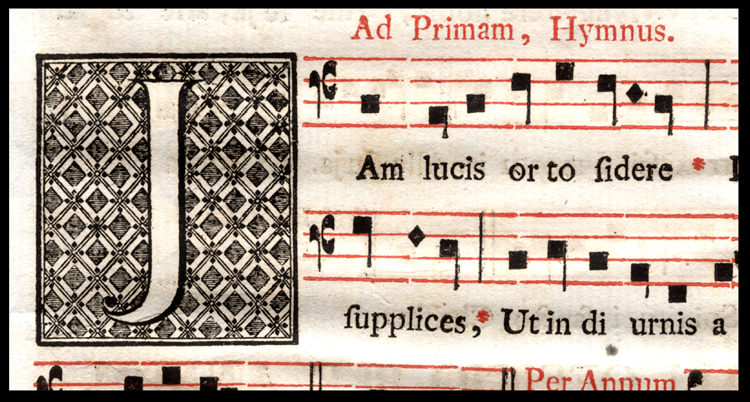
Numes
2 box stacked, read bottom to top, read 2 notes left to right. Dots are elongations. iij and ij = repeats. Double bars = break between phrases. Most are neumatic, a little melismatic as well.
2 Parts of the Mass
Proper: Text and/or music change according to the saints day or season
Ordinary: Text/music stays the same every mass
5 Parts of the Ordinary
Kyrie (Lord have mercy), Gloria (Glory to god in the highest), Credo (believe one god almighty), Sanctus (Holy god of hosts), Agnus Dei (Lamb of God)
Hildegard von Bingen
(1098-1179) writer, visionary, abbess of a convent, excelled at creating sequences and liturgical dramas.
Jutta von Sponheim
At age 12, got terrible illness and survived, dedicating the rest of her life to God. She became a spiritual leader and taught Hildegard Von Bingen
Tropes
New addition to pre-existing chant 9-12 centuries, text added most educational and explanatory
Sequences
Elaborate additions, became separate and stood on their own. (ex: Dies irae). However, catholic church got rid of all but 4.
Organum
Earliest form of polyphony, based on chant. Two or more melodic lines simultaneously, each with its own independent interest, could be voice parts about 4 or 5 apart. Slightly different rhythms, introduced meter and notation
Variations of Organum
Simple/Parallel Organum: Vox principalis, vox organalis
Free Organum: (10th-12th centuries) Note Against Note Counterpoint
Melismatic Organum:
(11-12th centuries) lower chant voice held out in long note values, original voice in free motion above that
The Ars Antiqua
(12th-13th centuries) The old art, Paris cultural center of Christian world, Louvre started as fortification of city, University of Paris great was great intellectual center for Christianity, Notre Dame and Notre Dame school
Tempus Perfectum
Way of organizing rhythms, subdivision of 3
Leonin and Perotin
Leonin: Mid 12th Century, 1150ish. Mentor of Perotin. Wrote 2 voice polyphony.
Perotin: (12th-eary 13th centuries) took Leonin's style and added voice layers with original composition. 2 voice parts —>3 or 4 parts
Medieval Instruments
Rebec (Lute), Vielle (Violin), Guitarra Morisca (Guitar), Lute, Pipe or Recorder, Shawm (Oboe), Nakers (Percussion)
Raimbaut de Vaquieras
(1155-1207) composed Kalenda maya (the 1st of May). Became close with Bonaface of Italy → grew from Jongleur to Troubadour.
Motet
A short piece of sacred choral music, typically polyphonic and unaccompanied.
Tempus Imperfectum
The division of beats into two equal parts instead of three
Felipe De Vitry
(1290-1361) French theorist, composer, poet, diplomat, soldier, worked in courts, wrote pieces in Fauvel. Coined Ars Nova.
Ars Nova
(New Art). Style of polyphony from 14th century France, distinguished from earlier styles by a new system of rhythmic notation that allowed duple or triple division of note values, syncopation, and great rhythmic flexibility
Guillaume de Machaut
The most important composer of the 14th century, worked in Paris, wrote sacred and secular compositions.
Unified 4 part polyphonic settings of the ordinary mass (4 voice, melodic interest and independence, same 5 movements of mass).
Major Compositions of the Medieval Period
Hildegard von Bingen (1098-1179)
Notable Composition: "Ordo Virtutum" (Musical morality play)
Guillaume de Machaut (c. 1300-1377)
Notable Composition: "Messe de Nostre Dame" (Mass setting)
Pérotin (fl. late 12th-early 13th century)
Notable Composition: "Viderunt omnes" (Polyphonic organum)