4- Post Mortem Changes
 Call Kai
 Learn
Learn Practice Test
 Spaced Repetition
 Match
Match Flashcards
 Knowt Play
1/32

There's no tags or description
Looks like no tags are added yet.
Name | Mastery | Learn | Test | Matching | Spaced | Call with Kai | Chat |
|---|
No analytics yet
Send a link to your students to track their progress
33 Terms
what do post mortem changes result from
autolysis
post mortem changes vary based on
tissue type
animal
cause of death
temp
body temp
microbial flora
describe decompositions
dead organic substances broken down into simpler organic or inorganic matter via 2 diff mechanisms (putrefaction and autolysis)
putrefaction
state of decomp when microorganisms cause tissues to turn into gases, liquids, simple molecules
autolysis
destruction of cells or tissues by their own enzymes aka self digestion
rank how fast tissues die from fastest to slowest
neurons
cardiac m
parenchyma cells
chondrocytes
describe autolysis
occurs in dead body and involves whole body
no inflammation
begins w/in minutes of last heartbeat and causes unavoidable changes
describe necrosis
occurs in live tissues
localized or regional
inflammation present
whats the order of autolysis
heart beat stops, hypoxia, inc CO2 = pH decrease, cytosolic lysosome rupture and enzymes enter cytosol, autolysis
t or f: depending on autolysis severity nothing may be left to diagnose
true due to extensive tissue breakdown.
postmortem autolysis can mask what
antemortem lesions
how does autolysis look histologically
lack of cell architecture and cell detail
numerous saprophytic bacteria
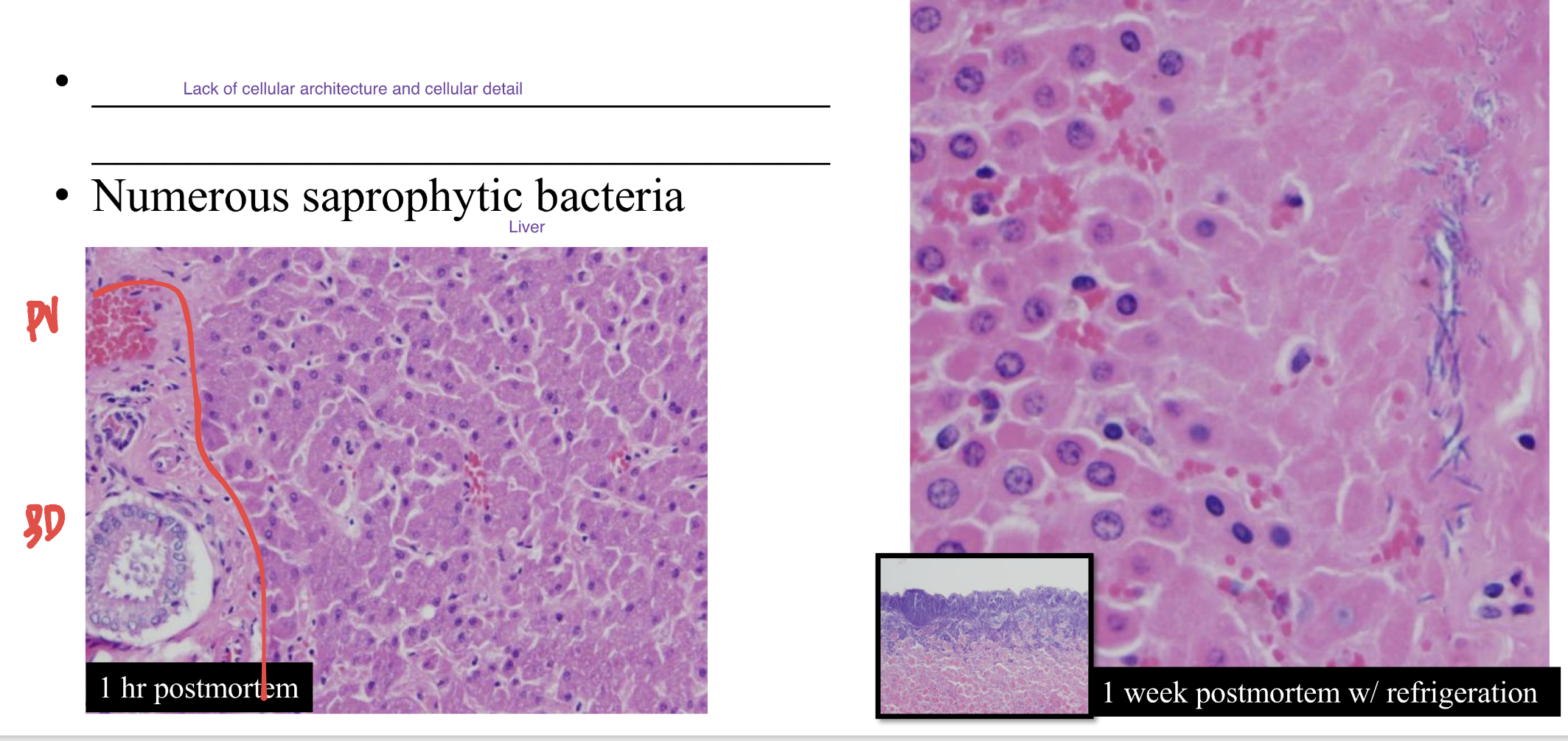
what are the 5 post mortem changes
fresh
putrefaction/bloat
active decomp
advanced decay
skeletonization
whats rigor mortis
2-36 hrs post death - muscle stiffening
small muscles first
why does rigor mortis result in hyperextension
extensors stronger than flexors
SR degrades which releases Ca and floods the sarcomere to bind actin and myosin
no atp aka no relaxation
define livor mortis
tissue discoloration due to intravascular blood pooling (hypostatic congestion) (gravitational)
describe livor mortis
occurs in all body cavities, hypoxic capillaries dilate pooling blood
develops in 30 min to 2 hrs
describe algor mortis
cooling of body to environment equilibrium
thick fur = will autolyze more rapidly
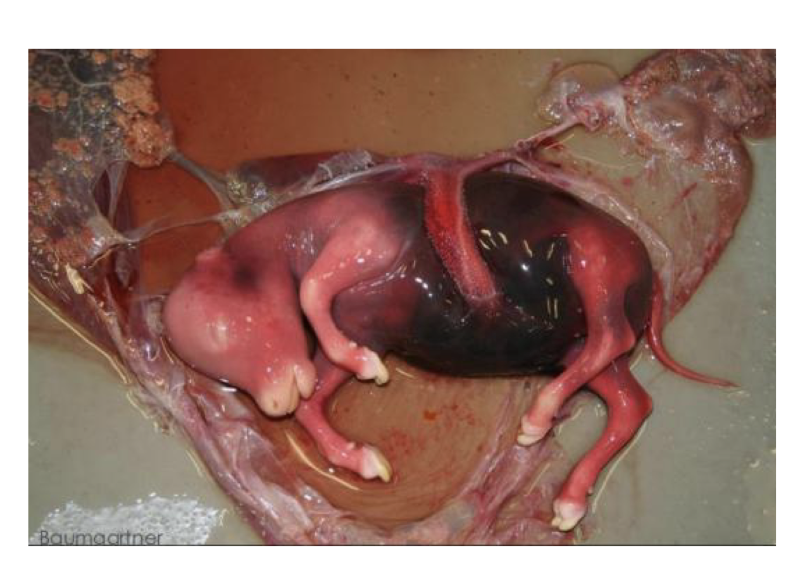
describe hemoglobin inhibition
staining of tissues by free hemoglobin
red discoloration
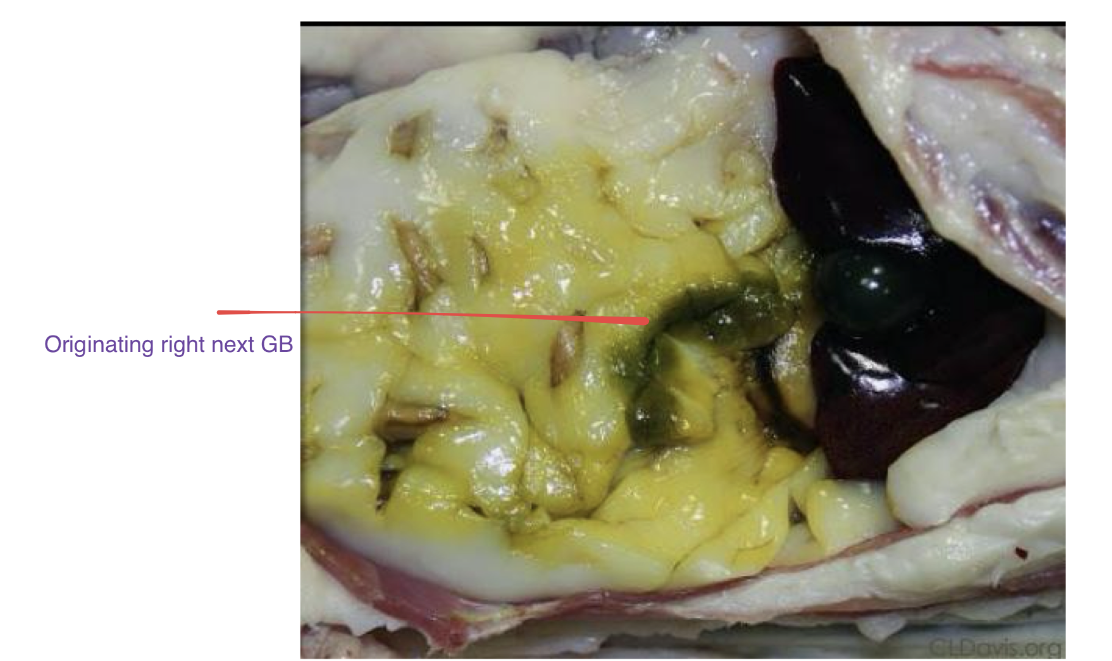
describe bile inhibition
staining by bile, yellow/green discoloration for the extrahepatic biliary system
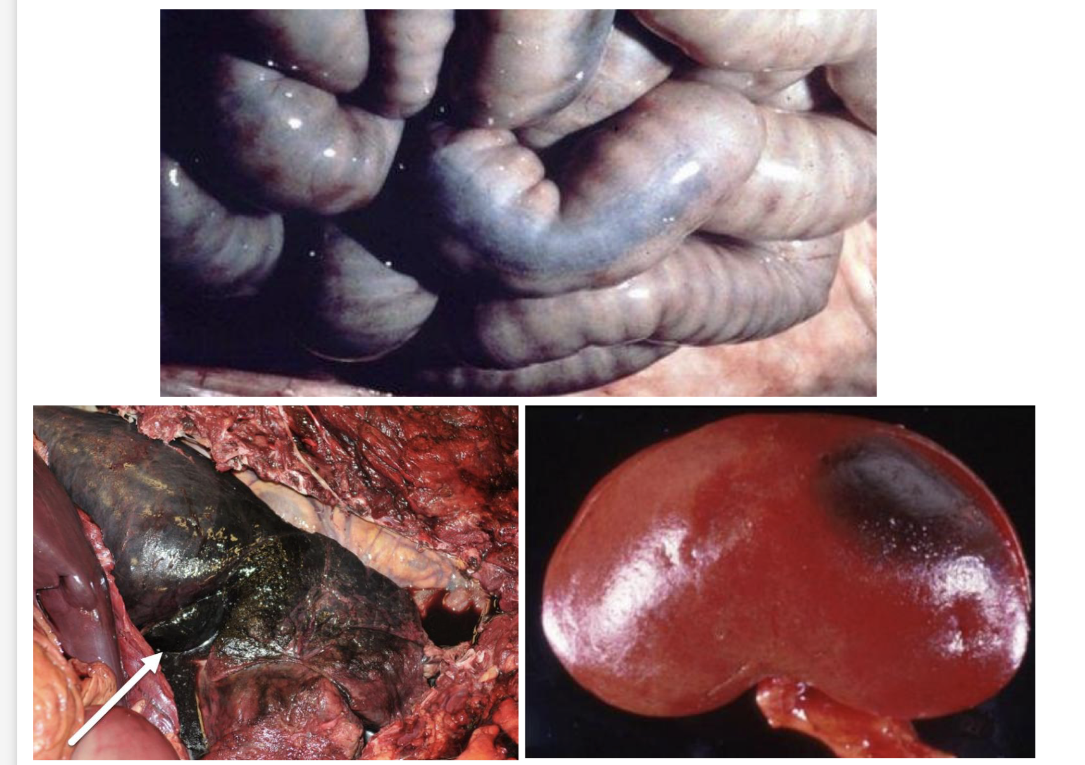
what is Pseudomelanosis
putrefactive bacteria that diffuses thru tissues and reacts with iron creative iron sulfide
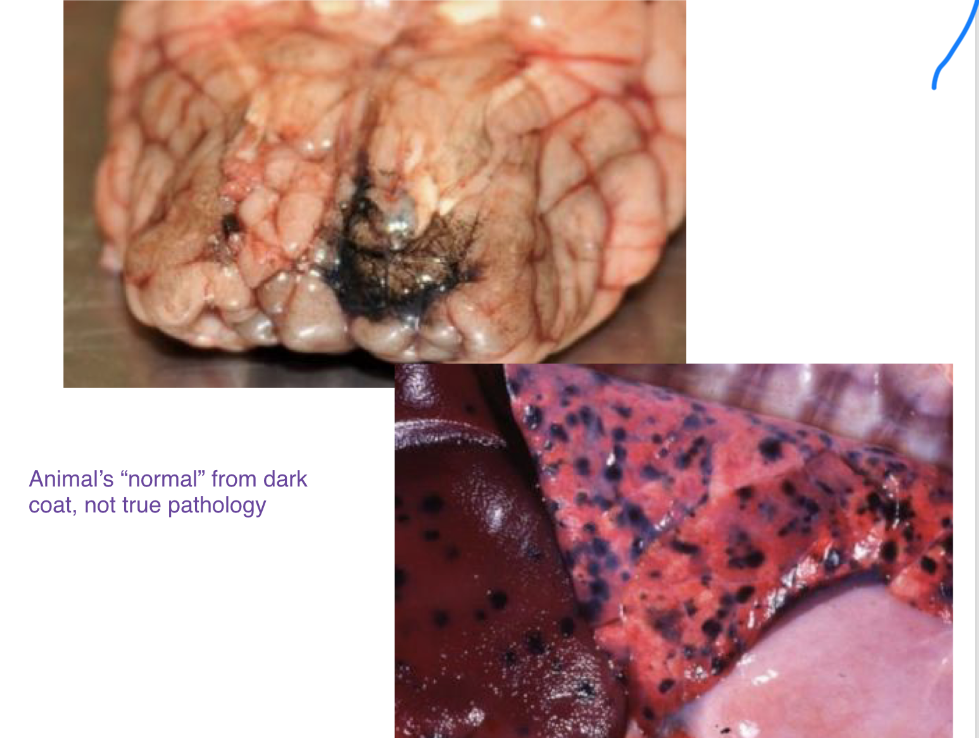
what is melanosis
normal dark melanin pigment of tissues
describe post mortem clots
occurs right after death but dissapers within 2 hours
fibrinolysin released from the endothelial cells resulting in incoagulable blood in the vessels
describe antemortem clots
true clot from the elements of Virchow’s triad
(hypercoagulability, endothelial damage, turbulent blood flow)
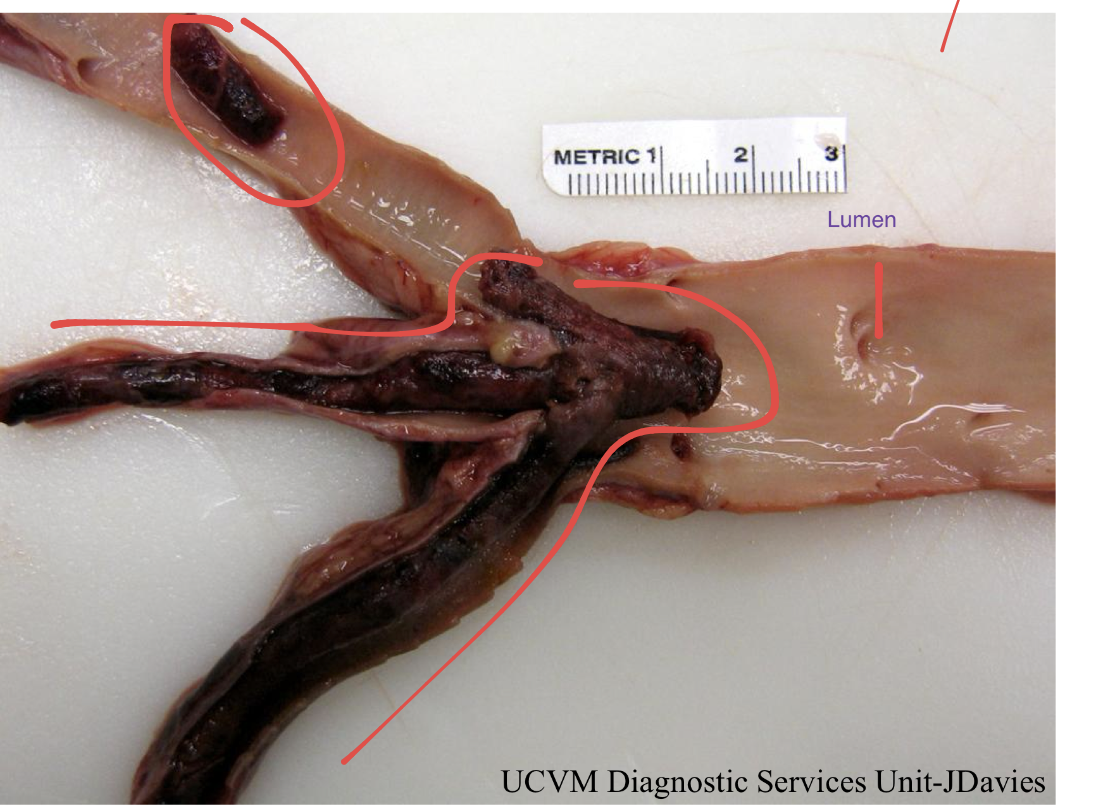
describe and name this clot
rough, friable, difficult to remove
antemortem clot
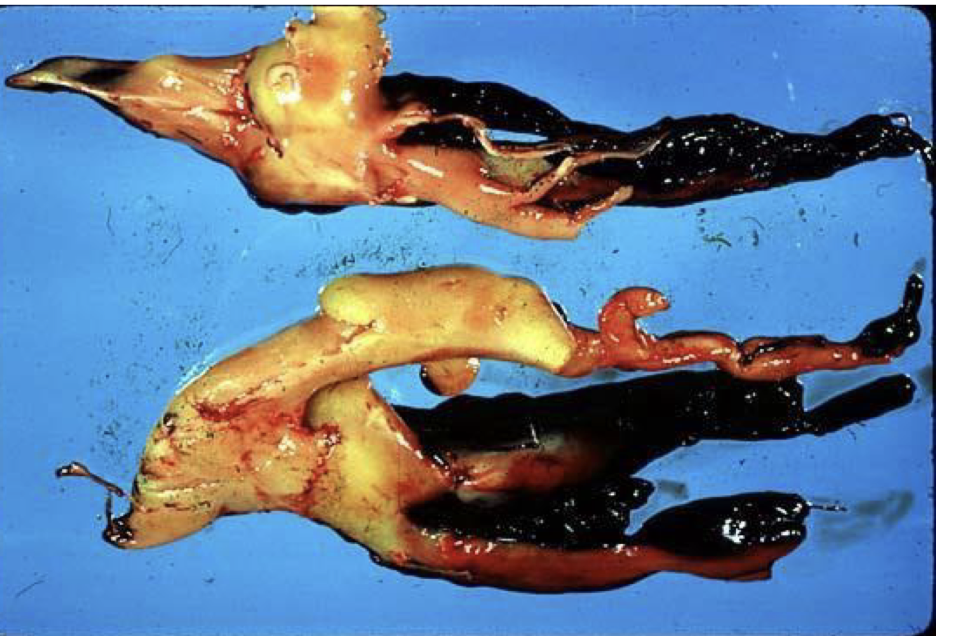
describe and name this clot
smooth, shiny, easy to remove
“chicken fat clot”
postmortem clot
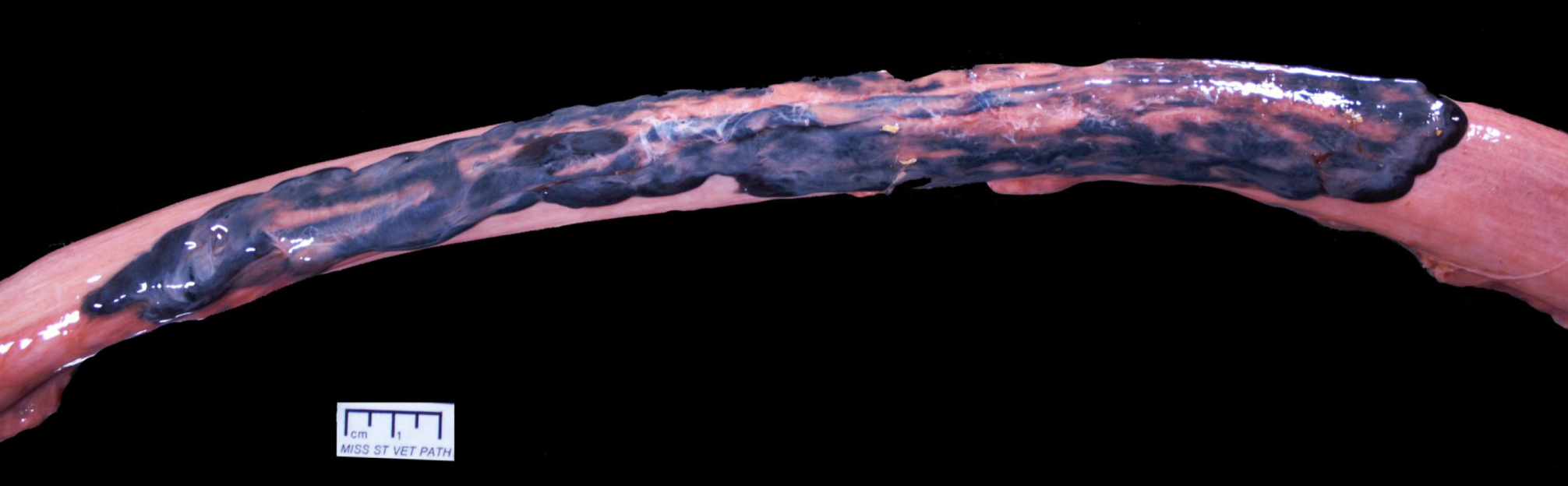
what type of clot
antemortem
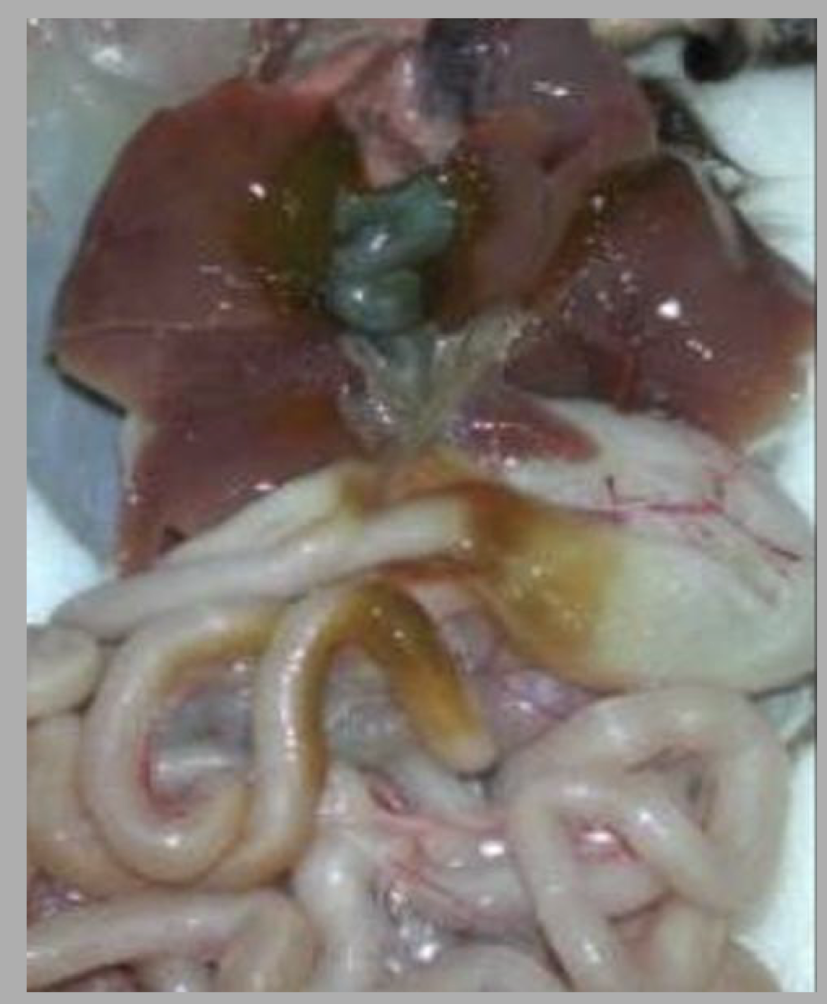
name this
non lesion bile inhibition
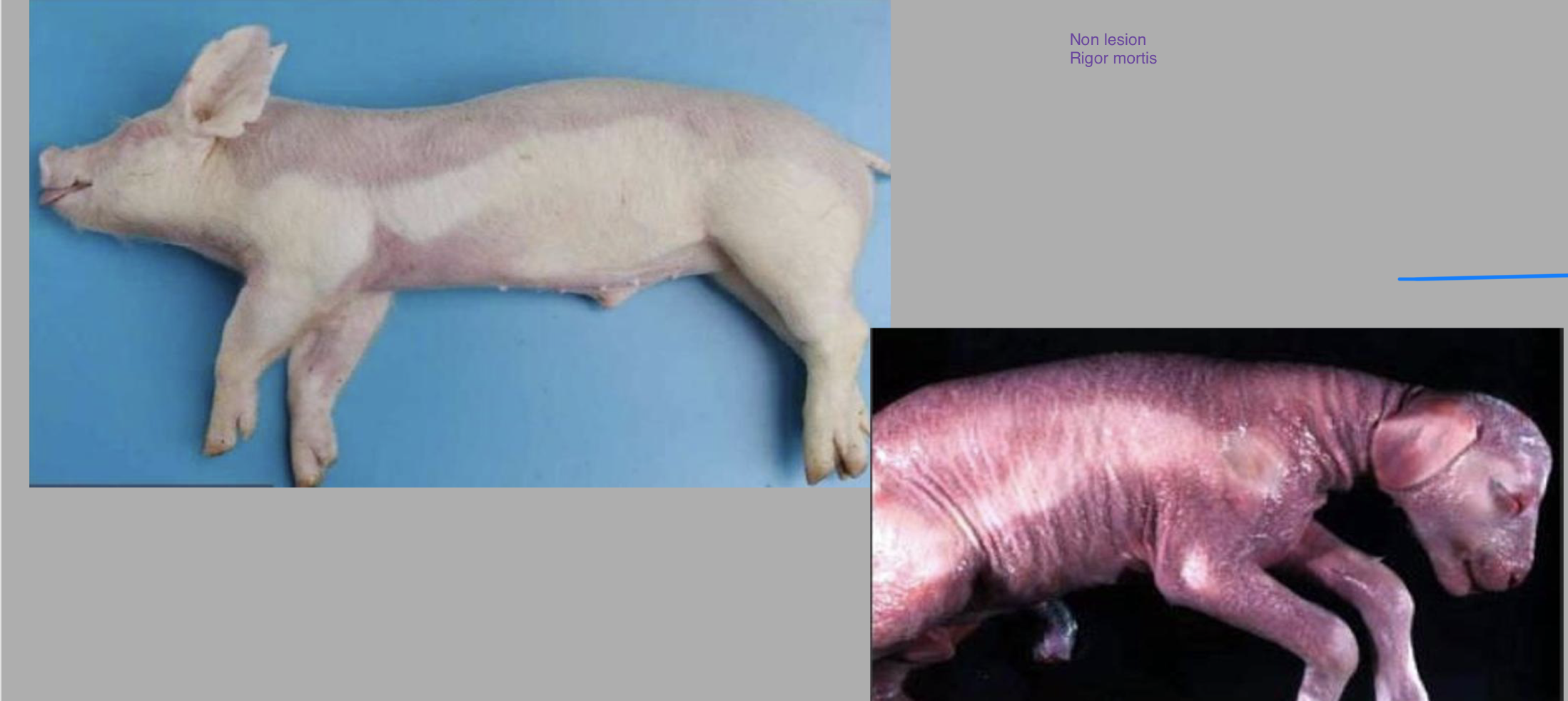
non lesion or pathology?
non lesion- rigor mortis
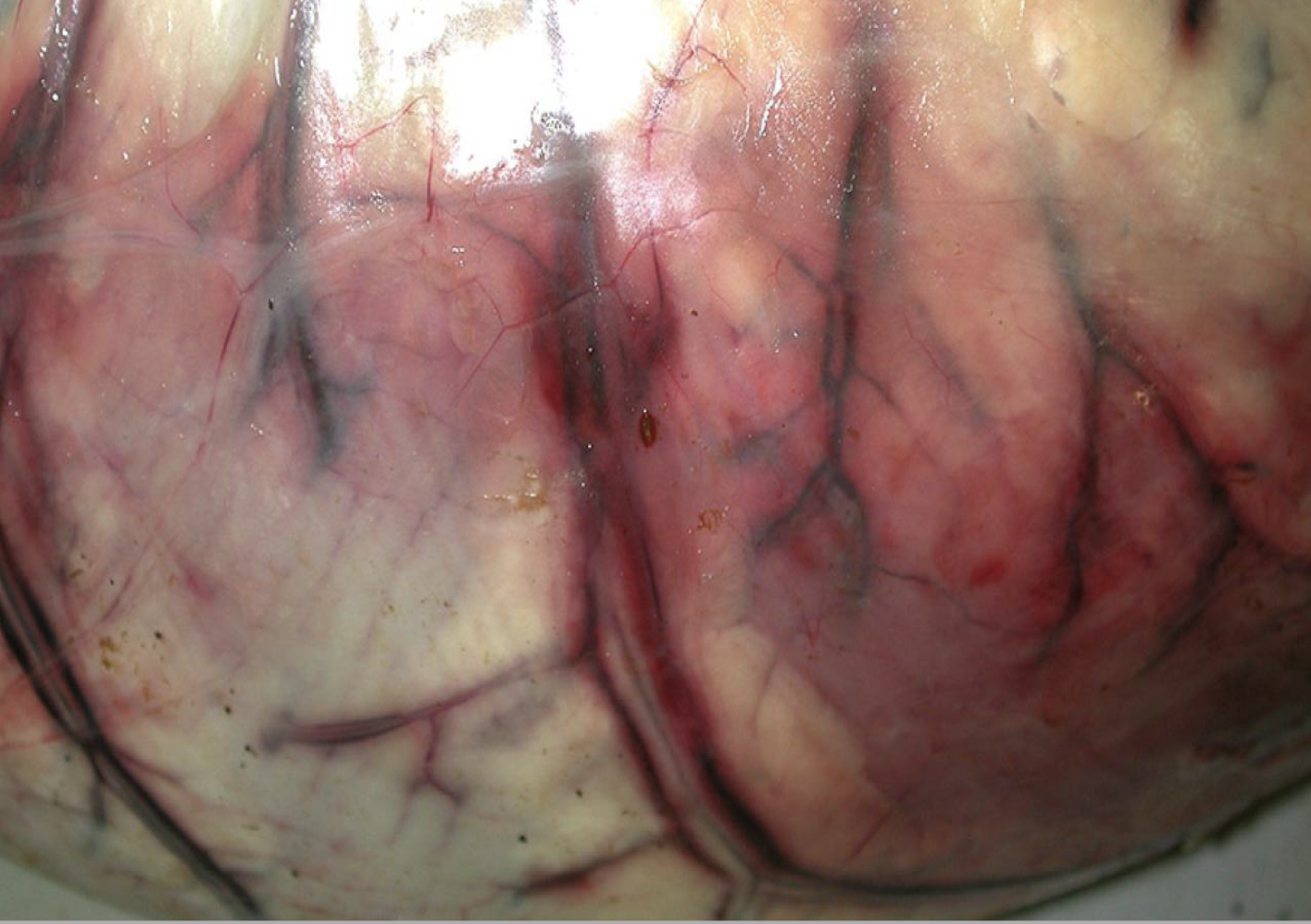
non lesion or pathology
non lesion
hemoglobin inhibition
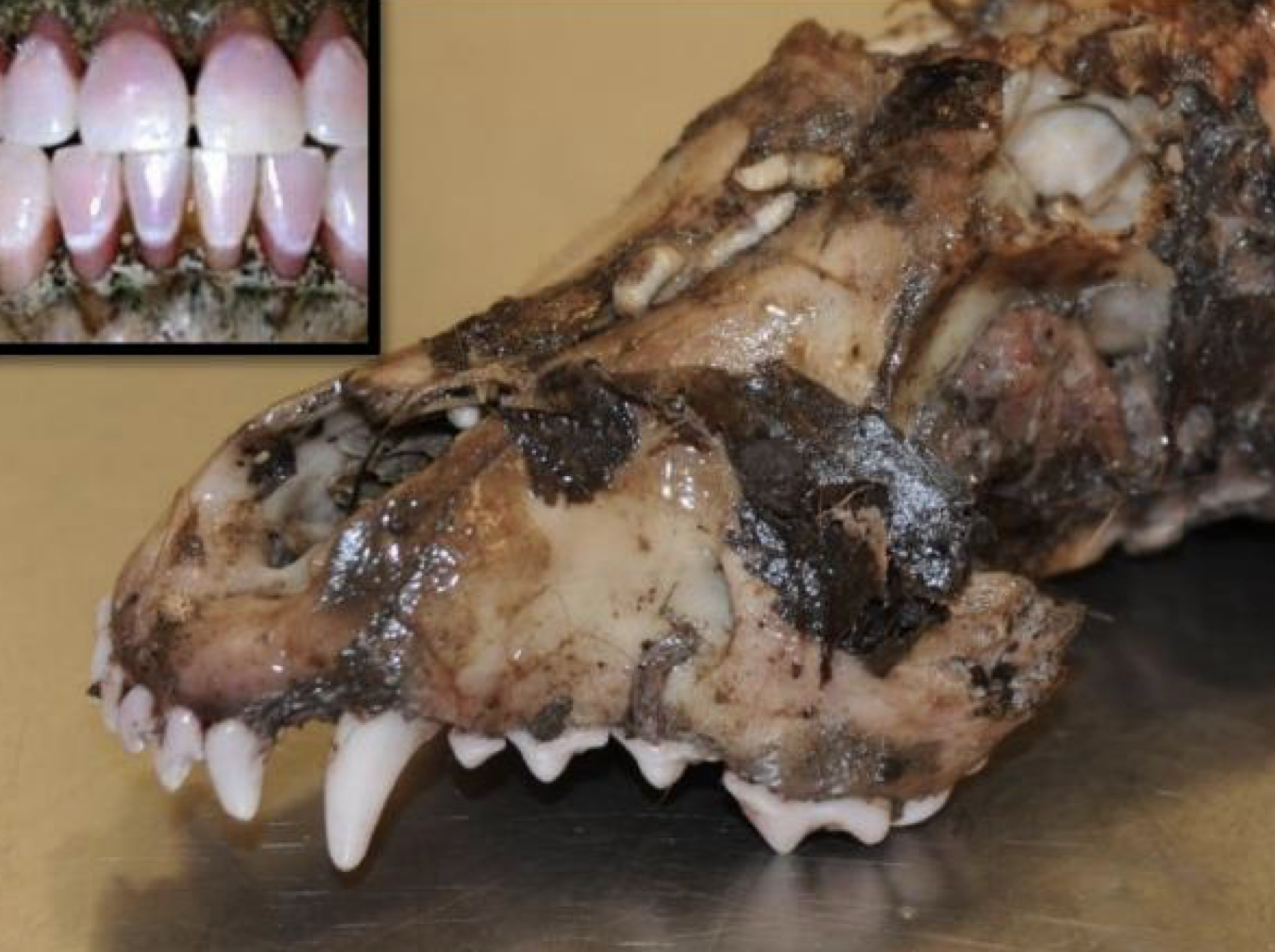
postmortem autolysis or pathology
hemoglobin inhibition that deposits in dentin
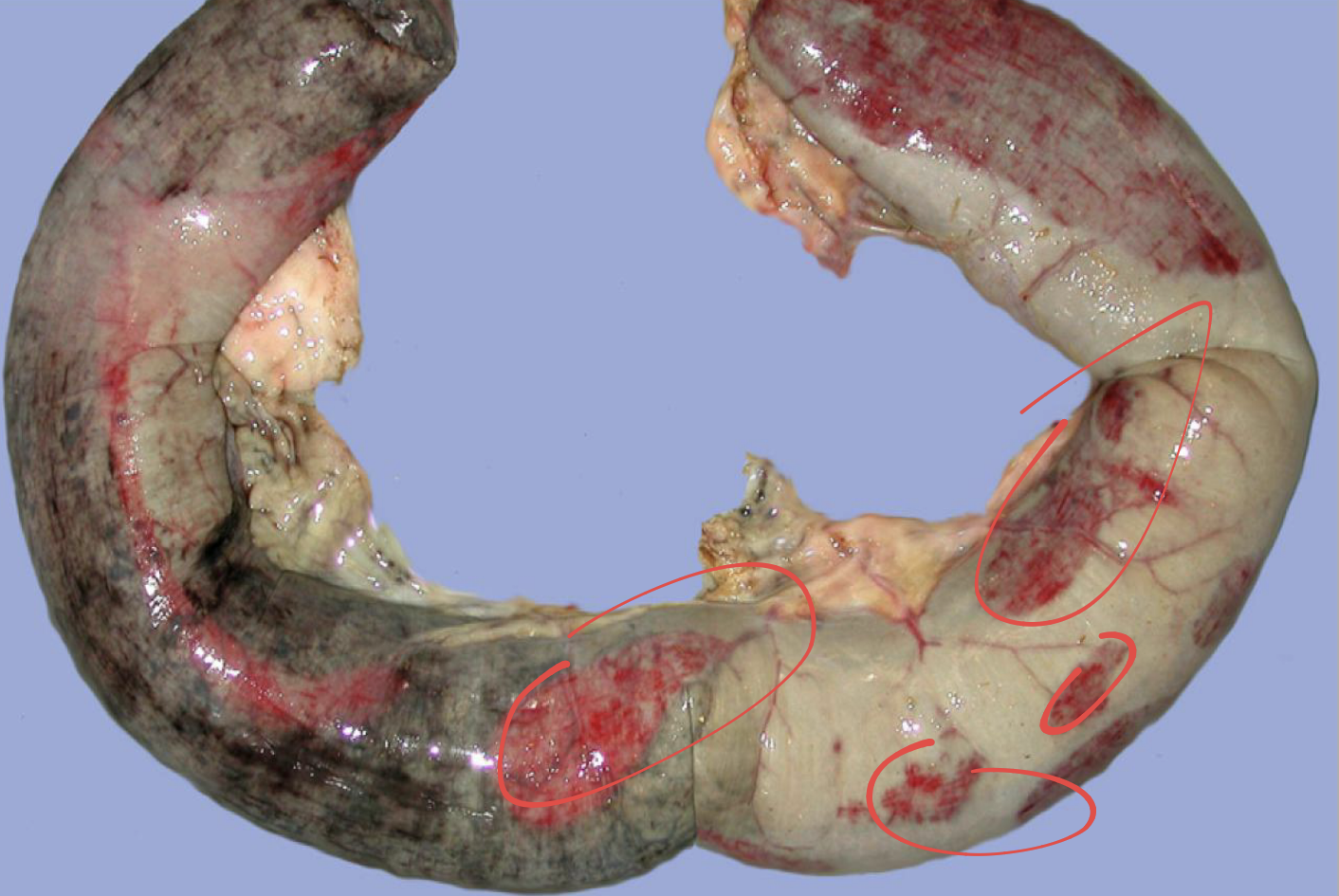
non lestion or path
non lesion- hydrogen sulfide from bacteria forming iron sulfide
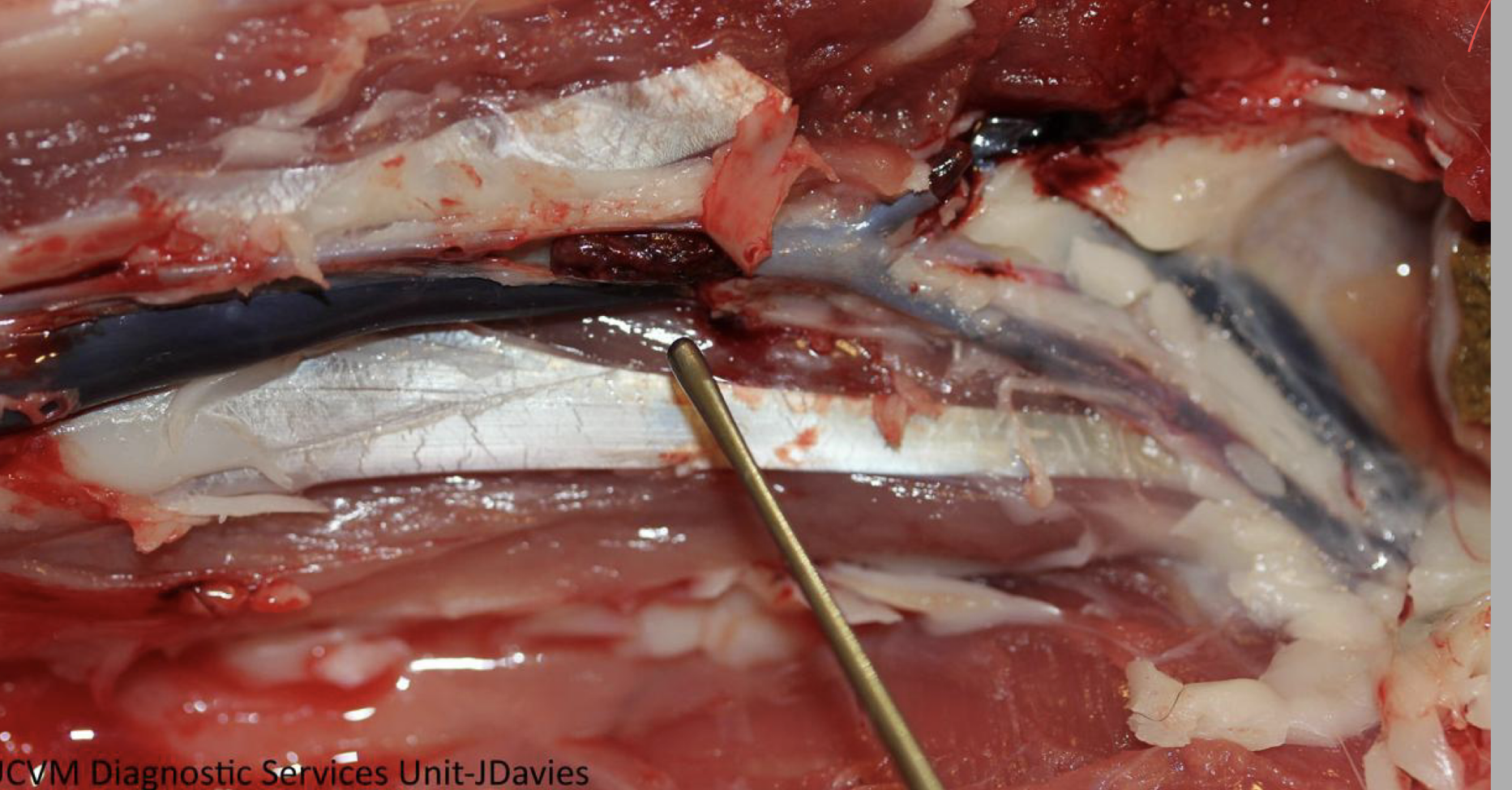
ante or post mortem clot
antemortem