Art History Ancient Greece: Archaic Period
 Call Kai
 Learn
Learn Practice Test
 Spaced Repetition
 Match
Match Flashcards
 Knowt Play
1/5

There's no tags or description
Looks like no tags are added yet.
Name | Mastery | Learn | Test | Matching | Spaced | Call with Kai | Chat |
|---|
No analytics yet
Send a link to your students to track their progress
6 Terms

Terms
Archaic: phase of ancient Greek art development from 650-480 BCE, bridging the Geometric and Classical Periods
Stylized: intentional departure from realism to exaggerated real life forms
Naturalized: the process of making a subject look lifelike and convincing
Egyptianizing Stance: specific pose in archaic greek sculptures
Kouros: type of sculpture of a young nude male
Archaic smile: expression in archaic art to bring a lifelike quality rather than a state of joy
Kore: type of statue showing a young clothed female figure
Peplos: a body-length woolen garment worn by women in ancient Greece
Pediment: triangles at the top of temples which show art
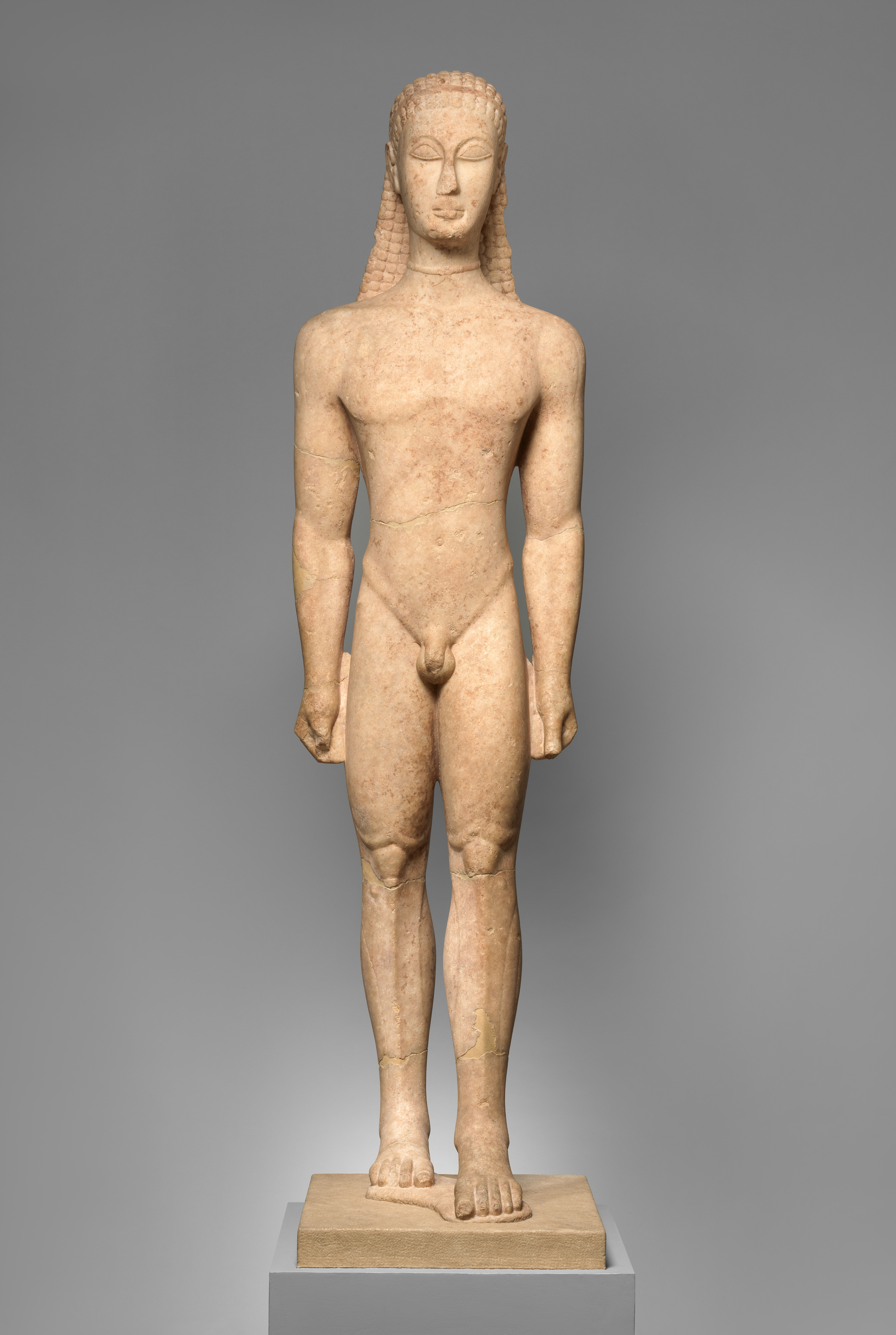
New York Kouros
Style: Inspired by Egyptian Ka sculptures
Purpose: Highlight heroism (heroic nude) of a man
Greek sculptures have more human form and more life to them since they focus on living → rather than Egyptians who focused on death + afterlife
Greek ideal → idea of the importance of striving for beauty and perfection
Archaic smile
New York vs. Anavysos Kouros: represent the evolution of Archaic Greek sculpture over a span of 50 years from geometric to organic naturalism


Peplos Kore
Freestanding vertical cylindrical column-like sculpture, more naturalistic in the face and softer in bodily rendering than earlier Archaic works
Archaic smile
Shows crease to imply legs


Exekias, Achilles, and Ajax Dice game
Trojan War heroes Achilles and Ajax sit on low stools facing each other, hunched over a block serving as a gaming table
Speech bubbles emerge from their mouths with inscriptions recording the score—Achilles calls out "four" and Ajax calls out "three" showing Achilles is winning
Both men wear partial armor and hold their spears, while their shields and helmets rest nearby, showing they are pausing between battles
Achilles wears hat to show status
Shows tension in Ajax’s face as he loses

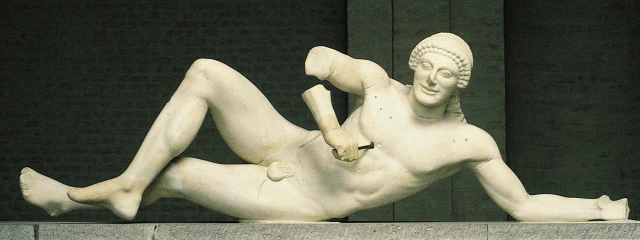
Dying Warrior - West Pediment of the Temple of Aphaia
Pose: Rigid, highly stylized, and unnatural. He faces outward toward the viewer rather than acknowledging his own pain or the ground.
Facial Expression: Features the signature Archaic smile, which looks detached or mismatched for a man dying in battle.
Anatomy: Stylized, geometric musculature and patterned, beaded "Egyptian-style" hair, typical of the Archaic period rather than true organic decay or real human suffering.
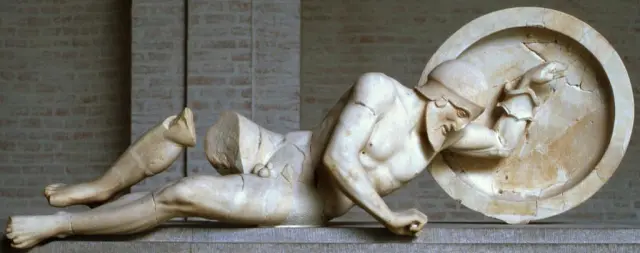
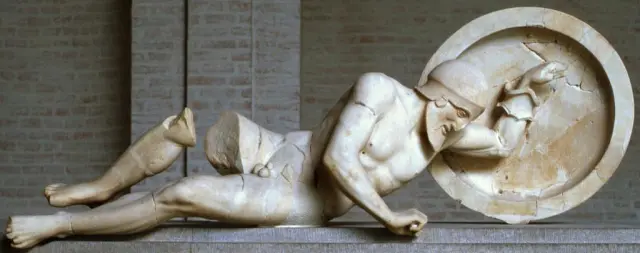
Dying Warrior - East Pediment of the Temple of Aphaia
Subject: a fallen hero from the first Trojan War led by Heracles
Style: It marks the transition from the rigid Archaic style to the naturalism of the Early Classical period
Is in better condition/more detailed because the East pediment was always decorated last
Unlike the western counterpart that features an "archaic smile," the eastern warrior displays human suffering, strain, and concentrated anguish as he tries to support his collapsing body with his shield
Shows real agony
Features advanced anatomy and a dynamic twisting pose