MSK Case
 Call Kai
 Learn
Learn Practice Test
 Spaced Repetition
 Match
Match Flashcards
 Knowt Play
1/30

Earn XP
Description and Tags
Lecture 15
Name | Mastery | Learn | Test | Matching | Spaced | Call with Kai | Chat |
|---|
No analytics yet
Send a link to your students to track their progress
31 Terms
An owner calls you stating that their gelding has been a bit sore since starting training after winter. Owner thinks it is in his shoulder. The chiropractor worked on his shoulders a couple weeks ago and he got a little better, but he is not striding out in the show pen.
Which is the least important question to ask when getting a history on a lameness exam?
when was your horse last de-wormed?
An owner calls you stating that their gelding has been a bit sore since starting training after winter. Owner thinks it is in his shoulder. The chiropractor worked on his shoulders a couple weeks ago and he got a little better, but he is not striding out in the show pen.
What information do you want to gather in the history?
signalment —> make sure it matches your records
horse’s job
duration
shoeing —> when last shod, type of shoeing
length of ownership —> was there a pre-purchase exam performed if purchased
comments from trainer
info about the lameness —> duration, circumstances when lame, which leg, medications given, history of lameness
An owner calls you stating that their gelding has been a bit sore since starting training after winter. Owner thinks it is in his shoulder. The chiropractor worked on his shoulders a couple weeks ago and he got a little better, but he is not striding out in the show pen.
Sunny will be 7yo in June. He has been off for about 3 months, seems worse in tight circles if the arena hasn’t been drug recently. The trainer feels like he’s not bringing his hocks under him at the lope. He was reshod 4 weeks ago. The trainer has him in aluminum shoes in front and steel shoes behind. The owner has not given him any bute, not sure if the trainer has. He’s never taken a lame step in his life. The owner bought him as a 4yo after he won a futurity class at the Congress. The owner did not do a pre-purchase exam on him because he knew the former owners pretty well.
Why is the arena not being drug a concern?
Footing will be too hard and uneven
An owner calls you stating that their gelding has been a bit sore since starting training after winter. Owner thinks it is in his shoulder. The chiropractor worked on his shoulders a couple weeks ago and he got a little better, but he is not striding out in the show pen.
Sunny will be 7yo in June. He has been off for about 3 months, seems worse in tight circles if the arena hasn’t been drug recently. The trainer feels like he’s not bringing his hocks under him at the lope. He was reshod 4 weeks ago. The trainer has him in aluminum shoes in front and steel shoes behind. The owner has not given him any bute, not sure if the trainer has. He’s never taken a lame step in his life. The owner bought him as a 4yo after he won a futurity class at the Congress. The owner did not do a pre-purchase exam on him because he knew the former owners pretty well.
What is the purpose of aluminum shoes used in the front?
they are lighter than steel so the horse moves better
An owner calls you stating that their gelding has been a bit sore since starting training after winter. Owner thinks it is in his shoulder. The chiropractor worked on his shoulders a couple weeks ago and he got a little better, but he is not striding out in the show pen.
Sunny will be 7yo in June. He has been off for about 3 months, seems worse in tight circles if the arena hasn’t been drug recently. The trainer feels like he’s not bringing his hocks under him at the lope. He was reshod 4 weeks ago. The trainer has him in aluminum shoes in front and steel shoes behind. The owner has not given him any bute, not sure if the trainer has. He’s never taken a lame step in his life. The owner bought him as a 4yo after he won a futurity class at the Congress. The owner did not do a pre-purchase exam on him because he knew the former owners pretty well.
What is a horse doing when “bringing their hocks under"?”
engaging their hind end to collect
An owner calls you stating that their gelding has been a bit sore since starting training after winter. Owner thinks it is in his shoulder. The chiropractor worked on his shoulders a couple weeks ago and he got a little better, but he is not striding out in the show pen.
Sunny will be 7yo in June. He has been off for about 3 months, seems worse in tight circles if the arena hasn’t been drug recently. The trainer feels like he’s not bringing his hocks under him at the lope. He was reshod 4 weeks ago. The trainer has him in aluminum shoes in front and steel shoes behind. The owner has not given him any bute, not sure if the trainer has. He’s never taken a lame step in his life. The owner bought him as a 4yo after he won a futurity class at the Congress. The owner did not do a pre-purchase exam on him because he knew the former owners pretty well.
Why do we want to know if an earlier pre-purchase exam waas performed?
there may be previous radiographs for comparison
An owner calls you stating that their gelding has been a bit sore since starting training after winter. Owner thinks it is in his shoulder. The chiropractor worked on his shoulders a couple weeks ago and he got a little better, but he is not striding out in the show pen.
Sunny will be 7yo in June. He has been off for about 3 months, seems worse in tight circles if the arena hasn’t been drug recently. The trainer feels like he’s not bringing his hocks under him at the lope. He was reshod 4 weeks ago. The trainer has him in aluminum shoes in front and steel shoes behind. The owner has not given him any bute, not sure if the trainer has. He’s never taken a lame step in his life. The owner bought him as a 4yo after he won a futurity class at the Congress. The owner did not do a pre-purchase exam on him because he knew the former owners pretty well.
What’s next?
distance exam and palpate limbs

An owner calls you stating that their gelding has been a bit sore since starting training after winter. Owner thinks it is in his shoulder. The chiropractor worked on his shoulders a couple weeks ago and he got a little better, but he is not striding out in the show pen.
Sunny will be 7yo in June. He has been off for about 3 months, seems worse in tight circles if the arena hasn’t been drug recently. The trainer feels like he’s not bringing his hocks under him at the lope. He was reshod 4 weeks ago. The trainer has him in aluminum shoes in front and steel shoes behind. The owner has not given him any bute, not sure if the trainer has. He’s never taken a lame step in his life. The owner bought him as a 4yo after he won a futurity class at the Congress. The owner did not do a pre-purchase exam on him because he knew the former owners pretty well.
Is this horse….
due for a trim
An owner calls you stating that their gelding has been a bit sore since starting training after winter. Owner thinks it is in his shoulder. The chiropractor worked on his shoulders a couple weeks ago and he got a little better, but he is not striding out in the show pen.
Sunny will be 7yo in June. He has been off for about 3 months, seems worse in tight circles if the arena hasn’t been drug recently. The trainer feels like he’s not bringing his hocks under him at the lope. He was reshod 4 weeks ago. The trainer has him in aluminum shoes in front and steel shoes behind. The owner has not given him any bute, not sure if the trainer has. He’s never taken a lame step in his life. The owner bought him as a 4yo after he won a futurity class at the Congress. The owner did not do a pre-purchase exam on him because he knew the former owners pretty well.
You have performed a distance exam and limb palpation. You determined the horse is due to be trimmed.
What’s next?
watch the horse move
An owner calls you stating that their gelding has been a bit sore since starting training after winter. Owner thinks it is in his shoulder. The chiropractor worked on his shoulders a couple weeks ago and he got a little better, but he is not striding out in the show pen.
Sunny will be 7yo in June. He has been off for about 3 months, seems worse in tight circles if the arena hasn’t been drug recently. The trainer feels like he’s not bringing his hocks under him at the lope. He was reshod 4 weeks ago. The trainer has him in aluminum shoes in front and steel shoes behind. The owner has not given him any bute, not sure if the trainer has. He’s never taken a lame step in his life. The owner bought him as a 4yo after he won a futurity class at the Congress. The owner did not do a pre-purchase exam on him because he knew the former owners pretty well.
You have performed a distance exam and limb palpation. You determined the horse is due to be trimmed.
You watched the horse move in a stright line, left circle, and right circle. You determine that the left front is most consistently lame. There is some right front and right hind lameness as well, but the left front is the lamest and more obvious when circling.
What do you want to do?
Limb flexions
An owner calls you stating that their gelding has been a bit sore since starting training after winter. Owner thinks it is in his shoulder. The chiropractor worked on his shoulders a couple weeks ago and he got a little better, but he is not striding out in the show pen.
Sunny will be 7yo in June. He has been off for about 3 months, seems worse in tight circles if the arena hasn’t been drug recently. The trainer feels like he’s not bringing his hocks under him at the lope. He was reshod 4 weeks ago. The trainer has him in aluminum shoes in front and steel shoes behind. The owner has not given him any bute, not sure if the trainer has. He’s never taken a lame step in his life. The owner bought him as a 4yo after he won a futurity class at the Congress. The owner did not do a pre-purchase exam on him because he knew the former owners pretty well.
You have performed a distance exam and limb palpation. You determined the horse is due to be trimmed.
You watched the horse move in a stright line, left circle, and right circle. You determine that the left front is most consistently lame. There is some right front and right hind lameness as well, but the left front is the lamest and more obvious when circling.
Limb flexions are normal.
What next?
hoof testers
An owner calls you stating that their gelding has been a bit sore since starting training after winter. Owner thinks it is in his shoulder. The chiropractor worked on his shoulders a couple weeks ago and he got a little better, but he is not striding out in the show pen.
Sunny will be 7yo in June. He has been off for about 3 months, seems worse in tight circles if the arena hasn’t been drug recently. The trainer feels like he’s not bringing his hocks under him at the lope. He was reshod 4 weeks ago. The trainer has him in aluminum shoes in front and steel shoes behind. The owner has not given him any bute, not sure if the trainer has. He’s never taken a lame step in his life. The owner bought him as a 4yo after he won a futurity class at the Congress. The owner did not do a pre-purchase exam on him because he knew the former owners pretty well.
You have performed a distance exam and limb palpation. You determined the horse is due to be trimmed.
You watched the horse move in a stright line, left circle, and right circle. You determine that the left front is most consistently lame. There is some right front and right hind lameness as well, but the left front is the lamest and more obvious when circling.
Limb flexions are normal.
Hoof testers are also normal.
What now?
diagnostic nerve blocks
Why do we want to perform diagnostic nerve blocks before radigraphs?
If we started with radiographs, we may end up imaging the entire limb because we see nothing in the foot. There are many diseases within the foot that show no radiographic changes.

Where would you perform a palmar digital nerve block (assume medial and lateral)?
B
An owner calls you stating that their gelding has been a bit sore since starting training after winter. Owner thinks it is in his shoulder. The chiropractor worked on his shoulders a couple weeks ago and he got a little better, but he is not striding out in the show pen.
Sunny will be 7yo in June. He has been off for about 3 months, seems worse in tight circles if the arena hasn’t been drug recently. The trainer feels like he’s not bringing his hocks under him at the lope. He was reshod 4 weeks ago. The trainer has him in aluminum shoes in front and steel shoes behind. The owner has not given him any bute, not sure if the trainer has. He’s never taken a lame step in his life. The owner bought him as a 4yo after he won a futurity class at the Congress. The owner did not do a pre-purchase exam on him because he knew the former owners pretty well.
You have performed a distance exam and limb palpation. You determined the horse is due to be trimmed.
You watched the horse move in a stright line, left circle, and right circle. You determine that the left front is most consistently lame. There is some right front and right hind lameness as well, but the left front is the lamest and more obvious when circling.
Limb flexions are normal.
Hoof testers are also normal.
You perform a palmar digital nerve block on the left front limb. The block was effective for the left front but now the lameness switched to the right front.
Why did the horse switch lame limbs?
bilateral lameness
An owner calls you stating that their gelding has been a bit sore since starting training after winter. Owner thinks it is in his shoulder. The chiropractor worked on his shoulders a couple weeks ago and he got a little better, but he is not striding out in the show pen.
Sunny will be 7yo in June. He has been off for about 3 months, seems worse in tight circles if the arena hasn’t been drug recently. The trainer feels like he’s not bringing his hocks under him at the lope. He was reshod 4 weeks ago. The trainer has him in aluminum shoes in front and steel shoes behind. The owner has not given him any bute, not sure if the trainer has. He’s never taken a lame step in his life. The owner bought him as a 4yo after he won a futurity class at the Congress. The owner did not do a pre-purchase exam on him because he knew the former owners pretty well.
You have performed a distance exam and limb palpation. You determined the horse is due to be trimmed.
You watched the horse move in a stright line, left circle, and right circle. You determine that the left front is most consistently lame. There is some right front and right hind lameness as well, but the left front is the lamest and more obvious when circling.
Limb flexions are normal.
Hoof testers are also normal.
You perform a palmar digital nerve block on the left front limb. The block was effective for the left front but now the lameness switched to the right front.
What next?
block the other limb
An owner calls you stating that their gelding has been a bit sore since starting training after winter. Owner thinks it is in his shoulder. The chiropractor worked on his shoulders a couple weeks ago and he got a little better, but he is not striding out in the show pen.
Sunny will be 7yo in June. He has been off for about 3 months, seems worse in tight circles if the arena hasn’t been drug recently. The trainer feels like he’s not bringing his hocks under him at the lope. He was reshod 4 weeks ago. The trainer has him in aluminum shoes in front and steel shoes behind. The owner has not given him any bute, not sure if the trainer has. He’s never taken a lame step in his life. The owner bought him as a 4yo after he won a futurity class at the Congress. The owner did not do a pre-purchase exam on him because he knew the former owners pretty well.
You have performed a distance exam and limb palpation. You determined the horse is due to be trimmed.
You watched the horse move in a stright line, left circle, and right circle. You determine that the left front is most consistently lame. There is some right front and right hind lameness as well, but the left front is the lamest and more obvious when circling.
Limb flexions are normal.
Hoof testers are also normal.
You perform a palmar digital nerve block on the left front limb. The block was effective for the left front but now the lameness switched to the right front.
You blocked the right front limb, which improved the lameness to the point the horse is sound enough.
What next?
radiographs
An owner calls you stating that their gelding has been a bit sore since starting training after winter. Owner thinks it is in his shoulder. The chiropractor worked on his shoulders a couple weeks ago and he got a little better, but he is not striding out in the show pen.
Sunny will be 7yo in June. He has been off for about 3 months, seems worse in tight circles if the arena hasn’t been drug recently. The trainer feels like he’s not bringing his hocks under him at the lope. He was reshod 4 weeks ago. The trainer has him in aluminum shoes in front and steel shoes behind. The owner has not given him any bute, not sure if the trainer has. He’s never taken a lame step in his life. The owner bought him as a 4yo after he won a futurity class at the Congress. The owner did not do a pre-purchase exam on him because he knew the former owners pretty well.
You have performed a distance exam and limb palpation. You determined the horse is due to be trimmed.
You watched the horse move in a stright line, left circle, and right circle. You determine that the left front is most consistently lame. There is some right front and right hind lameness as well, but the left front is the lamest and more obvious when circling.
Limb flexions are normal.
Hoof testers are also normal.
You perform a palmar digital nerve block on the left front limb. The block was effective for the left front but now the lameness switched to the right front.
You blocked the right front limb, which improved the lameness to the point the horse is sound enough.
Next, you want to take radiographs. What do you need to do before radiographing the foot?
all of the above

An owner calls you stating that their gelding has been a bit sore since starting training after winter. Owner thinks it is in his shoulder. The chiropractor worked on his shoulders a couple weeks ago and he got a little better, but he is not striding out in the show pen.
Sunny will be 7yo in June. He has been off for about 3 months, seems worse in tight circles if the arena hasn’t been drug recently. The trainer feels like he’s not bringing his hocks under him at the lope. He was reshod 4 weeks ago. The trainer has him in aluminum shoes in front and steel shoes behind. The owner has not given him any bute, not sure if the trainer has. He’s never taken a lame step in his life. The owner bought him as a 4yo after he won a futurity class at the Congress. The owner did not do a pre-purchase exam on him because he knew the former owners pretty well.
You have performed a distance exam and limb palpation. You determined the horse is due to be trimmed.
You watched the horse move in a stright line, left circle, and right circle. You determine that the left front is most consistently lame. There is some right front and right hind lameness as well, but the left front is the lamest and more obvious when circling.
Limb flexions are normal.
Hoof testers are also normal.
You perform a palmar digital nerve block on the left front limb. The block was effective for the left front but now the lameness switched to the right front.
You blocked the right front limb, which improved the lameness to the point the horse is sound enough.
You cleaned out the foot, packed it, and placed the foot on a block in order to take radiographs.
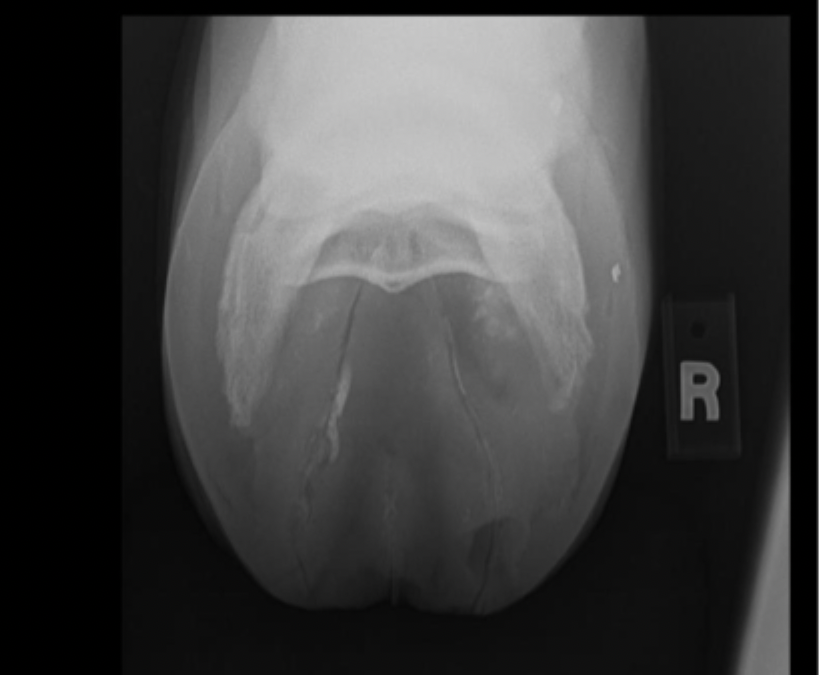
What is the primary lesion in the left front navicular bone?
osseous cyst-like lesion
An owner calls you stating that their gelding has been a bit sore since starting training after winter. Owner thinks it is in his shoulder. The chiropractor worked on his shoulders a couple weeks ago and he got a little better, but he is not striding out in the show pen.
Sunny will be 7yo in June. He has been off for about 3 months, seems worse in tight circles if the arena hasn’t been drug recently. The trainer feels like he’s not bringing his hocks under him at the lope. He was reshod 4 weeks ago. The trainer has him in aluminum shoes in front and steel shoes behind. The owner has not given him any bute, not sure if the trainer has. He’s never taken a lame step in his life. The owner bought him as a 4yo after he won a futurity class at the Congress. The owner did not do a pre-purchase exam on him because he knew the former owners pretty well.
You have performed a distance exam and limb palpation. You determined the horse is due to be trimmed.
You watched the horse move in a stright line, left circle, and right circle. You determine that the left front is most consistently lame. There is some right front and right hind lameness as well, but the left front is the lamest and more obvious when circling.
Limb flexions are normal.
Hoof testers are also normal.
You perform a palmar digital nerve block on the left front limb. The block was effective for the left front but now the lameness switched to the right front.
You blocked the right front limb, which improved the lameness to the point the horse is sound enough.
You cleaned out the foot, packed it, and placed the foot on a block in order to take radiographs.
What is the primary lesion in the right front navicular bone?
enlarged vascular channels
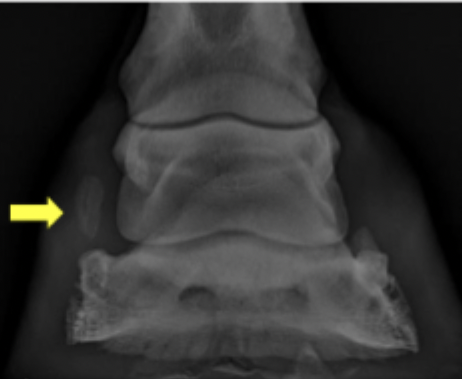
What the heck is this?
ossified collateral cartilage
What do you do if you see no changes on radiographs for the foot?
MRI
An owner calls you stating that their gelding has been a bit sore since starting training after winter. Owner thinks it is in his shoulder. The chiropractor worked on his shoulders a couple weeks ago and he got a little better, but he is not striding out in the show pen.
Sunny will be 7yo in June. He has been off for about 3 months, seems worse in tight circles if the arena hasn’t been drug recently. The trainer feels like he’s not bringing his hocks under him at the lope. He was reshod 4 weeks ago. The trainer has him in aluminum shoes in front and steel shoes behind. The owner has not given him any bute, not sure if the trainer has. He’s never taken a lame step in his life. The owner bought him as a 4yo after he won a futurity class at the Congress. The owner did not do a pre-purchase exam on him because he knew the former owners pretty well.
You have performed a distance exam and limb palpation. You determined the horse is due to be trimmed.
You watched the horse move in a stright line, left circle, and right circle. You determine that the left front is most consistently lame. There is some right front and right hind lameness as well, but the left front is the lamest and more obvious when circling.
Limb flexions are normal.
Hoof testers are also normal.
You perform a palmar digital nerve block on the left front limb. The block was effective for the left front but now the lameness switched to the right front.
You blocked the right front limb, which improved the lameness to the point the horse is sound enough.
You cleaned out the foot, packed it, and placed the foot on a block in order to take radiographs.
Radiographs show an osseous cyst like lesion of the left front navicular bone and enlarged vascular channels of the right navicular bone.
What is your diagnosis?
navicular syndrome
An owner calls you stating that their gelding has been a bit sore since starting training after winter. Owner thinks it is in his shoulder. The chiropractor worked on his shoulders a couple weeks ago and he got a little better, but he is not striding out in the show pen.
Sunny will be 7yo in June. He has been off for about 3 months, seems worse in tight circles if the arena hasn’t been drug recently. The trainer feels like he’s not bringing his hocks under him at the lope. He was reshod 4 weeks ago. The trainer has him in aluminum shoes in front and steel shoes behind. The owner has not given him any bute, not sure if the trainer has. He’s never taken a lame step in his life. The owner bought him as a 4yo after he won a futurity class at the Congress. The owner did not do a pre-purchase exam on him because he knew the former owners pretty well.
You have performed a distance exam and limb palpation. You determined the horse is due to be trimmed.
You watched the horse move in a stright line, left circle, and right circle. You determine that the left front is most consistently lame. There is some right front and right hind lameness as well, but the left front is the lamest and more obvious when circling.
Limb flexions are normal.
Hoof testers are also normal.
You perform a palmar digital nerve block on the left front limb. The block was effective for the left front but now the lameness switched to the right front.
You blocked the right front limb, which improved the lameness to the point the horse is sound enough.
You cleaned out the foot, packed it, and placed the foot on a block in order to take radiographs.
Radiographs show an osseous cyst like lesion of the left front navicular bone and enlarged vascular channels of the right navicular bone.
You diagnose navicular disease.
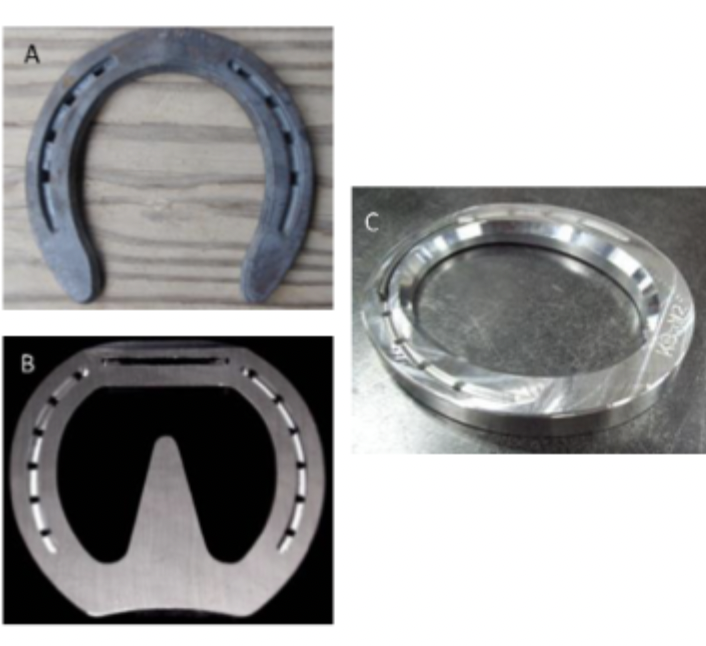
What is the cornerstone of your treatment plan?
shoeing changes
An owner calls you stating that their gelding has been a bit sore since starting training after winter. Owner thinks it is in his shoulder. The chiropractor worked on his shoulders a couple weeks ago and he got a little better, but he is not striding out in the show pen.
Sunny will be 7yo in June. He has been off for about 3 months, seems worse in tight circles if the arena hasn’t been drug recently. The trainer feels like he’s not bringing his hocks under him at the lope. He was reshod 4 weeks ago. The trainer has him in aluminum shoes in front and steel shoes behind. The owner has not given him any bute, not sure if the trainer has. He’s never taken a lame step in his life. The owner bought him as a 4yo after he won a futurity class at the Congress. The owner did not do a pre-purchase exam on him because he knew the former owners pretty well.
You have performed a distance exam and limb palpation. You determined the horse is due to be trimmed.
You watched the horse move in a stright line, left circle, and right circle. You determine that the left front is most consistently lame. There is some right front and right hind lameness as well, but the left front is the lamest and more obvious when circling.
Limb flexions are normal.
Hoof testers are also normal.
You perform a palmar digital nerve block on the left front limb. The block was effective for the left front but now the lameness switched to the right front.
You blocked the right front limb, which improved the lameness to the point the horse is sound enough.
You cleaned out the foot, packed it, and placed the foot on a block in order to take radiographs.
Radiographs show an osseous cyst like lesion of the left front navicular bone and enlarged vascular channels of the right navicular bone.
You diagnose navicular disease.
Which is the most appropriate show choice for this horse based on your diagnosis?
C
An owner calls you stating that their gelding has been a bit sore since starting training after winter. Owner thinks it is in his shoulder. The chiropractor worked on his shoulders a couple weeks ago and he got a little better, but he is not striding out in the show pen.
Sunny will be 7yo in June. He has been off for about 3 months, seems worse in tight circles if the arena hasn’t been drug recently. The trainer feels like he’s not bringing his hocks under him at the lope. He was reshod 4 weeks ago. The trainer has him in aluminum shoes in front and steel shoes behind. The owner has not given him any bute, not sure if the trainer has. He’s never taken a lame step in his life. The owner bought him as a 4yo after he won a futurity class at the Congress. The owner did not do a pre-purchase exam on him because he knew the former owners pretty well.
You have performed a distance exam and limb palpation. You determined the horse is due to be trimmed.
You watched the horse move in a stright line, left circle, and right circle. You determine that the left front is most consistently lame. There is some right front and right hind lameness as well, but the left front is the lamest and more obvious when circling.
Limb flexions are normal.
Hoof testers are also normal.
You perform a palmar digital nerve block on the left front limb. The block was effective for the left front but now the lameness switched to the right front.
You blocked the right front limb, which improved the lameness to the point the horse is sound enough.
You cleaned out the foot, packed it, and placed the foot on a block in order to take radiographs.
Radiographs show an osseous cyst like lesion of the left front navicular bone and enlarged vascular channels of the right navicular bone.
You diagnose navicular disease.
Since Sunny needs to get back into the show pen, we need to treat him more aggressively. What should we do in addition to shoeing changes?
intra-articular steroids in the coffin joint
An owner calls you stating that their gelding has been a bit sore since starting training after winter. Owner thinks it is in his shoulder. The chiropractor worked on his shoulders a couple weeks ago and he got a little better, but he is not striding out in the show pen.
Sunny will be 7yo in June. He has been off for about 3 months, seems worse in tight circles if the arena hasn’t been drug recently. The trainer feels like he’s not bringing his hocks under him at the lope. He was reshod 4 weeks ago. The trainer has him in aluminum shoes in front and steel shoes behind. The owner has not given him any bute, not sure if the trainer has. He’s never taken a lame step in his life. The owner bought him as a 4yo after he won a futurity class at the Congress. The owner did not do a pre-purchase exam on him because he knew the former owners pretty well.
You have performed a distance exam and limb palpation. You determined the horse is due to be trimmed.
You watched the horse move in a stright line, left circle, and right circle. You determine that the left front is most consistently lame. There is some right front and right hind lameness as well, but the left front is the lamest and more obvious when circling.
Limb flexions are normal.
Hoof testers are also normal.
You perform a palmar digital nerve block on the left front limb. The block was effective for the left front but now the lameness switched to the right front.
You blocked the right front limb, which improved the lameness to the point the horse is sound enough.
You cleaned out the foot, packed it, and placed the foot on a block in order to take radiographs.
Radiographs show an osseous cyst like lesion of the left front navicular bone and enlarged vascular channels of the right navicular bone.
You diagnose navicular disease.
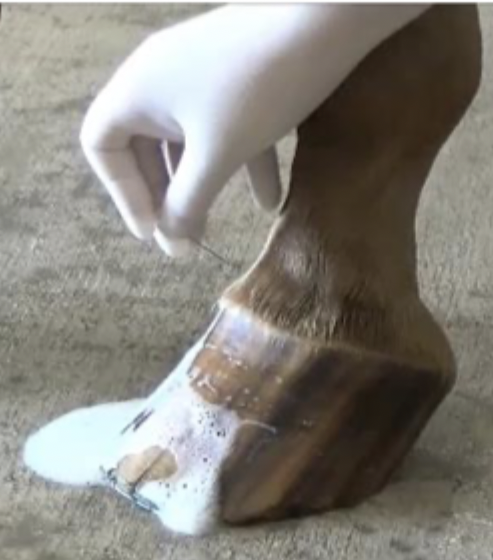
Since Sunny needs to get back into the show pen, we need to treat him more aggressively. In addition to shoeing changes, you choose to also administer intra-articular steroids in the coffin joint.
Sunny’s coffin joints were injected with triamcinolone.
Why triamcinolone? What do you think of the joint fluid?
Coffin joint = high motion joint, triamcinolone pairs well with high motion joints due to its lower risk of cartilage damage. It will also diffuse down to navicular bursa when injected into coffin joint.
Joint fluid appears soapy —> white, thin, foamy
Septic arthritis in foal secondary to omphalophlebitis.
When treating a severe limb infection, like a septic jiont, which is the most appropriate class of antibiotic to use locally?
concentration dependent
Septic arthritis in foal secondary to omphalophlebitis.
Which antibiotic is concentration dependent?
amikacin
Septic arthritis in foal secondary to omphalophlebitis.
Which concentration dependent antibiotic has the least effect on cartilage?
amikacin
Septic arthritis in foal secondary to omphalophlebitis.
How would you monitor reponse to treatment in this case?
serial cytologies