Lecture 2. General Concepts of Bones and Joints
 Call Kai
 Learn
Learn Practice Test
 Spaced Repetition
 Match
Match Flashcards
 Knowt Play
1/45

There's no tags or description
Looks like no tags are added yet.
Name | Mastery | Learn | Test | Matching | Spaced | Call with Kai | Chat |
|---|
No analytics yet
Send a link to your students to track their progress
46 Terms
33% organic compounds (collagen) + 67% inorganic compounds (minerals)
what is the general composition of a bone
allow flexibility
significance of the organic component of bones
provide strenght and ridgitiy
significance of the inorganic component of bones
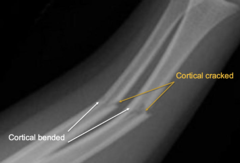
it is when a young animal can fracture their bone but not break it all the way due to the high organic content of their bones
what is a greenstick fracture and why is it significant
Actual green stick mostly bends some cracks
axial skeleton
what skeletal aspect includes the body, head, ribs, spine, and tail
appendicular skeleton
what skeletal aspect includes the thoracic and pelvic limbs
heterotopic skeleton
what skeletal aspect includes structures that aren't true bone but more just calcified structures (Os penis)
Total average number of bones
321
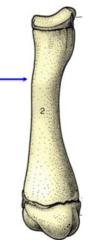
1. 3 ceneters of ossification, 1 at each epiphysis and 1 at the diaphysis
2. contains a medullary cavity
3. typically part of the limbs
classification of a long bone
Epiphysis
Diaphysis
Epiphysis
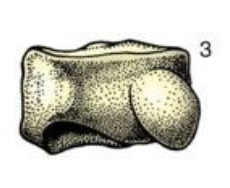
1. squareish shape
2. no medullary cavity
3. typically in manus or pes
classification of a short bone
1. expanded in two directions
2. no medullary cavity
classification of a flat bone
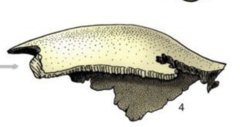
what is special about the pneumatic bones
characterisitic of flat bones that have air filled spaces in the skull for the paranasal sinuses
classification of irregular bones
falls into no other class
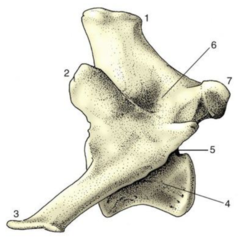
what aspect of bone is labeled 1
Proximal epiphysis
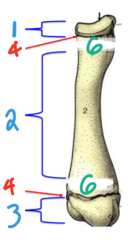
what aspect of bone is labeled 2
diaphysis
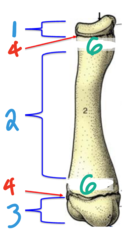
distal epiphysis
what aspect of bone is labeled 3
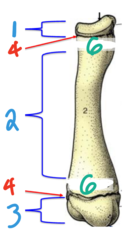
growth plate/physis
what aspect of bone is labeled 4
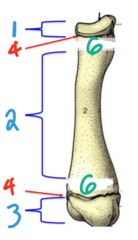
metaphysis
what aspect of bone is labeled 6
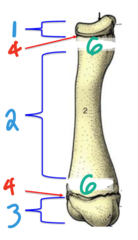
Articular surfaces are covered by
Articular cartilage
spongey bone (softer marrow filled)
what bone aspect is being indicated internally by 1
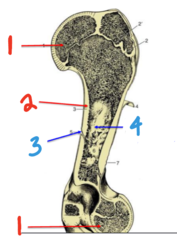
compact bone (thick and hard cortex)
what bone aspect is being indicated internally by 2
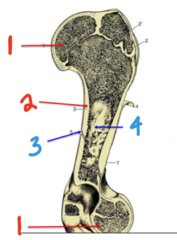
nutrient foramen where bone gets blood supply
what bone aspect is being indicated internally by 3
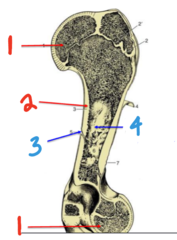
meddulary cavity for marrow (ONLY IN LONG BONES)
what bone aspect is being indicated internally by 4
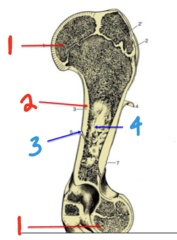
ribs are what type of bone they done not have a medular cavity
flat bone
spongey bone (softer marrow filled)
what aspect of this femur is 1
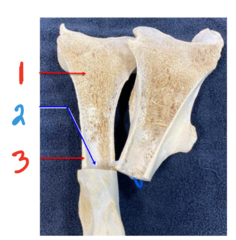
meddulary cavity for marrow (ONLY IN LONG BONES)
what aspect of this femur is 2
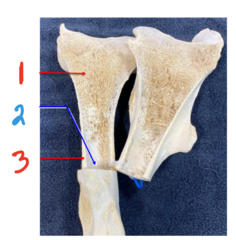
compact bone (thick and hard cortex)
what aspect of this femur is 3
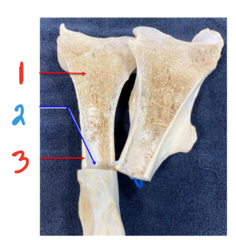
cortex will get thicker the closer you are to the diaphysis/shaft and thin out as you move to the epiphysis
what is true of the cortex thickness in a bone
dense fibrous membrane on outer surface of bone that helps to grow and expand bone
periosteum
vascular membrane that lines the inner surface of the bone. inner mudullary cavity, trabeculae of spongy bone and central canals of bones
endosteum
used at articular surface of bones to protect the joints and blends seamlessly w/ periosteum and fibrous joint capsule
hyaline articular cartilage
hyaline articular cartilage
what part of the joint does the blue arrow point to
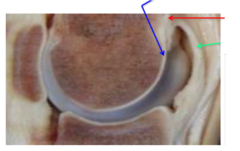
periosteum
what part of the joint does the red arrow point to
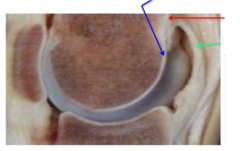
joint capsule
what part of the joint does the green arrow point to
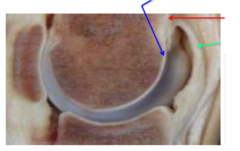
richly vascularized active hemopoietic gelatinous tissue in bones full of RBCs towards the epiphysis of long bones (prominent in young)
significance of the red marrow in bones
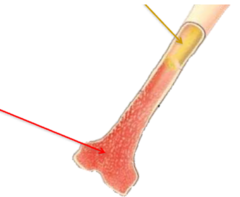
inactive marrow that becomes very fatty with age and remains in the diaphysis/shaft. Hemopoietic potential is “inactive”
significance of yellow marrow in bones
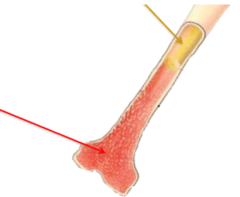
they can only be found in the femur
what is special about the trochanter of bones
fossa and grooves
what are the two forms of depressions in bones
initial cartilage base is resorbed and ossifies with age throughout the bone and the growth plates allowing elongation and hardening. Areas within this model that initially start to mineralize are called centers of ossification
how does the process of ossification occur in bones
primary ossification
what form of ossification occurs before birth in the diaphysis of bones
secondary ossification
what form of ossification occurs after birth at the epiphysis and large eminences of bones
via intramembranous ossification using a sheet of connective tissue (within a membrane) rather than cartilage
also occurs under the periosteum as bones grow in diameter
how do flat bones undergo ossification
under the periosteum
where do long bones undergo intramembranous ossification
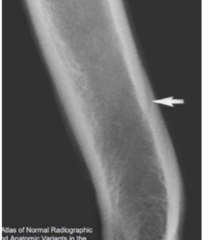
1. gets nutrients into the bones via the nutrient artery
2. can resemble oblique fracture on RADs
3. is where panosteitis will first show signs
why is the nutrient foramina so significant
sesamoid bone what does sesamo mean:
seed looks like the seed
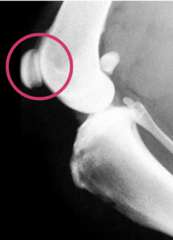
the patella is the largest seasmoid bone and helps to reduce tendon friction against bones and avoid ripping the tendon
what is the significance of the circled structure in the stifle joint