Dev. Lec. 6 - Emotional development + Temperament
0.0(0)
Studied by 1 person Call Kai
 Learn
Learn Practice Test
 Spaced Repetition
 Match
Match Flashcards
 Knowt Play
Card Sorting
1/29

Earn XP
Description and Tags
Chapter 6 (p. 185-197), Allen, J. L. (2015)
Last updated 9:29 PM on 2/1/23
Name | Mastery | Learn | Test | Matching | Spaced | Call with Kai | Chat |
|---|
No analytics yet
Send a link to your students to track their progress
30 Terms
1
New cards
what are the six basic emotions?
1. Happiness
2. Sadness
3. Fear
4. Anger
5. Surprise
6. Disgust
2
New cards
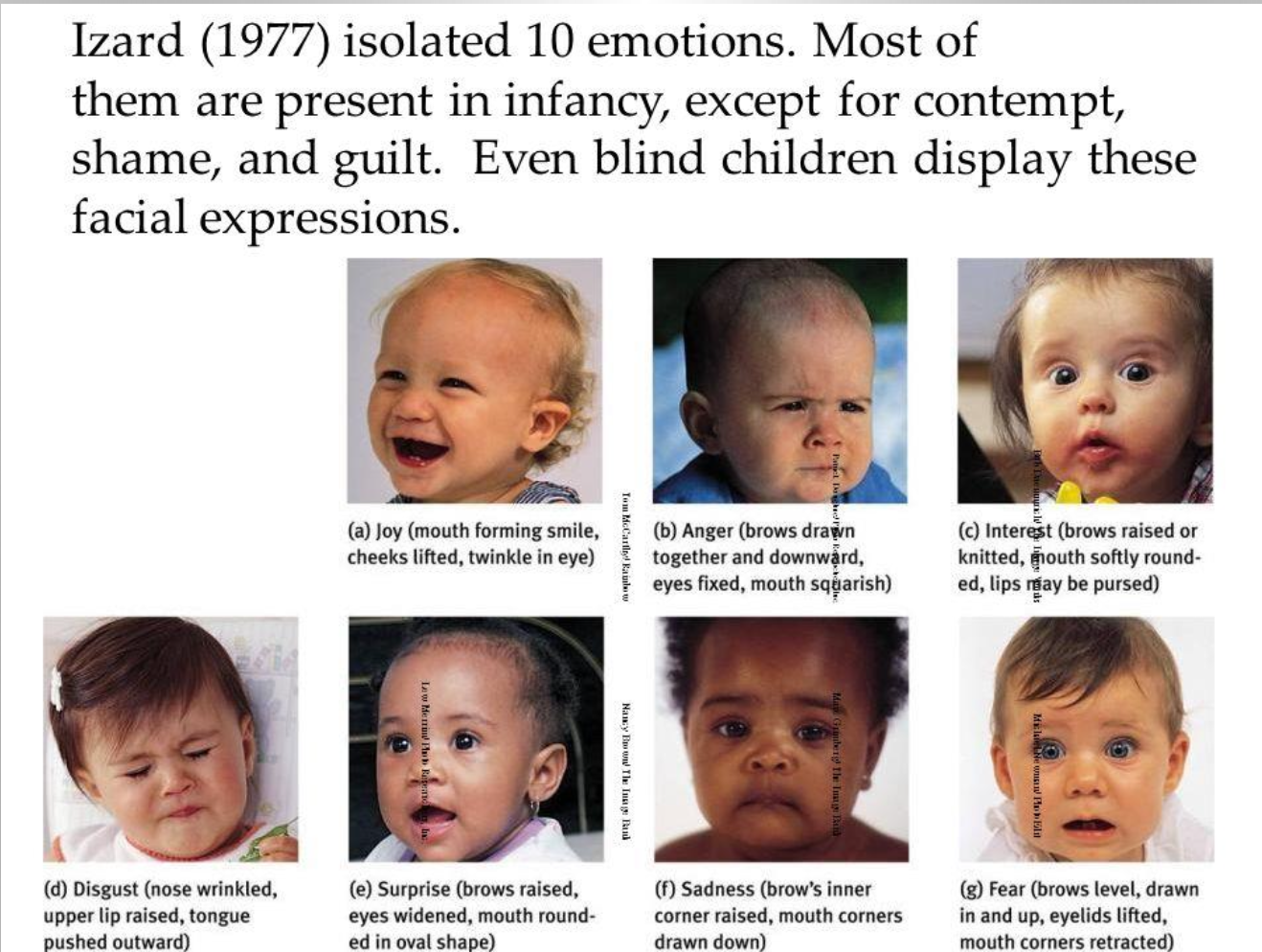
7 emotions found in infancy by Izard (1977)
1. Joy
2. Anger
3. Interest
4. Disgust
5. Surprise
6. Sadness
7. fear
3
New cards
Ethology
approach which emphasizes the evolutionary origins of many behaviors that are important for survival
4
New cards
Mechanism
Causation: how does this behavior occur in an individual?
5
New cards
Ontogeny
Development: how does this behavior arise in an individual?
6
New cards
Adaptive value
Function: why is this behavior adaptive for the species?
7
New cards
Phylogeny
Evolution: how does this behavior arise in the species?
8
New cards
The 4 attachment styles (Bowlby’s theory)
1. Secure
2. (Insecure) avoidant
3. (Insecure) anxious
4. (Insecure) disorganized
9
New cards
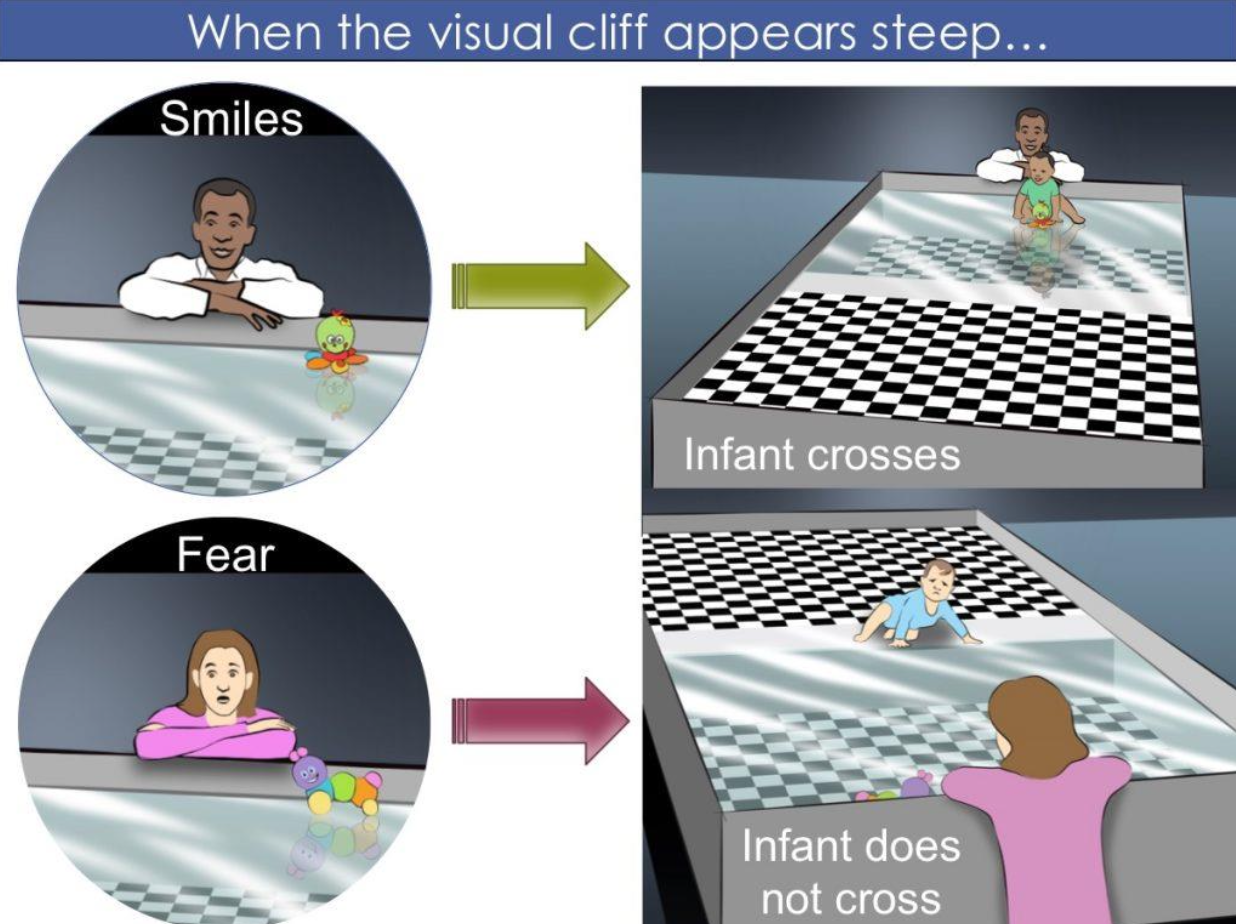
Social referencing can be measured with what experiment?
The visual cliff experiment
10
New cards
Constructivist perspective on emotions
Constrained methods introduce conceptual information to perceiver, which prime a mode of inference or salient content
* Agreement among perceivers
Unconstrained methods do not introduce conceptual information to perceiver, leaving perceiver to construct its interpretation
* Less agreement among perceivers
Nurture + active
* Agreement among perceivers
Unconstrained methods do not introduce conceptual information to perceiver, leaving perceiver to construct its interpretation
* Less agreement among perceivers
Nurture + active
11
New cards
Emotion regulation: delay of gratification predicts… (the marshmallow test)
later success in life
12
New cards
Temperament definition
individual differences in reactivity and regulation in affect, activity and attention
13
New cards
Big 5 dimensions of personality (OCEAN)
* Openness to experience
* Conscientiousness
* Extraversion
* Agreeableness
* Neuroticism
* Conscientiousness
* Extraversion
* Agreeableness
* Neuroticism
14
New cards
The six clusters of temperament types
1. Unregulated
2. Regulated
3. High reactivity
4. Bold
5. Average
6. Well-adjusted
15
New cards
Unregulated temperament type
* High activity, Low inhibition
* Under-controlled
* Difficult to deal with at home or in classroom
\
* Low on conscientiousness High on extraversion
\
benefit from:
* Consistent positive interactions
* Gentle discipline
* Under-controlled
* Difficult to deal with at home or in classroom
\
* Low on conscientiousness High on extraversion
\
benefit from:
* Consistent positive interactions
* Gentle discipline
16
New cards
Regulated temperament type
* Low activity, anger and approach. High inhibition and attention focus
* Well behaved, Over-controlled, Reserved
\
* High on conscientiousness, Low on extraversion
\
benefit from: \n • Encouragement to try new things
* Well behaved, Over-controlled, Reserved
\
* High on conscientiousness, Low on extraversion
\
benefit from: \n • Encouragement to try new things
17
New cards
High reactivity temperament type
* High on anger, approach, fear and shyness. Low activity, inhibition and attention focus
* Experience life intensively, Easily overwhelmed
\
* High on neuroticism
\
Benefit from: \n • Consistent positive interactions
* Experience life intensively, Easily overwhelmed
\
* High on neuroticism
\
Benefit from: \n • Consistent positive interactions
18
New cards
Bold temperament type
* High activity and approach. Low fear and shyness
* Easily excitable, Jump into tasks with little hesitation, Confident, Natural curiosity
\
* High on extraversion, High on openness to experience
\
Benefit from: \n • Organized and structured activities
* Easily excitable, Jump into tasks with little hesitation, Confident, Natural curiosity
\
* High on extraversion, High on openness to experience
\
Benefit from: \n • Organized and structured activities
19
New cards
Average temperament type
* Average on all temperament traits
* Easygoing, But maybe also: Unmotivated/uninterested
\
* Average on big 5
\
* These children may fly under the radar; they may need extra attention to make sure they don’t disengage from activities
* Easygoing, But maybe also: Unmotivated/uninterested
\
* Average on big 5
\
* These children may fly under the radar; they may need extra attention to make sure they don’t disengage from activities
20
New cards
Well-adjusted temperament type
* Average on all temperament traits, But high on inhibition and attention focus
* Easygoing, get along well at school and home
\
* High on conscientiousness
* Easygoing, get along well at school and home
\
* High on conscientiousness
21
New cards
what % of children are born with high reactivity temperament?
20%
22
New cards
about one-third of high reactivity children shows signs of ___ by adolescence
social anxiety
23
New cards
dandelions vs. orchids
Dandelions: individuals who remain stable, under whatever circumstances
Orchids: individuals who are vulnerable under negative conditions, but can excel under positive conditions
Orchids: individuals who are vulnerable under negative conditions, but can excel under positive conditions
24
New cards
Cool little kids (temperament-based intervention)
* Avoidance of parent-blaming
* Acknowledgement of different temperaments, emotions, etc.
* Problem behaviors are not unchangeable, not deliberate attempts to upset people, not a punishments that one deserves
* Acknowledgement of different temperaments, emotions, etc.
* Problem behaviors are not unchangeable, not deliberate attempts to upset people, not a punishments that one deserves
25
New cards
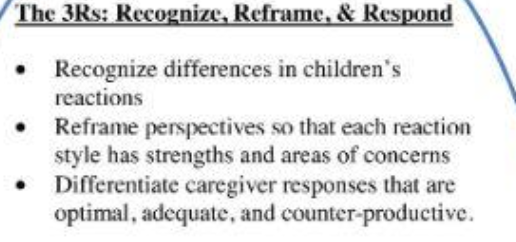
The 3 Rs
Recognize, Reframe, Respond
26
New cards
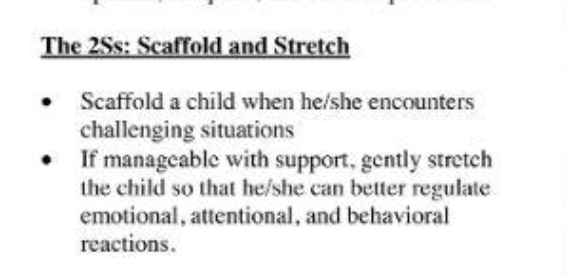
The 2S
Scaffold, Stretch
27
New cards
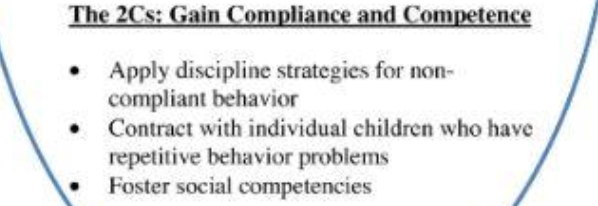
The 2Cs
Compliance and competence
28
New cards
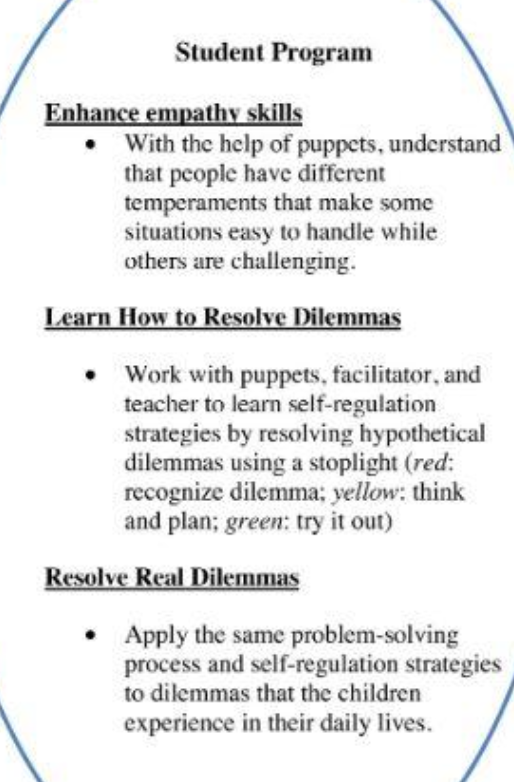
Temperament-based interventions: student program
enhance empathy skills, learn how to resolve dilemmas, resolve real dilemmas
29
New cards
INSIGHTS (temperament-based intervention): Gaining Compliance
\
**Positive parenting** (warmth, affection, praise, attention, goal setting and monitoring)
**Parental discipline** (non-physical including time outs, loss of privileges and experiencing natural consequences)
**Positive parenting** (warmth, affection, praise, attention, goal setting and monitoring)
**Parental discipline** (non-physical including time outs, loss of privileges and experiencing natural consequences)
30
New cards
INSIGHTS (temperament-based intervention): Fostering self-regulation / giving control
**Scaffolding**: structuring and simplifying the environment in relation to child’s temperament (e.g., removing challenges)
**Stretching**: when child succeeds, ‘stretch’ the situation gently
**Stretching**: when child succeeds, ‘stretch’ the situation gently