Forces Glossary
 Call Kai
 Learn
Learn Practice Test
 Spaced Repetition
 Match
Match Flashcards
 Knowt Play
1/28

Earn XP
Description and Tags
A comprehensive vocabulary set covering the basics of force types, balanced and unbalanced forces, resistance, non-contact forces, mass versus weight, and simple machines like levers.
Name | Mastery | Learn | Test | Matching | Spaced | Call with Kai | Chat |
|---|
No analytics yet
Send a link to your students to track their progress
29 Terms
force
A push or pull that can make something move, stop, speed up, slow down, change direction or change shape.

applied force
A force exerted by a person, animal or machine, such as when a girl kicks a ball.

contact force
Any force that can only occur when two objects are touching, such as applied forces and friction.
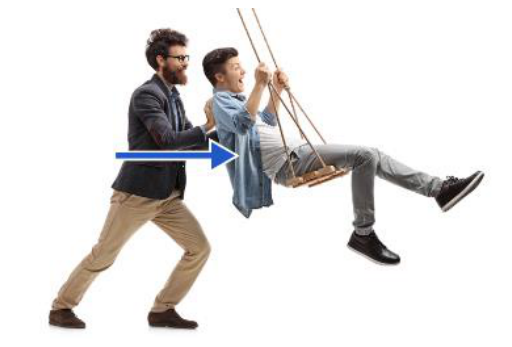
non-contact force
Any force that can occur even when two objects are not touching, such as gravity and magnetism.

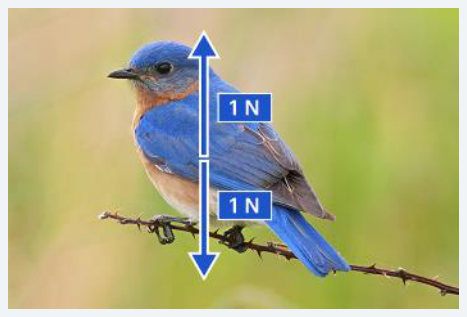
balanced force
A force with an equal and opposite force acting on the same object; these forces cancel out and do not change an object's motion.
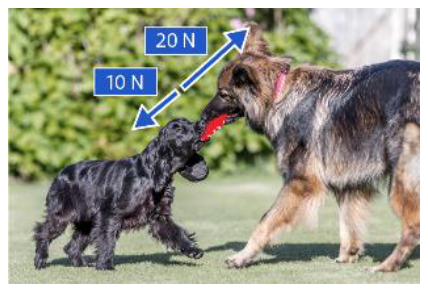
unbalanced force
A force without an equal and opposite force acting on the same object; these forces change an object's motion or shape.
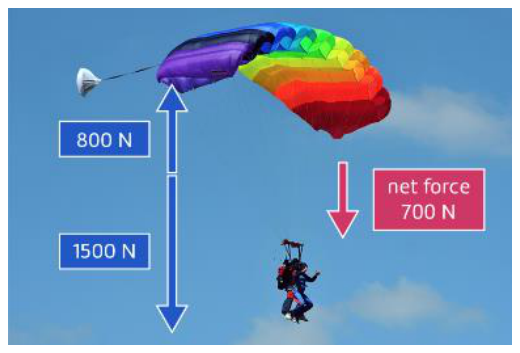
net force
The overall force on an object, found when balanced forces are cancelled out.
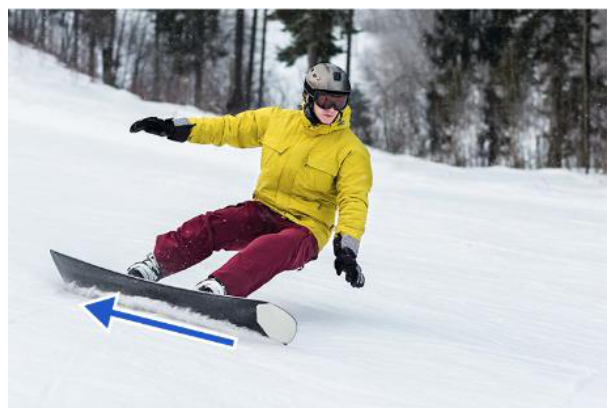
friction
A contact force that resists an object's motion and is larger on rough or sticky surfaces.
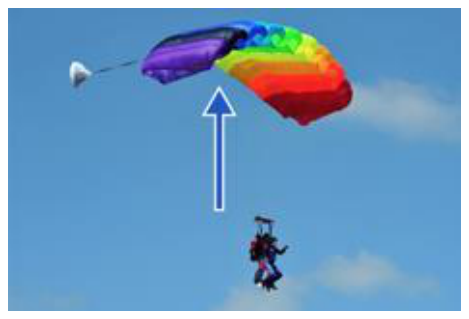
air resistance
A contact force that resists an object's motion through air, caused by the push of air particles.
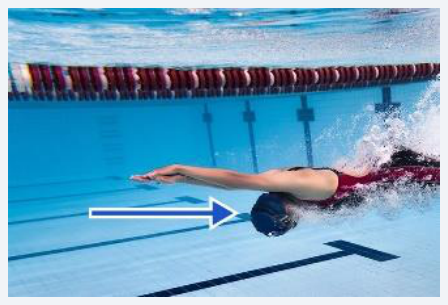
water resistance
A contact force that resists an object's motion through water, caused by the push of water particles.
elastic force
A contact force that occurs when a springy object is squashed or stretched, causing a spring to return to its natural length.
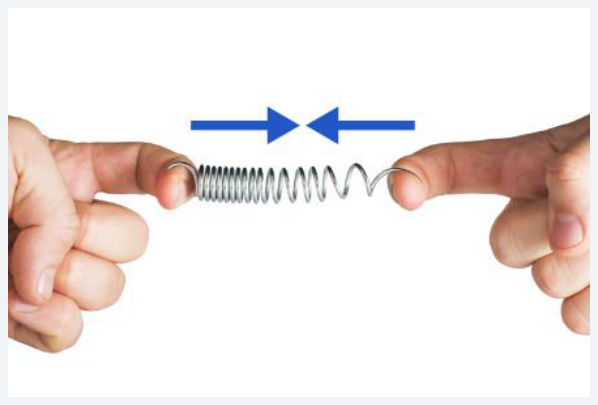
tension
A contact force that pulls inward when a solid object is stretched, which can prevent a stretched rope from breaking.
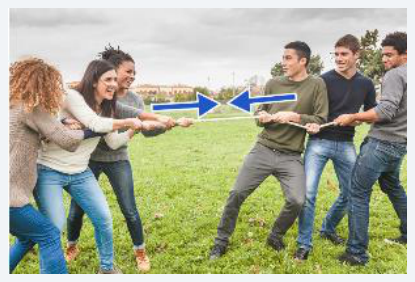
gravity
A non-contact attractive force between any two objects that have mass, which pulls objects to the ground or keeps them in orbit.
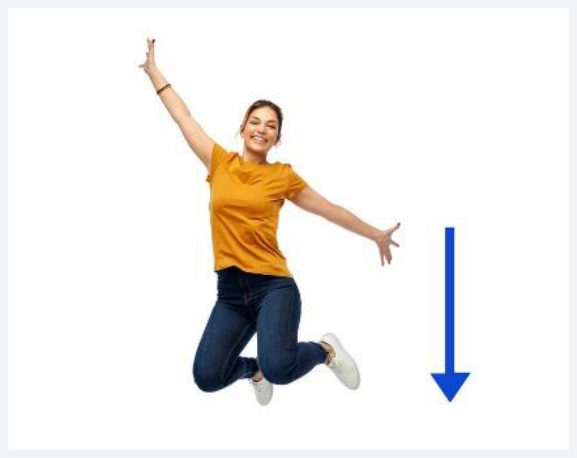
gravitational field
The space around an object where its gravity is felt; on Earth's surface, the force is about 10N for every 1kg mass.
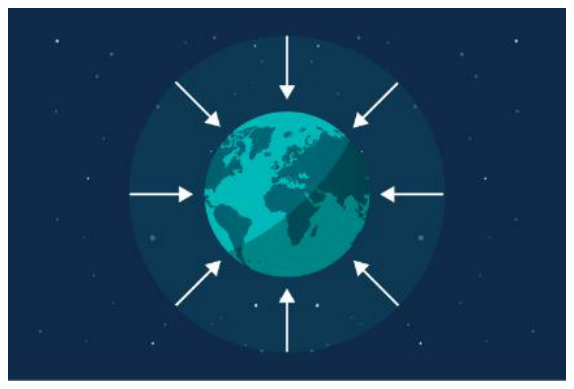
magnetism
A non-contact force exerted on some metals, such as iron and nickel, which can be either attractive or repulsive.
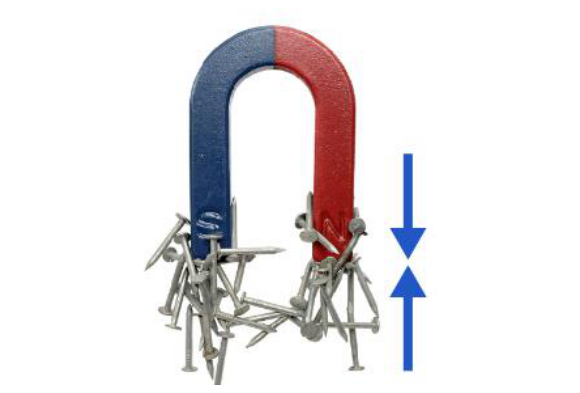
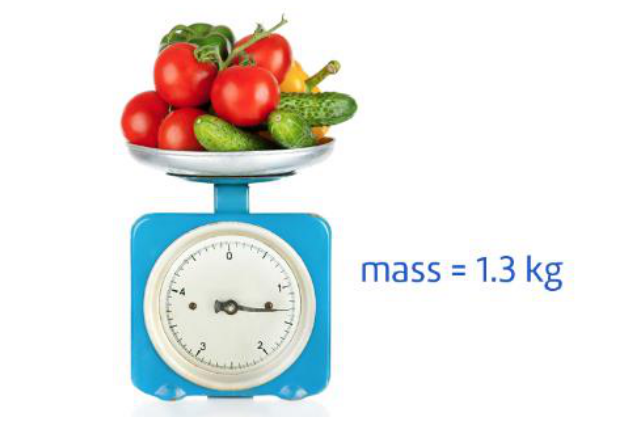
mass
The amount of matter in an object or substance; it does not depend on gravity and is measured in grams or kilograms.
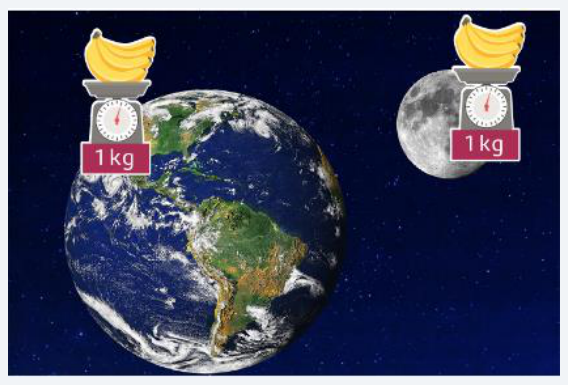
kilogram
The standard unit of mass; an object with a mass of 1kg on Earth also has a mass of 1kg on the Moon.
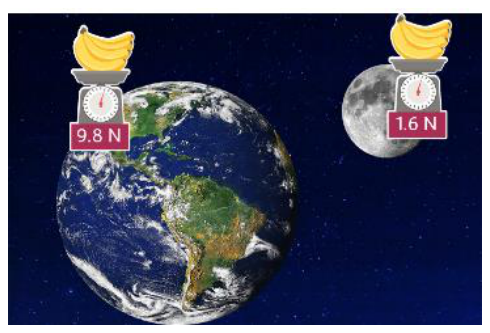
weight
The force of gravity on an object, which depends on mass and gravity (1kg mass weighs 9.8N on Earth but only 1.6N on the Moon).
newton
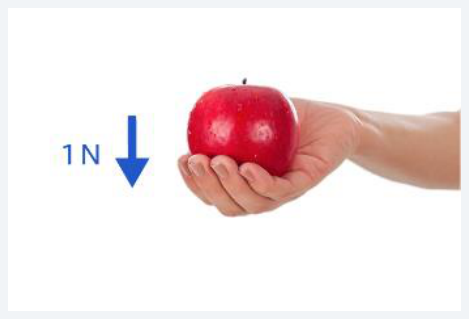
The standard unit of force, named after Isaac Newton; 1N is roughly the force of an apple pressing down on your hand.
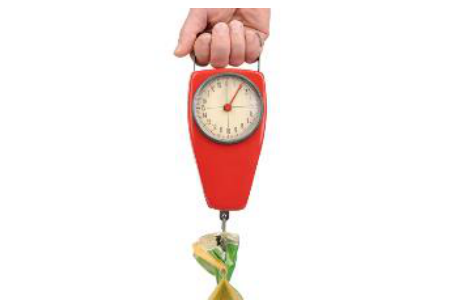
spring balance
A scientific instrument used to measure forces where the distance the spring stretches is related to the force pulling down on it.
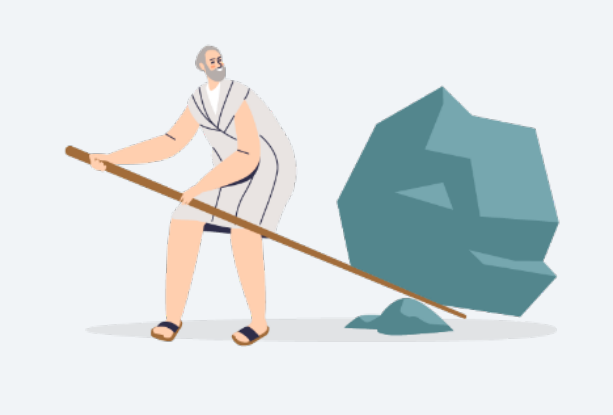
lever
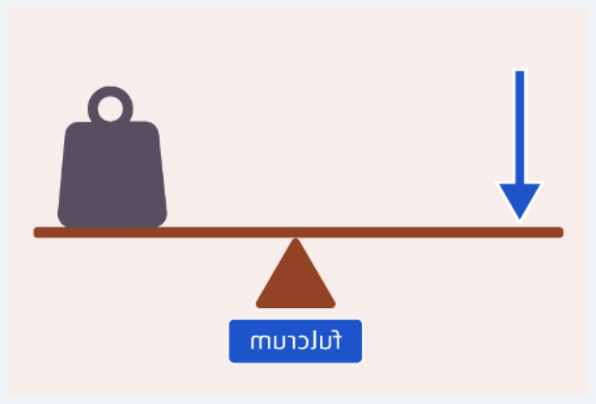
A simple machine made of a bar that rotates around a fulcrum to help move an object more easily or quickly.
fulcrum
The fixed point that a lever can rotate around; its location determines the type of lever.
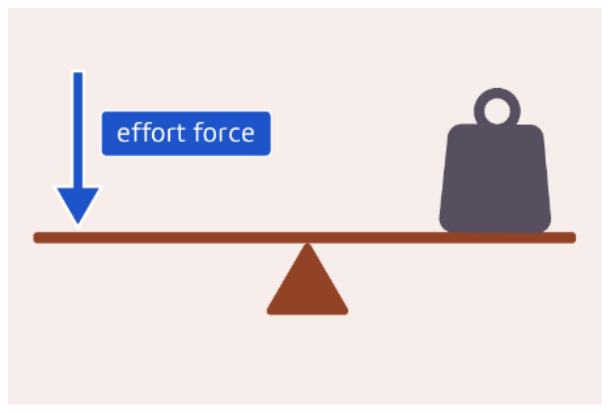
effort force
A force that is applied to make an object move, which must be greater than the resistance force.
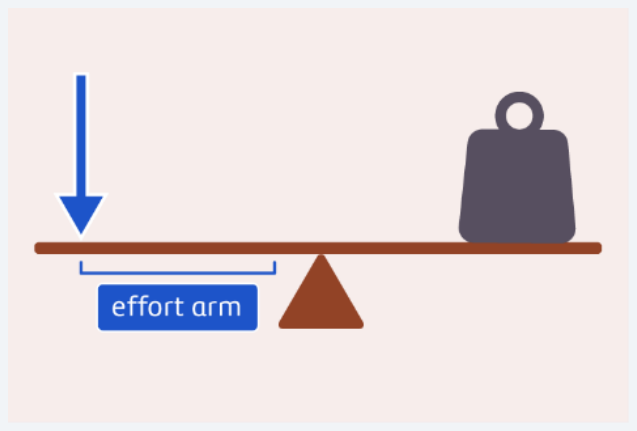
effort arm
The distance between the effort force and fulcrum in a lever; it is longer than the resistance arm in a force multiplier.
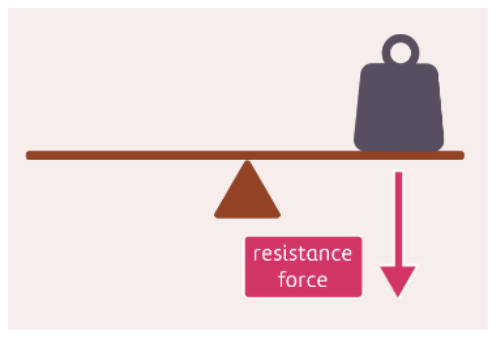
resistance force
A force that acts against an effort force in a lever, such as gravity acting on a mass being lifted.
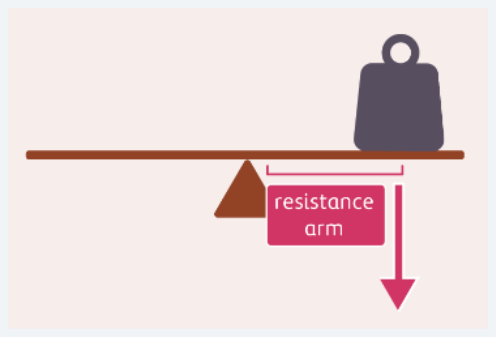
resistance arm
The distance between the resistance force and fulcrum in a lever; it is longer than the effort arm in a speed multiplier.
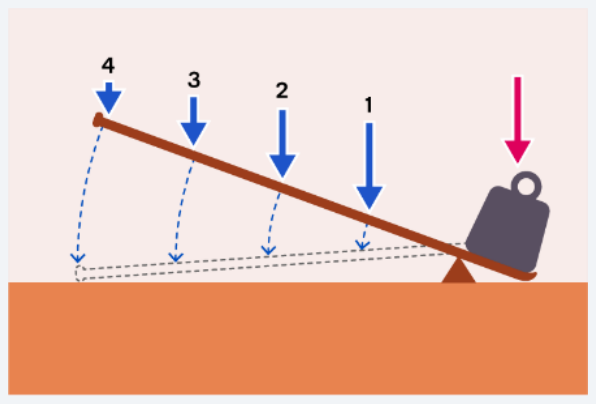
force multiplier
A lever that reduces the force needed to move an object, having an effort arm longer than its resistance arm.
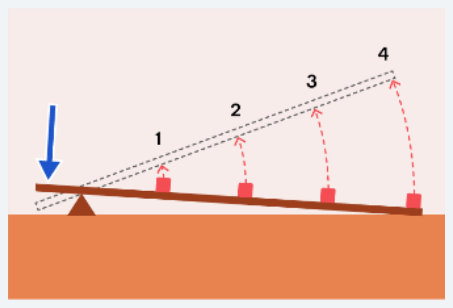
speed multiplier
A lever that increases how fast an object moves, having a resistance arm longer than its effort arm.
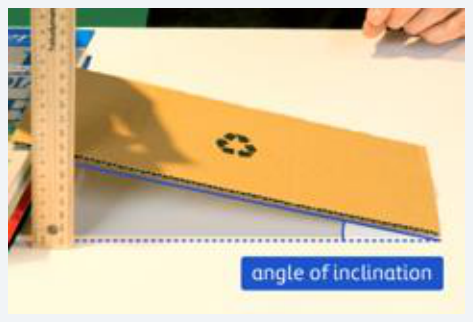
angle of inclination
The angle between the sloped face of a ramp and the ground, which alters the effort force required to raise an object.