Set #3 - American Revolution Era
 Call Kai
 Learn
Learn Practice Test
 Spaced Repetition
 Match
Match Flashcards
1/17

There's no tags or description
Looks like no tags are added yet.
Name | Mastery | Learn | Test | Matching | Spaced | Call with Kai | Chat |
|---|

18 Terms
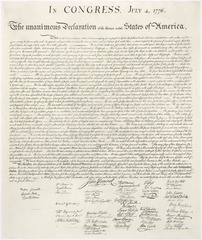
Declaration of Independence
July 4th, 1776 - Thomas Jefferson listed specific grievances against George III's government and expressed basic principles that justified the separation from Great Britain.
Battle of Yorktown
1781 - Last major battle of the Revolutionary War.
British Commander Charles Cornwallis and his troops were trapped by the French and the American Army.
Unalienable Rights
Basic natural rights that cannot be taken away from the people such as "life, liberty, and pursuit of happiness". These rights are stated in the Declaration of Independence.
Grievances
Complaints - List of wrongs done by the king to the American Colonies.
Thomas Jefferson listed many of these in the Declaration of Independence. Ex: for Quartering troops in private homes, waging war on the colonies, taxing without our consent.
Battle of Saratoga
(1777) Turning Point of the American Revolution
It showed the French that the Americans could beat the British - it convinced the French to give the U.S. supplies and support.
Valley Forge
(1777-1778) George Washington's poorly equipped army spent a freezing cold winter at Valley Forge, Pennsylvania.
Many died from diseases and starvation, but they also received badly needed training from a German volunteer - the Baron von Steuben
Articles of Confederation
Our nation's first constitution, was adopted by the Second Continental Congress in 1781 during the Revolution. This constitution made the National Gov. weak because states held most of the power. The national Gov. did not have the power to tax, regulate trade, or have a president.
Treaty of Paris 1783
This treaty ended the Revolutionary War - recognized the independence of the American colonies - and granted the colonies the territory from the southern border of Canada to the northern border of Florida and from the Atlantic to Mississippi.
2nd Continental Congress
1) Sent the "Olive Branch Petition"
2)Created a continental army with George Washington as the leader.
3)Agreed to write a formal letter declaring their independence from England.
Treaty of Paris 1763
Ended French and Indian War, France lost Canada, land east of the Mississippi, to British, New Orleans and west of Mississippi to Spain
Boston Tea Party
A 1773 protest against British taxes in which Boston colonists disguised as Mohawks dumped 45 tons of tea into Boston Harbor. No one was injured in this protest.
Intolerable Acts (Coercive Acts)
in response to Boston Tea Party, 1774, Port of Boston closed, reduced power of assemblies in colonies, permitted royal officers to be tried elsewhere, extended the quartering of troop's, and returned Canada to the French
Battle of Lexington and Concord
1st battle of Revolutionary War; "shot heard around the world"
Common Sense by Thomas Paine
1776 - Pamphlet that encouraged the Colonists to fight the British, and helped establish the Declaration of Independence
free enterprise system
An economic system in which people are free to operate their businesses as they see fit, with little government interference.
Civil disobedience
Nonviolent protest against unjust laws - example: Boston Tea Party
Boycott
a refusal to buy or use goods and services in protest or bring about change
Writs of Assistance
search warrants used to enter homes or businesses to search for smuggled goods