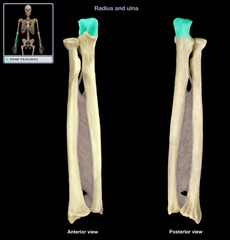
1016MSC - The Skeletal System
 Call Kai
 Learn
Learn Practice Test
 Spaced Repetition
 Match
Match Flashcards
 Knowt Play
1/146

Earn XP
Description and Tags
Anatomy & Physiology I - Laboratory (Practical)
Name | Mastery | Learn | Test | Matching | Spaced | Call with Kai | Chat |
|---|
No analytics yet
Send a link to your students to track their progress
147 Terms
Axial Skeleton
is made up of the skull, vetebral column, and thoracic cage
Appendicular Skeleton
consists of the pectoral girdle/upper limb and pelvic gridle/lower limb; attached to axial skeleton through the limb girdles.
Frontal Bone
Category: Cranial Bones
Features:
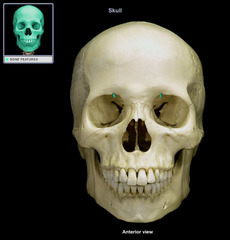
supraorbital foraman
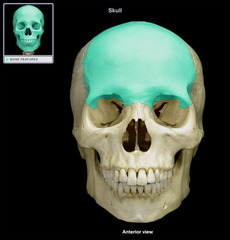
supraorbital foramen
Parietal Bone
Category: Cranial Bones
Features:
sagittal suture
coronal suture
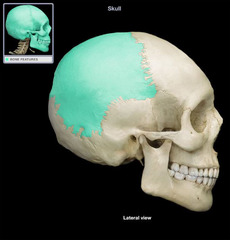
sagittal suture
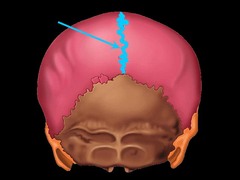
coronal suture
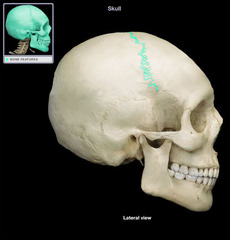
Temporal Bone
Category: Cranial Bones
Features:
squamous suture
zygomatic process
mandibular fossa
external acoustic meatus
styloid process
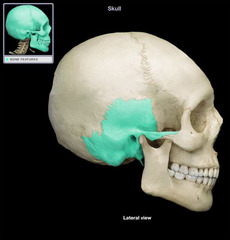
squamous suture
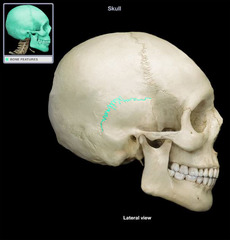
zygomatic process
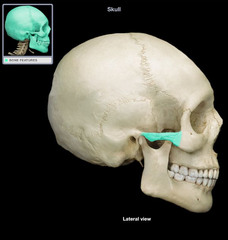
mandibular fossa
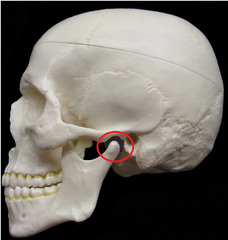
external acoustic meatus
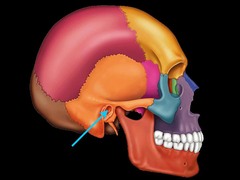
styloid process
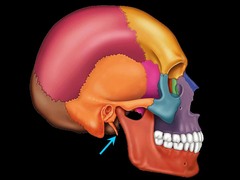
Occipital Bone
Category: Cranial Bones
Features:
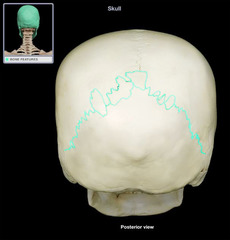
lambdoid suture
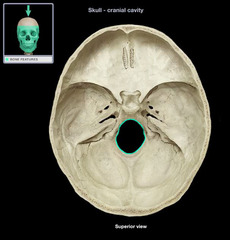
foramen magnum
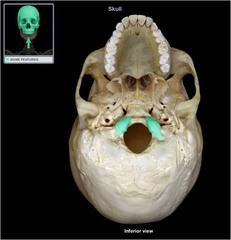
occipital condyles
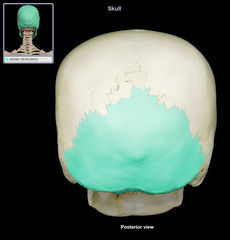
lambdoid suture
foramen magnum
occipital condyles
Sphenoid Bone
Category: Cranial Bones
Features:
greater wing
lesser wing
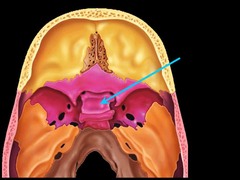
sella turcica
superior orbital fissure
optic canal
middle of the skull and behind the eyes; butterfly-shaped
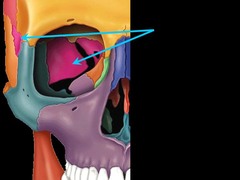
greater wing
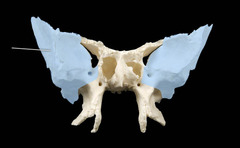
lesser wing
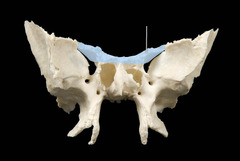
sella turcica
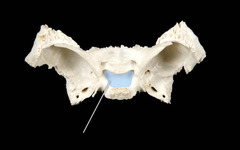
superior orbital fissure
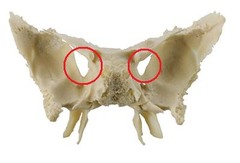
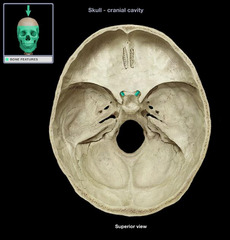
optic canal
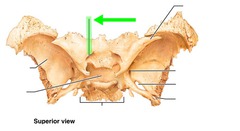
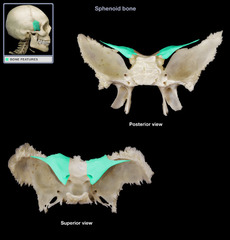
greater wing of the sphenoid bone
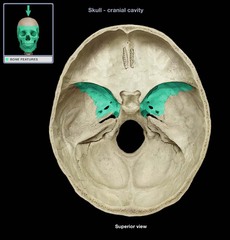
lesser wings of the sphenoid bone
sella turcica of the sphenoid bone
optic canal of the sphenoid bone
Ethmoid Bone
Category: Cranial Bones
Features:
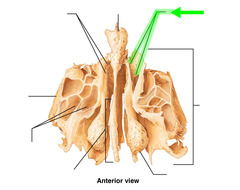
crista galli
cribriform plate
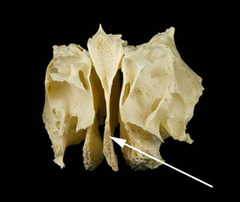
perpendicular plate
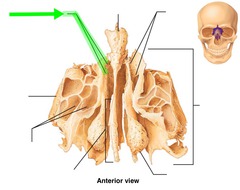
olfactory foramina
between the eyes and at the roof of the nasal cavity
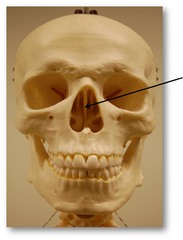
crista galli
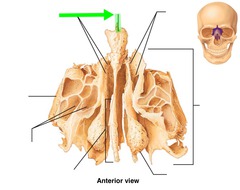
cribiform plate
perpendicular plate
olfactory foramina
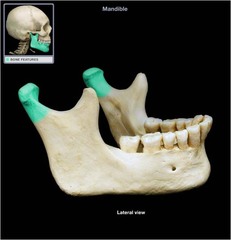
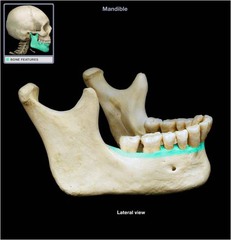
Mandible
Category: Facial Bones
Features:
mandibular ramus
mandibular condyles
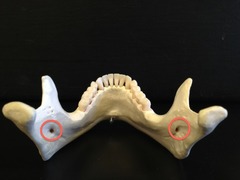
mandibular foramen
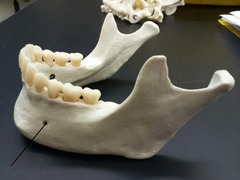
mental foramen
alveolar margin
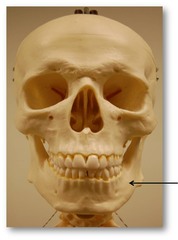
mandibular ramus
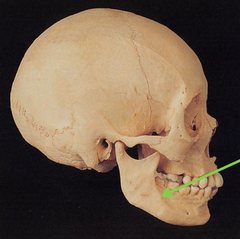
mandibular condyles
mandibular foramen
mental foramen
aveolar margin of mandible
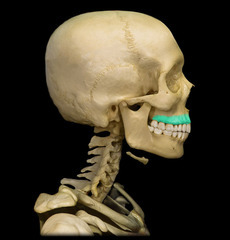
Maxillae
Category: Facial Bones
Features:
palatine process
alveolar margin
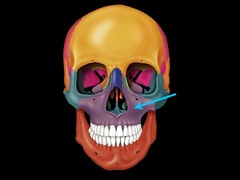
palatine process
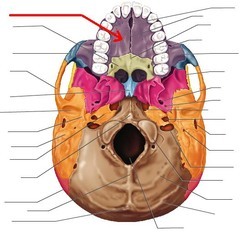
alveolar margin of the maxillae
Lacrimal Bone
Category: Facial Bones
Features:
lacrimal fossa
the smallest facial bone; where tears pass through
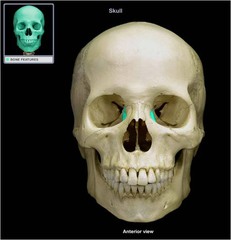
lacrimal fossa
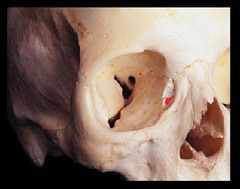
Palatine Bones
Category: Facial Bones
L-shaped bone
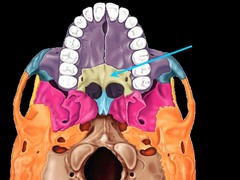
Zygomatic Bone
Category: Facial Bones
cheekbones
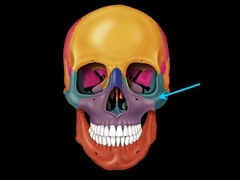
Nasal Bone
Category: Facial Bones
flat bones forming the bridge of the nose
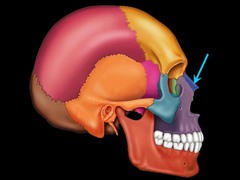
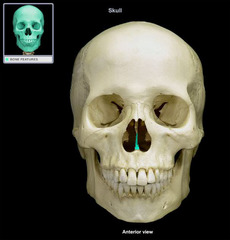
Vomer Bone
Category: Facial Bones
thin vertical bone in the midline of the nasal cavity
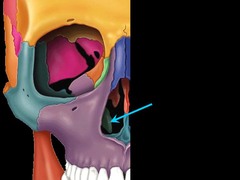
Inferior Nasal Conchae
Category: Facial Bones
curved/scroll-like projection sticking from the lateral wall of the nasal cavity
Paranasal Sinuses
Air-filled cavities in 4 bones:
Frontal
Ethmoid
Sphenoid
Maxillary
Collective Function: lighten the skull, warm and humidify inhaled air, and enhances your voice
Vertebral Column
Cervical (7); Thoracic (12); Lumbar (5); Sacral (5 fused); Coccygeal (4 fused)
Cervical: neck
Thoracic: upper/mid-back; attach to ribs
Lumbar: lower back; largest vertebrae
Sacral: fused; forms posterior pelvis
Coccygeal: fused; forms tailbone
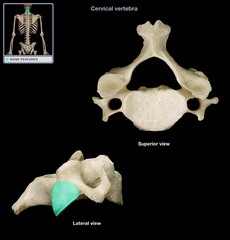
Cervical Vertebrae
Category: Vertebral Column
C1–C7
C1 – Atlas
C2 – Axis
C3 to C7 – Typical cervical vertebrae
Typical Vertebra
consists of vertebral foramen, vertebral body, spinous process, transverse process, superios and inferior articular facet
vertebral foramen
Category: Typical Vertebra
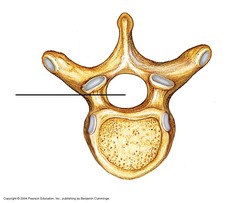
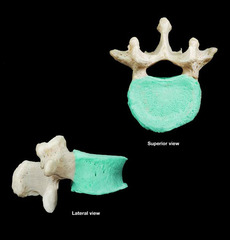
vertebral body
Category: Typical Vertebra
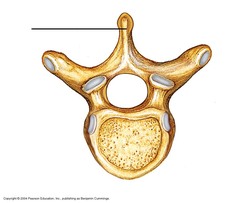
spinous process
Category: Typical Vertebra
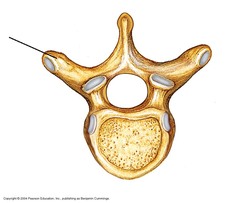
transverse process
Category: Typical Vertebra
superior articular facet
Category: Typical Vertebra
inferior articular facet
Category: Typical Vertebra
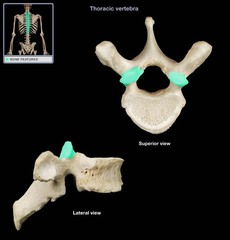
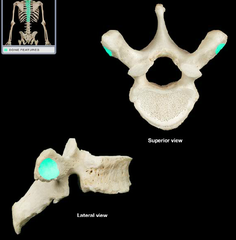
costal facets of the Thoracic Vertebrae
Sacrum
Category: Vertebral Column
Features:
sacral canal
sacral hiatus
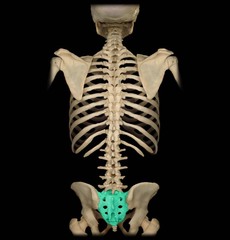
sacral canal
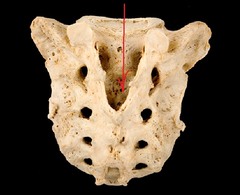
sacral hiatus
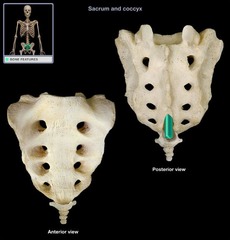
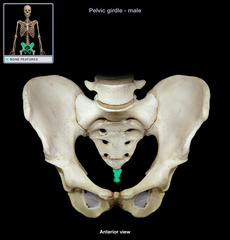
Coccyx
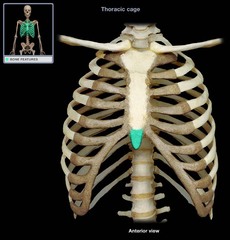
Sternum
Features:
manubrium
sternum body
xiphoid process
jugular notch
sternal angle
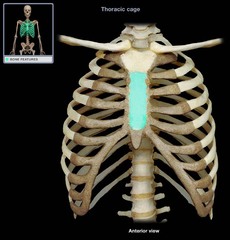
manubrium
sternum body
xiphoid process
jugular notch
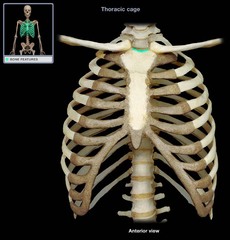
sternal angle
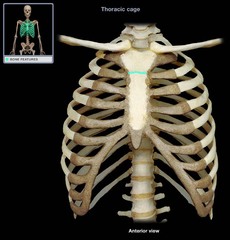
7 True Ribs
directly attach to the sternum through their own costal cartilage; how many pairs are there?
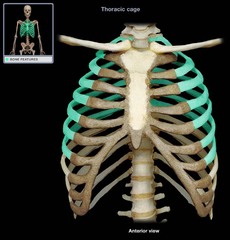
3 False Ribs
donot attach directly to the sternum; connect indirectly through the costal cartilage of rib 7
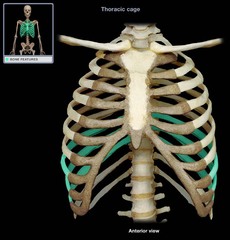
2 Floating Ribs
no attachment to the sternum; how many pairs are there?
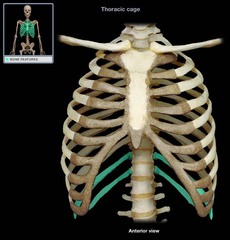
bodies of thoracic vertebrae
the head of the riib articulates with?
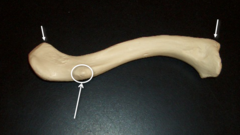
Clavicle
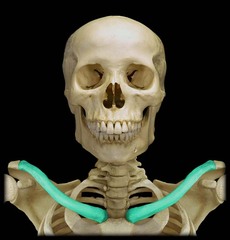
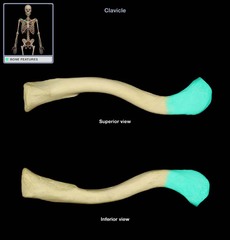
acromial end of the clavicle
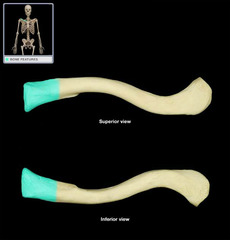
sternal end of the clavicle
superior surface of the clavicle
inferior surface of the clavicle
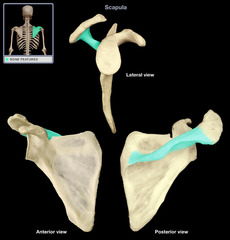
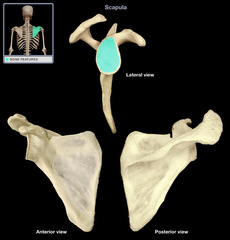
Scapula
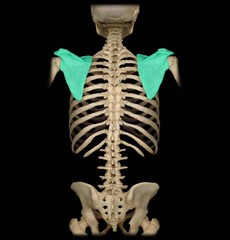
spine of the scapula
supraspinous fossa of the scapula
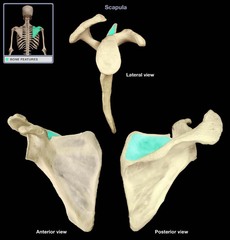
infraspinous fossa of the scapula
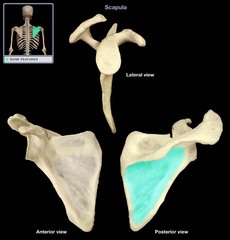
acromion processs of the scapula
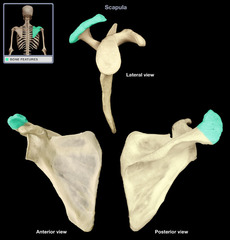
coracoid process of the scapula
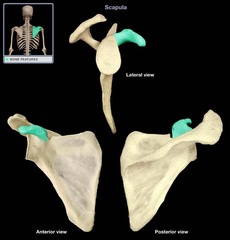
glenoid fossa of the scapula
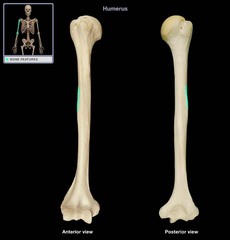
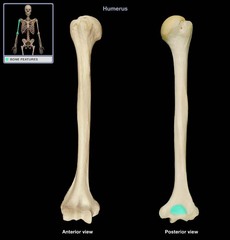
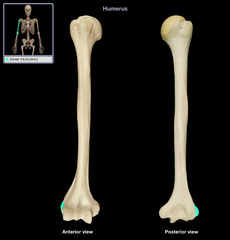
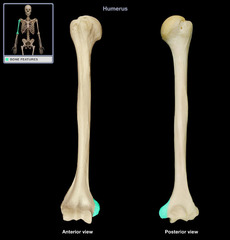
Humerus
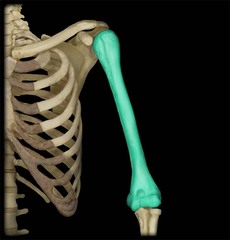
anterior view of the humerus
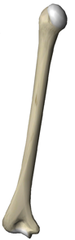
posterior view of the humerus
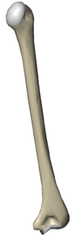
head of the humerus
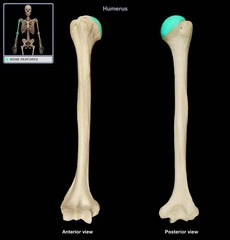
greater tubercle of the humerus
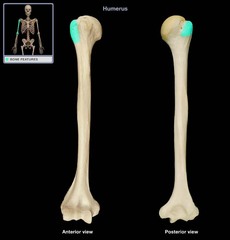
lesser tubercle of the humerus
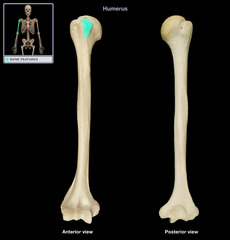
intertubercular groove (sulcus)
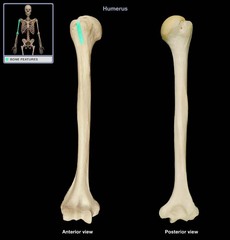
deltoid tuberosity of the humerus
olecranon fossa of the humerus
lateral epicondyles of the humerus
medial epicondyles of the humerus
capitulum of the humerus
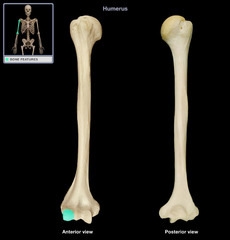
trochlea of the humerus
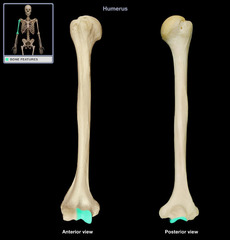
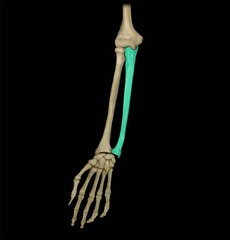
Ulna
olecranon process of the ulna