03 - Prenatal Development and Childbirth
 Call Kai
 Learn
Learn Practice Test
 Spaced Repetition
 Match
Match Flashcards
 Knowt Play
1/225

There's no tags or description
Looks like no tags are added yet.
Name | Mastery | Learn | Test | Matching | Spaced | Call with Kai | Chat |
|---|
No analytics yet
Send a link to your students to track their progress
226 Terms
Fertilization
Marks the beginning of development where sperm and ovum combine to create a zygote in the fallopian tube.
zygote
Single cell consists of DNA
Fertile Window
unpredictable time during which conception is possible
Maturation of sex cells
Must occur prior intercourse for conception to be possible
Menarche
Women first menstruation
Nocturnal Emission
Release of sperm at night
Ovulation
Rupture of a mature follicle which occurs every 28 days until menopause
Cell division
Zygote duplicates itself through the process of ___ to produce all cells that make up a baby
Death of both gametes
Unsuccessful fertilization results in the
Gametes
Sex cells that join during reproduction
White blood cells
Sperm cells are absorbed by the; body’s natural primary defense system
Ovum
Exits the body through the vagina; a mature female reproductive cell.
Dizygotic Twins
Fraternal twins; fertilization of 2 separate eggs by 2 sperms; Result of multiple eggs being released at one time
Monozygotic Twins
Identical twins; cleaving (splitting or cutting something apart) of 1 fertilized egg
Twin-to-twin Transfusion Syndrome
Nutrients are shared unequally as a result of an abnormal formation of blood vessels in the placenta
Mitosis
Somatic cell’s nucleus duplicates itself to form two new cells; Genetic identity of the parent cell is preserved, leading to minimal genetic variation among daughter cells; Formation of two identical diploid daughter cells

Diploid
Two complete sets (2n) of chromosomes
Meiosis
Specialized form of cell division that is involved in the production of gametes for sexual reproduction; Introduces genetic diversity results in genetically unique daughter cells; formation of four non-identical haploid daughter cells
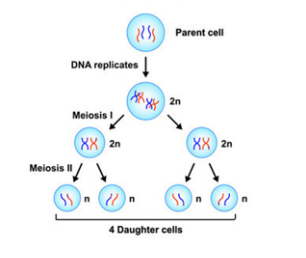
Haploid
One complete set of chromosomes (n)
Gene
Segments of DNA that contain the instructions for building and maintaining an organism ; Help cells to reproduce themselves and help manufacture the proteins that maintain life
Chromosomes
Threadlike structures that come in 23 pairs and contain DNA
Deoxyribonucleic Acid (DNA)
Complex molecule that contains genetic information
Mutation
Permanent alteration in the DNA sequence of a gene
Errors in DNA replication during cell division
Exposure to mutagens or a viral infection
Results of mutation
Proteins
Building blocks of cells and regulators that direct the body’s processes
Human Genome
Reference point that shows the location of all human genes
Exciting or inhibiting genes
Genetic expression is also affected by their environment by
Methylation
Tiny atoms attach themselves to the outside of a gene resulting in certain genes becoming turned on or off
Susceptibility Genes
Genes that make the individual more vulnerable to specific diseases or accelerated aging
Longevity Genes
Genes that make the individual less vulnerable to certain diseases and more likely to live to an older age
Sex-Linked Genes
Genes that determine an individual's sex / gender at birth; twenty-third pair of chromosomes
XX
Female sex chromosomes
XY
Male sex chromosomes
Autosomes
Chromosomes that are not related to sexual expression
X-linked Inheritance
When a mutated gene is carried on the X chromosome;
Because they lack a second X chromosome to mask the effects of the recessive allele
Why is X-linked Inheritance more commonly expressed in males?
Carriers
Females carrying one normal and one mutated X-linked allele are typically __ and may not express the disorder
Mendelian Genetics
Describes the inheritance of traits from one generation to the next.
Allele
Two or more alternative forms of a gene that occupy the same position on paired chromosomes and affect the same trait
Homozygous
Possessing two identical alleles for a trait
Heterozygous
Possessing two different alleles for a trait
Dominant Inheritance
Pattern of inheritance in which, when a child receives different alleles, only the dominant one is expressed
Dominant Gene
Allele that is expressed in the phenotype even when only one copy is present in the genotype (heterozygous condition)
Genotype
Organism's internal set of inherited genes; person’s genetic heritage; the actual genetic material
Phenotype
How those genes are observable, physical, and biochemical traits of an organism, shaped by both genetics and the environment
Recessive Inheritance
Pattern of inheritance in which a child receives identical recessive alleles, resulting in expression of a nondominant trait
Recessive Gene
An allele that is expressed in the phenotype only when two copies are present in the genotype (homozygous condition)
Polygenic Inheritance
Inheritance of traits that are controlled by multiple genes, each with a small additive effect.
Sample: Suppose a child has parents with different skin tones. The child may have a skin tone that is lighter, darker, or somewhere in between because many genes contribute to melanin production.
Multifactorial Transmission
Phenomenon by which environmental experience modifies the expression of the genotype for most traits
Sample: A child may inherit genes that make them more likely to gain weight. However, whether the child actually becomes overweight can also depend on diet, physical activity, lifestyle, and environment.
Epigenesis
Mechanism that turns genes on or off and determines functions of body cells
TRUE
T or F: Genes are turned off or on as they are needed by the developing body or when triggered by the environment
Puberty and Pregnancy
Cells are particularly susceptible to epigenetic modification during critical periods such as
Genetic Imprinting
Occurs when the expression of a gene has different effects depending on whether the mother or the father passed on the gene
Gamete formation
Certain genes are "imprinted" or marked with chemical modifications during
Imprinting Disorders
Aberrations (departure from what is normal, usual, or expected) in genetic imprinting
Down Syndrome (Trisomy 21)
Extra copy of chromosome 21; Associated with intellectual disabilities, distinctive facial features, and an increased risk of certain health issues

Cri-du-chat Syndrome
Deletion on the short arm of chromosome 5; May have a distinctive cry resembling a cat
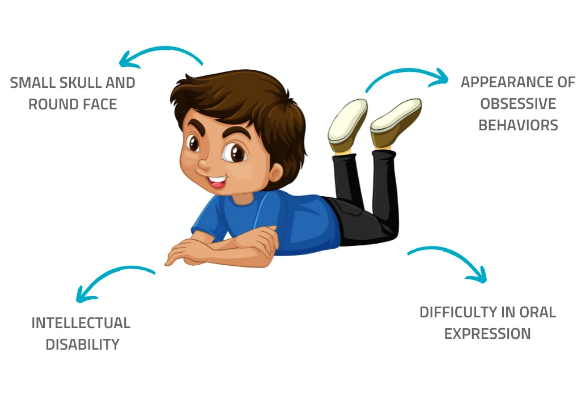
Edwards Syndrome (Trisomy 18)
Extra copy of chromosome 18; Associated with severe intellectual disabilities, congenital heart defects, and abnormalities in various organ systems

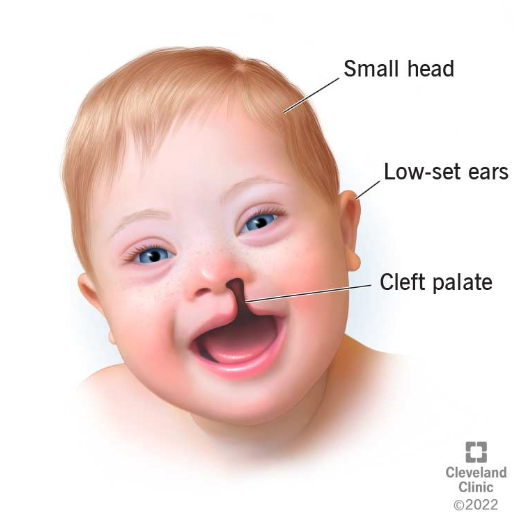
Patau Syndrome (Trisomy 13)
Extra copy of chromosome 13; Severe developmental and physical abnormalities, including intellectual disabilities, heart defects, and cleft lip and palate
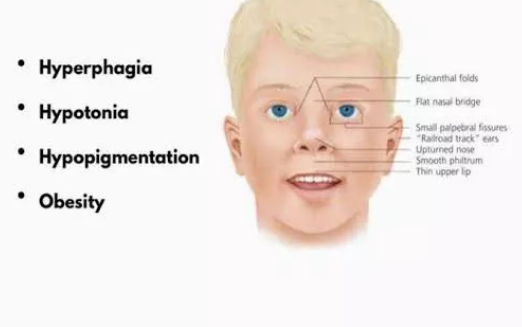
Prader-Willi Syndrome
Genes on chromosome 15 are missing or inactive; intellectual disabilities, obesity, and behavioral issues
Alpha, Antitrypsin Deficiency
Mutation in chromosome 14; Enzyme deficiency that can lead to cirrhosis of the liver, emphysema, and degenerative disease in middle age
Alpha Thalassemia
Mutation in chromosome 16; Severe anemia that reduces the ability of the blood to carry oxygen, and all affected infants are stillborn or die soon after birth
Beta Thalassemia (Cooley’s Anemia)
Mutation in chromosome 11; Severe anemia resulting in weakness, fatigue, and frequent illness; usually fatal in adolescence or young adulthood
Cystic Fibrosis
Mutation in chromosome 7; Overproduction of mucus which collect in the lungs and digestive tract; children do not grow normally and usually do not live beyond the age of 30
Anencephaly
Influenced by a combination of environmental and genetic factors associated with the formation and closure of the neural tube during embryonic development
Absence of the cerebral hemispheres and the overlying skull and scalp; infants are stillborn or die soon after birth
Spina Bifida
Mutation in chromosome 11; the neural tube / spinal column fails to close properly
muscle weakness or paralysis, loss of bladder and bowel control, hydrocephalus, and mental retardation
Phenylketonuria (PKU)
Caused by the inability to metabolize the amino acid, phenylalanine; intellectual disability / hyperactivity if left untreated
Polycystic Kidney Disease
Infantile form: enlarged kidneys, leading to respiratory problems and congestive heart failure
Adult form: kidney pain, kidney stones, and hypertension resulting in chronic kidney failur
Sickle-cell Anemia
A recessive gene causes the red blood cell to become a hook-shaped “sickle” that cannot carry oxygen properly
Limits the body’s oxygen supply; joint swelling, and heart / kidney failure
Tay-Sachs Disease
Deceleration of mental and physical development caused by an accumulation of lipids in the nervous system
Diabetes
Body doesn't produce enough insulin, which causes abnormal metabolism of sugar
Huntington’s Disease
Central nervous system deteriorates, producing problems in muscle coordination and mental deterioration
Angelman Syndrome
Absence or dysfunction of maternal genes on chromosome 15
developmental delays, seizures, and a happy demeanor
Turner Syndrome (XO)
Occurs in females with a single X chromosome (45, X)
short stature, webbed neck, and infertility
Klinefelter Syndrome (XXY)
Affects males with an extra X chromosome (XXY)
reduced fertility, gynecomastia (enlarged breasts), and other physical characteristics
Triple X Syndrome (XXX)
occurs in females with an extra X chromosome (47, XXX)
most individuals have no or mild symptoms, but some may experience learning difficulties, menstrual irregularities, and mental retardation
XYY Syndrome
Affects males with an extra Y chromosome (47, XYY)
tall structure, low IQ, especially verbal
Fragile X Syndrome
Expansion of a particular region on the X chromosome
Minor to severe mental retardation, delayed speech and motor development, speech impairments, and hyperactivity
Duchenne Muscular Dystrophy
Mutation in the X sex chromosome
Fatal disease usually found in males; marked by muscle weakness, minor mental retardation, respiratory failure and death in young adulthood
Behavior Genetics
Field that seeks to discover the influence of heredity and environment on individual differences in human traits and development
Heritability
Statistical estimate of contribution of heredity to individual differences in a specific trait within a given population
Concordant
Tendency of twins to share the same trait or disorder
Sample: Two identical twins were raised in different families. Both twins develop similar height and physical characteristics.
Twin Study
Behavioral similarity of identical twins is compared with the behavioral similarity of fraternal twins
Adoption Study
Seek to discover whether the behavior and psychological characteristics of adopted children are more like those of their adoptive parents or more like those of their biological parents
Reaction Range
Range of potential expressions of a hereditary trait; Depends on environmental opportunities and constraints and a person’s behavior
Sample: A child is born with genes that give them the potential to become very good at reading and language.
However, the child grows up in a home with few books and receives little educational support. Because of the limited environment, the child may not reach their full genetic potential.
Canalization
Illustrates how heredity restricts the range of development for some traits; Strongly programmed by genes and there is little opportunity for variance in their expression; It would take an extreme change in environment to alter their course
Sample: A baby is born with genes that strongly program the development of basic motor abilities, such as walking. Whether the child grows up in a quiet home, a busy household, or with different parenting styles, the child will most likely develop the ability to walk around the typical developmental period.
Genotype-Environment Interaction
Genetically similar children often develop differently depending on their home environments
Sample: Two children have different genetic predispositions for athletic ability.
Child A has genes that give them a high potential for physical strength and coordination. They grow up in a family that encourages sports, enrolls them in basketball training, and provides proper nutrition. As a result, their athletic ability becomes highly developed.
Child B has a similar genetic potential but grows up in an environment with little opportunity for sports or physical activity. Their athletic abilities may not develop to the same extent.
Genotype-Environment Correlations
Tendency of certain genetic and environmental influences to reinforce each other
Sample: Child A is naturally energetic and has a genetic predisposition for good physical coordination and athletic ability. Because of these characteristics, their parents notice that the child enjoys running and playing sports. The parents then enroll Child A in basketball training and provide opportunities to practice.
As a result, the child's genetic characteristics influence the type of environment they experience.
Passive
When an individual’s environment is correlated with the genetic makeup they inherit from their parents
Sample: A child is born into a family where both parents are highly intelligent and enjoy reading. The parents pass on genes associated with cognitive abilities to the child. At the same time, because the parents themselves love reading, they naturally create a home filled with books, educational materials, and intellectual discussions.
Evocative
When an individual's genetically influenced characteristics evoke specific responses from others in their environment
Sample: A child is naturally outgoing, talkative, and socially confident because of their genetic predispositions. Because the child frequently talks to others, asks questions, and enjoys interacting, teachers and classmates respond positively. The teacher may give the child more opportunities to participate in class, lead activities, or interact with other students.
Active
When individuals seek out or create environments that are compatible with their interests (niche-picking)
Sample: A teenager has a genetically influenced tendency toward high curiosity and a strong interest in music. As they grow older, they actively choose to spend time in environments that match these interests. They join the school choir, learn guitar, watch music tutorials, and seek out friends who also enjoy music.
Nonshared Environment
Unique environment in which each child in a family grows up; Consists of distinctive influences or influences that affect one child differently than another; Children’s genetic differences may lead parents to react to them differently and treat them differently
Sample: Two siblings, Anna and Mia, grow up in the same family with the same parents and attend the same school. However, Anna is encouraged by her teacher to join the debate club, while Mia becomes close friends with classmates who enjoy sports and joins the basketball team.
Over time, Anna becomes more confident and interested in public speaking, while Mia becomes more athletic and socially outgoing.
Obesity
Intelligence
Temperament and Personality
Schizophrenia
Characteristics Influenced by Heredity and Environment
Prenatal Development
Gestation that takes place in three stages
Germinal
Embryonic
Fetal
Three stages of Prenatal Development
Gestation
Period of development between conception and birth
Gestational Age
Age of an unborn baby dated from the first day of an expectant mother’s last menstrual cycle
Cephalocaudal Principle
dictates that development proceeds from the head to the lower part of the trunk
Sample: A newborn baby first gains control over their head and neck. After developing head control, the baby gradually gains control over their upper body and arms, and later develops control over their legs and feet, eventually learning to walk.
Proximodistal Principle
Dictates that parts of the body near the center develop before the extremities
Sample: A baby may first learn to control their shoulders and arms, then use their hands to grasp objects, and eventually develop the fine motor skills needed to pick up a small piece of food using their thumb and index finger.
First Trimester — Conception to 4 weeks
Less than 1/10 inch long
Beginning development of spinal cord, nervous system, gastrointestinal system, heart, and lungs
Amniotic sac envelopes the preliminary tissues of entire body
Called “zygote”