Muscular System
 Call Kai
 Learn
Learn Practice Test
 Spaced Repetition
 Match
Match Flashcards
 Knowt Play
1/72

There's no tags or description
Looks like no tags are added yet.
Name | Mastery | Learn | Test | Matching | Spaced | Call with Kai | Chat |
|---|
No analytics yet
Send a link to your students to track their progress
73 Terms
what are the 3 types of muscle?
smooth; cardiac; skeletal
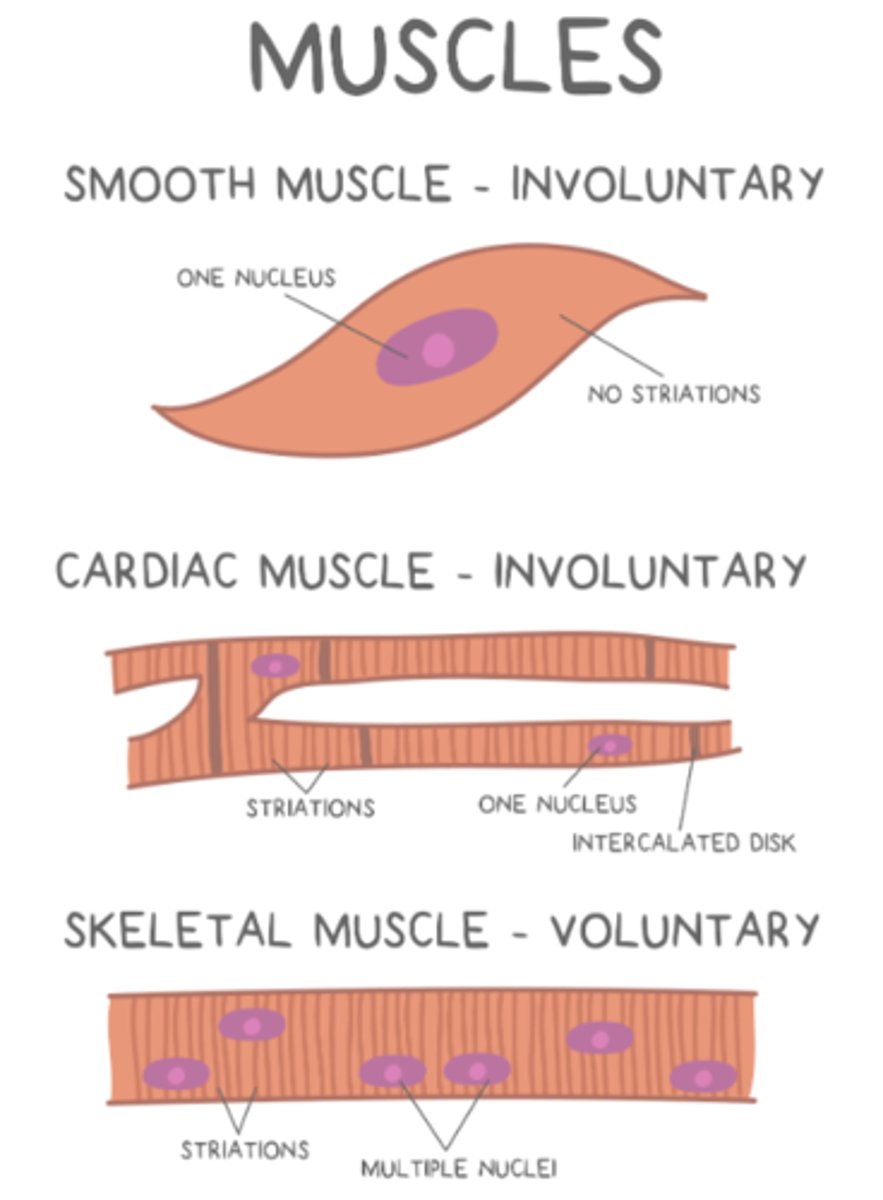
where is smooth muscle found?
walls of organs, airways, and blood vessels
smooth muscle contracts and relaxes _____ (voluntarily/involuntarily)
involuntarily
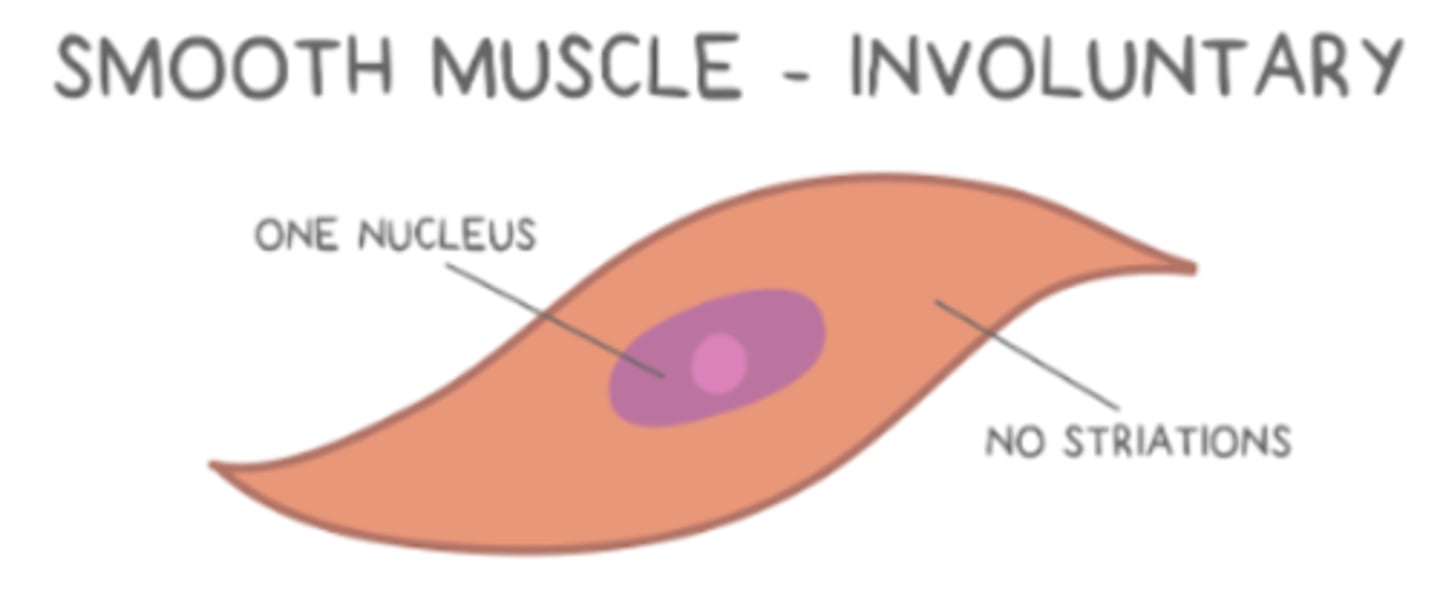
why is smooth muscle not striated?
it lacks sarcomeres
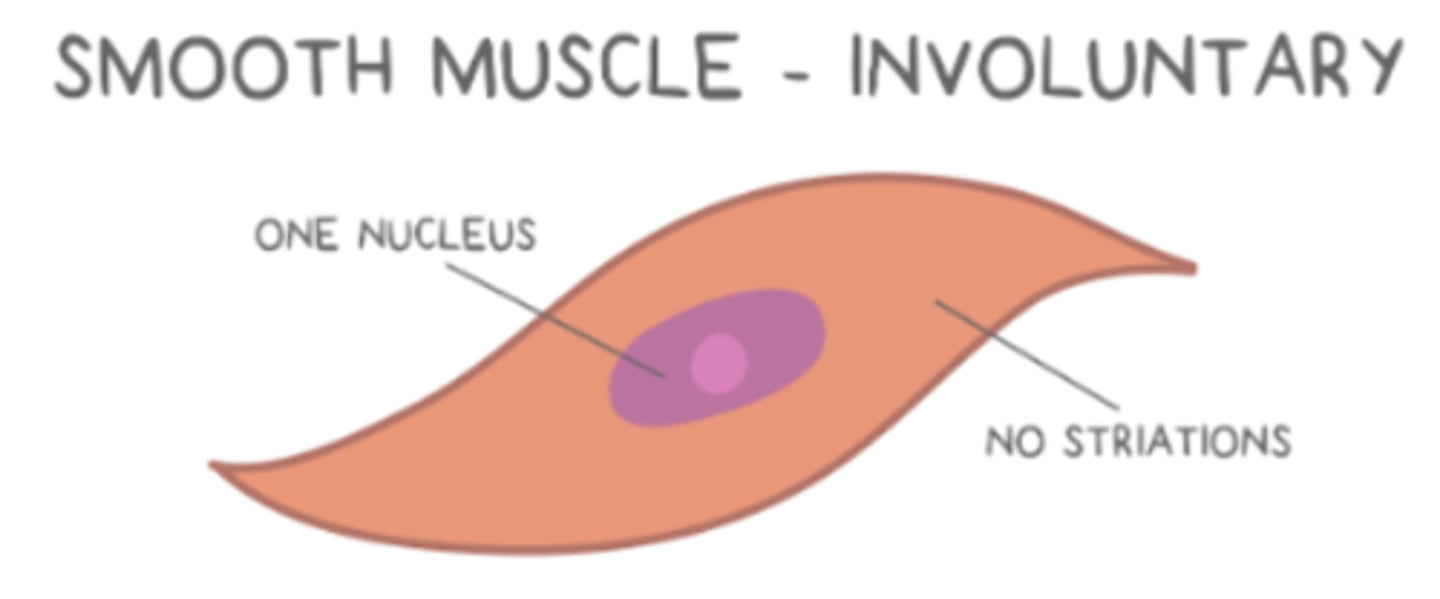
describe the structure of smooth muscle cells
they are short, tapered, and have only one nucleus per cell
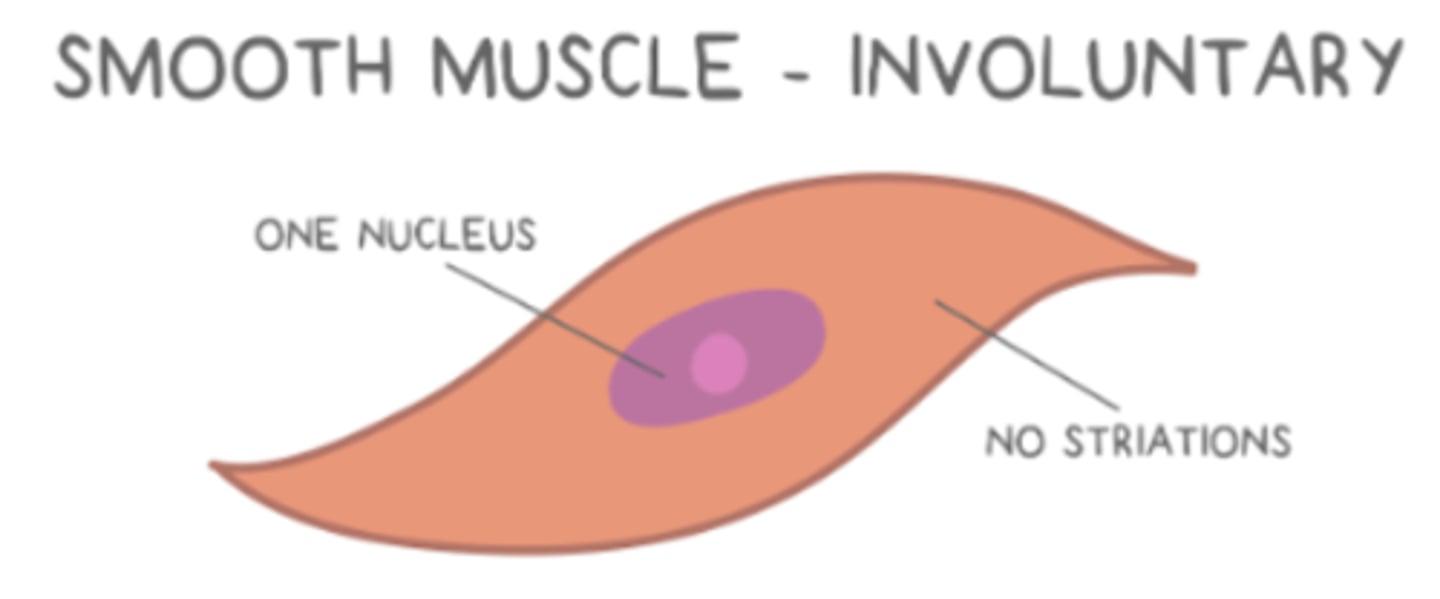
cardiac muscle is found in the heart, and it contracts _____ (voluntarily/involuntarily)
involuntarily
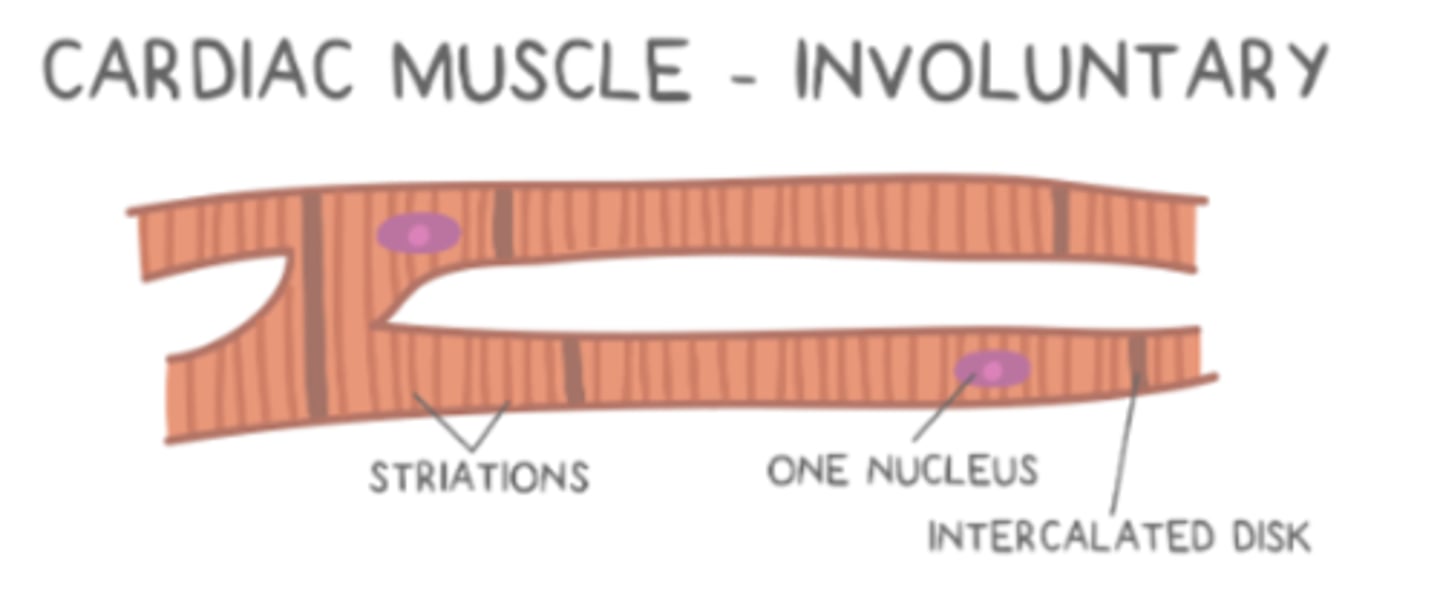
describe the structure of cardiac muscle cells
they are striated (have sarcomeres) and have one nucleus per cell
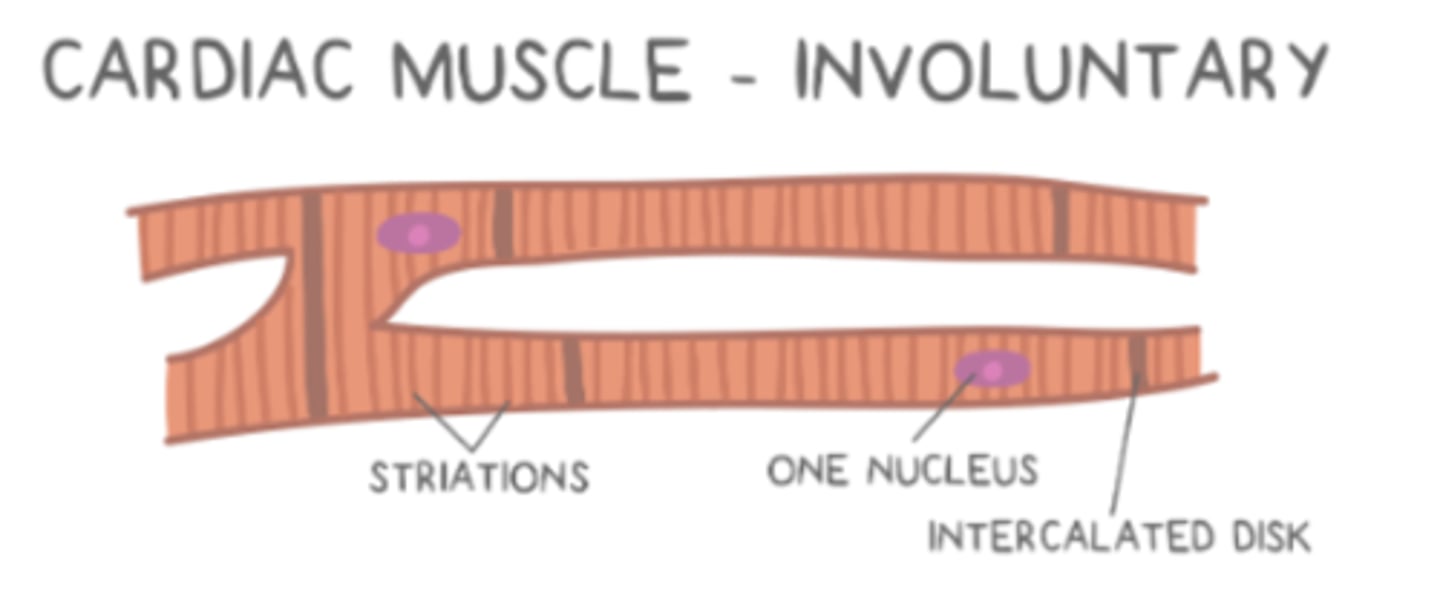
intercalated discs are found in _____ muscle
cardiac
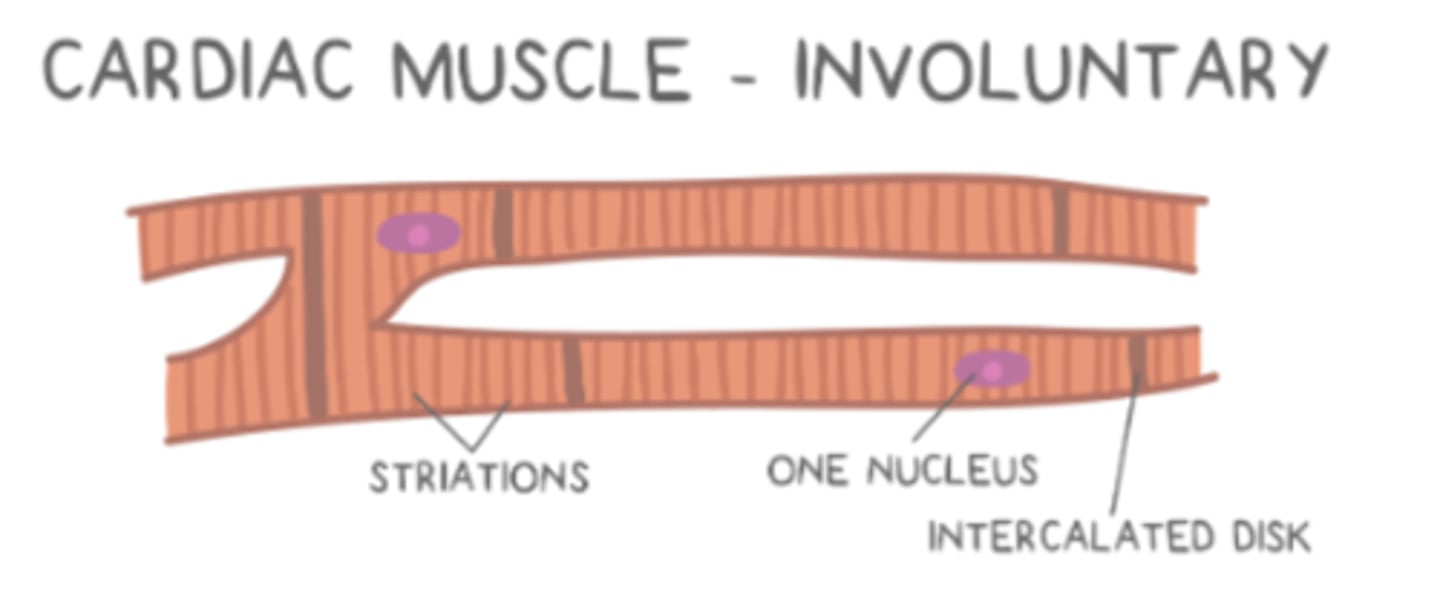
intercalated discs hold adjacent cardiac muscle cells (also known as _____) together, which allows for the heart _____
cardiomyocytes; syncytium
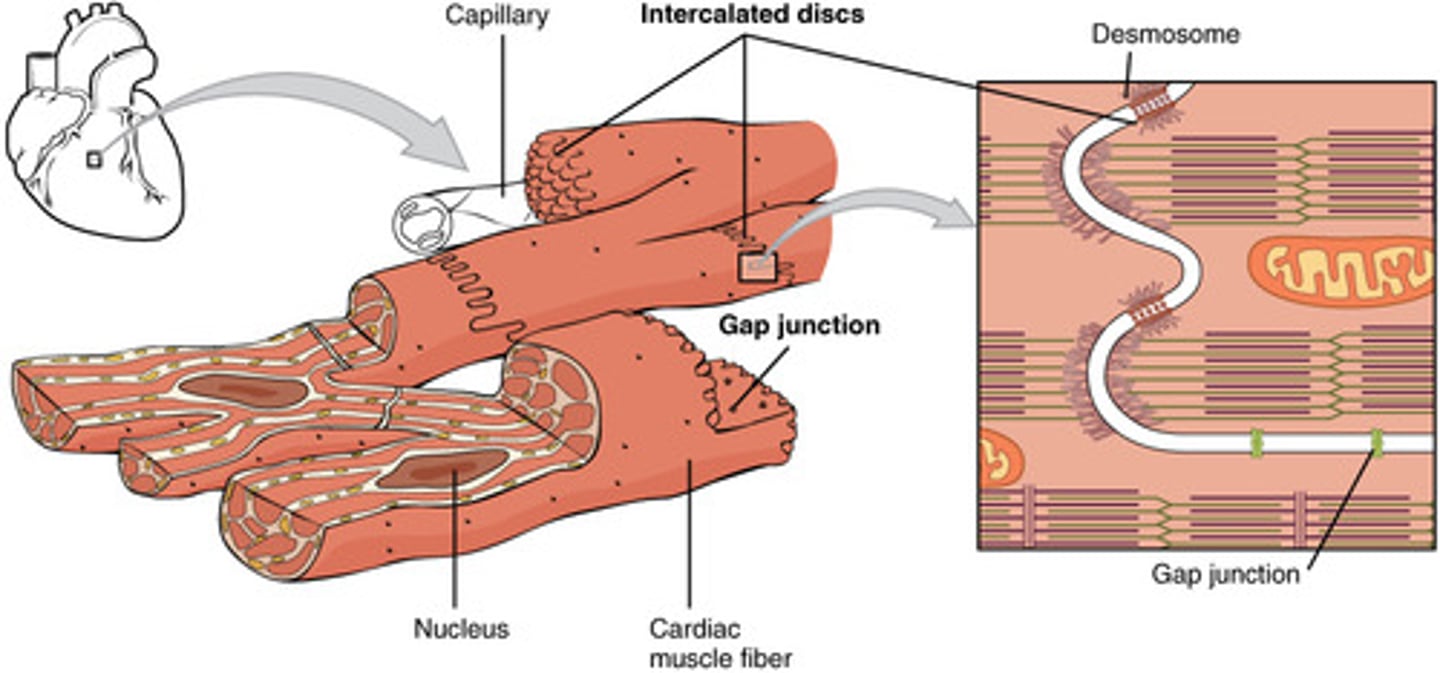
what are the components of an intercalated disc?
desmosomes and gap junctions
_____ cells are long, multinucleate, and striated
skeletal muscle
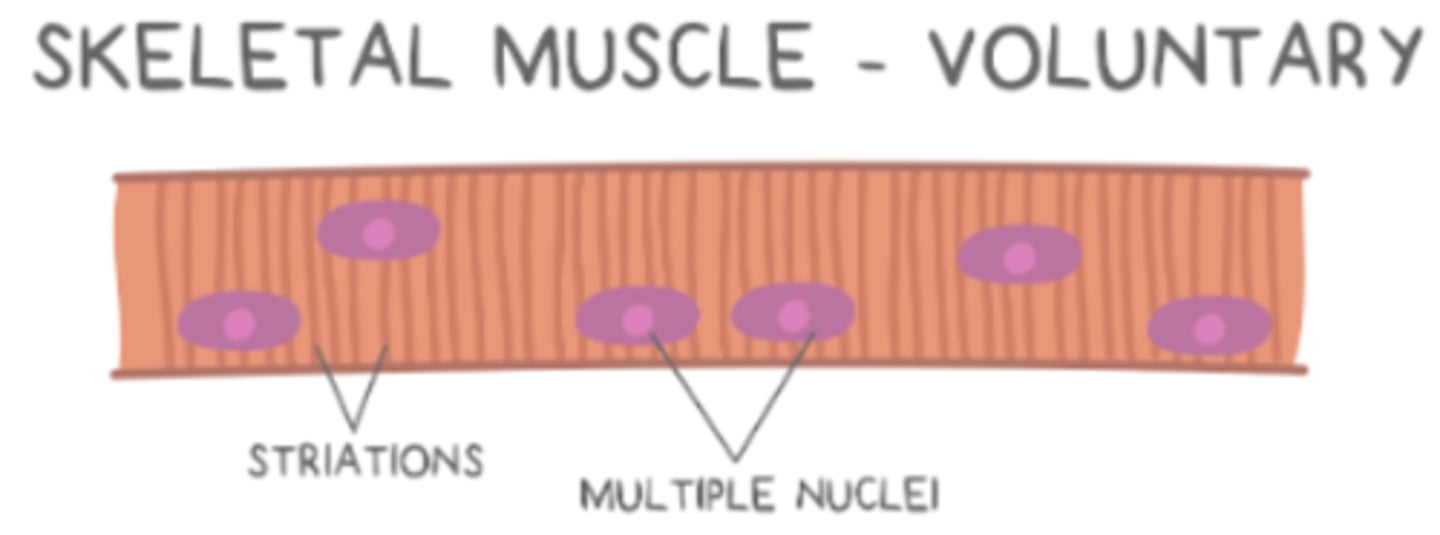
skeletal muscles are under _____ (voluntary/involuntary) control
voluntary
what are the "levels of bundles" in skeletal muscles?
muscle belly --> fascicles --> muscle fibers --> myofibrils
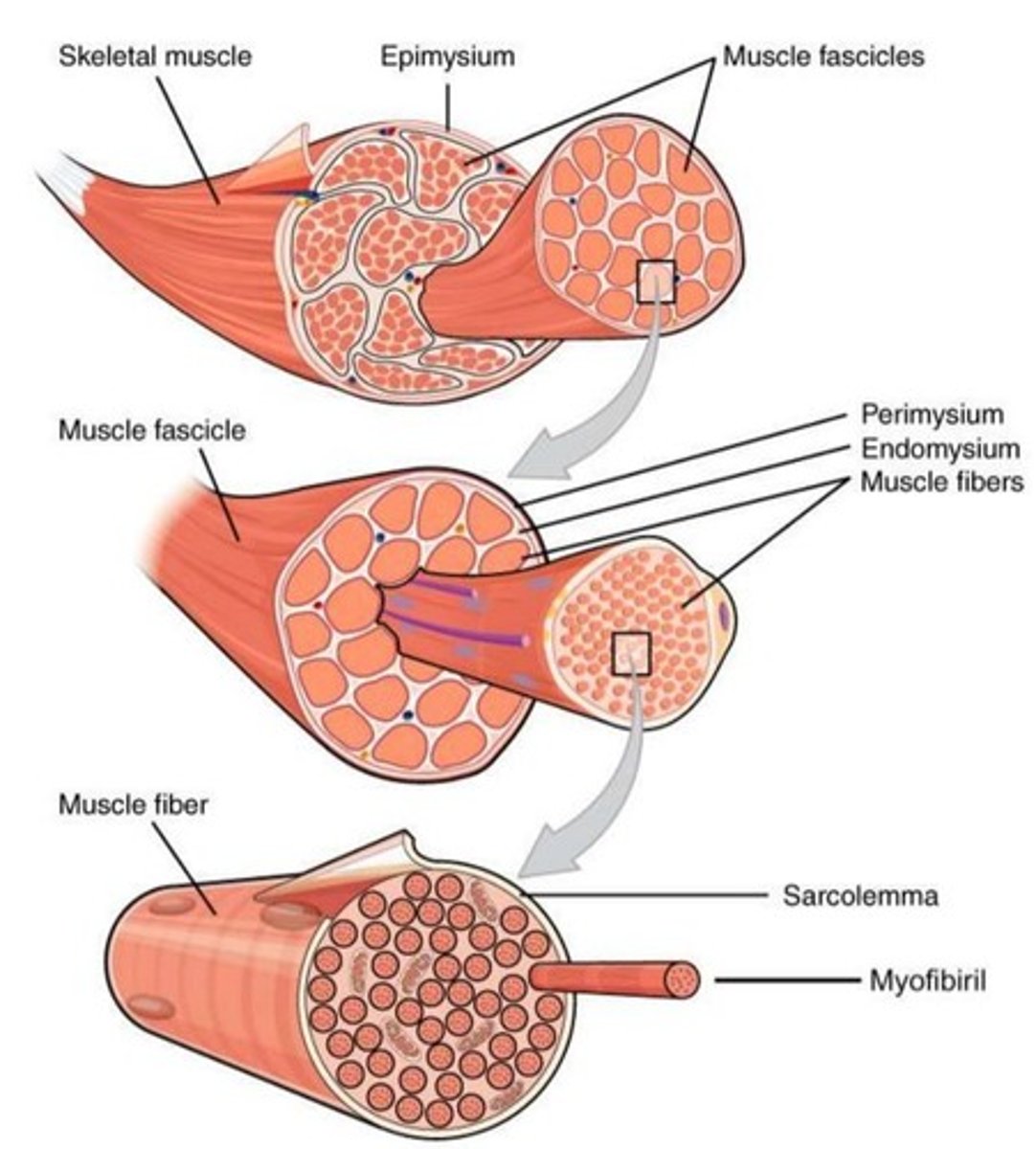
what is the protective sheath encasing all the fascicles contained in a muscle belly?
epimysium
what is the protective sheath found between the fascicles of a muscle belly?
perimysium
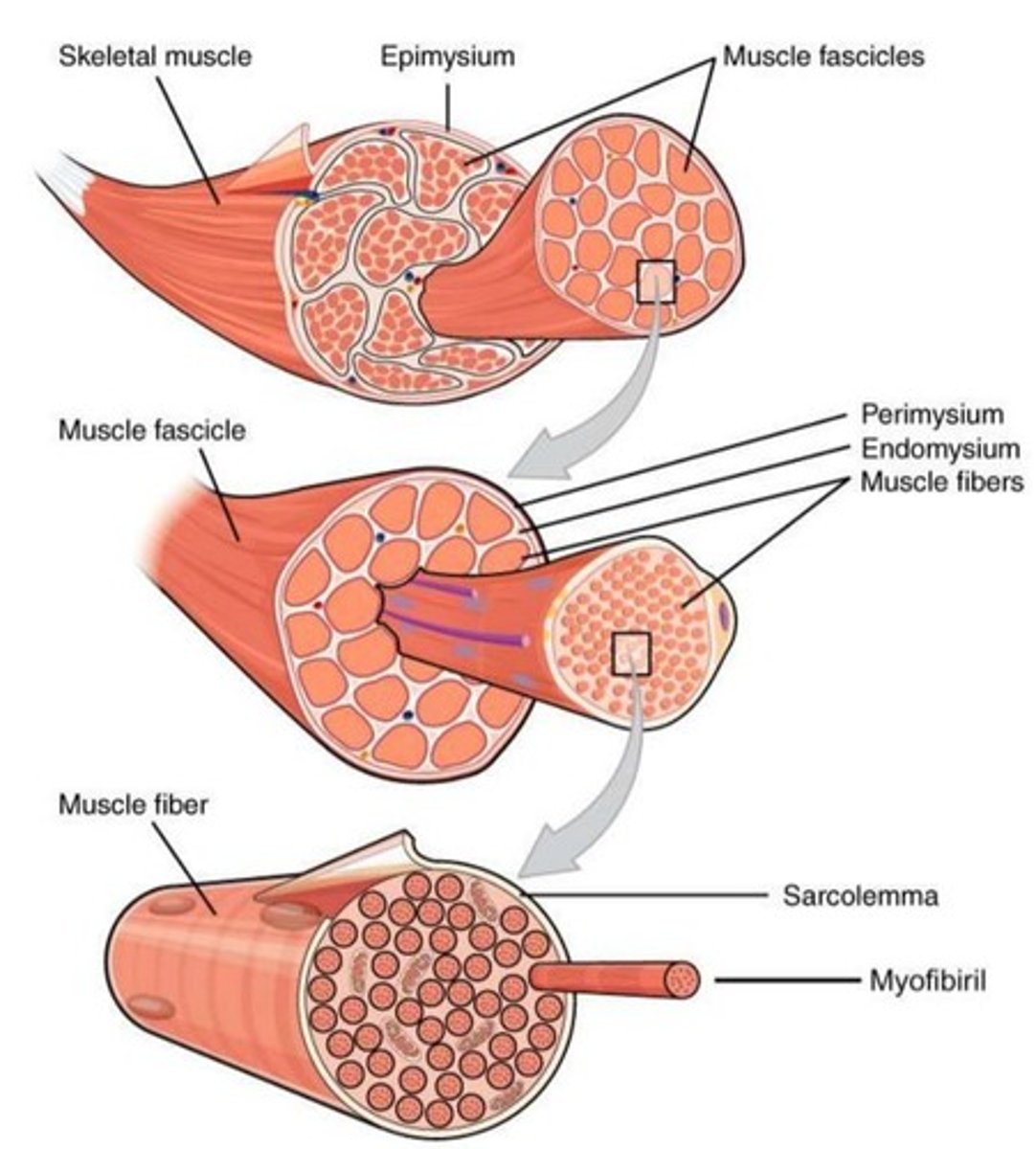
what is the protective sheath found between muscle fibers of an individual skeletal muscle fascicle?
endomysium
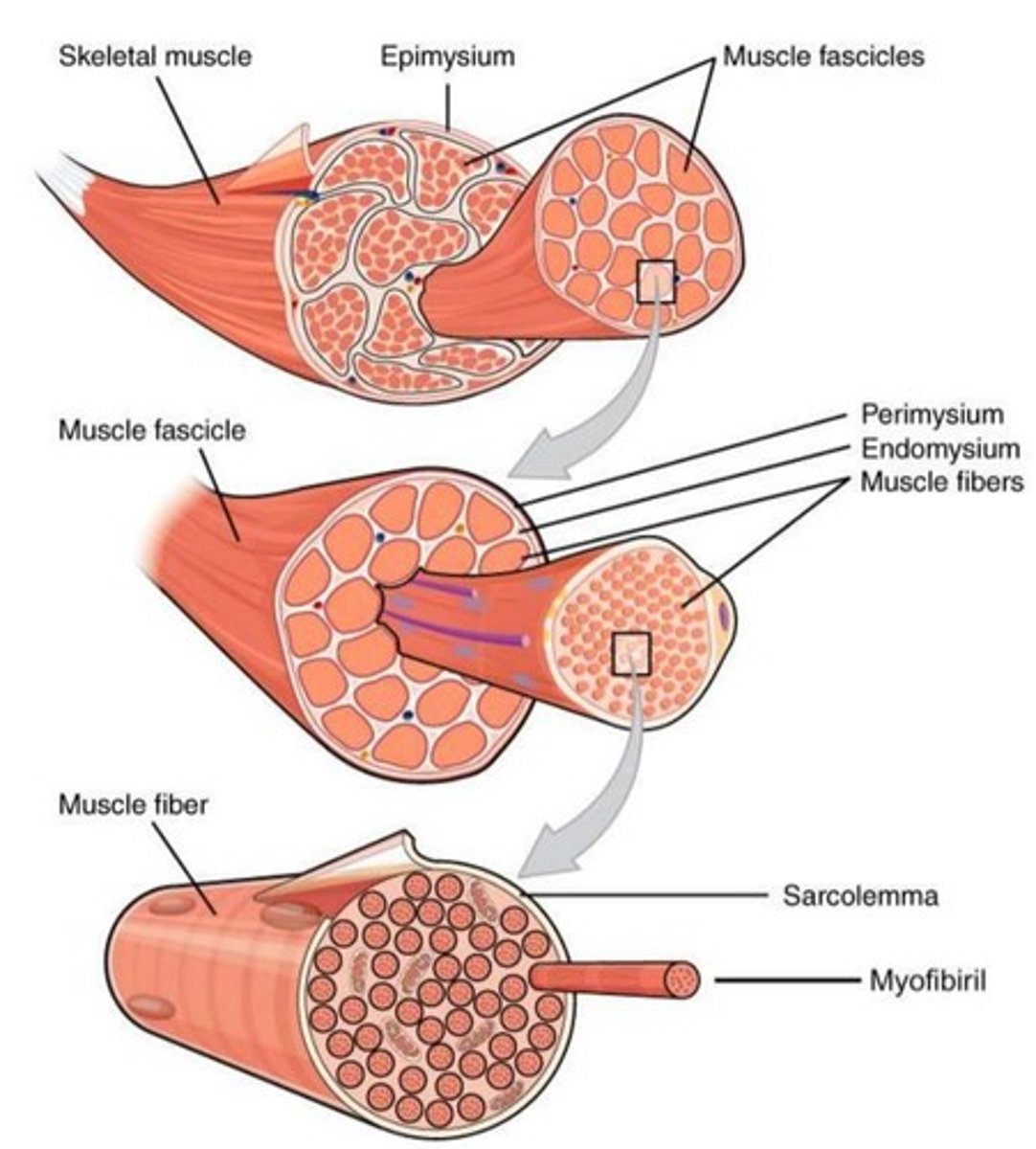
_____ are skeletal muscle cells
muscle fibers
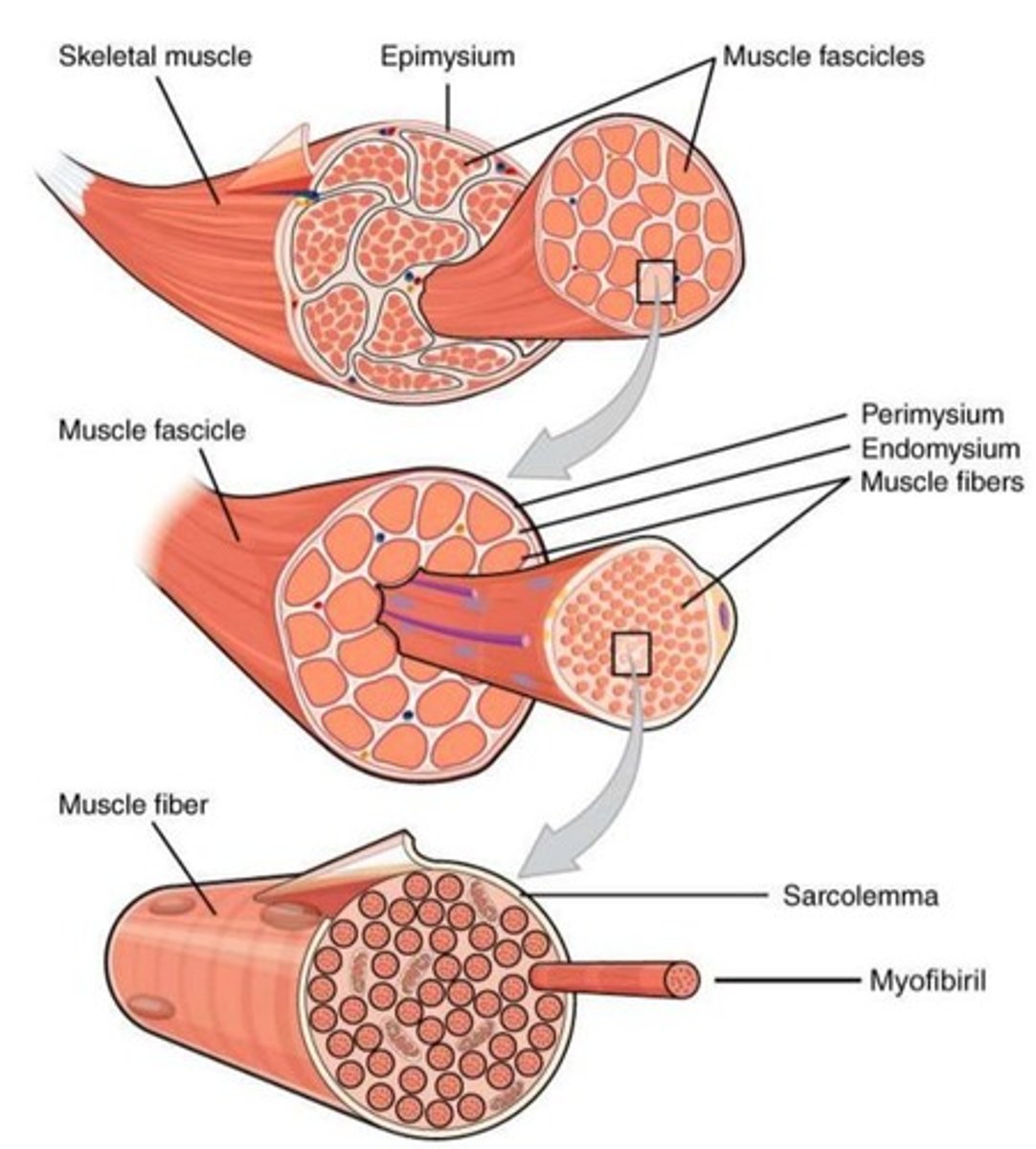
what is the plasma membrane of a muscle fiber called?
the sarcolemma
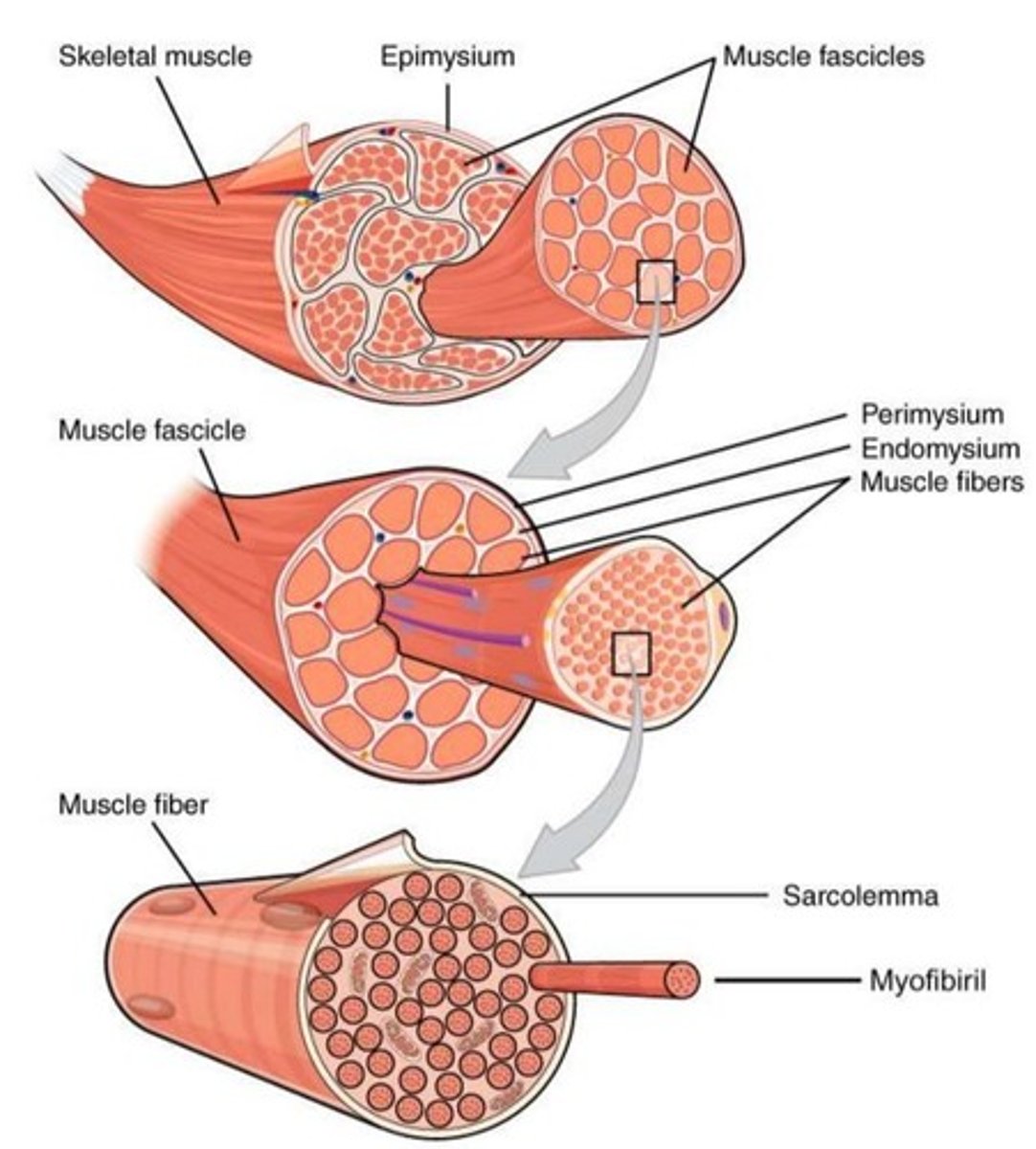
what is the cytoplasm of a muscle fiber called?
the sarcoplasm
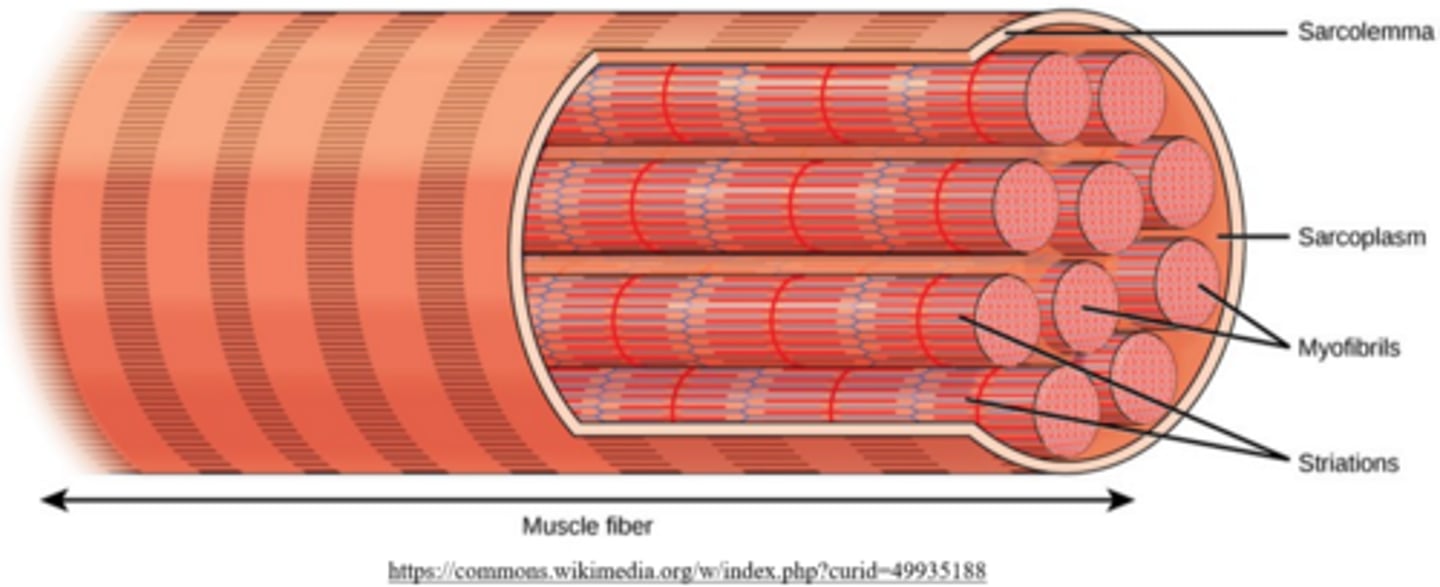
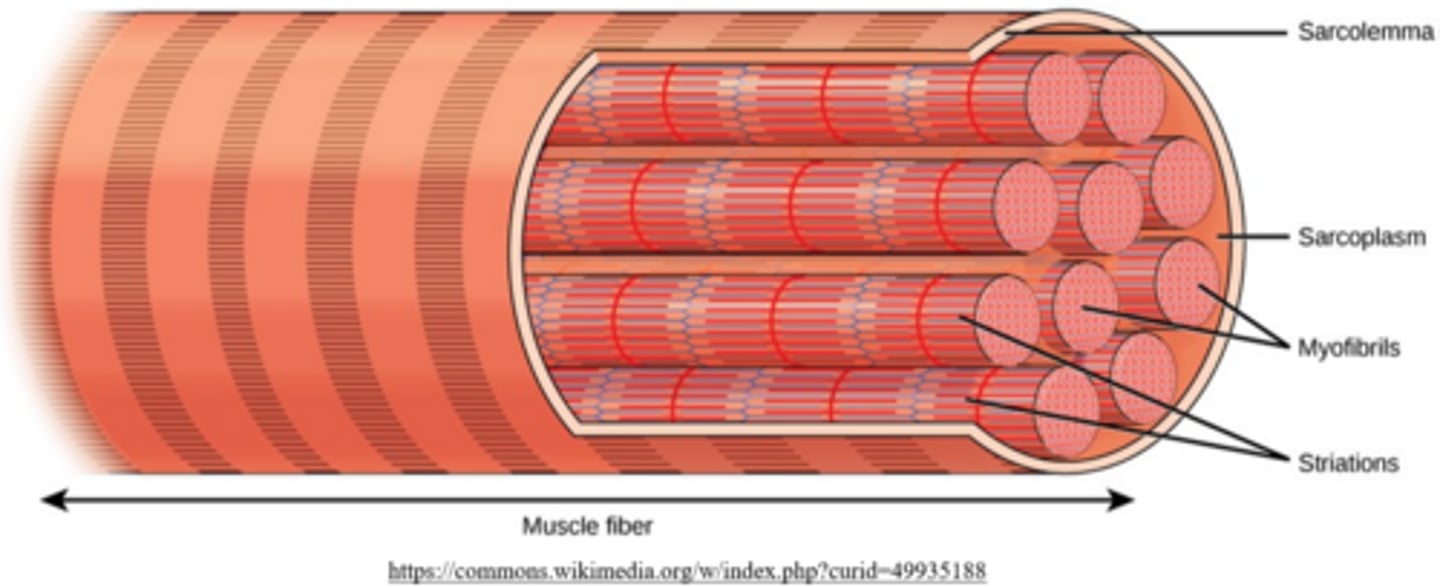
muscle fibers contain an array of organelles arranged in parallel, what are they called?
myofibrils
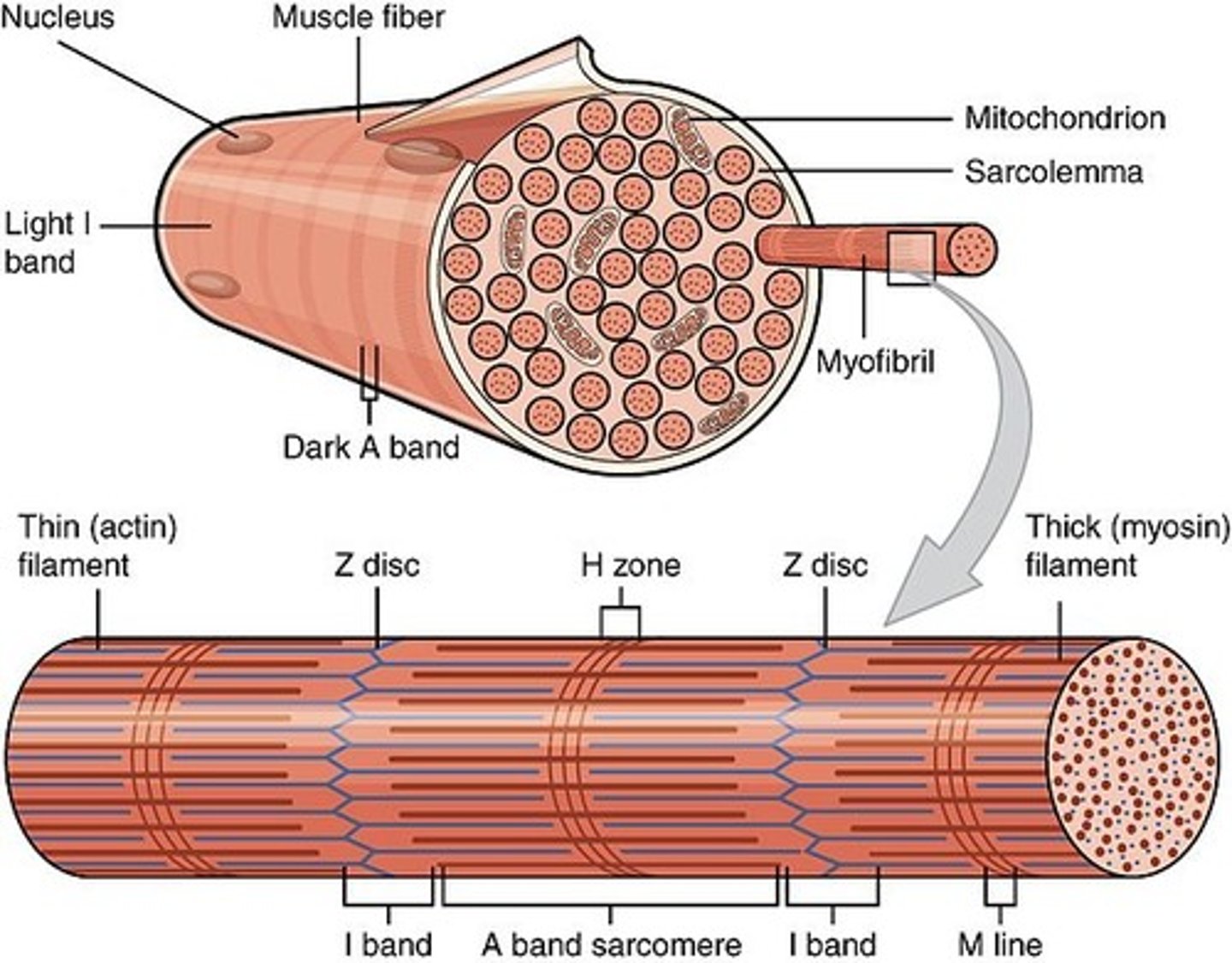
sarcomeres contain protein _____
myofilaments
myofibrils are composed of many repeating functional units, called _____
sarcomeres
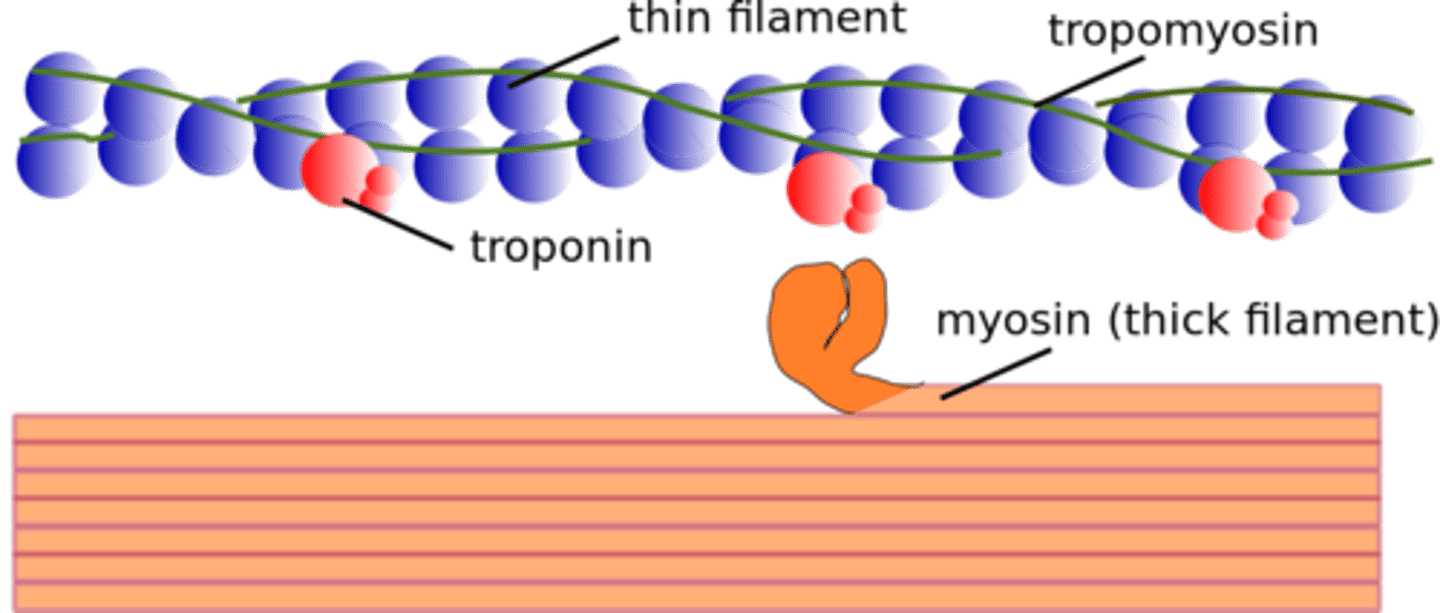
what are the main myofilament proteins of a myofibril?
actin and myosin
what is the functional unit of a muscle fiber and how does it facilitate muscle contraction?
sarcomeres; they shorten
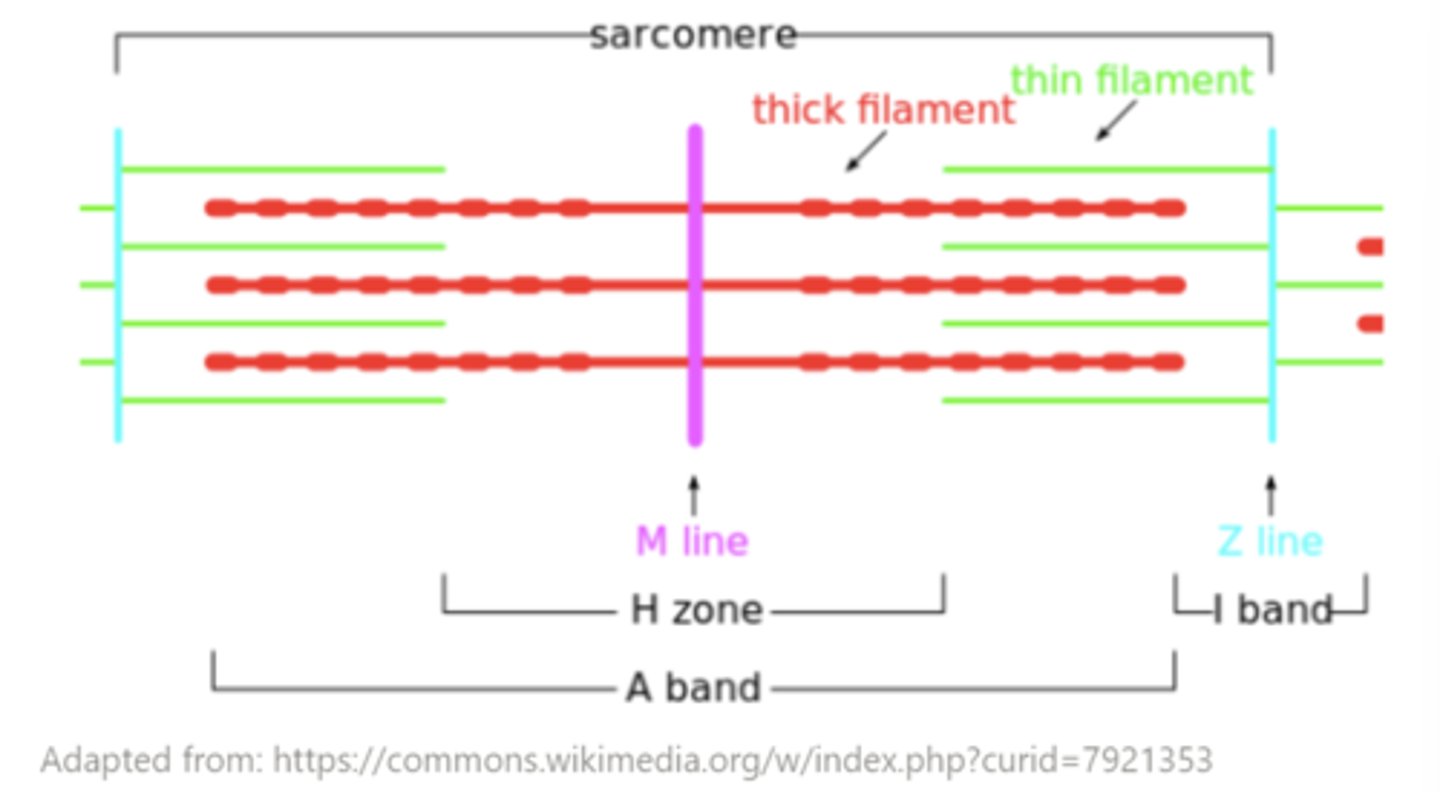
the _____ model explains how myofilaments slide past one another to shorten the sarcomeres of a muscle fiber
sliding filament
do myofilaments shorten during contraction?
no, the sarcomere shortens because myofilaments slide past each other
what is the space between the presynaptic motor neuron and postsynaptic muscle fiber called?
neuromuscular junction
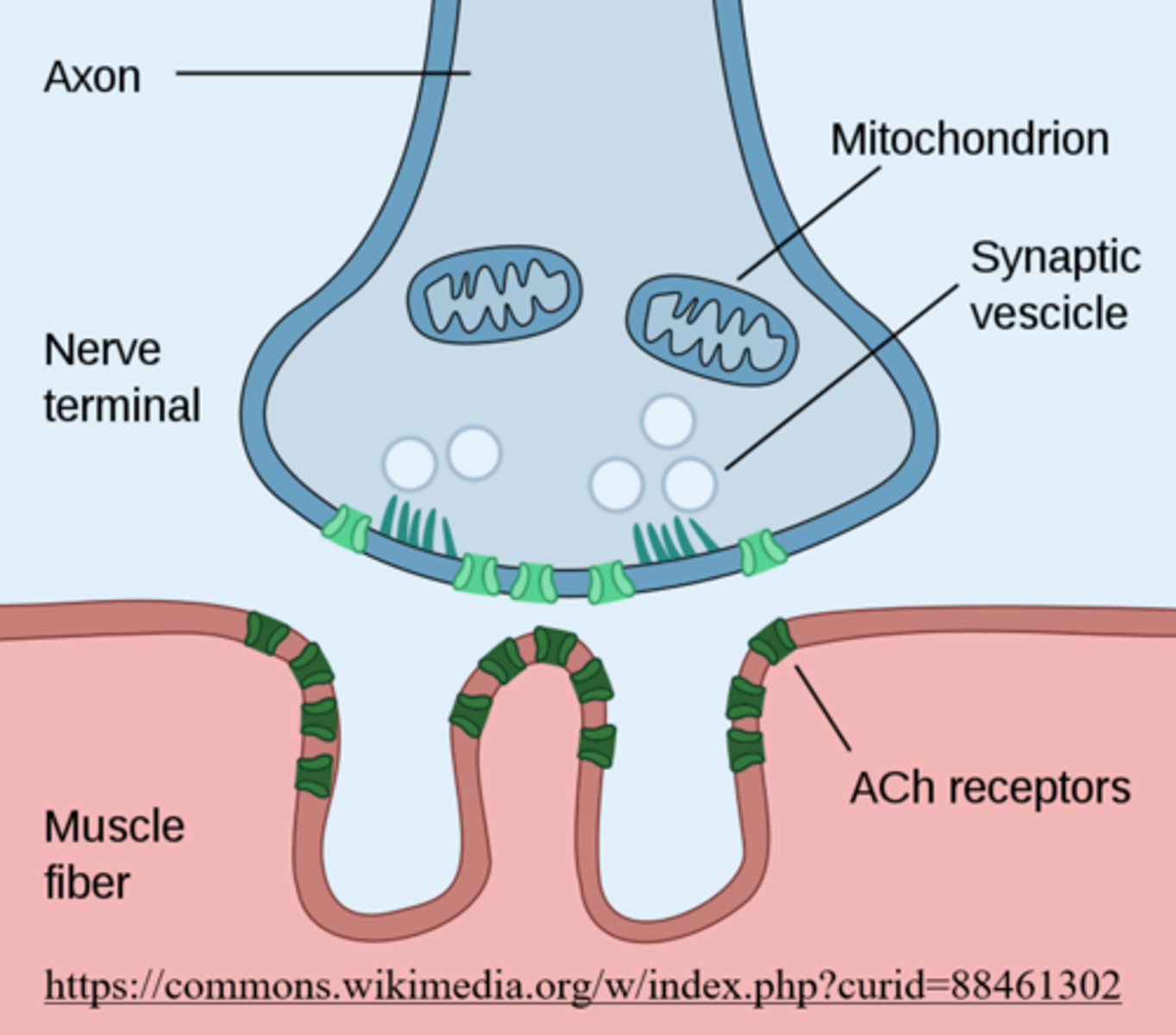
what neurotransmitter is released into neuromuscular junctions?
acetylcholine
acetylcholine facilitates the opening of _____ channels on the muscle fiber
ligand-gated Na+
what is the result of acetylcholine on the muscle fiber?
it allows some sodium to enter the muscle fiber and create a graded potential. This depolarization opens nearby voltage-gated Na+ channels to transfer the action potential to muscle
_____ allow action potentials to spread through muscle fibers quickly, coordinating the contraction
t-tubules
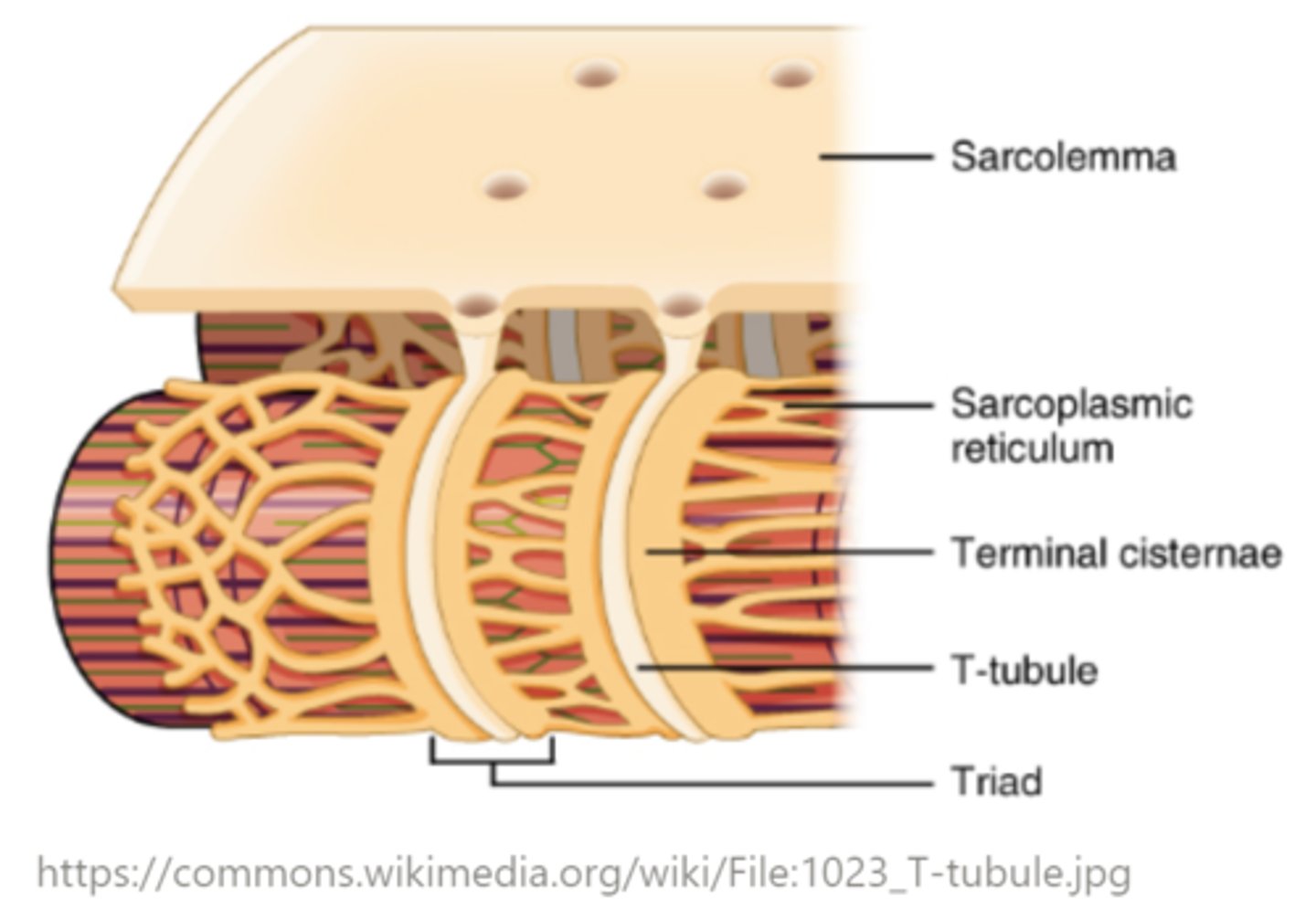
where are t-tubules found?
the sarcolemma
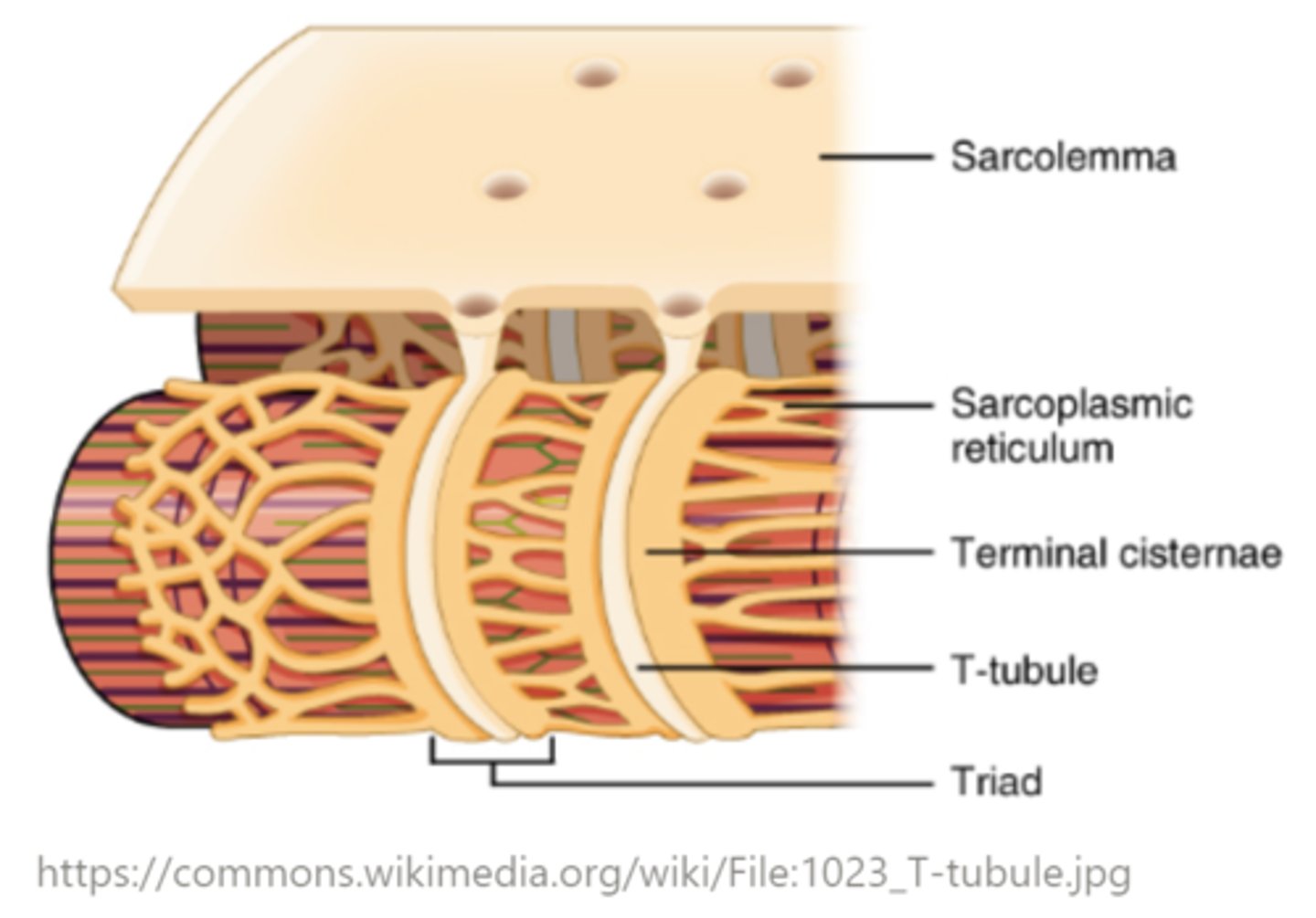
what is the specialized smooth endoplasmic reticulum (ER) found in muscle fibers?
the sarcoplasmic reticulum (SR)
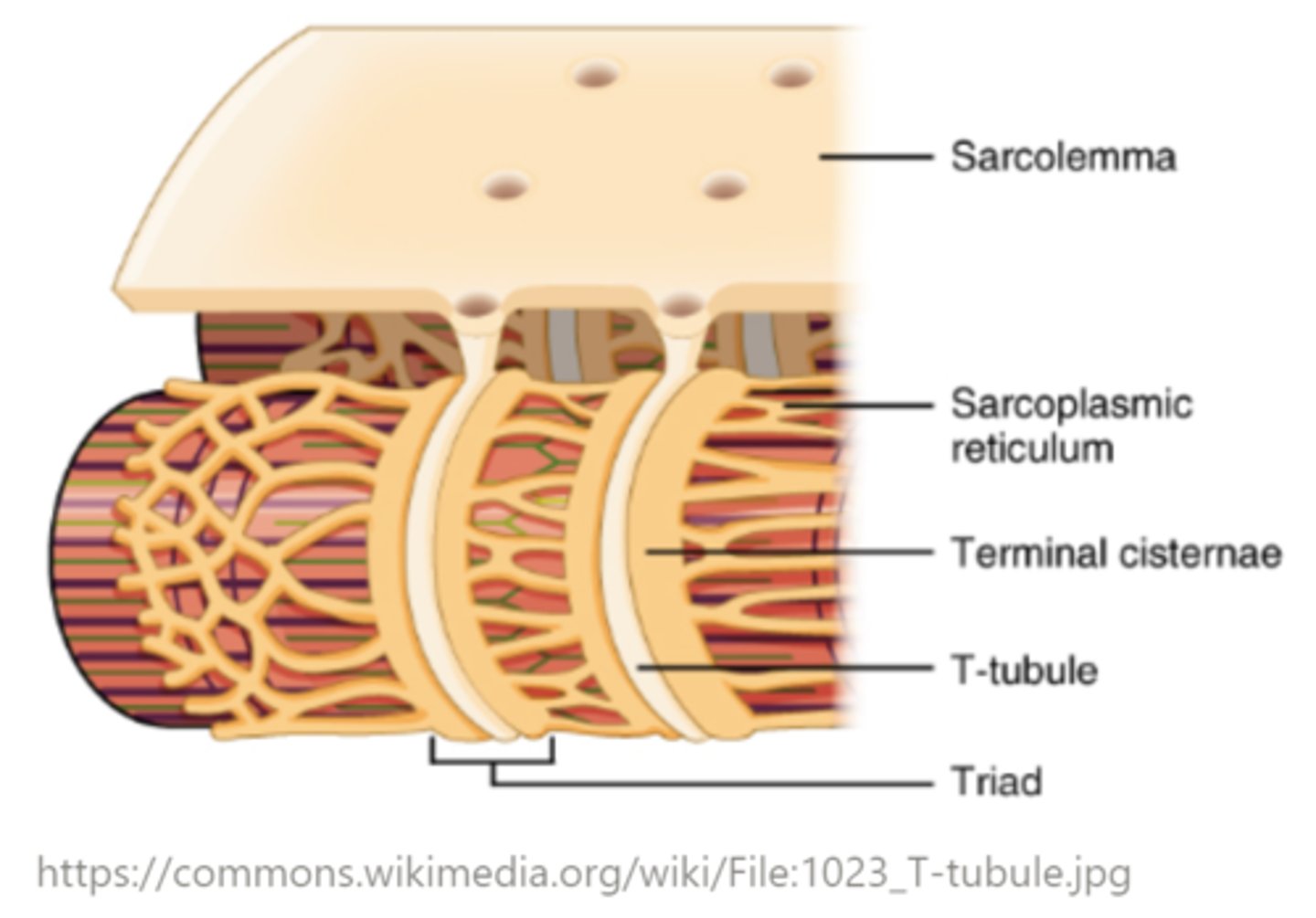
the sarcoplasmic reticulum stores _____ ions
Ca2+
what causes voltage-gated Ca2+ channels to open on the sarcoplasmic reticulum (SR)?
a wave of depolarization traveling down t-tubules
where does Ca2+ flow after it leaves the SR?
the sarcoplasm
what is the resting state of a muscle?
relaxed
_____ covers actin's binding site for myosin when muscle fibers are not stimulated
tropomyosin
_____ hold tropomyosin in place over actin's binding site for myosin
troponin complexes
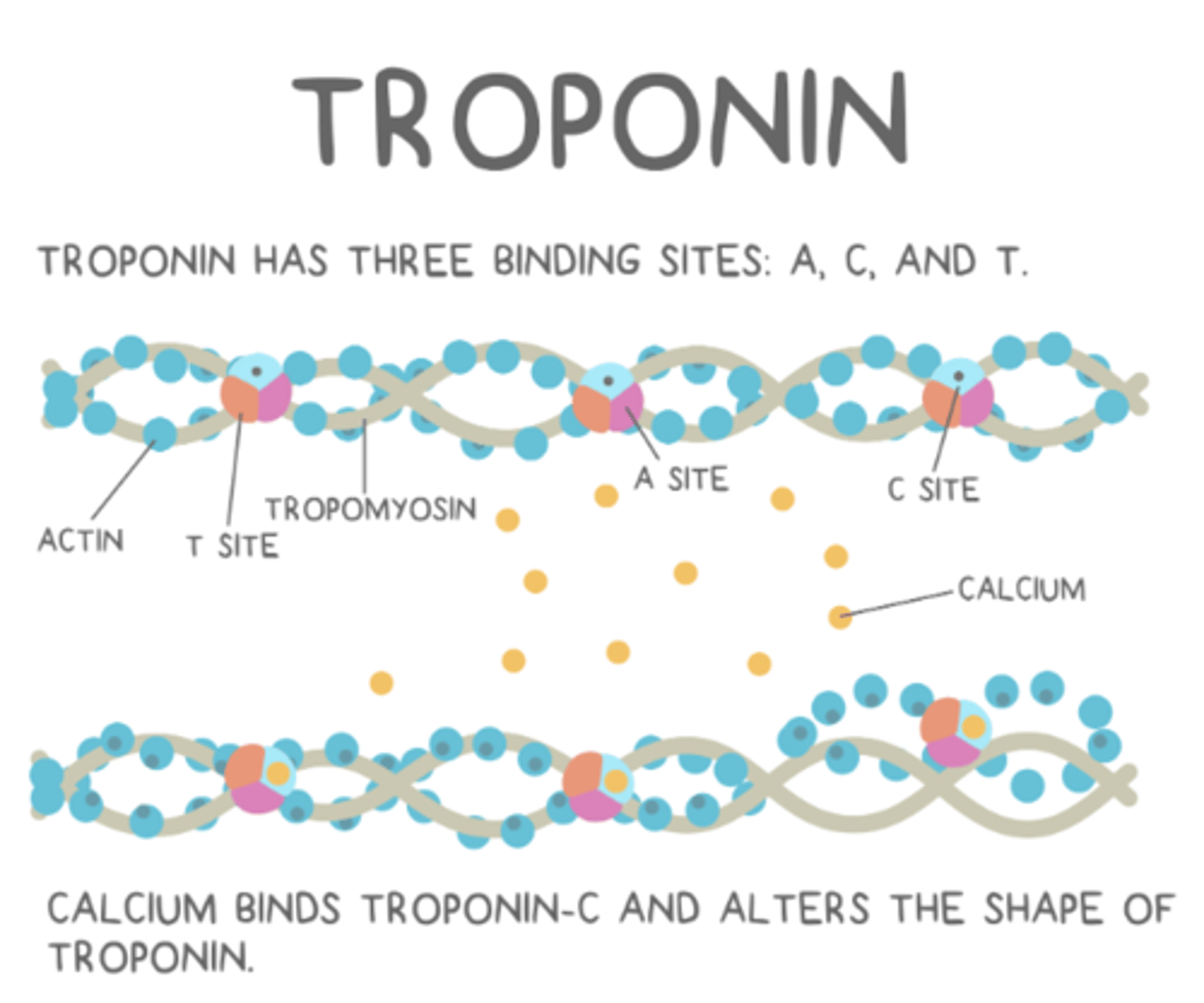
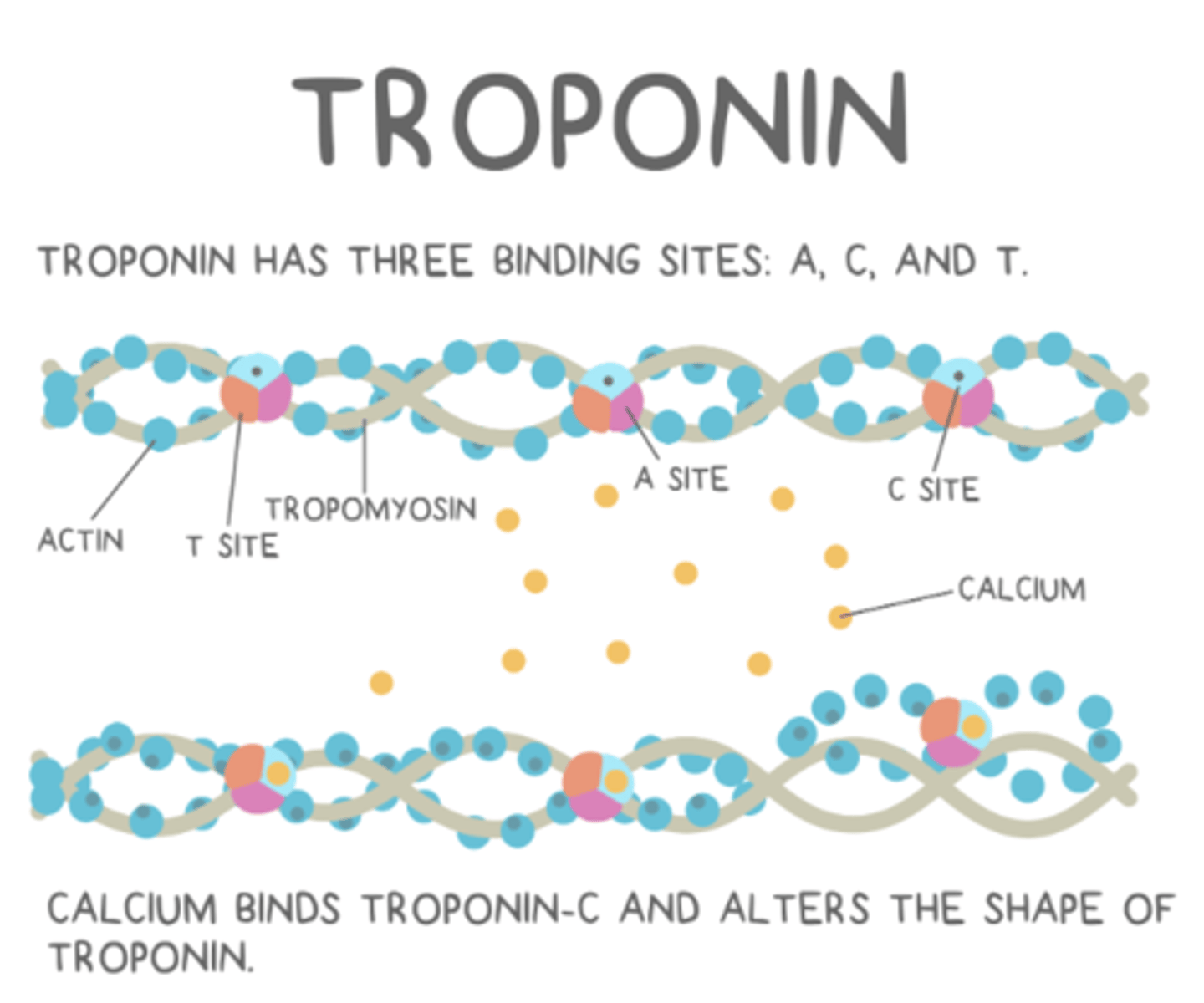
how does troponin move tropomyosin?
Ca2+ released from the SR binds to troponin-C, which triggers a shape change that moves troponin and therefore tropomyosin
what type of enzyme are myosin heads and what is their function?
ATPases; hydrolyze an ATP molecule into ADP and Pi
a _____ forms when myosin (thick myofilaments) bind to actin (thin myofilaments) after muscle fiber stimulation
cross-bridge
cross-bridges form when myosin ATPases _____ and enter their high-energy state
hydrolyze ATP
the power-stroke occurs when myosin _____ to enter a low-energy conformation
releases ADP + Pi
(the power-stroke occurs after the initial formation of a cross-bridge)
what releases the cross-bridge after the power-stroke has occurred?
ATP binding to myosin
why does rigor mortis occur in dead animals?
no ATP is being produced, so cross-bridges cannot be released
when the brain stops sending nerve signals for contraction, contraction stops - what happens to Ca2+?
it re-enters the SR by active transport
what is the result of the active transport of Ca2+ back into the sarcoplasmic reticulum?
troponin returns to its original shape and pulls tropomyosin back over the actin binding site
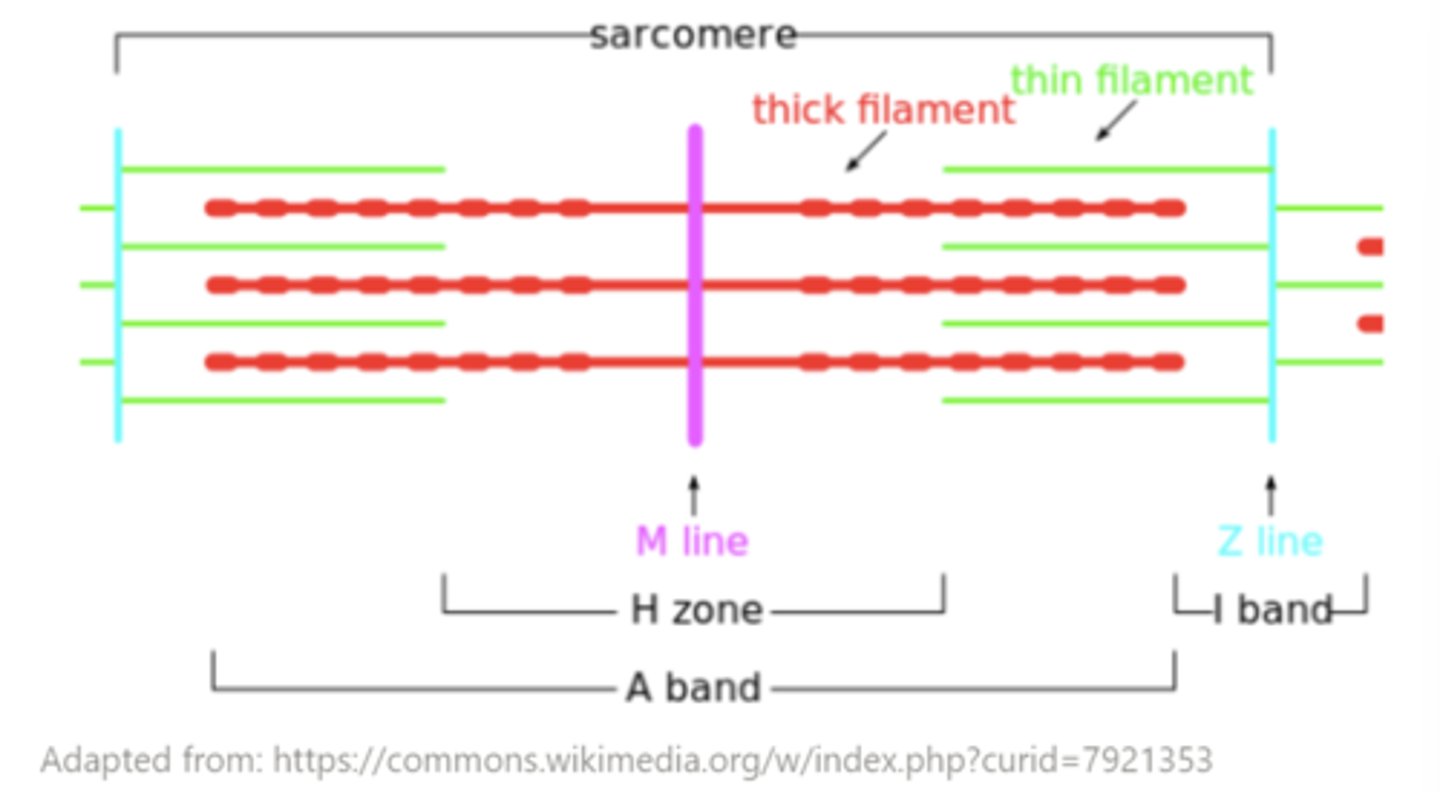
the _____ represents the periphery (end) of each sarcomere
Z line
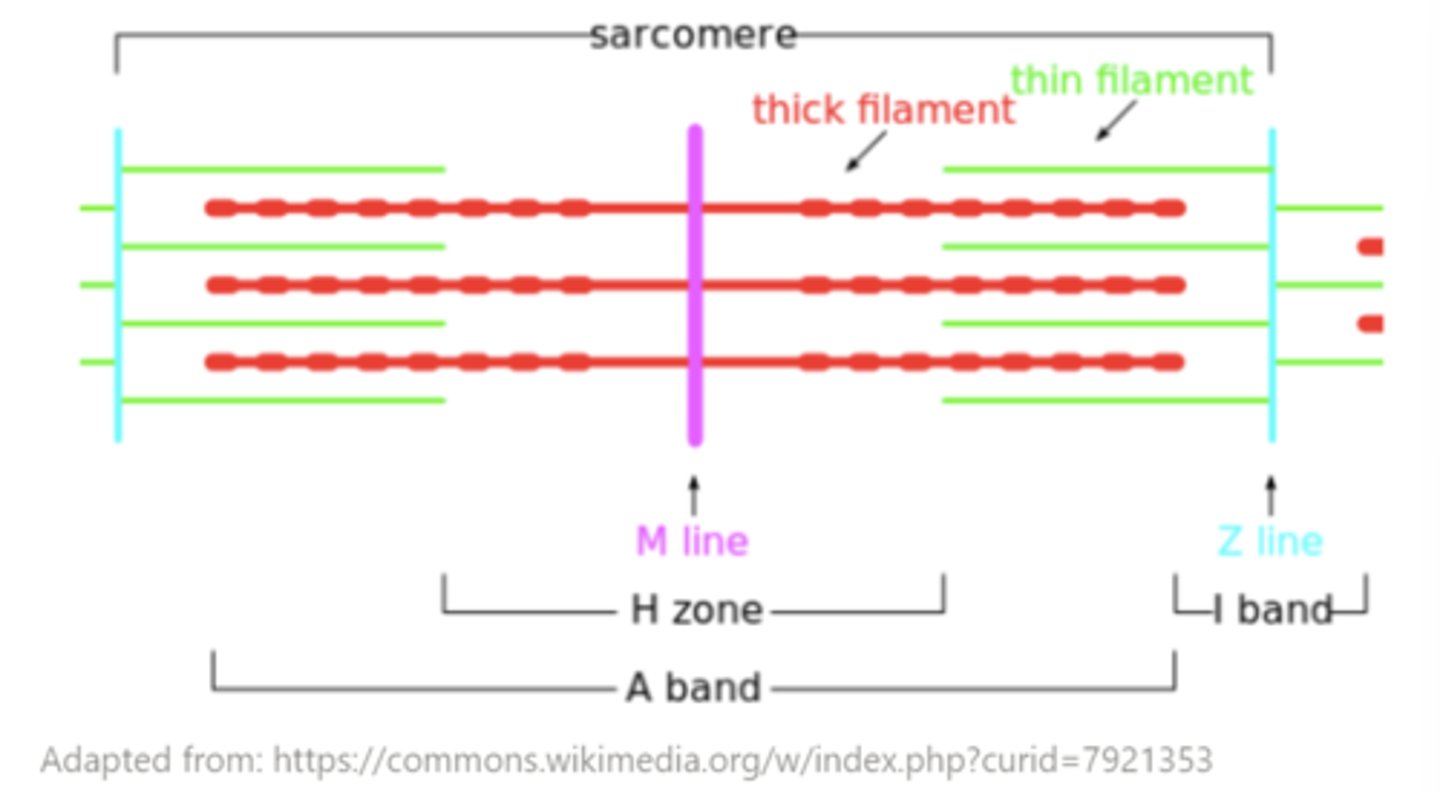
the _____ represents the midpoint of each sarcomere
M line
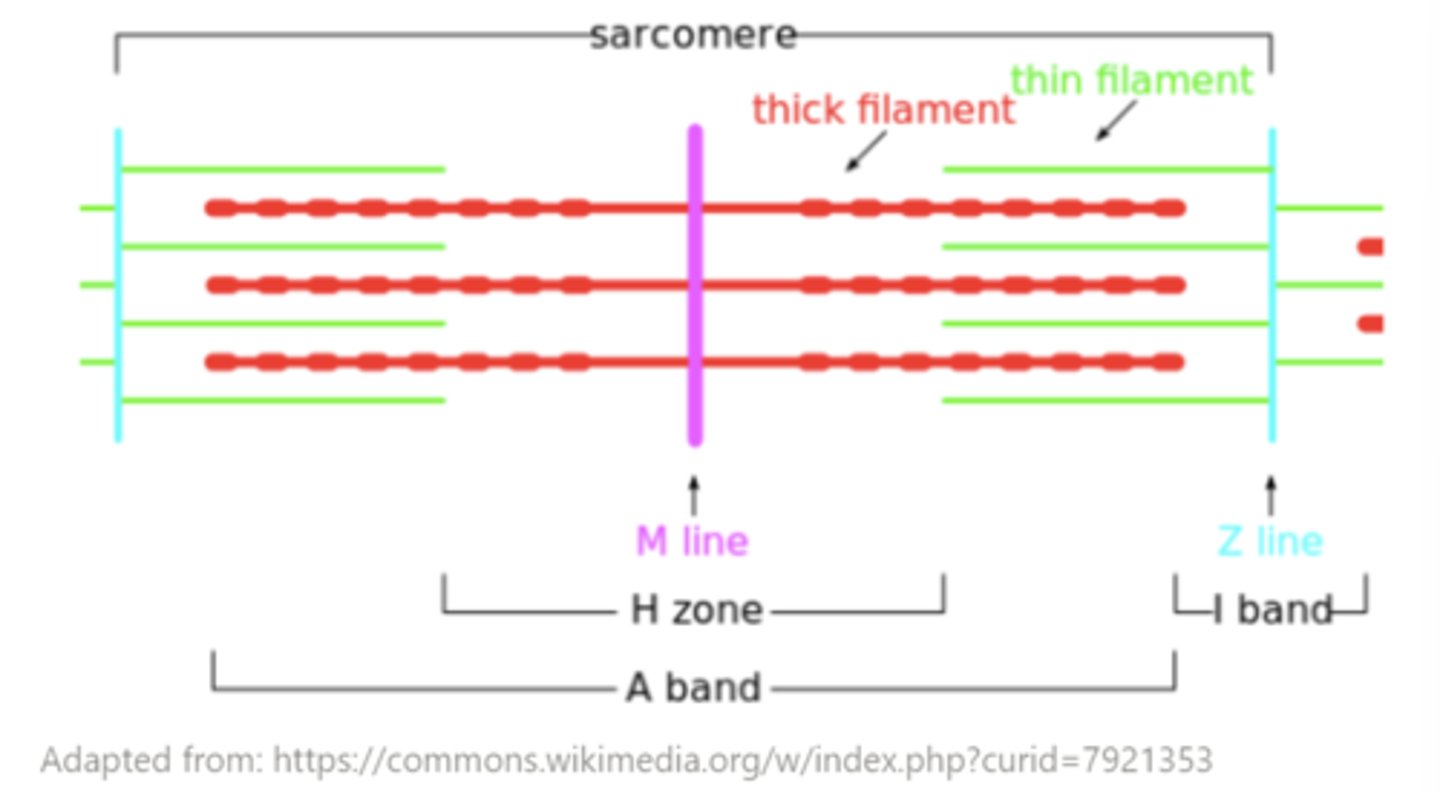
_____ branch from the Z line toward the M line
thin actin myofilaments
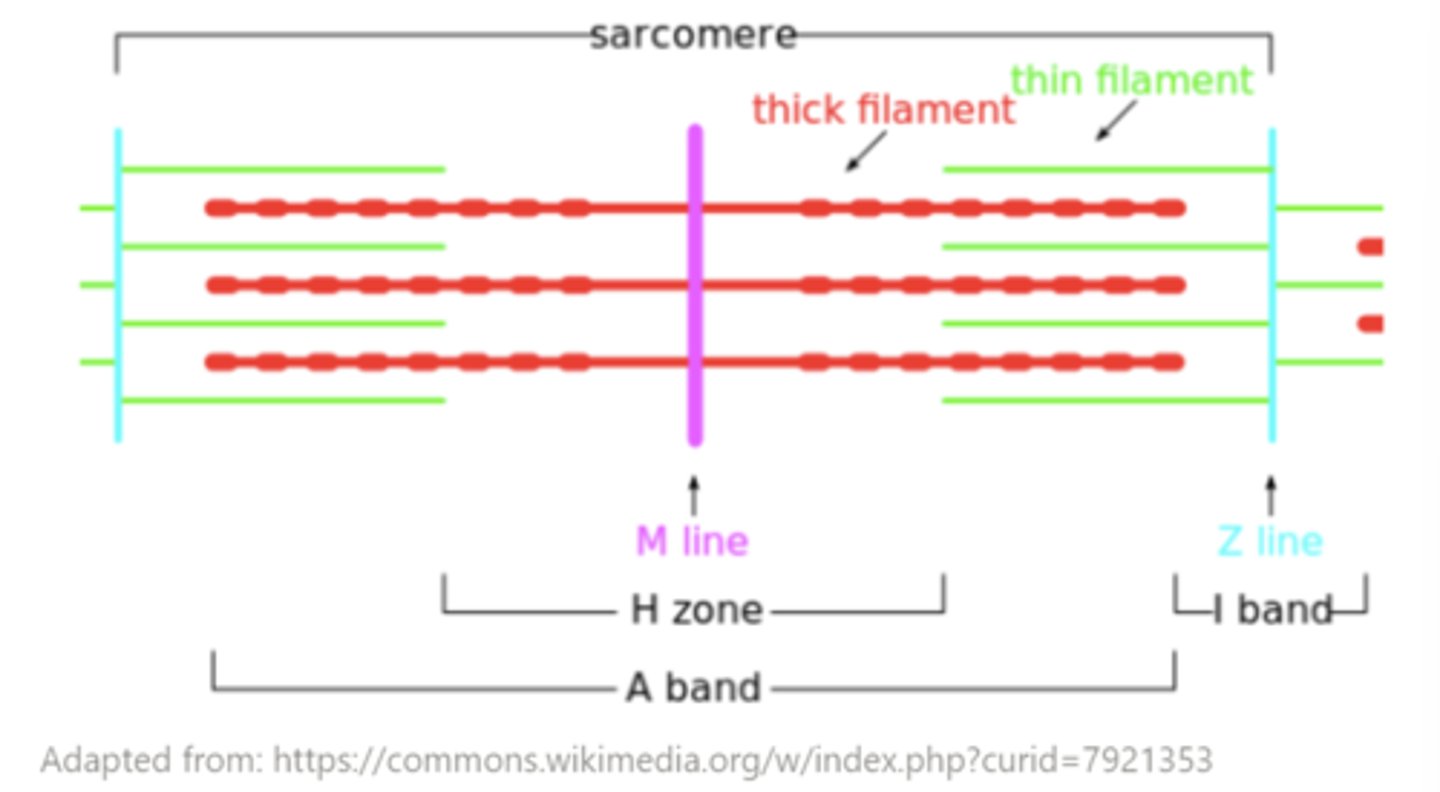
_____ branch from the M line toward Z line
thick myosin myofilaments
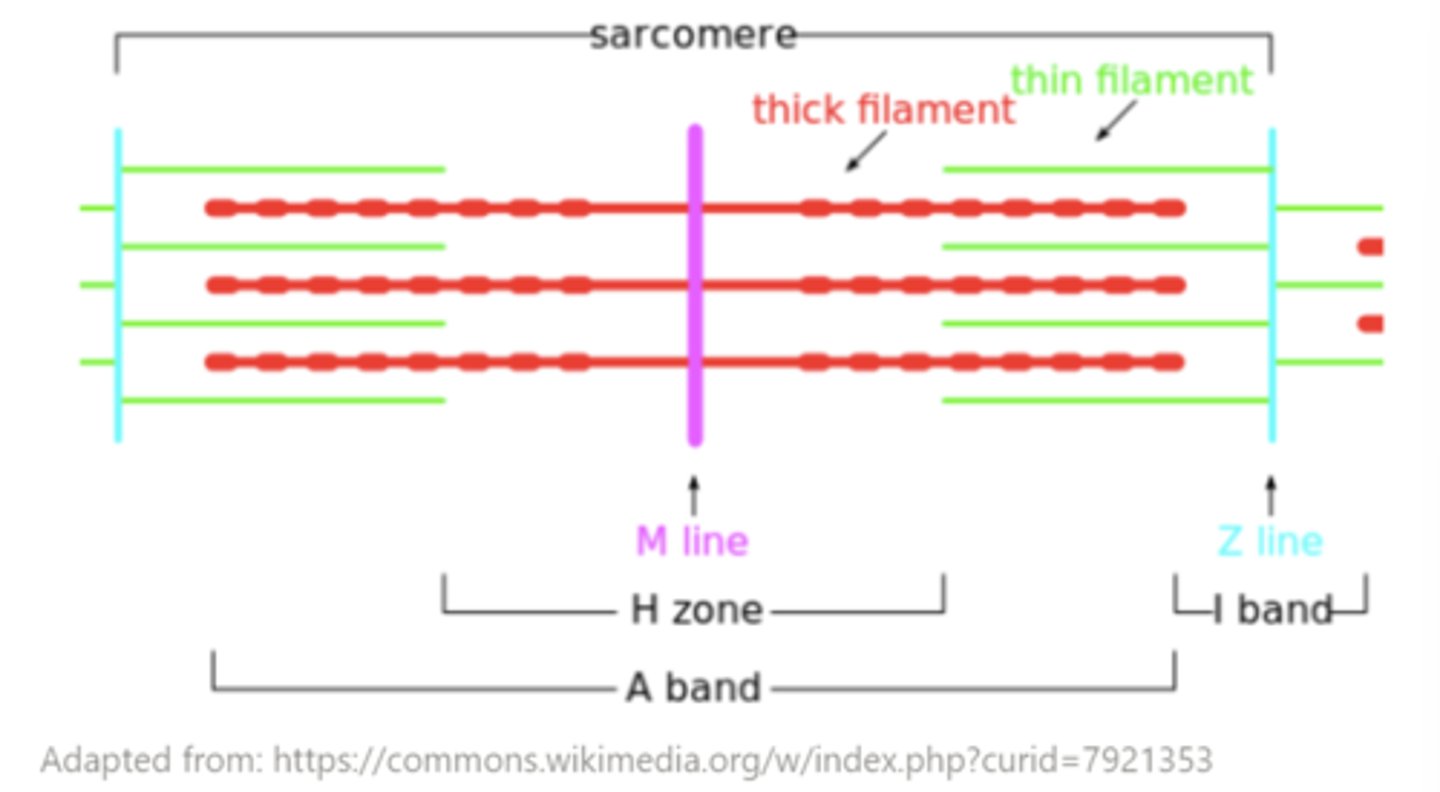
_____ are areas where only actin is present (includes the Z disk)
I bands
Mnemonic: I is a thin letter, so the I band only has thin filaments (actin)
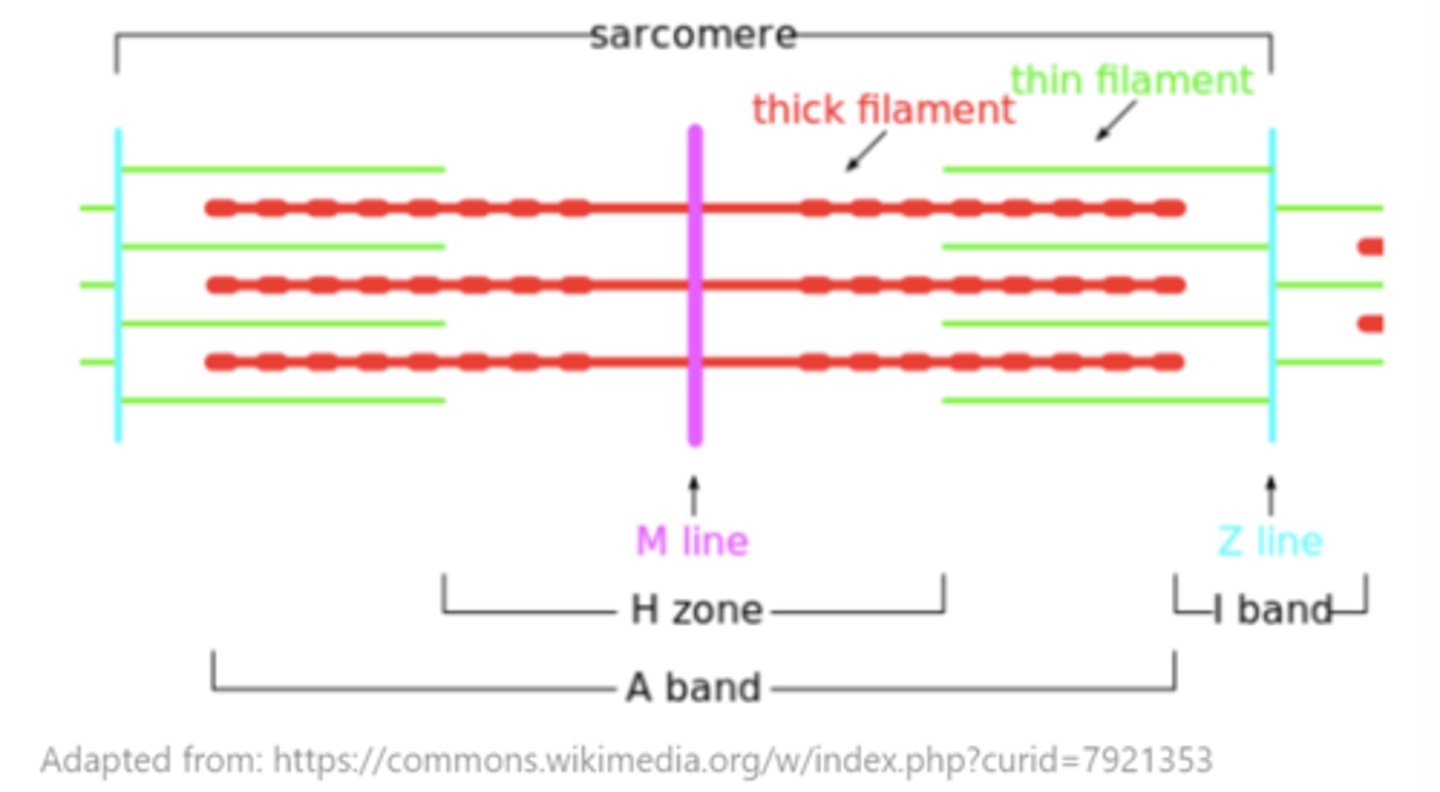
_____ are areas where myosin and actin overlap
A bands
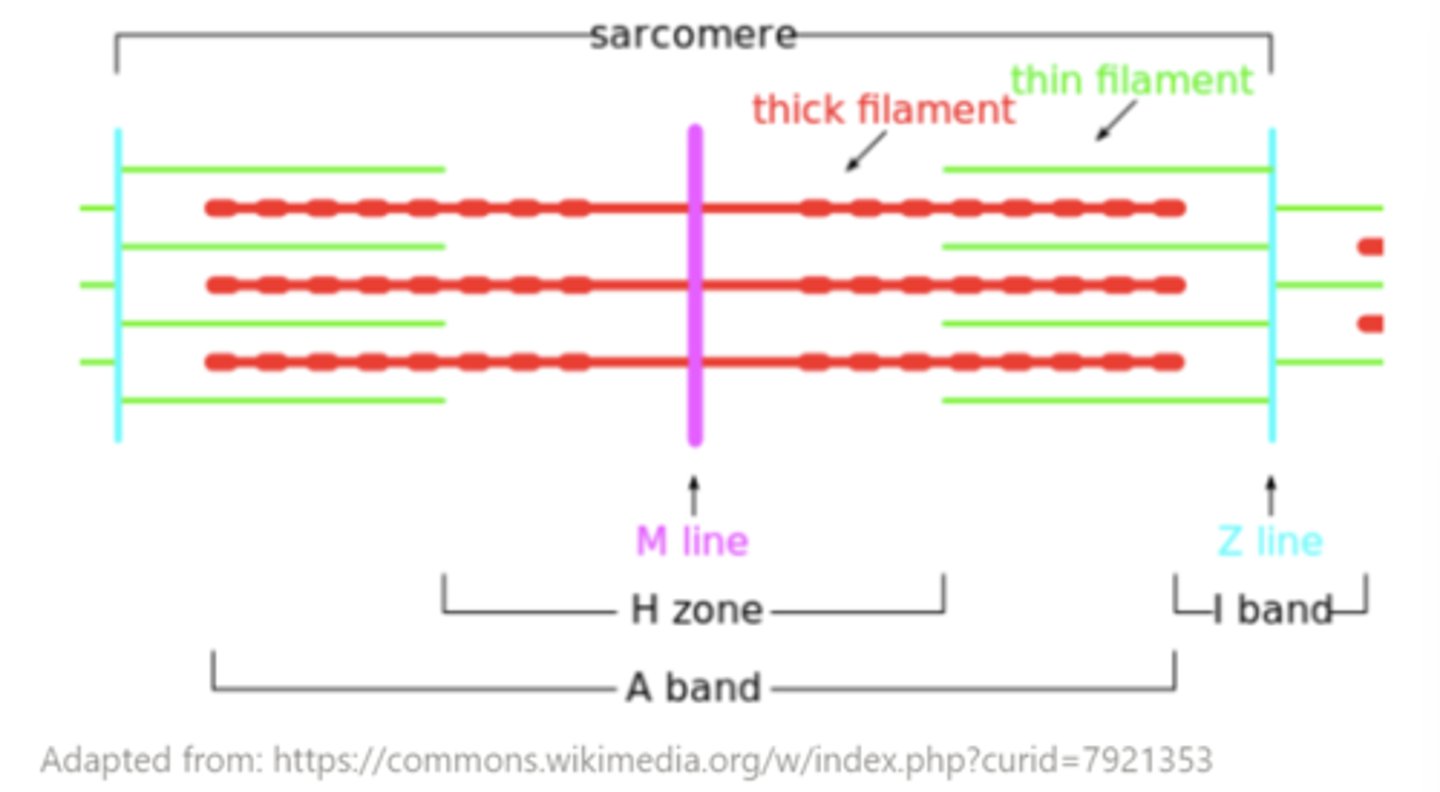
all bands and zones of a sarcomere shorten/disappear during a muscle contraction, with the exception of _____
the A band
the _____ is an area where only myosin is present
H zone
Mnemonic: H is a thick letter, so the H zone only has thick filaments (myosin)
a _____ is all the muscle fibers innervated by one motor neuron
motor unit
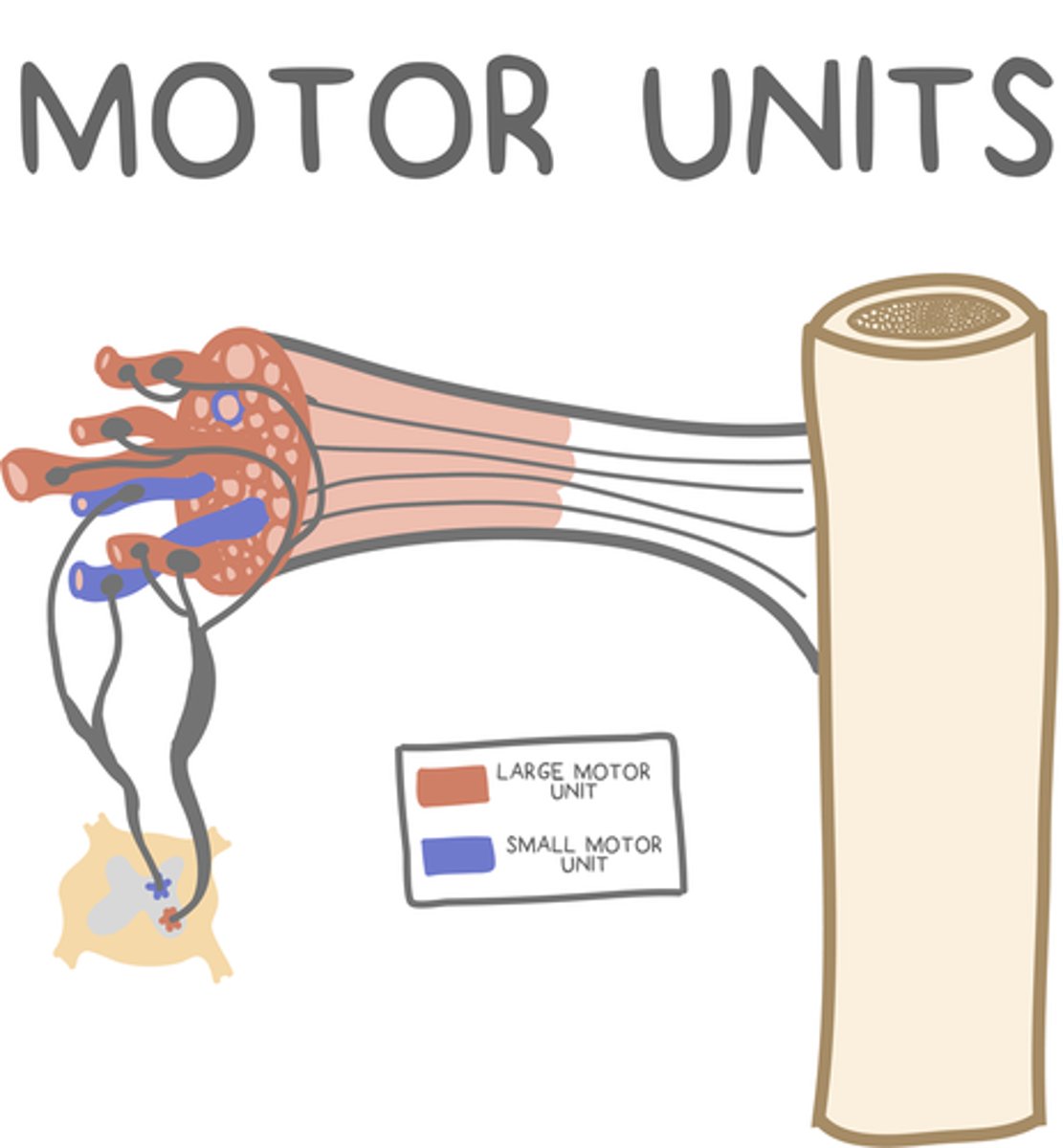
describe the general concept of a small motor unit
1 motor unit with few muscle fibers
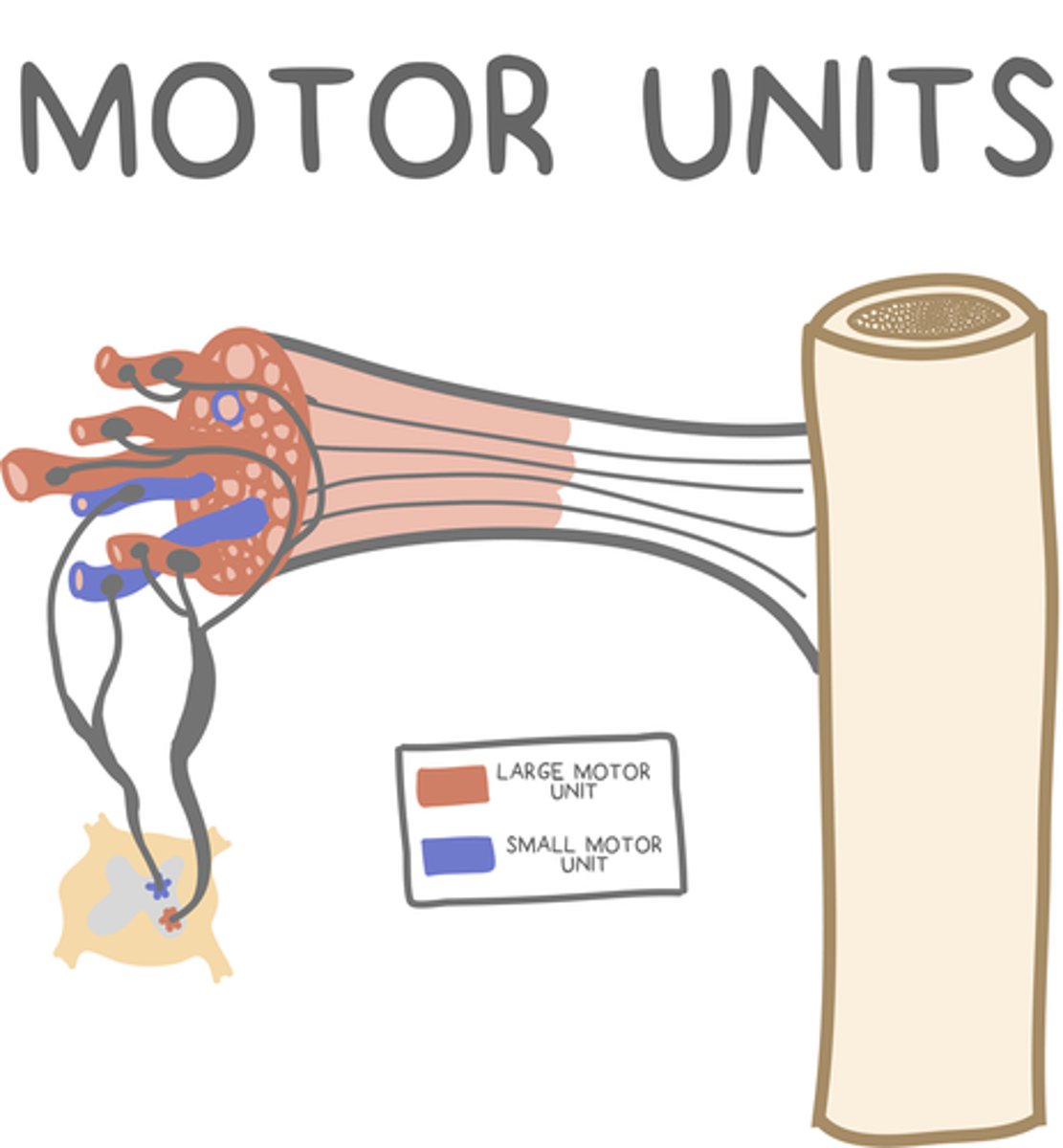
_____ movements are created by small muscles with many small motor units
precision
describe the general concept of a large motor unit
1 motor unit with many muscle fibers
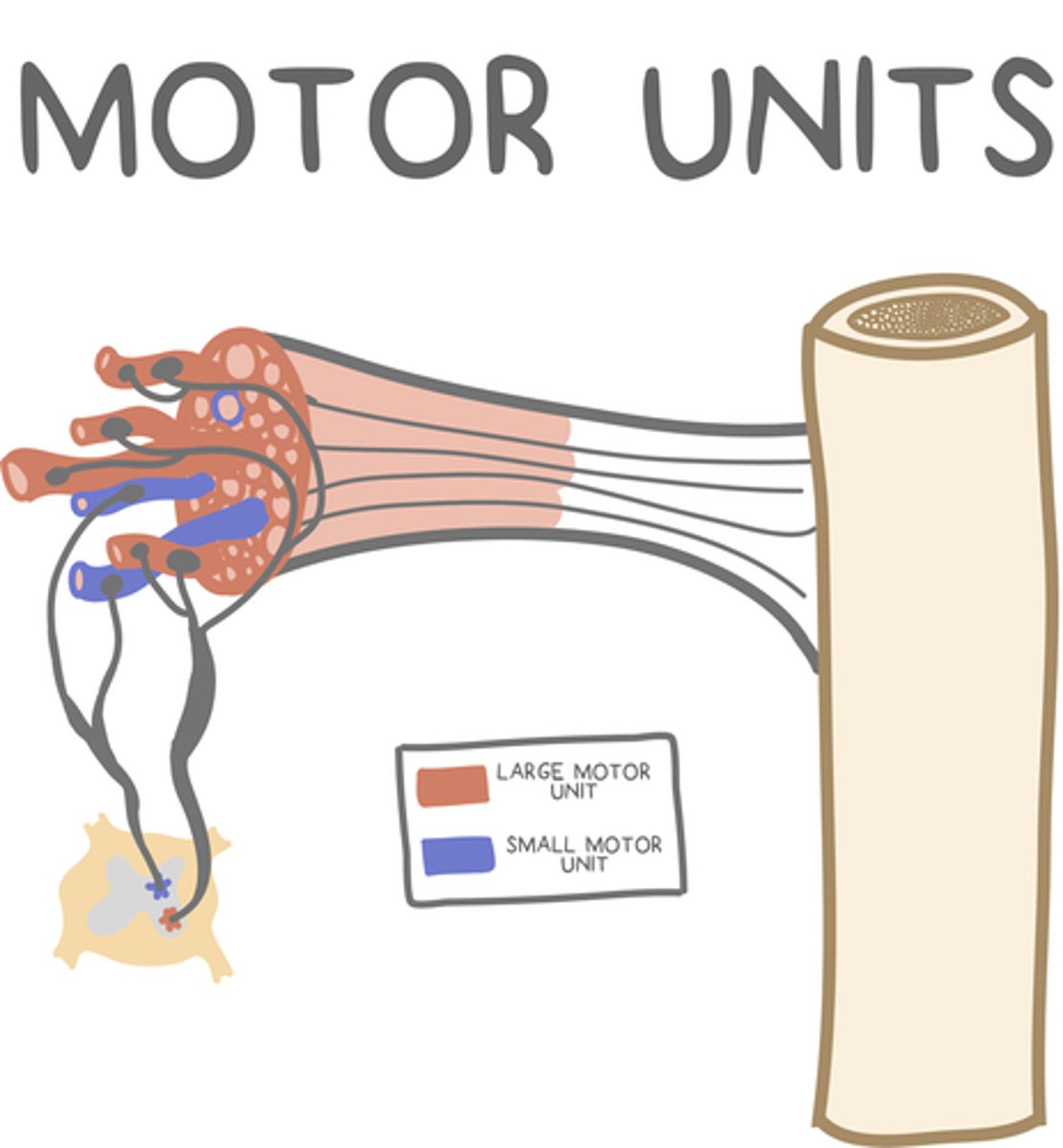
_____ movements are created by large muscles with few large motor units
powerful
a _____ is a brief muscle fiber contraction after a single action potential stimulates an entire motor unit
twitch
describe the all-or-nothing principle of muscle contraction
either the depolarization is above threshold (all fibers in the unit twitch) or it is below threshold (no fibers in the unit twitch)
what are the two main types of voluntary skeletal muscle contractions?
isotonic & isometric
_____ are those where the muscle contracts against the same weight to product a constant tension
isotonic contractions
what are the two types of isotonic contractions?
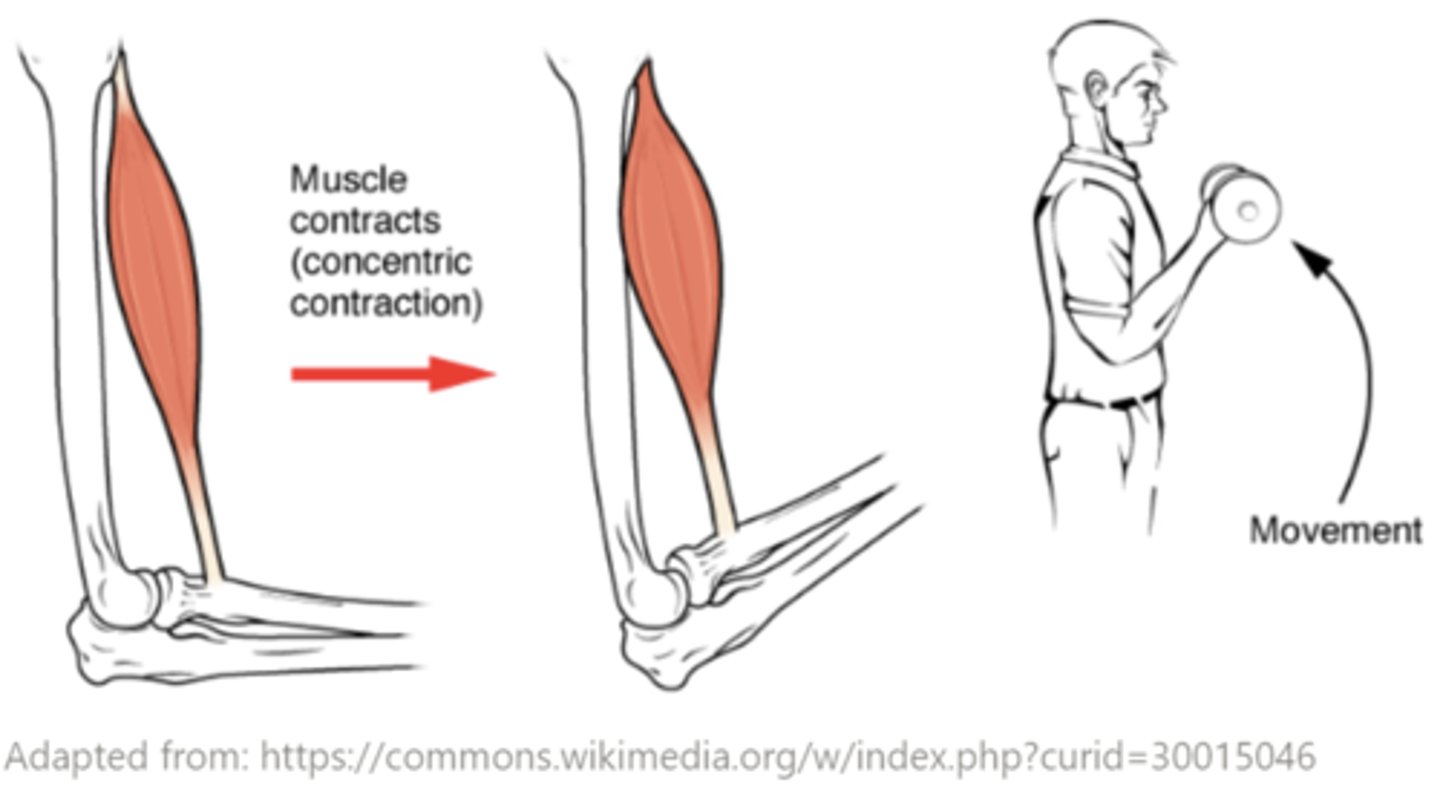
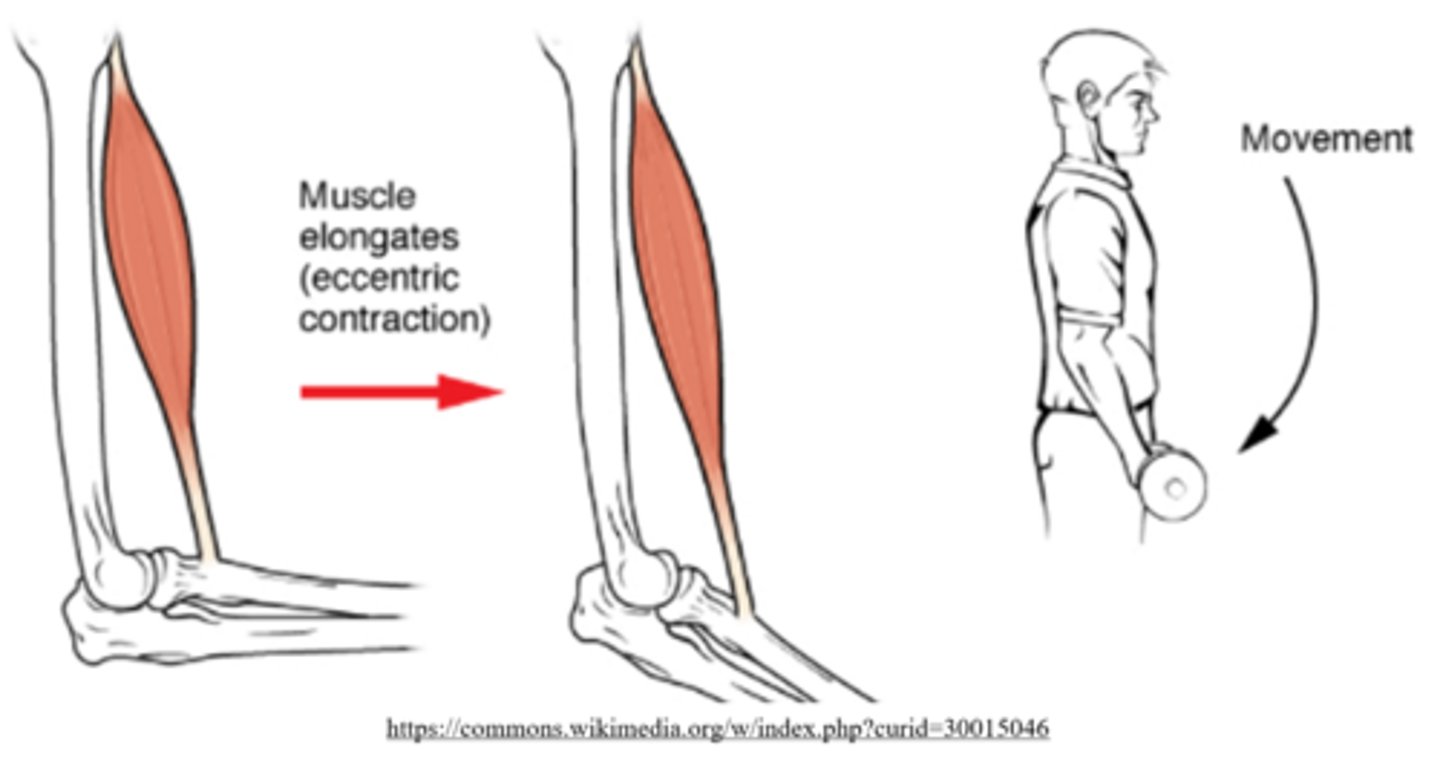
concentric and eccentric
_____ occur when a muscle shortens as it pulls the bone it inserts onto closer to the bone it originates from
concentric contractions
_____ occur when a muscle lengthens
eccentric contractions
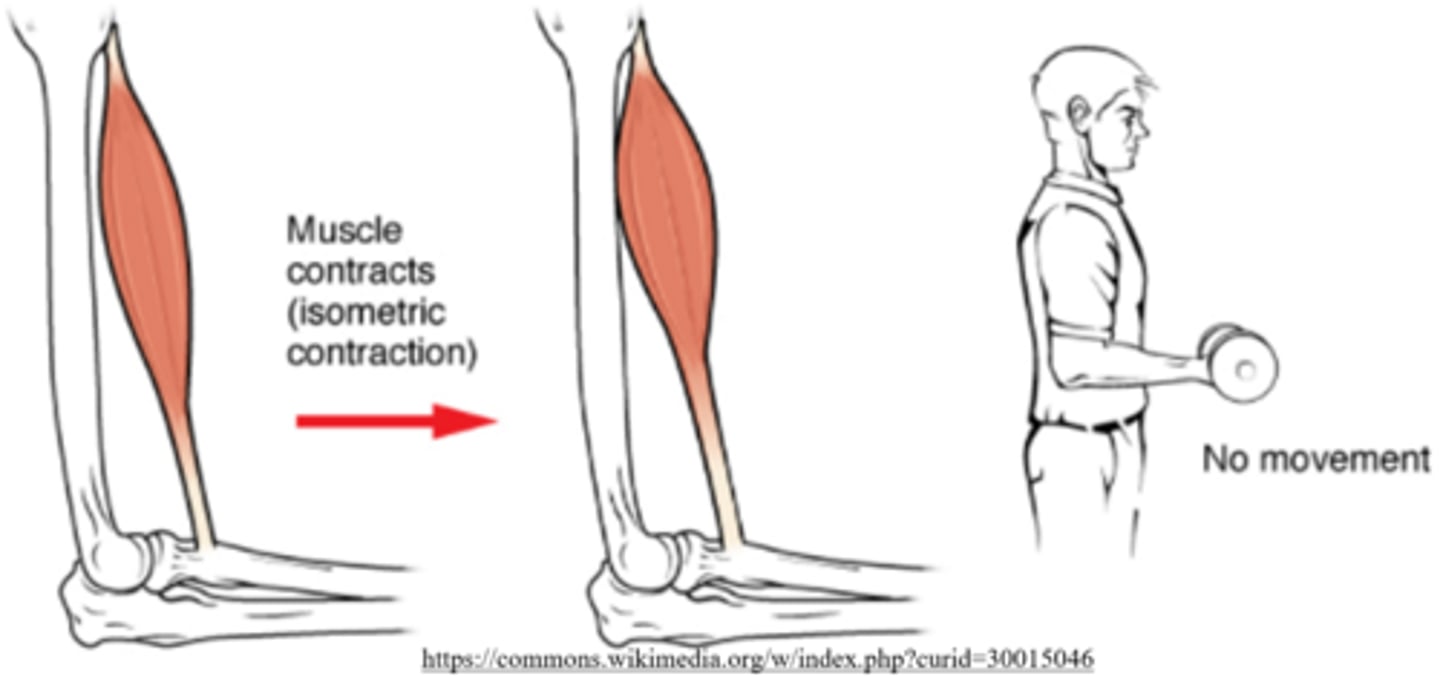
_____ occur when the muscle length and angle across the joint do not change
isometric contractions
what are the three main functional groups of skeletal muscles?
agonists (primary movers); antagonists; synergists
_____ are muscles involved in preforming a desired motion
agonists
_____ produce the opposite motion to agonists
antagonists
_____ are muscles that help primary movers and provide support to joints
synergists