A-Level Biology - 3.6.1 Stimuli, both internal and external, are detected and lead to a response
 Call Kai
 Learn
Learn Practice Test
 Spaced Repetition
 Match
Match Flashcards
 Knowt Play
1/52

There's no tags or description
Looks like no tags are added yet.
Name | Mastery | Learn | Test | Matching | Spaced | Call with Kai | Chat |
|---|
No analytics yet
Send a link to your students to track their progress
53 Terms
What are stimuli?
detectable changes in an environment
What are receptors?
cells that detect stimuli
Name two simple responses by organisms in response to changes in an environment
taxes
kineses
What is the role of taxes and kinesis?
simple responses that can maintain a mobile organism in a favourable environment
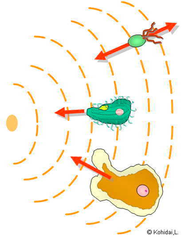
What is taxis?
directional response to a stimulus
away from an unfavourable stimulus, towards a favourable one
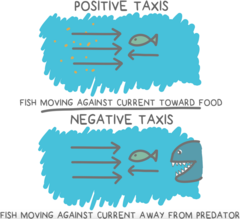
What is positive taxis?
when an organism moves towards a stimulus
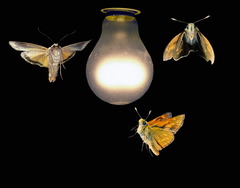
What is a negative taxis?
when an organism moves away from a stimulus
What is kinesis?
non directional response to a stimulus
organism changes its speed of movement and rate it changes direction
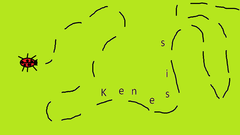
How does kinesis enable the survival of an organism?
in an unfavourable environment, the organism increases its speed and rate at which it changes direction
increases chance that organism is returned to a new location with favourable conditions
What is tropism?
plant growth in response to a stimulus
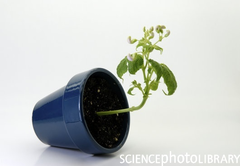
What is negative tropism?
plant growth away from a stimulus
What is positive tropism?
plant growth towards a stimulus
Name three plant stimuli
light
gravity
water
In flowering plants, what is growth in response to directional stimuli regulated by?
specific growth factors
Name a growth factor in plants
indoleacetic acid (IAA)
What is the role of IAA in flowering plants?
produced in tip of roots and shoots, then transported away to other tissues
controls cell elongation in shoots and inhibits cell elongation in the roots
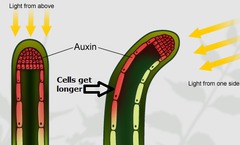
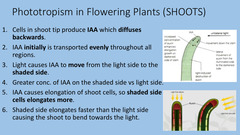
Explain the process of phototropism in plant shoots
cells in shoot tip produce IAA, which is transported away from the tip
in unilateral light, IAA diffuses towards the shaded side of the shoot
causes cells to elongate more on shaded side (where IAA concentration is higher) causing shoot to bend towards light
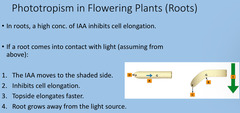
Explain the process of phototropism in plant roots
cells in root tip produce IAA, which is transported away from the tip
IAA diffuses towards the shaded side of the root
inhibits cell elongation on shaded side (where IAA concentration is higher) causing root to bend away from light
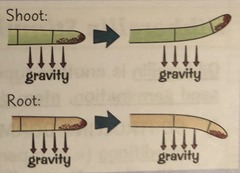
Explain the process of gravitropism in plant shoots
cells in shoot tip produce IAA; gravity causes movement of IAA to lower side of shoot
greater concentration on lower side so cells elongate more on lower side, causing shoot to bend away from gravity
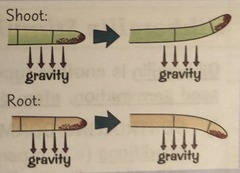
Explain the process of gravitropism in plant roots
cells in root tip produce IAA; gravity causes movement of IAA to lower side of root
greater concentration on lower side so cells elongate less on lower side, causing shoot to bend towards gravity
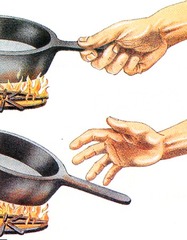
What is a reflex?
rapid and automatic response to a stimulus that can protect and organism from harm
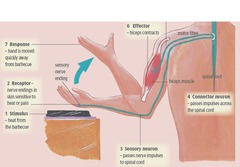
How many neurones are in a simple reflex arc?
three
Describe a three-neurone simple reflex arc
stimulus
↓
receptor
↓
sensory neurone
↓
relay neurone
↓
motor neurone
↓
effector
↓
response
What is a Pacinian corpuscle?
a receptor that responds to changes in mechanical pressure
convert energy of stimulus into nervous impulse (generator potential)
What does stimulation of a receptor lead to?
the establishment of a generator potential
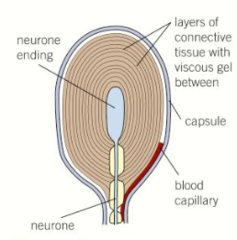
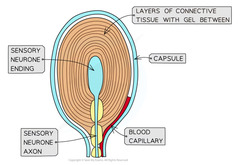
Describe the structure of a Pacinian corpuscle
sensory neurone ending surrounded by lamellae
surrounded by capsule
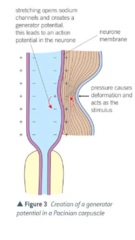
What leads to the establishment of a generator potential in a Pacinian corpuscle?
deformation of stretch mediated sodium ion channels
Explain how a generator potential is produced in a Pacinian corpuscle
1) Increased pressure deforms stretch-mediated sodium ion channels in the membrane, causing them to open
2) Na+ diffuse into sensory neurone through the channels by facilitated diffusion
3) end of sensory neurone becomes depolarised - potential difference between end and rest of neurone creates generator potential
Draw the structure of the eye
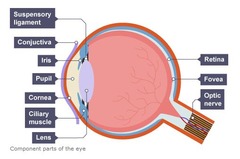
Name two photoreceptors in the retina
rods
cones
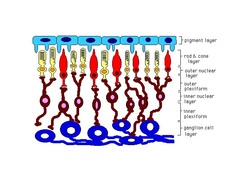
Explain the differences in sensitivity to light in rods and cones
RODS
- sensitive to low light intensity, so function better in low light
- many rod cells synapse with single sensory neurone, increasing chance that threshold value to create generator potential is exceeded
CONES:
- not sensitive to low light, so function better in bright light
- each cone cell synapses with a single sensory neurone, making it harder to exceed threshold value to create generator potential
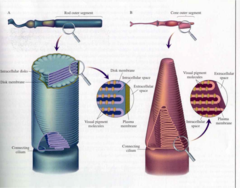
Explain the differences in sensitivity to colour in rods and cones
RODS:
- not sensitive to colour, see in black and white
- all contain rhodopsin, which absorbs a wide range of wavelengths
CONES
- sensitive to colour, see in red, green and blue
- three different types, each with a different pigment that absorbs a narrow range of wavelengths
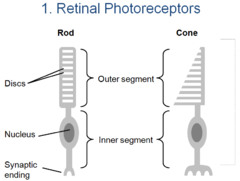
Explain the differences in visual acuity produced by rods and cones
RODS
- poor visual acuity
- many rod cells synapse with single sensory neurone
- single set of impulses to brain
CONES:
- high visual acuity
- each cone cell synapses with a single sensory neurone
- separate sets of impulses to the brain
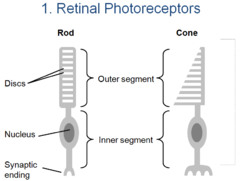
Describe the distribution of rods and cones
cone cells concentrated at fovea
rod cells concentrated at peripheries
blind spot has no rod or cone cells
What does myogenic mean?
heart contractions are initiated from within the muscle itself, not by nerve impulses
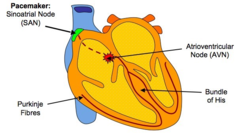
Where is the sino-atrial node (SAN) located?
wall of right atrium
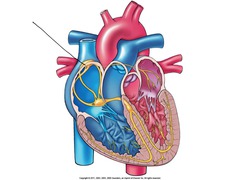
What is the role of the SAN in control of heart rate?
SAN produces a wave of electrical activity that travels across the atria walls, causing them to contract at the same time
its basic rhythm of contraction makes it a pacemaker
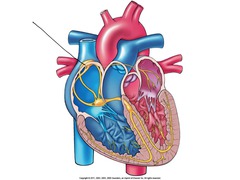
What prevents the initial electrical impulse from the SAN from crossing to the ventricles?
layer of non-conductive tissue (atrioventricular septum) prevents impulse from crossing to ventricles
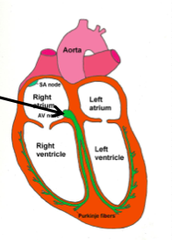
What is the role of the atrioventricular node (AVN) in control of heart rate?
wave of electrical activity enters AVN
after a short delay (atria empty of blood), AVN conducts electrical impulse between ventricles along Purkyne tissue in the bundle of His
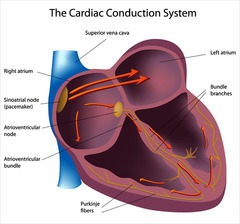
What is the role of Purkyne tissue in the bundle of His in the control of heart rate?
Purkyne tissue makes up the bundle of His
Bundle of His conducts impulse between ventricles to Purkyne fibres at base of ventricles
impulse spreads upwards through Purkyne fibres across ventricle walls, causing them to contract at the same time from the bottom upwards
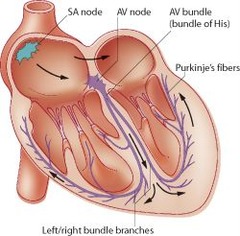
Describe the myogenic stimulation of the heart and how the regular contraction of the atria and ventricles is coordinated
1) SAN releases wave of electrical activity
2) So atria contract at the same time
3) AVN relays electrical activity after a short delay
4) Via Purkyne tissue in bundle of His
5) So ventricles contract at the same time from bottom upwards
Name two types of receptors involved in the control of heart rate
chemoreceptors
baroreceptors (pressure receptors)
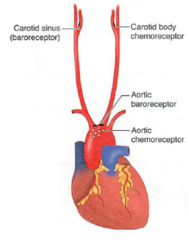
Where are chemoreceptors involved in control of heart rate located?
walls of the carotid arteries
aorta
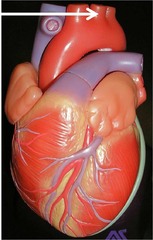
What are chemoreceptors sensitive to?
changes in CO₂ concentration and pH of the blood
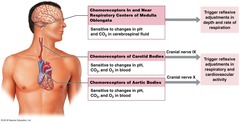
What is the role of chemoreceptors in controlling heart rate (during exercise)?
chemoreceptors detect increase in CO₂ concentration and decrease of blood pH
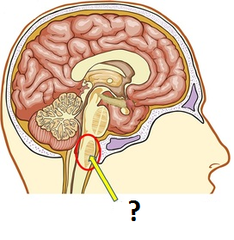
chemoreceptors increase frequency of impulses to cardiac centre in medulla
cardiac centre sends more impulses to the SAN via sympathetic nervous system
to increase the rate of production of electrical waves by the SAN and therefore increase heart rate
What is the role of chemoreceptors in controlling heart rate (when blood pH increases)?
increased blood flow causes more CO₂ being removed so CO₂ concentration of blood decreases
chemoreceptors detect higher pH and reduce frequency of impulses to cardiac centre in medulla
cardiac centre sends less impulses to the SAN, reducing heart rate
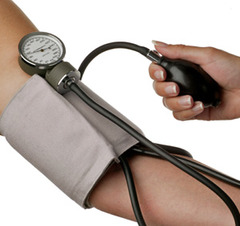
What are baroreceptors sensitive to?
changes in blood pressure
Where are baroreceptors involved in control of heart rate located?
wall of carotid arteries
aorta
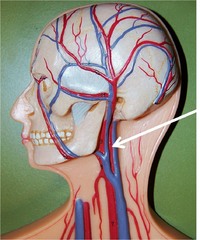
What is the role of baroreceptors in controlling heart rate (when blood pressure increases)?
pressure receptors detect increase in blood pressure
increase frequency of electrical impulses to cardiac centre in medulla
centre sends impulses via parasympathetic nervous system to SAN to decrease heart rate
What is the role of baroreceptors in controlling heart rate (when blood pressure decreases)?
pressure receptors increase frequency of impulses to the cardiac centre in medulla
centre sends impulses via sympathetic nervous system to SAN to increase heart rate
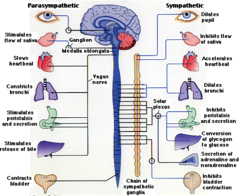
Name the two parts of the autonomic nervous system
sympathetic and parasympathetic
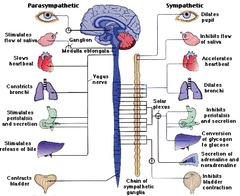
What is the role of the sympathetic nervous system?
triggers fight of flight response
eg increases heart rate, dilates bronchi
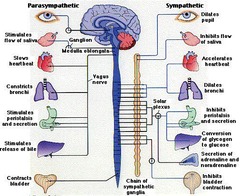
What is the role of the parasympathetic nervous system?
relaxes the body
eg decreases heart rate, stimulates digestion