NCM103-1L: Patient Positions in Bed
 Call Kai
 Learn
Learn Practice Test
 Spaced Repetition
 Match
Match Flashcards
 Knowt Play
1/14

Earn XP
Description and Tags
NurseLabs - Patient Positioning https://nurseslabs.com/patient-positioning/
Name | Mastery | Learn | Test | Matching | Spaced | Call with Kai |
|---|
No analytics yet
Send a link to your students to track their progress
15 Terms
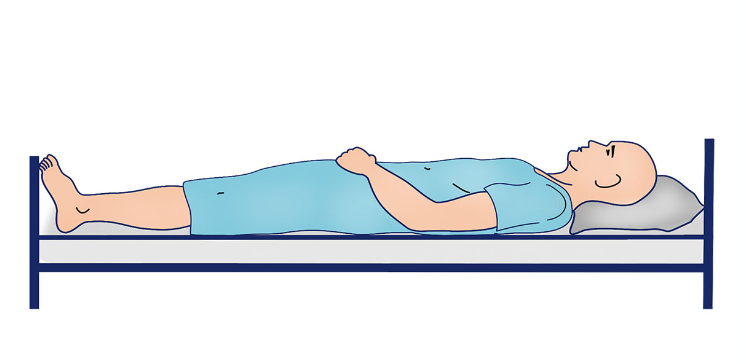
supine
the patient lies flat on the back with head and shoulders slightly elevated using a pillow unless contraindicated (e.g., spinal anesthesia, spinal surgery)
dorsal recumbent
the patient lies flat on the back with head and shoulders slightly elevated using a pillow unless contraindicated; thighs are slightly raised and knees are bent
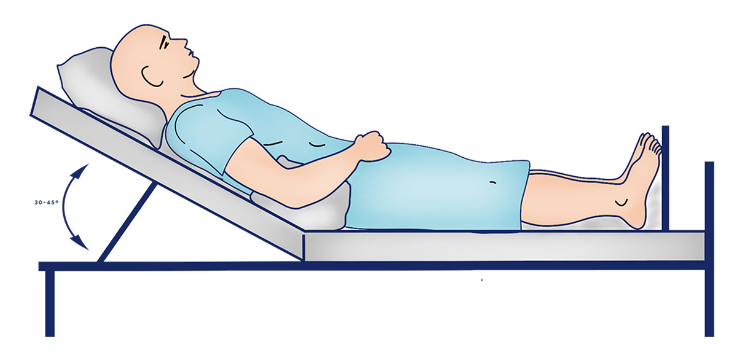
low fowler’s
(semi-sitting position - low) head of the bed is elevated 15 to 30 degreees
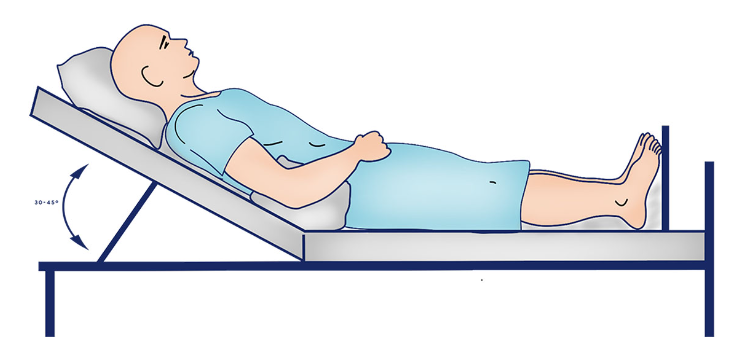
semi fowler’s
(semi-sitting position - mid) head of the bed is elevated 30 to 45 degreees
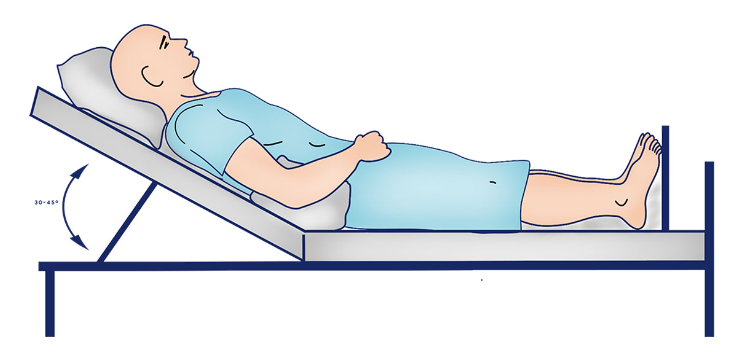
high fowler’s
(semi-sitting position - high) head of the bed is elevated 45 degrees to near vertical
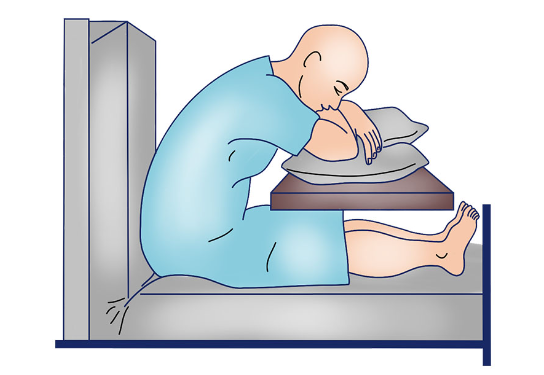
orthopneic
(tripod position) the patient in a sitting position or on the side of the bed with an overbed table in front to lean on and several pillows on the table to rest on
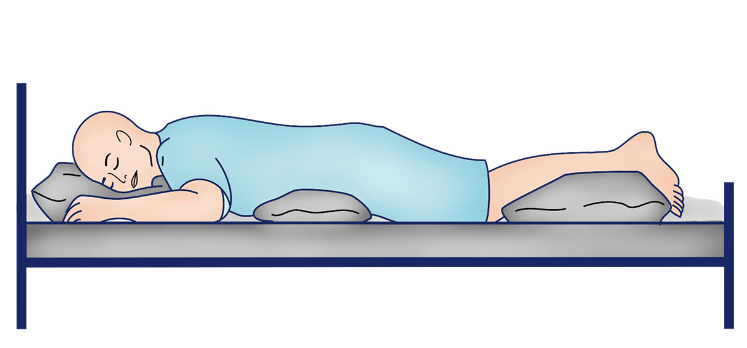
prone
the patient lies on the abdomen with their head turned to one side and the hips are not flexed
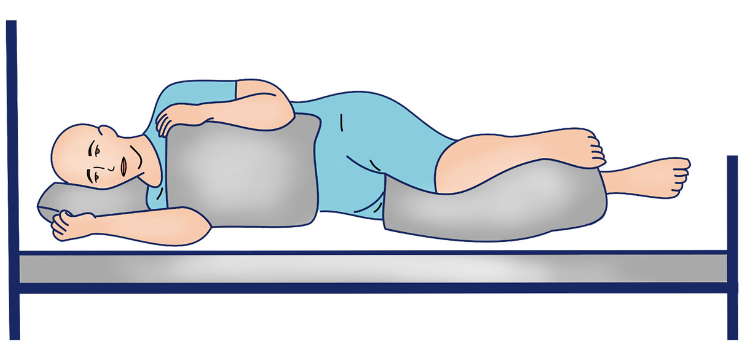
lateral
(side-lying position) the patient lies on one side of the body with the top leg in front of the bottom leg and the hip and knee flexed
flexing the top hip and knee and placing this leg in front of the body creates a wider, triangular base of support and achieves greater stability
an increase in flexion of the top hip and knee provides greater stability and balance, this flexion reduces lordosis and promotes good back alignment
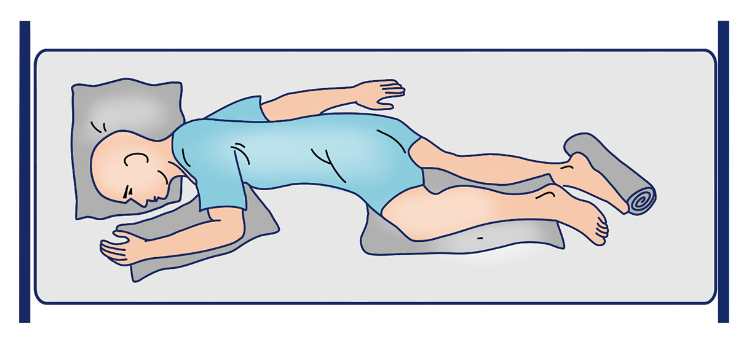
sim’s
(semi-prone position) the patient assumes a posture halfway between the lateral and the prone positions
the lower arm is positioned behind the client, and the upper arm is flexed at the shoulder and the elbow
the upper leg is more acutely flexed at both the hip and the knee than is the lower one
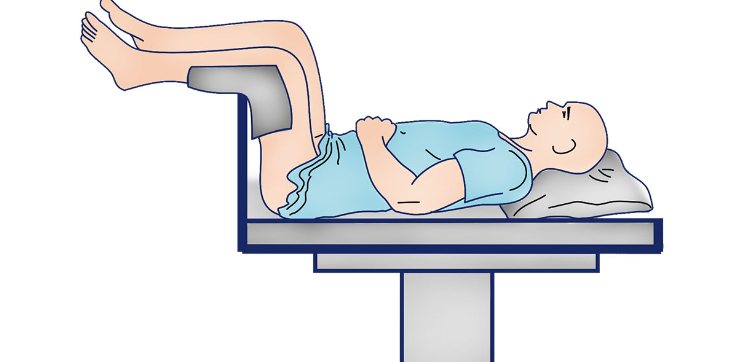
lithotomy
the patient is on their back with hips and knees flexed and thighs apart (pregnancy delivery)
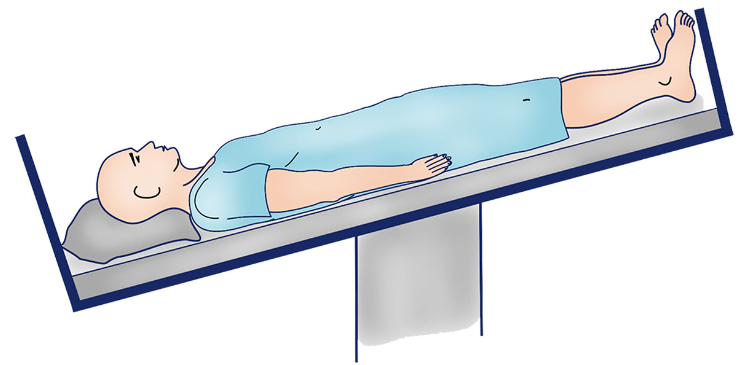
trendelenburg’s
lowering the head of the bed and raising the foot of the bed of the patient; the patient’s arms should be tucked at their sides
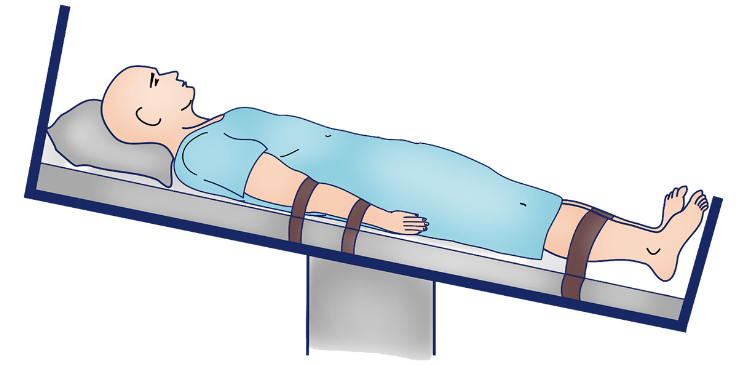
reverse trendelenburg’s
the head of the bed is elevated with the foot of the bed down; it is the opposite of Trendelenburg’s position
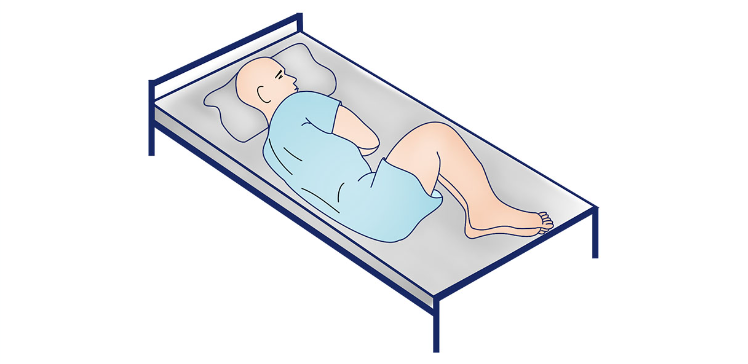
knee chest
lateral or prone:
lateral: the patient lies on their side, the torso lies diagonally across the table, and the hips and knees are flexed
prone: the patient kneels on the table and lowers their shoulders onto the table, so their chest and face rest on the table
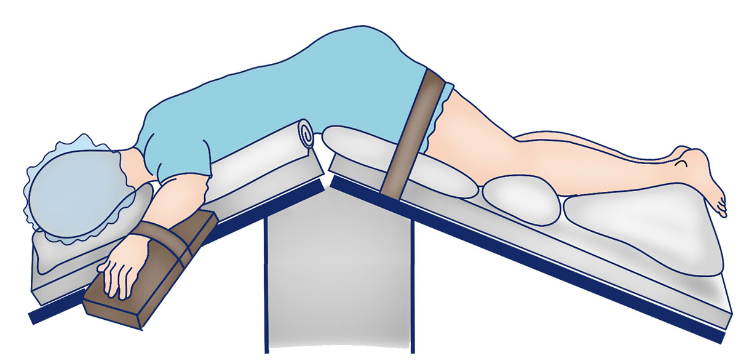
jackknife
(kraske) the patient’s abdomen lies flat on the bed, the bed is scissored so the hip is lifted and the legs and head are low
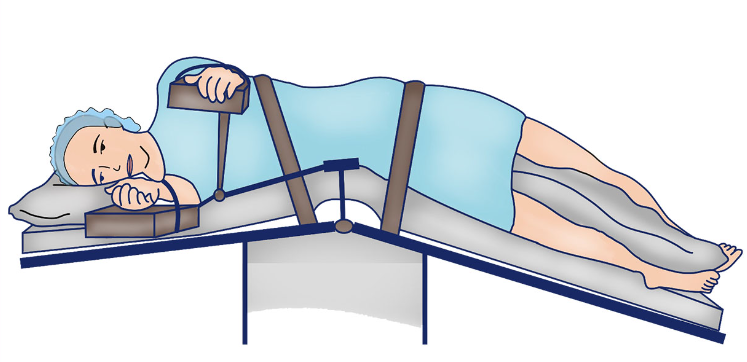
kidney
the patient assumes a modified lateral position wherein the abdomen is placed over a lift in the operating table that bends the body
the patient is turned on their contralateral side with their back placed on the edge of the table
the contralateral kidney is placed over the break in the table or over the kidney body elevator (if an attachment is available)
the uppermost arm is placed in a gutter rest at no more than 90º abduction or flexion