PCOL 2 - ANGINA CAD SUPP.
 Call Kai
 Learn
Learn Practice Test
 Spaced Repetition
 Match
Match Flashcards
 Knowt Play
1/83

There's no tags or description
Looks like no tags are added yet.
Name | Mastery | Learn | Test | Matching | Spaced | Call with Kai | Chat |
|---|
No analytics yet
Send a link to your students to track their progress
84 Terms
What is angina pectoris?
A characteristic chest pain or discomfort due to myocardial ischemia or infarction.

What underlying disease is associated with angina pectoris?
Coronary Artery Disease (CAD).
What is the primary cause of coronary artery disease?
Insufficient blood flow in one or more coronary arteries.
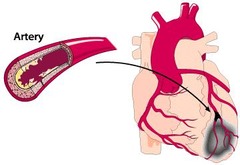
What are the types of angina pectoris?
Acute Coronary Syndrome (ACS), Chronic Stable Angina Pectoris (CSAP), and Prinzmetal Angina.
What characterizes Acute Coronary Syndrome (ACS)?
Chest pain lasting at least 20 minutes, unrelieved by rest and sublingual nitrates.
What is the difference between STEMI and NSTEMI?
STEMI is ST Segment Elevation Myocardial Infarction, while NSTEMI is No ST Segment Elevation Myocardial Infarction.
What is Chronic Stable Angina Pectoris (CSAP)?
Also known as effort angina, it lasts 2-5 minutes and is provoked by physical exertion or stress.
What is Prinzmetal Angina?
Also called Variant Angina, it is caused by transient spasm of localized portions of blood vessels.
What is the primary therapeutic objective of antianginal agents?
To restore the balance between myocardial oxygen supply and demand.
What are the main classes of antianginal drugs?
Vasodilators, Calcium Channel Blockers, and Beta-Blockers.
What is the action of nitrovasodilators?
They counteract vasospasm and increase oxygen supply.
What are the side effects of nitrovasodilators?
Tolerance, vascular headache, reflex tachycardia, and postural hypotension.
What is the role of calcium channel blockers in angina?
They decrease myocardial oxygen requirement by reducing heart rate, blood pressure, and contractility.
What can cause significant myocardial ischemia in Prinzmetal Angina?
Transient spasm of localized portions of blood vessels.
What is the effect of nitrates on myocardial oxygen requirements?
They decrease preload and venous return, thus reducing oxygen requirements.
What is 'Monday Disease' in relation to nitrovasodilators?
A phenomenon where tolerance develops when nitrate serum levels are sustained over time.
What is the significance of sildenafil when used with nitrates?
It can cause severe hypotension and myocardial infarctions due to potentiation of nitrates' action.
What is the effect of beta-blockers in angina management?
They are the first-line maintenance treatment for Chronic Stable Angina Pectoris (CSAP).
What is the duration of action for very short-acting nitrovasodilators?
Less than 5-10 minutes.
What are the clinical uses of sodium nitroprusside?
Management of angina pectoris, hypertensive emergencies, and acute pulmonary edema.
What is the mechanism of action of dipyridamole?
It acts as a vasodilator and antiplatelet drug.
What is the primary mechanism of calcium channel blockers in angina relief?
They reduce myocardial contractile force and arterial pressure.
What is the typical duration of action for intermediate-acting nitrovasodilators?
5-8 hours.
What is the effect of nitrates on mean arterial pressure?
They reduce afterload and diminish oxygen requirements.
What is the role of organic nitrates in angina treatment?
They are used to relieve angina by increasing myocardial oxygen supply.
What characterizes silent ischemia?
Ischemia not accompanied by pain, which can occur in some individuals.
What is the clinical significance of atherosclerosis in CAD?
It leads to fixed coronary artery narrowing, contributing to angina.
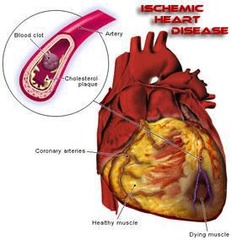
What is Coronary Artery Disease (CAD)?
Also known as Ischemic Heart Disease or Coronary Heart Disease, CAD is a condition where insufficient blood flow occurs in one or more coronary arteries.
What are the potential consequences of Coronary Artery Disease?
It can lead to temporary ischemia (decreased oxygenation of myocardium) or complete infarction (absence of oxygenation leading to myocardial necrosis).
What are the common causes of Coronary Artery Disease?
Atherosclerosis, thrombosis, embolism, and vasospasm.
What is the difference between ischemia and infarction?
Ischemia is partial damage with decreased oxygenation but viable myocardial cells, while infarction is complete damage leading to cell death.
What is the role of vasodilators in treating Angina Pectoris?
They help to increase blood flow to the heart muscle, alleviating chest pain caused by angina.
What is the significance of troponins in myocardial infarction?
Increased troponin levels indicate heart muscle damage, commonly used to detect myocardial infarction.
What is the underlying disease associated with Angina Pectoris?
Coronary Artery Disease (CAD).
What can trigger the symptoms of Angina Pectoris?
Physical exertion, emotional stress, or other factors that increase the heart's demand for oxygen.
What is the pathophysiology of Angina Pectoris?
It results from a mismatch between the heart's oxygen supply and demand, often due to narrowed coronary arteries.
What is the clinical use of antianginal agents?
To relieve chest pain associated with angina by improving blood flow or reducing the heart's workload.
What is atherosclerosis?
A condition characterized by the buildup of fatty deposits (atheromas) in the arterial walls, leading to reduced blood flow.

What is thrombosis?
The formation of a blood clot within a blood vessel, which can obstruct blood flow.
What is embolism?
The obstruction of a blood vessel by a clot or other debris that has traveled from another site in the circulation.
What is vasospasm?
A sudden constriction of a blood vessel, reducing blood flow, which can contribute to angina.
What does 'chest pain' indicate in the context of CAD?
It can indicate myocardial ischemia or infarction, but pain may not always be present.
What is the duration of ischemia?
It can be temporary, lasting for a few minutes, or it can lead to permanent damage.
What is the clinical significance of Acute Coronary Syndrome (ACS)?
ACS represents a range of conditions associated with sudden, reduced blood flow to the heart, often requiring immediate medical attention.
What is Acute Coronary Syndrome (ACS)?
A condition characterized by chest pain lasting for at least 20 minutes, unrelieved by rest and SL nitrates.
What are the three conditions related to ACS?
STEMI, NSTEMI, and Unstable Angina Pectoris.
What does STEMI stand for?
ST Segment Elevation Myocardial Infarction.
What does NSTEMI stand for?
Non-ST Segment Elevation Myocardial Infarction.
What is Chronic Stable Angina Pectoris?
Also known as effort angina or classic angina, it is caused by fixed coronary artery narrowing due to atheroma.
What triggers Chronic Stable Angina Pectoris?
Physical exertion, emotional stress, exposure to cold, or smoking.
How long does chest pain last in Chronic Stable Angina Pectoris?
Typically 2-5 minutes.
When does pain occur in Prinzmetal Angina?
Principally at rest and usually unprovoked by physical exertion.
What is the pathophysiology of angina?
An imbalance between the oxygen requirement of the heart and the oxygen supplied via coronary vessels.
What are the therapeutic objectives of antianginal agents?
To restore the balance between myocardial O2 supply and demand.
What are the classifications of antianginal drugs?
I. Vasodilators (Nitrates, Calcium Channel Blockers) II. Non-vasodilators (β-adrenergic Receptor Antagonists).
What are the classes of Nitrovasodilators?
I. Very Short-acting, II. Short-acting, III. Intermediate-acting, IV. Long-acting.
What is the effect of nitrates at regular/low doses?
Peripheral venodilation, increased peripheral pooling of blood, decreased preload/venous return, and reduced myocardial wall tension.
What happens at high doses of nitrates?
Additional arteriolar and coronary artery vasodilation, reduced mean arterial pressure, and increased O2 supply.
What is the role of Calcium Channel Blockers in angina treatment?
They decrease myocardial oxygen requirement and counteract vasospasm.
What is the significance of nitric oxide in vascular smooth muscle?
It causes relaxation and is involved in erectile dysfunction treatment.
What is a common side effect of nitrates?
Headaches due to vasodilation.
What is the Black Box warning associated with nitrates?
Risk of death when used with PDE-5 inhibitors.
What is the function of β-blockers in angina management?
They decrease heart rate, ventricular volume, blood pressure, and contractility.
What is 'silent' or 'ambulatory' ischemia?
Ischemia that occurs without accompanying pain in some individuals.
What is the typical prevalence of Chronic Stable Angina Pectoris?
Occurs in 2 out of 100 cases, considered rare.
What is the primary clinical use of sodium nitroprusside?
Management of hypertensive emergencies and angina pectoris.
How is sodium nitroprusside administered for acute coronary syndrome (ACS)?
IV infusion.
What is the role of beta-blockers in the management of chronic stable angina pectoris (CSAP)?
They decrease myocardial oxygen requirement by reducing heart rate, blood pressure, and contractility.
What is a significant side effect of nitrovasodilators?
Tachyphylaxis and tolerance.
What is the recommended time interval between using nitrates and sildenafil?
At least 6 hours.
What are the effects of sildenafil on vision?
It can cause difficulty in blue-green discrimination.
What do calcium channel blockers (CCBs) do in the context of angina?
They reduce myocardial oxygen requirements and relieve coronary artery spasm.
Which type of calcium channel blockers are alternatives to beta-blockers for CSAP?
Non-DHP CCBs like Verapamil and Diltiazem.
What is the effect of long-acting DHP CCBs in angina management?
They serve as alternative treatments for chronic stable angina pectoris.
What is the initial management approach for cyanide poisoning?
Use of sodium nitroprusside.
What is the mechanism of action of nitrovasodilators?
They cause vasodilation by increasing nitric oxide levels.

What is reflex tachycardia in relation to nitrovasodilator use?
An increase in heart rate that occurs as a compensatory response to vasodilation.
What is the primary action of dipyridamole?
It acts as a vasodilator and antiplatelet drug.
What are the short-acting DHP CCBs typically used for?
They are generally avoided unless for Prinzmetal angina, where they may be given with beta-blockers.
What is the role of nitrates in the treatment of Prinzmetal angina?
They are used in combination with beta-blockers for effective management.
What is the consequence of nitrite ions oxidizing iron atoms of hemoglobin?
It leads to the formation of methemoglobin, causing hypoxia.
What is the effect of beta-blockers on anginal attacks?
They can reduce the frequency of anginal attacks.
What is the significance of IV infusion of nitrovasodilators?
It allows for rapid onset of action in acute settings.
What is a common side effect of nitrovasodilators related to headaches?
Vascular headache.