Lecture 6: Periparturient And Postpartum Periods in Cattle
 Call Kai
 Learn
Learn Practice Test
 Spaced Repetition
 Match
Match Flashcards
 Knowt Play
1/42

There's no tags or description
Looks like no tags are added yet.
Name | Mastery | Learn | Test | Matching | Spaced | Call with Kai | Chat |
|---|
No analytics yet
Send a link to your students to track their progress
43 Terms
- uterine infections (endometritis, metritis, and pyometra)
- retained placenta
- metabolic and nutritional disease = ketosis, hypocalcemia, LDA
- prolapses (vaginal and uterine)
- perineal lacerations
- tears or uterine artery rupture
List the 6 major periparturient disease in cattle?
- metritis (NOT ENDOMETRITIS)
Which uterine infection is the most likely to make a cow sick and is the most common?
- dystocia
- hypocalcemia
- retained fetal membranes
- unsanitary calving
Uterine infections has a higher occurrence in dairy cattle. What are the predisposing factors?
- temporary inflammation of the endometrium (lining of uterus)
- animals are not sick and systemically well
- purulent exudate from vulva, but uterus feels normal on palpation
What are the signs of endometritis in cattle?
- parturition
- copulation (dirty DICK)
- AI
- uterine infusion
- normal vaginal flora
What are the causes of endometritis?
- a temporary issue that will clear after a few cycles,
- Ceftiofur SQ
How do you treat endometritis?
true
True or false
historically they used to treat, but no abx are approved for intra-uterine infusion in lactating dairy cattle
- contamination of the uterus during parturition
- unsanitary calvings
- dystocia
- dead calves
- improper dystocia management
- condition which increase retrained placenta or decrease involution
What are the causes of metritis?
- retained placenta
Metritis occurance can increase by 50-90% due to what?
- mixed G+ and G-, coliforms, anaerobes
- involution is not progressive,
- uterus has a thin and non-muscular wall
what is early non-septic metritis in cattle like?
- caused by synergistic activity of trueperella pyogenes and fusobacterium necrophorum
- large thin walled uterus with voluminous grey watery smelly fluid
what is late non-septic metritis in cattle like?
- clinical signs
- rectal exam
How do you diagnose non-septic metritis?
- early (7-10 days post partum) = subtle or undetectable
- malodorous, watery, fetid discharge = SMELLS
+/- ADR, depressed, decrease milk production, anorexia, fever
Non-septic metritis is diagnosed based on clinical signs, what are they?
- thick walls with good contractions
- no fluid in the uterus
What should a normal uterus feel like 2 weeks post partum in cattle?
- ceftiofur SQ = excenel (TX OF CHOICE)
How do you treat non-septic metritis?
- when a postpartum cow gets coliforms or clostridium in their uterus leading to endotoxic shock
What is septic/toxic metritis in cattle?
- systemically ill to moribund --> potentially fatal infection (very very sick)
- dehydration, sunken eyes, weakness, hypothermia
- enlarged thin walled uterus with voluminous fluid on rectal
What are the clinical signs for septic/toxic metritis?
- roughly handle the uterus
- infuse antimicrobials
- stimulate uterine contractions (no oxytocin or PGF2)
What should you not do when treating septic metritis since it can result in the release and absorption on endotoxins?
- supportive care --> fluids and systemic abx
- handle uterus carefully
- consider syphoning off uterine fluid
- stabilize how today and treat uterus tomorrow
How do you treat septic metritis?
- purulent exudate in uterus
- in the presence of corpus luteum/ progesterone (cervix is closed and pus held in uterus)
- no estrus
What are the characteristics of a pyometra in bovines?
1. metritis, endometritis, lochia, ect is present
2. cow ovulates and a CL forms while above is happening.
3. uterine contents inhibit PGF2a release and CL is maintained
What is the pathophysiology of bovine pyometra?
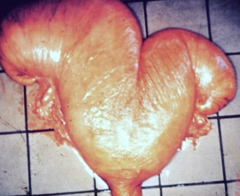
- 18 days
- if do not rid the cow of metritis, endometritis, ect the cow will likely get a pyometra
When is the first postpartum ovulation in a dairy cow? Why is this important with a pyometra?
- around 30 days
Normal gross uterine involution (shinkage) is complete when?
- endometritis
What does a cow have if it has a purulent discharge without a corpus luteum or progesterone?
- at routine reproductive herd health visit
- history or complaint of unobserved estrus
- no estrus after 60 days (voluntary waiting period)
- rectal exam
How do you diagnose a pyometra in cattle?
- give PGF2a to remove the CL
- fair to good, but don't breed on the first heat back
How do you treat a bovine pyometra? What is the prognosis?
- the presence of a placenta greater than 12 hours post partum
What are the characteristics of a bovine retained placenta/fetal membrane?
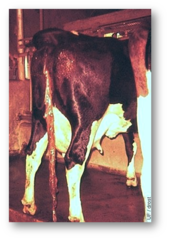
- benign neglect
- abx if acting ill
- ecbolics (oxytocin or PGF2a) but questionable value
- collagenases into the umbilical artery = most promising therapy but not approved in the USA
How do you treat a bovine retained placenta/fetal membrane?
- brahmans and crosses due to extra skin are most likely to get them
- heritable in herefords and shorthorns --> Cull them!!!!!!!
What are the etiologies of vaginal prolapse in cattle?
- usually pre-partum due to rise in estrogen
When does a vaginal prolapse normally occur and why?

- buhner technique until she is close to calving
How can you treat a vaginal prolopse?
- uterine
______ prolapse is not genetic and cows do not need to be culled for it.
- not related to vaginal prolapses
- not genetic = no culling
- due to a parturient accident, hypocalcemia, uterine inertia, straining
- begins with inversion of one uterine horn
What are uterine prolapses like in all species?
- uterine artery rupture --> hypovolemic shock --> QUICK DEATH = lost cause
- septicemia
- hypothermia
- strangulation of other abdominal viscera
- reperfusion injury
What are the sequella for uterine prolapses in all species?
- TRUE EMERGENCY
- need to travel to farm so cow does not rupture artery
- minimize stress
What do you need to consider when dealing with a uterine prolapse in cattle?

- epidural
- clean and debrite it
- reduction, make sure the horns are completely severed
- once reduced give oxytocin to prevent recurrence
- paranternal Ca
- abx
- +/- vulvar retention sutures
- amputation of the uterus cranial to cervix = last resort
How do you treat uterine prolapse in cattle?
- depends on initial systemic state
- recurrence is no more likely than any other cow
- long-term potential for metritis and subfertility
What is the prognosis of a uterine prolapse in a cow?
- 18 days PP first ovulation, usually silent
- 35 days PP to max 45 days first observed estrus
What is the postpartum return to estrus like in a normally involting adequately nourished dairy cow?
- the presence and the calf suckling
Why does return to estrus normally take longer in beef cattle?
- expulsion of lochia
- return to nongravide size and relative symmetry
- normally complete around 30 days
What does uterine involution grossly look like?
- necrosis and removal/expulsion of excess maternal tissue
- epithelialization of placental sites
- normally completed by 45 days
What does uterine involution histologically look like? When is it normally complete?
- yes = normal
Is this a normal lochia?

no = abnormal (too thin and watery)
Is this a normal lochia?
