CM 2.1 - Renal Diseases

0.0(0)
Studied by 0 people
call kaiCall Kai
Locked
learnLearn
examPractice Test
spaced repetitionSpaced Repetition
heart puzzleMatch
flashcardsFlashcards
GameKnowt Play
Card Sorting

1/27

encourage image

There's no tags or description

Looks like no tags are added yet.

Last updated 4:48 AM on 7/15/26
Name
Mastery
Learn
Test
Matching
Spaced
Call with Kai
Chat

No analytics yet

Send a link to your students to track their progress

28 Terms

1
New cards

SET A —GLOMERULAR DISEASE:

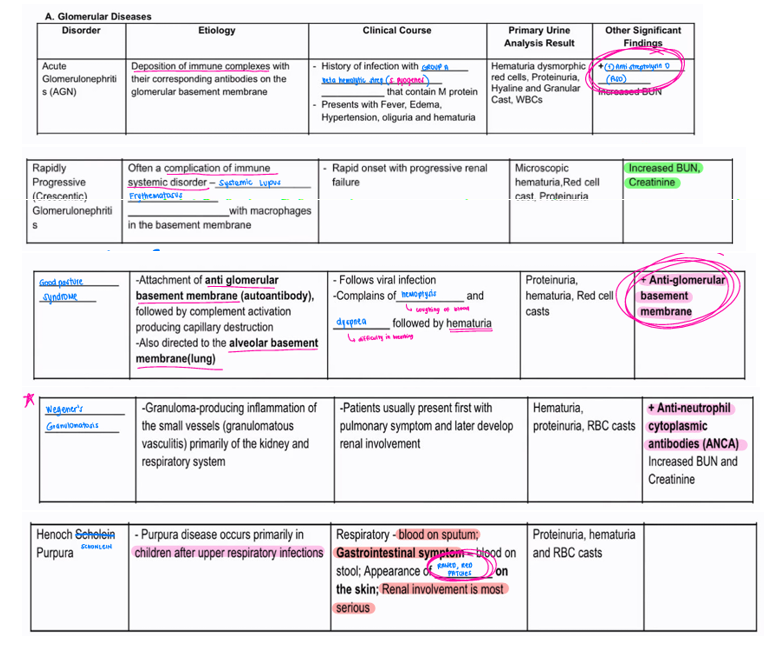
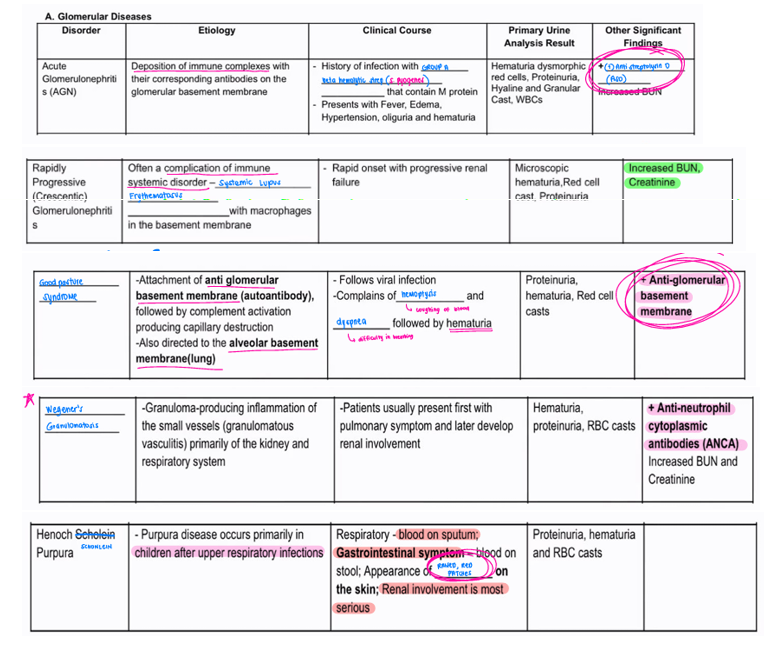
  • Occurs in patients with history of infection of Group A beta hemolytic streptococcus (S. pyogenes) that contain M protein

  • Acute Glomerulonephritis

  • Rapidly Progressive Glomerulonephritis

  • Good Pasture Syndrome

  • Wegener’s Granulomatosis

  • Henoch Schonlein Purpura

<ul><li><p><span style="color: red;"><strong>Acute Glomerulonephritis</strong></span></p></li><li><p><sub><sup>Rapidly Progressive Glomerulonephritis</sup></sub></p></li><li><p><sub><sup>Good Pasture Syndrome</sup></sub></p></li><li><p><sub><sup>Wegener’s Granulomatosis</sup></sub></p></li><li><p><sub><sup>Henoch Schonlein Purpura</sup></sub></p></li></ul><p></p>
2
New cards

SET A —GLOMERULAR DISEASE:

  1. What bacteria is the major cause of Acute Glomerulonephritis (AGN)?

  2. What infectious agent is specific to this bacteria?

  1. Group A beta hemolytic strep (S. pyogenes)

  2. M protein

<ol><li><p><strong><em><u>Group A beta</u></em></strong> hemolytic strep (<span style="color: blue;"><em>S. pyogenes</em></span>)</p></li><li><p><strong><em>M protein</em></strong></p></li></ol><p></p>
3
New cards

SET A —GLOMERULAR DISEASE:

  1. Given that Acute Glomerulonephritis (AGN) is caused by Group A beta strep (S. pyogenes), what clinical findings is found specific to this disease?

  1. (+) Anti Streptolysin O (ASO)

<ol><li><p>(+)<span style="color: blue;"><strong><em> Anti Streptolysin O </em></strong></span>(ASO)</p></li></ol><p></p>
4
New cards

SET A —GLOMERULAR DISEASE:

  • This disease is often a complication of immune systemic disorder (Systemic Lupus Erythrematosus) with macrophages in the basement memebrane

  • Acute Glomerulonephritis —strep bacterial infection

  • Rapidly Progressive Glomerulonephritis

  • Good Pasture Syndrome

  • Wegener’s Granulomatosis

  • Henoch Schonlein Purpura

<ul><li><p><sub><sup>Acute Glomerulonephritis —strep bacterial infection</sup></sub></p></li><li><p><span style="color: red;"><strong>Rapidly Progressive Glomerulonephritis</strong></span></p></li><li><p><sub><sup>Good Pasture Syndrome</sup></sub></p></li><li><p><sub><sup>Wegener’s Granulomatosis</sup></sub></p></li><li><p><sub><sup>Henoch Schonlein Purpura</sup></sub></p></li></ul><p></p>
5
New cards

SET A —GLOMERULAR DISEASE:

  • This disease is caused by attachment of anti-glomerular basement (autoantibody), followed by complement activation producing capillary destruction

  • Also directed to the alveolar basement membrane (lungs)

  • Acute Glomerulonephritis —-strep infc.

  • Rapidly Progressive Glomerulonephritis —systemic lupus

  • Good Pasture Syndrome

  • Wegener’s Granulomatosis

  • Henoch Schonlein Purpura

<ul><li><p><sub><sup>Acute Glomerulonephritis —-strep infc.</sup></sub></p></li><li><p><sub><sup>Rapidly Progressive Glomerulonephritis —systemic lupus</sup></sub></p></li><li><p><span style="color: red;"><strong>Good Pasture Syndrome</strong></span></p></li><li><p><sub><sup>Wegener’s Granulomatosis</sup></sub></p></li><li><p><sub><sup>Henoch Schonlein Purpura</sup></sub></p></li></ul><p></p>
6
New cards

SET A —GLOMERULAR DISEASE:

  • Classical complains of this disease includes:

    • Hemoptysis → bloody cough

    • Dyspnea → difficulty in breathing

    • Followed by Hematuria

  • Also positive (+) for Anti-glomerular basement membrane

  • Acute Glomerulonephritis

  • Rapidly Progressive Glomerulonephritis

  • Good Pasture Syndrome

  • Wegener’s Granulomatosis —(+) Anti-neutrophil cytoplasmic antibodies (ANCA)

  • Henoch Schonlein Purpura

<ul><li><p><sub><sup>Acute Glomerulonephritis</sup></sub></p></li><li><p><sub><sup>Rapidly Progressive Glomerulonephritis</sup></sub></p></li><li><p><span style="color: red;"><strong>Good Pasture Syndrome</strong></span></p></li><li><p><sub><sup>Wegener’s Granulomatosis —(+) Anti-neutrophil cytoplasmic antibodies (ANCA)</sup></sub></p></li><li><p><sub><sup>Henoch Schonlein Purpura</sup></sub></p></li></ul><p></p>
7
New cards

SET A —GLOMERULAR DISEASE:

  • This disease is caused by Granuloma-producing inflammation of the small vessels primarily of the kidney and respiratory system

  • Positive (+) for Anti-neutrophil cytoplasmic antibodies (ANCA)

  • Acute Glomerulonephritis

  • Rapidly Progressive Glomerulonephritis

  • Good Pasture Syndrome — (+) Anti-glomerular basement membrane

  • Wegener’s Granulomatosis

  • Henoch Schonlein Purpura

<ul><li><p><sub><sup>Acute Glomerulonephritis</sup></sub></p></li><li><p><sub><sup>Rapidly Progressive Glomerulonephritis</sup></sub></p></li><li><p><sub><sup>Good Pasture Syndrome — (+) Anti-glomerular basement membrane</sup></sub></p></li><li><p><span style="color: red;"><strong>Wegener’s Granulomatosis</strong></span></p></li><li><p><sub><sup>Henoch Schonlein Purpura</sup></sub></p></li></ul><p></p>
8
New cards

SET A —GLOMERULAR DISEASE:

  • Classical findings of this disease includes:

    • Blood on sputum (respiratory)

    • Blood on stool (GI symptom)

    • Raised Red Patches on skin

    • Renal Involvement —most serious

  • Acute Glomerulonephritis

  • Rapidly Progressive Glomerulonephritis

  • Good Pasture Syndrome

  • Wegener’s Granulomatosis

  • Henoch Schonlein Purpura

<ul><li><p><sub><sup>Acute Glomerulonephritis</sup></sub></p></li><li><p><sub><sup>Rapidly Progressive Glomerulonephritis</sup></sub></p></li><li><p><sub><sup>Good Pasture Syndrome</sup></sub></p></li><li><p><sub><sup>Wegener’s Granulomatosis</sup></sub></p></li><li><p><span style="color: red;"><strong>Henoch Schonlein Purpura</strong></span></p></li></ul><p></p>
9
New cards

SET C —GLOMERULAR DISEASE:

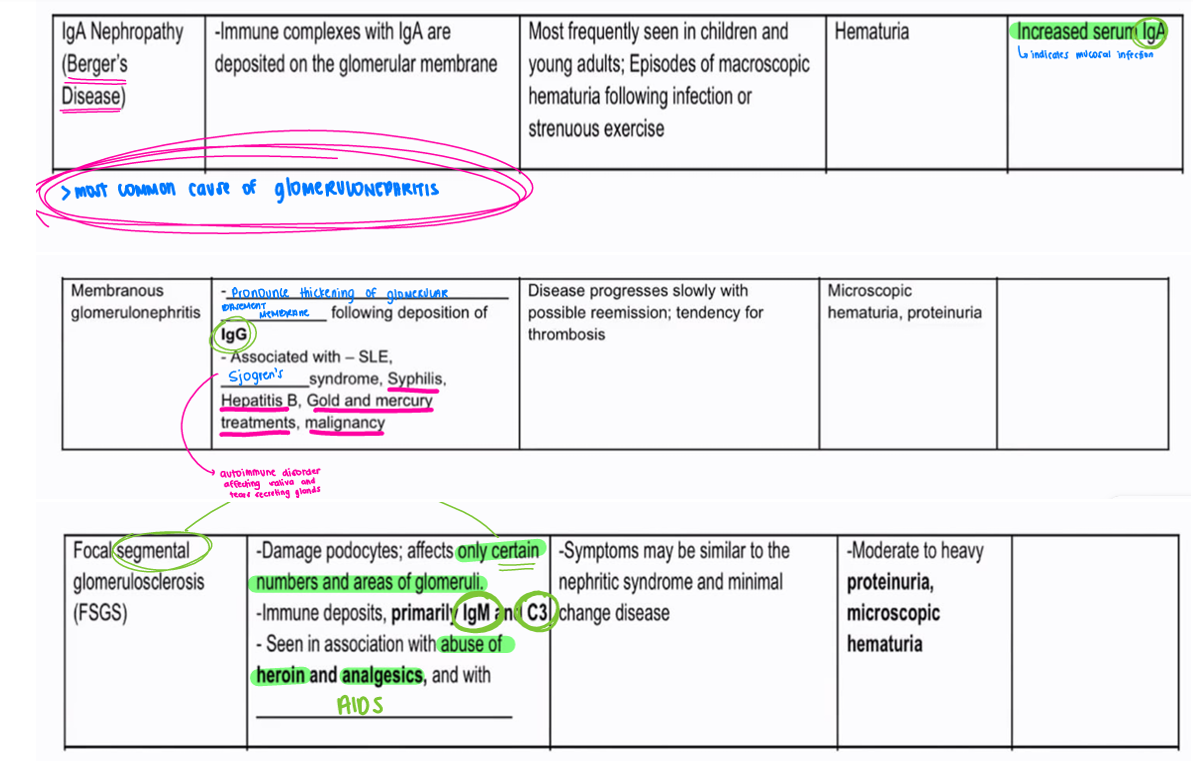
  • This disease is due to immune complexes with IgA are deposited on the glomerular membrane

  • Berger’s Disease (IgA Nephropathy) —IgA

  • Membranous Glomerulonephritis —IgG

  • Focal Segmental Glomerulosclerosis (FSGS) —IgM and C3
<ul><li><p><span style="color: red;"><strong>Berger’s Disease (IgA Nephropathy) —IgA</strong></span></p></li><li><p><sub><sup>Membranous Glomerulonephritis —IgG</sup></sub></p></li><li><p><sub><sup>Focal Segmental Glomerulosclerosis (FSGS) —IgM and C3</sup></sub></p></li></ul><p></p>
10
New cards

SET C —GLOMERULAR DISEASE:

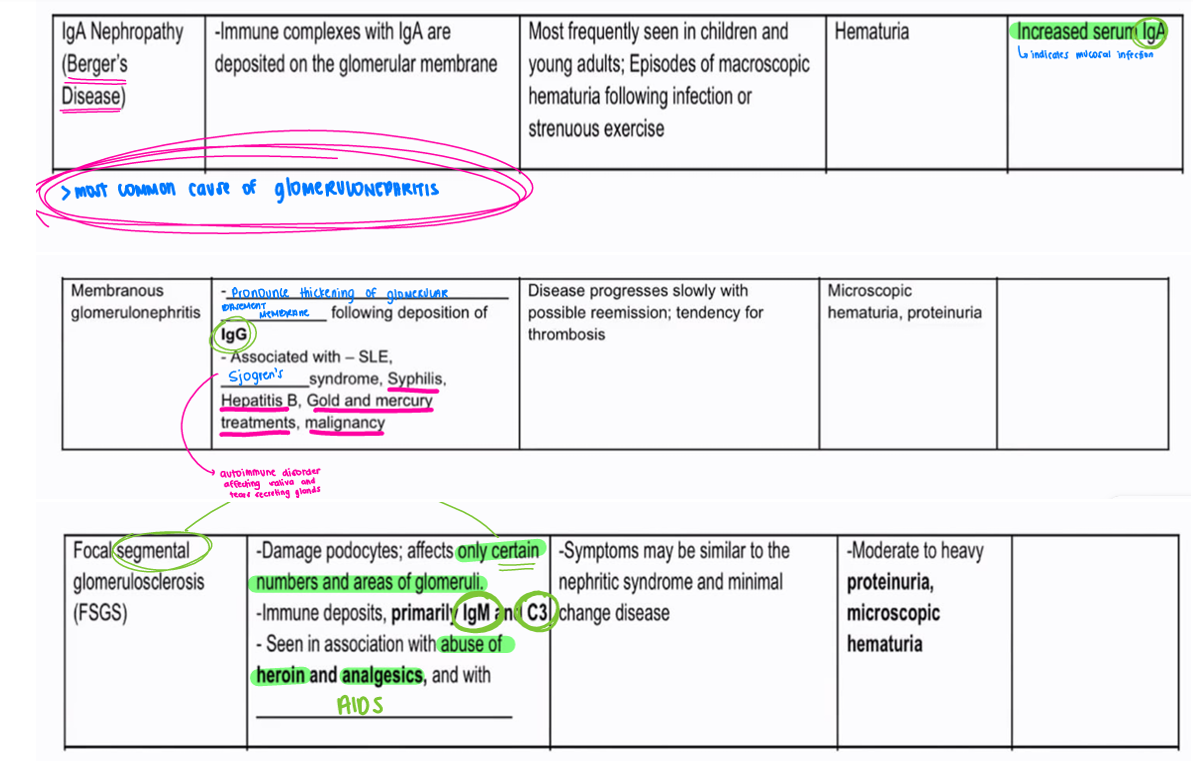
  • This disease is associated with pronounced thickening of glomerular basement membrane following depositions of IgG

  • Berger’s Disease (IgA Nephropathy) —IgA

  • Membranous Glomerulonephritis —IgG

  • Focal Segmental Glomerulosclerosis (FSGS) —IgM and C3
<ul><li><p><sub><sup>Berger’s Disease (IgA Nephropathy) —IgA</sup></sub></p></li><li><p><span style="color: red;"><strong>Membranous Glomerulonephritis —IgG</strong></span></p></li><li><p><sub><sup>Focal Segmental Glomerulosclerosis (FSGS) —IgM and C3</sup></sub></p></li></ul><p></p>
11
New cards

SET C —GLOMERULAR DISEASE:

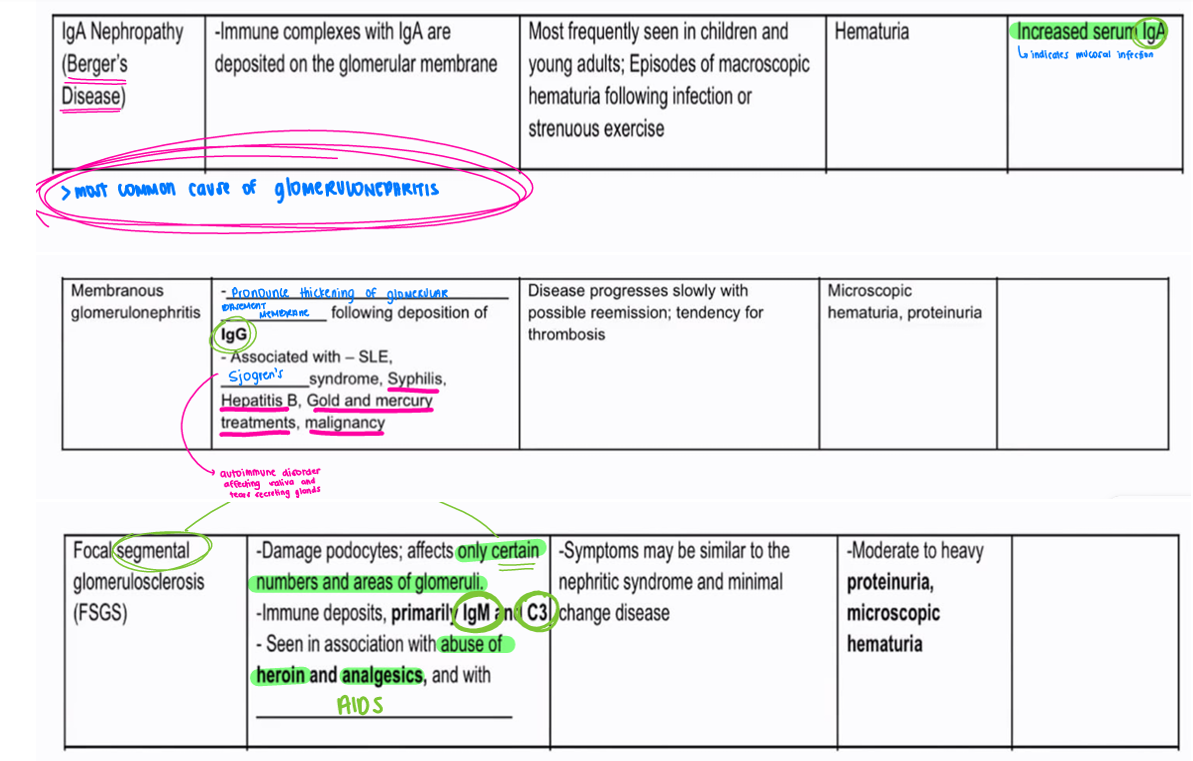
  • This disease is associated with:

    • Sjogren’s Syndrome

    • Syphilis

    • Hepatitis B

    • Gold and Mercury Treatment

    • Malignancy

  • Berger’s Disease (IgA Nephropathy) —IgA

  • Membranous Glomerulonephritis —IgG

  • Focal Segmental Glomerulosclerosis (FSGS) —IgM and C3
<ul><li><p><sub><sup>Berger’s Disease (IgA Nephropathy) —IgA</sup></sub></p></li><li><p><span style="color: red;"><strong>Membranous Glomerulonephritis —IgG</strong></span></p></li><li><p><sub><sup>Focal Segmental Glomerulosclerosis (FSGS) —IgM and C3</sup></sub></p></li></ul><p></p>
12
New cards

SET C —GLOMERULAR DISEASE:

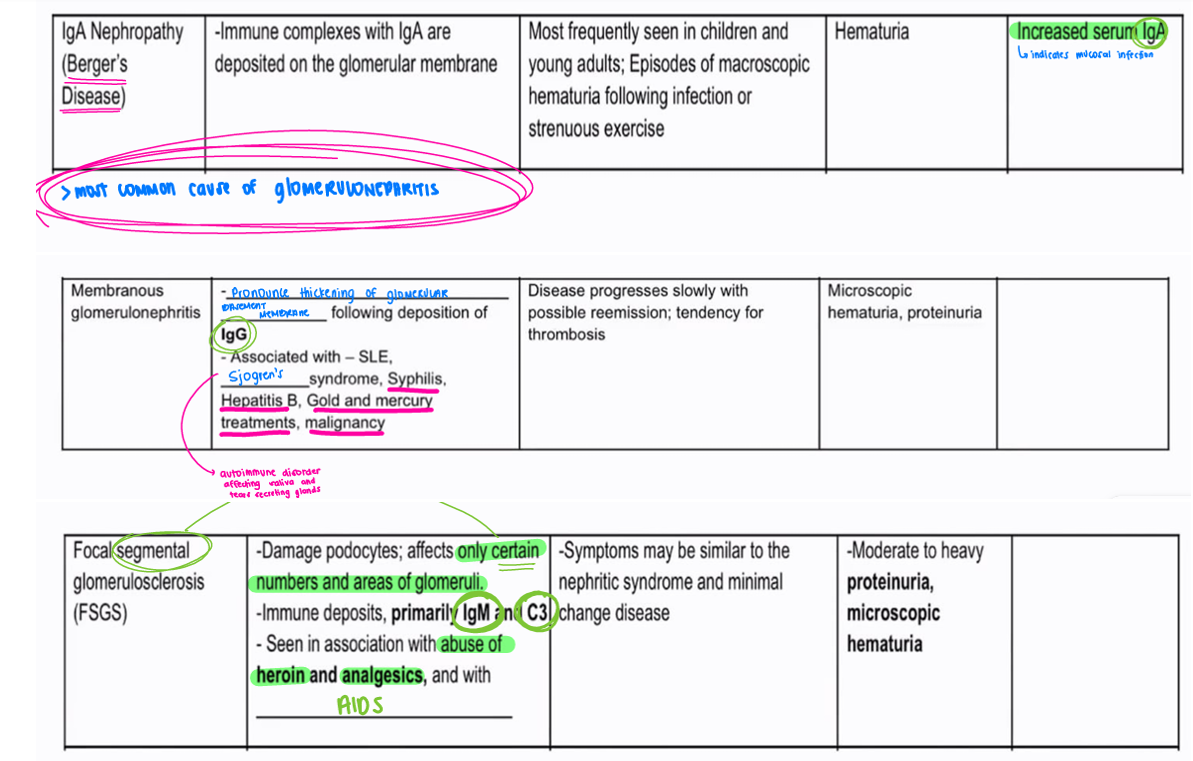
  • This disease is due to damage of podocytes and affects only certain numbers and areas of glomeruli

  • Immune deposits primarily IgM and C3

  • Berger’s Disease (IgA Nephropathy) —IgA

  • Membranous Glomerulonephritis —IgG

  • Focal Segmental Glomerulosclerosis (FSGS) —IgM and C3
<ul><li><p><sub><sup>Berger’s Disease (IgA Nephropathy) —IgA</sup></sub></p></li><li><p><sub><sup>Membranous Glomerulonephritis —IgG</sup></sub></p></li><li><p><span style="color: red;"><strong>Focal Segmental Glomerulosclerosis (FSGS) —IgM and C3</strong></span></p></li></ul><p></p>
13
New cards

SET C —GLOMERULAR DISEASE:

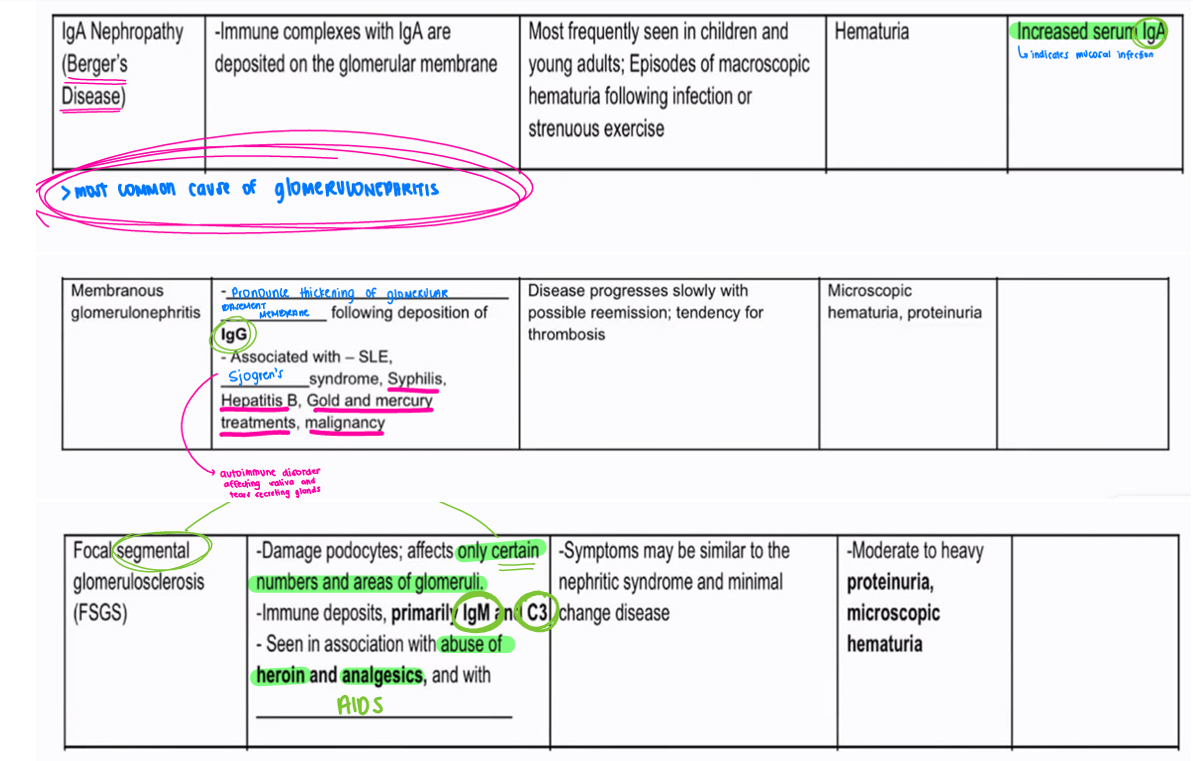
  • This disease is associated with abuse of heroin and analgesics, and also with HIV/AIDS

  • Berger’s Disease (IgA Nephropathy) —IgA

  • Membranous Glomerulonephritis —IgG

  • Focal Segmental Glomerulosclerosis (FSGS) —IgM and C3
<ul><li><p><sub><sup>Berger’s Disease (IgA Nephropathy) —IgA</sup></sub></p></li><li><p><sub><sup>Membranous Glomerulonephritis —IgG</sup></sub></p></li><li><p><span style="color: red;"><strong>Focal Segmental Glomerulosclerosis (FSGS) —IgM and C3</strong></span></p></li></ul><p></p>
14
New cards

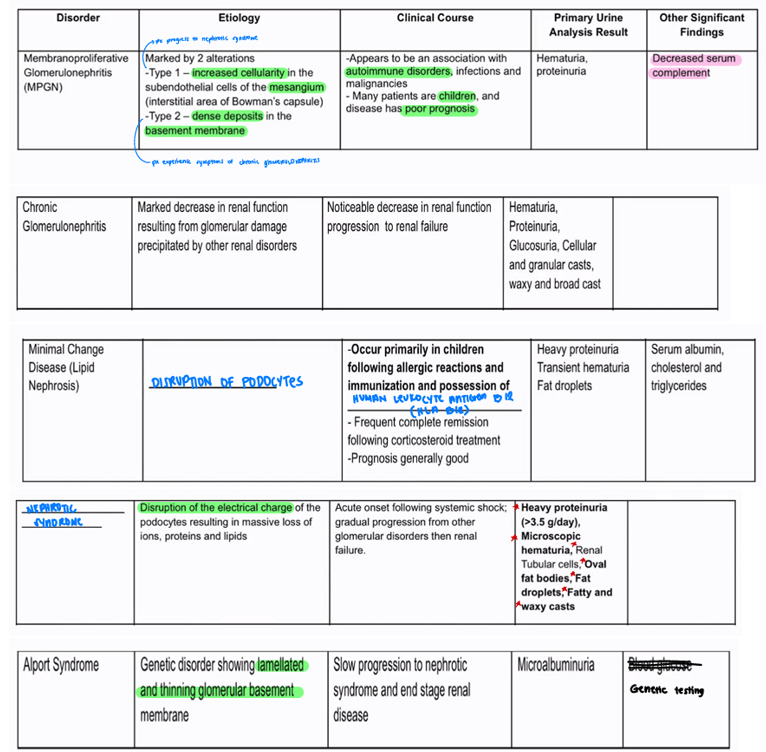
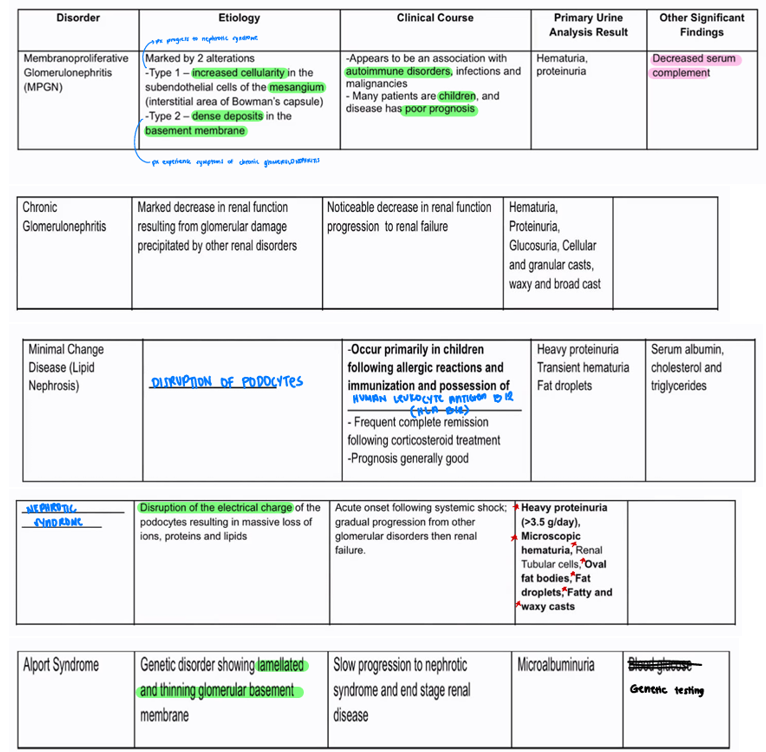
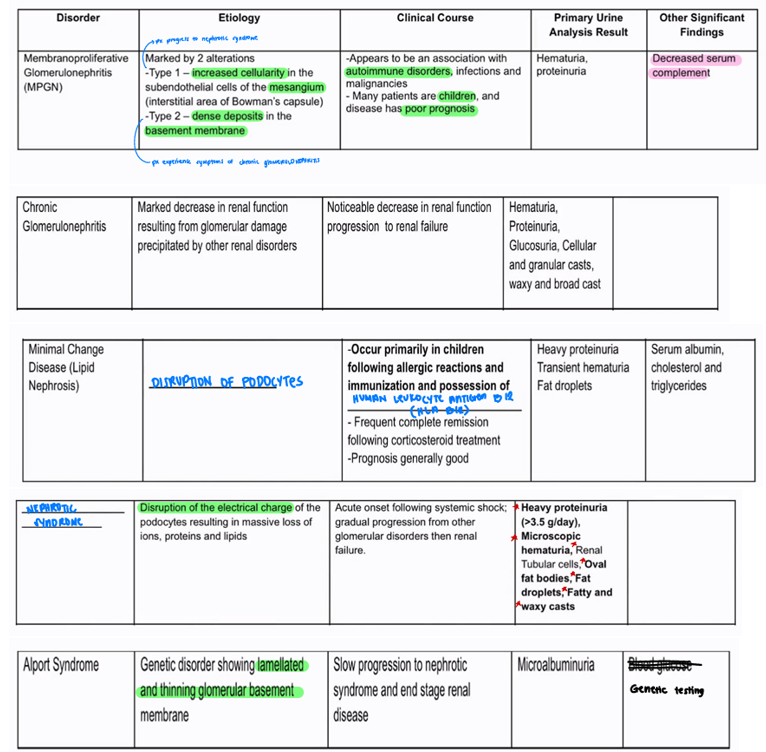
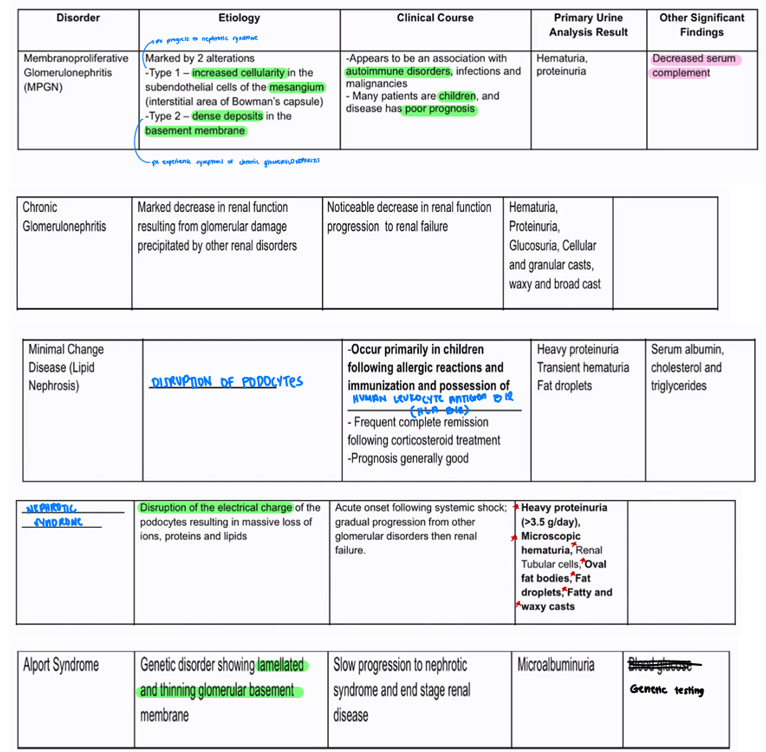
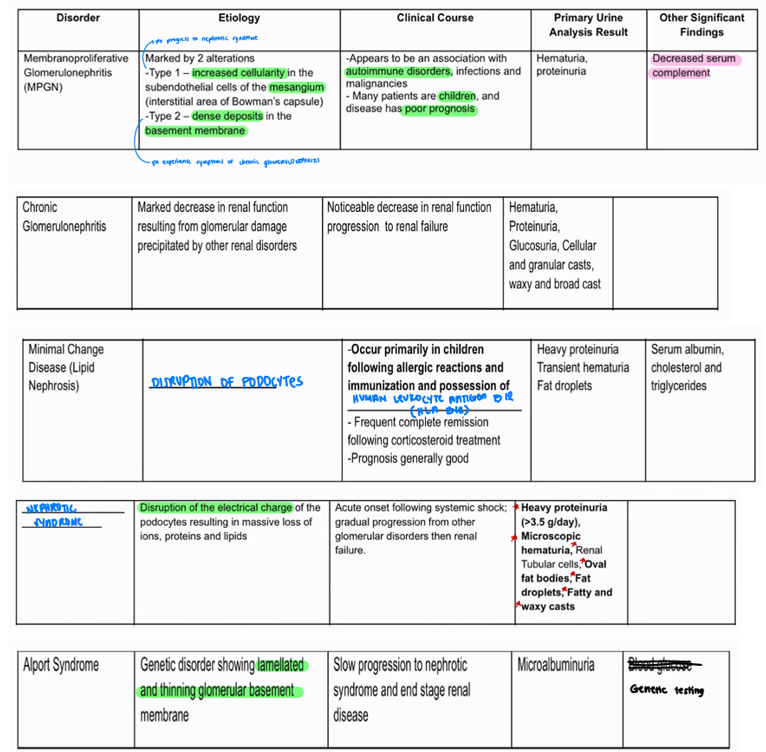
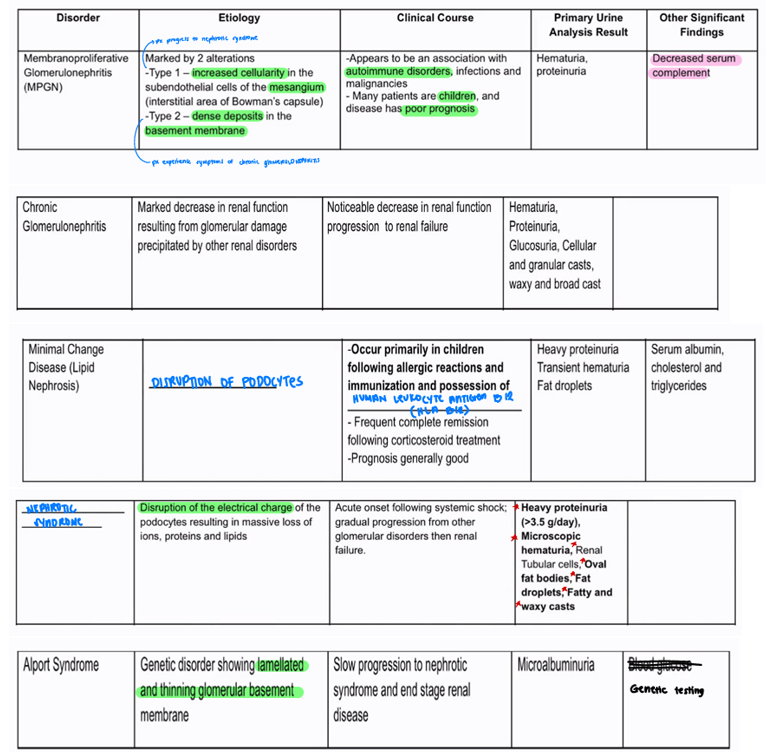
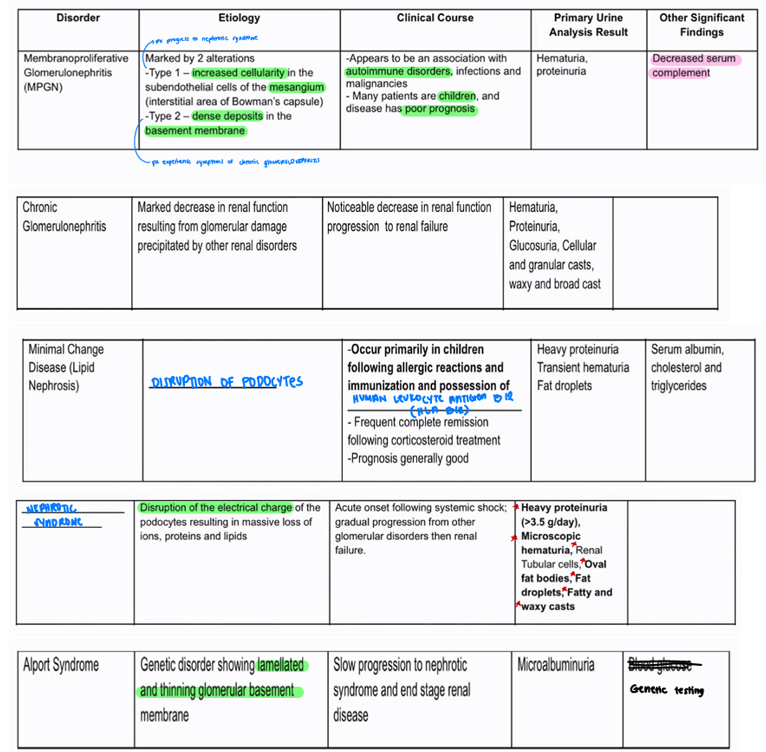
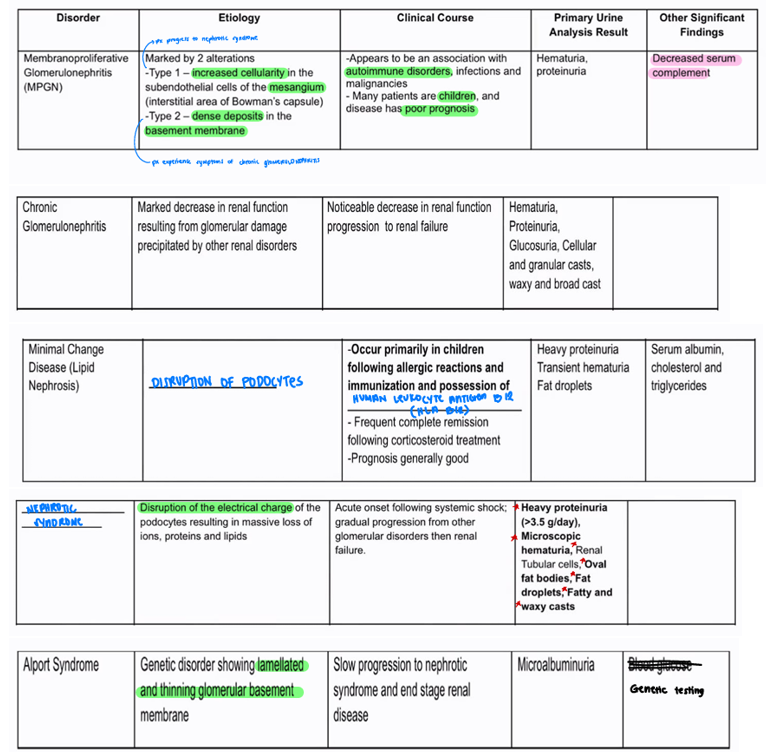
SET B —GLOMERULAR DISEASE:

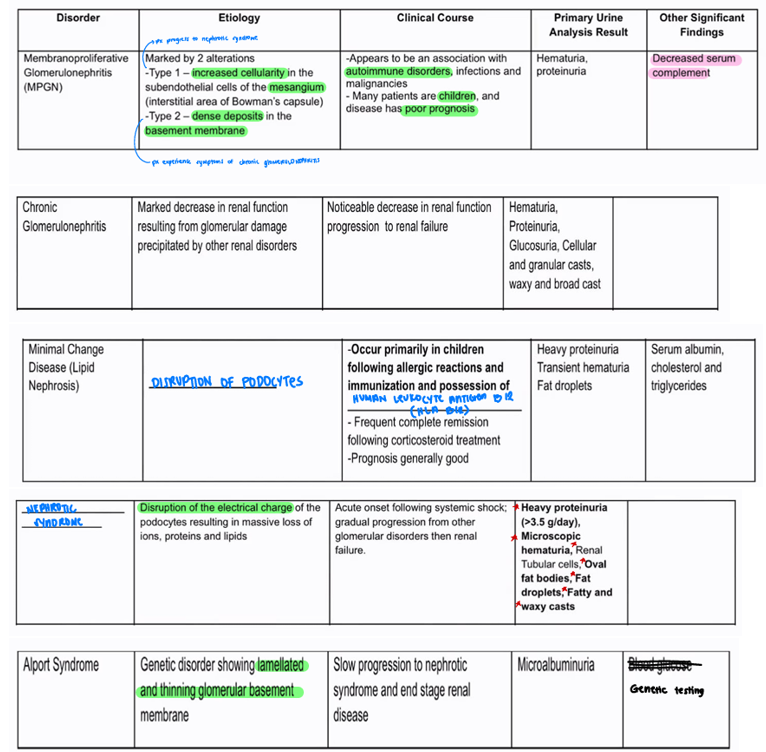
  • This disease is marked by different alterations in the cellularity of the glomerulus and peripheral capillaries

  • Membranoproliferative Glomerulonephritis (MPGN)

    • Type 1 — increase cellularity in subendothelial cells of mesangium

    • Type 2 —dense deposits in the basement membrane

  • Chronic Glomerulonephritis

  • Minimal Change Disease (Lipid Necrosis)

  • Nephrotic Syndrome

  • Alport Syndrome

<ul><li><p><span style="color: red;"><strong>Membranoproliferative Glomerulonephritis (MPGN)</strong></span></p><ul><li><p>Type 1 — increase cellularity in subendothelial cells of mesangium</p></li><li><p>Type 2 —dense deposits in the basement membrane</p></li></ul></li><li><p><sub><sup>Chronic Glomerulonephritis</sup></sub></p></li><li><p><sub><sup>Minimal Change Disease (Lipid Necrosis)</sup></sub></p></li><li><p><sub><sup>Nephrotic Syndrome</sup></sub></p></li><li><p><sub><sup>Alport Syndrome</sup></sub></p></li></ul><p></p>
15
New cards

SET B —GLOMERULAR DISEASE:

  • Remember that Membranoproliferative Glomerulonephritis (MPGN) is due to alteration of cellularity, what type of MPGN is due to increased cellularity in the subendothelial cells of mesangium

  • Membranoproliferative Glomerulonephritis (MPGN)

    • Type 1 — increase cellularity in subendothelial cells of mesangium

    • Type 2 —dense deposits in the basement membrane

  • Chronic Glomerulonephritis

  • Minimal Change Disease (Lipid Necrosis)

  • Nephrotic Syndrome

  • Alport Syndrome

<ul><li><p><strong>Membranoproliferative Glomerulonephritis (MPGN)</strong></p><ul><li><p><span style="color: red;">Type 1 — increase cellularity in subendothelial cells of mesangium</span></p></li><li><p>Type 2 —dense deposits in the basement membrane</p></li></ul></li><li><p><sub><sup>Chronic Glomerulonephritis</sup></sub></p></li><li><p><sub><sup>Minimal Change Disease (Lipid Necrosis)</sup></sub></p></li><li><p><sub><sup>Nephrotic Syndrome</sup></sub></p></li><li><p><sub><sup>Alport Syndrome</sup></sub></p></li></ul><p></p>
16
New cards

SET B —GLOMERULAR DISEASE:

  • Remember that Membranoproliferative Glomerulonephritis (MPGN) is due to alteration of cellularity, what type of MPGN is due to dense deposits in the basement membrane?

  • Membranoproliferative Glomerulonephritis (MPGN)

    • Type 1 — increase cellularity in subendothelial cells of mesangium

    • Type 2 —dense deposits in the basement membrane

  • Chronic Glomerulonephritis

  • Minimal Change Disease (Lipid Necrosis)

  • Nephrotic Syndrome

  • Alport Syndrome

<ul><li><p><strong>Membranoproliferative Glomerulonephritis (MPGN)</strong></p><ul><li><p>Type 1 — increase cellularity in subendothelial cells of mesangium</p></li><li><p><span style="color: red;">Type 2 —dense deposits in the basement membrane</span></p></li></ul></li><li><p><sub><sup>Chronic Glomerulonephritis</sup></sub></p></li><li><p><sub><sup>Minimal Change Disease (Lipid Necrosis)</sup></sub></p></li><li><p><sub><sup>Nephrotic Syndrome</sup></sub></p></li><li><p><sub><sup>Alport Syndrome</sup></sub></p></li></ul><p></p>
17
New cards

SET B —GLOMERULAR DISEASE:

  • Remember that Membranoproliferative Glomerulonephritis (MPGN) is due to alteration of cellularity, what type of MPGN can progress to nephrotic syndrome?

  • Membranoproliferative Glomerulonephritis (MPGN)

    • Type 1 — increase cellularity in subendothelial cells of mesangium

    • Type 2 —dense deposits in the basement membrane

  • Chronic Glomerulonephritis

  • Minimal Change Disease (Lipid Necrosis)

  • Nephrotic Syndrome

  • Alport Syndrome

<ul><li><p><strong>Membranoproliferative Glomerulonephritis (MPGN)</strong></p><ul><li><p><span style="color: red;">Type 1 — increase cellularity in subendothelial cells of mesangium</span></p></li><li><p>Type 2 —dense deposits in the basement membrane</p></li></ul></li><li><p><sub><sup>Chronic Glomerulonephritis</sup></sub></p></li><li><p><sub><sup>Minimal Change Disease (Lipid Necrosis)</sup></sub></p></li><li><p><sub><sup>Nephrotic Syndrome</sup></sub></p></li><li><p><sub><sup>Alport Syndrome</sup></sub></p></li></ul><p></p>
18
New cards

SET B —GLOMERULAR DISEASE:

  • Remember that Membranoproliferative Glomerulonephritis (MPGN) is due to alteration of cellularity, what type of MPGN associates with px experiencing symptoms of chronic glomerulonephritis?

  • Membranoproliferative Glomerulonephritis (MPGN)

    • Type 1 — increase cellularity in subendothelial cells of mesangium

    • Type 2 —dense deposits in the basement membrane

  • Chronic Glomerulonephritis

  • Minimal Change Disease (Lipid Necrosis)

  • Nephrotic Syndrome

  • Alport Syndrome

<ul><li><p><strong>Membranoproliferative Glomerulonephritis (MPGN)</strong></p><ul><li><p>Type 1 — increase cellularity in subendothelial cells of mesangium</p></li><li><p><span style="color: red;">Type 2 —dense deposits in the basement membrane</span></p></li></ul></li><li><p><sub><sup>Chronic Glomerulonephritis</sup></sub></p></li><li><p><sub><sup>Minimal Change Disease (Lipid Necrosis)</sup></sub></p></li><li><p><sub><sup>Nephrotic Syndrome</sup></sub></p></li><li><p><sub><sup>Alport Syndrome</sup></sub></p></li></ul><p></p>
19
New cards

SET B —GLOMERULAR DISEASE:

  • This disease is marked by decrease in renal function resulting from glomerular damage precipitated by other renal disorder

  • Membranoproliferative Glomerulonephritis (MPGN)

    • Type 1 — increase cellularity in subendothelial cells of mesangium

    • Type 2 —dense deposits in the basement membrane

  • Chronic Glomerulonephritis

  • Minimal Change Disease (Lipid Necrosis)

  • Nephrotic Syndrome

  • Alport Syndrome

<ul><li><p><sub><sup>Membranoproliferative Glomerulonephritis (MPGN)</sup></sub></p><ul><li><p><sub><sup>Type 1 — increase cellularity in subendothelial cells of mesangium</sup></sub></p></li><li><p><sub><sup>Type 2 —dense deposits in the basement membrane</sup></sub></p></li></ul></li><li><p><span style="color: red;"><strong>Chronic Glomerulonephritis</strong></span></p></li><li><p><sub><sup>Minimal Change Disease (Lipid Necrosis)</sup></sub></p></li><li><p><sub><sup>Nephrotic Syndrome</sup></sub></p></li><li><p><sub><sup>Alport Syndrome</sup></sub></p></li></ul><p></p>
20
New cards

SET B —GLOMERULAR DISEASE:

  • This disease is due to disruption of podocytes

  • Occur in children following allergic rxn and immunization and posession of Human Leukocyte Antigen B12 (HLA-B12)

  • Membranoproliferative Glomerulonephritis (MPGN)

    • Type 1 — increase cellularity in subendothelial cells of mesangium

    • Type 2 —dense deposits in the basement membrane

  • Chronic Glomerulonephritis

  • Minimal Change Disease (Lipid Necrosis)

  • Nephrotic Syndrome

  • Alport Syndrome

<ul><li><p><sub><sup>Membranoproliferative Glomerulonephritis (MPGN)</sup></sub></p><ul><li><p><sub><sup>Type 1 — increase cellularity in subendothelial cells of mesangium</sup></sub></p></li><li><p><sub><sup>Type 2 —dense deposits in the basement membrane</sup></sub></p></li></ul></li><li><p><sub><sup>Chronic Glomerulonephritis</sup></sub></p></li><li><p><span style="color: red;"><strong>Minimal Change Disease (Lipid Necrosis)</strong></span></p></li><li><p><sub><sup>Nephrotic Syndrome</sup></sub></p></li><li><p><sub><sup>Alport Syndrome</sup></sub></p></li></ul><p></p>
21
New cards

SET B —GLOMERULAR DISEASE:

  • What antigen is associated with Minimal Change Disease (Lipid Nephrosis)

  • Human Leukocyte Antigen B12 (HLA B12)

<ul><li><p><span style="color: blue;"><strong>Human Leukocyte Antigen B12 (HLA B12)</strong></span></p></li></ul><p></p>
22
New cards

SET B —GLOMERULAR DISEASE:

  • This disease is due to disruption of electrical charge of the podocytes

  • Membranoproliferative Glomerulonephritis (MPGN)

    • Type 1 — increase cellularity in subendothelial cells of mesangium

    • Type 2 —dense deposits in the basement membrane

  • Chronic Glomerulonephritis

  • Minimal Change Disease (Lipid Necrosis)

  • Nephrotic Syndrome

  • Alport Syndrome

<ul><li><p><sub><sup>Membranoproliferative Glomerulonephritis (MPGN)</sup></sub></p><ul><li><p><sub><sup>Type 1 — increase cellularity in subendothelial cells of mesangium</sup></sub></p></li><li><p><sub><sup>Type 2 —dense deposits in the basement membrane</sup></sub></p></li></ul></li><li><p><sub><sup>Chronic Glomerulonephritis</sup></sub></p></li><li><p><sub><sup>Minimal Change Disease (Lipid Necrosis)</sup></sub></p></li><li><p><span style="color: red;"><strong>Nephrotic Syndrome</strong></span></p></li><li><p><sub><sup>Alport Syndrome</sup></sub></p></li></ul><p></p>
23
New cards

SET B —GLOMERULAR DISEASE:

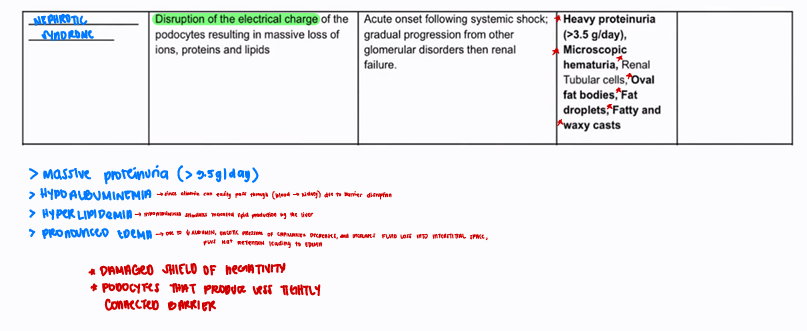
  • Given that Nephrotic Syndrome is due to disruption of electrical charge of podocytes. What are the 4 classical findings of this disease (according to manual)

  • Massive Proteinuria (>3.5 g/day) (Normal: <10 mg/dL or 100 mg/day)

  • HYPOAlbuminemiaprotein easily can pass through

  • HYPERLipidemia hypoalbuminemia stimulate lipid production by liver

  • Pronounced Edema low albumin leads to low oncotic pressure of capillaries
<ul><li><p><span style="color: red;"><strong>Massive Proteinuria</strong> (&gt;3.5 <strong>g/day</strong>)</span> →<sub><sup> (Normal: &lt;10 </sup></sub><span style="color: blue;"><strong><sub><sup>mg/dL</sup></sub></strong></span><sub><sup> or 100 </sup></sub><span style="color: blue;"><strong><sub><sup>mg/day</sup></sub></strong></span><sub><sup>)</sup></sub></p></li><li><p><span style="color: red;"><strong><u>HYPO</u>Albuminemia</strong></span> → <sub><sup>protein easily can pass through</sup></sub></p></li><li><p><span style="color: red;"><strong><u>HYPER</u>Lipidemia </strong></span>→ <sub><sup>hypoalbuminemia stimulate lipid production by liver</sup></sub></p></li><li><p><span style="color: red;"><strong>Pronounced Edema </strong></span>→<sub><sup> low albumin leads to low oncotic pressure of capillaries</sup></sub></p></li></ul><p></p>
24
New cards

SET B —GLOMERULAR DISEASE:

  • This disease id due to genetic disorder showing lamellated and thinning glomerular basement membrane

  • Membranoproliferative Glomerulonephritis (MPGN)

    • Type 1 — increase cellularity in subendothelial cells of mesangium

    • Type 2 —dense deposits in the basement membrane

  • Chronic Glomerulonephritis

  • Minimal Change Disease (Lipid Necrosis)

  • Nephrotic Syndrome

  • Alport Syndrome

<ul><li><p><sub><sup>Membranoproliferative Glomerulonephritis (MPGN)</sup></sub></p><ul><li><p><sub><sup>Type 1 — increase cellularity in subendothelial cells of mesangium</sup></sub></p></li><li><p><sub><sup>Type 2 —dense deposits in the basement membrane</sup></sub></p></li></ul></li><li><p><sub><sup>Chronic Glomerulonephritis</sup></sub></p></li><li><p><sub><sup>Minimal Change Disease (Lipid Necrosis)</sup></sub></p></li><li><p><sub><sup>Nephrotic Syndrome</sup></sub></p></li><li><p><span style="color: red;"><strong>Alport Syndrome</strong></span></p></li></ul><p></p>
25
New cards

TUBULAR DISORDERS:

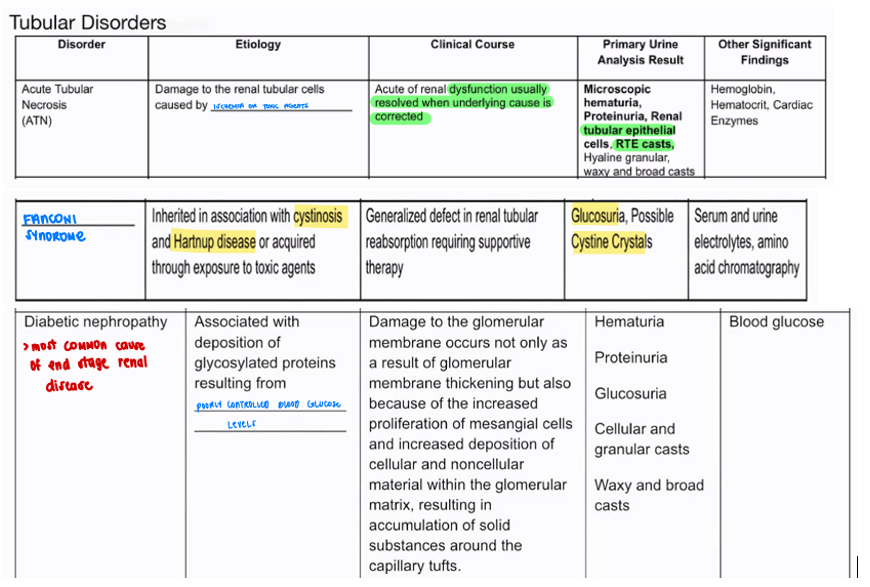
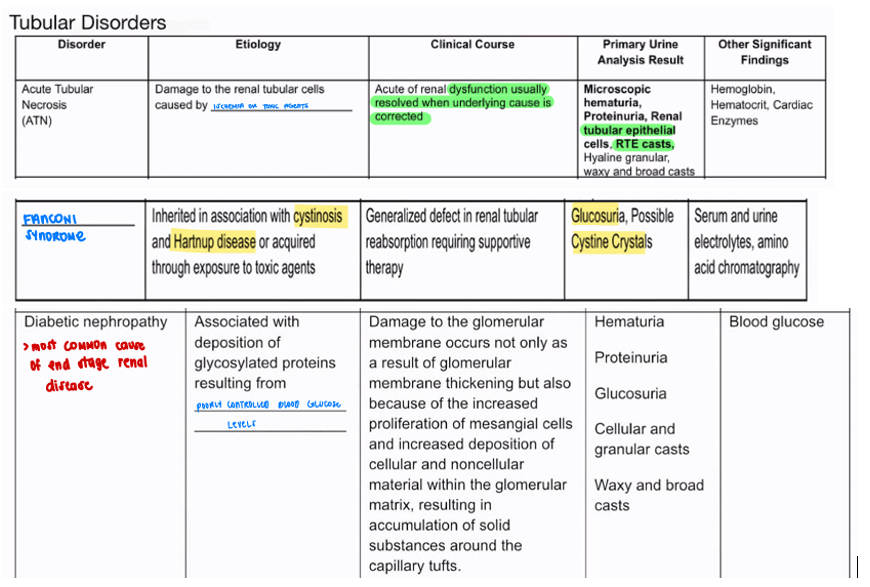
  • This tubular disease is associated with damage to renal tubular cells caused by Ischemia (↓ blood flow) and Toxic Agents

  • This disorder usually is resolved when underlying cause is corrected

  • Acute Tubular Necrosis (ATN)

  • Fanconi Syndrome

  • Diabetic Nephropathy

<ul><li><p><span style="color: red;"><strong>Acute Tubular Necrosis (ATN)</strong></span></p></li><li><p><sub><sup>Fanconi Syndrome</sup></sub></p></li><li><p><sub><sup>Diabetic Nephropathy</sup></sub></p></li></ul><p></p>
26
New cards

TUBULAR DISORDERS:

  • This tubular disease is associated with Cystinosis and Hartnup disease

  • Urine findings includes Glucosuria and Cystine Crystals

  • Acute Tubular Necrosis (ATN)

  • Fanconi Syndrome

  • Diabetic Nephropathy

<ul><li><p><sub><sup>Acute Tubular Necrosis (ATN)</sup></sub></p></li><li><p><span style="color: red;"><strong>Fanconi Syndrome</strong></span></p></li><li><p><sub><sup>Diabetic Nephropathy</sup></sub></p></li></ul><p></p>
27
New cards

TUBULAR DISORDERS:

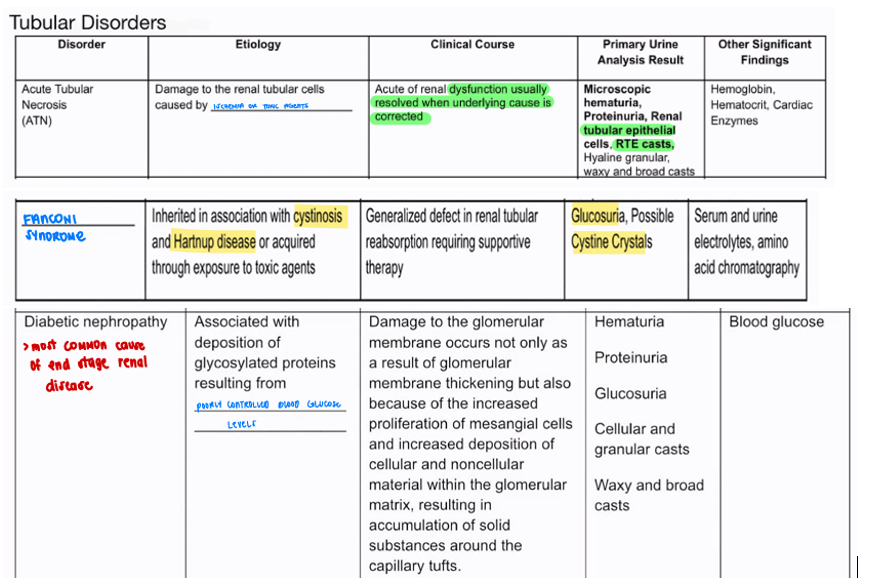
  • This tubular disease is the MOST COMMON CAUSE OF END STAGE RENAL DISEASE (ESRD)

  • DIABETIC NEPHROPATHY

    • Berger’s Disease (IgA Nephropathy) → Common Cause GLOMERULONEPHRITIS
<ul><li><p><span style="color: red;"><strong>DIABETIC NEPHROPATHY</strong></span></p><ul><li><p><strong><sub><sup>Berger’s Disease (IgA Nephropathy)</sup></sub></strong><sub><sup> → Common Cause </sup></sub><span style="color: blue;"><strong><u><sub><sup>GLOMERULONEPHRITIS</sup></sub></u></strong></span></p></li></ul></li></ul><p></p>
28
New cards

TUBULAR DISORDERS:

  • This tubular disease is associated with depositions of glycosylated proteins resulting from poorly controlled blood glucose levels

  • Acute Tubular Necrosis (ATN)

  • Fanconic Syndrome

  • Diabetic Nephropathy

<ul><li><p><sub><sup>Acute Tubular Necrosis (ATN)</sup></sub></p></li><li><p><sub><sup>Fanconic Syndrome</sup></sub></p></li><li><p><span style="color: red;"><strong>Diabetic Nephropathy</strong></span></p></li></ul><p></p>