2026 psych
 Call Kai
 Learn
Learn Practice Test
 Spaced Repetition
 Match
Match Flashcards
 Knowt Play
1/59

There's no tags or description
Looks like no tags are added yet.
Name | Mastery | Learn | Test | Matching | Spaced | Call with Kai | Chat |
|---|
No analytics yet
Send a link to your students to track their progress
60 Terms
Synapse
point of Communication between two neurons, or between a neuron and a target cell, such as a muscle or a gland.
Excitatory
stimulates the postsynaptic neuron, making it more likely to fire action potential or neural impulse
inhibitory
the decreased likelhood that the post-synaptic neuron will fire an action potential or neural impulse
Glutamate
the main excitatory neurotransmitter in the nervous system, involved with learning and memory
is released when a neural pathway associated with an experience is stimulated or activated.
cognition, memory formation, learning, behaviour, moement, and sensation
stimulates neural activity
canfeine can increase glutamate activity
GABA
main inhibitory neurotransmitter in the nervous system, associated with anxiety, specific phobias and parkinson’s disease
essential for motor control, vision and decreasing anxiety
supresses or slows down neural activity
one of the main neurotransmitters involved with anxiety treatment
when GABA is released across the synapse, the brain and body are calmed
alcohol can INCREASE GABA activity, accounting for its sleep enhancing effects (sedative)
Too little can be associated with anxiety and epileptic seizures as the brain is ‘over firing’
couterbalances glutamate
CNS
the brain and the spinal cord; processes and coordinates responsess to sensory stimuli
sends motor info to the PNS via motor neurons (efferent)
receives sensory info from the body (PNS) via sensory neurons (afferent)
PNS
all the nerves outside the central nervous system that carry messages between the central nervous system and muscles, organs and glands throughout the body.
somatic NS
a subdivision of the PNS that carries sensory information to the CNS and motor information to the body.
voluntary movement
comprised of sensory (afferent) and motor (efferent) neurons
Autonomic NS
a subdivision of the PNS that controls the body’s internal environment in a self-regulated manner.
regulates involuntary functions of the body: heart rate, digestion & breathing
divided into sympathetic and parasympathetic
Parasympathetic NS
a subdivision of the Autonomic NS that:
keeps homeostasis
counteracts the activity initiated by the SYMPATHETIC NS
restores body to a state of calm after arousal or under threat (20-30 mins)
Dominates the SYMPATHETIC NS most the time
Sympathetic NS
Activates internal muscles, organs or glands to prepare body for heightened levels of arousal (under threat).
Fight or flight reponse
increased stress/increased alertness
increases heart/breathing rate, blood pressure etc - to pump more oxygen to body
decreases use of non-essential functions like digestion
if in this intense arousal state for too long, one is in danger of developing physiological or psychological disorders
Enteric NS
largest part of ANS
responsible for controlling the functions of digestive system
can communicate directly with CNS
can function independently of the CNS (‘second brain’)
sends and receives messages from both para/sympathetic NS
controls movement of food thru digestive system and mixes digestive enzymes
controls the actions of gastrointestinal tract without CNS control
connects with CNS via the VAGUS NERVE (feelings of hunger or fullness)
Afferent transferal
information transferred ascending (toward the CNS)
sensory neurons
Efferent transferal
information transferred descending (away from the CNS)
motor neurons
Spinal cord (CNS)
receives sensory info from PNS and transmits to brain
carries motor info from brain to PNS
works with brain
Spinal reflex
steps:
sensory receptors detect a stimulus
sensory neurons transmit neural message to spinal cord afferently
interneurons in the spinal cord relay the message to motor neurons
motor neurons send an appropiate neural/motor messgae to the muscle, cuaisng contraction
sensory information is also transmitted to the brain to enable interpretaiton of the simulus after reflex.
unconcious and not initiated by the brain.
interneurons
the ‘middle man’
a nerve cell in the spinal cord that connects
motor and sensory neurons by relaying
information between the two
exists exclusively in the CNS
Dendrite
detects and receieves neural information from other neurons
neurotransmitters, neuromodulators, neurohormones
receptor site
Soma
message is passed from dendrite to the soma
cell body
may collect and integrate information from thousads of other neurons
Axon
after being integrated from soma, transmitted along the axon
single tube-like extention
transmits neural info to other neurons
neural synapse
neural impulse reaches axon termina; of the presynaptic neuron
presynaptic neuron (axon terminal)
releases neurochemicals (message or action potential)
causes vesicals to bind with menbrane and release neurotransmitters into synaptic gap
neurotransmitters bind to receptor sites on the dendirites of the post-synaptic neuron
neurotransmitter makes the POST-synaptic neuron
more or less likely to fire. (excitatory or inhibitory)
Neurotransmitters
chemicals released by a presynaptic neuron to send signals/messages to the postsynaptic neuron
role
to transmit chemical the message to adjacent neuron
releases into the synapse to a single postsynaptic neuron
moderately fast and direct
eg: glutamate (excitatory) and GABA (inhibitory)
Neuromodulators
chemicals released by neurons to alter the effectiveness of neural transmission, therefore INDIRECTLY impacting postsynaptic neurons
role:
to alter the neural transmission of neurons by controlling the synthesis (production of neurotransmitters) and the release of neurotransmitters
released outside the synapse, affecting a group of neurons
moderately slow and lasts for a long time
eg: dopamine & seratonin
special neuromodulators can act as a neurotransmitter, affecting only an individual neuron
Dopamine
type of neuromodulator
has both inhibitory & exitatory effects
involved in:
smooth voluntary muscle movement
experiencing pleasure
attention
mood
reward-based learning/motivation
Synaptic plasticity
refers to the structural and functional changes that occur in the connections between neurons in the brain due to EXPERIENCE
these changes can result in the strengthening or weakening of the synapses, or the creation of new ones
changes include: sprouting, rerouting, and pruning
Sprouting (LTP - Long-term potentiation) - structure
takes place within the ACTUAL neuron
results in the development of new structures:
increased number of dendrite branches
extension of an axon
increased number of axon terminals (MORE)
the increase of axon terminals = increased vesicles → potentially increased neurotransmitters
Expanded neural network
Rerouting (LTP/LTD) - structure
Establishment of a new neural pathway
a neuron will seek a connection with another neuron, resulting in a new synaptic connection
can also lead to sprouting
when neurons are damaged:
undamaged neurons, which can no longer connect with damaged ones, will seek a connection with other undamaged neurons
Pruning (LTD) - structure
Elimination of synaptic connections
are eliminated if unused, therefore pruned
occurs in order to make room for new connections, or to make current connections stronger
Long term potentiation
the long-lasting strengthening of synaptic connections due to repeated co-activation
increased tendency of a group of neurons to fire after they have been repeatedly stimulated over a period of time
LTP increases
vesicles
neurotransmitters
dendritic spines
receptor sites
LTP steps
during learning and gaining experience, the axon terminals of the presynaptic neurons release glutamate (neurotransmitter)
glutamate has an EXCITATORY effect on the receptors, making it more likely to fire.
causes long-lasting changes at the synapse
repeated glutamate secretion stimulates the release of dopamine
dopamine interacts with the genes of a neuron to generate new proteins (equates to new structural growth)
LTD
the long-lasting reduction in the strength of a synaptic connection due to the repeated low-intensity stimulation
may prune unimportant or unwanted connections
leavings only the important connections that have been strengthened by LTP
LTD plays important part in clearing the brain of old mems to make way for new info to be learnted and new mems to be formed
LTD decreases:
receptor sites
dendrites
synaptic connections
Serotonin
And inhibitory neurotransmitter, that also acts as a neuro modulator
More than 90% of serotonin is found in the gastrointestinal tract as a part of the gut brain axis
Regulates almost all human behavioural processes
mood, perception, reward, anger, appetite, memory, attention etc
High/balanced serotonin activity → calm, focused, happy and stable moods
→ greater ability to control/regulate emotions
→ reduced impulsivity, therefore more able to delay need for awards
Low levels of serotonin
More difficult to regulate/control emotions
Higher levels of aggression
Increased impulsivity → more likely to take risks for a reward
Frequent awakenings, which leads to fatigue
Linked to depression and/or anxiety
How does dopamine work when one is hungry?
steps:
dopamine levels decrease below baseline in the reward pathway of brain
Results in the sensation of hunger
→ increasing the food seeking or eating behaviour
when one eats → dopamine levels increased in the reward pathway above baseline
Pleasure is experienced, reinforcing this pattern of brain activity and behaviour
How does dopamine work in addiction?
Steps/cycle:
Unhealthy behaviour such as gambling or smoking
→ increased dopamine released in the reward pathway → producing feelings of pleasure
→ overtime, less dopamine is produced → diminish his brain’s supply
→ increases our urge to continue playing/engaging to seek out same feelings of pleasure
Loops back to the start.
Stress definition?
a state of mental, emotional and physiological tension caused by a stressor
perception that it exceeds one’s ability to cope.
what is a stressor
an event that causes stress or something that exceeds our ability to cope perceptually
internal
originates inside the individual
psychological (feelings/expectations) or biological (pain, illness)
external
originates outside the individual
environmental (loud noises or temperatures) or sociocultural (life events, losses)
acute stress
sudden or short-term
Usually more intense (sharper)
CAN be beneficial and help us with challenges
triggers fight or flight or freeze response
releases cortisol and adrenaline
Chronic stress
Ongoing, prolonged, or long-term
Less intense/severe
Generally more detrimental to one's health
cortisol surge
physiological effects of stress? (FFF)
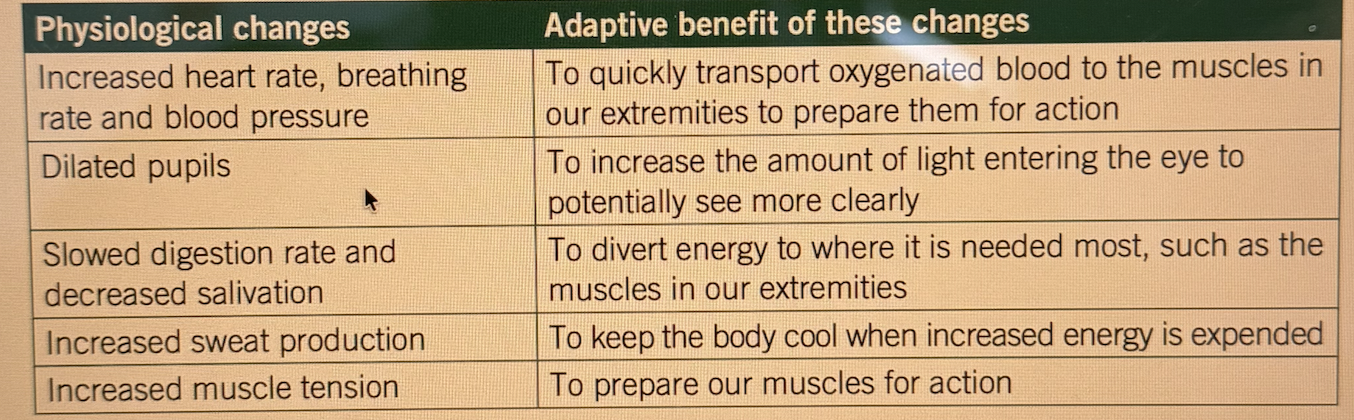
where is cortisol produced and when
a hormone produced by the adrenal glands
released in response to ALL stress.
released into our bloodstream
effect of cortisol in response to stress
good/increases:
Boosts energy levels and increases blood glucose levels
Increased alertness
Increased brain’s use of glucose
Increases bodies ability to repair tissues
Maintains our sympathetic nervous system dominance.
bad/decreases:
Decreases energy from non-essential bodily functions
Digestion, growth, reproductive
Suppresses immune system, making us more susceptible to diseases
Risks of cancer, anxiety, depression
what is the Gut brain axis? (GBA)
the bidirectional communication/connection between the brain and the gut.
between ENS and CNS
90% of info is afferent, therefore gut → brain
10% is brain → gut
connects via the Vagus nerve.
what is gut microbiota and what is the significance?
millions of microorganisms that mainly assist in the digestion of food.
produces and regulates neurochemicals
supports gut health
supports immune function
therefore, gut health and mental wellbeing/stress are very much correlated.
what factors impact gut health?
external:
foods like pre/probiotic foods
supports and allows for symbiosis
internal
stress
cortisol levels
unique type of microbiotas
causes DYSbiosis
Shock stage
resistance to stress compared to normal:
drops below normal
responses:
acute stress response*
loss of muscular tone
body temperature/blood pressure lowered
parasympathetic NS dominant (freeze)
Counter-shock stage
resistance to stress compared to normal:
initially below, rises above normal
responses (FFF):
ADRENALINE & cortisol initially increased
muscle tense
heart/breathing rate increase
pupil dilation
Sympathetic NS dominance
Resistance stage
resistance to stress compared to normal:
Well above normal, beginning to drop (does not drop below normal tho)
Responses:
cortisol levels highest
high energy due to high blood sugar levels
immune system functioning IMPAIRED (minor conditions/physiological problems)
lack of energy
headaches
flu/colds
Exhaustion stage
resistance to stress compared to normal:
well below normal
Responses:
energy store depleted
stress coping chemical deplete
wear and tear
fatigue, infections, diseases
if stressor is eliminated, exhaustion stage may not be reached
Strengths and weaknesses of GAS model
Strengths:
predictable pattern, therefore easily tested
BIOLOGICAL MODEL
one of the first bodels suggesting stress can weaken body’s resistance to illnesses
non-specific, therefore same effect irrespective of stressor
Limitations:
humans and rats are physiologgically different (humans stress responses tend to be more complex)
does not account for individual differences in stress responses
eg: disorders like hypertension, PTSD, depression etc
does not account for psyhcological or cognitive processing in response to stress
Primary appraisal
evaluation on whether the event/stressor is relevant or stressful to the individual
irrelevant/not stressful? → no stress
positive/benign → no stress
stressful
harm/loss (already happened) → distress
threat (upcoming/anticipated) → distress
challenge (beneficial, excitement) → eustress
Secondary appraisal
evaluation on whether the individual has coping resources
adequate → stress is reduced/managed/minimised
inadequate → amplified/heightened stress
internal resources → determination, coping strategies
external resources → family and friends help
Strengths and weaknesses of Transactional model
strengths:
focuses on psychological responses of stress
emphasises personal nature and individuality
stress is related to environment → individual has an active role in stress response
accounts for change in the stressor iteself, therefore our response can also change
Limitations:
difficult to test through experimentation due to individualistic/subjective nature
ignores/neglects biological factors
some may go through secondary and primary appraisal at the same tiime
Coping flexibility
personality trait.
the ability to effictively modify or adjust one’s coping strategies according to the demands of different stressors.
recognise if the use of an approach is appropiate for a specific situation
recognise when a coping strategy is effective, thus discontinuing if ineffective
producde & implement an alternative coping strategy when needed
usually, rich coping flexibilty → more adaptive outcomes caused by stress responses
reduced physiological dysfunction
Context specific effectiveness
The degree to which a coping strategy is successful in alleviating or minimising stress
Does the coping strategy meet the demands of the stressor?
Is there a ‘good fit’ between the strategy and the stressful situation?
Approach strategies
An effort to confront a stressor and deal DIRECTLY with it and its effects
seeking advice from an expert
talking about it with friends and family
developing a plan to increase control over a problem
accepting responsibility/recognise positive aspects of it
Avoidant strategies
An effort to avoid a stressor and not directly deal with it and its effects
procrastination
napping or oversleeping
substance abuse
denial
use of distractions eg TV, games, social media
Strengths and weaknesses of approach strategy
Strengths
generally considered to be more adaptive and effective than avoidance strategies
one who uses more approach strategies to cope tend to experience less physiological symptoms, and can function more effectively than one who relies more on avoidance strategies
Limitations
initially, short-term, approach strategies may increase stress levels when they are engaging with stressor and its causes.
may require lots of energy to focus and deal with stressor, which means they might neglect other aspects of their lives
Strengths and limitations of avoidance strategies
Strengths
Selectively avoiding, dealing with unchangable aspects of a stressor by ‘switching off’ may be considered an adaptive strategy
allows one to conserve energy and focus on other changable stressors
minimises stress for other stressors
Limitations
tends to be maladaptive
excessive reliance → negative consequence:
increased vulnerability to mental health problems eg. hypertension, depression
long-term use can contribute to
delinquency
socially inappropiate behaviours
substance use
only helpful in short term, long term can obstruct individuals from responding to a stressor
Conscious response
complex
Goal directed
Voluntary.