Module 2: Overview of Feed Resources
 Call Kai
 Learn
Learn Practice Test
 Spaced Repetition
 Match
Match Flashcards
 Knowt Play
1/13

There's no tags or description
Looks like no tags are added yet.
Name | Mastery | Learn | Test | Matching | Spaced | Call with Kai | Chat |
|---|
No analytics yet
Send a link to your students to track their progress
14 Terms
Animal feeds according to encyclopeadia are classified as follow:
concentrates, high in energy value, including fat, cereal grains and their by-products (barley, corn, oats, rye, wheat), high-protein oil meals or cakes (soybean, canola, cottonseed, peanut [groundnut]), and by-products from processing of sugar beets, sugarcane, animals, and fish, and
roughages, including pasture grasses, hays, silage, root crops, straw, and stover (cornstalks)
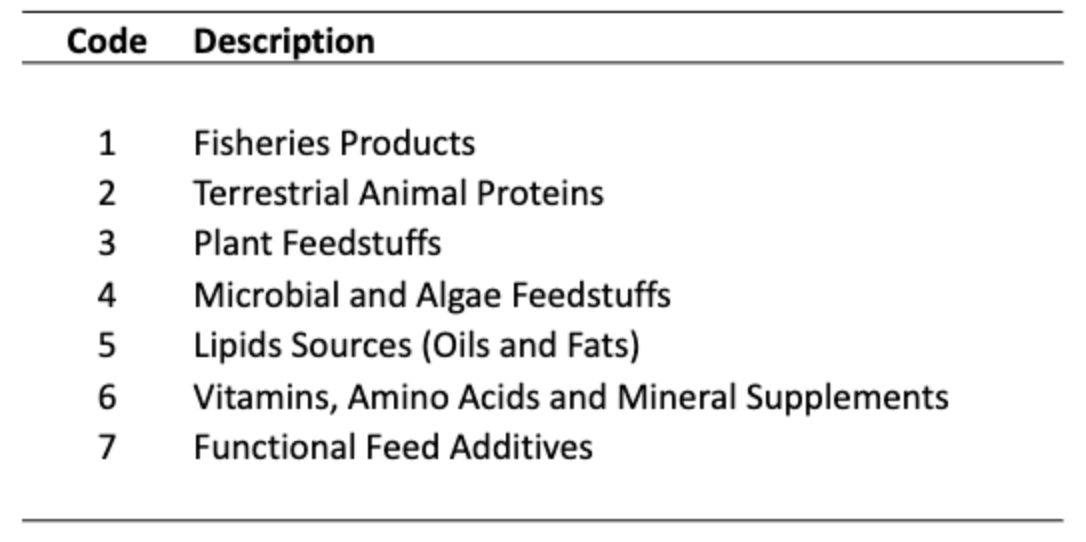
How does the Food and Agriculture Organization (FAO) categorize feed

IAFFD classification of feed
Types/origins of forages and roughages
Grass forage
Legumes forage
Forage crops / Fodder (cultivated plants like corn cut and used as forage)
Browse (leaves and small branches of trees/shrubs, and other non-herbaceous vegetation)
Forms of forages and roughages
Pasture
Fresh cut (green chop) (80-90% moisture)
Hay (dried to less than 12-15% moisture)
Silage (50-80% moisture)
Haylage (Partly dried to 20-50% moisture and ensiled); halfway between hay and silage
Compressed (cubed), dehydrated (less than 10% moisture)
Forage legumes description
Plants of the legume family are noted for their high content in protein due to their symbiotic nitrogen-fixing bacterial colonizing their root
Forage legumes examples
Alfalfa, also called Lucerne, (Medicago sativa) is Canada's most valuable forage.
Red clover (Trifolium pratense) is more suited to imperfect soil drainage than alfalfa.
Alsike clover (T. hybridum) and white clover (T. repens) are also widely cultivated.
Grass forages
Timothy (Phleum pratense) is the dominant forage grass in eastern Canada.
Crested wheatgrass (Agropyron cristatum) is a dominant forage grass in western Canada.
Orchard grass (Dactylis glomerata) and Russian wild ryegrass (Elymus junceus) are dominant forage grasses in British Columbia.
Bromegrass (Bromus inermis) is grown in eastern Canada and on the Prairies.
Kentucky bluegrass (Poa pratensis) is commonly grown in many areas.
Examples of forage grain/crop
Corn
Barley
Oat
Wheat
Factors affecting forage quality
Six major factors affecting forage quality (not yield):
Maturity
Crop species
Harvest and storage
Environment,
Soil fertility
Variety (genetic)
What happens as forage matures
As forage grasses and legumes approach reproductive maturity, yield and dry matter (DM) accumulation increases
However, forage quality decreases:
Less leaves (higher protein, lower fibre part)
More stems (more fibrous part)
Lower crude protein
Higher levels of fibres that are difficult to ferment (ADF = Acid detergent fibres

Ensiling/silaging and how it’s done
Ensiling forages is a practice where wilted or fresh cut grass is packed into an anaerobic environment.
The ensiling process relies on lactic acid bacteria utilizing the water- soluble sugars within the plant to produce organic acids which lower the pH from 6.0 to 3.8-5.0, depending on the forage species.
The low pH and anaerobic conditions limit bacterial growth and degradation of the quality of the silage
Good ensiling practices include
Good ensiling practices involves preserving forage, excluding oxygen, and reducing the pH quickly through bacterial fermentation.
Silage quality
Lactic acid should be the primary acid in good silage. This acid is stronger than the other acids (acetic, propionic, and butyric) in silage and therefore is usually responsible for greater decrease in silage pH.
Fermentations that produce lactic acid result in the lowest losses of DM and energy from the crop during storage compared to fermentation conditions promoting the production of other organic acids.
In general, silages with high levels of acetic acid and butyric acids can result in reduced feed intakes by ruminants.