BI 233 respiratory system
 Call Kai
 Learn
Learn Practice Test
 Spaced Repetition
 Match
Match Flashcards
 Knowt Play
1/49

There's no tags or description
Looks like no tags are added yet.
Name | Mastery | Learn | Test | Matching | Spaced | Call with Kai | Chat |
|---|
No analytics yet
Send a link to your students to track their progress
50 Terms
tidal volume
regular in and out breathing
residual volume
amount of air left in the lungs after max exhalation
expiratory capacity
TV + ERV
total lung capacity
TV + IRV + ERV + RV
vital capacity
TV + IRV + ERV
forced vital capacity
air being physically forced out of the lungs
forced expiratory volume in 1 second
how much air leaves that first second of exhalation
pulmonary ventilation
air in and out of lungs from high to low pressure
boyle’s law (volume/pressure)
if volume increases, then pressure decreases
2 groups of neural control over breathing
ventral and dorsal
ventral neural control group
pattern generator of in and out rhythmdor
dorsal neural control group
slow down or speed up, changes depth of respirations
receptors in the medulla detect __ (1)
CO2
receptors in the aorta and carotid detect __ (3)
pH, CO2, O2
dalton’s law
in a mixture, each gas exerts a pressure equal to its amount of pressure
factors of external respiration (5)
partial pressure gradient
solubility coefficients
membrane thickness
membrane area
ventilation
oxygen transportation (1)
hemoglobin preferentially changes how much oxygen it drops off depending on tissue workload
carbon dioxide transport methods (3)
dissolve in plasma
CO2 → carbonic acid via carbonic anhydrase
carbonic acid → bicarb and hydrogen
factors of oxygen affinity (3)
temperature
pH
hormones that increase metabolic rate
pneumonia
inflammation, swelling, edema leads to a thickened resp. membrane resulting in low O2 saturation and hypoxemia
tuberculosis
infected alveolar macrophages get walled off forming fibrous nodules/tubercles resulting in low lung compliance
emphysema
irritants, smoking, air pollution breaks down alveolar tissue → scar tissue → low lung compliance and increased energy expenditure
chronic bronchitis
resp. cilia destroyed, goblet cells overproduce mucus resulting in chronic cough and sputum, bronchial tree infection
squamous cell carcinoma
columnar to squamous cells replacing functional lung tissue
adenocarcinoma
cancerous mucus glands
small cell carcinoma
non differentiated cell clusters, quick metastisis
type I pneumocyte
thin for diffusion
type II pneumocyte
cuboidal for surfactant production
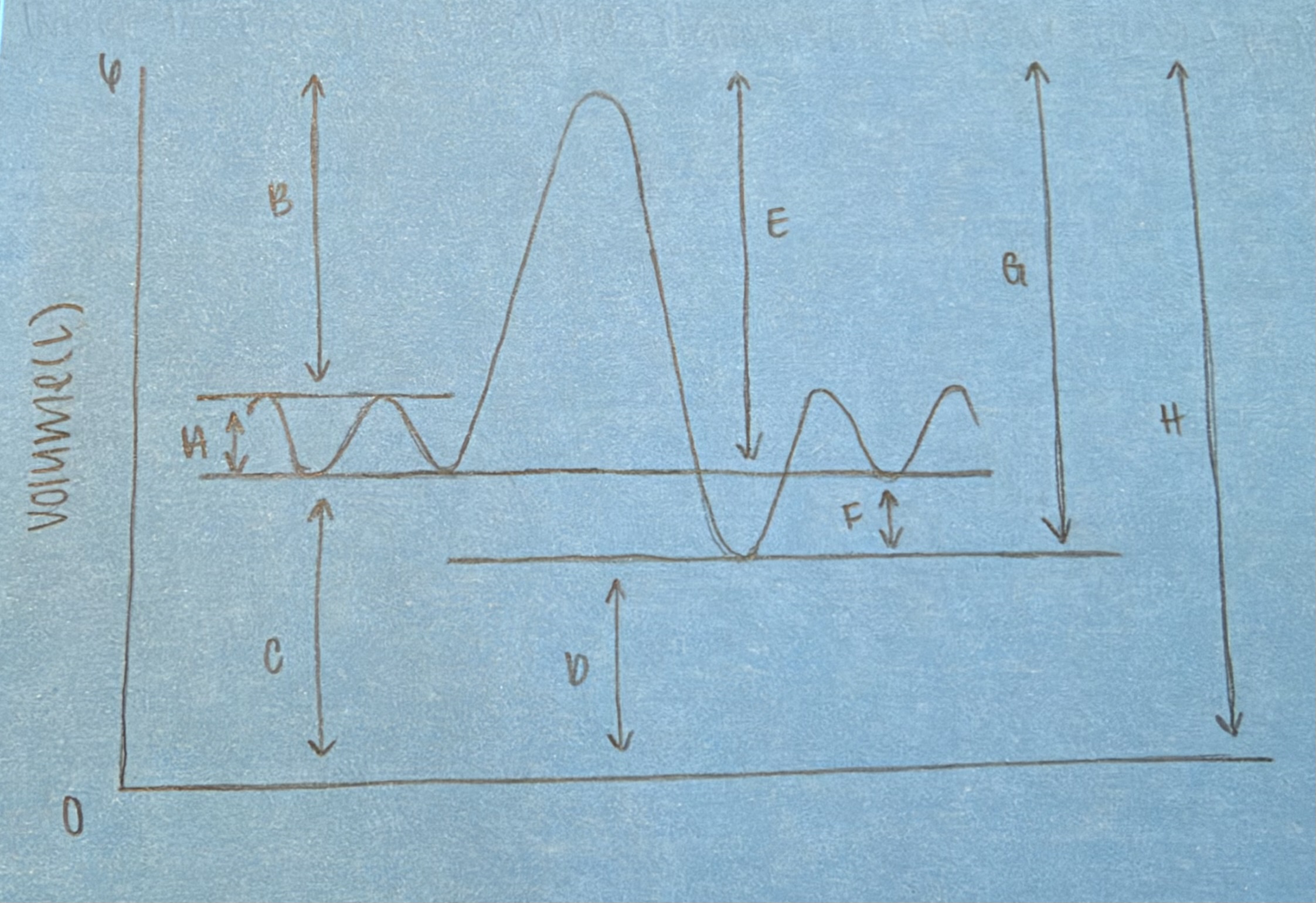
what volume is letter A?
tidal volume
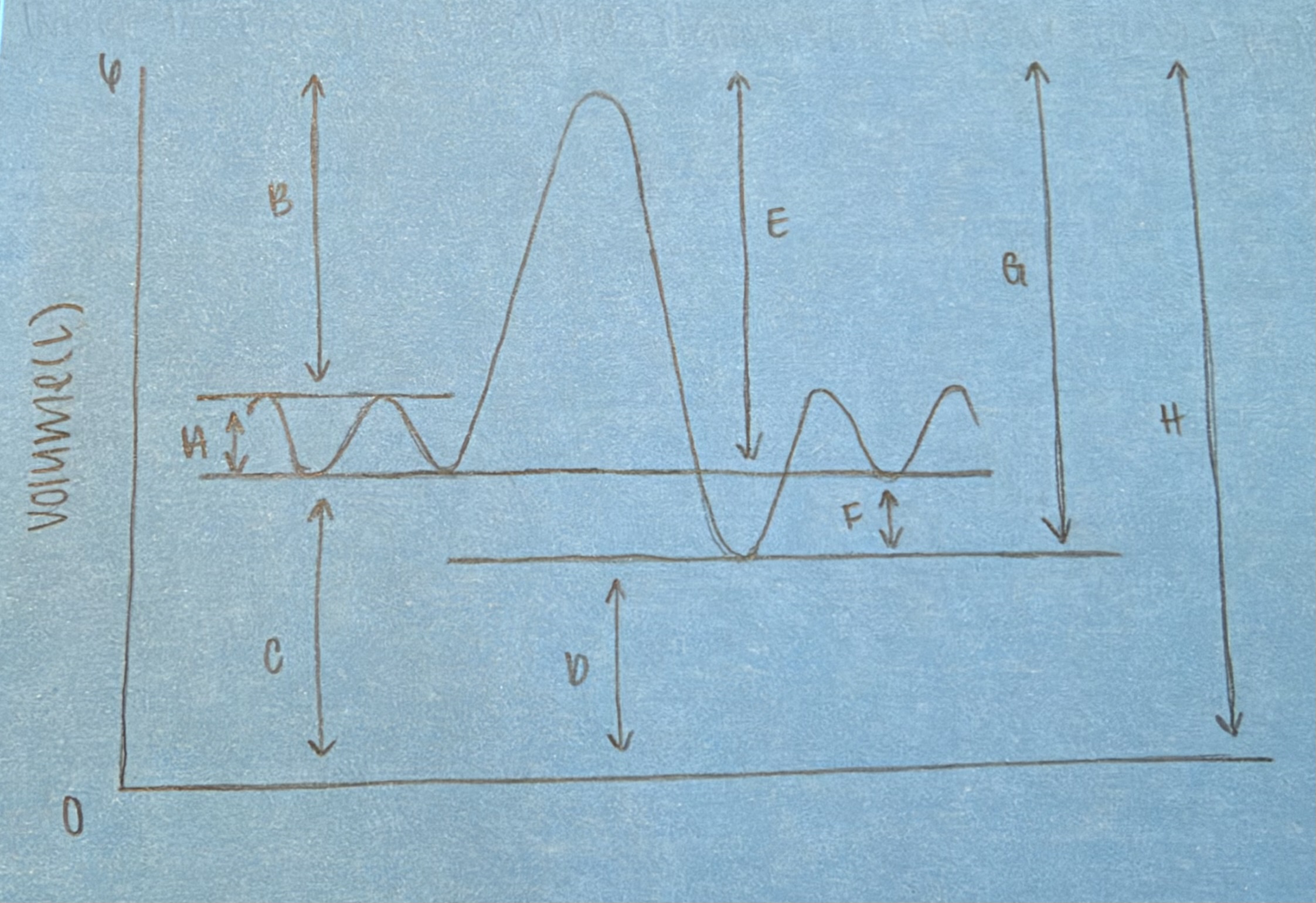
what volume is letter B?
inspiratory reserve volume
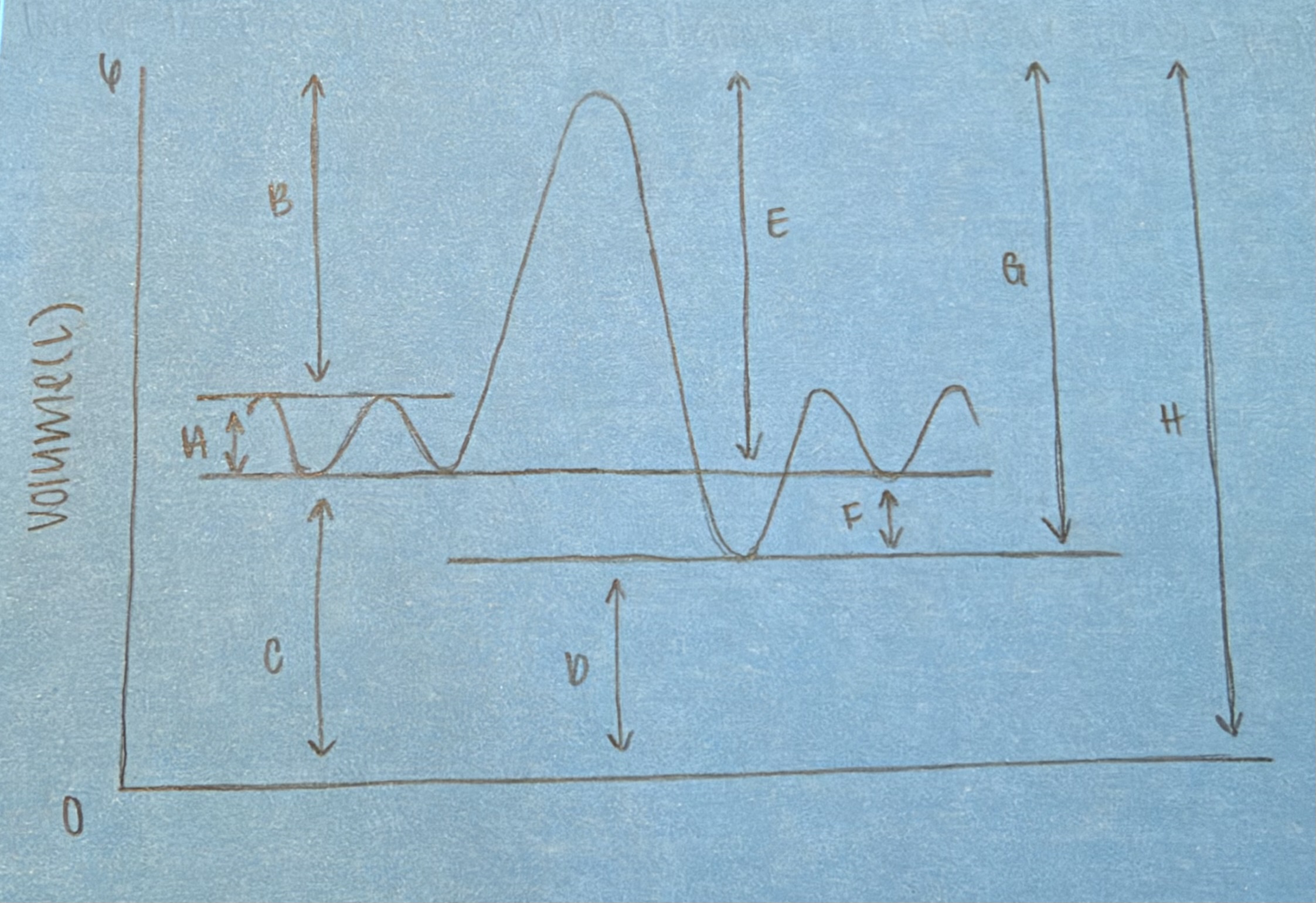
what volume is letter C?
functional residual capacity
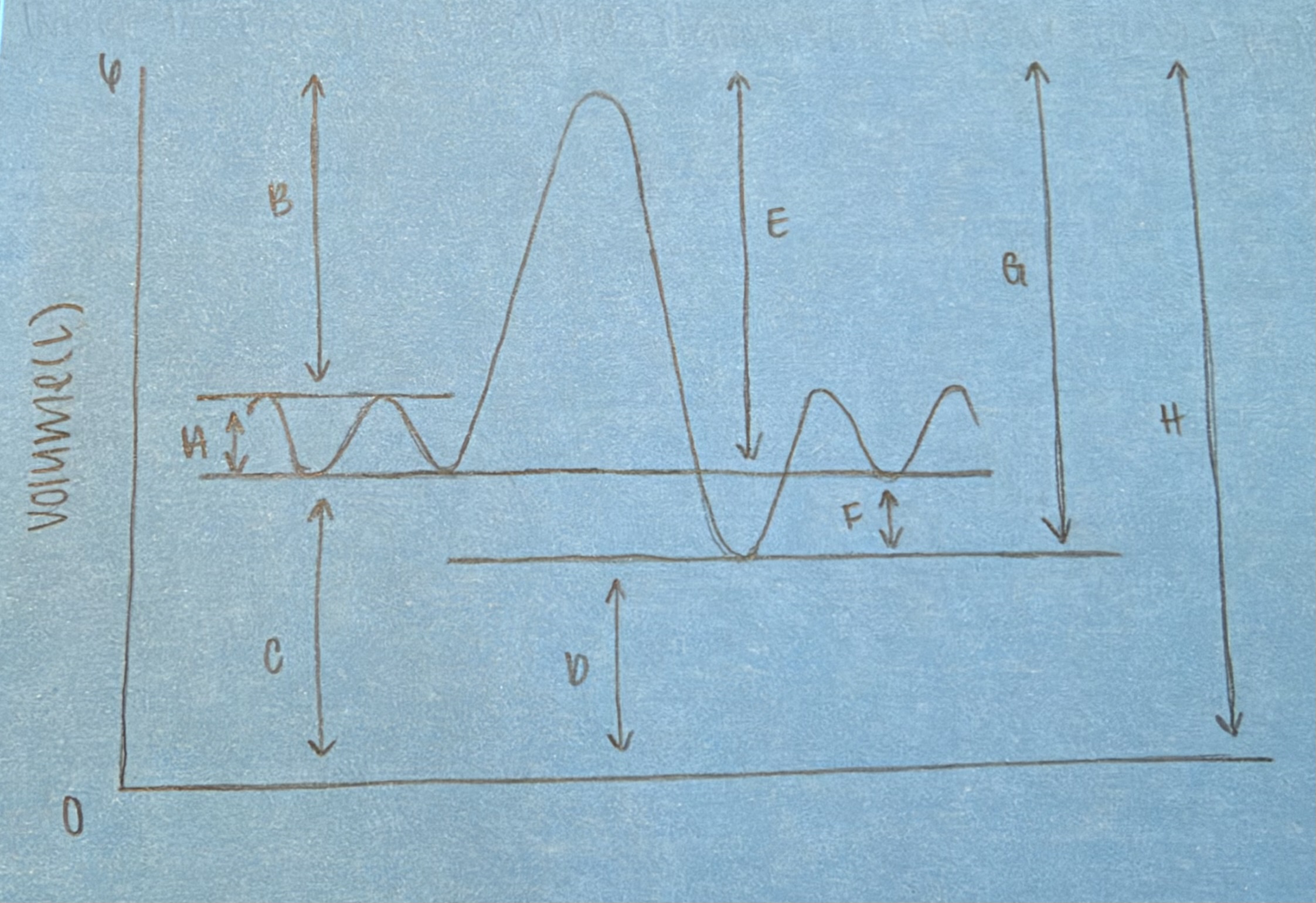
what volume is letter D?
residual volume
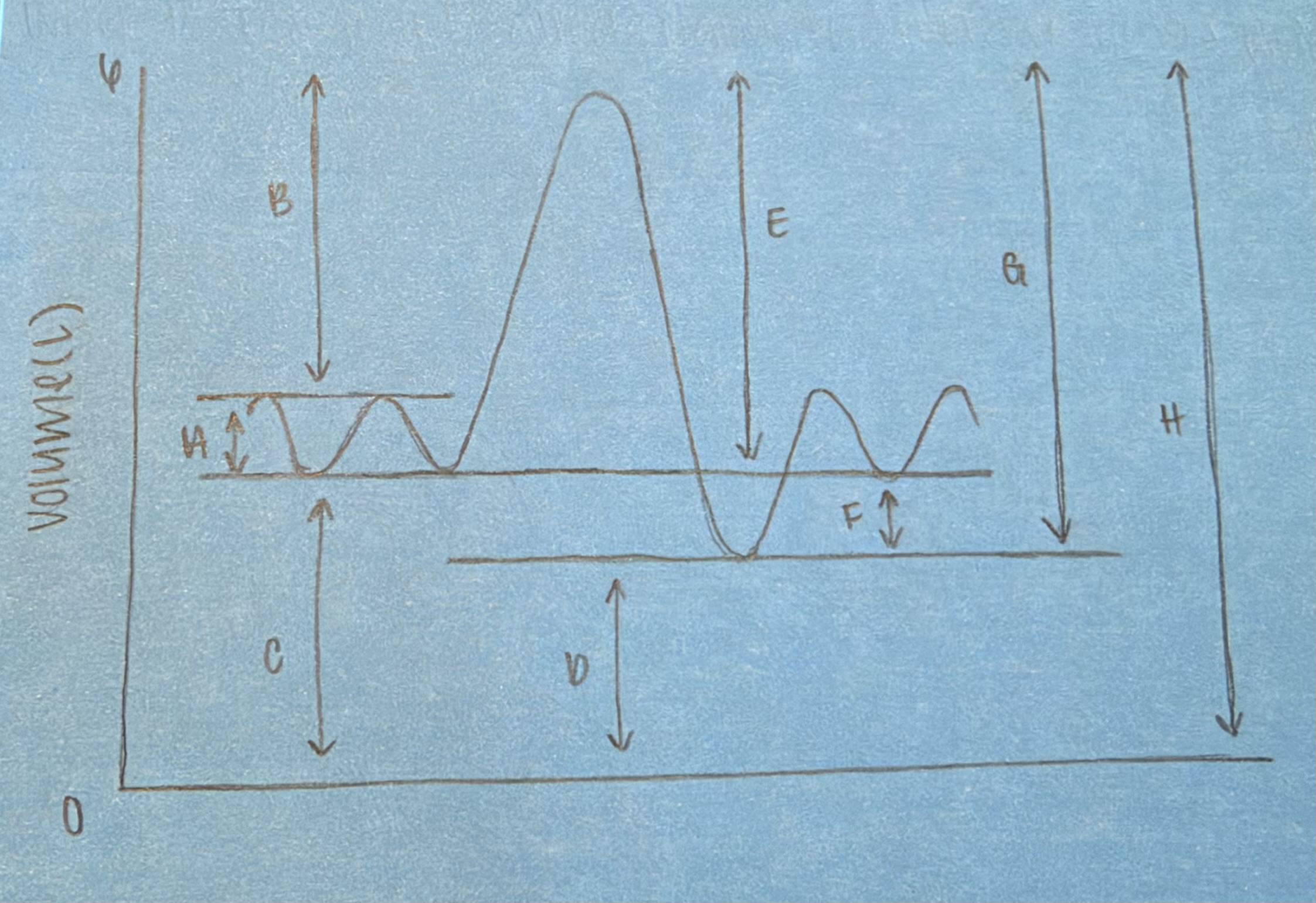
what is the volume for letter E?
inspiratory capacity
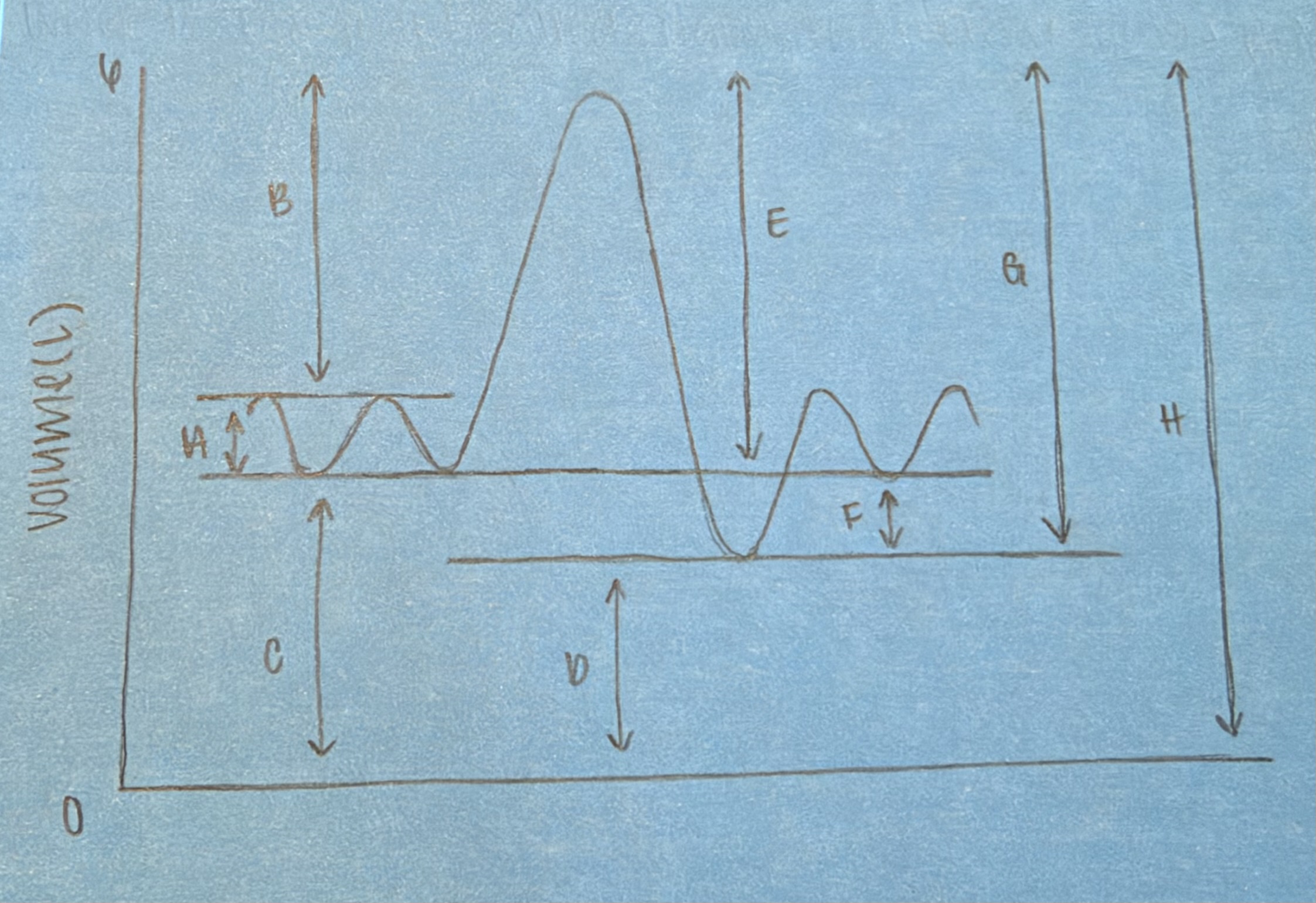
what is the volume for letter F?
expiratory reserve volume
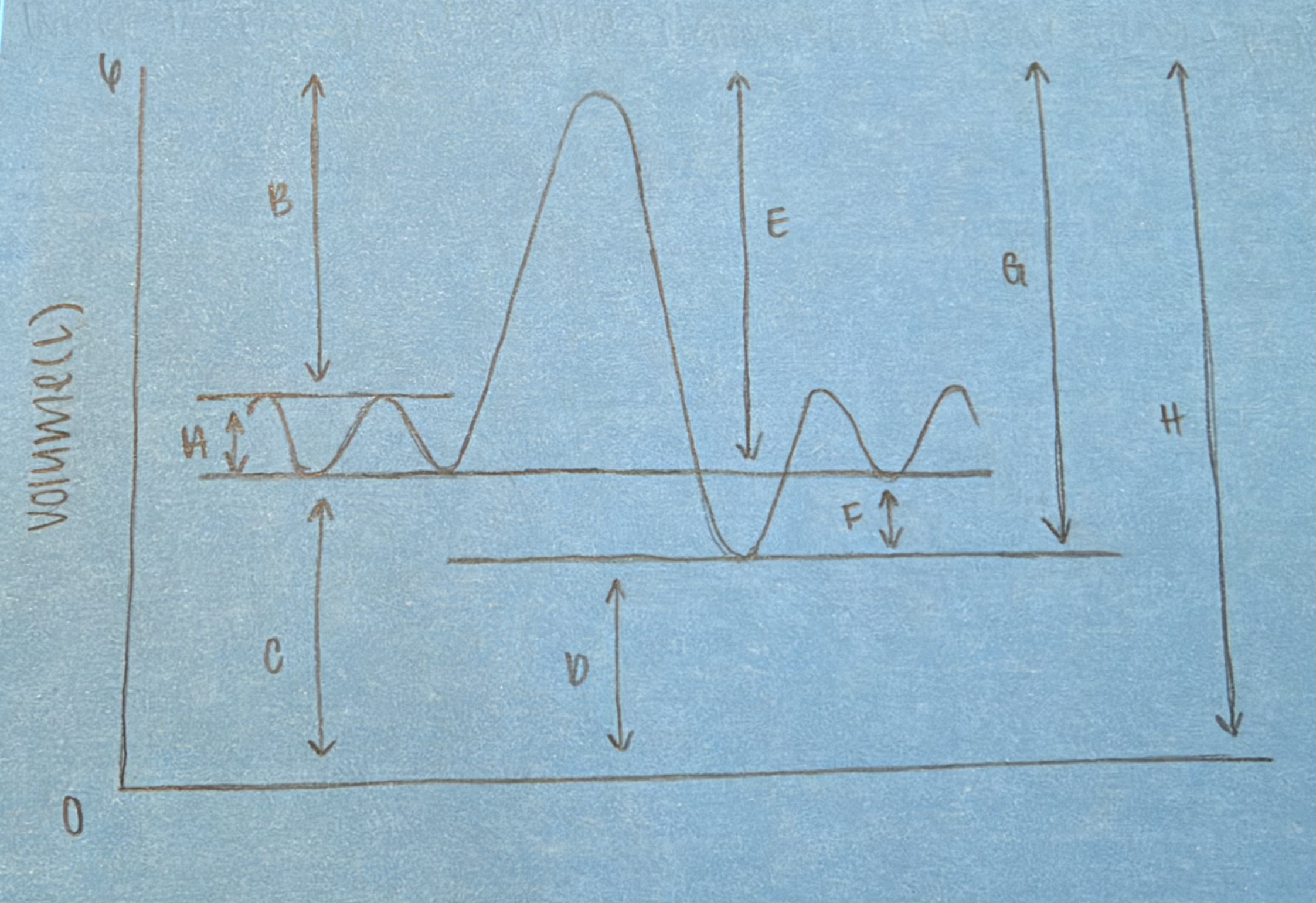
what is the volume for letter G?
vital capacity
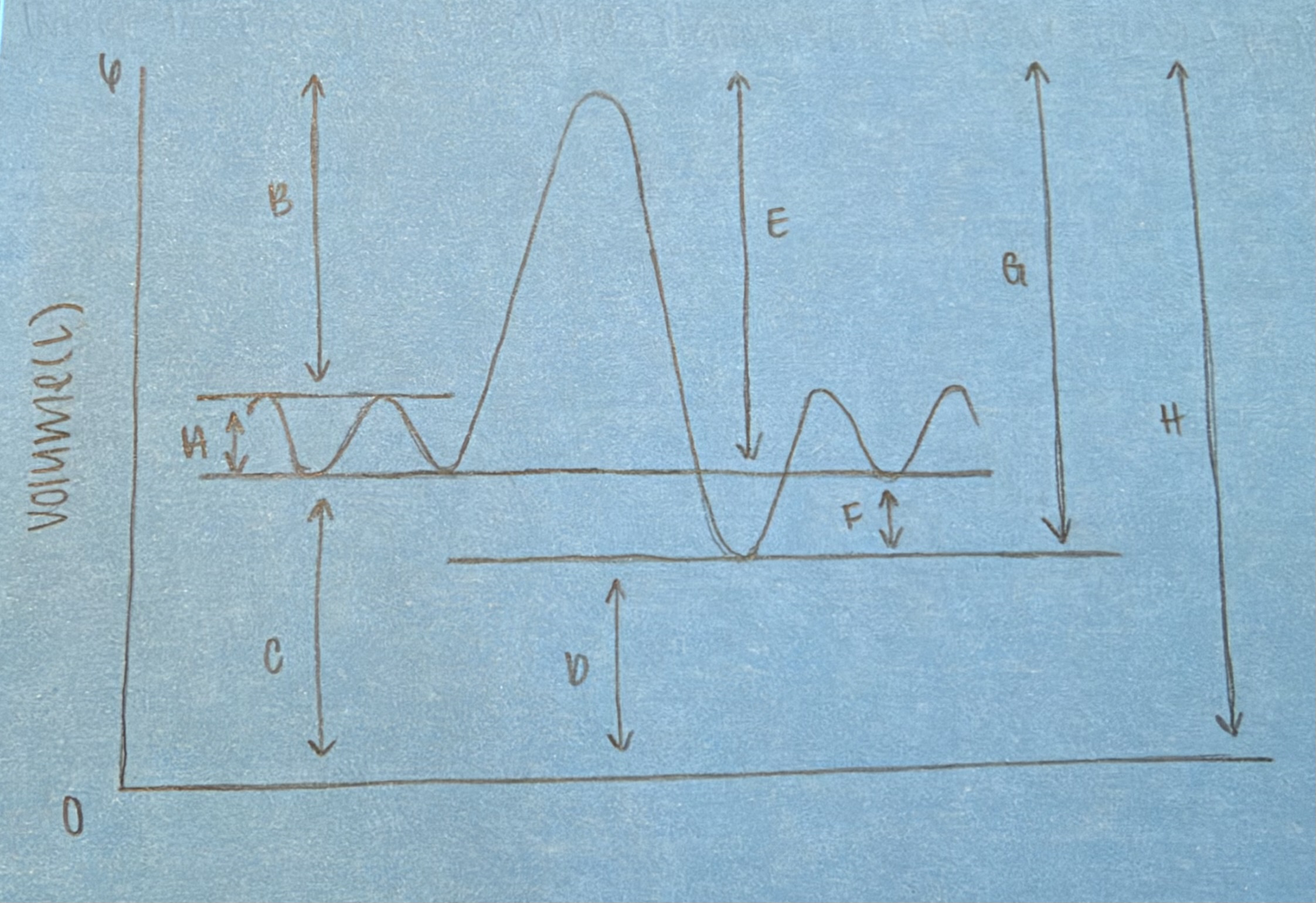
what is the volume for letter H?
total lung capacity

ID the pink arrow
trachea

ID the blue arrow
right horizontal fissure

ID the yellow arrow
carina

ID the orange circle
hilus

ID the red arrow
cardiac notch

ID the purple circle
cardiac impression

ID the black arrow
left oblique fissure

ID the green arrow
right oblique fissure

ID the black arrow
hyoid bone

ID the blue arrow
epiglottis

ID the green arrow
thyrohyoid ligament

ID the yellow arrow
laryngeal prominence

ID the red arrow
thyroid cartilage

ID the pink arrow
cricothyroid ligament