Chem 1 Pearson ch. 3
 Call Kai
 Learn
Learn Practice Test
 Spaced Repetition
 Match
Match Flashcards
 Knowt Play
1/29

There's no tags or description
Looks like no tags are added yet.
Name | Mastery | Learn | Test | Matching | Spaced | Call with Kai | Chat |
|---|
No analytics yet
Send a link to your students to track their progress
30 Terms
ionic bonding
metal + nonmetal, cation gives electron to anion
covalent bonding
nonmetal + nonmetal or more, make molecules, share electrons
empirical formula
smallest whole number ration of atoms (ex. CH2)
molecular formula
number of each atoms a compound has (ex. C6H12)
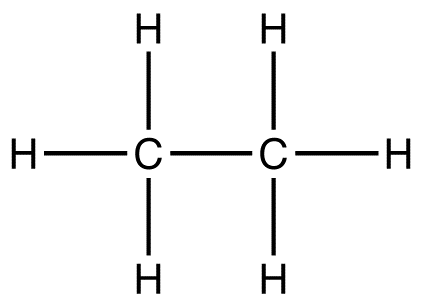
structural formula
physical diagram, can tell bond multiplicity and molecular geometry
ionic formula charges
swap the charges for the subscripts
ex. Na^+1 and P^-3 = Na3P
group 1 charge
1+
group 2 charge
2+
group 13 charge
3+
group 15 charge
3-
group 16 charge
2-
group 17 charge
1-
type I metals
main group (groups 1, 2, 13), have fixed charges
type ii metals
transition metals, variable charges, indicate with roman numeral
ex. Cu^2+ = copper (II)
type ii metal exceptions
Ag^1+, Zn^3+, Sc^3+
monoatomic ions
single atom with + or - charge
monoatomic ion naming
anion base + ide
ex. Cl^1- = chlorida
polyatomic ions
covalently bonded interior, interacts ionically
type I binary naming
cation + anion base + ide
ex. NaCl = sodium chlorida
type II binary naming
cation (roman numeral) + anion base + ide
ex. NiCl2 → Ni^2+ and Cl^1- = nickel (II) chlorida
polyatomic
cation + anion (usually polyatomic)
ex. Na^+ + ClO^- = sodium chlorite
polyatomic ion naming
most = per + polyatomic ion + ate (ex. ChO4^1- = perchlorate)
more = polyatomic ion + ate (ex. ChO3^1- = chlorate)
less = polyatomic ion + ite (ex. ChO2^1- = chlorite)
least = hypo + polyatomic ion + ite (ex. ChO^1- = hyporchlorite)
binary molecular compounds
2 nonmetals
prefix + atom + ide
(ex. CO2 = carbon dioxide)
binary acid
H^+ + one nonmetal
binary acid naming
hydro + nonmetal + ic acid
(ex. HCl^1- = hydrochloric acid)
oxyacid
include oxygen
oxyacid naming
anion root + ic acid
(ex. HNO3 = nitric acid)
total molar mass
(atoms)(molar mass) + (atoms)(molar mass) + (atoms)(molar mass) + …
mass percent
(((atoms)(molar mass)) / (total molar mass of compound))(100)
elements that are diatomic in nature
Br I N Cl H O F (brinclhof)
found in pairs, usually doubled (N2, I2, etc)