Unit 17.2: Mechanics (Theory 2)
 Call Kai
 Learn
Learn Practice Test
 Spaced Repetition
 Match
Match Flashcards
 Knowt Play
1/26

Earn XP
Name | Mastery | Learn | Test | Matching | Spaced | Call with Kai |
|---|
No analytics yet
Send a link to your students to track their progress
27 Terms
Giga (G)
10^9
Mega (M)
10^6
kilo (k)
10³
centi ( c )
10^-2
milli (m)
10^-3
micro (μ)
10^-6
nano (n)
10^-9
What quantity is speed?
Scalar (only quantity)
What quantity is velocity?
Vector (as it has direction)
Formula for speed?
Distance ÷ Time
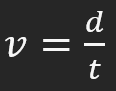
Formula for velocity?
Final displacement ÷ Time taken
Formula for acceleration?
Change in velocity ÷ time

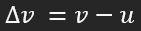
How to calculate change in velocity?
Final velocity - initial velocity
How to convert from m/s to km/hr?
3.6 x m/s
How to convert from km/hr to m/s?
km/hr ÷ 3.6
What is the formula for force?
Mass x Acceleration

What is the formula for weight?
Mass x Gravity (10m/s²)
How to get speed from distance time graphs?
Gradient of line (rise ÷ run)
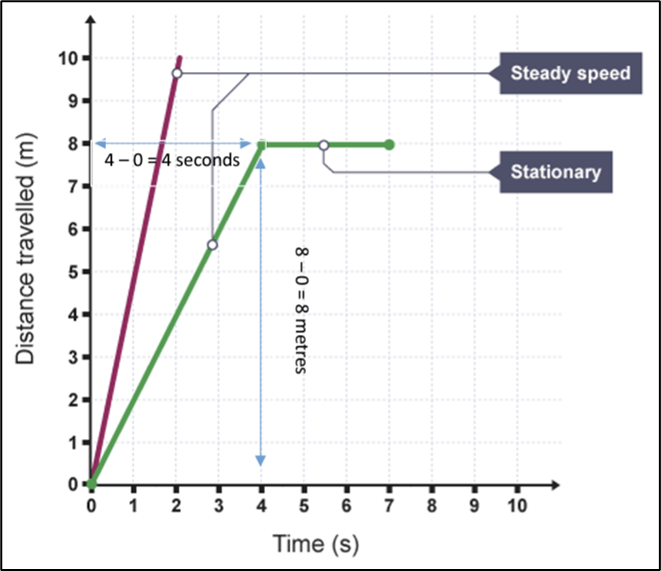
On x-time graphs, time is always on which axis?
X axis
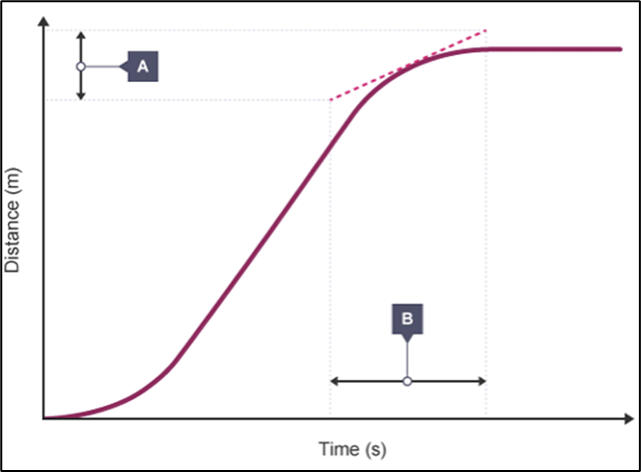
What is a tangent?
Draw a straight line that touches a curve (used to find speed as curved line = accelerating/decelerating)
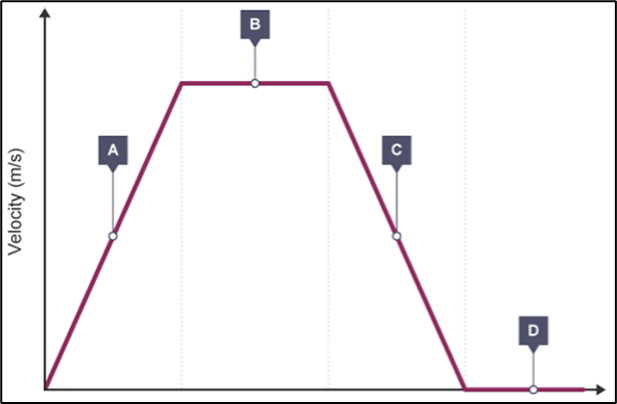
In a velocity time graph, the gradient = ?
acceleration of object
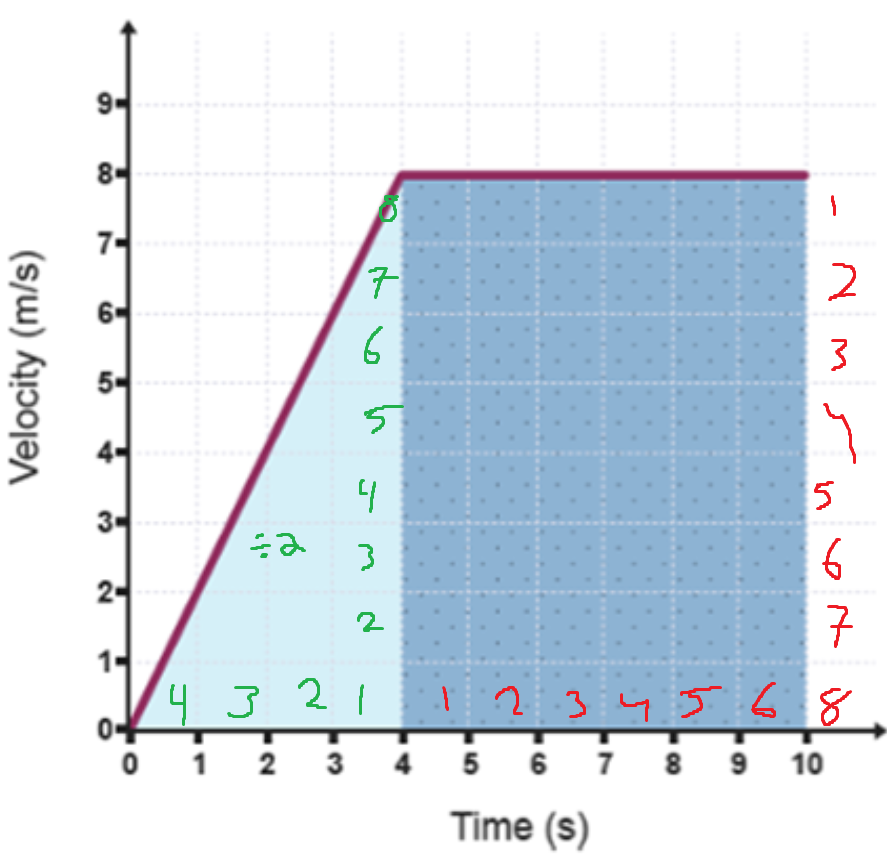
How do you calculate displacement on a velocity time graph?
Calculate the area under on a velocity time graph
Density is directly proportional to?
Mass
Density is inversely proportional to?
Volume
What is Newton’s First Law?
An object will stay at rest or move with constant velocity unless an unbalanced force acts.
What is Newton’s Second Law?
When an unbalanced force does act, the object will accelerate where F = MA
So, Acceleration ∝ Resultant Force
and Acceleration ∝ 1/Mass (inversely proportional)
What is Newton’s Third Law?
Every action has an equal and opposite reaction.