Calculus 1 Vocab - Chapter 4
 Call Kai
 Learn
Learn Practice Test
 Spaced Repetition
 Match
Match Flashcards
 Knowt Play
1/8

There's no tags or description
Looks like no tags are added yet.
Name | Mastery | Learn | Test | Matching | Spaced | Call with Kai | Chat |
|---|
No analytics yet
Send a link to your students to track their progress
9 Terms
Antiderivative
The process of finding the original function when given the derivative
Differential equation
An equation that contains the derivative of a function in it
Indefinite Integration
Same as the antiderivative
Relationship of distance to velocity and acceleration
v(t)dt = d(t), a(t)dt = v(t), a(t) = v’(t), v(t) = d’(t), a(t) = d”(t)
Riemann Sum
The process of approximating the area under the curve by using small rectangles
Average Value of a Function
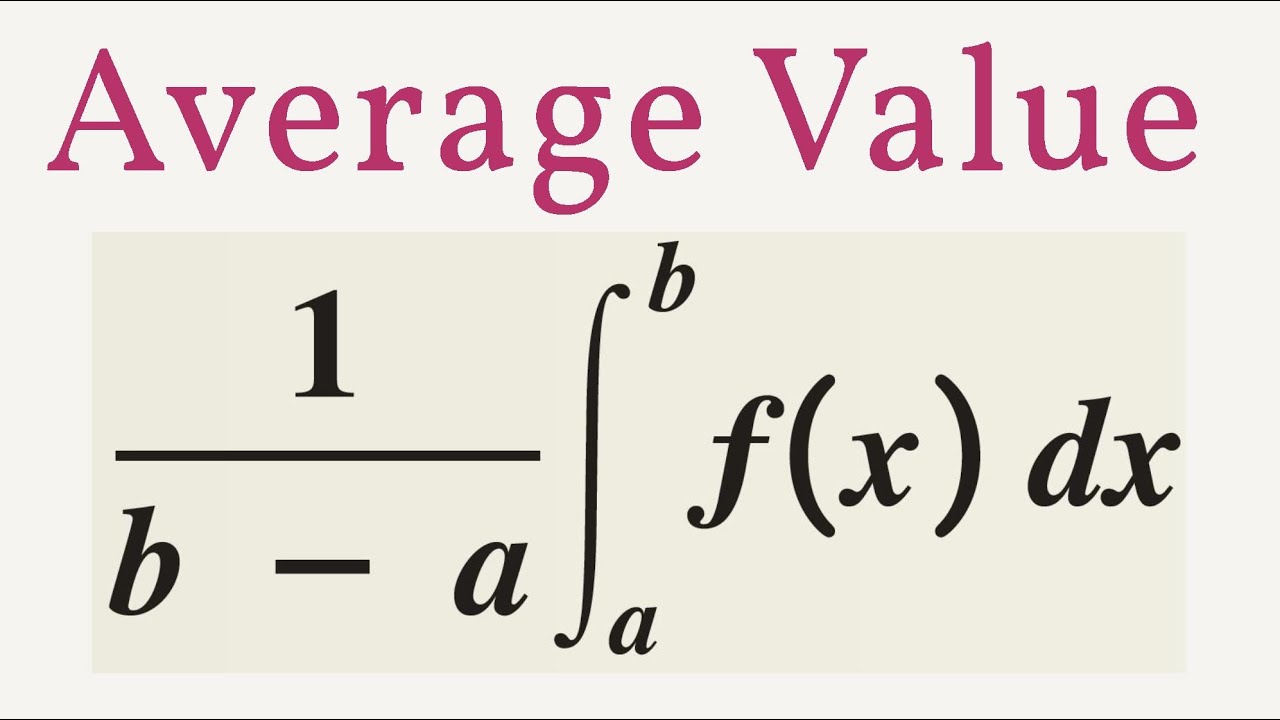
Fundamental Theorem of Calculus
Suppose that f is continuous on [a, b], Part I: If F is defined on [a, b] by (average value of a function) then F is an antiderivative of f. That is, F’(x) = f(x) for x in [a, b]. Part II: If G is any antiderivative of f on [a, b], then…
![<p>Suppose that f is continuous on [a, b], Part I: If F is defined on [a, b] by (average value of a function) then F is an antiderivative of f. That is, F’(x) = f(x) for x in [a, b]. Part II: If G is any antiderivative of f on [a, b], then…</p>](https://assets.knowt.com/user-attachments/8a2795d3-5f4f-4dea-b276-1f5926cde039.png)
Simpson’c Rule
1/3 (∆x) (Y0 + 4Y1 + 2Y2 + 4Y3 + 2Y4 +...+ 2Yn-2 + 4Yn-1 + Yn) and n is even; or 1/3(2M + T)
Trapezoid Rule
Half the first height, plus all the other heights, plus half the last height, all multiplied by the width