All things med mx
 Call Kai
 Learn
Learn Practice Test
 Spaced Repetition
 Match
Match Flashcards
 Knowt Play
1/71

There's no tags or description
Looks like no tags are added yet.
Name | Mastery | Learn | Test | Matching | Spaced | Call with Kai | Chat |
|---|
No analytics yet
Send a link to your students to track their progress
72 Terms
Remipril is for what?
Remipril is an angiotensin-converting enzyme (ACE) inhibitor used to treat hypertension and heart failure by relaxing blood vessels, thereby reducing blood pressure.
Atovastatin is for what?
Atovastatin is a statin medication used to lower cholesterol levels and reduce the risk of cardiovascular disease by inhibiting the enzyme HMG-CoA reductase.
Pantoprazole or Omepraole is for what?
Pantoprazole is a proton pump inhibitor (PPI) used to treat gastroesophageal reflux disease (GERD) and other conditions involving excessive stomach acid production.
A/E: Renal impact!
Dutasteride & tamsulosin is for what?
Dutasteride and tamsulosin are medications used to treat benign prostatic hyperplasia (BPH) by reducing prostate size and improving urine flow.
Hydrocholorothiazide is for what?
Hydrochlorothiazide is a thiazide diuretic used to treat hypertension and edema by promoting fluid excretion through the kidneys. Excretes potassium → ↓ K⁺ good for if you have too much (in hyperkalaemia)
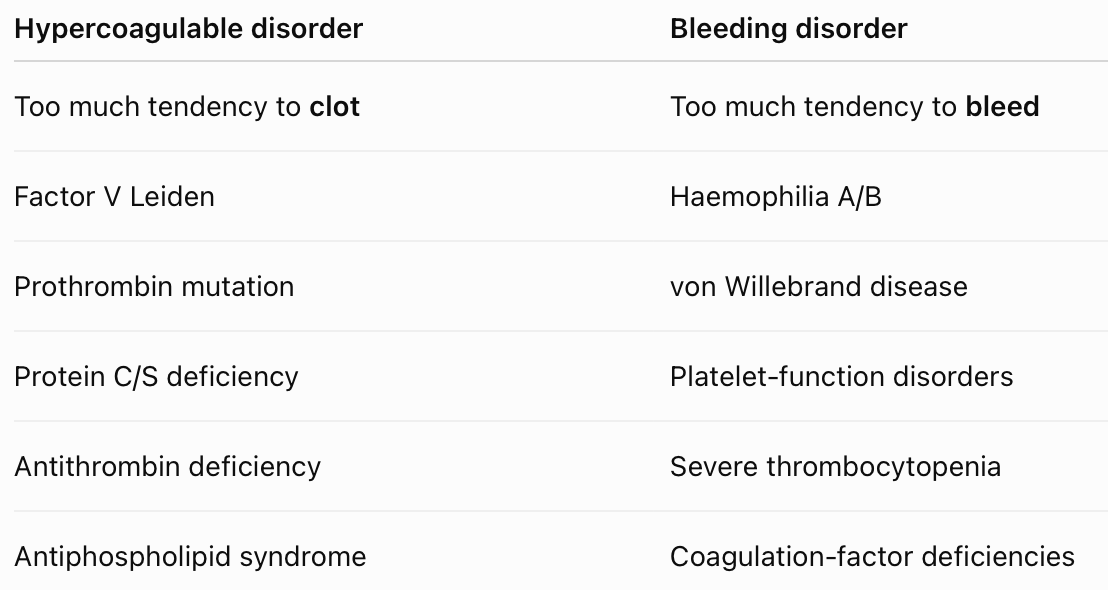
Hyperkalemia mx
Insulin + glucose , Salbutamol, Diuretics that remove potassium= thiazide, Calcium gluconate,
also Sodium Bicarbonate (makes blood more basic w/ high Ph, H+ comes out by trading K+ into cells),
± exchange resins eg: Resonium
Hypercalcaemia mx
IV fluids (sodium chloride) in all cases of inc Ca
use w/ IV bisphosphonate aka zoledronic acid (but takes 2d at least to work)
Denosumab (is monoclonal Ab, stops RANK → stops bone turn over —> less Ca made) eg) Prolia for osteoperosis
In severe inc Ca+ —> Calcitonin but has short half life
Mx for easy bruising
avoidance of medications that impair platelet function:
NO aspirin, clopidogrel, NSAIDs, anticoagulants (warfarin, DOACs), corticosteroids.
Mx for easy bruising/ bleeding in ITP
in Thrombocytopenia treat the underlying cause.
if severe: corticosteroids ± IVIG.
if severe blood loss: plt transfusion
Coagulation factor deficiency in Vit K low? or if low cogulation factors in haemophilia?
Replace vit K
replace coag factors (VIII or IX)
von Willebrand disease mx?
desmopressin or vWF-containing factor replacement.
STEMI mx
O2
Aspirin
GTN
Morphine
reduce mortality with: BBlockers, Statins, Reperfusion <90min or thrombolysis PCTA angioplasty
Alcohol withdrawl mx?
Initial assessment: ABCD
IV access
monitor vitals,GCS
withdraw score
Give Thiamine + Benzodiazepine eg) Diazepam (according to scale)
correct electrolytes (K+/Mg)
± treat hypoglycaemia
± IV fluids (if dehydrated)
± Metoclopramine (antiemetics for N / V)
Mx for school sores (impetigo) in children?
Clean the lesions gently w/ soap/ water
keep it covered
good hygiene
dont share anything! no towels/ bed/ cloths
treat all affected household contacts
Wash existing cloths/ bed
if Group A strep infection in Impetigo —> IM benzathine benzylpenicillin
If Scabies: Permethrin cream 5% w/ repeat in 7 days or Ivermectin if> 15kg child
Febrile convulsions in a child Mx?
if simple febrile cause: reassurance
If seizure >5min : benzodiazepine ASAP
safety net: to call an ambulance if:
seizure lasts >5 minutes
it is their first seizure
they do not wake/recover afterwards
they have difficulty breathing or become blue/pale
the seizure is prolonged or they remain significantly drowsy.
initial Ix/mx + actual mx: of heavy menstrual bleeding?
Assess haemodynamic stability and severity of bleeding.
Pregnancy test.
FBC ± ferritin → assess iron-deficiency anaemia.
Determine likely cause using PALM-COEIN.
Consider pelvic examination and pelvic US depending on history/examination.
Treat iron deficiency if present.
Mx:
IUD (Mirena) → generally most effective medical option.
Tranexamic acid → reduces menstrual blood loss; taken during menstruation.
NSAIDs (e.g. mefenamic acid) → reduce bleeding + dysmenorrhoea.
Combined oral contraceptive pill → regulates/reduces bleeding.
Progestogen → alternative when oestrogen contraindicated.
± hysterectomy or endometrial ablation
Surgical emergency trauma eg: gun shot wound
A – Airway + C-spine
B – Breathing: RR, SpO₂, chest examination, oxygen if required.
C – Circulation: control catastrophic haemorrhage immediately, assess pulse/BP, IV access, bloods, fluids/blood products as appropriate.
D – Disability: GCS, pupils, BGL.
E – Exposure: look for other injuries
Mx:
Apply direct pressure/haemostatic dressing; use a tourniquet
IV access
analgesia
Prevention of infection: tetanus shot prophylaxis + Abs
urgent surgical assessment and imaging when stable.
How do you manage delirium?
Identify and treat the underlying cause.
ABCDE + observations + BGL.
Correct dehydration/electrolyte abnormalities/hypoxia —> if those are cause
Review medications.
Treat any: pain, constipation and urinary retention
Ensure glasses/hearing aids are available.
Avoid unnecessary restraints/catheters.
Maintain sleep–wake cycle, Provide orientation: clock, calendar, familiar people/environment.
manage mild CAP community-acquired pneumonia in a child?
mild:
Oral antibiotics if bacterial pneumonia suspected.
Fluids and regular feeding as tolerated.
Paracetamol/ibuprofen for comfort/fever.
Safety-netting and review.
manage severe CAP community-acquired pneumonia in a child?
Admit.
Oxygen if hypoxaemic.
IV antibiotics if unable to tolerate oral therapy or significantly unwell.
IV/NG fluids if required.
Monitor respiratory status closely.
What important interaction should you remember with digoxin?
Digoxin has a narrow therapeutic index. Check renal function, electrolytes and interacting medications. Toxicity can cause GI symptoms, confusion, visual disturbance and arrhythmias.
How do you manage an uncomplicated, reducible inguinal hernia?
may not need surgery if no symptoms (aka uncomplicated)
if symptoms = refer for surgery esp if risk of strangulation
observe for syx
How do you manage an incarcerated/strangulated hernia?
Emergency surgical assessment.
NBM.
IV access + fluids.
Analgesia/antiemetics.
Bloods ± crossmatch.
(strangulation is present if severe pain + irreducable tender lump + red + N/V + ischemic / BO signs)
How do you manage major depression during pregnancy?
Assess suicide/self-harm risk and symptoms for severity
Discuss psychological therapy
For mild depression → psychological interventions may be appropriate initially.
Moderate–severe depression → psychological therapy + consider antidepressant medication: SSRIs
Severe depression w/ inability to care for self → urgent psychiatric assessment/admission may be required.
What is the management of faltering growth/ failure to thrive in baby?
Confirm accurate weight/length/height measurements and plot serially.
Assess dietary intake and feeding and waste (wet nappies- if malabsorption vs inadequate intake eg) feeding issue)
Detailed developmental and psychosocial history (inc requirements or different behaviours)
Examine for systemic disease (IBD/ coeliac / diabetes/ infection)
Assess parental heights/genetic potential.
Dietitian/paediatric referral if significant or persistent.
Antiplt drugs vs Anticoagulation drugs & what their main use is?
Antiplt: arterial prevention
Anticoag: venus prevention

Returned traveller with fever + rash + diarrhoea/vomiting = Malaria vs Dengue vs typhoid treatment?
if Malaria:
P. falciparum; severe malaria requires urgent IV artesunate
if Dengue:
supportive care and careful fluid management. Use paracetamol for fever/pain and avoid aspirin/NSAIDs because of bleeding risk.
if typhoid:
Antibiotics + fluids + electrolytes
Pre-Operative Mx?
-Patient education & consent
-Lifestyle modification (alcohol and smoking cessation, exercise and weight loss)
-Pre-operative fasting guidelines:
-Altered diet prior to surgery to enhance bowel recovery and avoid bowel prep if appropriate
-Solids allowed until 6 hours pre-operatively (unless contraindicated)
-Intake of clear fluids until 2 hours prior to surgery, with some centers moving towards being able to drink clear fluids up to the time of leaving the ward
-Loading with 12.5% carbohydrate beverage within 2 hours of surgery
Intra-Operative Mx?
-Use of multimodal and opioid sparing analgesia, including regional anaesthesia (e.g. spinal and epidural anaesthesia)
-Use of multimodal postoperative nausea and vomiting prophylaxis
-Use of minimally invasive surgery
-Targeting a goal-directed fluid therapy regime, including goal-directed haemostasis management
Post-Operative Mx?
-Ensure adequate pain control is achieved to allow for early mobilisation
-Early oral intake and optimising nutrition
-Multi-disciplinary post-operative patient follow-up, including in the post-acute care phase
Post op pain mx + A/E?
START: Non-opioid analgesia consists of paracetamol and/ or NSAIDs
Watch for—> NSAIDS contraindicated with Warfarin, A/E: Gastric uclers so give PPI
A/E: Renal failure (avoid)
A/E: Bleeding risk (plt dysfunction)
NEXT: -Weak opiates: codeine
-Strong opiates: morphine
If renal impairment —> use oxycodone (e.g. Endone) or fentanyl
A/E: Constipation + Nausea = need laxitives/ bowel chart w/ Anti-emetics.
A/E: sedation & confusion & resp depression
Neuropathic pain mx 2 main groups?
Non-pharmacological: CBT, transcutaneous electric nerve stimulation (TENS) or capsaicin cream (typically for localised pain)
vs
-Pharmacological therapies: gabapentin, amitriptyline or pregabalin; if these are not successful or not tolerated, specialist referral should be considered
N/V prevention & management in 2 ways?
Prophylactic measures:
-Anaesthetic measures (reduce opiates, reduce volatile gases)
-Prophylactic antiemetic therapy throughout surgery
-Dexamethasone when u start anaestasia
Conservative:
Fluids + Analgesia must be adequate
± Nasogastruc tube to aid gastric decompression
Drugs: try to tailor to cause of N/V:
If already given N meds, try a different one.
-if impaired gastric emptying —> need to start bowels use Metoclopramide (is prokinetic) “M for Move it”
or domperidone (motillium- dopamine antag) inhbits gut motility so u feel less sick
DO NOT use in bowel obstruction cuz it will not move the obstruction
if BO: use Hyscine (anti-muscarinic will dec GI secretion &N/V)
Usually start w/ Ondansetron —> then metoclopramide —> then Cyclizine
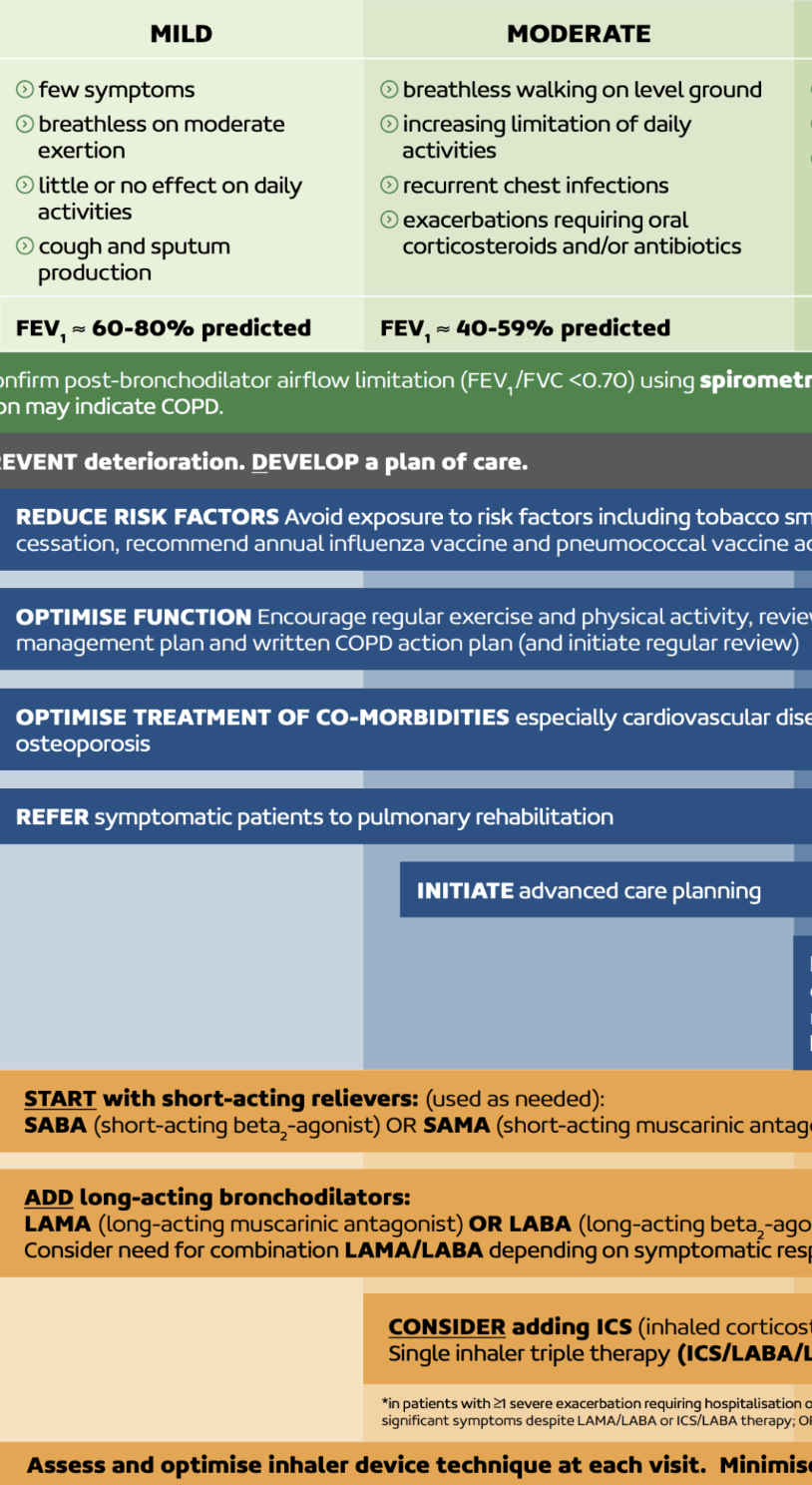
Mx for Mild COPD which is FEV1 60-80%?
Management aims to optimise function, prevent deterioration and manage exacerbations. Start:
smoking cessation
vaccinations (flu + pneumoccocal)
pulmonary rehabilitation (to clear symptoms of ongoing cough/sputum)
SNAP exercise, nutrition
avoidance of irritants (smoke/ pollutants/
Pharmacological treatment is stepwise: start with a short-acting bronchodilator (SABA/SAMA) for symptom relief
manage co-mobidities CVD + anxiety/ depression (COPD attacks can cause anxiety and is a chronic burden), Lung cancer (COPD is a RF for it) & osteoporosis (Repeated courses of corticosteroids for COPD exacerbations can accelerate bone loss)

Mx for Moderate COPD which is FEV1 :40-59% vs severe COPD with <40%?
moderate COPD is usually managed mainly with inhaled therapy + lifestyle measures, whereas severe COPD requires escalation of inhaled therapy and more intensive supportive management w/ inhaled steroids:
We already start with a short-acting bronchodilator (SABA/SAMA) for symptom relief → step up to a LAMA or LABA if symptoms persist → LAMA + LABA if still symptomatic → consider triple therapy (ICS + LAMA + LABA) for patients with persistent symptoms/frequent exacerbations.
For severe also manage: advanced lung disease w/ at home O2 therapies & long term non-invase ventilation ± surgery ± bronchoscopic interventions (requiring specialists).
Mx of acute COPD exacerbation?
For an acute exacerbation, treat promptly with bronchodilators ± corticosteroids and antibiotics when indicated, and provide controlled oxygen (88–92% if CO2 retention) with hospitalisation if severe.
What medications do you give for VTE prophylaxis?
vs if you actually have VTE whats used for treatment?
& who do you be cautious with?
Prophylaxis:
Hospitalised surgical patient
→ LMWHeparin (Clexane) is commonly the default
Post-operative orthopaedic patient
→ options can include LMWH or certain DOACs eg) Dabigatran, Apixiban
Patient with established DVT/PE
→ therapeutic anticoagulation such as apixaban is appropriate in many patients
For treatment/ cure of existing VTE:
Use Warfarin, Apririn
NOTES:
Used until INR becomes therapeutic.
LMWH dont use in renal failure or in Heparin induced thrombotic thrombocytopeoenia
Aspirin - for thromboprophylaxis , A/E: inc risk of GI bleed & brain bleed
risk based on: hypercoagulable state:
Surgery or trauma
Immobility/hospitalisation
Pregnancy and postpartum period
Oestrogen-containing contraception or HRT
Obesity
Increasing age
Previous VTE
Long-distance travel
Acute infection/inflammation
Monitor VTE prophylaxis in bleeding pts & those with haemorrhage, GI bleeds, severe thrombocytopenia, liver disease.

Mx of anastomotic leaks post surgery?
Ab IV
Fluids IV
Monitor urinary catheter for sepsis by seeing urine outflow volume
NBM if planing surgery —>
If really severe:
-explore site of infection w/ explorative laparotomy
-Washout
-insert/ clean drain or stoma
IX: CT for contents leak
*syx of Fever, tachycardia or hypotension, Increasing abdominal pain/peritonism
Mx of post-op Ileus ?
Is when abdo surgery dec the fx of abdo to do peristalsis, = is functional. causes constipation + obstruction (no gas) + bloating & distention w/ N/V.
Conservative function returns in 2-5d unless becomes BO or anastomotic leak
-NBM cuz bowel isnt gonna push any meds even laxitievs wont go through
-correct fluids w/ IV & electrolytes
-decompression via NG tube
-monitor, dont give opioids (constipation A/E)
IX: CT contrast for contents

Mx of post-op Atelectasis (small airways lung collapse) ?
*is very common to some degree
*can become: hypoxaemia, reduced lung compliance, pulmonary infections, and acute respiratory failure
*on Ex: crackles on affected side and low O2 sat (others will be fine)
MX: conservative w/ supplemental O2 & pain relief
Incentive spirometry (reps phsycian) + Chest physio to open chest
Anticoagulation peri op mx depends on what 2 key concepts/ risks? and the 3 key medications & investigation
compare risk in thromboemolic vs bleeding to decide if patient needs to stop their anticoagulation:
Thomboembolic risk (clot/stroke): “CHADsVASc” for ppl w/ Afib
C — Congestive heart failure (1 point)
H — Hypertension / high blood pressure (1 point)
A₂ — Age 75 or older (2 points)
D — Diabetes mellitus (1 point)
S₂ — Stroke, TIA (transient ischemic attack), or blood clot history (2 points)
V — Vascular disease, such as a prior heart attack or peripheral artery disease (1 point)
A — Age 65 to 74 (1 point)
Sc — sex category, being female (1 point)
0 (men) or 1 (women): Low risk; blood thinners (anticoagulants) are generally not needed.
1 (men): Intermediate risk; oral anticoagulation may be considered.
2 or higher (men) / 2 or higher (women): Higher risk; oral anticoagulant medication is typically
vs bleeding risk: “HAS BLED” for candidates for or currently taking anticoagulant therapy.
H— Hypertension (uncontrolled systolic blood pressure over 160 mmHg)
A — Abnormal renal (kidney) and/or liver function (1 point for each)
S — Stroke history
B — Bleeding history or predisposition (major bleed in the past)
L — Labile INR (unstable or high international normalized ratio readings if on warfarin)
E — Elderly (age greater than 65)
D — Drugs (using antiplatelet drugs like aspirin or NSAIDs) and/or Alcohol (8 or more drinks per week) (1 point for each)
0 to 2: Low to moderate risk for major bleeding. Anticoagulation can usually be considered safely.
3 or higher: High risk for bleeding. This does not mean you cannot take blood thinners, but it signals the doctor to use caution, correct reversible risk factors (like high blood pressure or alcohol use), and schedule more regular follow-ups
Warfarin has a longer half life ∴ earlier discontinuation at least 5 days pre-surgery. —> can do bridging anticoag w/ LMWH on day 4 (dec risk of embolism & dec bleeding risk ) must check INR —> must be b/w 1.5-2 before surgery
then stop LMWH 24h before surgery & restart warfarin as nomral 24h after
DOACS eg) apixiban pre surgery: can be discontinued 1-2 days prior to surgery. cuz they rapidly get used up and stop working fast once stopped.
LMWH pre surgery only used in bridging
Pre surgery mx of diabetes if insulin dependant vs oral hypoglycemic meds?
Book for morning list
Night before surgery —> reduce basal insulin to 2/3rds
Omit morning insulin → start on sliding scale (Variable rate IV insulin infusion) + 5% IV dextrose (sugar)
Monitor BSL every 2 hrs
Continue till pateint is able to eat and drink → overlap with normal insulin regimen
vs if on oral diabeteic medications:
* Caese medication periop
Metformin → morning of surgery (lactic acidosis)
SGLT2 inhibitors → 3 days prior to surgery (euglycemic ketoacidosis)
THEN CONTINUE AS ABOVE!!
"supplemental insulin protocol" where they have a basal insulin dose + supplemental insulin based on BGL that is checked q6h
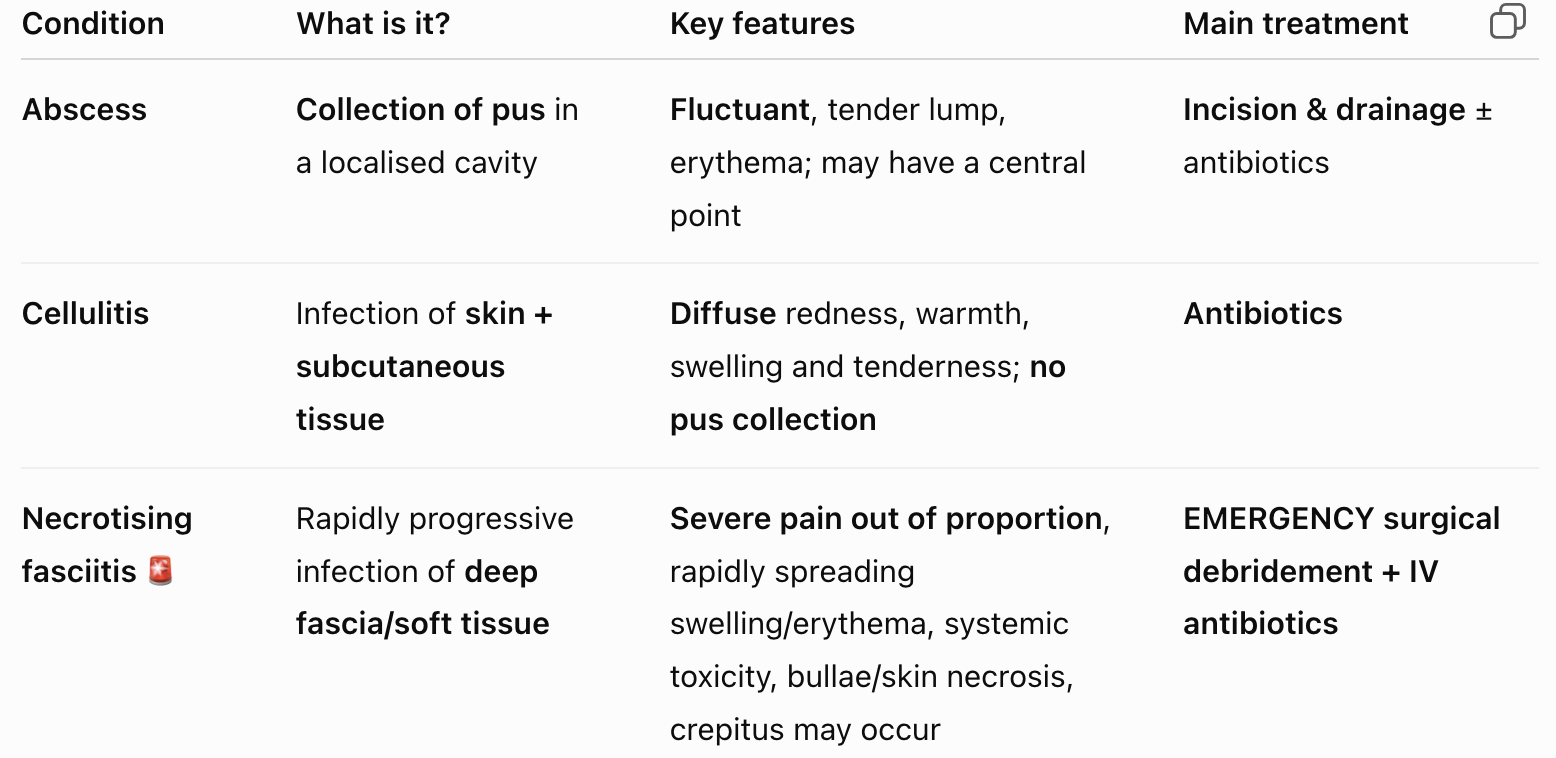
How to identify and manage: Abscess vs Cellulitis vs Nec fasciitis?
Types of clean/dirty wounds and mx & dressing to use?
Clean wound (is any wound with very low bacteria, no break in aseptic technique, no cuts into organs which have bacteria) —> no Mx prophylactic Abs needed UNLESS prosthetic/ foreign body was inserted OR pt is immunosuppressed —> Non adherent dressings (do not adhere to epithelialising tissue) Requires secondary dressing (holds the primary in place)
Clean but Contaminated wound (has some bacteria from purposely done elective entry to GI / lungs/ genitourinary area (exposing to organ bacteria) OR from breach in aseptic techniqie (introducing outside bacteria) —> Mx needs prophylactic Abs + clean the wound Lavage/ wash + can close the wound. eg) cutting finger, cholecystectomy,
Contaminated wound (unsterile entry of bacteria /infection from organs (done without electing to) eg) trauma)) or is a wound thats chronically open. —> Mx: same ^
→
Dirty wound: actually infected, foreign matter(animal/farming/bullet), pus, contaminated wounds left for 24h. —> Also needs AP prophylaxis + Lavage wash BUT KEEP OPEN TO CLEAR —> can still put dressing: antimibcrobial dressings (e.g. iodine gauze, silver containing dressings)
if deep cavity wound eg) abscess use packed dressing ti fill negative space —> Betadine-soaked ribbon gauze

The medicines that require withholding, cessation or dose reduction in acute kidney injury (AKI) or if they are sick?
“SADMAN”
S | Sulfonylureas – increased risk of hypoglycaemia |
A | ACE inhibitors – risk of worsening AKI |
D | Diuretics – risk of worsening AKI |
M | Metformin – increased risk of lactic acidosis |
A | Angiotensin receptor blockers (ARBs) - risk of worsening AKI |
N | NSAIDs – risk of worsening AKI |
S | Sodium-glucose co-transporter 2 (SGLT2) inhibitors – increased risk of ketoacidosis |
What are some high risk medications?
“APINCHS for a pinch in time”
A | Antimicrobials | Aminoglycosides: gentamicin, tobramycin and amikacin |
P | Potassium and other electrolytes | Injections of concentrated electrolytes: potassium, magnesium, calcium, hypertonic sodium chloride |
I | Insulin | All insulins |
N | Narcotics (opioids) and other sedatives | Opioids e.g. hydromorphone, oxycodone, morphine, fentanyl, alfentanil, remifentanil and analgesic patches |
C | Chemotherapeutic agents | vincristine, methotrexate, etoposide, azathioprine |
H | Heparin and other anticoagulants | heparin and low molecular weight heparins (LMWH): dalteparin, enoxaparin |
S | Systems | Medication safety systems, such as independent double checks, safe administration of liquid medications, standardised order sets and medication charts etc. |
Temazepam is what kind of drug ? and what are its A/E?
Benzodiazepines carry significant risks, including excessive sedation, falls and other accidents, respiratory depression, confusion and cognitive impairment. Older patients are at particularly high risk of these harms.
When benzodiazepines are taken regularly, for more than two to four weeks, tolerance and dependence are likely to occur.
only for shortterm
Metoclopramide is what kind of drug / its A/E?
Antiemetic,
A/E: Elderly people and those of low body weight may be more sensitive to the adverse effects (e.g. extra-pyramidal).
What kind of drug is Citalopram? and consideration for it or A/E?
selective serotonin reuptake inhibitor (SSRI)
guidelines recommend psychological therapies for mild depression, and 6 to 12 months of antidepressant therapy for a single episode of moderate-to-severe depression
A/E: Whilst SSRIs have a generally good safety profile, they can cause hyponatraemia and increase the risk of falls.
What kind of drug is Amitriptyline? and consideration for it or A/E?
tricyclic antidepressant (TCA). These medicines act as serotonin and noradrenaline reuptake inhibitors, but also block cholinergic, histaminergic and alpha1-adrenergic receptors. TCAs were originally used in major depression but are now more commonly used for other indications, particularly for neuropathic pain and prophylaxis of migraine; and less rationally, to assist with sleep.
TCAs may cause sedation and orthostatic hypotension, which may present with dizziness; both these increasing the risk of falls. TCAs also have a potent anticholinergic effect, which may result in cognitive impairment, dry mouth, dry eyes, constipation and urinary retention. As the elderly are already at an increased risk of many of these symptoms, TCAs have been described as 'Potentially Inappropriate Medicines' for older patients.
What kind of drug is Apixaban? and consideration for it or A/E?
factor Xa inhibitor anticoagulant. It is used in non-valvular AF to reduce the risk of thromboembolism, particularly stroke.
Elderly should continue this medicine but at a lower dose (2.5 mg twice a day) due to her renal impairment, age and low body weight
If poor creatine clearance once/ not recovering/ allergy —> move to rivaroxiban instead
Prescribing cascade examples
prescribing an additional medicine to alleviate the adverse effects of another medicine"—>
prescribing a proton pump inhibitor to relieve dyspepsia caused by a NSAID
prescribing a topical corticosteroid to treat a rash caused by an anti-seizure medicine
prescribing a cough suppressant to relieve a cough caused by an ACE inhibitor.
Mx for shock?
Simultaneously assess and resuscitate
ABCDE's
Lie down, keep warm, O2 therapy, monitor vitals, ECG, IDC
2x large bore IV canulas
Urgent bloods – FBC, coags, LFTs, UECs, VBGs
IV fluids
Initially crystalloid boluses
Followed by whole blood products
If bleeding → TXA; If IV fluids fail → vasopressors (e.g norepinephrine, inotropic agents)
notes: shock is when Inadequate perfusion of vital organs OR Hypotension (Systolic Blood Pressure < 90) + organ dysfunction
types: “SHOCK”
Septic and Distributive shock
Vasodilation → Inability to distribute blood to organs
Includes: septic, anaphylactic and neurogenic shock
Hypovolemic shock
Decreased blood volume
Includes: Haemorrhage, fluid loss (burn, diarrhoea, DKA/HUS)
Obstructive shock
Obstruction of heart / blood vessel → preventing adequate perfusion
Includes: tamponade, pneuothorax, thromboempolism
Cardiogenic shock
Issue with the heart pumping → inadequate perfusion
Includes: rhythm, ventricles, valves
Kemicals
Chemicals responsible for oxygen dissociating from Hb
Includes: CO, cyanide, methemglobinemia
Mx of post op N/V?
Non pharm:
Adequate fluid hydration
Adequate analgesia
Consider nasogastric tube - to aid gastric decompression
+ pharm (prophylactic during surgery and alternate drug when used post op)
IV Ondansetron IV (5HT3 antagonist)
IV Dexamethasone at start of anaesthesia (corticosteroid)
long acting anti-emetic
IV Droperidol at end of anaesthesia (D2 antagonist)}}
A/E (same as contraindications) NSAIDS?
Liver : bleeding risk plt impact
lungs: asthma trigger
Gut: PUD bleed/ ulcer bleed
Renal: Failure esp from triple whammy & drug interaction eg) Warfarin
Types of opioids and order of use?
Start: Codeine / tramadol - {{c1::weak opioid, AE = constipation hence often undesirable for treatment
—> Next: Morphine {{c2::strong opioid, longer lasting, better IV) —> Same as Hydromorhone
Or:
Oxycodone - also strong better oral than morphine
Tapentadol - {{c5::chronic pain (slow release)}}
Mathadone - {{c6::patients with renal failure}}
Tramedol / tapentadol - {{c7::both act on additional receptors (not just opioid receptors) → ∴ can be added on}}
Fentanyl - {{c8:: strong opioid but short acting → ∴ preferred for ACS}}
Neuropathic pain responds better to alternate analgesics (amitriptyline or gabapentin
Refeeding syndrome mx and whos at risk?
if a patient hasn't eaten for > 5 days, aim to re-feed at no more than 50% of requirements for the first 2 days.
Two risk categories > 10 d vs >5 d

Fluid maintenance vs Replacemnt fluid calculation? & Ix how do we monitor the fluids?
For:
Child 16kg ?maintenance fluid
Adult 96 kg ?maintenance fluid
Adult 40kg ?maintenance fluid + replacemnt fluid calculation if mild vs mod vs severely dehdyrated/ hypovolemic state?
Ix: check pt fluid levels:
fluid input-output chart
daily weight chart
UECs - low eGFR, high UCR, electrolyte abnormalities
Calculations:
Fluid maintencen calculation (is what they need baseline) : 4:2:1 (is mainly for paeds)
Child 16kg ?maintenance fluid -->
-10 —> x4 = 40
-6 —> x2 = 12 = total 52ml/hr
Adult 96 kg ?maintenance fluid, if using 4:2:1 vs using 25-30ml/kg/day ratio
First 10kg —> x4—> 40
Second 10kg —> x2 —> 20
Minus from 96kg = 76kg left = 76 ml = 76+40+20= 136 ml/hr
BUT using the 25-30ml/kg/DAY then this is= 2400 per DAY / 24hr for per hour= 100ml/hr
Adult 40kg ?maintenance fluid + rehydration of losses
80ml/hr if using 4:2:1 or if using 25ml/kg/day —> 40×25 = / 24h per day = 42ml/hr
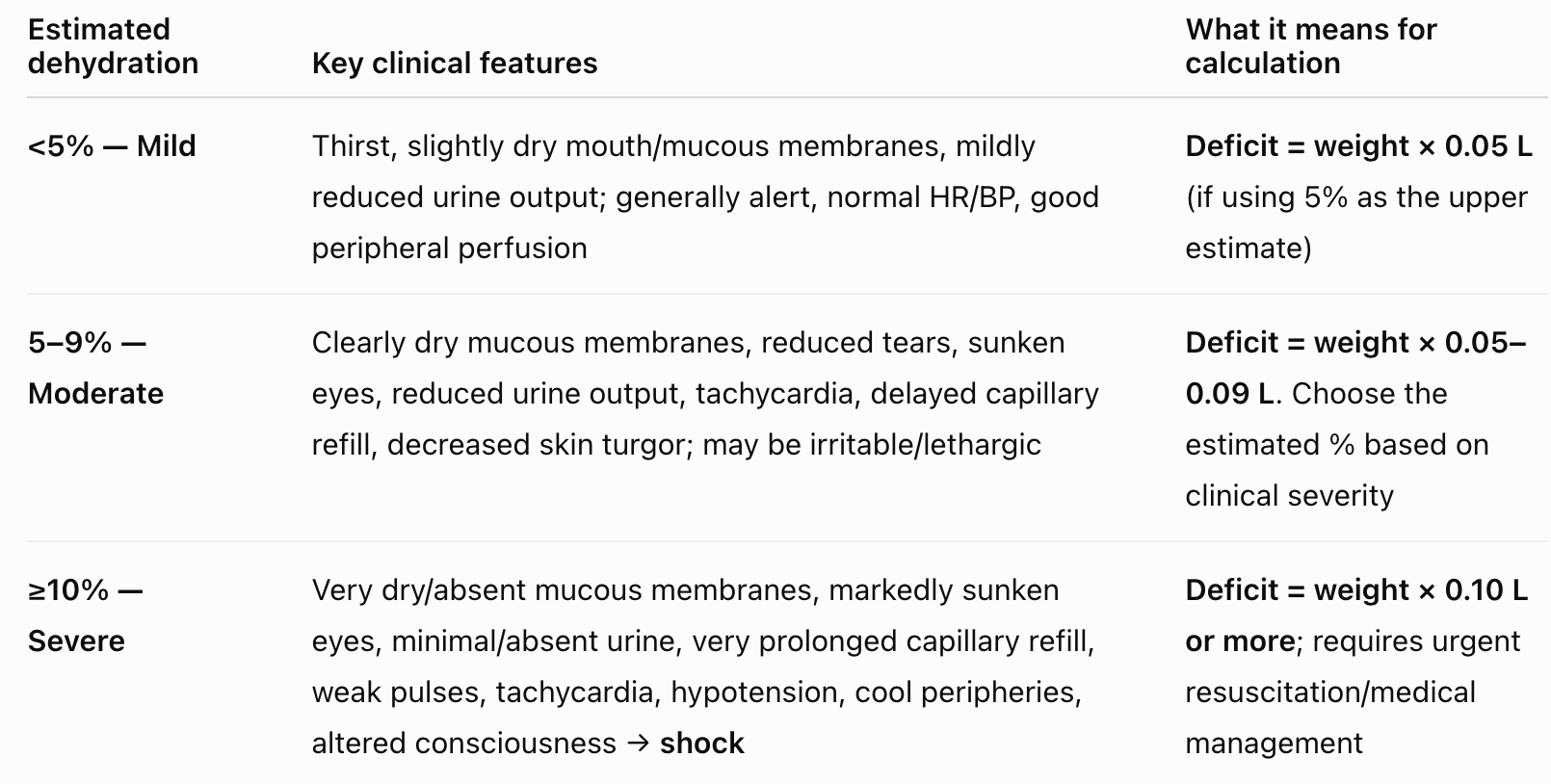
If dehydrated: Fluid deficit (mL) = weight (kg) × % dehydration × 10
if mild estimate based on their symptoms is 5% or 5-9% or 10%, then use it^
eg) for 40kg ^ Moderate, 9%: 40 × 9% × 10 = 3,600 mL bolus/deficit + the 42ml/hr
*ALSO replace elcteolytes if vomiting, diarrhoea
eg) 16 kg child, sunken eyes, dry mucous membranes, prolonged CRT
I'd think:
1. Assess ABCDE + severity
2. Determine % dehydration
3. Calculate deficit = kg × % × 10 mL
4. Add maintenance
5. Replace ongoing losses
6. If shock → IV isotonic boluses + reassess
7.if renal/ cardiac failure monitor for fluid overload
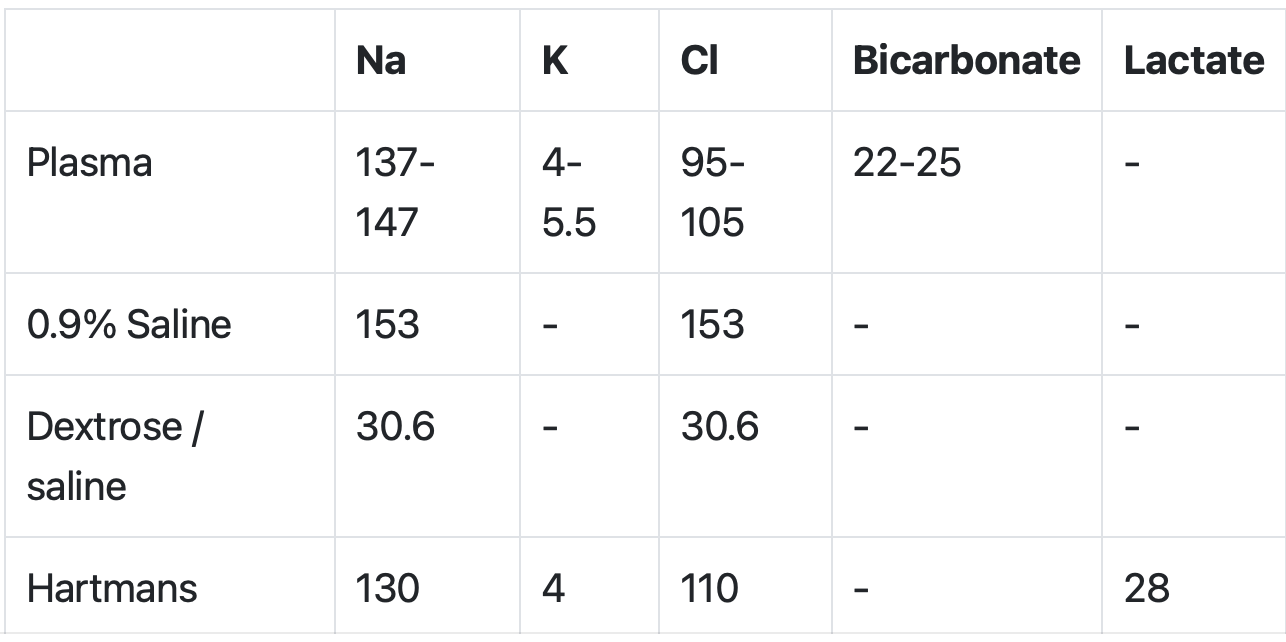
Which fluid choice to use for the following replacemnts of losses:
V/N / NGTube (loss of H,Na, CL, K)
Pure water loss ( (fever, dehydration, hyperventilation) = hypernatraemia!!
Biliary drainage (loss of Na/ CL./ bicarb/ K)
Diarrhoea / colostomy (Na, bicarb, K)
Jejunal / ileal stoma or fistula (loss of Na/ CL./ bicarb/ K)
Pancreatic drain/fistula (loss of Na/ CL./ bicarb/ K)
Inappropriate urinary loss / polyuria (Na/ K)
Ongoing blood loss eg) Malaena
0.9% Saline ± KCL (replace Na & CL)
5% dextrose (provided water via met of glucose)
lots of Na/ Cl so need to balance w/ crystaloid fluid Hartmann's
Hartmann's (bicarb replacemnt)
Hartmann's (Na/Cl but crystaoid )
Hartmann's (bicarb replacemnt)
depends on whats low measure urine outoput
blood product fluids!
🟦 Stomach → 0.9% saline (for resuscitation and maintenance fluids watch for over met acidosis.)
Because vomiting = HCl loss → Cl⁻ depletion + alkalosis
🟩 Bowel → Hartmann's (contains lactate to balance Ph otherwise same as saline)
Because diarrhoea/stomas = lots of Na⁺, Cl⁻ and/or HCO₃⁻ loss
💧 Water only → 5% dextrose (not for resus, pro:maintains hydration w/out excess electrolytes)
Because you're replacing free water
🩸 Blood → plasma/blood products
One important point: Hartmann's is not ideal for major vomiting/NG losses because the major problem there is chloride depletion, so 0.9% saline is preferred. Also, if the patient is losing potassium, you would usually need to add K⁺ separately after checking serum K⁺ and renal function.
What are things to consider in pre operative care?
Analgesia
Anti-emetics
IV access
Maintainence fluids
Nil by mouth
Nutrition state
Medication cesation
VTE assess + prophylaxis
Abx prophylaxis
Book / Consen
What medications may need to be ceased pre operatively? vs modified?
Diabetic drugs
Metformin - risk of lactic acidosis
SGLT2 inhibitors (gliflozins) - euglycemic keotacidosis
stop at least 3 days before
→ insulin therapy given if needed
Antiplatelets / coagulants – stop / bridge / continue
Clopidogrel – stopped 7 days prior to surgery
Aspirin and other antiplatelets – can often be continued
Warfarin – caese 5 days prior → commenced on therapeutic dose of LMWH
Heparin – caese day of surgery
Enoxaparin – caese day before surgery
DOACs – caese 1-2 days before surgery
OCP or HRT
Risk of DVT
stopped 4 wks prior to surgery’
Modify: insulin into IV & steroids must continue but switch b/w oral/ IV depending on surgery (to avoid addisonian crisis)
Aortic dissection Mx?
ABCDEs
Resuscitation
High flow O2 therapy
IV access (2x large bore canulas) urgent bloods
Urinary catheter
Analgesia (IV opiates)
Definitive mx is type A (surg) or B dissection (pharm) —>
1. MUST dec BP (approach for type B stanford) → 'anti-impulse therapy'
Target HR = 60-80; Target systolic BP = 100-120
1st line – β blocker
2nd line – CCB (non-dihydropyradines) “Aim = reduce velocity of LV contraction → decrease shear stress and minimize lesion progression”
Refer to vascular / cardiothoracic team
urgent transfer to appropriate facility
ICU
2. surgery mx usually for stanford type A (at aorta)
AAA Mx?
ABCDEs
2x large bore IV access, lie down, keep warm, high flow O2
Urgent bloods – FBC, UEC, LFT, coagulation screen, G+H, crossmatch
IV fluids resuscitation (0.9% NaCl or Hartmann's)
Permissive hypotension (sytolic BP ≤ 100)
Transfer to local vascular unit for immediate review and prep for surgery
if stable (do CT) if collapsed to surgery for endovascular repair (EVAR)
Chronic limb Ischaemia mx before it becomes critical limb?
Manage CVD risk factors (cardiac (do ECG), DM, (BSL), cholesterol (lipids))
—> Antiplatelet (clopidogrel)
→ DM medications
—> statins
Surgical:
—> angioplasty ± stents
—> Bypass grafts
—> amputation when critical limb
General mx for arterial ulcers/ PAD?
aims to improve blood supply to the affected area, promote ulcer healing, and prevent recurrence.
1. Control: SNAP mx for RF, statins, HTN mx, DM Mx, CVD mx
2. Optimisation of blood flow: Revasculaise/ restrore blood flow since the blood has stopped supplying it, angioplasty, stenting, or bypass to open artery.
3. Antiplatelet agents (e.g., aspirin, clopidogrel) and statins
4. Wound care: debrivemnet/ levage to remove dead tissue and promote healing. Need approproate dressing maintain a moist wound environment and protect against infection.
+/- Abs if infection
monitor for osteomyelitis
features of venous ulcer / vericose veins + mx?
Lifestyle
Leg elevation (to bring blood back up)
Increased exercise
Weight reduction
Dressings and emolients for surrounding skin – maintain surrounding skin health
Compression bandage (gold standard) only one that works → decrease oedem
Safety net! → infection
+/- vasodilator med
CP: looks like deep cellulitis on medial bone of foot but due to venous insufficiency.
Wet, shallow with irregular borders w/ more pain in night
Most commonly located on medial malleolus region
Associated ft. of venous insufficiency
Surrounding edema / inflammation
Varicose veins —> Mx: conservative, elevate, avoid standing for long, weight loss, inc exercise. compression socks, eczema mx) ± laser ablasion/ foaming inflammatory,
Haemosiderin deposition (brownish deposition)Varicose eczema
Atrophe blanche
Lipodermatosclerosis
+/- signs of infection (red, hot, swollen, tender, pus)
+/- concommitant signs of PAD (if mixed ulcers)
Ix: venous duplex USS, dopler + pic, ABPI.
Meliodosis:
syx? Ix? Mx?
syx: Abscess everywhere (lung/ liver/ spleen)
Pneumonia w/ skin infections w/ Jt pains (osteomylitis) ± watch for : encephalitis/meningitis, and bacteremia.
Ix: Cultures - blood, urine, sputum (must use Ashdowns medium for B. pseudomallei.
CT CAP → deep seated infections / Abscess
Mx: Erradicate w/ Meropenum OR use Ceftazamine —> then maintain and avoid 2nd infection w/ combo: TMP-SMX for 3months Trimetjprim + sulfamethoxazole + give folic acid (cuz these will dec it)

What condition is this:
Child with ≥5 days fever + conjunctivitis (red eye) + strawberry tongue/cracked lips (swollen) + rash spots and patches all oevr body + swollen hands/feet + cervical node → think coronary artery aneurysm
Dx: Kawasaki disease
Ix: FBC-anemia, thrombocytosis , inc CRP, UEC/ LFT (failures), urinalysis w/ culture can show sterile pyuria, Blood cultures and resp swabs (rule out GAS infection), ECG/Echo to chec coronary artery lesions.
Mx: Immediatly give IV immunoglobulins + Aspirin and review arteries