EAR 117 Exam #1
 Call Kai
 Learn
Learn Practice Test
 Spaced Repetition
 Match
Match Flashcards
 Knowt Play
1/29

There's no tags or description
Looks like no tags are added yet.
Name | Mastery | Learn | Test | Matching | Spaced | Call with Kai | Chat |
|---|
No analytics yet
Send a link to your students to track their progress
30 Terms
Half-life
Time required for half of an initial quantity of a radioactive isotope to decay
Isostasy
Mechanism by which areas of Earth’s crust rise or subside until their masses are in balance, “floating” on the mantle
Oceans and sea ice
97.26% of total water on Earth
Ice caps and glaciers
2.11% of total water on Earth
Freshwater lakes
.009% of total water on Earth
Rivers
.0001% of total water on Earth
Transpiration
Plant roots suck up water through the soil, the water goes into the plants, the water evaporates into the air, moves a lot of water from the soil into the air
Sublimation
a solid piece of water (ice or snow) does not have to melt first and can directly become water vapor, like dry ice
Argo floats
Instruments that measure temperature and salinity; can sink, drift, and float back up to send data to the satellite
Long residence time
Large reservoir, small flux
Short residence time
Small reservoir, large flux
Crust
outer layer of the Earth, light-colored, low density rock
Mantle
Second layer of the Earth, dark-color, heavy rock
Outer Core
The liquid, metallic portion of the innermost layer of the Earth
Inner Core
The solid, metallic portion of the innermost layer of the Earth
Lithosphere
A rigid surface layer consisting of crust and shallow mantle rock fused together, solid
Asthenosphere
A weak, deformable region in the mantle where the temperature and pressure conditions lead to partial melting of the rock and loss of strength
Mesosphere
A region of solid material that convects slowly, moving upward in some regions and downward in others due to temperature gradients and density differences
Oceanography
A multidisciplinary field in which geology, geophysics, chemistry, physics, meteorology, and biology are all used to understand the oceans
The Hydrologic Cycle
Movement of water among the land, oceans, and atmosphere due to vertical and horizontal transport, evaporation, and precipitation
Divergent boundary
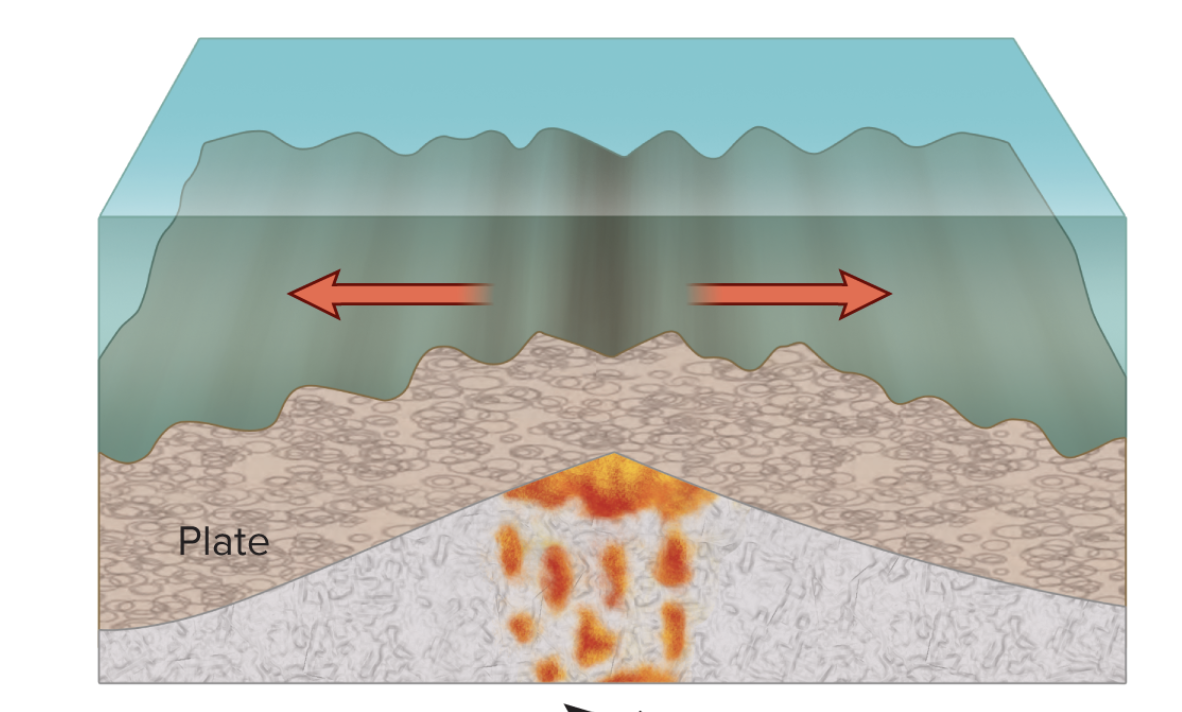
Convergent boundary

Transform faulty boundary

Ocean-ocean convergence

Ocean-continent convergence

Continent-continent convergence
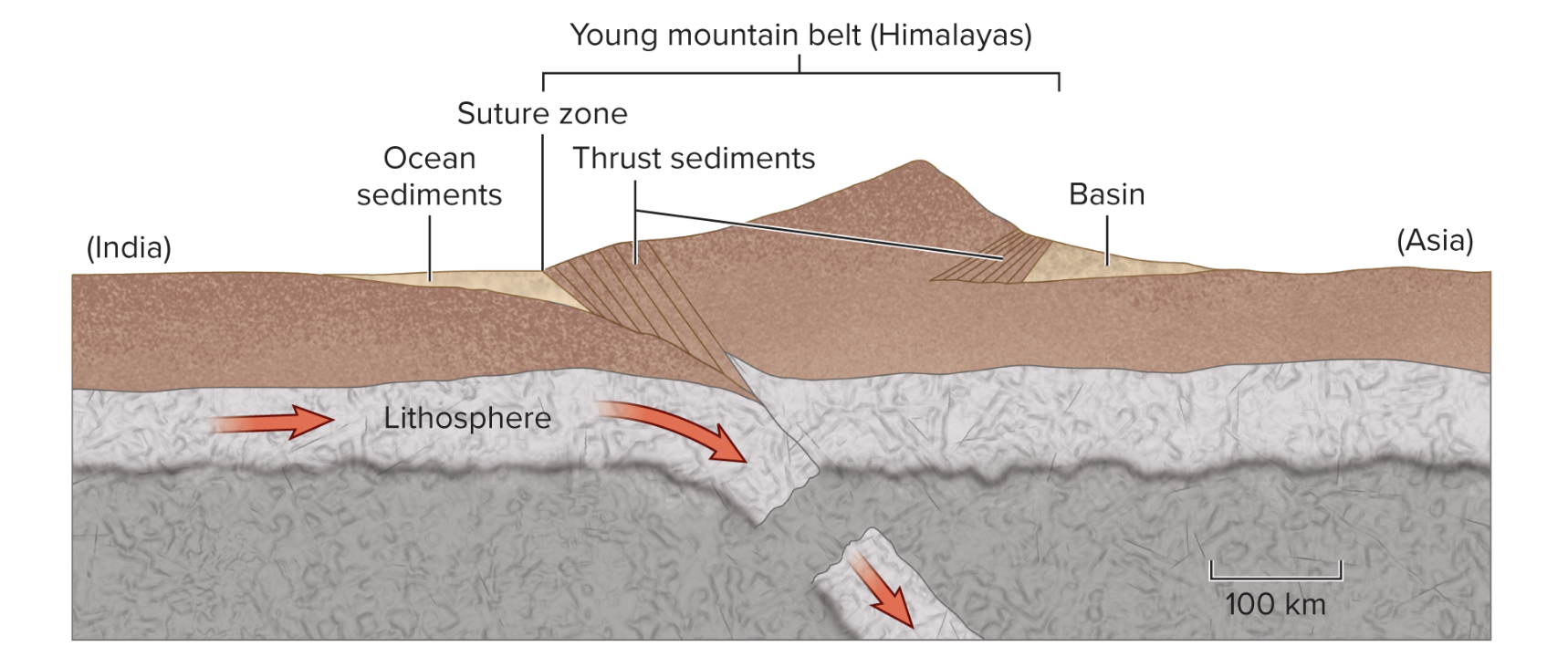
Foraminifera
Minute, one-celled animals that usually secrete calcareous shells
Diatoms
A group of photosynthetic phytoplankton with silica shells that are found in areas with suitable light, nutrients, and correct temperature
Radiolaria
A type of zooplankton that thrive in warm water and have siliceous outer shells covered with long spines
Gas Hydrates
A combination of natural gas, primarily methane, and water, which forms a solid, ice-like structure under pressure at low temperatures