Cholesterol Synthesis
 Call Kai
 Learn
Learn Practice Test
 Spaced Repetition
 Match
Match Flashcards
 Knowt Play
1/34

There's no tags or description
Looks like no tags are added yet.
Name | Mastery | Learn | Test | Matching | Spaced | Call with Kai | Chat |
|---|
No analytics yet
Send a link to your students to track their progress
35 Terms
What is the basic 5-carbon building block used to construct cholesterol, and what is it derived from?
Isoprene (activated as isopentenyl pyrophosphate), which is derived from mevalonate.
In labeled cholesterol structures, carbons are marked as originating from either methyl or carboxyl carbons of acetate. What does this indicate about cholesterol's ultimate carbon source?
All of cholesterol's carbons originate from acetate (acetyl-CoA) — some carbons trace back to acetate's methyl carbon, others to its carboxyl carbon, reflecting the multi-step condensation process building up from simple 2-carbon units.
What is the simplified "big picture" flow of cholesterol synthesis you should be able to recognize by structure alone?
Acetate → Mevalonate → isoprene condensation → squalene → cyclization → cholesterol.
What are the two enzymatic steps that convert 2 acetyl-CoA molecules into HMG-CoA? (First stage of cholesterol synthesis)
Thiolase combines 2 acetyl-CoA → acetoacetyl-CoA; then HMG-CoA synthase converts acetoacetyl-CoA (+ another acetyl-CoA) → HMG-CoA.
What enzyme converts HMG-CoA to mevalonate, what cofactor does it use, and where in the cell does this occur? (First stage of cholsterol synthesis)
HMG-CoA reductase, using NADPH (releasing CoA-SH); this occurs in the cytosol.
Why is the HMG-CoA reductase step significant beyond just being part of the pathway?
It's the rate-limiting step of cholesterol synthesis — making it the primary target for regulation (and for drugs like statins).
In Stage 2, mevalonate (6 carbons) is converted to activated isoprene (5 carbons). What activates this intermediate, and what's the energy cost?
It's activated by pyrophosphate, and the process requires 3 ATP.
In Stage 3, how do isoprene units combine to build up to squalene? List the sequential condensations and carbon counts.
1 isoprene (5C) + 1 isoprene (5C) → geranyl pyrophosphate (10C); geranyl pyrophosphate (10C) + 1 isoprene (5C) → farnesyl pyrophosphate (15C); farnesyl pyrophosphate (15C) + farnesyl pyrophosphate (15C) → squalene (30C).
In Stage 4, what happens to squalene to form cholesterol?
Squalene undergoes cyclization to form the multi-ring steroid structure, followed by introduction of an OH group on carbon 3, plus many additional steps (15+) to reach the final cholesterol structure.
In the well-fed state, what signaling pathway promotes HMG-CoA reductase activity and cholesterol synthesis?
Insulin signaling through its membrane receptor activates the PI3K → Akt/PKB pathway and the pentose phosphate pathway (PPP), both of which promote HMG-CoA reductase activity.
In the fasted state, what two signals inhibit HMG-CoA reductase, and what pathway leads to one of them?
AMPKinase (activated by low energy status) and PKA (activated via glucagon → GPCR → G-protein pathway → increased PDE activity) both inhibit HMG-CoA reductase, reducing cholesterol synthesis.
What alternative product increases when cholesterol synthesis is reduced in the fasted state?
Oxysterols.
Which of these correctly describes cholesterol's regulatory effect: does cholesterol inhibit HMG-CoA reductase degradation, increase its synthesis, stimulate its activity, or increase LDL receptor synthesis? Does insulin activate HMG-CoA reductase?
High cellular cholesterol promotes degradation of HMG-CoA reductase (not inhibition of degradation) and decreases synthesis of new enzyme and decreases LDL receptor synthesis — it doesn't directly stimulate reductase activity. Insulin does activate HMG-CoA reductase (via the PI3K/Akt pathway), consistent with increased cholesterol synthesis in the fed state.
What's the general structure shared by all plasma lipoproteins?
A hydrophilic surface made of a phospholipid monolayer (with embedded apolipoproteins) coating a hydrophobic core containing triglycerides and/or cholesteryl esters.
Rank chylomicrons, VLDL, LDL, and HDL from largest/lowest density to smallest/highest density.
Chylomicrons (largest, lowest density) → VLDL → LDL → HDL (smallest, highest density, most protein-rich surface).
What's in the core of a chylomicron vs. VLDL vs. LDL vs. HDL?
Chylomicron: core packed mostly with triglycerides. VLDL: mixed core of triglycerides and cholesterol esters. LDL: smaller core enriched in cholesterol esters. HDL: smallest core, relatively more surface protein and phospholipid than core lipid.
What is the main apolipoprotein on chylomicrons, and what does it do?
ApoC-II, which activates lipoprotein lipase (LPL) to promote triglyceride hydrolysis and fatty acid uptake by tissues.
What is the main apolipoprotein on LDL, and what does it do?
ApoB-100, which binds the LDL receptor to enable receptor-mediated endocytosis and cholesterol delivery to cells.
What is the main apolipoprotein on HDL, and what does it do?
ApoA-I, which activates LCAT (lecithin-cholesterol acyltransferase) to esterify cholesterol, supporting reverse cholesterol transport and facilitating cholesterol efflux from peripheral tissues via transporters like ABCA1.
Walk through the endogenous lipid transport pathway starting from VLDL release by the liver.
1) Liver releases VLDL (containing triglycerides and cholesterol). 2) In circulation, VLDL acquires ApoC-II and ApoE from HDL. 3) ApoC-II activates lipoprotein lipase on capillary walls, hydrolyzing triglycerides into free fatty acids — this shrinks VLDL first into IDL, then into LDL. 4) LDL (now cholesterol-rich, containing ApoB-100) delivers cholesterol to peripheral cells via LDL receptor-mediated uptake.
What is HDL's role in this pathway (reverse cholesterol transport)?
HDL, also originating from the liver, removes excess cholesterol from peripheral tissues and returns it to the liver.
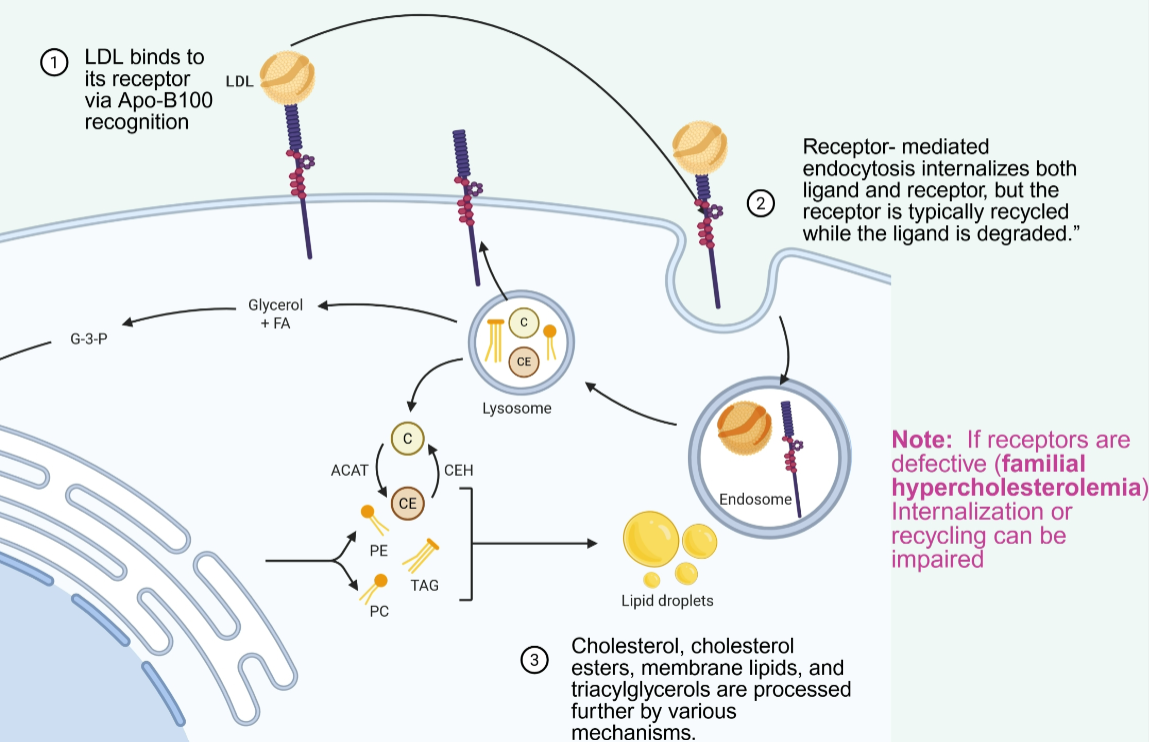
What apolipoprotein does the LDL receptor recognize, and what happens once LDL binds its receptor?
ApoB-100. The receptor-LDL complex clusters into a membrane invagination, and both are internalized into a vesicle via receptor-mediated endocytosis.
After LDL is internalized, what happens to the receptor versus the LDL particle itself?
The receptor is typically recycled back to the plasma membrane, while the LDL particle is retained for degradation (via endosome → lysosome fusion).
Once LDL components are broken down in the lysosome into free cholesterol (C) and cholesteryl esters (CE), what are cholesterol's possible fates?
Re-esterification by ACAT for storage as cholesteryl esters, incorporation into membranes, or use in further lipid synthesis (glycerol and fatty acids released also feed into triglyceride and phospholipid synthesis and lipid droplet formation).
What genetic condition results from defects in LDL receptors (impairing internalization or recycling)?
Familial hypercholesterolemia.
In the atherosclerosis progression sequence, what are the stages from initial lesion to complicated lesion?
Initial lesion (macrophage infiltration) → fatty streak (intracellular lipid accumulation) → intermediate lesion (intracellular + extracellular lipid buildup) → atheroma (lipid-rich core forms) → fibrous plaque (fibrotic/calcified layers) → complicated lesion/rupture (plaque rupture, thrombosis, blocked blood flow).
What is the clinical consequence shown as the endpoint of advanced atherosclerotic plaque progression?
Myocardial infarction (heart attack).
How does HDL protect against cardiovascular disease at the level of foam cells?
By removing cholesterol from peripheral tissues via reverse cholesterol transport, HDL reduces the cholesterol content of foam cells (lipid-laden macrophages), helping protect against plaque formation.
What feature is common to ALL plasma lipoproteins (chylomicrons, VLDL, LDL, HDL), even though their size, density, and cargo differ?
Each has at least one apolipoprotein responsible for directing the particle's behavior and uptake. (Not every lipoprotein has a hydrophobic core containing free fatty acids specifically, not all activate lipoprotein lipase via ApoC-II, and not all transport cholesterol back to the liver — only HDL does that. The universal shared feature is the directing apolipoprotein(s) plus the general phospholipid-surface/hydrophobic-core architecture.)
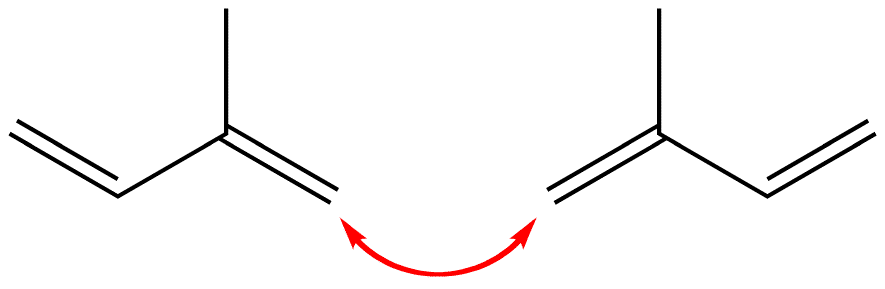
name this structure
isoprene
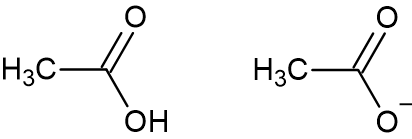
name the structure
acetate

name the structure
cholsterol
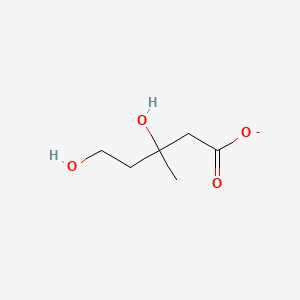
name the structure
mevalonate
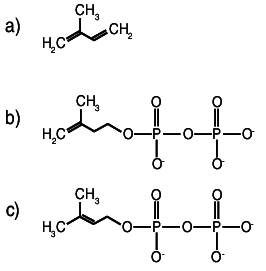
name structure B and C
activated isoprene
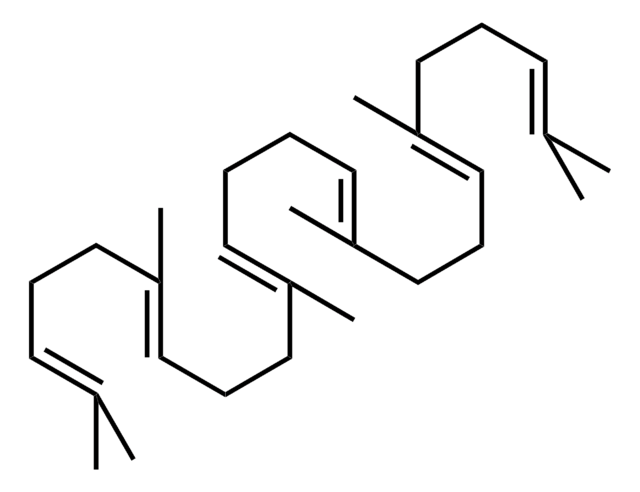
name the structure
squalene