BIOCH 200 Unit 9 - Glycolysis and the PDC (Terms)
 Call Kai
 Learn
Learn Practice Test
 Spaced Repetition
 Match
Match Flashcards
 Knowt Play
1/25

There's no tags or description
Looks like no tags are added yet.
Name | Mastery | Learn | Test | Matching | Spaced | Call with Kai | Chat |
|---|
No analytics yet
Send a link to your students to track their progress
26 Terms
Glycolysis
A catabolic pathway occurring in the cytosol that involves the partial oxidation of glucose into two molecules of pyruvate, generating NADH and ATP in small amounts
Gluconeogenesis
The anabolic opposing pathway of glycolysis that reduces pyruvate molecules back to glucose
Hexose Phase
The activation stage of glycolysis in which all intermediates are 6-carbon molecules, serving as an energy investment phase where a small amount of ATP is consumed to activate glucose (reactions 1-4)
Triose Phase
The late stage of glycolysis in which all intermediates are 3-carbon molecules that have been lysed from the hexose phase, serving as an energy payout phase where a net gain in energy is harvested as ATP (reactions 5-10)
Hexokinase
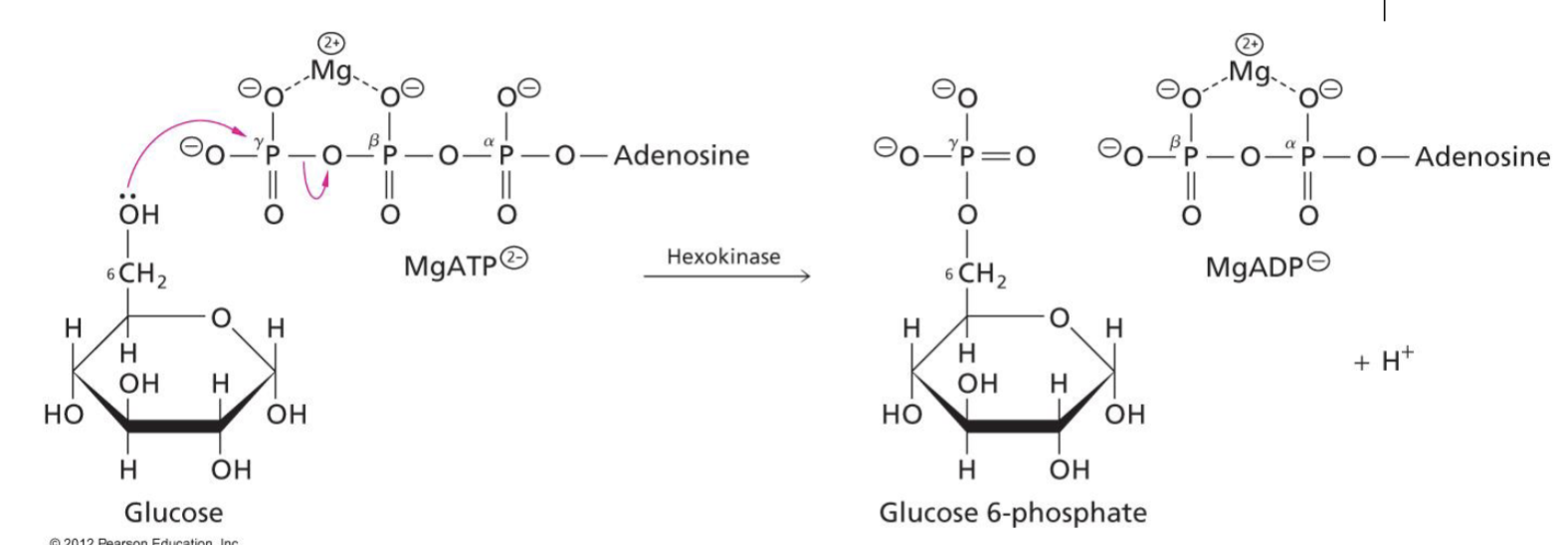
An enzyme that regulates the irreversible phosphoryl transfer reaction of glucose into glucose-6-phosphate found in reaction 1
Phosphoryl Transfer Reaction
A reaction that involves the transfer of a phosphoryl group within a molecule onto a separate molecule with an oxygen group, commonly forming a phosphoester bond
Isomerization
A broad reaction type that involves the change of a molecule to one of its isomers (ex. aldehyde to ketone)
Phosphofructokinase-1 (PFK-1)
An enzyme that regulates the phosphoryl transfer of fructose-6-phosphate to fructose-1,6-bisphosphate in reaction 3 of glycolysis
Pentose Phosphate Pathway
A reaction pathway separate from glycolysis that uses and creates G6P and regenerates NADPH
Acyl Phosphate/Mixed Anhydride
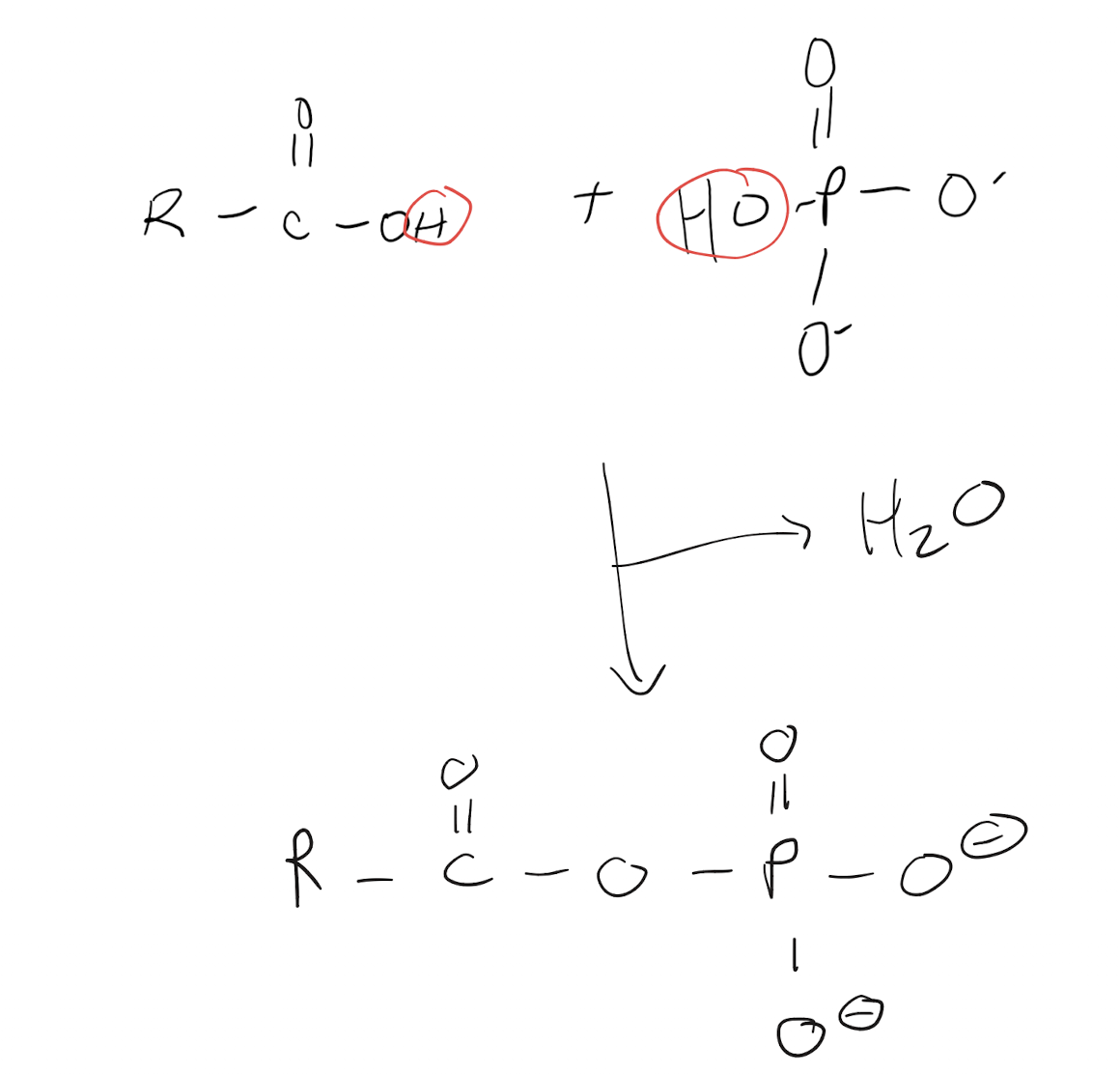
A functional group composed of a phosphate attached to a carboxyl group, formed via the linkage of a phosphate and a carboxylic acid
GAP Dehydrogenase (GAPDH)
An enzyme that regulates the reversible oxidation and phosphorylation reactions of GAP into 1,3-BPG found in reaction 6 of glycolysis
Energy Capture Step
Steps in glycolysis that generate high-energy products (NADH and ATP) that subsequently leave the pathway, which is seen in steps 6, 7, and 10
1,3-Bisphosphoglycerate (1,3-BPG)
A high energy acyl phosphate intermediate formed and consumed within the energy capture phase of glycolysis that releases a large amount of energy upon hydrolysis
Phosphate Transfer Potential
Free energies of hydrolysis for phosphate-containing compounds, representing their energetic capacity and willingness to form ATP via a phosphate transfer
Substrate Level Phosphorylation (SLP)
A coupled phosphate transfer reaction that produces a nucleoside triphosphate
Pyruvate Kinase
An enzyme that regulates the irreversible tautomerization and substrate level phosphorylation of PEP into pyruvate in reaction 10 of glycolysis
Tautomerization
The largely exergonic conversion of one structural isomer to another, typically from an unstable intermediate to a stable product form
Enolpyruvate
The unstable tautomer of pyruvate preliminarily formed in reaction 10 of glycolysis by pyruvate kinase assisted SLP of PEP that decomposes to a stable product form spontaneously
Lactate Dehydrogenase
The enzyme that catalyzes the reversible anabolic reduction of pyruvate into lactate under anaerobic conditions
Pyruvate Dehydrogenase Complex (PDC)
A multienzyme complex found in the mitochondrial matrix that contains catalytic and regulatory enzymes as well as 5 cofactors that catalyzes the pyruvate dehydrogenase reaction
Pyruvate Dehydrogenase Reaction
The process that links glycolysis to the citric acid cycle by which pyruvate is converted to acetyl CoA
Pyruvate Translocase
Transporter protein located on the inner mitochondrial membrane that transports pyruvate into the mitochondrial matrix
Coenzyme A (CoA)
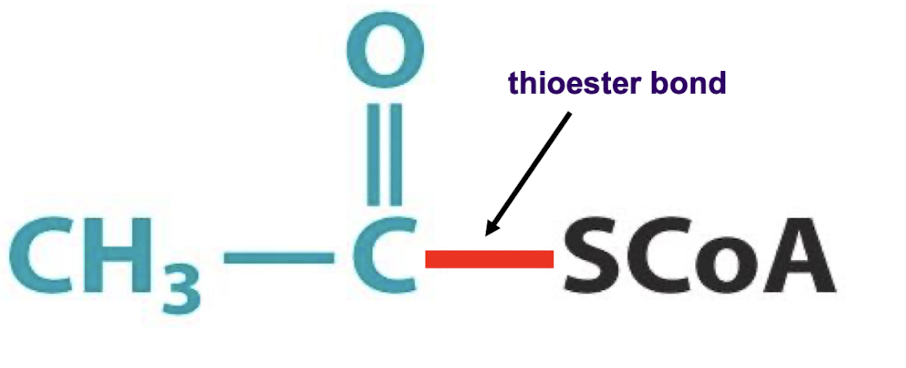
A loosely bound organic cosubstrate with a terminal sulfyhydryl group that forms a thioester bond with acetyl groups
Acetyl-CoA
A high energy intermediate that is the primary reactant of the CAC, structured as an activated form of acetate that is formed via a thioester bond between CoA and acetate
Decarboxylation
The loss of a carboxyl group from a molecule to form CO2
Transacetylation
The transfer of acetate from one molecule to another