ANS 230 Exam 1
 Call Kai
 Learn
Learn Practice Test
 Spaced Repetition
 Match
Match Flashcards
 Knowt Play
1/66

There's no tags or description
Looks like no tags are added yet.
Name | Mastery | Learn | Test | Matching | Spaced | Call with Kai | Chat |
|---|
No analytics yet
Send a link to your students to track their progress
67 Terms
What is Nutrition?
Choices we make about food affect something as small as the individual cells in our body and as large as the environment around us
The act or process of nourishing or being nourished; specifically, the sum of processes by which an animal takes in and utilizes food substances.
Science that interprets the interaction of nutrients that affect maintenance (different physic logical functions), growth, reproduction, lactation, and health.
Nutrition
Focus on metabolic pathways through which molecules inside us are transformed form one form to another.
Includes everything that applies to the study of nutrient utilization and nutritional problems.
It is unique because of its specific objective i.e. improving the survival, health, and growth of animals by understanding their metabolism.
Why does it matter?
Nutrient requirements
Feed & Feeding Management
Animal Health
Biological: Nutrient requirements, health
Management: Feed & Feeding strategies
Economic: Feed costs
Return on investment
Feed cost and livestock production
Feed is the single largest variable cost in animal production
U.S. Agriculture; This chart shows a breakdown of the monetary value of U.S. agriculture products by category.
Nutrition directly influences productivity, efficient, and profitability across sectors.
Small changes in FE scale to billions of dollars
FE= Feed efficiency= How much nutrient goes into animal is retained vs excreted
GDP from agriculture
Share of GDP from agriculture
Agriculture GDP share is small, but its societal impact is large.
High-income vs Low-income countries differ in reliance on agriculture.
Livestock efficiency determines land, water, and nutrient use.
Why does it matter? Environment
Environment- Nutrient
Animals, Agriculture, and environment
Nutrient Waste and Recycling
Nutrient excretion
Methan & GHG
Global
Healthy, sustainable and inclusive food systems are critical to achieve the world’s development goals.
Agricultural development is one of the most powerful tools to end extreme poverty, boost shared prosperity, and feed a projected 10 billion people by 2050.
Growth in the agriculture sector is two or four times more effective in raising incomes among the poorest compared to other sectors
Global population growth increase pressure on efficiency
Animal and Its food
Animals depend upon plants for the existence.
are biochemical converters of plant-derived nutrients
Plants synthesize complex materials from simple substances.
Animals cannot synthesize energy, plants capture solar energy
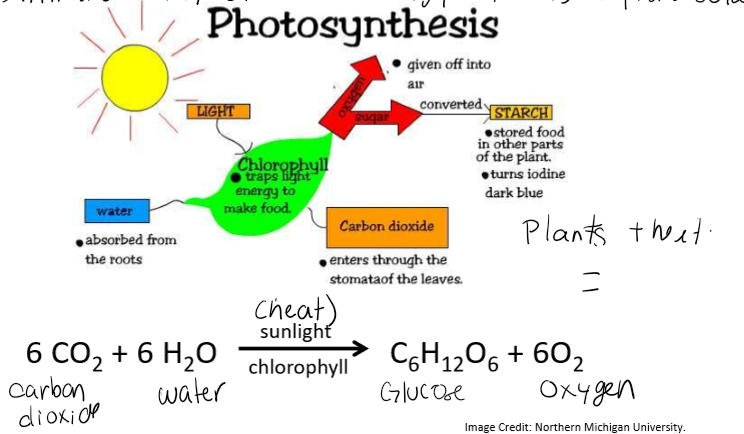
Photosynthesis
6 CO2 + 6 H2O Sunligh+chlorophyll → C6H12O6 + 6 O2
Carbon dioxide + Water → Glucose + Oxygen
Physics - Chemistry - Biology
Physics: Energy transfer, heat loss
Chemistry: Bonds, Oxidation-reduction
Biology: Enzymes, Tissues, Regulation
Nutrient cannot be understood through a single discipline
Nutrition- A complex science
Energy is not in nutrients, Energy is within nutrients
Ingestion: Feed intake
Digestion/Absorption: breakdown and uptake
Metabolism: Chemical transformations
Assimilation: Use for structure/function
Excretion: Waster removal (only measure of loss we know)
Nutrient requirement based on how much they eat
Energy loss occurs at every step
Metabolism:
Energy comes from breaking bonds measured by ATP
Metabolism: Interconversion of nutrients to supply energy
Catabolism:
Catabolism: Breakdown of nutrients- generates chemical energy and heat. Releases energy (Exergonic) glucose → ATP
Anabolism:
Anabolism: Assimilation of new chemicals for structure and function- uses energy. Requires energy (endergonic) amino acids → muscle protein
REDOX Potential
a measure of the tendency of chemicals (nutrients) to acquire electrons or lose electrons and thereby be reduced or oxidized respectively. It is measured in volts (V), or millivolts (mV).
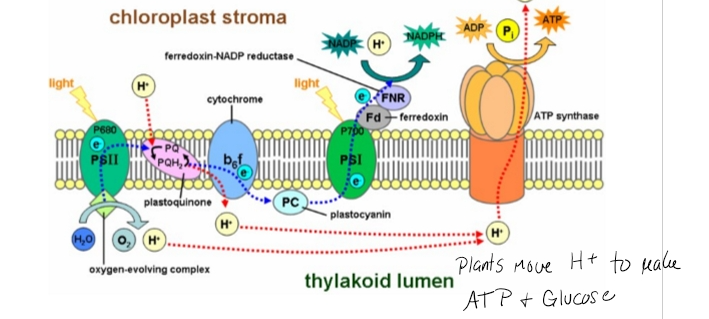
Electron move with protons (H+)
Generation of ATP
Oxidation:
Chemical rx that results in the loss of electrons
ATP generation depends on controlled oxidation of nutrients
Carbohydrates and fats differ in oxidation pathways
Reduction:
chemical rx that results in the gain of electrons
Who is the Father of nutrition & Chemistry:
Antoine Lavoiser (1743-1794)
“La vie est une fonction chimique”
Transfer of food & oxygen into heat & water, creating energy (1770)
Established the chemical basis of nutrition in a respiration experiment.
Established the line between respiration, oxidation, and energy metabolism
Foundation of calorimetry
Principles of Nutrition
Physical and chemical basis for nutrient requirements-
Food producing animals
Domesticated
Zoo’s and exotic
Wildlife
First Law of Thermodynamics
Matter and Energy cannot be created or destroyed
Laws of conservation of mass
They are always conserved.
In nutrition this means:
energy out must equal energy in
energy changes form as it goes through our body
Everything an animal consumes is accounted for
Digestion and absorption - nutrients used by body.
Excretion in urine, feces, respiration or heat loss- by products of metabolism
Fecal loss- undigested nutrients
Intake= retained + lost
Milk, meat, eggs= retained
Principles of Nutrition
The form of matter or energy changes
This allows us to determine how nutrients are used for different purposes:
Growth
Production
Pregnancy
Exercise, etc
Nutrient is about partitioning nutrients: growth vs lactation vs pregnancy
Balance: correct proportions
Quality: Nutrient composition
Bioavailability: Useable fraction
Not all protein sources are equal.
Takeaway: “Formulation is more than meeting numbers.”
What factors might affect nutrient use by animals:
What animal
Health and well-being
Weight
Life stage
resources
metabolic rate
Intake: palpability, access
Gut environment: Microbiome, pH
Digestion & Absorption: enzymes, transit time
These factors explain variation in animal performance
Introduction to Life
Understanding how biological organization progresses from atoms to organ systems
Chemistry & Biology
Why does chemistry matter in biology?
All biological processes are driven by chemical interactions
Biologically important molecules:
Glucose, amino acids, fatty acids
Structure determines function at the molecular level
Nutrients are chemical entities
Structural Organization & Functional Integration
Atoms: Simplest building blocks of matter: subatomic particles, atoms and molecules. Atoms made of protons and electrons.
Water molecule: Biological molecules are C based. Two or more atoms combine to form a molecule.
Cellular Level: A variety of molecules combine to form the fluid and organelles of a body cell. Cell- smallest independently functioning unit. Bacteria- single celled organisms. Animals- multicellular organisms.
Tissue: Group of many cells that work together to perform a specific function. Nutrients move in and out
Organ: Anatomically distinct structure composed of two or more tissue types. Each organ performs a specific physiological function
Organ system: Group of organs working together to perform major functions to meet physiological needs of the body
Organismal level: Many organ systems work harmoniously together to perform the functions of an independent organism.
Cell- Smallest Independently Functioning Unit
Prokaryotic: Simple cell without a membrane-bound nucleus or organelles; Unicellular and include Bacteria and Archaea.
Eukaryotic: More complex, contains a membrane-bound nucleus and specialized organelles (such as mitochondria, and endoplasmic reticulum) and include animals, plants, fungi, and protists
Bacterial Cell: ~0.5 to 5nm in diameter
Animal cell: ~10 to 100 nm in diameter
An average animal cell is ~10-20 times larger in diameter than a bacterial cell, corresponding to roughly 1000 x greater volume.
If a bacterial cell were the size of a marble, and animal cell would be about the size of a tennis ball to a grapefruit.
6 Nutrients: Complex molecules varying molecular structure
Carbohydrates- CHO, energy (glucose, starch).
Proteins- AA; energy; enzymes, structure, signaling (never use for energy requirements)
Lipids- energy (long term); membranes; insulation,
Water- temperature regulation; solvent for rxs.
Minerals- structural (Ca, P) vs regulatory (Na, K).
Vitamins- cofactors in metabolism
Carbs and lipids= energy
Animals will take protein and use it for energy
Nutrients may be:
A source of Energy (quality); CHO, Proteins, Lipids
Required in large or small amounts (quantity); Macro, Micro
Organic or inorganic(don’t have carbon); Minerals, H2O
Dispensable Nutrient
Do not need to include in diet (to meet animal’s requirements)
Synthesized by the animal (they can make it)
Still considered essential (still important)
Indispensable Nutrient
Must be provided in the diet.
Cannot be synthesized by the animal (can’t make it)
Conditionally indispensable ie. not synthesized in sufficient quantities (not made by the animal enough to meet requirements)
Indispensable nutrient Species specific (examples)
Amino Acids
▪Taurine: Indispensable for cats (carnivores) due to limited synthesis; no reqs for dogs.
▪ Arginine: Conditionally indispensable during severe illness, trauma, or certain genetic conditions (like sickle cell in humans), increasing demand beyond synthesis capacity.
▪ Glutamine: Needed in higher amounts during stress (surgery, burns) for gut health and immune function, often exceeding normal production.
Vitamins & Minerals
▪ Vitamin C : Guinea pigs and primates (including humans) can't synthesize it; most other mammals (dogs, cats, livestock) can, making it conditionally indispensable depending on species.
▪ B Vitamins (e.g., B12): Microbes produce most B vitamins; Ruminants vs non-ruminants; Diet or coprophagy - Makes B12 conditionally indispensable in some species
Conditionally Indispensable
Factors that result in Conditional Requirements
▪ Growth & Life Stage: Neonates (newborns) often need nutrients (like arginine, glutamine, choline) that adults can synthesize.
▪ Disease/Stress: Trauma, infection, or metabolic disorders overwhelm synthesis pathways (e.g., arginine, glutamine in sepsis).
▪ Dietary Imbalance: Poor-quality protein or lack of precursors (e.g., for vitamin A from plant carotenoids) can trigger needs.
Stress, disease, and genetics shift many nutrients from ”dispensable" to "conditionally indispensable" or even fully ”indispensable," with species dictating the baseline and the triggers
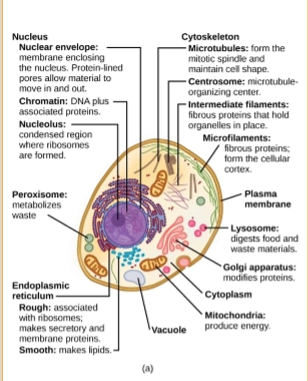
Animal Cell
Plant Cell
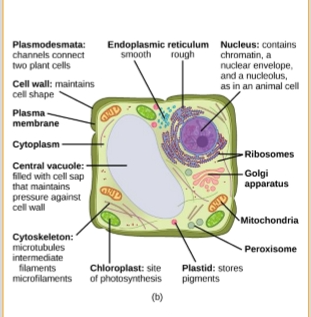
Key Functional Differences of Plant and Animal Cell
Energy & Nutrition:
Plant Cell:
Autotropic (make own food) using chloroplast for photosynthesis (sunlight to glucose).
Animal Cell:
Heterotrophic (eat others) using mitochondria for cellular respiration (glucose to ATP).
Structure & Support:
Plant Cell:
Rigid cell wall (cellulose) provides fixed shape, protection, prevents bursting in water.
Animal Cell:
Flexible cell membrane only, allowing movement, shape changes, & immune function (no wall).
Water & Waste Management:
Plant cell:
Large central vacuole maintains turgor pressure (firmness) and stores water/ nutrients/waste
Animal cell:
Multiple small vacuoles/vesicles, rely on lysosomes (waste breakdown).
Communication:
Plant cell:
Plasmodesmata (channels through cell walls) for direct cell-to-cell connection
Animal Cell:
Gap junctions, allowing flexibility in tissue structure
Plant & Animal Cell
Plants store energy as starch.
Animals store energy as glycogen or triglycerides.
Animal cell membranes contain a phospholipid bilayer and protein- no cell wall.
Plant cell membranes contain cell wall
Both are eukaryotes, i.e. they have a well-defined cell nucleus that houses chromosomes
Plants synthesize AA (amino acids) from inorganic N (reduce nitrates).
Nitrogen-fixing bacteria in legumes
In US animal acids come from plants an animals
70% of air we breathe is nitrogen
What is Energy and it Key principles?
A property of systems, not a substance.
The capacity to do work, physical, chemical, or biological.
Key principles
It can be transferred
It can be transformed
Total energy is conserved(First law of thermodynamics)
Energy Metabolism
Required for animal cells
energy in bonds of ATP
Feed nutrients converted into energy
Metabolic rxs (redox rxs) capture this energy as ATP.
ATP used to drive all other reactions
All reactions release heat
Second Law of thermodynamics
In any energy transfer, the entropy (disorder) increases i.e. it is not 100% efficient
Never 100%, always a loss
Chemical reactions release heat
Heat is dissipated from the body
The efficiency of metabolism is related to the generation of heat
Every time you eat your body temp rises
Energy Metabolism
Energy is animals is typically measured by their metabolic rate
Metabolic rate-
Is the amount of energy an animal uses over a specific period of time.
Usually expressed in units like calories (kcal) per unit time. (measurement of energy = calories)
Calculated by measuring O2 consumed and CO2 produced (indirect calorimetry)
Capital C= kilo calorie= 1000 kcal= 1 cal
Animals Require energy to Sustain life- Maintenance Basal metabolic rate
Basal metabolic rate is maintenance
Measure maintenance has to look at where there coming from. Need energy for bodily functions. Each organ needs energy requirements.
Daily energy expenditure (EE)
This is broken down into 3 main categories
Resting metabolism
60%
largest is resting and maintenance
Physical activity
32%
Thermic effect
8%
Energy required for digestions, absorption, and nutrient processing
Basal Metabolic Rate
Per animal (whole-body BMR)
Total energy expenditure (24h)
Kcal/d
Useful to determine energy required
Per unit of Body Weight(BW) (Mass-specific BMR)
BMR relative to animals actual BW
kcal/kg, BW/d
Per Unit of metabolic BW (BW^0.75)
Most accurate to compare different species
kcal/kg, BW^0.75/d

Energy requirements related to body size
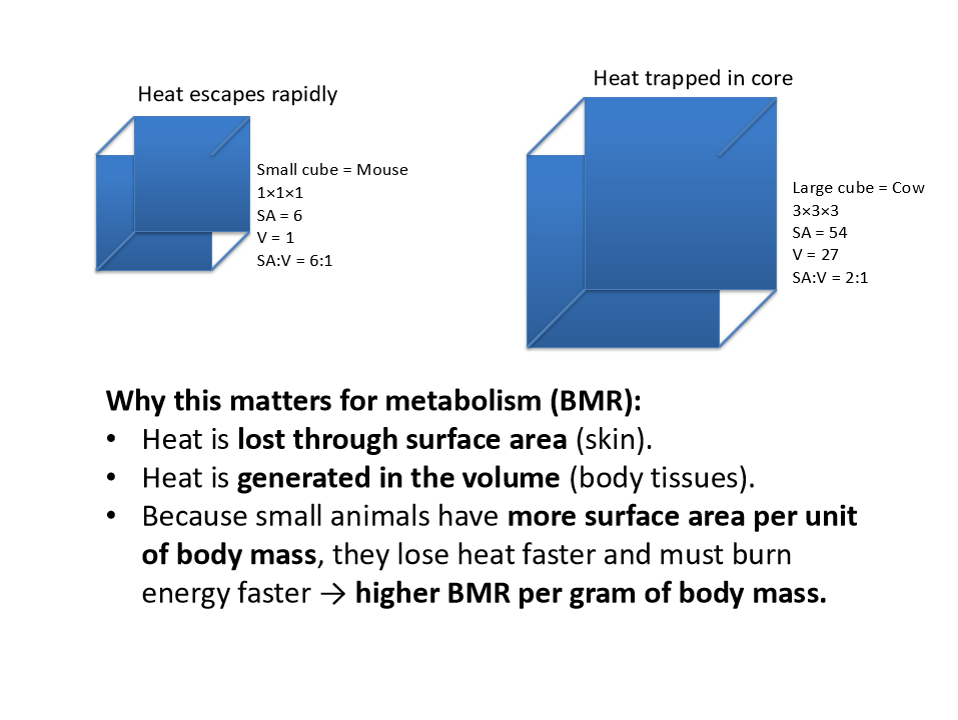
Lower Mass = High BMR
High Mass = Lower BMR
Larger surface area
Lost heat faster
more energy to maintain internal temperature
Energy Consumption and Body size
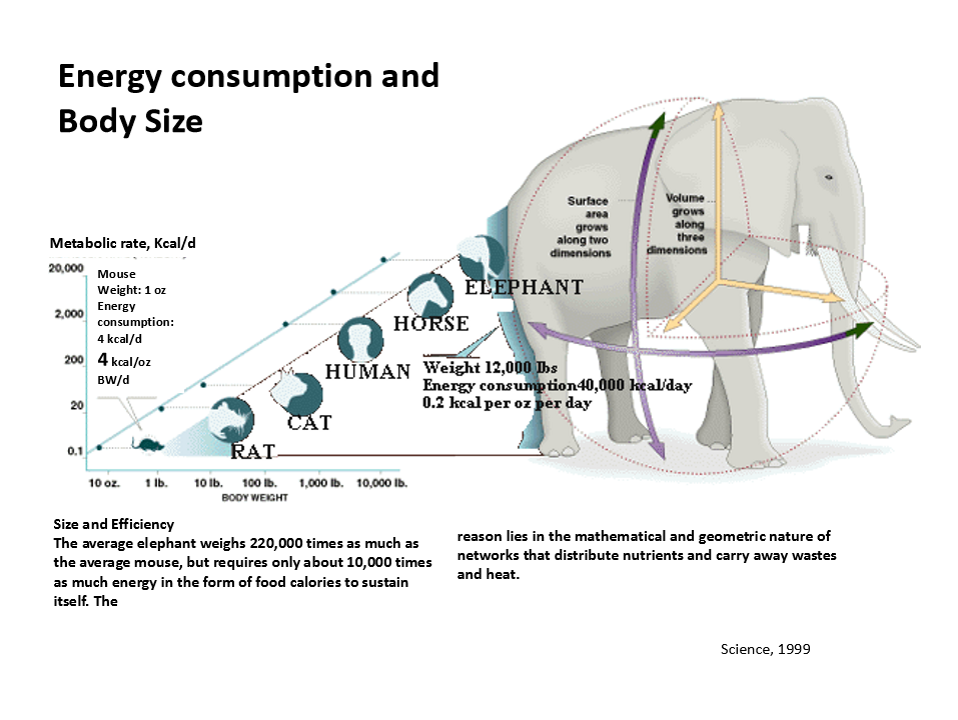
BMR & Metabolic Body size
Heat loss is proportional to body surface area
Surface area of animal difficult to measure.
Kleiber’s surface law:
¾ power of BW
BW^0.75 = Metabolic body size
Allows us to compare across species
Basal Metabolic Rate
Also referred to as: Fasting Catabolism
Body breaks down its own tissue reserves: no external energy provided
Energy expanded in fasting animal
estimated by “heat” production
Heat production is measured by direct or indirect calorimetry in a respiration chamber.
Basal Metabolic rate: Assessing Maintenance requirements
Animal must be awake.
Complete physical & mental rest.
Post absorptive state i.e. not actively digesting food (fasting).
Thermoneutral environment
Key takeaways
Metabolism produces heat as a byproduct.
endotherms use this metabolic heat to maintain a stable internal body temperature.
Basal Metabolic Rate (BMR):
The baseline rate of energy use in a resting, fasting animal at a neutral temperature
Body size and metabolism:
Smaller endotherms have higher mass-specific BMRs (a “hotter” metabolism per gram) than larger animals
Activity matters:
Metabolic rate increases with activity- more active animals burn more energy.
Torpor as an energy-saving strategy:
Some animals can dramatically lower their metabolism during torpor.
Hibernation= winter torpor
Estivation= summer torpor
Basal Metabolic Rate in species
Core Concepts: Clear definitions of Basal Metabolic Rate (BMR), maintenance requirements, and standard reference values from NRC (National Research Council) publications.
The Scaling Problem: An explanation of why expressing caloric requirements as raw energy per unit of body mass (\(kcal/kg\ BW\)) fails to compare species accurately due to differences in surface-area-to-volume ratios.
Metabolic Body Weight (MBW): Breakdown of the scaling formula (\(\text{BW}^{0.75}\)), the historical work of Max Kleiber and Samuel Brody, and how it normalizes requirements to allow for an "apples-to-apples" comparison across species.
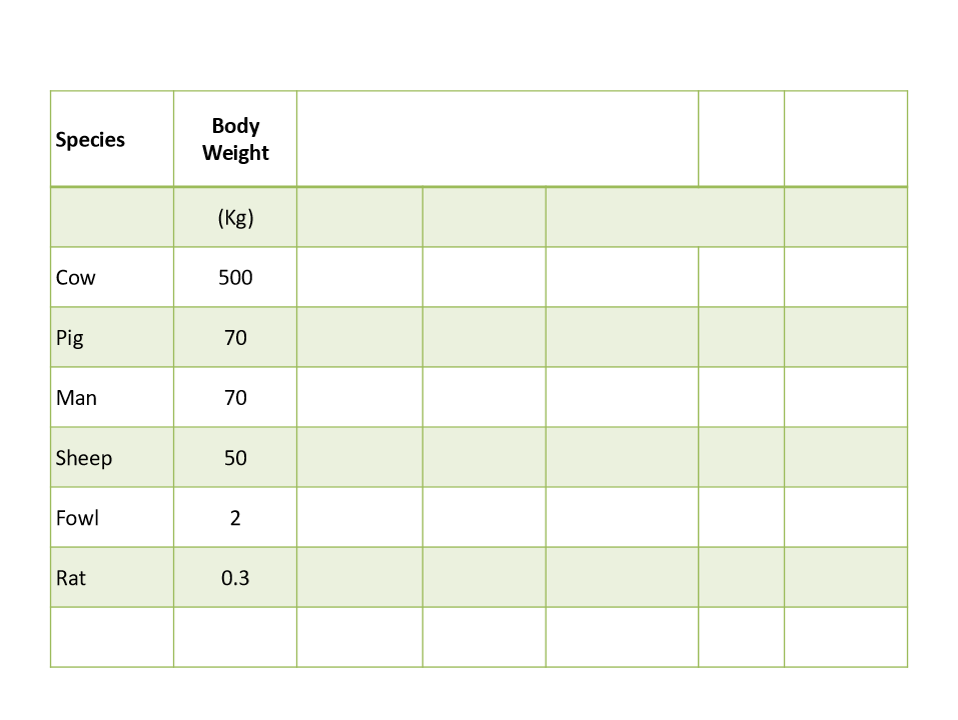
Comparison Matrix: A complete table illustrating raw weight, raw daily kilocalories, raw \(kcal/kg\), and metabolic scaling (\(kcal/kg^{0.75}\)) for the cow, human, sheep, pig, and rat (verifying how the metabolic requirements all converge closely around ~70–74 \(kcal/kg^{0.75}\)).
Mathematical Walkthroughs: Step-by-step arithmetic examples of how to calculate metabolic body weight and metabolic energy requirements.
Exam Prep Questions: A selection of high-yield practice questions designed to help you prepare for exam-style problems on these topics.
Maintenance Heat Production Energy: Connected metabolic body weight to the baseline heat produced by animals to maintain bodily functions.
Scale Weight vs. Book Values: Clarified that "regular body weights" are physically measured (like running a cow through a squeeze chute on a scale), whereas "daily caloric requirements" are pulled from reference tables (such as the NRC books).
Transcription Alert for "PowerPoints number five": Addressed this common speech-to-text error. In lecture transcripts, when the speaker mentions "PowerPoints number five," they are referring to the "power of 0.75" (\(\text{BW}^{0.75}\)), which is the standard mathematical exponent for metabolic scaling.
The Practicality of Kleiber's Law: Highlighted why this formula is so powerful—it allows producers and nutritionists to estimate complex surface-area-to-volume parameters that are impossible to measure directly, using just a simple scale weight.
Biology of Aging
The Biology of Aging: Explains aging (senescence) as a post-sexual-maturity decline driven by a slowing of cell division and an accumulation of dysfunctional cells.
Environmental Cooling & Longevity: Explores how frigid aquatic environments slow down heart rates and metabolic rates, directly delaying cellular aging in long-lived species like the Greenland shark (>400 years), the quahog clam (~500 years), and the Antarctic glass sponge (>10,000 years).
The Body Size Rule & Cellular Constraints: Details why larger animals typically outlive smaller ones and examines the cellular bottleneck in very small organisms (like worms and flies) whose bodies are made of non-dividing cells that cannot be replaced once damaged.
Predation as an Evolutionary Driver:
Fast Life History: High predation risks force small animals (like mice) to grow and reproduce rapidly as an evolutionary survival mechanism.
Slow Life History: Shielded by size, large animals can afford to age slowly and reproduce over many decades.
Defying the Size Rule: Breaks down why bats, birds, moles, and turtles live exceptionally long relative to their small body masses because of predator-avoidance adaptations (like flight, burrowing, or physical shells).
Human Lifespan Progress: Notes that although our global average lifespan of 71 years doesn't match the longest-lived animals, we have significantly boosted it from an average of just 50 years in the early 1900s.
New Practice Questions (Q8–Q12): Added five exam-style prep questions to test your comprehension of these evolutionary and ecological concepts.
Metabolic Factory
he Cellular "Metabolic Factory": Explains how the cellular-level metabolic rate serves as the foundational "factory" that governs aging by dictating the speed at which cells grow, divide, and die [21:09, 21:27, 21:35].
Human Environmental & Nutritional Management: Highlights how humans are unique in taking control of our biological fate—increasing life expectancy from 50 years in the early 1900s to 71 years today by actively managing death factors like nutrition and environmental exposure [20:18, 20:23].
The Slowest Metabolic Rate on Earth:
Identifies the sloth as holding the title for the slowest total metabolic rate in the animal kingdom [22:39, 22:50, 24:43].
Transcription Correction: Clarifies that the automated transcript's use of "slot" or "slots" is a speech-to-text error for sloth [22:50, 24:43].
The Power of Evolutionary Exceptions: Discusses why studying animals that defy standard nutritional principles and laws (like sloths) is so vital—it teaches us alternative evolutionary strategies that have allowed them to survive on Earth even longer than humans [24:33, 24:40, 24:52].
New Practice Questions (Q13–Q15): Added three targeted, exam-style review questions addressing human lifespan control, cellular metabolic factories, and sloth metabolic adaptations.
The Jefferson Bone Box & Megalonyx (1796
Details the famous historical error where Thomas Jefferson mistook fossilized claw bones for a giant undiscovered North American lion, warning Lewis and Clark to be on the lookout [25:34, 26:00, 26:16]. In reality, these bones belonged to the extinct ground sloth genus Megalonyx [26:20, 26:27].
Massive Prehistoric Scale:
Contrasts modern cat-sized tree sloths with extinct giants like Megalonyx (weighing 1 metric ton) and Megatherium (weighing up to 6 metric tons—as large as an elephant) [26:41, 26:51, 26:57].
The Avocado Co-Evolution:
Highlights a critical ecological partnership—modern avocados have massive seeds that smaller animals cannot swallow, but giant sloths could swallow them whole, dispersing the seeds in their feces and preventing the extinction of the avocado tree [27:17, 27:22, 27:28].
The Treetop Migration:
Explains how giant ground sloths vanished around 10,000 years ago (due to ice age shifts, competition, or human arrival), while smaller ancestors survived by migrating permanently into the canopy [27:38, 27:43, 27:49, 27:57].
The Nutritional Dilemma of Leaves (Folivory):
Explains why a pure leaf diet (especially in three-toed sloths) is a massive biological bottleneck [28:15, 28:41, 28:47]. Leaves contain very little energy and are highly resistant to extraction, necessitating extreme digestive adaptations like a slow, multi-chambered fermenting stomach to survive [28:29, 28:34, 28:55, 29:01].
Sloth facts
he Sloth’s Digestive Plant: Details the massive multi-chambered fermentation stomach that occupies one-third of a sloth’s body weight/volume, and explains why digesting a single meal can take 5 to 7 days, or even weeks, to extract every possible kilocalorie of energy [29:01, 29:06, 29:10].
Active Energy Conservation Strategies:
Behavior: Explains how sloths survive by doing almost nothing (eating, resting, sleeping) and descending from the canopy for a bathroom break only once a week [29:18, 29:23, 29:28].
Locomotion: Highlights their slow pace (taking 5 minutes to cross an average street), which has allowed them to adapt to have 30% less muscle mass than standard mammals their size [29:36, 29:45, 29:51].
Thermoregulation: Examines how they save energy by allowing their body temperature to fluctuate by up to 5°C (making them less rigid than mammals, but more constant than reptiles) [29:57, 30:01].
The Interspecies Slow-Metabolism Leaderboard:
Three-toed Sloths (Absolute slowest metabolic rate of any mammal) [30:10, 30:19]
Giant Pandas (Second slowest) [30:19]
Two-toed Sloths (Third slowest) [30:24]
The Sloth Ecosystem: Details the mutualistic relationship with algae growing directly on sloth fur, providing the host with leafy green canopy camouflage and a quick snack [30:24, 30:29, 30:40].
The Production Nutrition Conundrum (Metabolism vs. Efficiency):
Discusses the chicken-and-egg evolutionary puzzle: did a slow metabolism cause a low-energy diet, or vice versa? [32:30, 32:37, 32:41, 32:47]
Contrasts evolutionary survival niches (where low metabolism is highly economical) with agricultural production goals [33:00, 33:10].
Explains that in livestock nutrition (e.g., dairy cattle), higher metabolic rates are desirable only if the animal is actively capturing nutrients for production purposes (milk/meat) [33:00, 33:10]. If an increased metabolic rate is wasted as maintenance heat production (heat increment), it is highly undesirable because feed energy is lost to the environment as heat rather than captured as output [33:10, 33:17, 33:26].
The Paradox of Low-Energy Reproduction: Addresses the critical student question: If a sloth’s daily energy budget is so tight, how do they physically afford the nutritional demands of reproduction and raising offspring? [33:55]
Metabolic Pathway Alterations & Nutrient Partitioning: Introduces the instructor's explanation that both sloths and giant pandas manage this bottleneck through inherent metabolic mechanisms that actively alter standard biochemical pathways [34:18, 34:22, 34:30]. This specialized system allows them to dynamically divert and partition scarce dietary nutrients directly toward gestation and lactation, prioritizing reproductive processes even during times of absolute energy restriction [34:30, 34:38].
Expanded Case Study Interjections: Integrates the instructor's live commentary on the giant sloth slides, detailing the Pleistocene megafauna extinction dynamics (~10,000 years ago) and the physical transition of smaller surviving species migrating to the canopy to escape predators [37:02, 37:18, 37:23, 37:34].
New Practice Question (Q27): Added a brand-new, high-yield practice question specifically focused on metabolic pathway alterations and nutrient diversion during reproduction in low-energy animals [34:22, 34:30].
Evolutionary Cellular Energy Storage (The Feast-or-Famine Design):
The Hardwired Impulse: When animal cells encounter energy, their immediate default is to capture and store it as glycogen (for short-term, rapid-release storage in the liver and muscles) and triglycerides (for long-term, high-density storage in fat tissue) [40:23, 40:29].
The "Fear of Starvation" Logic: Animal cells biologically operate as if "they will never see energy again" [40:13, 40:29]. Because food supply in the wild was historically unpredictable and scarce, immediate cellular energy storage was a critical survival adaptation that allowed ancestral animals to withstand prolonged periods of famine [40:13, 40:29].
The "Kocsis Nozzle" Ad Break Outtake (Humorous Study Note):
I added a fun, highlighted "Transcription Outtake" section at the very end of your notes [40:40]. It notes that around minute 40:40, the automated transcript suddenly shifts to pitch a patented $49 garden hose nozzle that uses a "hydraulic jet accelerator" to multiply water pressure by 15 times [40:40, 41:10, 41:27].
It reassures you that unless your instructor is looking to pressure-wash their driveway using "pure physics," this nozzle is 100% NOT going to be on your exam! [41:22]