PHRM 720 Exam 2
 Call Kai
 Learn
Learn Practice Test
 Spaced Repetition
 Match
Match Flashcards
 Knowt Play
1/92

There's no tags or description
Looks like no tags are added yet.
Name | Mastery | Learn | Test | Matching | Spaced | Call with Kai | Chat |
|---|
No analytics yet
Send a link to your students to track their progress
93 Terms
What are risk factors for atherosclerosis
Dyslipidemia, hypertension, Diabetes Mellitus, Insulin resistance
What caused dyslipidemia?
An increase in one or more lipoprotein such as LDL-C, VLDL-C, Triglycerides or there’s a decrease in HDL-C
What is primary prevention of dyslipidemia?
the prevention of atherosclerotic cardiovascular disease in a person without a known history of disease.
What is the secondary prevention of Dyslipidemia?
the prevention of ASCVD in a person with a history of ASCVD disease
What counts as history of ASCVD disease?
Acute coronary syndrome, myocardial infarction, stable or unstable angina, coronary or other arterial revascularization, stroke, transient ischemic attack or peripheral arterial disease.
What are modifiable risk factors for cardio vascular disease?
Physical inactivity , high blood pressure, smoking, high cholesterol/lipids, obesity, Diabetes Mellitus, Metabolic Syndrome.
What are non-modifiiable risk factors for Cardiovascular Disease?
Age, Family History, Male
Cholesterol, triglycerides and phospholipids are
a. Hydrophilic
b. hydrophobic
Hydophobic - ish

What is the missing structure in the picture?
Triglyceride


What is the missing structure in the picture?
Protein


What is the missing structure in the picture?
Phospholipid

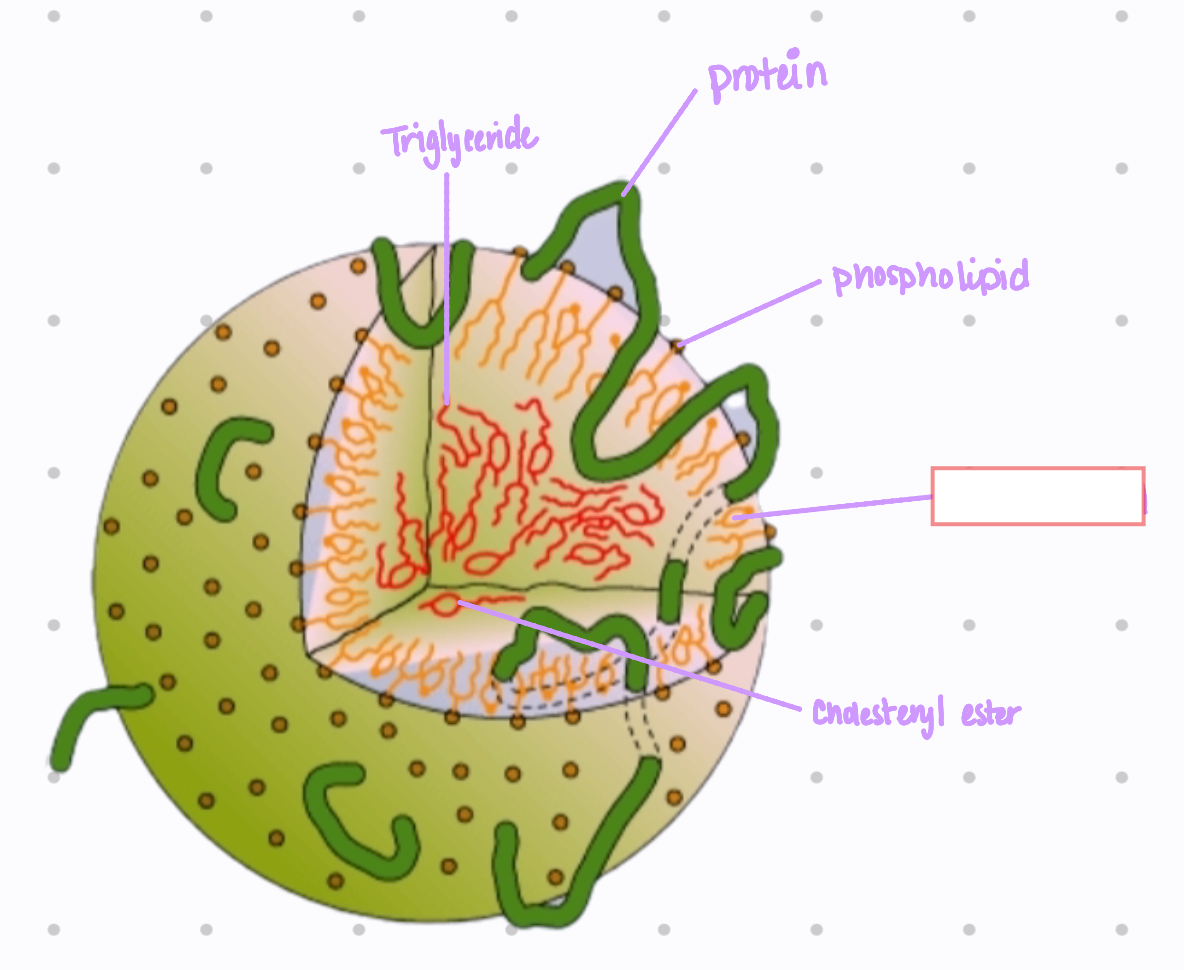
What is the missing structure in the picture?
Free Cholesterol
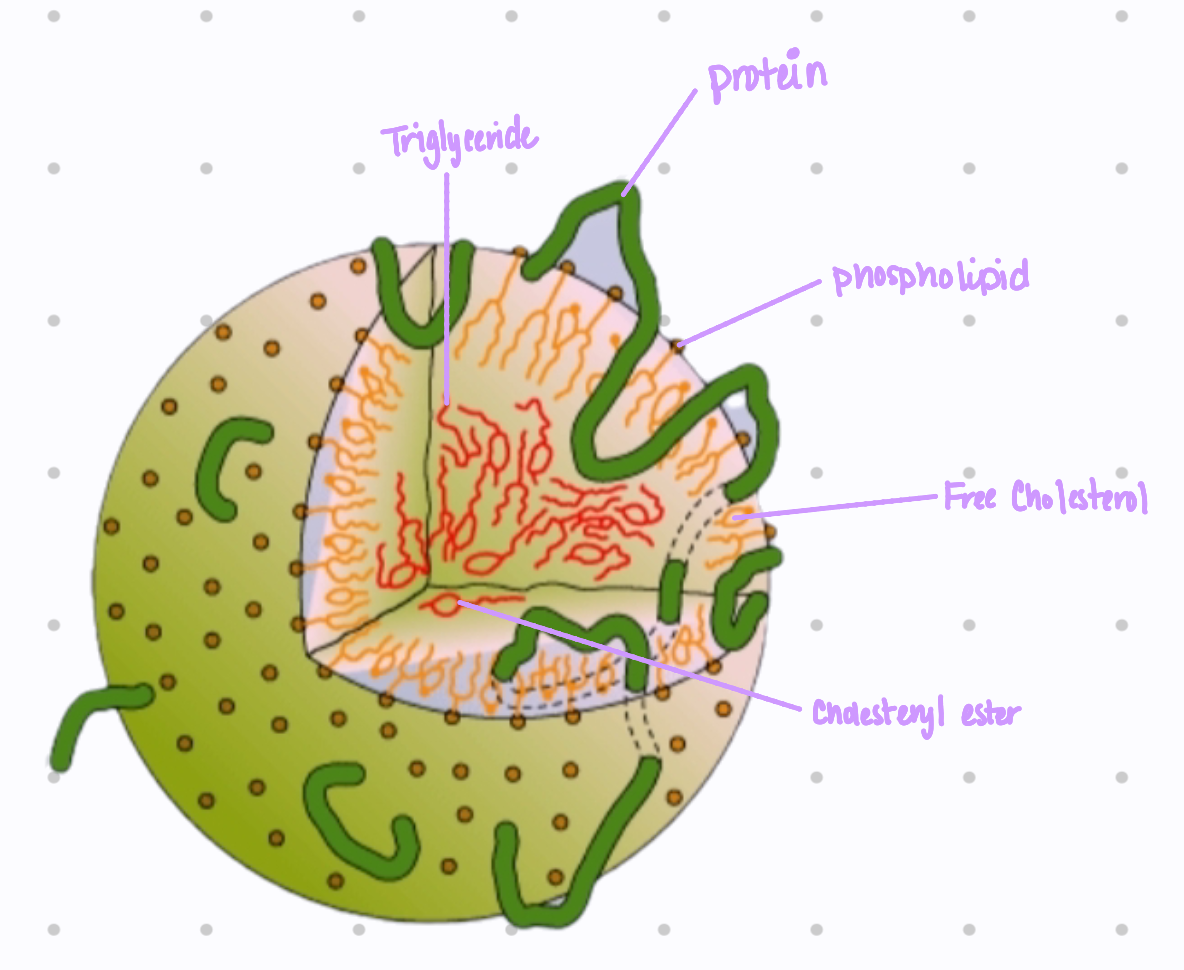

What is the missing structure in the picture?
Cholesteryl ester

What do cholesterol, triglycerides and phospholipids rely on for transport through the aqueous blood stream.
Lipoproteins are used to transport cholesterol, triglycerides, and phospholipids through the aqueous bloodstream.
Cholesterol synthesis happens mostly where?
In the liver and intestinal mucosal
what are phospholipids essential for?
For cell function and lipid transport

What is this molecule?
Lecithin, it is a major phospholipid
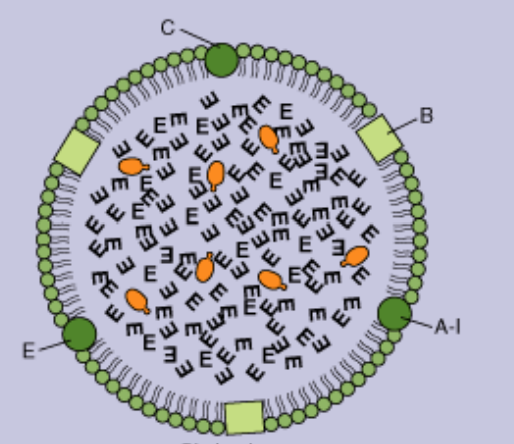
which lipoprotein is this?
Chylomicron - it is the largest of the lipoproteins, it has lots od triglycerides but very few esterified cholesterol and is primarily responsible for transporting dietary fats from the intestines to other locations in the body.
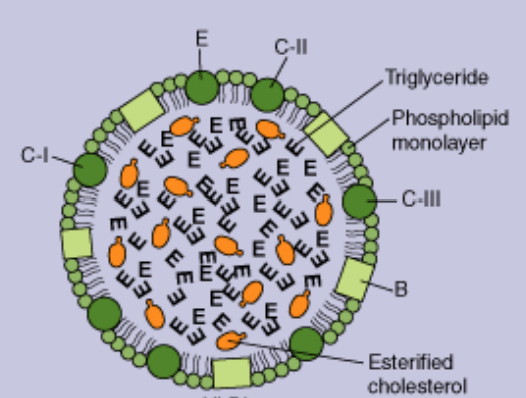
Which lipoprotein is this?
VLDL - a lipoprotein that transports triglycerides and cholesterol from the liver to tissues, smaller than chylomicrons but larger than LDL. Contains less triglycerides and more esterified cholesterol compared to chylomicrons.
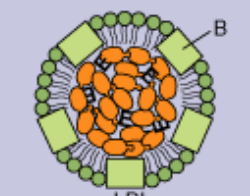
Which lipoprotein is this?
LDL - a lipoprotein that carries cholesterol from the liver to the cells, often referred to as "bad" cholesterol. It is associated with an increased risk of atherosclerosis and heart disease due to its tendency to deposit cholesterol in the arterial walls.

Which lipoprotein is this?
HDL - a lipoprotein that is responsible for returning cholesterol from the tissues back to the liver. Often referred to as "good" cholesterol, it helps reduce the risk of atherosclerosis.
There are two pathways for cholesterol metabolism and they differ in their sources and transport processes, what are they?
The exogenous pathway, which involves dietary intake of cholesterol and its transport via chylomicrons, and the endogenous pathway, which involves cholesterol synthesized in the liver and its transport by VLDL and LDL.

What happens during step 1 and by who?
Chylomicrons. The intestinal mucosa secretes TG-rich chylomicrons (produced primarily from dietary lipids); the liver secretes TG-rich VLDL particles.

What happens during step 2?
VLDL is converted to IDL and then into LDL by the action of lipoprotein lipase, which hydrolyzes triglycerides. This process leads to the release of free fatty acids and the transformation of VLDL into LDL.
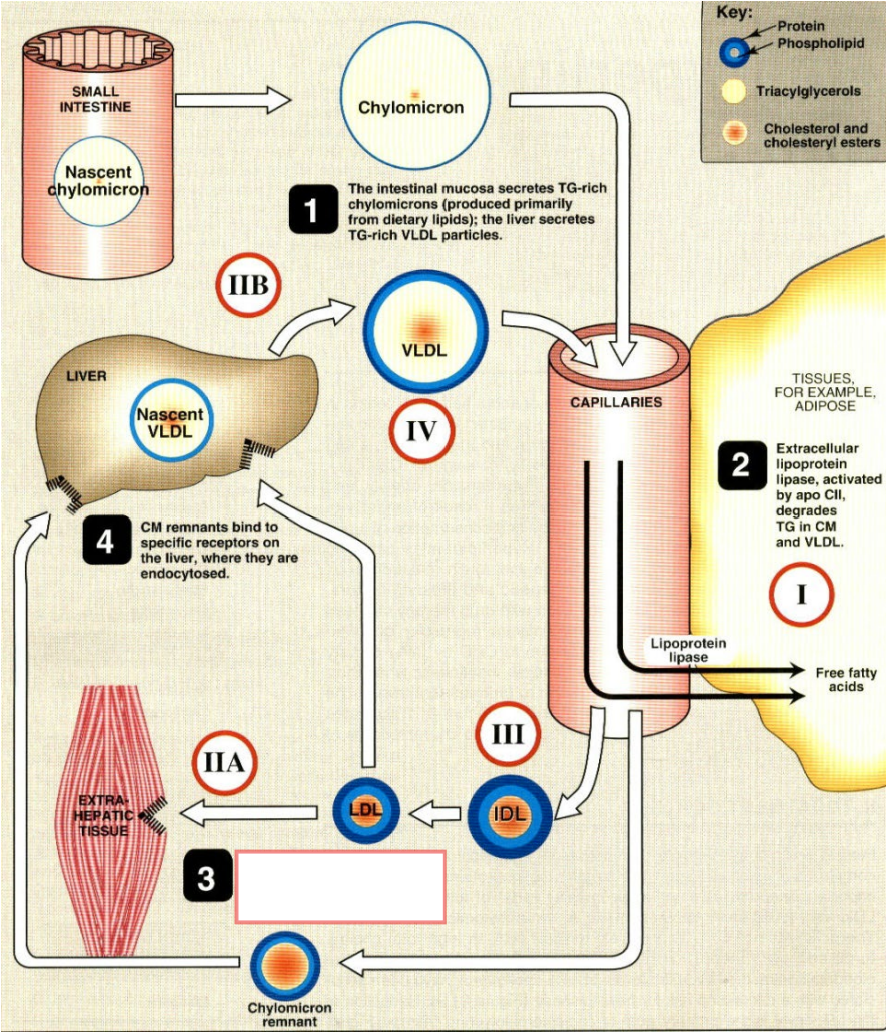
What happens during step 3?
LDL particles are taken up by tissues through receptor-mediated endocytosis, where they deliver cholesterol for membrane synthesis and storage.

What happens during step 4?
Definition: LDL is either returned to the liver for recycling or further processed into smaller, denser LDL particles, which can contribute to atherosclerosis if present in excess.

The liver synthesizes and secretes ____________particles into circulation
Very low density lipoprotein (VLDL)

As VLDL circulates, the enzyme ____________cleaves core ____________ into free fatty acids for peripheral tissue uptake.
lipoprotein lipase, triglycerides

During the lipolysis step, ApoC, surface PL and seignificant amounts of TG are removed, this transforms VLDL into a smaller denser particle known as?
VLDL remnant - it retains ApoB-100 and ApoE

____________acts on VLDL remnant to further hydrolyze remaining triglycerides and surface phospholipids. ApoE is shed from the particle
Hepatic triglyceride lipase

The final product is ________, which is predominantly enriched in ____________ and contains _____________ as its sole primary apolipoprotein.
LDL, Cholesteryl Esters (CE), ApoB-100

The liver secretes lipid-free ________, which can rapidly accept a small amount of phospolipids and unesterified cholesterol to form Pre-beta1-HDL
ApoA-1
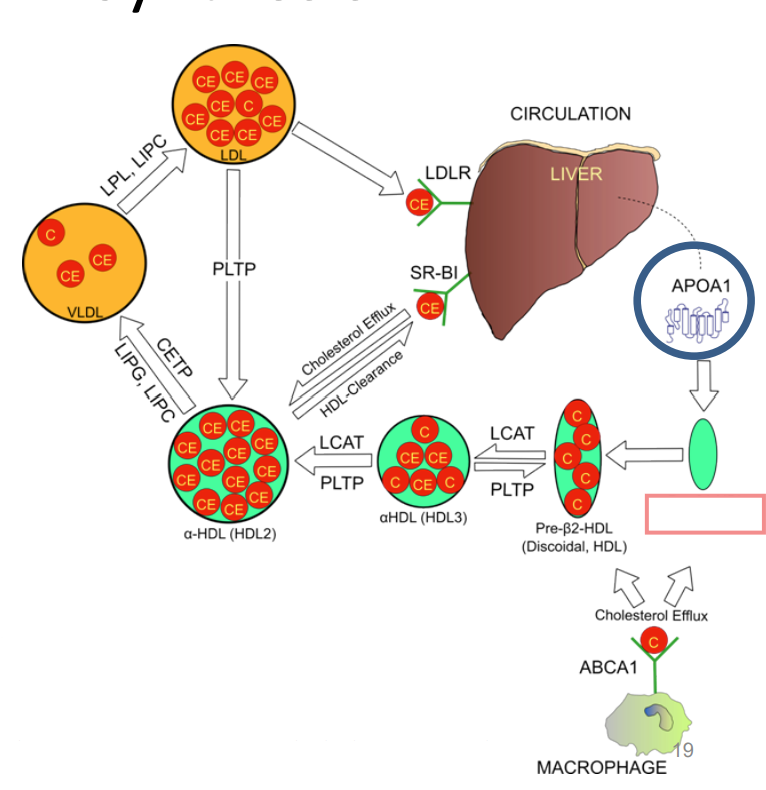
___________interacts with peripheral cells (like macrophages) via the ABCA-1 transporter. ABCA-1 mediates the efflux of unesterified cholesterol onto Pre-β1-HDL, transforming itinto lipid-rich, disk-shaped Pre-β2-HDL.
Pre-β1-HDL

The enzyme _________ esterifies free cholesterol into ____________. Because CE is hydrophobic it moves into the core of the particle, converting discoidal HDL into spherical αHDL with the help of _____________.
LCAT, Cholesteryl Esters, PLTP

COntinued LCAT estrification and PLTP-mediated phospholipid transfer, HDL3 accepts additional cholesterol to mature into larger, CE-dense ________.
HDL2

For direct clearance: Mature HDL delivers cholesteryl esters directly to the liver via the _____________.
SR-BI receptor
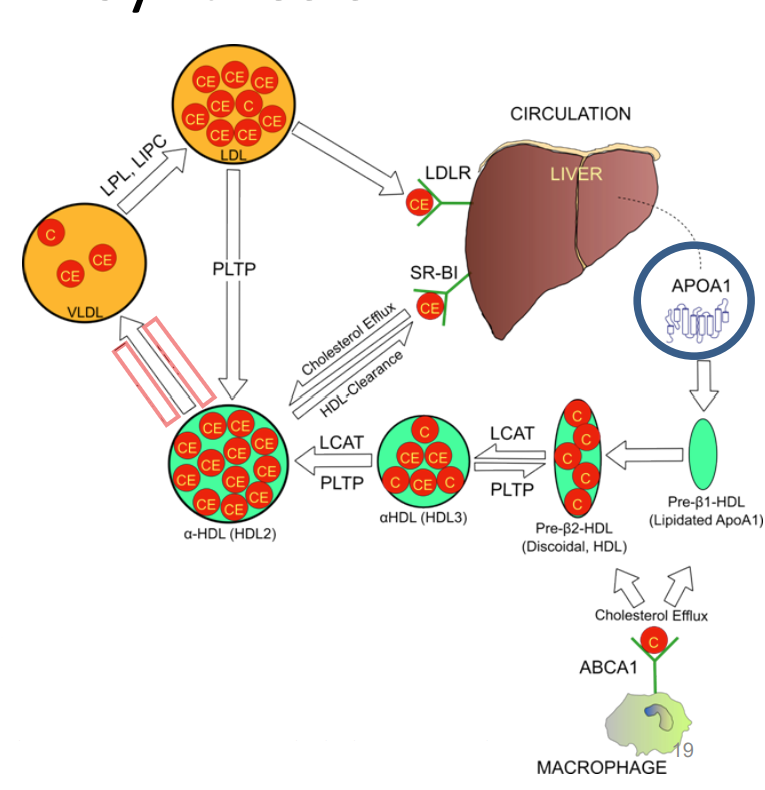
__________ transfers cholesteryl esters from HDL2 to VLDL/LDL in exchange for ___________.
CETP, triglycerides.

__________ and __________ can then deliver cholesterol back to the liver through the ________(________).
VLDL, LDL, LDLR, (LDL Receptor)
Statins have which of the following potential toxic side effects? SELECT ALL THAT APPLY
a. Myopathy and rhabdomyolysis
b. Bradycardia
c. Hyperglycemia leading to diabetic ketoacidosis
d. Hepatotoxicity
e. Cough
a. Myopathy and rhabdomyolysis, d. Hepatotoxicity
Flag question
Question text
Which of the following best explains how statin treatment reduces circulating LDL levels?
Select one:
a. Increased activity of cholesterol ester transfer protein (CETP)
b. Increased activity of lipoprotein lipase (LPL)
c.Upregulation of LDL receptors
Reduced synthesis of HDL
Reduced synthesis of chylomicrons
Upregulation of LDL receptors
This is the primary mechanism by which statins lower LDL cholesterol levels. Statins competitively inhibit HMG-CoA reductase, the rate-limiting enzyme in cholesterol synthesis in the liver. This inhibition leads to decreased hepatic cholesterol content, which triggers the movement of sterol regulatory element binding proteins (SREBPs) from the endoplasmic reticulum to the Golgi where they are activated. The activated SREBPs then increase expression of LDL receptors on hepatocyte surfaces. These increased LDL receptors enhance clearance of LDL from the bloodstream, directly reducing circulating LDL levels. Patients with homozygous familial hypercholesterolemia (who lack functional LDL receptors) respond poorly to statin therapy since they lack functional LDL receptors.
Structural protein essential for VLDL and LDL assembly; ligand for LDL receptors.
a. Bile Acid
b. Cholesterol
c. PCS8
d. ApoB-100
d. ApoB-100
Synthesized from cholesterol, these promote lipid emulsification and intestinal absorption
a. Bile Acid
b. Cholesterol
c. PCSk9
d. ApoB-100
a. Bile Acid
Binds to LDL receptors and targets them for degradation, reducing hepatic LDL clearance
a. Bile Acid
b. Cholesterol
c. PCSK9
d. ApoB-100
c. PCSK9
Hydrophobic form of cholesterol stored in lipoprotein cores for transport.
a. Cholesterol Ester
b. Cholesterol
c. PCSK9
d. ApoB-100
a. Cholesterol Ester
What is the goal of primary prevention?
Prevention of clinical ASCVD
What is the earlieast you can do a ASCVD risk assessment?
greater than or equal to 2 years of age if family history of premature ASCVD, severe hypercholesterolemia or FH
why are we screening between the ages of 9 and 11 years of age?
To identify children at risk for dyslipidemia and cardiovascular disease early as well familial hypercholesterolemia.
*After 13 years of age LDL’s go down.
After an early childhood screening, when should there be a lipid screening again?
at 19 years of age.
should recheck at least every 5 years
What are some LDL-C goals?
< 100mg/dL for prevent-ASCVD
If a patient has PREVENT-ASCVD greater than 10% what is their LDL-C target goal?
less than 70mg/dL
If a patient has familial hypercholesterolemia, what is their LDL-C target goal?
less than 70mg/dL
What are considered 1st degree relatives?
Parents, siblings
What is a familial risk event in males?
any cardiovascular event before the age of 55 such as a heart attack, stroke, bypass surgery or other significant heart-related incidents.
what is a familial risk event in females
Any cardiovascular event before the age of 65, including heart attack, stroke, bypass surgery, or other major heart-related incidents.
10-year ASCVD risk categories (PREVENT)
Low risk = <3%
Borderline risk = 3% to < 5%
intermediate risk = 5% to < 10%
High risk = 10% or greater
Primary prevention populations exempt from 1-year risk calculation
Patients with diabetes, severe hypercholesterolemia (LDL-C greater than 190mg/dL), HIV, or Kidney Disease (Stage > 3)
Lp(a) screening recommendation and high risk cutoff
Screen at least once in a lifetime for all adults.
High risk threshold is greater than 125nmol/L
very high risk is greater than 250nmol/L
hsCRP Criteria as an ASCVD Risk Enhancer
hsCRP greater than 2mg/L measured on two successive occasions without an identifiable underlying cause.
Primary Prevention Treatment: Low Risk (3% 10 year Risk)
Lifestyle counseling. Moderate-Intensity statin is reasonable if LDL-C is 160-189mg/dL or has a 30 year ASCVD risk >10%
What is a low 10-year ASCVD risk?
<3%
What is a borderline 10-year ASCVD risk?
3% to <5%
What is an intermediate 10-year ASCVD risk?
5% to <10%
What is a high 10-year ASCVD risk?
10% or greater
Primary Prevention Treatment: Borderline Risk (3% - < 5% 10-year RIsk)
Assess risk enhancers and CAC.
If statin initiated: Moderate intensity statin
Primary Prevention Treatment:
Intermediate Risk (5% - <10%) 10 year risk
At least moderate-intensity Statin for a 30-49% reduction in LDL-C, LDL-C <100mg/dL, non-HDL-C ,130mg/dL
Primary Prevention Treatment: High Risk (>10% 10year risk)
High Intensity statin to achieve 50% reduction in LDL-C, LDL-C <70mg/dL, non-HDL-C <100mg/dL.
What are some dietary management of LDL-C Disorders?
the Intake of fruits, vegetables, nuts, legumes, whole grains, and fiber. Replace saturated and trans-fat with dietary monounsaturated and polyunsaturated fat. i.e olive oil is a good example
Every patient should be assessed and recommended for lifestyle changes such as:
Encourage heart-healthy diets, regular physical activity, avoidance of nicotine, healthy sleep habits, and maintaining a healthy weight
What are heart-healthy diets?
The mediterranean diet, and DASH diet
what is considered good regular physical activity?
150 minutes of moderate intensity/week or 75 minutes of vigorous intensity/week
Fish oil consumption would result in?
lowering triglyceride 25-35%
Role of CAC Score = 0 AU in borderline/ intermediate risk patients
Reasonable (COR 2a) to defer statin therapy and recheck CAC in 3-7 years (unless smoking, diabetes, severe hypercholesterolemia, or strong family history present)
Therapeutic targets for CAC Score > 100AU or >75th Percentile
Initiate statin therapy (COR1) aiming for greater than 50% LDL-C reduction, LDL-C < 70mgdL and non-HDL-C < 100mg/dL
Statin Recommendations for Adults Aged 40-75 with Diabetes (No ASCVD)
Moderate Intensity statin for all (COR1)
LDL-C <100mg/dL
High Intensity Statin if 10-year risk .10% or multiple risk factors (COR 2a, LDL-C < 70mg/dL)
Primary Prevention Treatment for severe Hypercholesterolemia
(LDL-C is greater than 190mg/dL)
Maximal tolerated statin.
If no HeFH or additional risk factors present, goal LDL-C , 70mg/dL. Add non-statin if unachieved.
Primary Prevention recommendation for Chronic Kidney Disease (>stage 3) and HIV
Moderate intensity Statin recommended for adults aged 40-75 (COR 1) target 30-49% LDL-C reduction and LDL-C < 100mg/dL
Definition of Very High RIsk Secondary ASCVD
History of > 2 major ASCVD events OR 1 major ASCVD event plus >2 high risk conditions (ex. age 65, diabetes, HTN, Smoking, HF, PCI/CABG history)

C. Removing fatty acids from chylomicrons, VLDL, and IDL

B, E

C

B

A,B,D

E

C. the lactone ring at the top makes it a prodrug