biol346 lab practical #1 progressive
 Call Kai
 Learn
Learn Practice Test
 Spaced Repetition
 Match
Match Flashcards
 Knowt Play
1/68

Earn XP
Description and Tags
biol346 cwru
Name | Mastery | Learn | Test | Matching | Spaced | Call with Kai | Chat |
|---|
No analytics yet
Send a link to your students to track their progress
69 Terms

pectoralis major (ORIGIN)
1.) medial 1/3 of clavicle
2.) manubrium and body of sternum
3.) costal cartilages of ribs 1-6
4.) aponeurosis of the external oblique

pectoralis major (INSERTION)
humerus, from the lateral lip of the intertubercular groove to the crest of the greater tubercle

pectoralis major (ACTION)
1.) adducts the arm at the shoulder
2.) medial rotation of the arm at the shoulder
3.) clavicular portion: flexes the arm at the shoulder (if already extended)
4.) sternalcostal portion: extends the arm at the shoulder (if already flexed)

pectoralis minor (ORIGIN)
outer surface of ribs 3-5
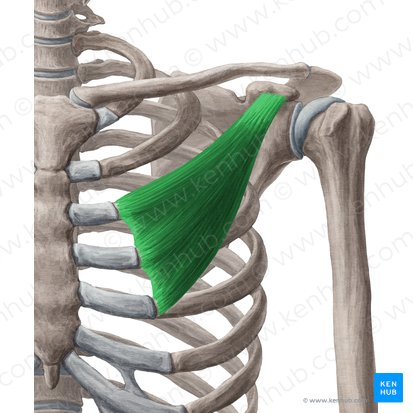
pectoralis minor (INSERTION)
coracoid process of the scapula
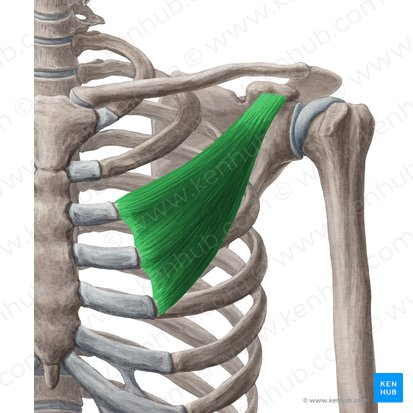
pectoralis minor (ACTION)
1.) depression and lateral rotation of the scapula
2.) protracts the scapula if already retracted
3.) elevates ribs in forced inspiration

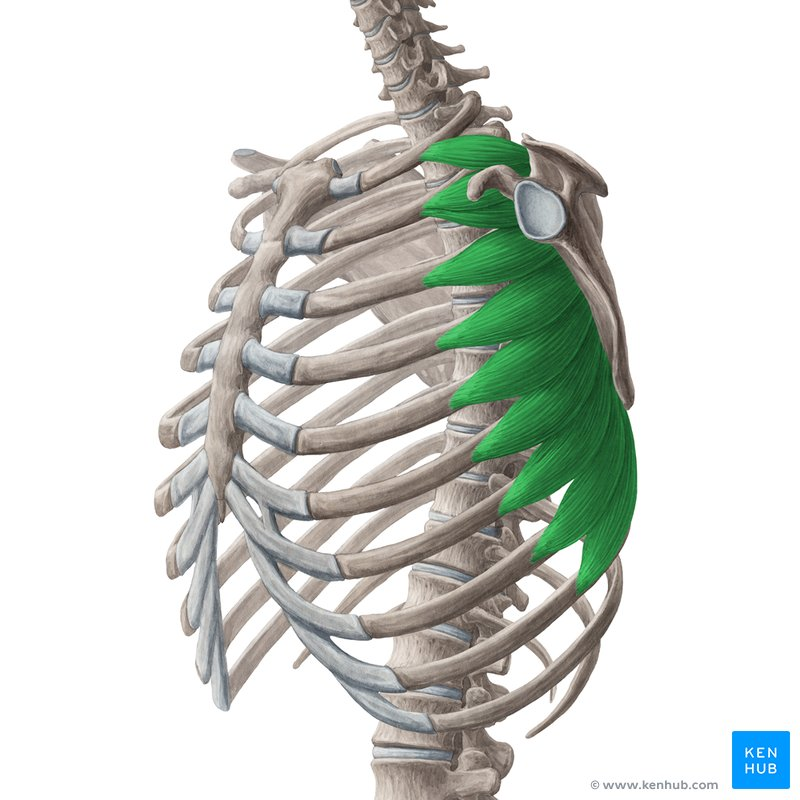
serratus anterior (ORIGIN)
individual slips from the outer surface of ribs 1-8

serratus anterior (INSERTION)
anterior (costal) surface of vertebral border of the scapula
serratus anterior (ACTION)
1.) protracts the scapula
2.) stabilizes the scapula
3.) assists in upward rotation of the scapula
musculature of the anterior chest
1.) pectoralis major
2.) pectoralis minor
3.) serratus anterior
musculature of the anterior shoulder and axilla
1.) deltoid (deltoideus)
2.) subclavius
3.) subscapularis
4.) coracobrachialis

deltoid (ORIGIN)
1.) anterior portion: distal, antero-lateral 1/3 of clavicle
2.) lateral portion: lateral border of the acromion process of scapula
3.) posterior portion: spine of scapula
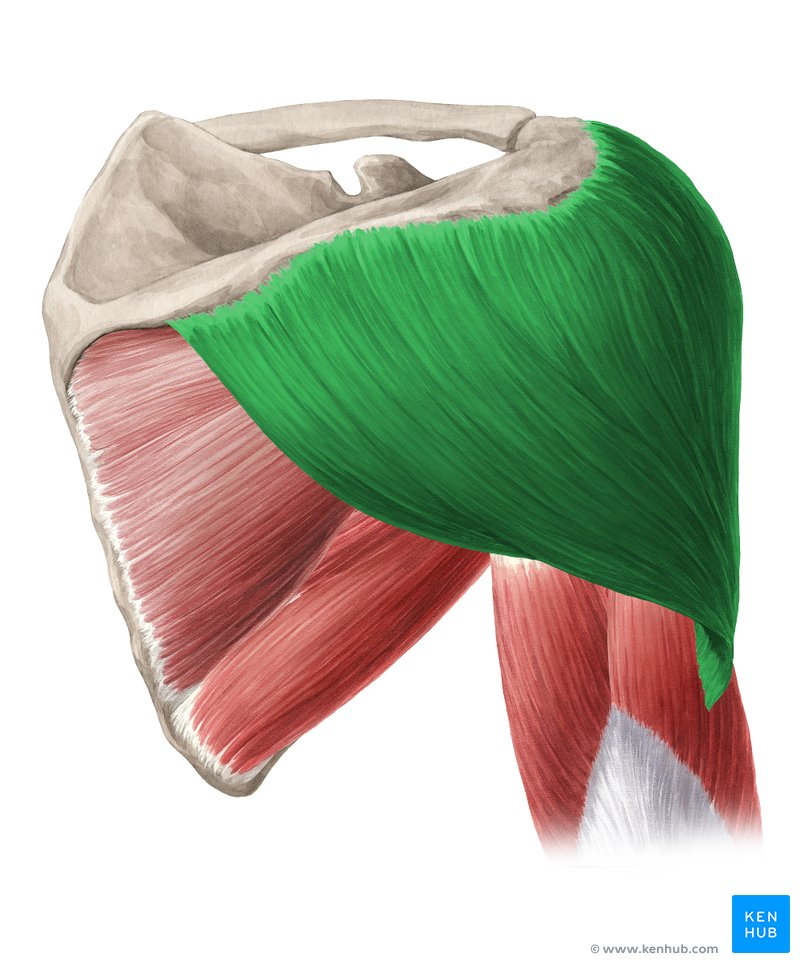
deltoid (INSERTION)
deltoid tuberosity of humerus

deltoid (ACTION)
1.) abducts the arm at the shoulder (co-contraction of all portions)
2.) flexion and medial rotation of the arm at the shoulder (anterior portion)
3.) extension and lateral rotation of the arm at the shoulder (posterior portion)

subclavius (ORIGIN)
costochondral junction of rib 1
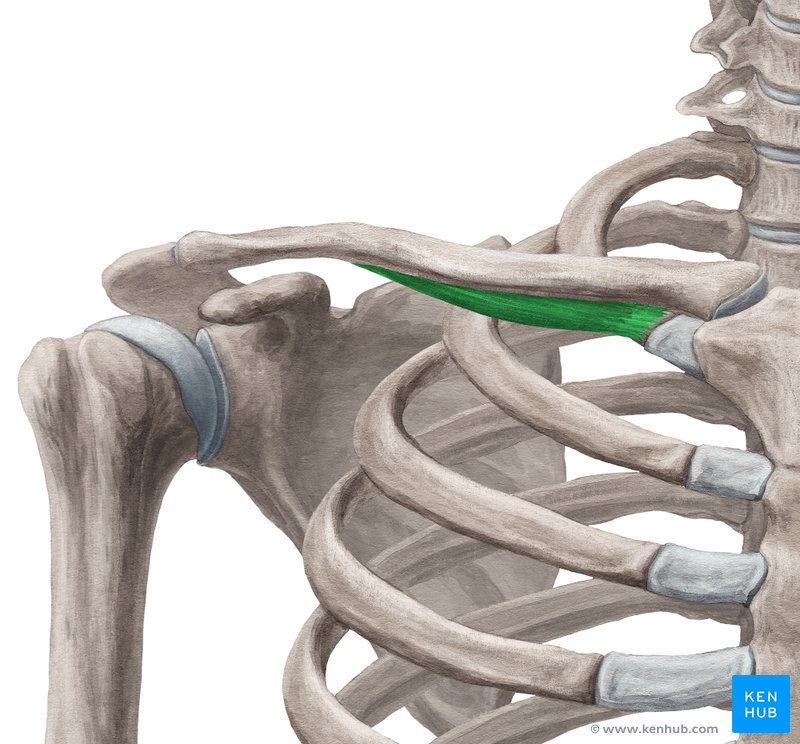
subclavius (INSERTION)
inferior surface of clavicle

subclavius (ACTION)
depresses and and stabilizes clavicle
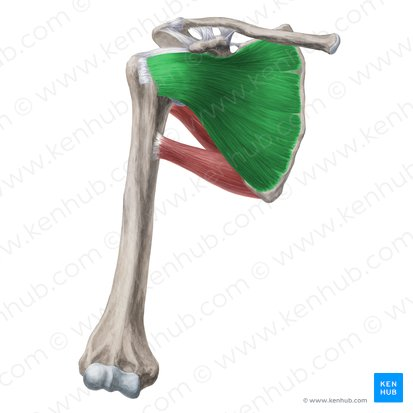
subscapularis (ORIGIN)
subscapular fossa of scapula

subscapularis (INSERTION)
lesser tubercle of humerus
subscapularis (ACTION)
1.) medial rotation of the arm at the shoulder
2.) stabilizes the glenohumeral joint

corachobrachialis (ORIGIN)
coracoid process of the scapula
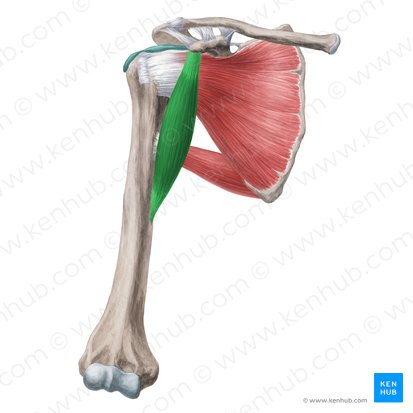
coracobrachialis (INSERTION)
medial shaft of the humerus at the mid-diaphysis

coracobrachialis (ACTION)
weakly adducts the arm at the shoulder
musculature of posterior shoulder and upper back
1.) trapezius
2.) latissimus dorsi
3.) rhomboideus (rhomboid) minor
4.) rhomboideus (rhomboid) major
5.) levator scapulae
6.) supraspinatous
7.) infraspinatous
8.) teres minor
9.) teres major
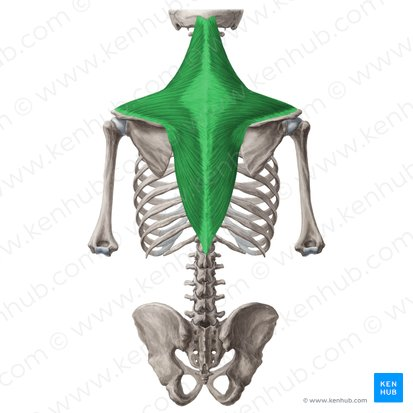
trapezius (ORIGIN)
1.) external occupital protuberance
2.) along the medial sides of the superior nuchal line
3.) ligamentum nuchae (surrounding the cervical spinous processes)
4.) spinous processes of C1-T12

trapezius (INSERTION)
1.) superior portion: postero-lateral 1/3 of clavicle
2.) middle portion: acromion process of scapula
3.) inferior portion: superior margin of spine of scapula

trapezius (ACTION)
1.) elevates the scapula
2.) upper fibers: upward rotation of the scapula
3.) lower fibers: downward rotation of the scapula
4.) retracts the scapula

latissimus dorsi (ORIGIN)
1.) spinous process of T7-L5
2.) posterior surface of S1-S3
3.) iliac crest
4.) ribs 9/10-12
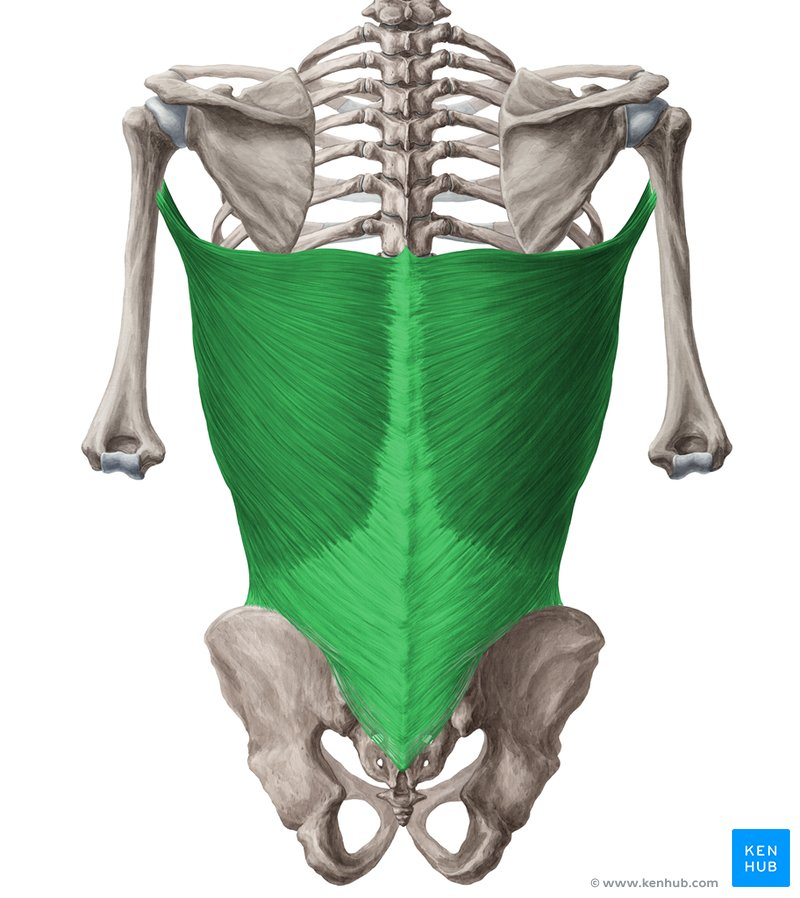
latissimus dorsi (INSERTION)
lateral lip of the intertubercular groove of humerus

latissimus dorsi (ACTION)
1.) adducts the arm at the shoulder
2.) medial rotation of the arm at the shoulder
3.) extends the arm at the shoulder (if already flexed)
4.) downward rotation of the scapula

rhomboideus (rhomboid) minor (ORIGIN)
1.) spinous process of C7 and T1
2.) ligamentum nuchae
3.) supraspinous ligament

rhomboideus (rhomboid) minor (INSERTION)
vertebral border of the scapula, superior to rhomboideus major, near the superior angle

rhomboideus (rhomboid) minor (ACTION)
retracts the scapula
rhomboideus (rhomboid) major (ORIGIN)
1.) spinous processes of T2-T5
2.) supraspinous ligament

rhomboideus (rhomboid) major (INSERTION)
vertebral border of the scapula from the spine to the inferior angle
rhomboideus (rhomboid) major (ACTION)
retracts the scapula

levator scapulae (ORIGIN)
transverse processes of C1-C3/C4

levator scapulae (INSERTION)
superior angle of the scapula

levator scapulae (ACTION)
1.) elevates the scapula
2.) extends the neck
3.) lateral flexion of the neck

supraspinatus (ORIGIN)
supraspinous fossa of the scapula

supraspinatus (INSERTION)
superior facet of the greater tubercle of the humerus

supraspinatus (ACTION)
1.) abducts the arm at the shoulder (first 15-20 degrees)
2.) stabilizes the glenohumeral joint
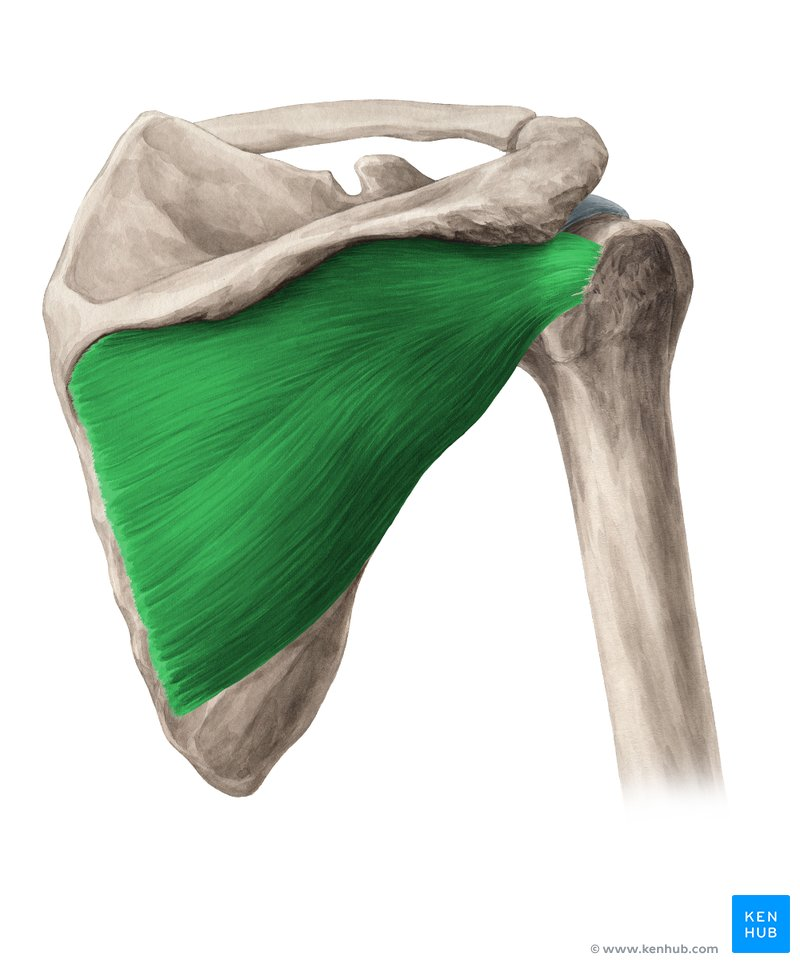
infraspinatus (ORIGIN)
infraspinous fossa of the scapula

infraspinatus (INSERTION)
middle facet of the greater tubercle of the humerus
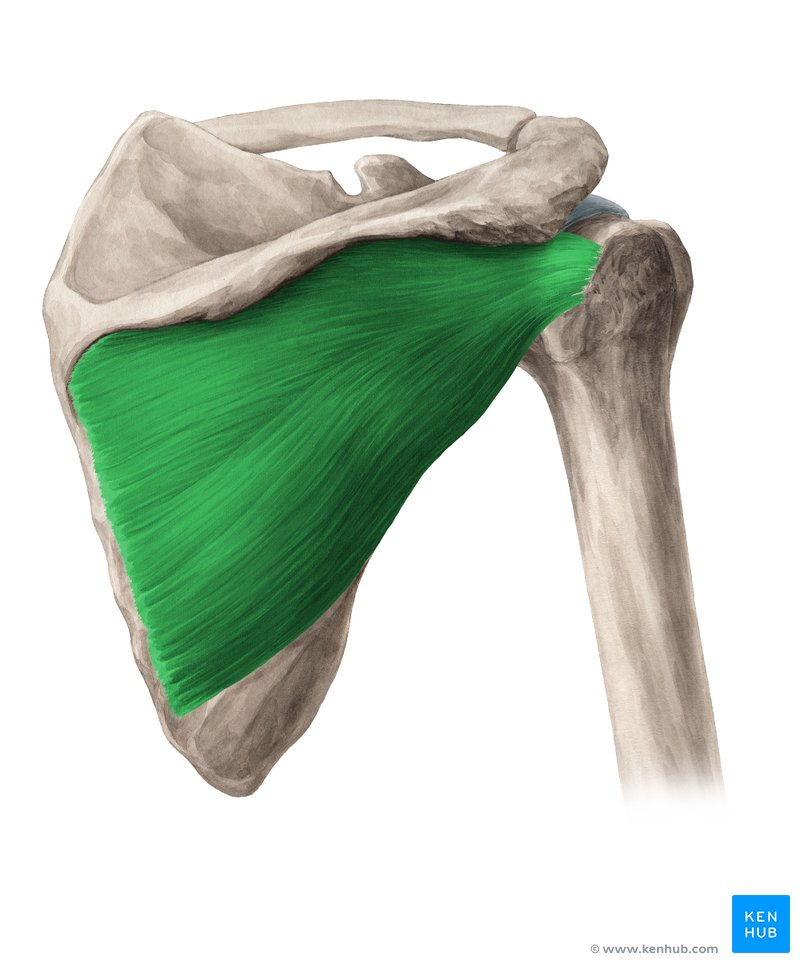
infraspinatus (ACTION)
1.) lateral rotation of the arm at the shoulder
2.) stabilizes the glenohumeral joint

teres minor (ORIGIN)
axillary border of scapulla, superior to the teres major
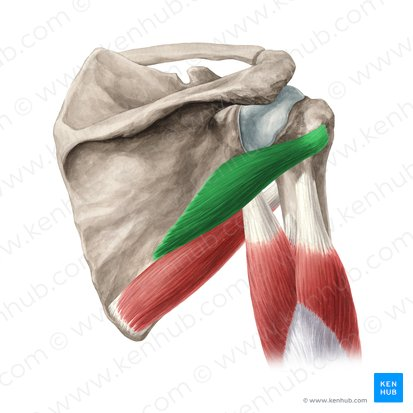
teres minor (INSERTION)
inferior facet of the greater tubercle of the humerus
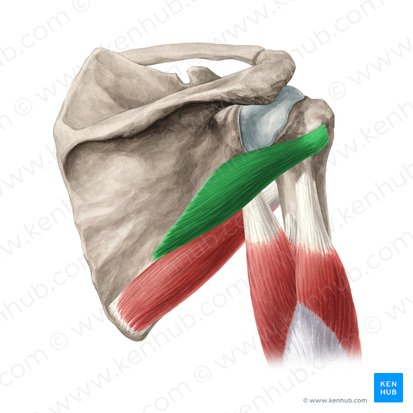
teres minor (ACTION)
1.) lateral rotation of the arm at the shoulder
2.) stabilizes the glenohumeral joint

teres major (ORIGIN)
posterior part of the inferior angle of the scapula

teres major (INSERTION)
medial lip of the intertubercular groove of the humerus (just medial to the insertion of latissimus dorsi)
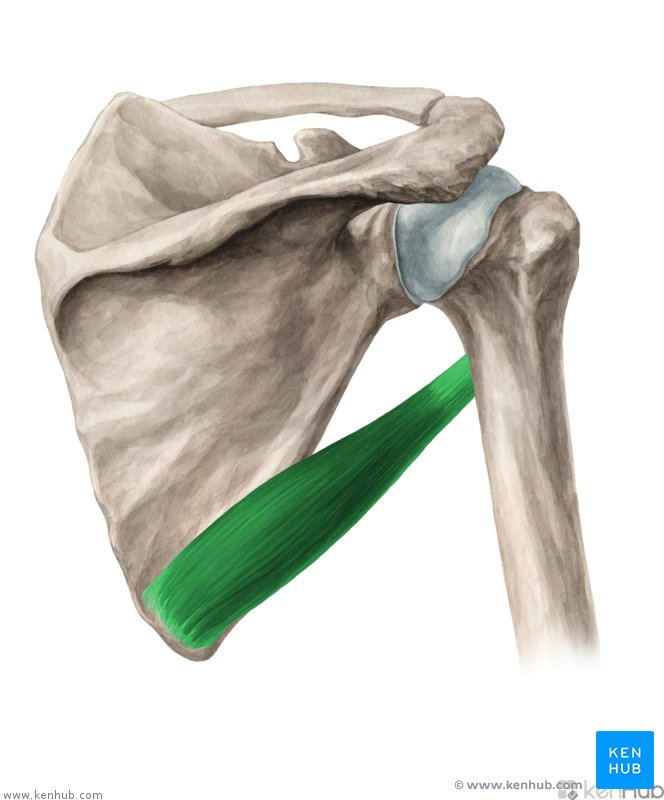
teres major (ACTION)
1.) adducts the humerus
2.) medial rotation of the arm at the shoulder
3.) extends the arm at the shoulder (if already flexed)
musculature of the anterior arm
1.) biceps brachii
2.) brachialis

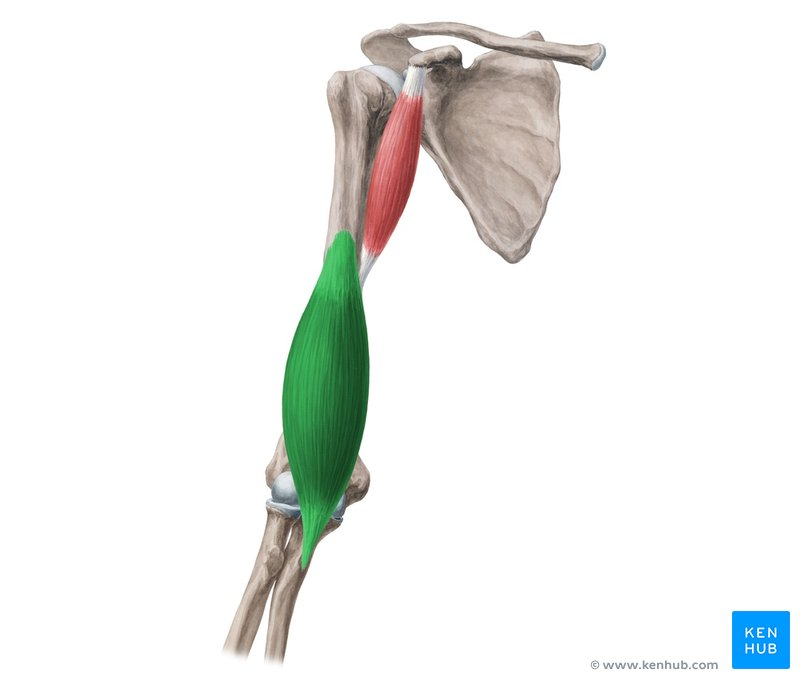
biceps brachii (ORIGIN)
1.) long head: supraglenoid tubercle and glenohumeral labrum
2.) short head: tip of the coracoid process of the scapula

biceps brachii (INSERTION)
1.) radial tuberosity
2.) bicipital aponeurosis on medial forearm

biceps brachii (ACTION)
1.) supinates the forearm (if already prone) - prime mover for this action
2.) flexes the forearm at the elbow (if already supine)
3.) weakly flexes the arm at the shoulder
brachialis (ORIGIN)
distal ½ of anterior humerus

brachialis (INSERTION)
1.) ulnar tuberosity
2.) coronoid process of ulna

brachialis (ACTION)
flexes the forearm at the elbow - prime mover for this action
musculature of the posterior arm
1.) triceps brachii
2.) anconeus
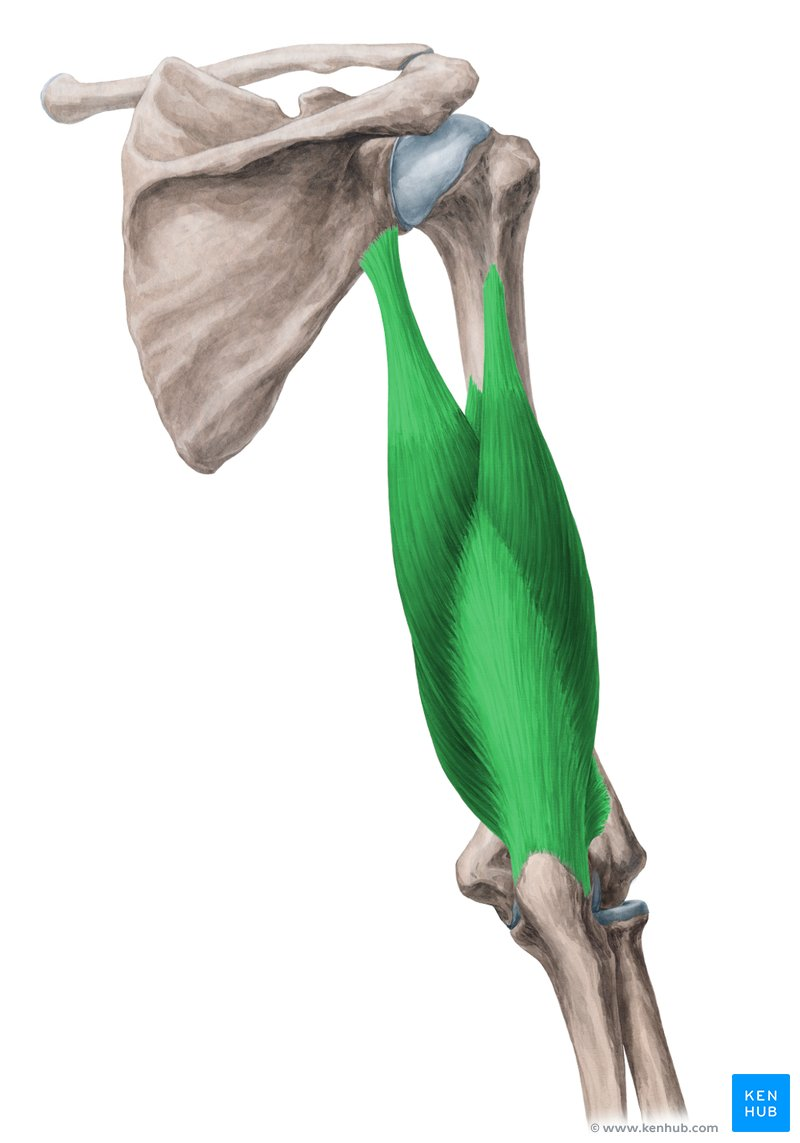
triceps brachii (ORIGIN)
1.) long head: infraglenoid tubercle of scapula
2.) lateral head: upper half of the posterior surface of the shalf of the humerus
3.) medial head: posterior shaft of humerus, distal to the radial groove (deep to the long and lateral heads)

triceps brachii (INSERTION)
posterior surface of the olecranon process of the ulna, via tendon common to the 3 heads

triceps brachii (ACTION)
1.) long head: adducts the arm, extends the arm at the shoulder
2.) lateral head/medial head: extends the forearm at the elbow

anconeus (ORIGIN)
posterior surface of the lateral epicondyle of the humerus
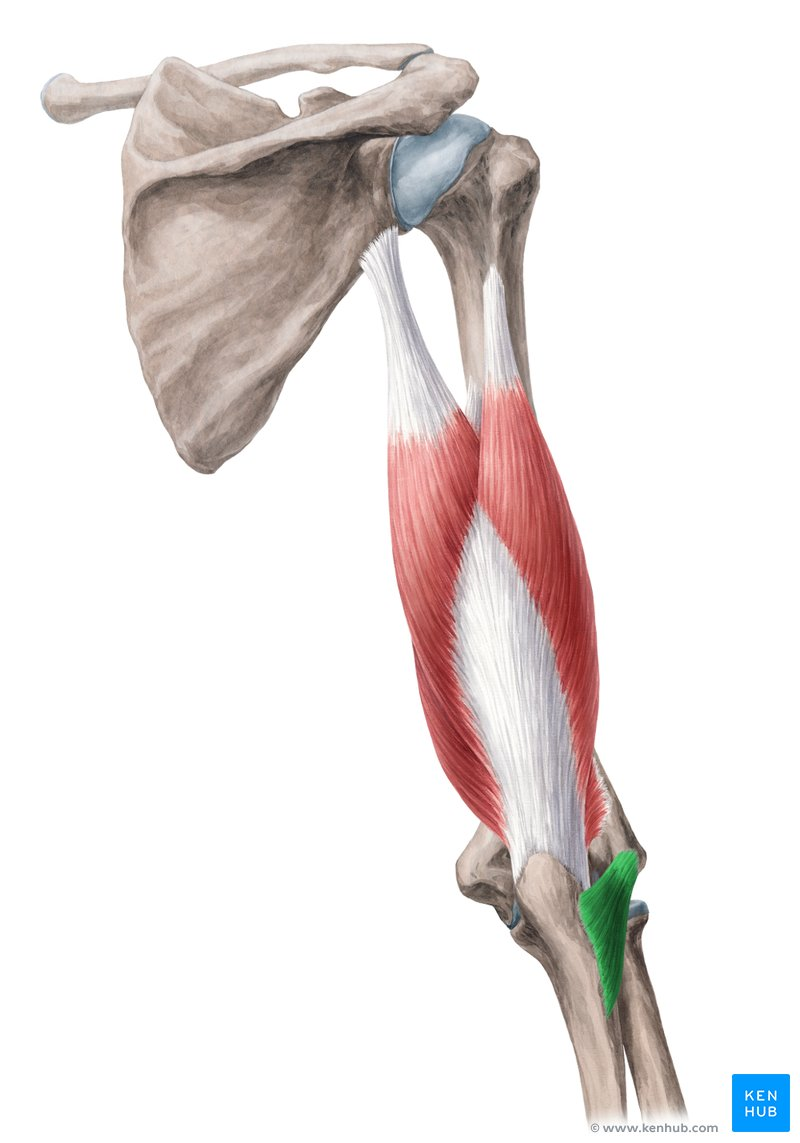
anconeus (INSERTION)
lateral surface of olecranon extending to the lateral part of the ulna

anconeus (ACTION)
1.) extends the forearm at the elbow
2.) supports the elbow when in full extension
musculature of the posterior hand
1.) dorsal interossei (x4)
(singular, interosseus)
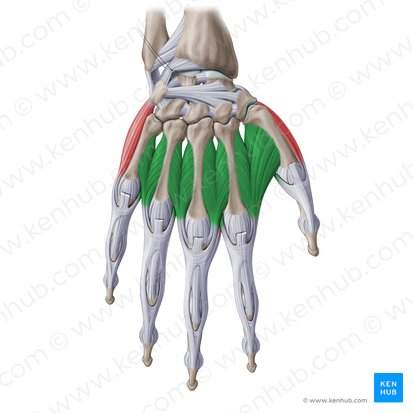
dorsal interossei (ORIGIN)
bipennate, one head from each pair of adjacent metacarpals

dorsal interossei (INSERTION)
1.) base of the proximal phalanx of the digit in each pair that is closer to digit 3
2.) extensor hoods of each digit

dorsal interossei (ACTION)
abducts digits 2-4
[mnemonic: DAB, Dorsal interossei ABduct]