Eukaryotic Cells
 Call Kai
 Learn
Learn Practice Test
 Spaced Repetition
 Match
Match Flashcards
 Knowt Play
1/91

There's no tags or description
Looks like no tags are added yet.
Name | Mastery | Learn | Test | Matching | Spaced | Call with Kai | Chat |
|---|
No analytics yet
Send a link to your students to track their progress
92 Terms
Archaea extra info
very little is knob about archaea because many of them are extremophiles
distinct domain of life (look like bacteria but genetically like us)
Dr. Carl Woesse studied 16S RNA and discovered the domain archaea
Asgard group = considered the closest known microorganisms to eukaryotes, suggesting they may hold key clues to understanding the evolution of complex life from simpler organisms
The first eukaryotic cells appeared _______.
1.8 billion years ago
Bacteria, Archaea, and Eukarya all evolved from the Last Universal Common Ancestor (LUCA)
The last common ancestor of all eukaryotic cells was a single-celled microorganism closely related to _______.
archaea
Microbial members of domain Eukarya are much more genetically and ecologically diverse than ________.
larger eukaryotes (humans and animals)
Eukarya exhibit tremendous morphological and ecological complexity but a ________.
limited range of metabolic diversity
Many organelles are enclosed separately by their own _________.
lipid membranes
Mitochondria and chloroplasts originated from _______.
endosymbiosis
this theory is widely accepted
The proposed ancestors of mitochondria were _______.
oxygen-using non-photosynthetic prokaryotes
an ancient prokaryote absorbed a respiring bacteria which eventually becomes the mitochondria
The proposed ancestors of chloroplasts were _________.
photosynthetic prokaryotes
an ancient prokaryotic cells absorbs a respiring bacteria (becomes mitochondria) and a bacteria capable of photosynthesis (becomes chloroplasts)
Mitochondria and chloroplasts display the following similarities with bacteria that led to the endosymbiont theory
1. Capable of independent division
2. Contains a circular chromosome with bacterial
DNA sequences
3. Prokaryotic-sized ribosomes
4. Enveloped by a double membrane
• Bacterial-like membranes and can be inhibited by drugs that affect only bacteria
Prokaryotes have circular DNA while eukaryotes have ________.
linear DNA
Endosymbiotic Theory
WELL SUPPORTED among scientific circles
Bacteriologists have placed both mitochondria and chloroplasts on a family tree of bacteria
Mitochondria’s closest bacterial relative
are rickettsias
• An intracellular bacteria
Mitochondria
sites of cellular respiration, a metabolic process that uses oxygen to generate ATP
powerhouse of the cell
have a double membrane
Chloroplasts
found in plants and algae, are the sites of photosynthesis
Mitochondria
Double membrane: a smooth, continuous
outer membrane with an inner folded
membraneCells that are metabolically active have a lot of these (e.g. liver, muscle, sperm cells)
Generate energy (ATP) for the cell
Divide independently of the cell
Contain circular strands of DNA and prokaryotic ribosomes
Chloroplasts
the site of photosynthesis, where light energy is converted into chemical energy of food molecules.
Found in algae and plant cells
Capable of converting energy from sunlight into chemical energy through photosynthesis
Produce oxygen gas as a by-product of photosynthesis
Resemble mitochondria but are larger, contain special pigments, and are more varied in shape
Nucleus
the main genetic control center in eukaryotic cells
Contains 1 or more chromosomes
Separated from the cytoplasm by a
nuclear envelope which has Nuclear pores that allow certain materials to pass between the nucleus and the cytoplasm
Nucleolus
where components of ribosomes are made; within the nucleus of a eukaryotic cell
Ribosomes
NOT membrane bound
Free ribosomes (cytosol) and bound ribosomes (rough endoplasmic
reticulum or nuclear envelope)Cells that have high rates of protein synthesis have particularly large
numbers of these (e.g. human pancreas)function: protein synthesis
Both prokaryotic and eukaryotic cells have ribosomes, but _______.
the structures differ slightly.
eukaryotic ribosomes being significantly larger (80S) compared to prokaryotic ribosomes (70S)
Endomembrane system
Manufacturing and distributing cellular
productsRegulates Protein Traffic and
Performs Metabolic Function
Components of the endomembrane system
1. Nuclear envelope
2. Endoplasmic reticulum
3. Golgi apparatus
4. Lysosomes
5. Vacuoles
6. Plasma membrane
These components are either continuous or connected through transfer by vesicles
Endomembrane System process
nuclear envelope is connected to RER which is also continuous with SER
membranes and proteins produced by the ER move via transport vesicles to the golgi
the golgi pinches off transport vesicles and other vesicles that give rise to lysosomes, other types of specialized vesicles, and vacuoles
the lysosome is available for fusion with another vesicle for digestion’
a transport vesicle carries proteins to the plasma membrane for secretion
the plasma membrane expands by fusion of vesicles; proteins are secreted from the cell by exocytosis
Smooth Endoplasmic Reticulum
ER without ribosomes attached
Synthesizes lipids
• Oils, steroids, and
phospholipids
• Steroids include sex
hormones of vertebrates
and steroids secreted by
the adrenal glandsDetoxifies drugs and poisons
elevated amounts in liver cells
Rough Endoplasmic Reticulum
ER with ribosomes
attachedAttached ribosomes make
membrane proteins and
secretory protein.Secretory proteins depart
from the ER wrapped in
transport vesiclesmodifies proteins for
shipment
Golgi Apparatus
Receives, refines, stores, and
distributes chemical products of
the cellModifies products of the ER
Manufactures certain
macromoleculesSorts and packages materials
into transport vesicles
Lysosome
cell’s garbage disposal
A membranous sac of hydrolytic enzymes that can digest (hydrolyze) macromolecules
work best in acidic environments
digest our own organelles to make new components (autophagy)
Autophagy
Lysosomes use enzymes to recycle the cell’s own organelles and macromolecules
Vacuole
Membrane-bound sacs containing fluids or solid particles to be digested, excreted, or stored
Cytoplasm
everything inside the plasma membrane and
external to the nucleus
• the substance in which various cellular components are found
Cytoskeleton
a network of fibers extending throughout the cytoplasm
• It gives animal cells shape and support
• Controls intracellular traffic
• It gives cells some ability to control their movement
Eukaryotic Cilia
Similar to flagella in structure,
but are smaller and more numeroussimilar to bacterial fimbrae
Eukaryotic Flagella
X10 thicker than bacterial
flagellaMoves in a wave-like manner
instead of rotatingless complex than bacterial flagella
Plasma (Cytoplasmic) Membrane
Selectively permeable membrane enclosing the cytoplasm of a cell
• The boundary that separates the cell from its surroundings
• Regulates the traffic of chemicals into and out of the cellStructure: Fluid mosaic model
• phospholipid bilayer & membranous proteins
Glycocalyx
a layer of material containing substantial amounts of sticky carbohydrates
An outermost layer covering the plasma membrane that comes into direct contact with the environment
strengthens the cell surface, helps attach cells together, and may contribute to cell–cell recognition
can appear as a network of fibers, slime layer, or a capsule
Protozoa, helminths, animals, and some algae do not have _______.
cell walls
Cell walls of fungi and most algae ________.
Rigid and provide structural support and shape
Different in chemical composition from bacterial and archaeal cell walls
Fungi
Thick inner layer of polysaccharide fibers composed of chitin or cellulose.
Thin outer layer of mixed glycans
Algae
Varied in chemical composition: various sugars along with minerals such as silicon dioxide and calcium carbonate
Cell membrane
Typical bilayer of phospholipids in which protein molecules are embedded
Contain sterols of various kinds which provide stability
Cytoplasmic membranes of eukaryotes have a
similar function as those in bacteria and archaea,
serving as ________.
selectively permeable barriers in transportation
Microbial eukaryotes can be defined by their
morphology as _______.
protists, algae, or fungi
Protist
an informal term referring to any
eukaryotic microorganism that is not a plant,
animal, or fungus
Algae
include unicellular and multicellular
eukaryotes that perform photosynthesis but
are not plants
Fungi
nonphototrophic eukaryotic microorganisms with rigid cell walls composed of chitin
Fungal cells
Cell walls - - - > Chitin
• Cell membranes - - - > Sterols (ergosterol) = Target in anti-fungal drugsTwo basic morphological types:
• Hyphae
• Yeasts
Yeasts
Round to oval shape
Asexual reproduction, budding
Hyphae
Long, threadlike cells found in the bodies of filamentous fungi
(molds)
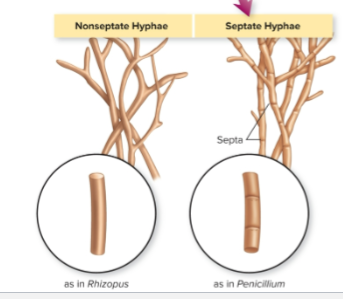
Pseudohypha
chain of yeast cells
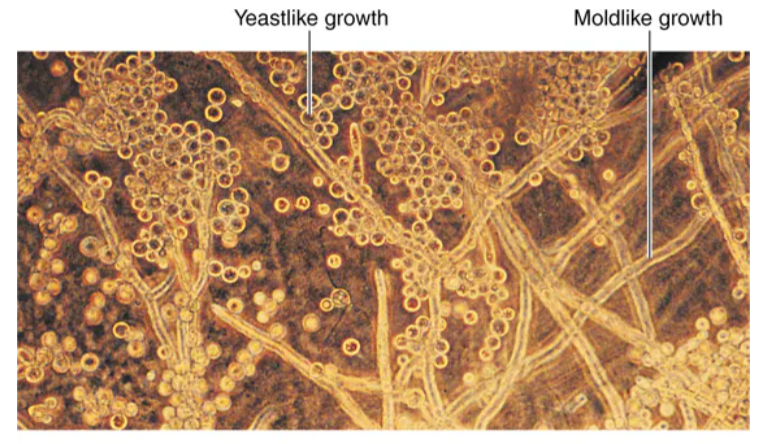
Some fungal cells are considered dimorphic and can take _________.
either growth form (yeast or hyphae), depending on growth conditions - - - > particularly characteristic of some pathogenic molds
Fungal Nutrition
fungi can be Heterotrophic, saprobic, or parasitic
can penetrate the substrate and secrete enzymes that reduces it to small molecules that can be absorbed by the cells
heterotrophic
fungi acquire nutrients from a wide variety of organic substrates
Saprobic
these substrates from the remnants of dead plants and animals in soil or aquatic
habitats
Parasitic
grow on the bodies of current or previously living animals or plants, although very few require a living host
Fungi are often found in ________.
nutritionally poor or adverse environments, and those with high salt or sugar content
Benefits of Fungi
Play an essential role in decomposing organic matter and returning minerals to the soil
Form stable associations with plant roots and increase their ability to absorb water and nutrients
Fungi have been engineered to produce large quantities of antibiotics, alcohol, organic acids, and vitamins
Some fungi are eaten or used to provide flavoring to food
Morphology of Fungi
Cells of most microscopic fungi grow
in loose associations or coloniesColonies of yeasts are much like
bacteria: they have a soft, uniform
texture and appearanceColonies of filamentous fungi are
noted for the striking cottony, hairy,
or velvety texture
Fungi can propagate by the outward growth of ________.
existing hyphae or by fragmentation
Spores
Primary reproductive mode of fungi
Can be dispersed through the environment by air, water, and living things
Will germinate upon finding a favorable substrate and produce a new fungus
colony in a short time
Asexual spores
formed by the hyphae of one
organismWhen these spores germinate, they become organisms that are genetically identical to the parent
types: Sporangiospores and Conidiospores/conidia
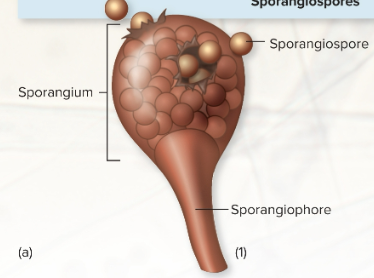
Sporangiospores
formed by successive cleavages
within a saclike head called a sporangium, which is attached to a stalk, the sporangiophore
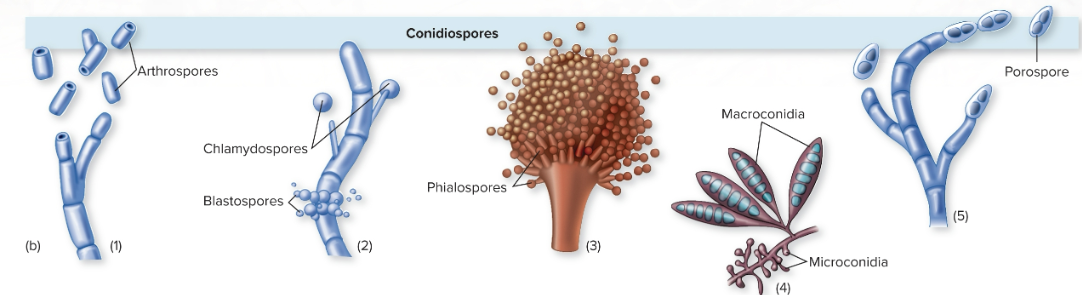
Conidiospores or conidia
free spores not enclosed by a spore-bearing sac
Sexual spores result from the fusion of nuclei from _______.
two opposite mating strains (plus and minus
strains) of the same species of fungus.
Sexual spores require two different mating strains and so are made ______.
less frequently than asexual spores. Organisms that grow from sexual spores will have genetic characteristics of both parental strains
Variations lead to potentially advantageous adaptations
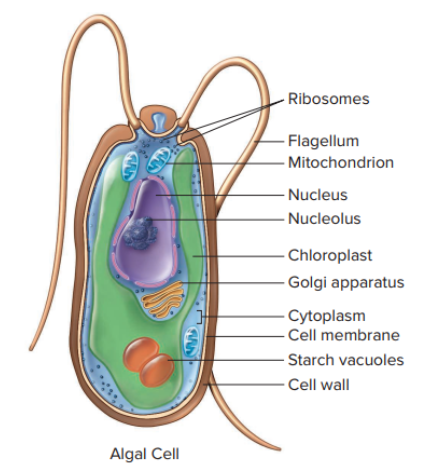
Algae
A group of photosynthetic organisms most readily recognized by their larger members, such as seaweeds and kelps
Widespread in both fresh and marine waters
Provide basis of food web in most aquatic habitats
Contribute significantly to oxygen content of the atmosphere through photosynthesis
Algae (cont.)
Unicellular, colonial, and filamentous
formsLarger forms can possess tissues
and simple organsExhibits most organelles - - - >
including chloroplasts
Diatoms
One of the most prevalent groups on Earth
Cell wall contains silica
• High diversity is useful in forensics in analyses of bodies of water
Diatoms and forensics
breathing when entering the water = diatoms in lungs and peripheral organs
died before entering the water = diatoms only in lungs
Forensic Limnology
the study of freshwater ecology for the presence of diatoms (particularly) in order to solve forensic and medical cases
Diatoms are among the most important and _________.
prolific microscopic sea organisms and serve directly or indirectly as food for many animals.
Structural Materials: such as heat and fire-resistant products, sound proofing materials, polishes such as, porcelain, drainpipes, tiles, non-conducting materials and artificial stone
Cosmetic products: soaps, deodorants, toothpaste
Used as an insecticide (Diatomaceous Earth)
As a base in dynamite
Protozoa
Name comes from the Greek for “first animals”
About 12,000 species of single-celled creatures
Widely distributed in nature, exhibit wide
range of morphologiesMost are harmless, free-living inhabitants of water and soil
A few species are pathogens responsible for hundreds of millions of infections each year
Protzoan form and function
Single cells containing all of the major eukaryotic organelles
Cytoplasm divided into two parts:
1. Ectoplasm2. endoplasm
Ectoplasm
clear outer layer involved in locomotion, feeding,
and protection; present in protzoa
Endoplasm
granular inner region housing the nucleus,
mitochondria, and food and contractile vacuoles; present in protozoa
Protozoan form and function
Some organelles act as a primitive nervous system to coordinate movement
Can move through fluids by means of pseudopods (“false feet”)
Cell membrane regulates food, wastes, and secretions
Cell shape can remain constant (as in most ciliates), or change constantly (as in amoebas)
Nutritional requirements of Protozoa
Heterotrophic, require food in a complex organic form
Free-living species scavenge dead plant or animal debris or graze on bacteria and algae
Some have special feeding structures, such as oral grooves
• Some absorb food directly through the cell membrane
• In all protozoa, digestion takes place in membrane-enclosed vacuoles
Habitat range of habitats
Pathogenic species may live on the fluids of their host, such as plasma and digestive juices, or actively feed on tissues
Main limiting factor is availability of moisture
Predominant habitats are fresh and marine water, soil, plants, and animals
Can survive in extremes of temperature and pH
Many protozoans alternate between the ______.
trophozoite and cyst stage, depending on the habitat
Some protozoan groups exist only in the
trophozoite phase
Trophozoite
motile feeding stage of protozoa requiring
ample food and moisture to stay active
Cyst
Dormant, resting stage when conditions in the environment become unfavorable
Resistant to heat, drying, and chemicals
can be dispersed by air currents
Important factor in the spread of disease
Stages of protozoa lift cycle
trophozoite (active feeding stage)
cell rounds up, losing motility
drying and lack of nutrients = early cyst wall formation
mature cyst (dormant resting stage)
moisture and nutrients restored = cyst wall breaks open
All protozoa reproduce by _________.
relatively simple, asexual mitotic cell division
or multiple fission
Sexual reproduction in protozoa
occurs in most protozoa
Ciliates participate in conjugation in
which two cells fuse and exchange
micronucleiResults in new and different genetic
combinations - - - > can be advantageous
in evolution
Helminths
Include tapeworms (Cestodes), flukes (Trematodes), and roundworms (Nematodes)
Adult specimens are usually large enough to be seen with the naked eye
• May need a microscope for eggs/larvaeNot all flatworms and roundworms are parasites; many live free in soil and water
• ~50 species cause disease in humansDisease-causing helminths spend part of their lives in the gastrointestinal tract
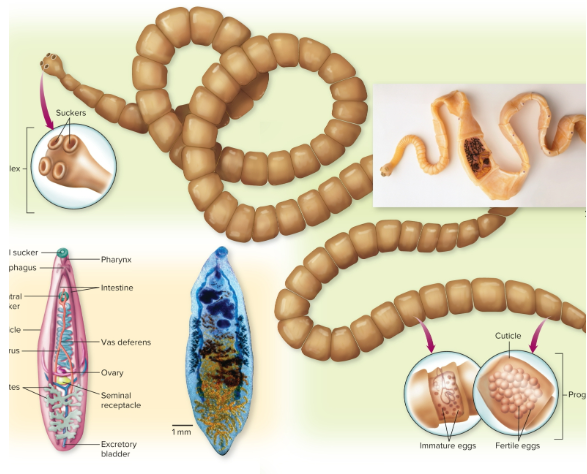
Flatworms
Very thin, often segmented body
planDivided into tapeworms and flukes
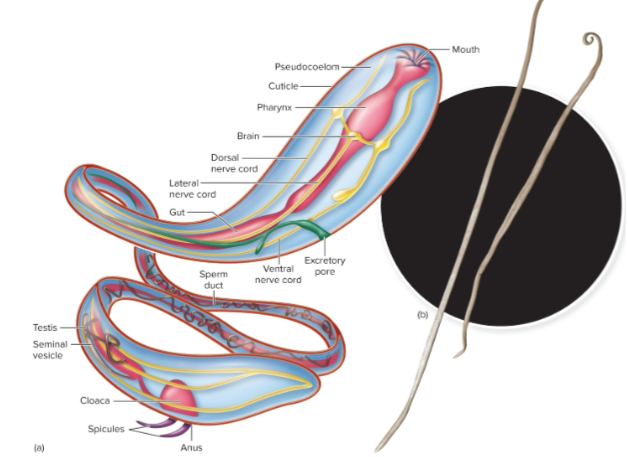
Roundworms
Elongated, cylindrical, unsegmented body
General Worm Morphology
Multicellular animals that are equipped to some degree with organs
and organ systems
• In pathogenic helminths, the most developed organ system is the
reproductive tractTherefore, there is a reduction in the digestive, excretory, nervous,
and muscular systems
Life Cycles and Reproduction of helminths
Complete life cycle includes the fertilized egg, larval, and adult stages
Adults derive nutrients and reproduce sexually in a host’s body
can be separate sexes (visually similar or distinct) or
hermaphroditic
Life cycle of helminths
Must transmit an infective form (egg or larva) to the body of another host
The host in which the larva develops is known as the intermediate (secondary) host
Adulthood and mating occur in the definitive (final) host
Transport host is an intermediate that experiences no parasitic development
Sources for human infection with helminths are contaminated ______.
food, soil, and water or infected animals
Fertilized eggs of helminths
Released to the environment
Provided with a protective shell and extra
food to aid their development into larvaeVulnerable to heat, cold, drying, and
predators
Certain helminths can lay from ______.
200,000 to 25 million eggs a day to assure successful completion of their life cycle