ALL redox
 Call Kai
 Learn
Learn Practice Test
 Spaced Repetition
 Match
Match Flashcards
 Knowt Play
1/47

There's no tags or description
Looks like no tags are added yet.
Name | Mastery | Learn | Test | Matching | Spaced | Call with Kai | Chat |
|---|
No analytics yet
Send a link to your students to track their progress
48 Terms
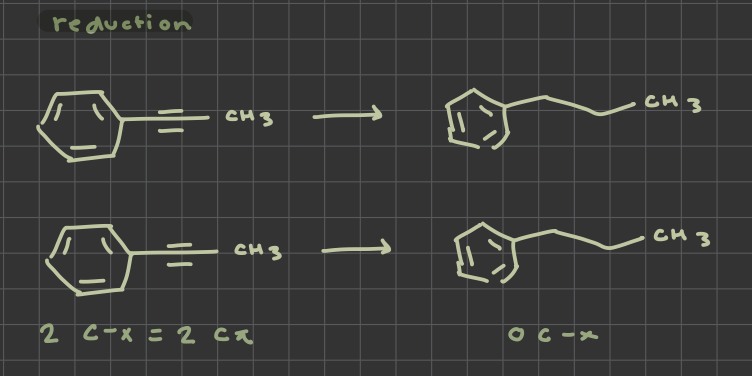
Reduction
Decrease oxidation state
Gain of C–H bonds
Loss of C–X bonds or C–O bonds
Example: alkyne → alkene → alkane
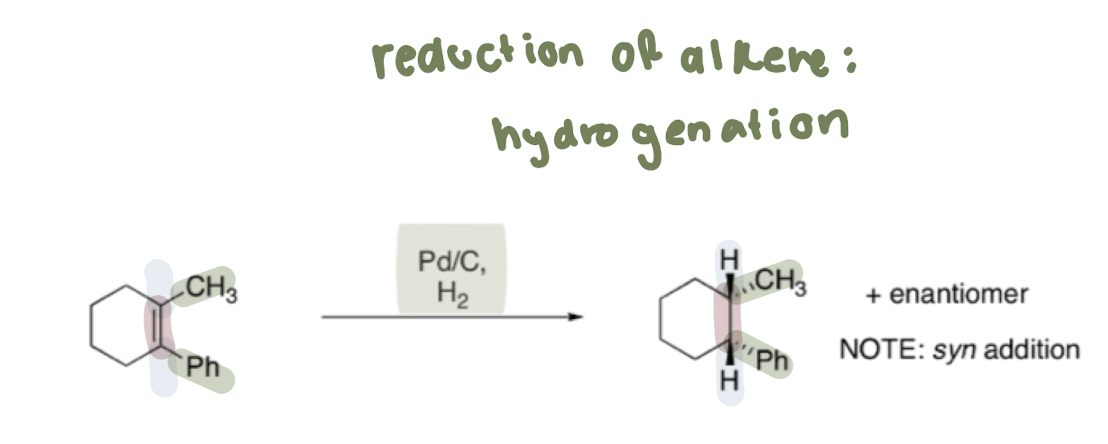
Pd/C + H₂
Hydrogenation (reduction)
What it reduces:
alkene → alkane
alkyne → alkane
aldehyde → alcohol
ketone → alcohol
Stereochemistry:
syn addition
(two H add same side)
Hydrogenation outcome
Pd/C + H₂
Adds 2 hydrogens across π bond
alkene → alkane
alkyne → alkane
carbonyl → alcohol
Lindlar's Catalyst, H2
Reaction type: partial alkyne reduction
What it reacts with: alkyne
Outcome: alkyne → cis alkene TWO H SAME FACE
Stereochemistry: syn addition
Key: poisoned Pd catalyst, reaction stops at alkene
Na0 / NH₃
Reaction type: dissolving metal reduction
Outcome:
alkyne → trans alkene H ON OPPOSITE
Stereochemistry:
anti addition
(H atoms opposite sides)
Alkyne Reduction Summary
Pd/C + H₂ → alkane
Lindlar + H₂ → cis alkene
Na / NH₃ → trans alkene
LiAlH₄
Lithium aluminum hydride
Reduces:
alkyl halides R–X (halogen)
sulfonates (OTs good LG) R–O–SO₂–Ph
Outcome:
C–X → C–H
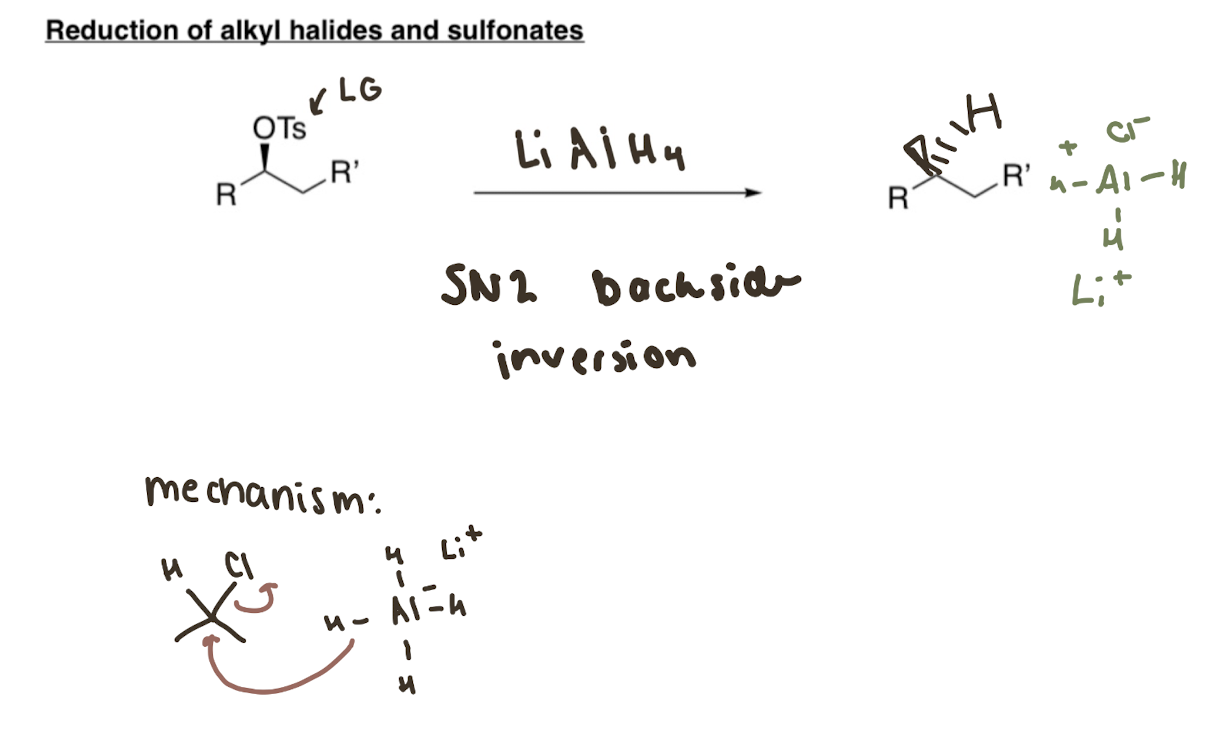
Hydride H⁻ acts as a nucleophile and performs an SN2 attack. less substituted carbon (because SN2).
LiAlH₄ mechanism type
Behaves like SN2
Hydride (H⁻) attacks carbon
Stereochemistry:
inversion of configuration
(backside attack)
Oxidation
Increase oxidation state
More bonds to heteroatoms
Fewer C–H bonds
Example:
alcohol → aldehyde → carboxylic acid
mCPBA
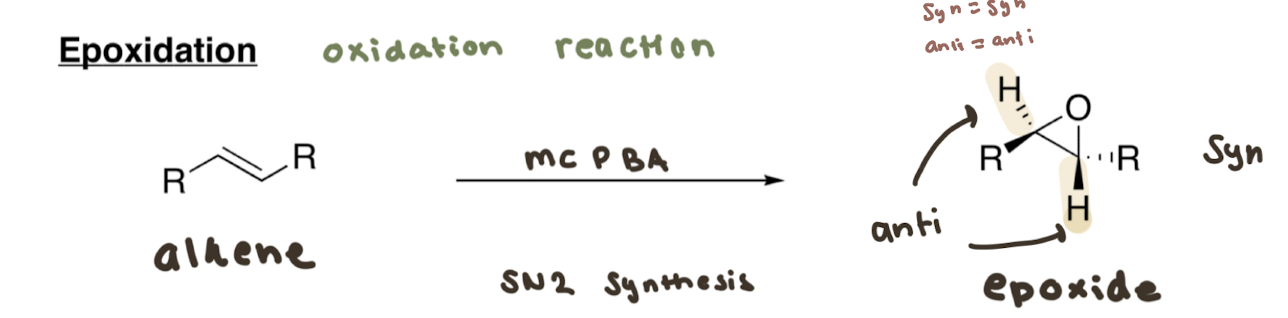
Reaction: Epoxidation
What it reacts with: Alkene
Outcome: Alkene → epoxide
Stereochemistry:
syn addition (O adds to the same face of the alkene)
cis alkene → cis epoxide
trans alkene → trans epoxide
Products: Epoxide + enantiomer (if new stereocenter forms)
O inserts across C=C to form a 3-membered epoxide ring.
Syn dihydroxylation
1. OsO4/ 2. NaHSO3/ H2O
alkene → syn diol
two OH groups add to same side
product:
cis diol
+e
Anti dihydroxylation
1. mCPBA / 2. KOH
alkene → anti diol
two OH groups add to opposite sides
product:
trans diol
+e
Ozonolysis
Ozonolysis ozone (o3) splits the double or triple bond into two molecules.
Reagents:
O₃
Zn / H₂O or (CH₃)₂S
Outcome:
alkene → two carbonyl compounds
(aldehydes or ketones)




reduction of alkene: hydrogenation


reduction of alkene: hydrogenation


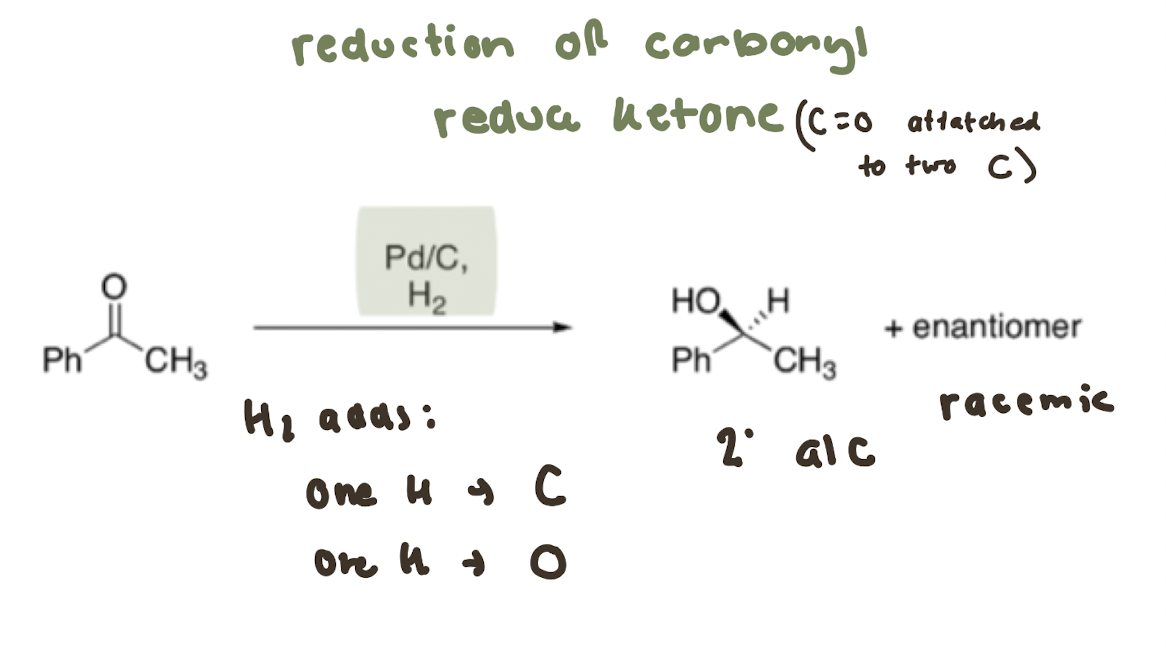
reduction of carbonyl. reduce aldehyde

reduction of carbonyl, reduce ketone
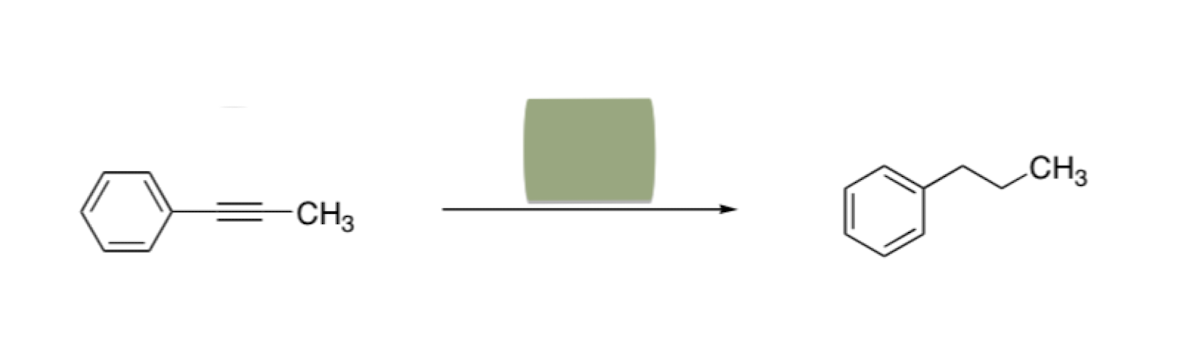
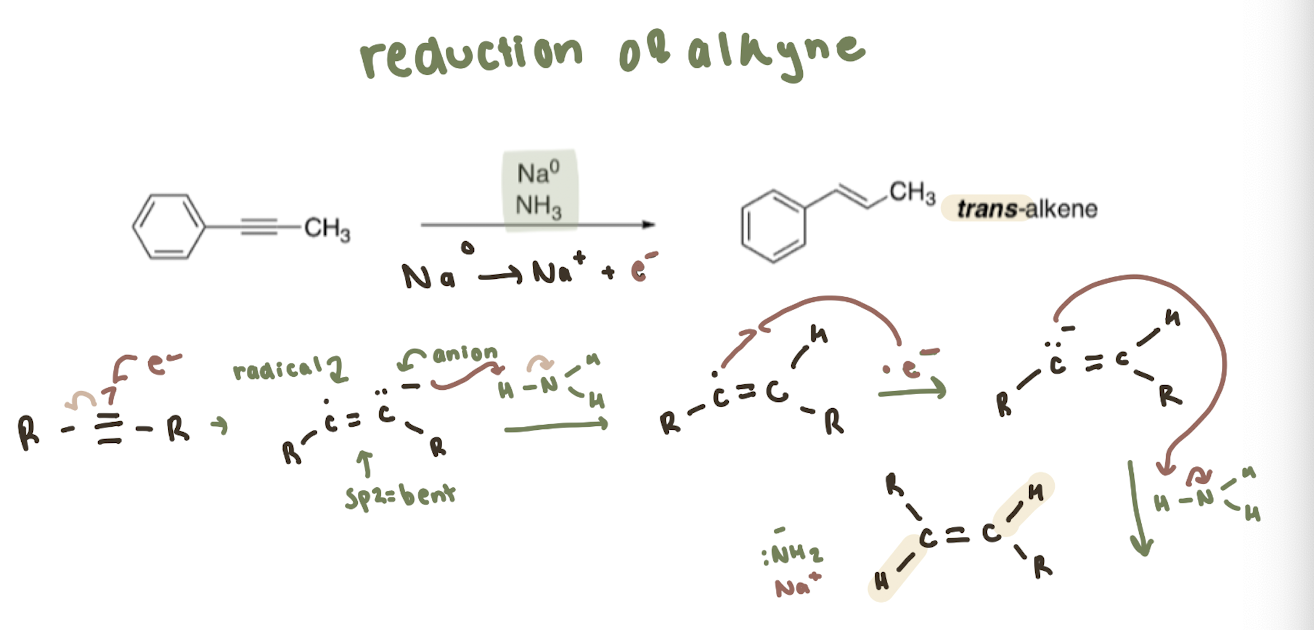
reduction of alkyne

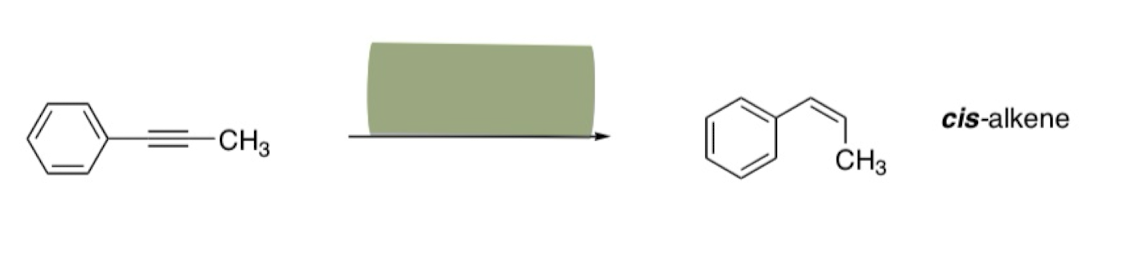
reduction of alkyne, cis alkene
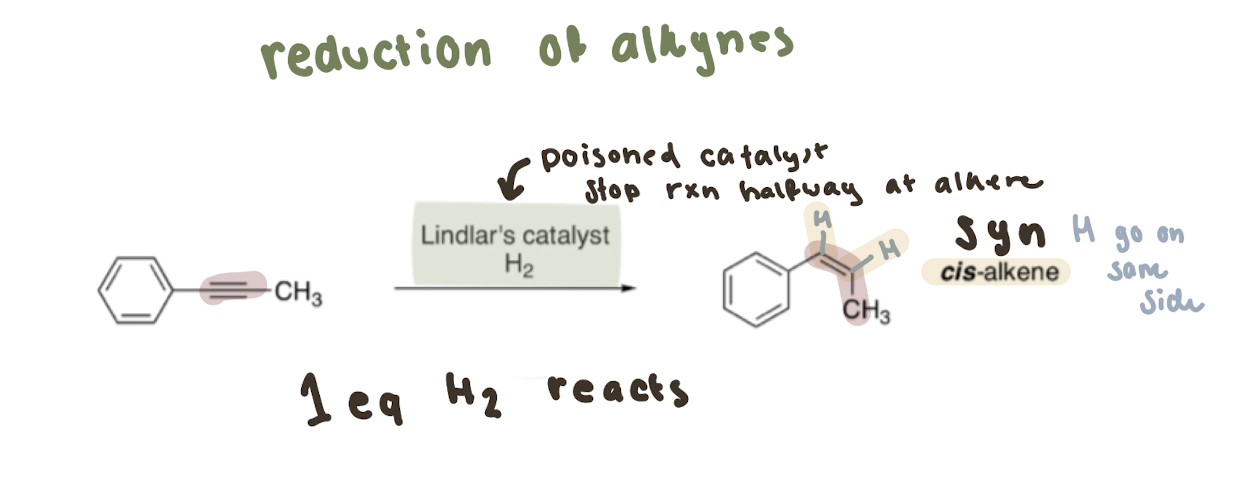

reduction of alkyne, trans alkene
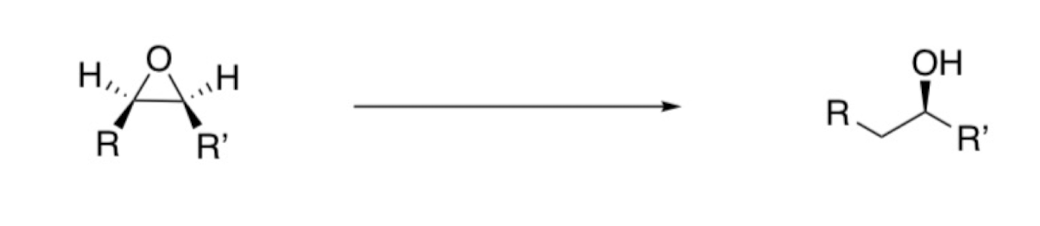
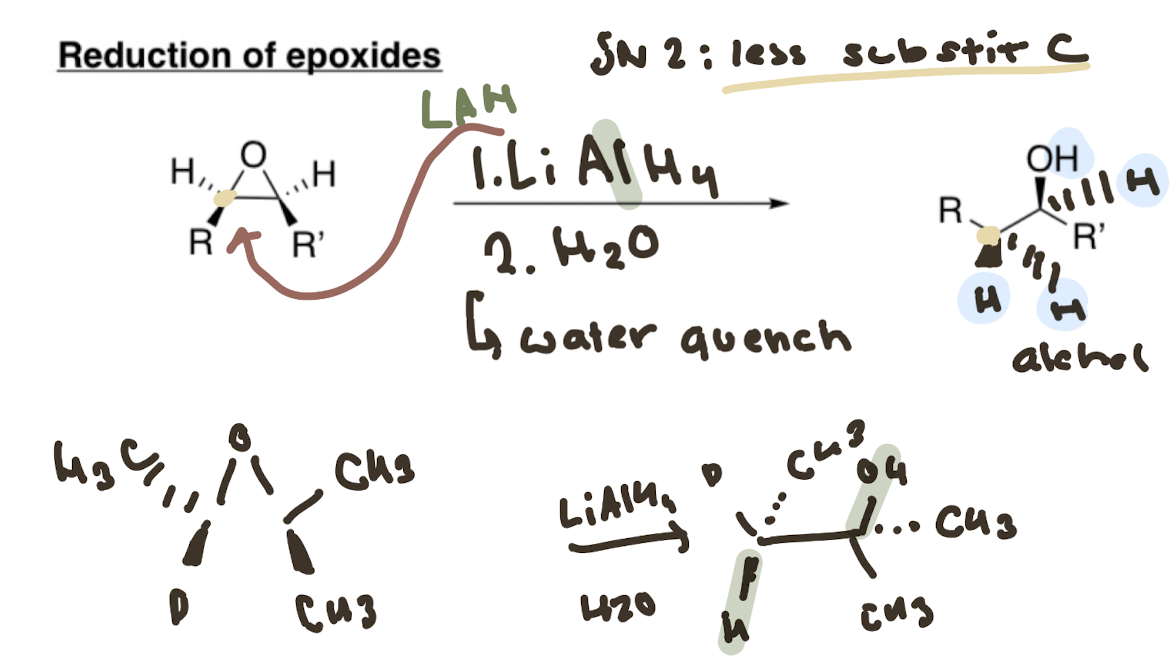
reduction of epoxide
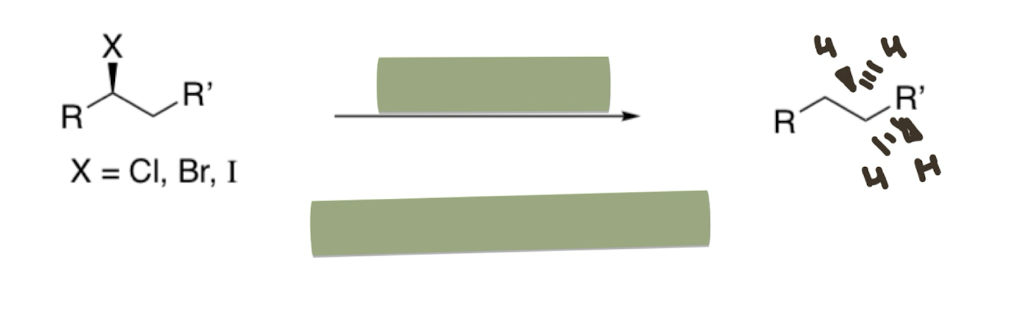
reduction of alkyl halides and sulfonates


reduction of alkyl halides and sulfonates

epoxidation


dihydroxylation

dihydroxylation

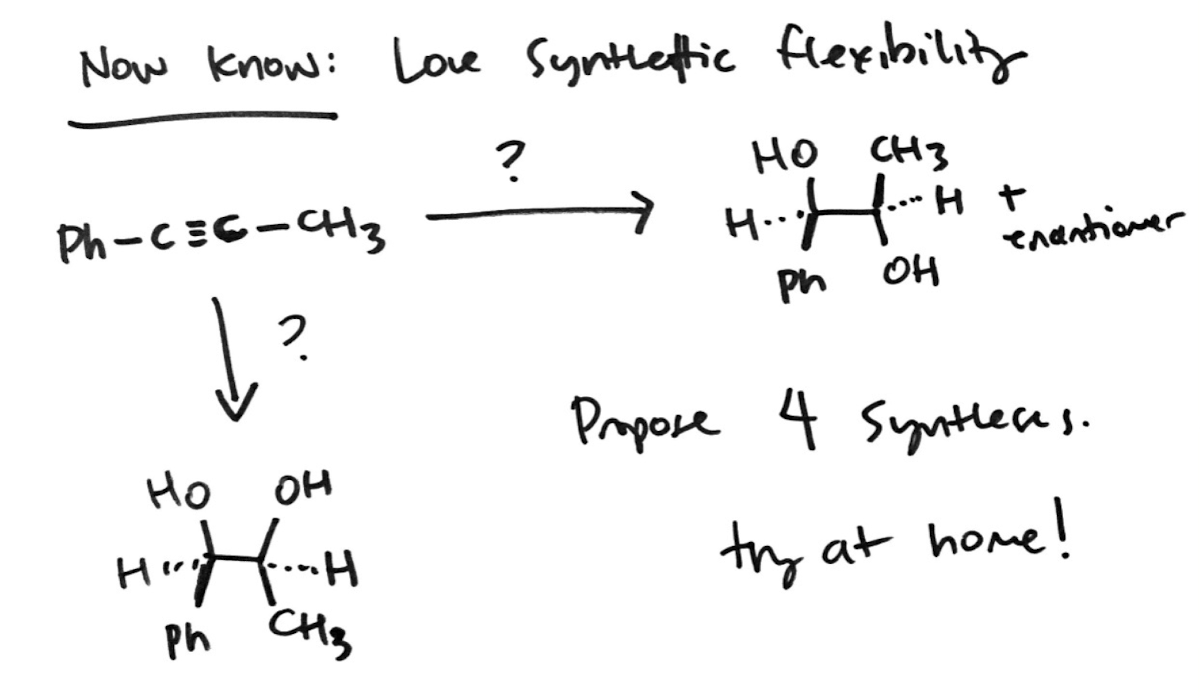

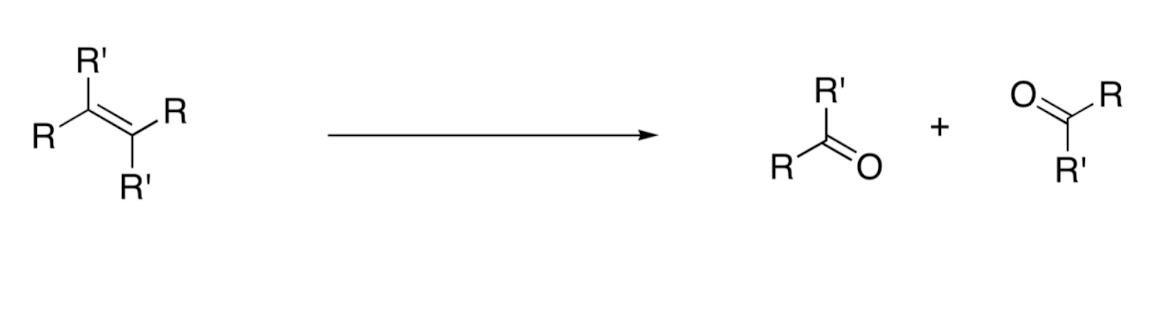
oxidative cleavage
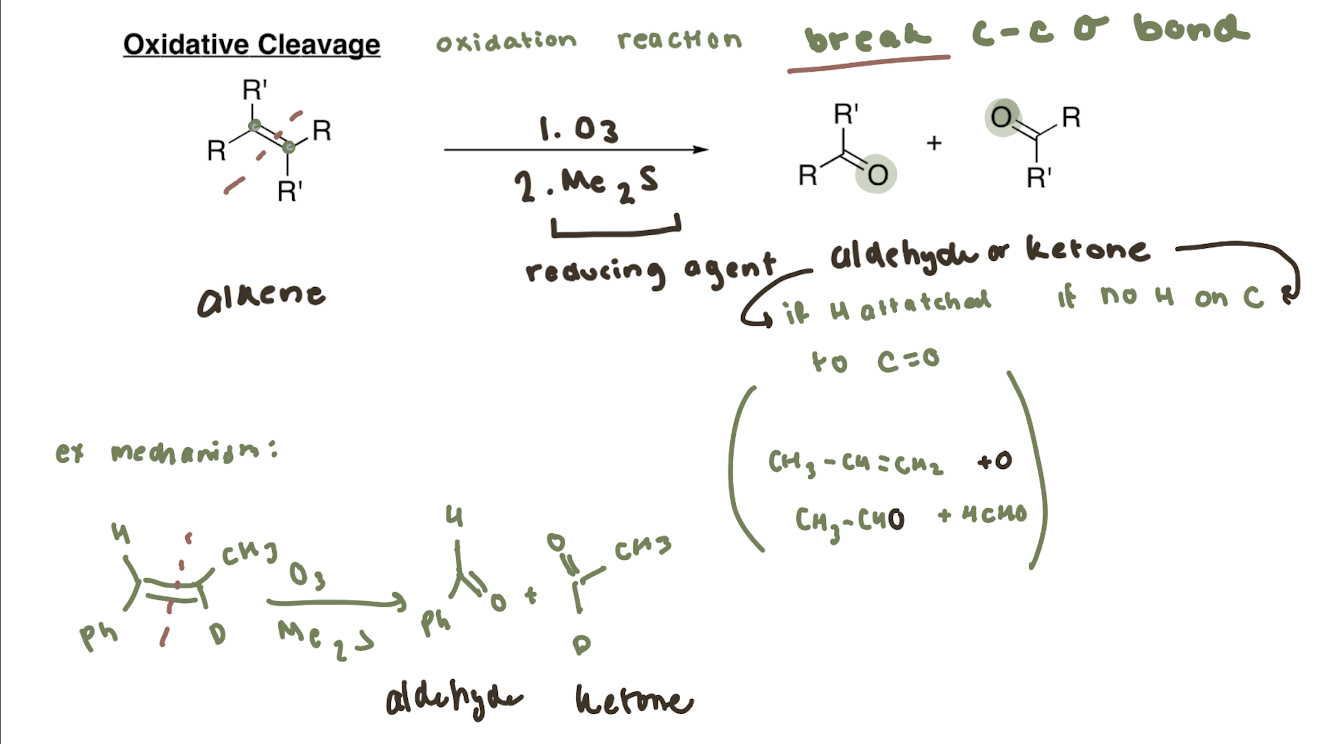

oxidative cleavage
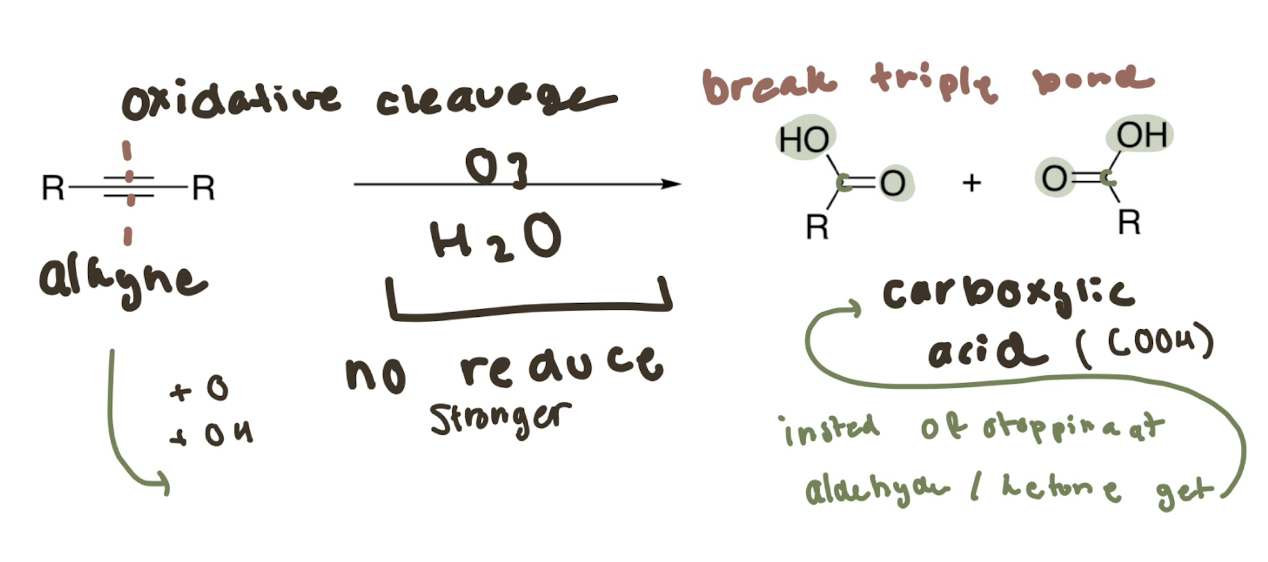


oxidation

oxidation
LiAlH₄, H₂O
epoxide ring opening
Mechanism: SN2 attack by hydride (H⁻)
Attack occurs on less substituted carbon
Outcome: epoxide → alcohol
ring opens
H adds to one carbon
OH forms after H₂O workup
OsO₄, NaHSO₃, H₂O
Reaction type: dihydroxylation
What it reacts with: alkene
Outcome: alkene → syn diol (two OH same face of the double bond)
Stereochemistry: syn addition
mCPBA, KOH
Reaction type: anti dihydroxylation
Steps:
epoxide formation
base opening
What it reacts with: alkene
Outcome: alkene → anti diol anti diol (two OH opposite sides)
Stereochemistry: anti addition
O₃, Me₂S
Reaction type: ozonolysis
What it reacts with: alkene
Outcome: alkene → 2 NEW aldehydes/ketones
Key: breaks C=C bondIf that alkene carbon had at least one H on it → it becomes an aldehyde
If that alkene carbon had only carbons attached (no H) → it becomes a ketone
O₃, H₂O
Reaction type: oxidative cleavage
What it reacts with: alkyne
Outcome: alkyne → carboxylic acid
carboxylic acid:containing –COOH , has two parts Carbonyl (C=O), Hydroxyl (–OH) attached to the same C
Key: breaks C≡C bond
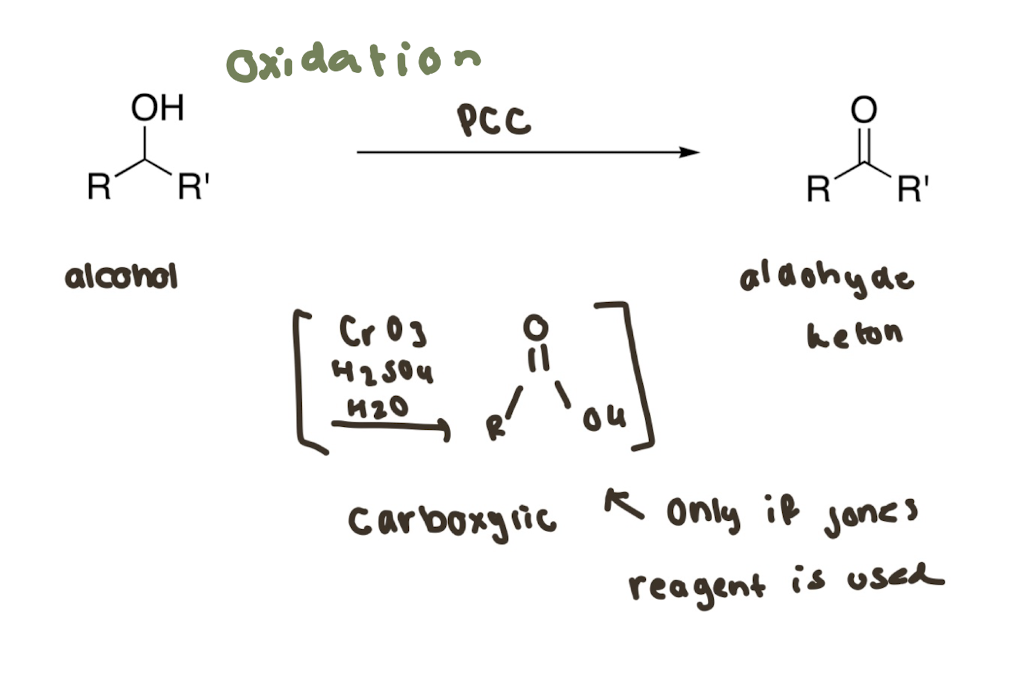
PCC
Reaction type: Partial oxidation
What it reacts/STARTS with:
1° alcohol
2° alcohol
Outcome:
1° alcohol → aldehyde
2° alcohol → ketone
Key: Stops at aldehyde (does NOT oxidize to carboxylic acid)
Jones reagent
CrO₃, H₂SO₄, H₂O
Reaction type: strong oxidation
What it reacts with:
1° alcohol
2° alcohol
Outcome:
1° alcohol → carboxylic acid
2° alcohol → ketone
Reduction reagents
Pd/C, H₂ → alkane
Lindlar → cis alkene
Na/NH₃ → trans alkene
LiAlH₄ → strong hydride reduction
Oxidation reagents
mCPBA → epoxide
OsO₄ → syn diol
mCPBA + KOH → anti diol
O₃ + Me₂S → aldehydes / ketones
O₃ + H₂O → carboxylic acids
PCC → aldehyde
Jones → carboxylic acid
Dihydroxylation
alkene → diol
adds two OH groups
two possible stereochemistries:
syn-diol
anti-diol
Pd/C, H₂ for Carbonyls
Carbonyl: C=O (carbon double bonded to oxygen)
Aldehyde: R–CHO, 1 C / 1 H
Ketone: R–CO–R′, 2 C
Outcome:
aldehyde → 1° alcohol
ketone → 2° alcohol
What happens:
gain C–H bond
C=O becomes C–OH
Stereochemistry:
syn addition
H₂SO₄
They dehydrate an alcohol to form an alkene.
ROH→alkene
Think: alcohol → elimination → double bond.
POCl₃ / pyridine
They dehydrate an alcohol to form an alkene.
ROH→alkene
Think: alcohol → elimination → double bond.
H₃PO₄
Strong acid for alcohol dehydration → alkene
For 2°/3° alcohols: usually E1 → carbocation forms, so check for rearrangement.
tsoh
Strong acid for alcohol dehydration → alkene