619 GLA 8/27 Back Pain
 Call Kai
 Learn
Learn Practice Test
 Spaced Repetition
 Match
Match Flashcards
 Knowt Play
1/89

There's no tags or description
Looks like no tags are added yet.
Name | Mastery | Learn | Test | Matching | Spaced | Call with Kai | Chat |
|---|
No analytics yet
Send a link to your students to track their progress
90 Terms
Clinical Definition of Low Back Pain
pain, muscle tension, or stiffness localized below the costal margin (ribs) and above the inferior gluteal folds
can be localized or diffuse
may be accompanied with radiation into the legs (must go past gluteal folds, indicates sciatica)
Sciatica
pain or discomfort associated with the sciatic nerve, localized at one or more lumbosacral nerve roots (L4-S2)
sciatica is not a diagnosis, it is a nerve pain symptom that indicates an underlying condition
Risk Factors Assocaited with Low Back Pain Complaints
smoking, obesity, chronic diseases, sleep disturbances, increased age, female, physically strenuous work, low educational attainment
workers comp insurance being involved in the patient’s low back pain case, job dissatisfaction, psychological factors such as somatization disorder/anxiety/depression
Ways to Characterize Back Pain
how long it has been happening
etiology
Time as a Way to Characterize Low Back Pain
acute low back pain lasts less than 6 weeks
subacute lasts between 6 and 12 weeks
chronic persists more than 12 weeks (3 months)
Prognosis of Acute Low Back Pain is Favorable
most pain decreases rapidly within one month, and slowly decreases for three months until it is gone REGARLESS of what treatment modality is applied (supporting osteopathic principle of self-healing)
once it reaches chronic it remains almost constant
Chronic Low Back Pain
10% of back pain patients will go on to have chronic low back pain
can be recurrent within 6 months
Etiology
character of back pain, the study of cases, origins, or reasons behind pain
commonly stems from muscle or ligament strains caused by heavy lifting, sudden movements, or poor posture
Difficulty in Diagnosis of Back Pain
since the spine is so complicated, the pathophysiology is complex and multifacetes
trying to pinpoint the specific anatomical structure that is causing pain is difficult
3 Non-Mechanical Causes of Low Back Pain
neoplasia
infection
inflammatory arthritis
visceral (viscerosomatic)
Neoplasia
non-mechanical cause of low back pain, uncontrolled abnormal growth of cells or tissues on the body, can be benign with normal growth or malignant with aggressive growth/invasion/metastasization
multiple myeloma, spinal tumors, metastatic lesions
Inflammatory Arthritis
non-mechanical cause of low back pain, includes rheumatoid arthritis, psoriatic arthritis, inflammatory bowel disease, adult-onset still’s disease, scleroderma, juvenile idiopathis arthritis, and systemic lupus erythematosusidiopathic
ankylosing spondylitis, sporatic spondylitis, reiter syndrome
Visceral (Viscerosomatic)
non-mechanical cause of low back pain, aortic aneurysm, prostatitis, endometriosis, pelvic inflammatory disease, pancreatitis, cholecystitis
Most Common Cause for Disability in the US
arthritic conditions
Red Flags of Low Back Pain (Things you Don’t Want to Miss)
possible fracture
possible tumor
possible infection
possible cauda equina syndrome
Possible Fracture
red flag of low back pain, unless the vertebrae are weak from disease it takes a high energy trauma to fracture your spine
pain is usually axial, non-radiating, severe and disabling
pain begins immediately following the trauma
High Energy Trauma
a type of injry caused by a force that transfers a large amount of kinetic energy to the body, resulting in extensive damage to the tissues
often have multiple injuries, and are at risk for spinal cord injuries
Types of High Energy Trauma
car accident (+45 mph), motorcycle accidents, fall from height greater than 10 ft, hard fall at high speed, gunshots, physical assault
Possible Tumor
red flag of low back pain, if patient currently has or has had a history of cancer, then you need to be suspicious that back pain could be from a tumor
Common “Red Flags” of Possible Tumor
unexplained weight loss, fevers associated with back pain, extreme night time pain, age older than 50, failure to improve after 6 weeks
Possible Infection
red flag of low back pain, suspected if the patients back pain is also associated with fever or chills or if the patient has a rash in the location of their back
ex: osteomyelitis, septic discitis, abscesses, shingles
2 Risk Factors for Possible Spinal Infection
history of IV drug use
patient is immunosupressed
Possible Cauda Equina Syndrome
red flag of low back pain, results from any lesion tha compresses the cauda equina nerve roots
Symtoms of Cauda Equina Syndrome
saddle sensory anesthesia (can’t feel around where a saddle is)
bladder and bowel dysfunction (erectile dysfunction in men)
lower back pain
unilateral or more typically bilateral sciatica
variable lower extremity motor and sensory loss in the legs
What two symptoms distingush cauda equina from radiculopathy?
saddle sensory anesthesia and bladder/bowel dysfunction (+ erectile dysfunction in men)
Cauda Equina Syndrom is a Surgical Emergency
early neurological neurologic,or orthopedic consultation are recommended
damage may be irreversible
bowel, bladder, and sexual functions are the least likely to return fully and take the longest time to show any sign of recovery
Initial Assessment o Patients with Acute Low Back Pain
detection or red-flags through a problem-focused history and physical exam
any patient with low back pain should have an initial focused neurological exam performed to make the most specific diagnosis
musculoskeletal exam and osteopathic structural exam to look for somatic dysfunction
Neurological Examination of Lower Extremities (should be done even in the absence of sciatica)
deep tendon reflexes of the lower extremity
motor strength testing of the lower extremity by nerve root
sensation testing of the lower extremity by dermatome
straight leg raising test (tests for radiculopathy)
Imaging in the First 4 Weeks of Low Back Symptoms
usually not helpful in the absence of red flags, waiting 4 weeks allows most patients to recover spontaneously and avoid unnecessary cost/radiation/procedures
one acception is progressive neurological deficits or worsening symptoms
2 Overall Categories of Low Back Pain
those without radiation into the legs
those that cause radiation into the legs
Types of Low Back Pain Without Radiation Into the Legs
lumbar strain (psosas syndrome)
lumbar strain (iliolumbar ligament syndrome)
facet arthritis
spondylosis
Types of Low Back Pain that Cause Radiation Into the Legs
lumbosacral radiculopathy
cauda equina syndrome
lumbar spinal stenosis
piriformis syndrome
trigger point in the gluteus minimus
Lumbar Strains
one of the most common causes of low back pain, muscle strains and tears from violent muscular contraction during an excessively forceful muscle stretch
can also be due to overuse (fatigue induced muscle disorder, delayed onset muscle soreness)
present as non-radiating low back pain
Strains
tears, either partial or complete, of the muscle-tendon unit
Key to Lumbar Strain Diagnosis
mechanism of injury
Muscles in Lumbar Strain
can be any posterior spinal muscle, but the ones that span several joints are most common
Muscle-Tendon Unit
tendon injuries are considered strains, but if the tendon completely ruptures then tendon rupture is the prefered term (not common in spine)
Lumbar Strain History
trauma history may be very elusive (patient doesn’t remember staring point), any abnormalities that alter our posture can cause muscle stress
onset is immediate or delayed by 24 hrs, pain is localized to lumbar or lumbosacral areas
pain is increased with activity and relieved by rest, any muscle contraction causes recreation of pain
Lumbar Strain Physcial Exam
palpation of muscle spasm or muscle hypertonicity indicates that those muscles are involved
remember to evaluate the hamstrings (they can cause overstretching of erector spinae muscles and slowly recover over time)
3 Degrees of Muscle Strains
1st degree (microscopic muscle tears)
2nd degree (macroscopic muscle fiber tears)
3rd degree (complete disruption with joint instability)
What degree of strain is more uncommon with low back pain?
3rd degree
Psoas Syndrome Image
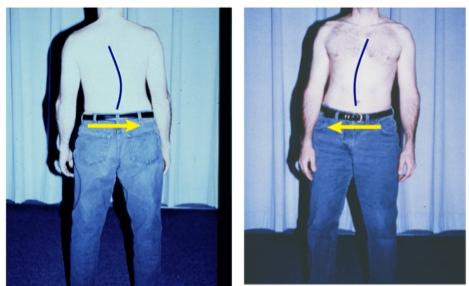
Psoas and Iliacus Muscles

Psoas Major Muscle
responsible for psoas syndrome, can flex the thigh or help flex the spine, so deep that you can only see it at the back of the abdominal wall
Psoas Syndrome
type of muscle strain that causes low back pain, caused by contraction of psoas major on one side, pelvis is usually shifted to opposite side of psoas spasm to help maintain balance (lumbar sidebending)
Presentation of Psoas Syndrome
abrupt low back pain
complaint of new, sudden onset scoliosis
inability strand up straight due to shortened psoas major
Key Somatic Dysfunction of Psoas Syndrome
L1 or L2 Type 2
Psoas Syndrome to Sciatica
can induce piriformis syndrome on the opposite side of the spasmed psoas
Sprains
ligamentous injuries caused by sudden violent contraction, sudden torsion, severe direct blows, or a foreceful straigntening from a crouched position
What ligaments are prone to injury?
most can sustain sprains, but the posterior ligaments are most prone to injury
Sprain vs Strain
can occur together, but sprain usually occurs immediately after injury, pain typically worsens with movement and improves with rest, plapating anatomy can help differentiate
sprain: intermittent pain
strain: constant ache
Iliolumbar Ligament Syndrome
easily identifiable sprain, occurs when the iliolumbar ligament is strained or stressed, pain in multifidus triangle
Iliolumbar Ligament Syndrome Pain Pattern
pain in multifidus triangle that often radiates around the iliac crest and possibly into the groin on the ipsilateral side
minica inguinal hernia, often mistaken as hip joint issue
Iliolumbar Ligament

Mutifidus Triangle
area extending from L4 lateral to both iliac crests an then down to the lower third of the sacrum
2 Causes of Lower Back Pain from Degenerative Changes from the Discs and Joint of the SPine
intervertebral discs
facets
Facet Causes of Low Back Pain
facet arthritis
spondylosis
spondylolisthesis
spondylolysis
Facet Arthritis
facet cause of low back pain, the presence of nonreceptive fibers in the various tissue structures of facet joints, as well as the existence of autonomic nerves there
hard to diagnose without invasive techniques
Spondylosis
facet cause of low back pain, a degenerative process affecting the vertebral disc and facet joints, gradually develops with age
Spondylolisthesis
facet cause of low back pain, a forward translation of a vertebral body with respect to the vertebral below
Spondylolysis
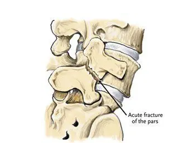
facet cause of low back pain, a unilateral or bilateral defect of the pars interarticularis that affects one or more of the vertebrae, can lead to spondylolisthesis
Spondylylosis Involving L5
Predispositions of Spinal Injury or Low Back Pain
preexisting structural deformities such as scoliosis, spondylolysis, or spinal fusions
Degenerative Changes as a Natural Part of Aging
also consequence of poor nutrition, smoking, atherosclerosis, job related activities, genetics
discs begin to degenerate in 20s
usually gradual onset of stiffness with or without pain
THIS is why x-ray is not useful
Degenerative Changes Key Elements
discogenic pain and facet pain without nerve root involvement typically is vague, diffuse, and distributed axially
activities that increase intradiscal pressure (lifting, valsalva maneuver) intensify symptoms
vibrational stress from driving also exacerbates discogenic pain
disc herniation may coexist
Lumbosacral Radiculopathy
back pain with radiation down the leg, results from nerve root impingement or inflammation that has progresses enough to cause neurologic symptoms in the ears that are supplied by the affected nerve roots
Radiculopathy
some causes of acute and chronic low back pain are associated with radiculopathy, but radiculopathy is not a cause of low back pain
Lumbosacral Radiopathy vs Radiculopathy
lumbosacral: pain, numbness, tingling, or weakness along the course of the nerve
radiculo: problem occurs at or near the root of the nerve as it is exiting the neural foramen
Herniated Lumbar Disc Image
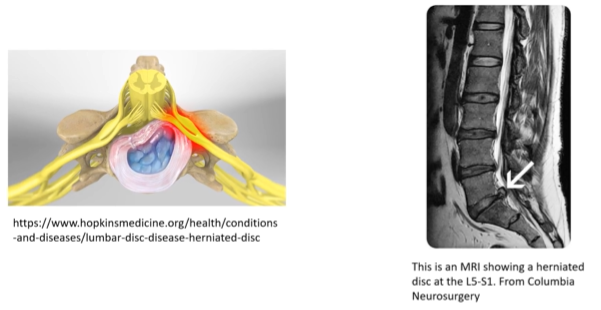
Lumbosacral Radiopathy Symptoms
onset is sudden with low back pain (back pain can get better when leg pain appears)
coughing, sneezing, and sitting can make it worse and radiate down the posterior or posterolateral leg to the foot
Most Common Causes of Lumbosacral Radiopathy
most common location for disc herniation is L4, L5, and S1
4 Causes of Nerve Root Impingement (Lumbosacral Radiopathy)
herniated disc
spinal stenosis
tumor
hematoma
Diagnosis L4 Nerve Root Impingement
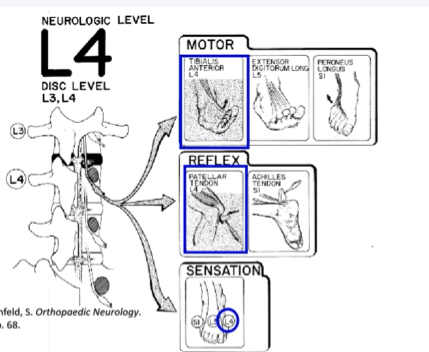
Diagnosis of L5 Nerve Root Impingement
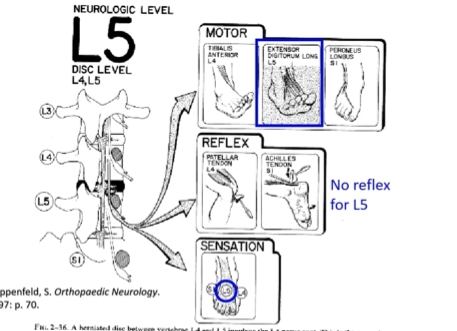
Diagnosis of Si Nerve Root Impingement
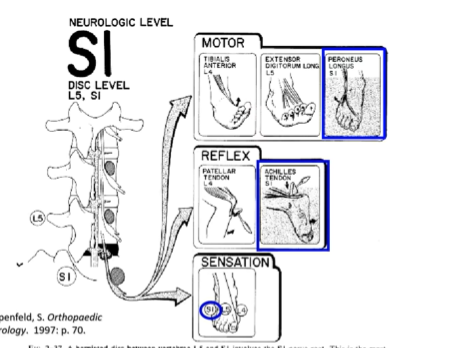
Combining History and Physical Exam to Diagnose Radiculopathy
abrupt onset of low back pain with radiation into one or both legs
coughing or sneezing makes it worse
no change in bladder or bowel habits
radiation of pain follows a dermatome
positive straight leg test (possible decreased sensation along affected dermatome, decreased deep tendon reflexes, weakness in the appropriate muscles)
Lumbar Spinal Stenosis
spinal canal narrowing with possible subsequent neural compression, narrowing can occur in the central canal or lateral recess (intervertebra foramen), can cause radiculopathy, radicular leg pain predominates back pain
Causes of Lumbar Spinal Stenosis
compression of intervertebral foramen
ligamentum flavum hypertrophy, facet hypertrophy of the cephelad vertebra, vertebral body osteophytosis, vertebral body compression fractures, herniated nucleus pulposus
Patient Presentation of Lumbar Spinal Stenosis
severe lower extremity pain, weakness, numbness in the legs while walking, with or without back pain (neurogenic claudication)
pain is worse with spinal extension and better with flexion (comfortable with pushing cart)
Normal Exam Findings of Lumar SPinal Stenosis
negative slrt, dtrs can be diminished bilaterally or normal, muscle strength intact, sensory loss may or may not be present
must differentiation between neural and neurogenic
Neurological Symptoms of Lumbar Spinal Stenosis
reproducted by extension an eased by flexion, use stoop test
diagnosis confirmed with MRI or CT
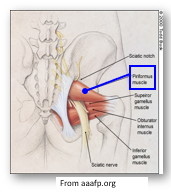
Piriformis Synrome
when the piriformis muscle compresses the sciatic nerve, affects peripheral nerve but not nerve roots
What Piriformis is and Isn’t
it is truly a problem with the sciatic nerve
it is not radiculopathy
Piriformis Muscle
external roation and abduction of hip
attaches to sacrum and anterior/posterior trochanter