Lymphoproliferative Disorders--Lymphomas
 Call Kai
 Learn
Learn Practice Test
 Spaced Repetition
 Match
Match Flashcards
 Knowt Play
1/34

There's no tags or description
Looks like no tags are added yet.
Name | Mastery | Learn | Test | Matching | Spaced | Call with Kai | Chat |
|---|
No analytics yet
Send a link to your students to track their progress
35 Terms
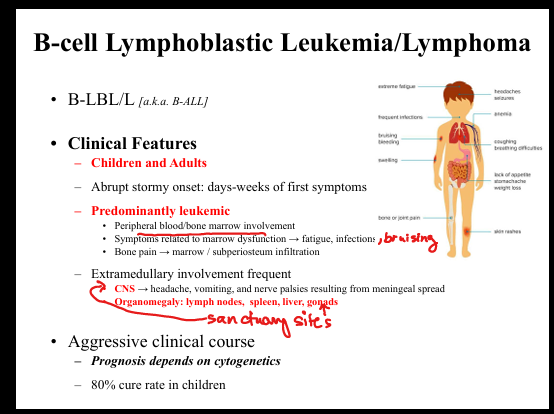
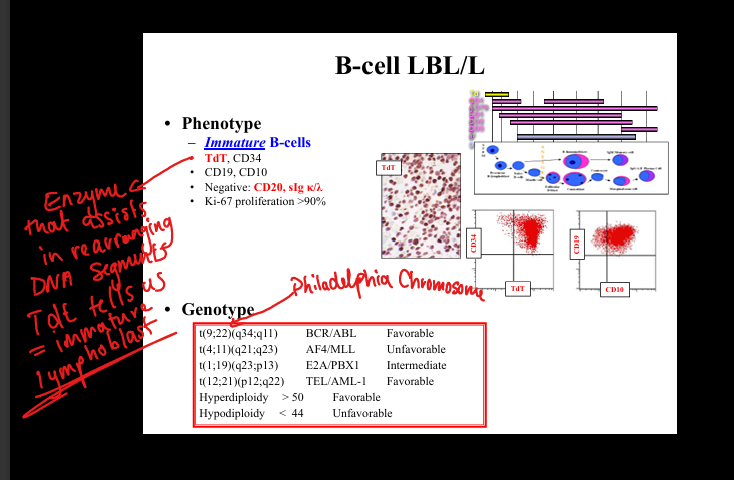
B‑lymphoblastic leukemia/lymphoma features
Abrupt onset, marrow failure, CNS involvement, TdT+, CD34+, CD19+, CD10+, high Ki‑67
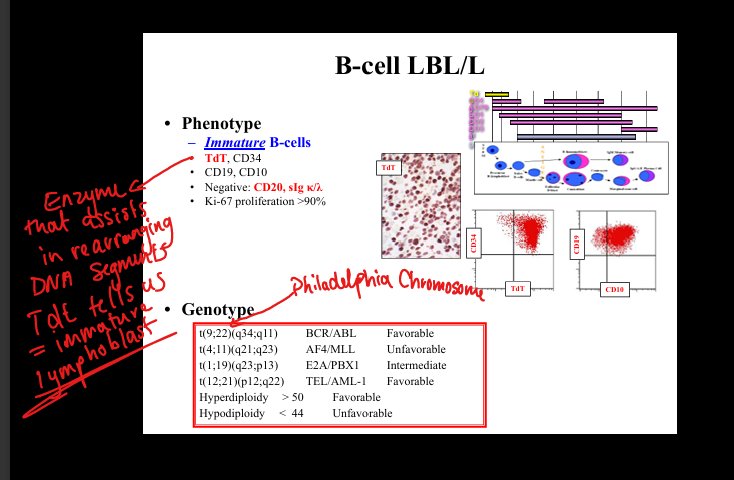
B‑Cell Lymphoblastic Leukemia/Lymphoma cytogenetics
t(9;22) Philadephia BRC ABL
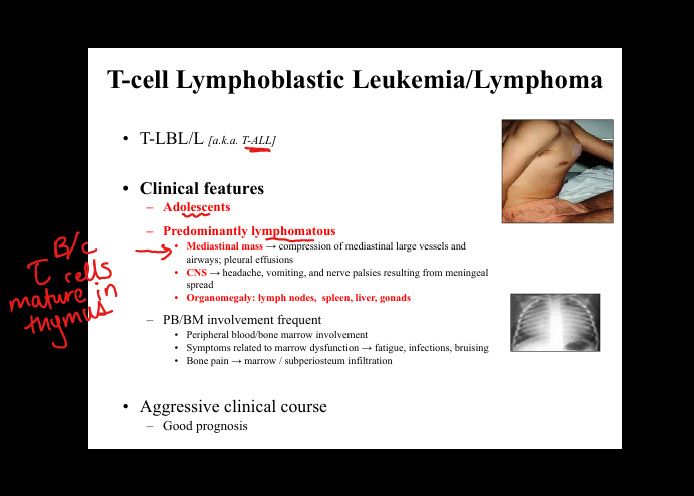
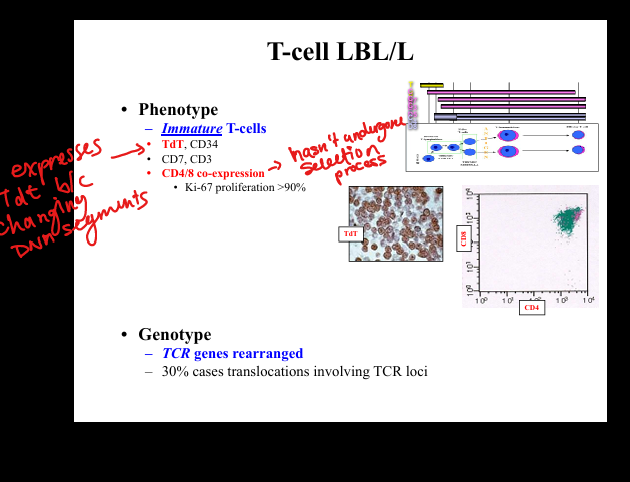
T‑lymphoblastic leukemia/lymphoma features
Adolescents, mediastinal mass, CNS, lymph nodes, TdT+, CD34+, CD3+, CD7+, CD4/CD8 co‑expression
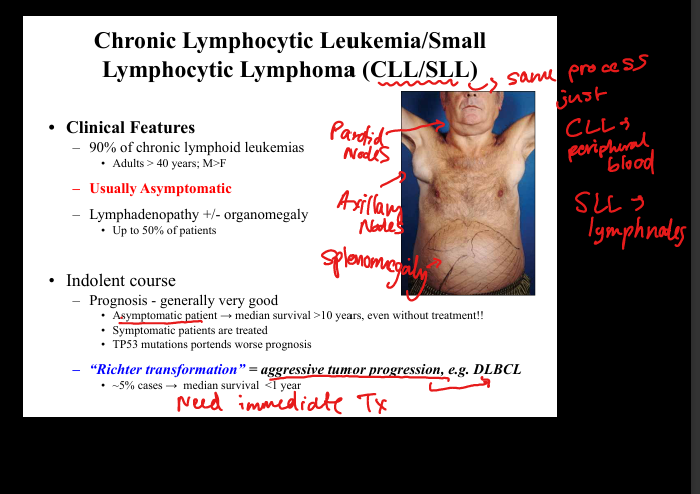
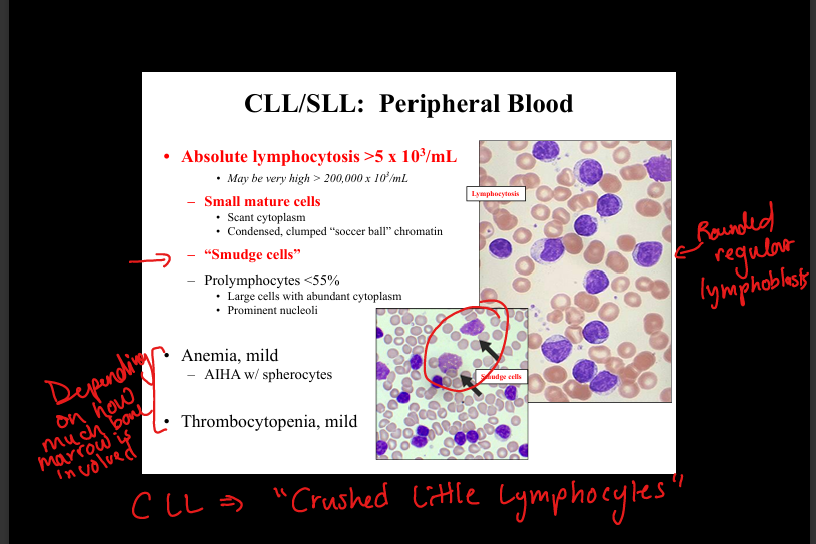
CLL/SLL clinical features
Older adults, usually asymptomatic, lymphocytosis, smudge cells(Crushed Little Lymphocytes), lymphadenopathy, indolent course, risk of Richter transformation(aggressive tumor progression)
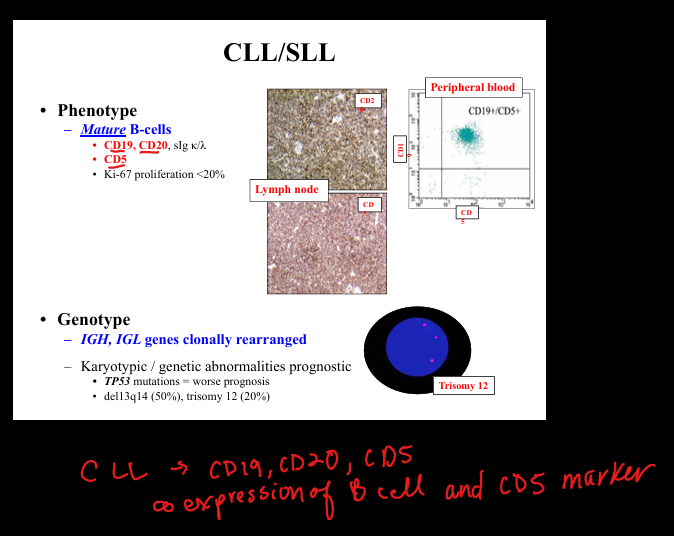
CLL/SLL phenotype
CD19+, CD20(dim), CD5+, surface Ig light chain restricted (Get crushed in 1920-5»depression esk)
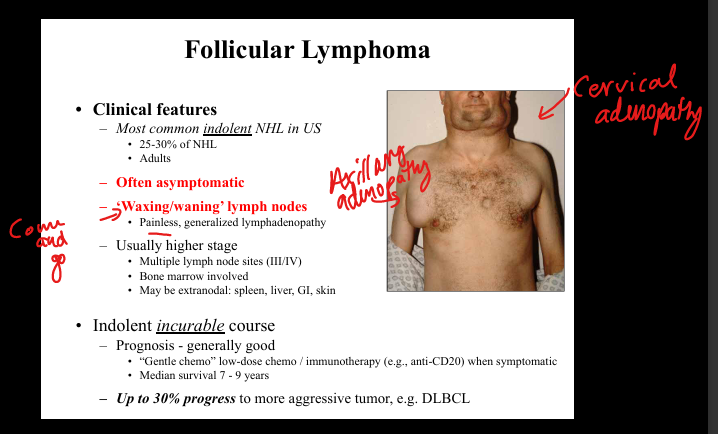
Follicular lymphoma clinical features
Indolent, often asymptomatic, waxing/waning lymphadenopathy, bone marrow involvement, adults
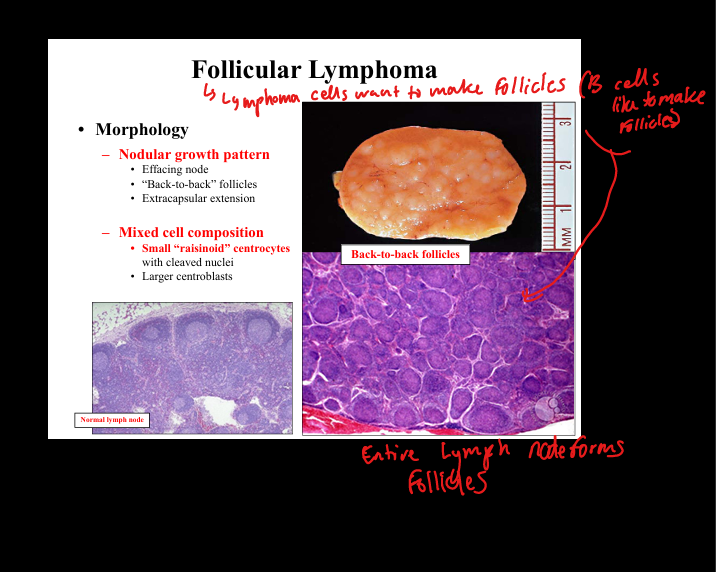
Follicular lymphoma morphology
Nodular “back‑to‑back” follicles, centrocytes + centroblasts, loss of mantle zone
Follicular lymphoma phenotype
CD19+, CD20+, CD10+, BCL2+, light chain restricted
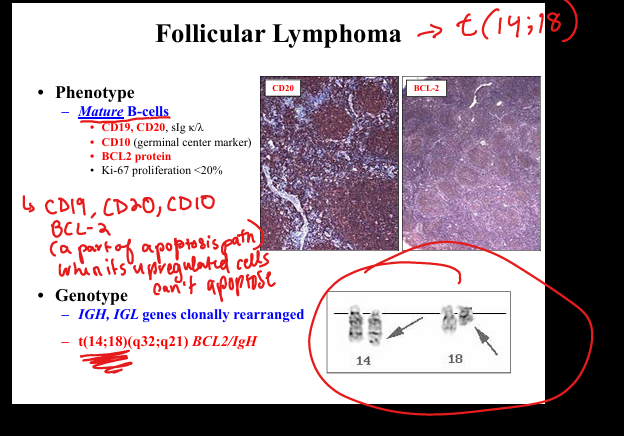
Follicular lymphoma genetics
t(14;18) (You get follicles at 14 and 18 pimples)
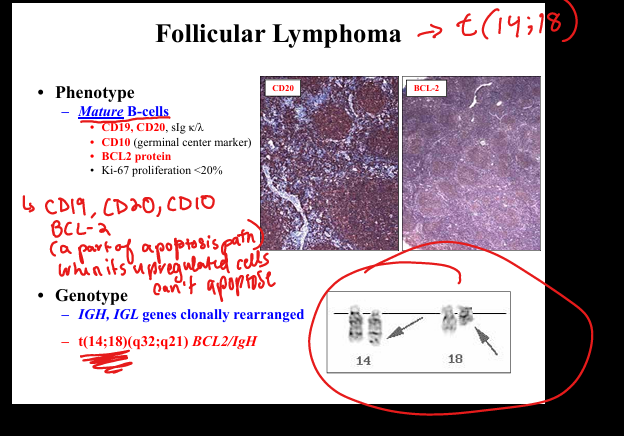
Diffuse large B‑cell lymphoma clinical features
Rapidly enlarging mass, nodal or extranodal, aggressive but curable
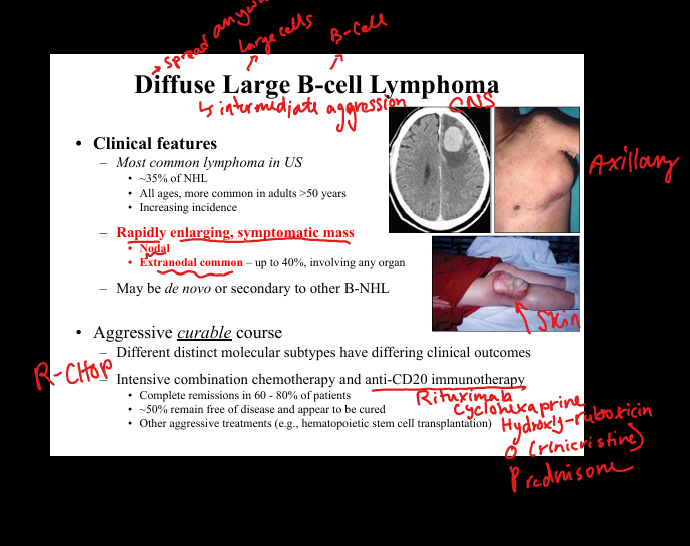
DLBCL morphology
Diffuse sheets of large pleomorphic cells, prominent nucleoli, high mitotic rate, necrosis
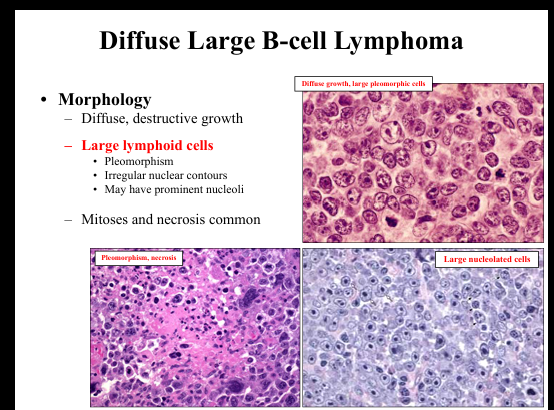
Diffuse Large B Cell Lymphoma phenotype
CD19+, CD20+, variable CD10/BCL6/MUM1, Ki‑67 50–100%
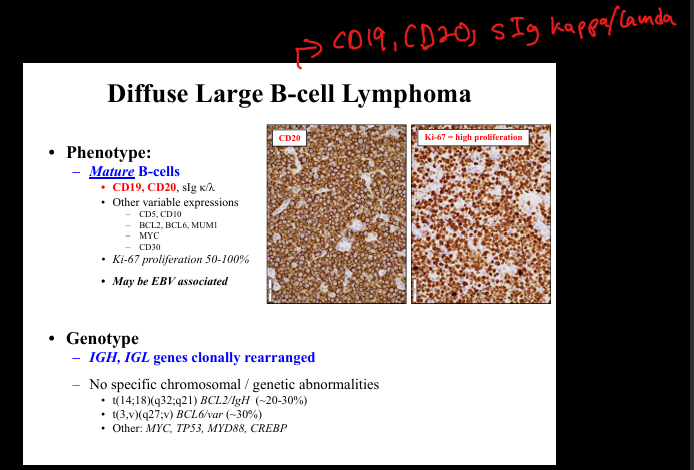
Anaplastic large cell lymphoma clinical features
T cell lymphoma, Children/young adults, rapidly enlarging nodal/extranodal masses, B‑symptoms(fever, weight loss, night sweats), aggressive but curable
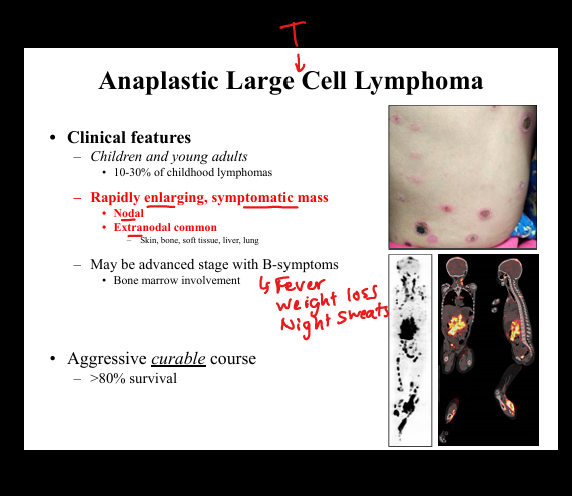
Anaplastic Large (T) Cell Lymphoma morphology
Large pleomorphic cells, “hallmark” horseshoe nuclei, wreath cells, sinusoidal pattern
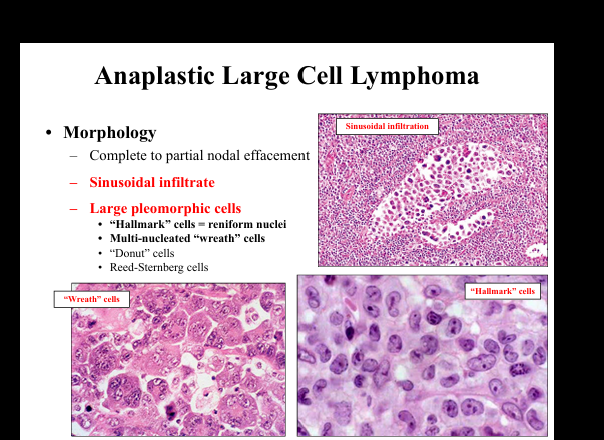
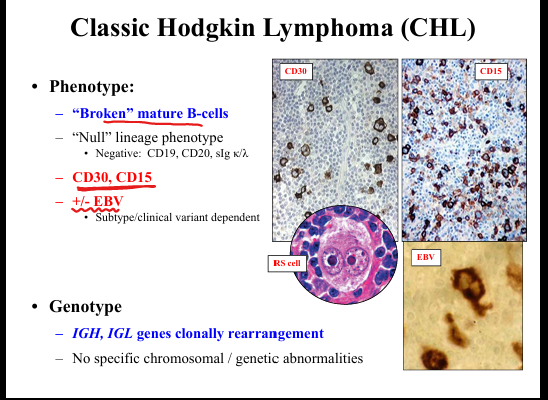
Anaplastic Large (T) Cell Lymphoma (ALCL) phenotype
CD30+, ALK+ or ALK–, variable CD3/CD4 bc T cell origin
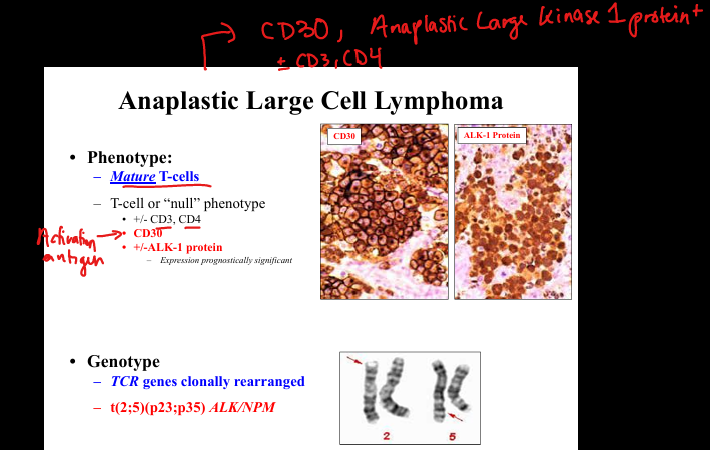
Anaplastic Large (T) Cell Lymphoma (ALCL) genetics
t(2,5)
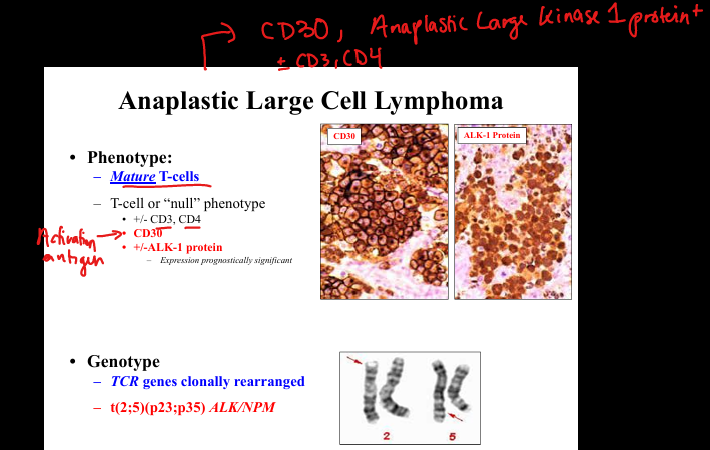
Classic Hodgkin lymphoma clinical features
Bimodal age distribution, mediastinal/cervical nodes, B Cell lymphoma, contiguous spread, B‑symptoms possible, may be EBV associated
HODGKIN=CHEST»munchkin in my chest
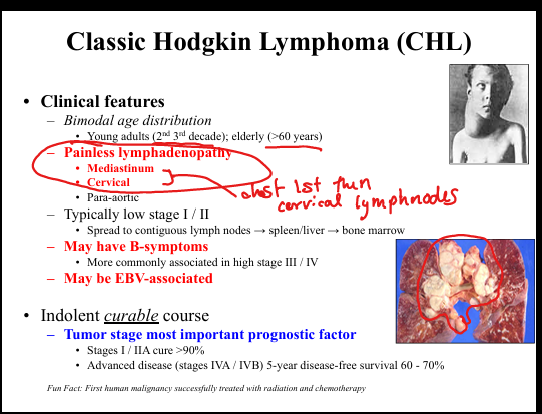
Classic Hodgkin lymphoma (CHL) morphology
Reed‑Sternberg cells in inflammatory background, fibrosis, lacunar/mummified variants
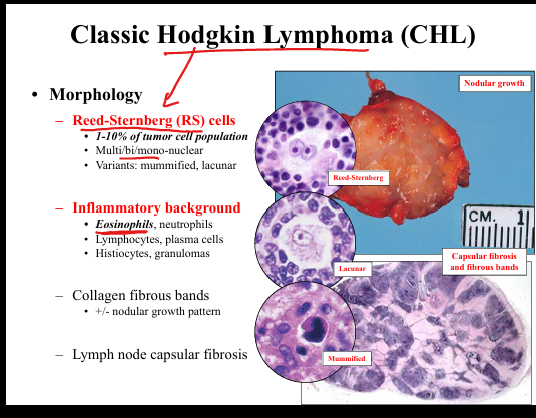
Classic Hodgkin lymphoma (CHL) phenotype
CD30+, CD15+, EBV variable, negative for CD19/CD20/surface Ig
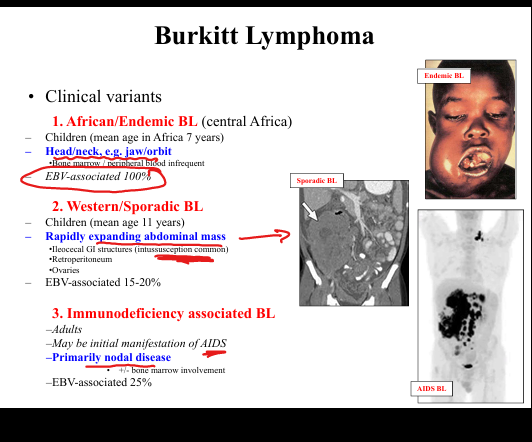
Burkitt lymphoma clinical variants
Endemic (jaw), sporadic (abdomen), immunodeficiency‑associated
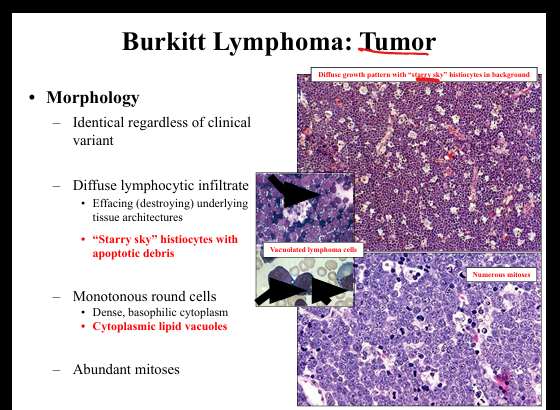
Burkitt lymphoma morphology
Diffuse sheets of medium cells, basophilic cytoplasm, lipid vacuoles, “starry sky” macrophages
Burkitt lymphoma phenotype
CD19+, CD20+, CD10+, Ki‑67 ≈100%, EBV variable
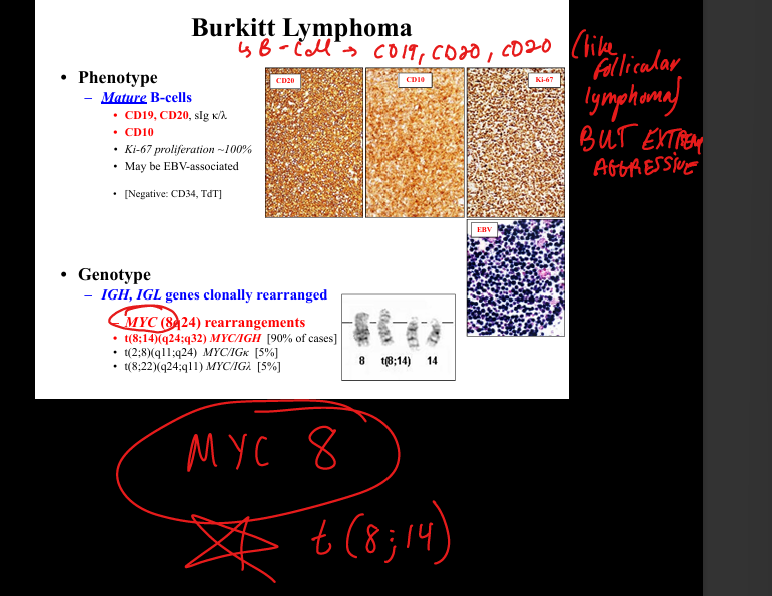
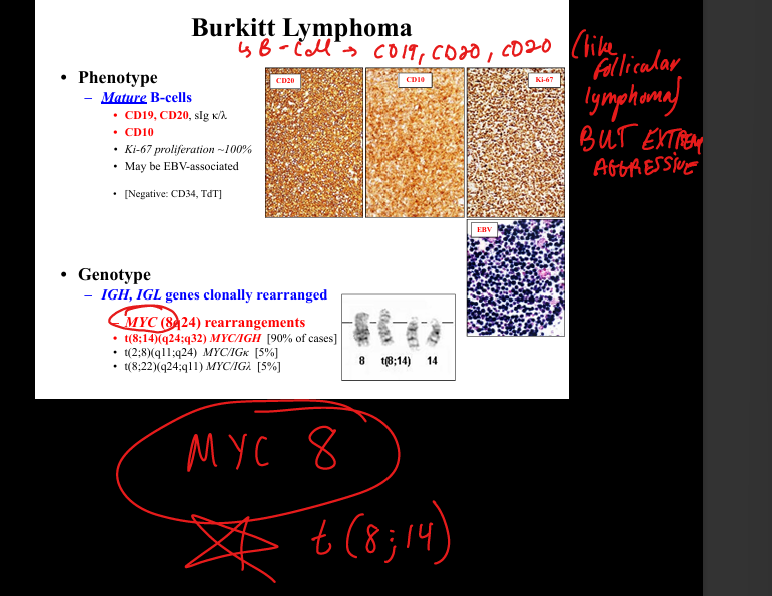
Burkitt lymphoma genetics!!
MYC rearrangements w/8: t(8;14)
Burkitt lymphoma treatment considerations
Requires urgent therapy, CNS prophylaxis, high tumor lysis risk
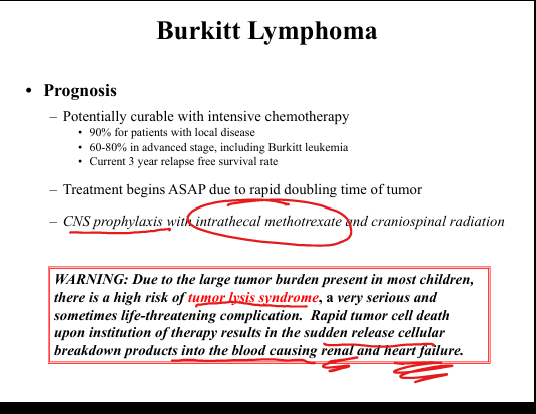
Plasma cell myeloma clinical features
Bone pain, lytic lesions, anemia, renal failure, hypercalcemia, monoclonal gammopathy (CRAB=hyperCalcemia, Renal failure, Anemia, Bone pain)
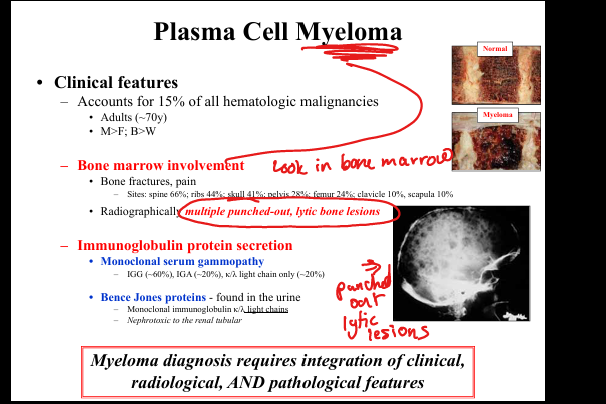
Myeloma peripheral smear
Rouleaux formation due to high serum proteins
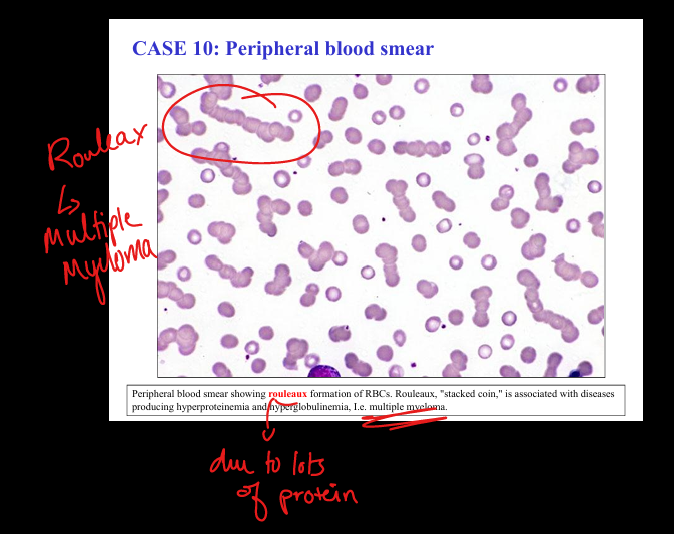
Multiple Myeloma bone marrow
Sheets of plasma cells, atypia, multinucleation, cytoplasmic inclusions
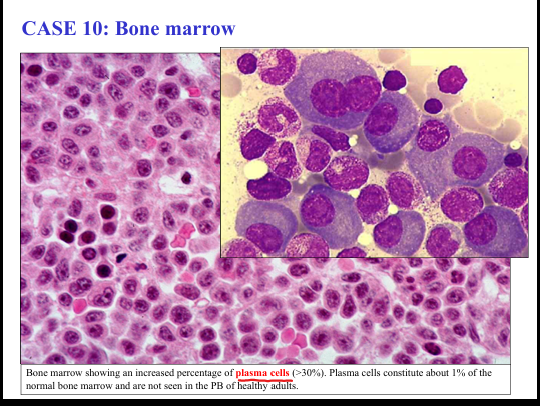
Myeloma phenotype
CD38+, CD138+, cytoplasmic Ig+, CD56+, negative CD19/CD20
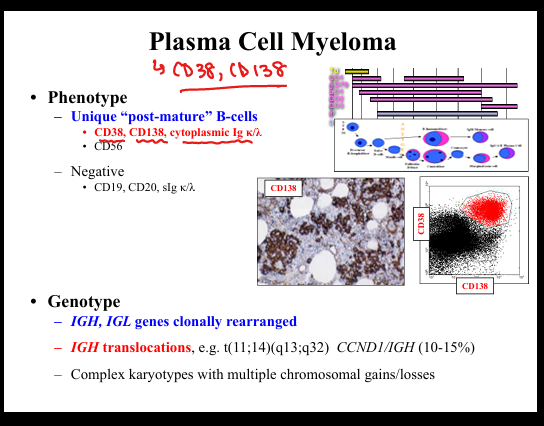
Hairy cell leukemia clinical features
Pancytopenia, massive splenomegaly, infections, no lymphadenopathy(leukemic process)
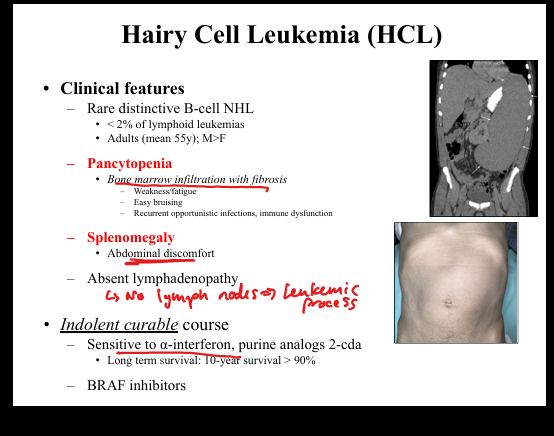
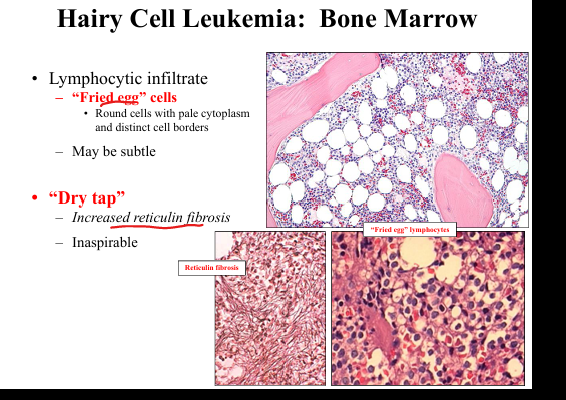
Hairy cell leukemia morphology
“Hairy” cytoplasmic projections, fried‑egg cells in spleen, dry tap marrow
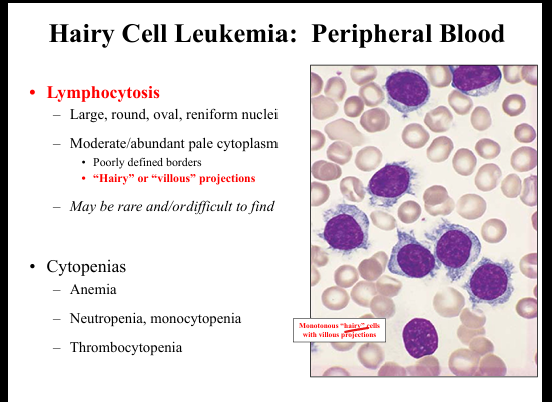
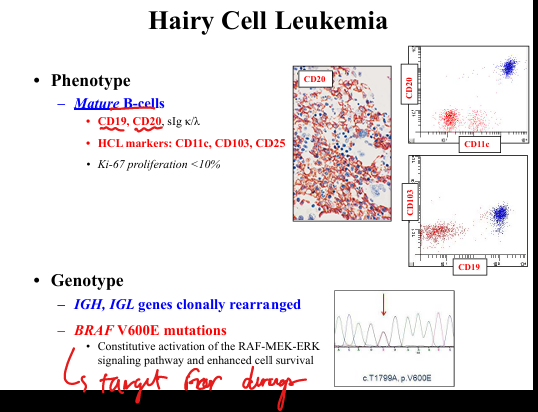
Hairy cell leukemia phenotype
CD19+, CD20+, CD11c+, CD25+, CD103+, annexin A1+
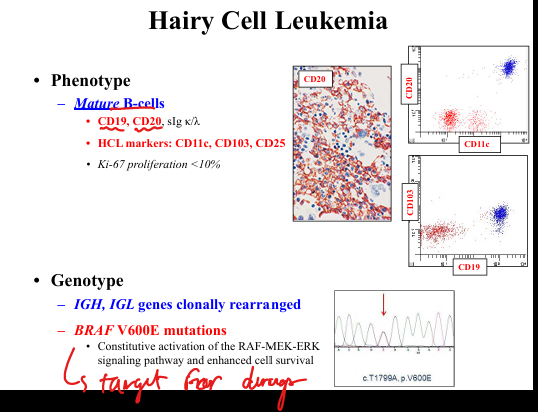
Hairy cell leukemia genetics
BRAF V600E mutation (Hairy BRAF)
Hodgkin Vs Non-Hodgkin
Hodgkin has Reed Sternberg cells, spreads from lymph node to lymph node
Non-hodgkin-skin, GI, bone marrow
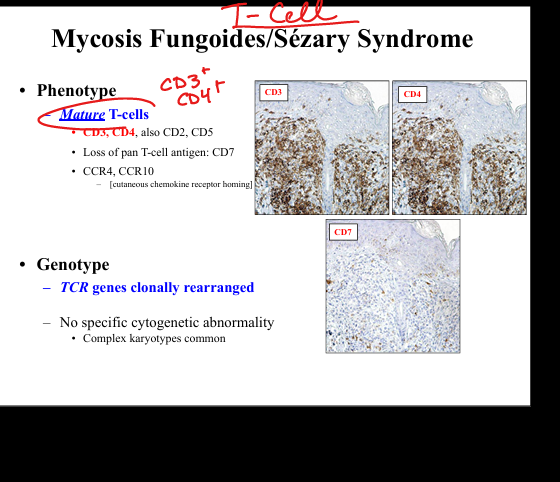
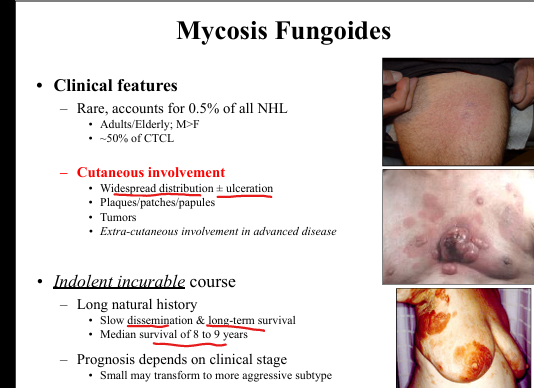
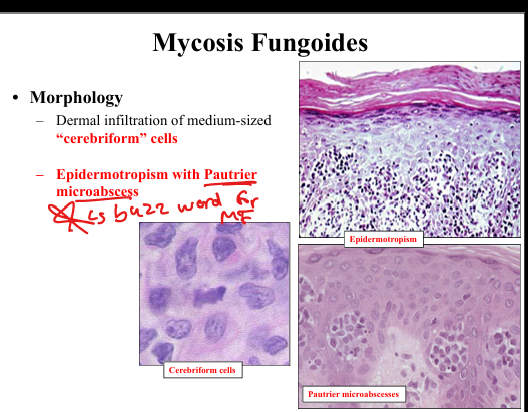
Mycosis Fungoides (cutaneous T cell Lymphoma)»Sezary Syndrome(Leukemic MF)
Cutaneous rash, Pautrier microabscesses, exfoliative erythroderma,
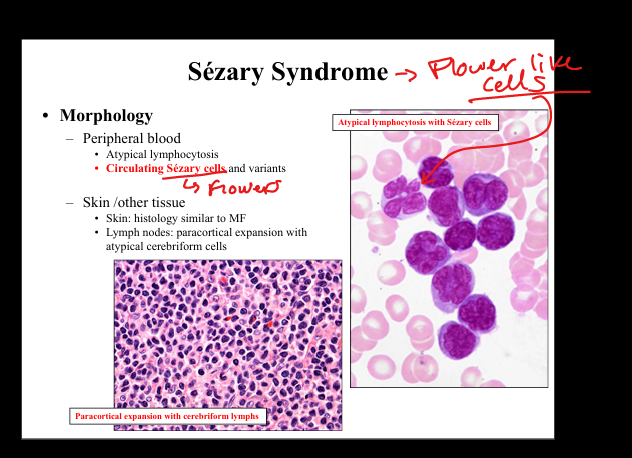
Sezary Syndrome cells
Flower like cells