Apparel Contruction final
 Studied by 12 people
 Call Kai
 Learn
Learn Practice Test
 Spaced Repetition
 Match
Match Flashcards
 Knowt Play
1/63

There's no tags or description
Looks like no tags are added yet.
Name | Mastery | Learn | Test | Matching | Spaced | Call with Kai |
|---|
No study sessions yet.
64 Terms
Shaping Manipulaitons
Things you sew into the garment so that it has shape
Darts (definition and construction)
A wedge shape tuck
the lines on the outside are called dart legs
The point where the dart legs meet is called the Apex
The distance between the dart legs is called the dart excess or intake
These shaping manipulations should release one inch away from the fullest part of your body
Dart
The apex should taper gradually since it will be pointing to the largest part of the body
If the apex does not taper gradually the garment will have a dimple
Darts give a _______ Shaping
subtle
we would use a dart
on a straight skirt where you want the transition from your waist to your hips to be really subtle.
if you have two darts on the front or back you want the center dart to be slightly longer than the side darts.
When we sew these dart we want the dart intake on vertical darts to be pressed to the _______
Center
When we sew these dart we want the dart intake on Horizontal darts to be pressed _______
Down
When we press in our dart we use the
Pressing ham
-the small part of the dart goes to the wide part of the ham because that is where the small part of the dart will sit on your actual body
There are two different darts and they are ______________ and _______ or ___________
One point dart- One Apex
Two point or fish eye dart- Has two apex (allows you to have a garment that comes in at the waist and releases at bust and hips)
One way to get a nice taper at the point you can
decrease the stitch length towards the bottom of the dart
as well as doing several knot applications rather than backstitching
Tucks
Slender folds in the fabric that are stitched down
they are usually more decorative
often times the fold is on the outside of the garment
tucks are going to be a quarter of an inch or less
really narrow tucks are called
pin tuck (the amount of the fold is the diameter of a pin, they are less than a quarter of inch wide)
Release tuck
The stitching is stopped.These tucks are sewn a few inches and then stopped so that upper part where the tucks are made will take in the fabric.
Pleats
They are typically 5/8 of inch to two inches
give us a controlled fullness
Knife pleats
Folds all go to the same direction
They lay side by side
All of the folds are the same width ( they are very uniform
Box Pleat
Folds are going away from each other
Inverted Pleat
The folds are coming towards each-other.
pleats
you can hard press the pleats to keep the pleats straight
you can also stitched down the pleats
you can do nothing for a more flowy look
combination
kick pleat
allows you to walk
has to overlap
Accordion pleat
3 dimensional
goes into fabrics that are thermoplastic
they are usually heat set, or rolled into place
like an athleisure skirt
gathers
small soft folds in the fabric
puffy kind of shaping
we typically run two rows of gathering stitches because it makes our gathers more even
Zipper
A slide closure meaning that it locks the teeth together
the fabric on the zipper is called the zipper tape
the rigid things in the center are called the teeth
if you have a long strand of just the teeth and and tape is called a coil
the thing we hold on to is called the pull
slider is the thing that the pull is attached to
the metal things on the top is called the top stop
most of the teeth now are synthetic meaning they are more comfortable to wear as well as more flexible
metal teeth are much stronger and they
Conventional zipper
meaning you see the zipper teeth
metal zippers
must be sewn into to strong fabrics that can handle them
thread stop
use to to lengthen and shorten zipper with synthetic teeth
we make the zipper shorter at the bottom
seperating zipper
used when we want the whole garment to open. Does not have a bottom stop. It instead has a box and pin. The pin has to engage both exactly to go all the way up.
four ways to apply conventional zippers
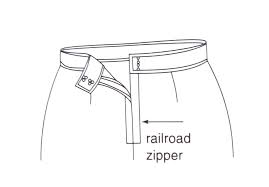
-railroad/slot/center zipper
Railroad/slot/centered zipper
we are pulling the two edges of the opening together and they are meeting over the the top of the zipper. There is stitching on both sides of the zipper. Doesn’t really close too good since its meeting on top of the zipper teeth.
A very fast and easy way to put in the zipper
Lapped zipper
Has one edge that is lapping over the whole zipper. Since it is wider than the centered zipper application it is able to hide the zipper better.
pick stitch
more formal stitching done on to stitch the lapped zipper application
Fly zipper application
only ever done on a bottom garment in the center front. You have different pieces making that curve on the zipper application
Seen on jeans.
Exposed zipper application
you can see the zipper teeth
invisible zipper
you can not see the teeth. made so that the coil is folded so the teeth are tucked underneath. the only thing you see on the outside of the garment is the pull
half foot
used on industrial machines. traditional zipper foot
you want to stitch
zipper → needle → foot
invisible zipper foot
has deep grooves were the teeth go which help us stitch the crease to the fabric so we don’t see the zipper.
well constructed zippers
if it is lapped, centered, fly, or an invisible zipper, the zipper should be concealed the entire length of the zipper
the top stitching should be parallel to the teeth
the placket should be the same length as your zipper
everything should lay smooth and flat
natural waistline
the smallest part of your body where you ben.
High waisted
anything that is above your natural waistline
empire waistline
waistline right below your bust
low waisted
below your natural waist line
waistline seam
found if you join a bodice and a bottom
waistline
you only want a half inch to an inch in ease at your waistline in fabric that does not stretch
since it needs to sit closer to your body the waistline needs support
peter sham or gross-grain sham
peter sham is woven more intricately than the gross-grain ribbon meaning it is a little bit more expensive
the Regis in the ribbon are made since it is an uneven weave and allows the ribbon to conform. The strong yarns in the ribbon provide stableness.
twill tape
uses fine yarns, strong but very thin. sew in with the seam.
stay tape
waistbands
band that sits on top of the rest of the garment
-has a separate closure than the garment
straight waistband
a straight piece of fabric that is going around the body
the stronger yarns are going around the body in the waistband
may be in two parts found in garment you are looking to alter
contoured waIistband
shaped waistband
more than one piece
there will be a seam either on the center back or on the side seam
faced waistline
we don’t want the band on top so we just face the edge for a cleaner look
always an applied facing
Yoke
helps us get smaller at the waistline and bigger at the hips
can be found where there is a waistband on top of it
or it can be found alone on the top pf the waistband
the yoke is different than the contoured waistband because the yoke is part of the body of the garment so the zipper would go all the way up through the yoke
specialized interfacing
used only on straight wasitbands
belt loops
also called carriers
waistlines
cant be are same waist measurement (for fabric that doesn’t stretch) or you wont be able to move it will have ease just less ease than other places on your body
your waistline should look comfortable on you
apparel Quality
The degree to which a garment meets expectations or the degree of excellence and conformance to requirements
ISO defines it as: the totality of characteristics of an entity that bear on its ability to satisfy stated or implied needs
ISO
the international organization of standards
Quality features
it is composed of performance features and quality features
Performance features
What the garment does for the consumer.
Aesthetic performance
Appearance
Design
Trend/Classic
Functional Performance
Utility
Durability
Fit
Comfort
Physical features
What the garment is
Tangible form and composition
Fabric
What increases the cost of the goods
fabric and labor
Construction quality
The effort and time the maker was willing to expend in the pursuit of less bulk, thinner and more flexibility, and in making sure that transition from thick to thin are as imperceptible as possible.
cut
stitching
seams
shaping manipulations
hem closures
plackets/openings
support fabrics
Fit
intangible difference between the costumer purchasing your goods and not.
Characteristics of Good Fit
Ample ease for movement
No excess folds/wrinkles
Grain
shaping manipulations
seams
well fitter garments
you have to have enough ease to fit
excess fold or wrinkles- shows where there is too much fabric or not enough fabric
the lengthwise grain runs up and down the body
the cross grain runs parallel to the floor at the chest, waist, and hips
in a well fitted garment darts release one inch away from your garment
major seams should be where they are supposed to be