Diversity of Fishes
 Call Kai
 Learn
Learn Practice Test
 Spaced Repetition
 Match
Match Flashcards
 Knowt Play
1/34

Earn XP
Description and Tags
BIO 365
Name | Mastery | Learn | Test | Matching | Spaced | Call with Kai | Chat |
|---|
No analytics yet
Send a link to your students to track their progress
35 Terms
Fusiform body type
typical fish shape; cigar-shaped; circular or elliptical in cross section
Lateral Compression body shape
made for slow speeds, highly maneuverable
vertical depression body shape
flattened; slow-moving bottom dwellers
elongated body shape
long-body, round in cross section (snake-like)
superclass agnatha
jawless fishes, 2 orders, Myxiniformes and petromyzontiformes
Order Myxiniformes
Hagfishes - no eyes, teeth only on tounge, 6 tentacles around mouth, no paired fins, 2 nostrils
Order Petromyzontiformes
lampreys - well-developed eyes, teeth in oral disc, no tentacles around mouth, one nostril, no paired fins
Superclass Gnathostomata
Contains all jawed-fishes
Class chondrichthyes
cartilaginous fishes - contains orders squaliformes, rajiformes, and chimaeriformes
Order Squaliformes
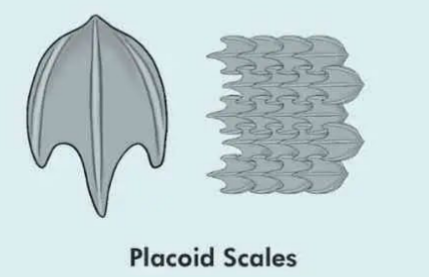
dogfish sharks (126 species); fusiform body, have placoid scales, heterocercal tail, gill slits behind head
Order Rajiformes
Skates (300 species); flattened body, pectoral fin expanded for swimming, mouth and gill slits on ventral surface, holes behind eyes permit flow of water current
Order Chimaeriformes
ratfish (30 species); tapering tail, skin essentially naked, poisionous dorsal spine
Superclass Euteleostomi
Bony vertebrates
Class Sarcopterygii
Fleshy-finned fishes, contains order lepidosireniformes
Order Lepidosireniformes
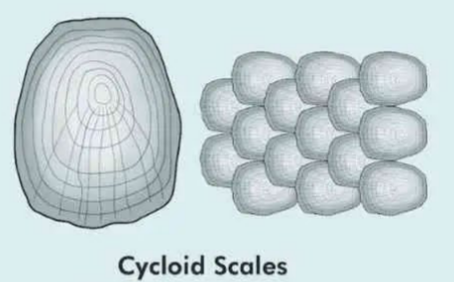
Lungfishes (5 species); elongated body, large cycloid scales, fins are long and filamentous
Class Actinopterygii
Ray-finned fishes (most species rich class of vertebrates)
Subclass Chondrostei
Primitive bony fishes - Order Acipenseriformes
Order Acipenseriformes
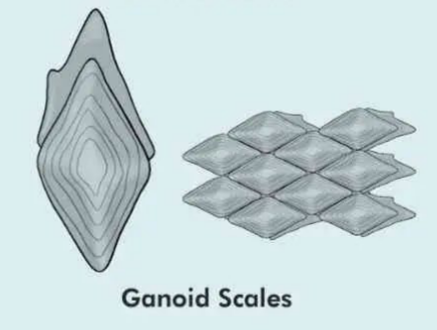
sturgeons and paddlefish (27 species); sturgeon - snout elongate, mouth and barbels undersurface of snout, have scutes, heterocercal tail. paddlefish - elongated body, paddle-shaped snout, heterocercal tail, few patches of ganoid scales
Subclass Neopterygii
Modern Bony fishes
Order Lepisosteiformes
gars (7 species); cylindrical body with heavy ganoid scales, jaws are elongated and well-toothed, short dorsal fin set far back, abbreviate heterocercal tail
Order Amiiformes
bowfin (1 living species); elongate dorsal fin, bony gular plate in throat region, depressed mouth, thin cycloid-like scales
Order Anguilliformes
eels (730 species); snake-like body, scales are absent or rudimentary, no pelvic fins, sometimes lacking pectoral fins
Order Clupeiformes
herrings and anchovies (350+ species); body expremely compressed, many have keeled abdominal scutes, scales cycloid, soft fin-rays only
Order Salmoniformes
salmon and trout (150 species); body is slender or fusiform, commonly have adipose fin, all fin-rays soft, scales are cycloid
Order Cypriniformes
minnow, suckers, and shiners (3000+ species); cycloid scales, soft fin-rays, no adipose fin
Order Siluriformes
catfishes (2800 species); body either naked or covered in bony plates, elongate barbels frequently present, spines in dorsal and pectoral fins, adipose fin usually present
Order Gadiformes
cods and hakes (550 species); body typically fusiform, 2 or 3 dorsal fins, 2 anal fins
Order Scorpaeniformes
scorpionfishes (1400 species); body often depressed, head with large mouth and often spines, dorsal/anal/pelvic fins with spines
Order Perciformes
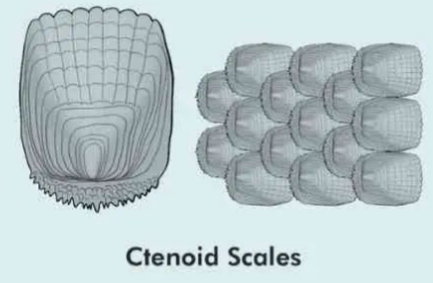
perch-like fishes (10,000+ species); structurally very diverse but most with fin spines, thoracic pelvic fins, and ctenoid scales
Order Pleuronectiformes
flatfishes and flounders (650 species); juveniles are bilaterally symmetrical but become flattened during maturation, eyes migrate to one side of head
Order Tetraodontiformes
triggerfishes, trunkfishes, and puffers (350 species); body often stout or angular, fused teeth, mouth forms a beak
Cycloid Scales
Ctenoid Scales
Ganoid Scales
Placoid Scales