chapter 10C – interdependency
 Call Kai
 Learn
Learn Practice Test
 Spaced Repetition
 Match
Match Flashcards
 Knowt Play
1/44

There's no tags or description
Looks like no tags are added yet.
Name | Mastery | Learn | Test | Matching | Spaced | Call with Kai | Chat |
|---|
No analytics yet
Send a link to your students to track their progress
45 Terms
biodiversity
variety of all organisms on Earth
species diversity
variety of different organisms living in a particular habitat / region
genetic diversity
variety of genes / alleles present in a species
increase genetic diversity = increase individuals survive and reproduce when environmental conditions change
ecosystem diversity
variety of physical environments in which organisms live in and interact
changes over time
ecology
study of how organisms interact with one another and their environment
study of ecosystems
ecological organisation
cells, organisms, populations, communities, ecosystem
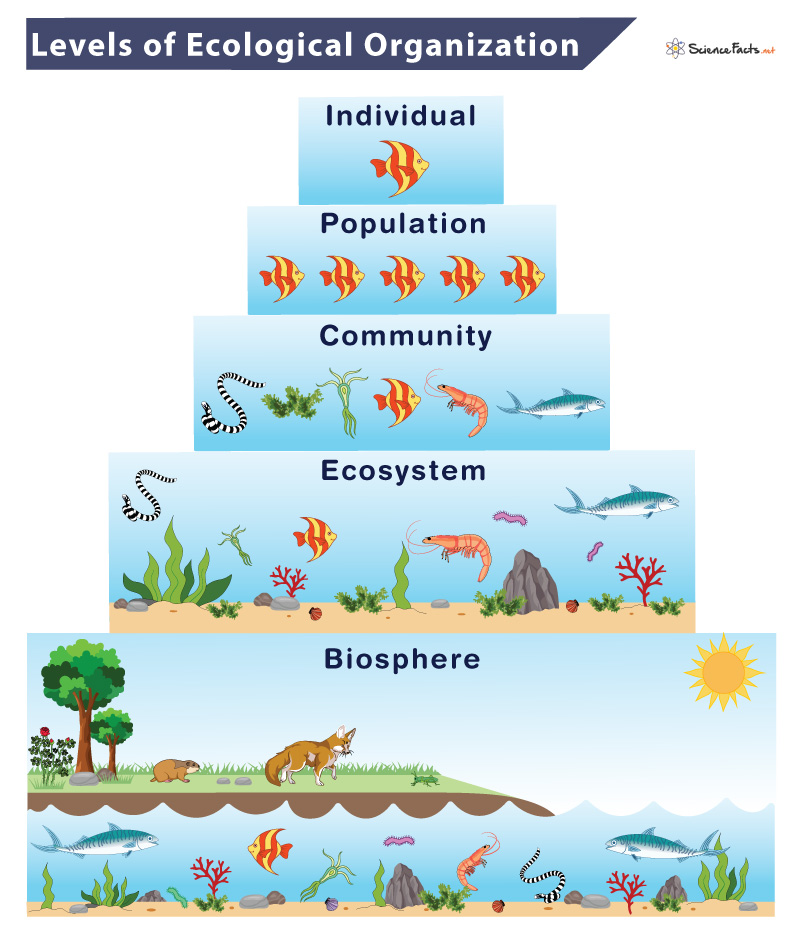
ecosystems
multiple communities interacting with one another and their environment
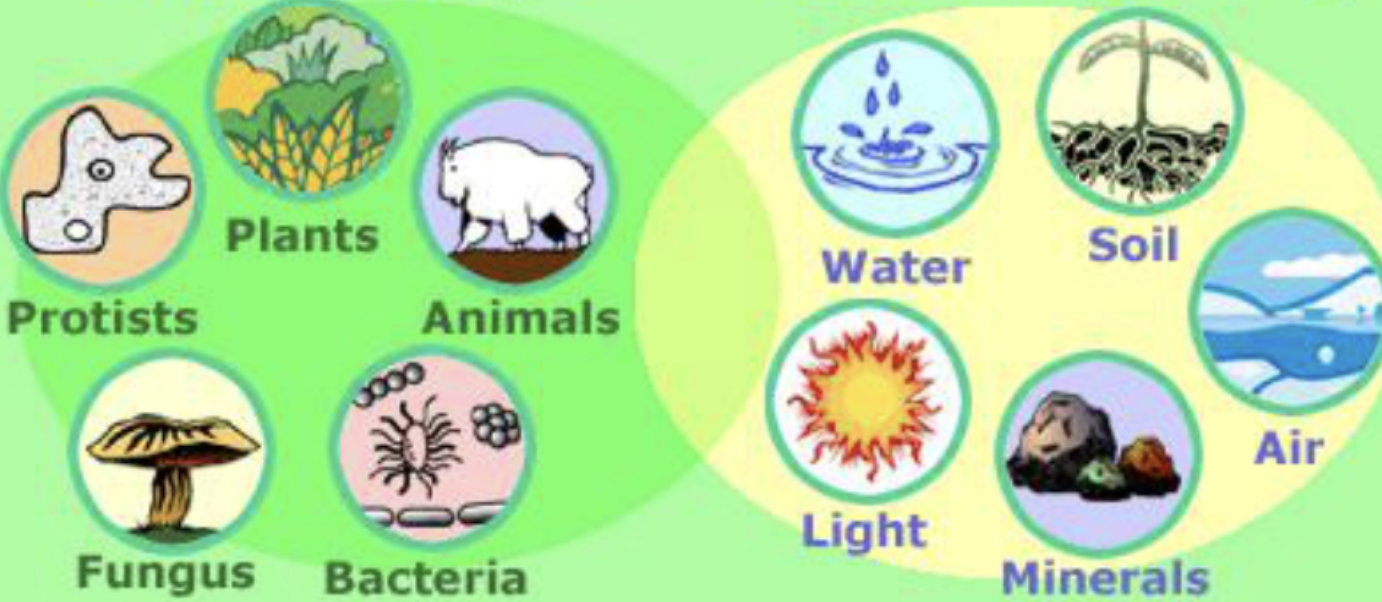
ecosystems are made up of:
abiotic + biotic factors
contain many individual and population interactions
flow of energy / nutrients between organisms
biotic factors
property of the environment relating to organisms
examples of biotic factors
predator-prey relationship
symbiosis
competition
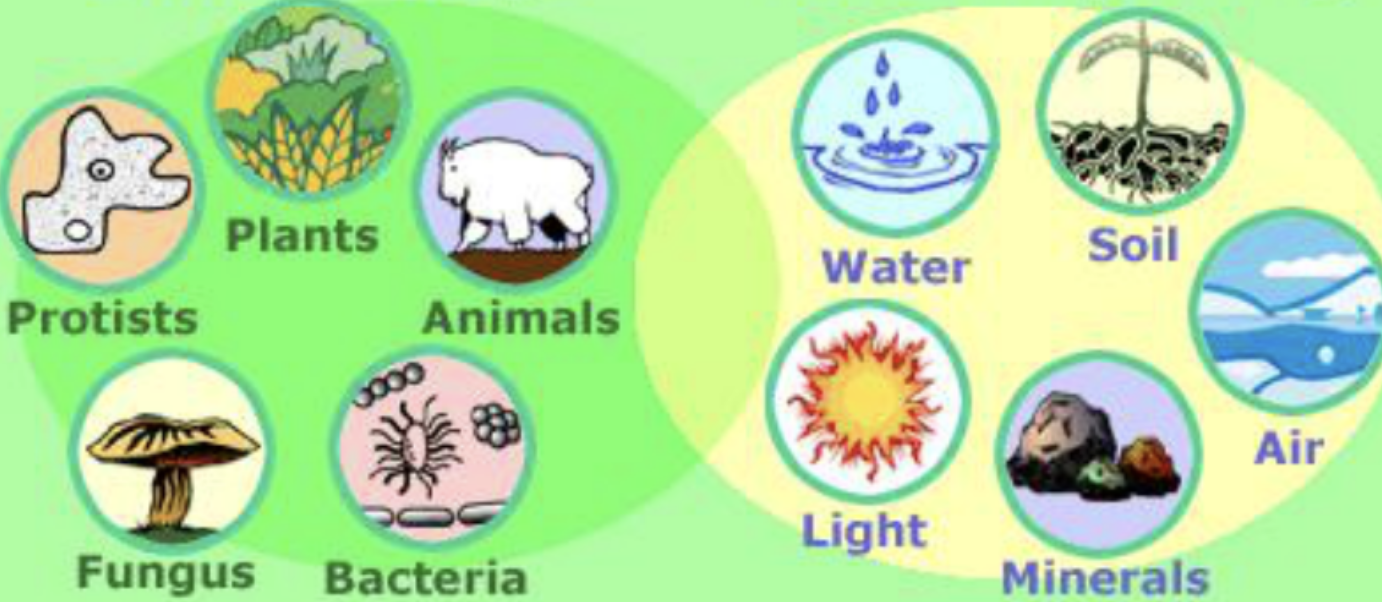
abiotic factor
property of the environment relating to non-living things
examples of abiotic factors
temperature of air
temperature of water
nutrient / water availability
components of an ecosystem
population
community
ecosystem
species
a group of similar organisms capable of interbreeding under natural conditions to produce viable and fertile offspring
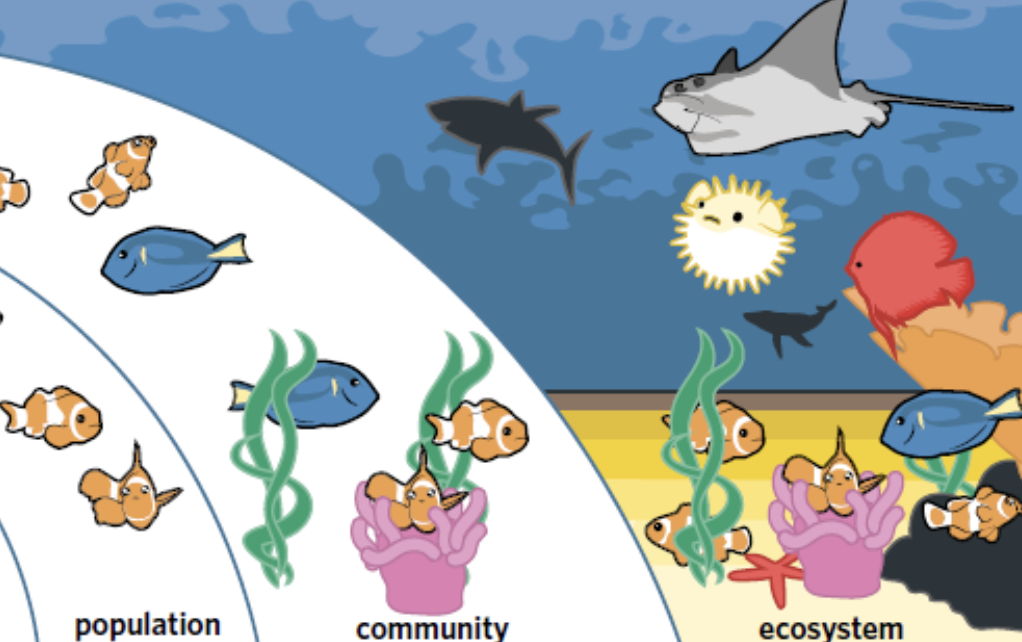
population
group of individuals of the same species living in the same geographic location
number of individuals in a population and is dependent on immigration, emigration, births, deaths
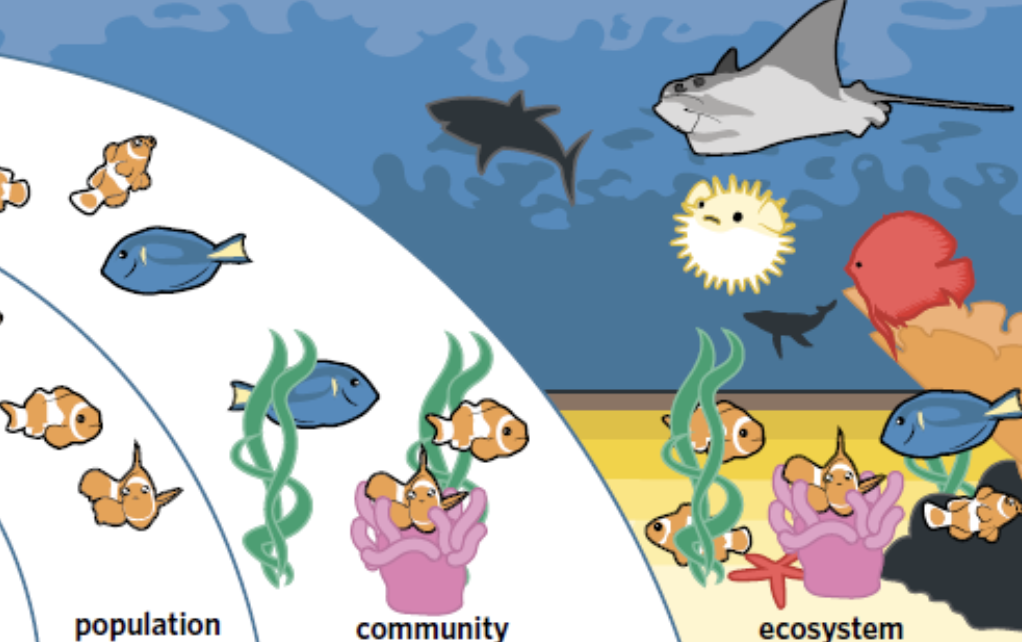
community
group of interacting populations of different species in the same geographical region
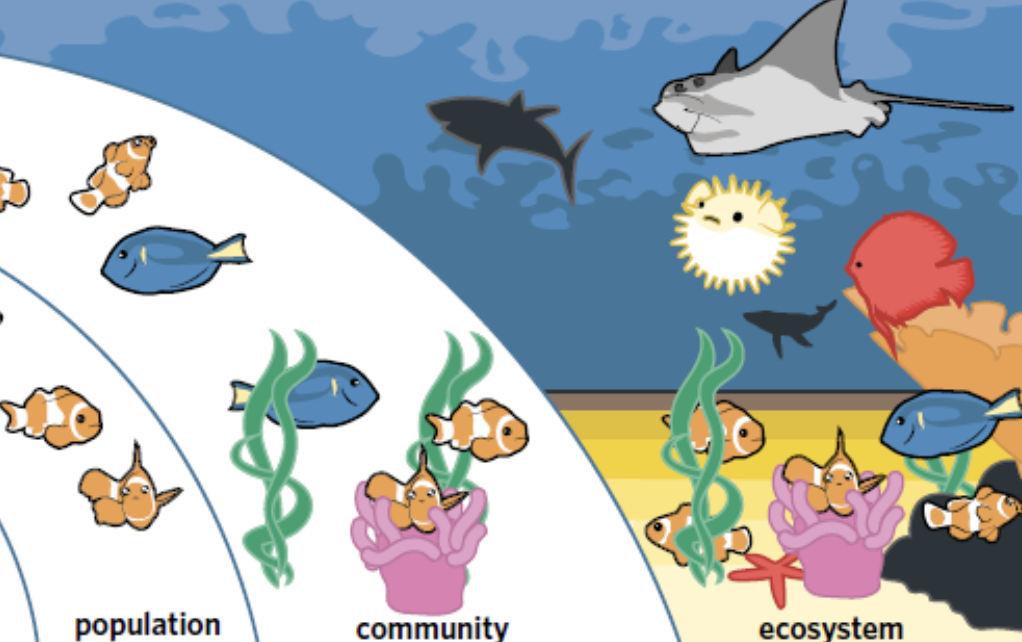
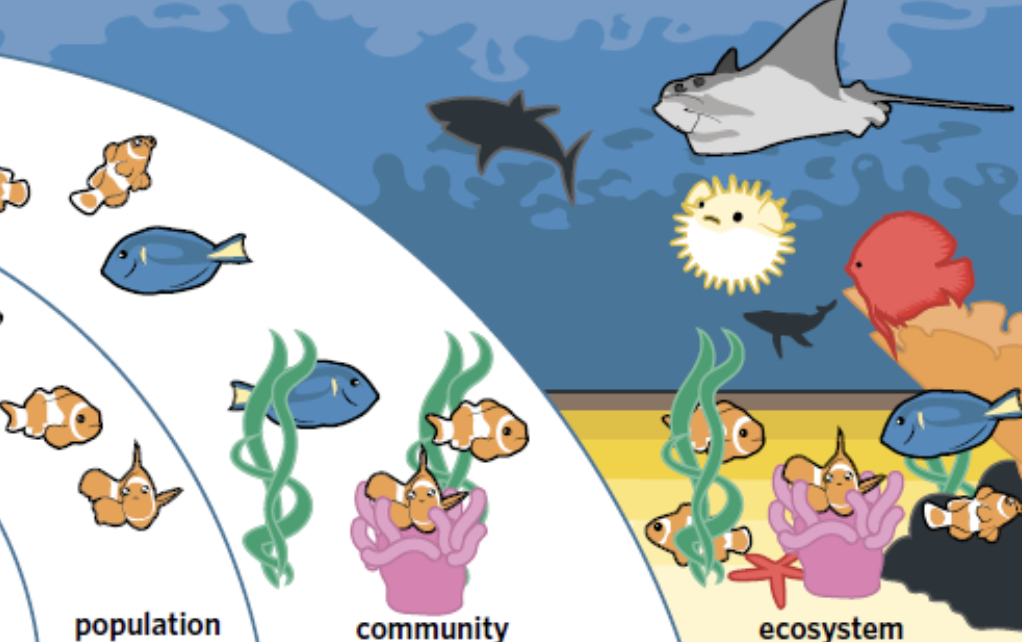
ecosystem
multiple communities interacting with one another and their physical environment
classification of organisms
domain
kingdom
phylum
class
order
family
genus
species
King Philip Came Over For Good Spaghetti
naming organisms
Genus species
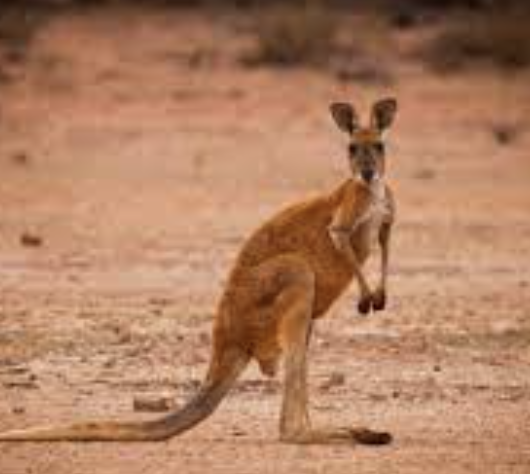
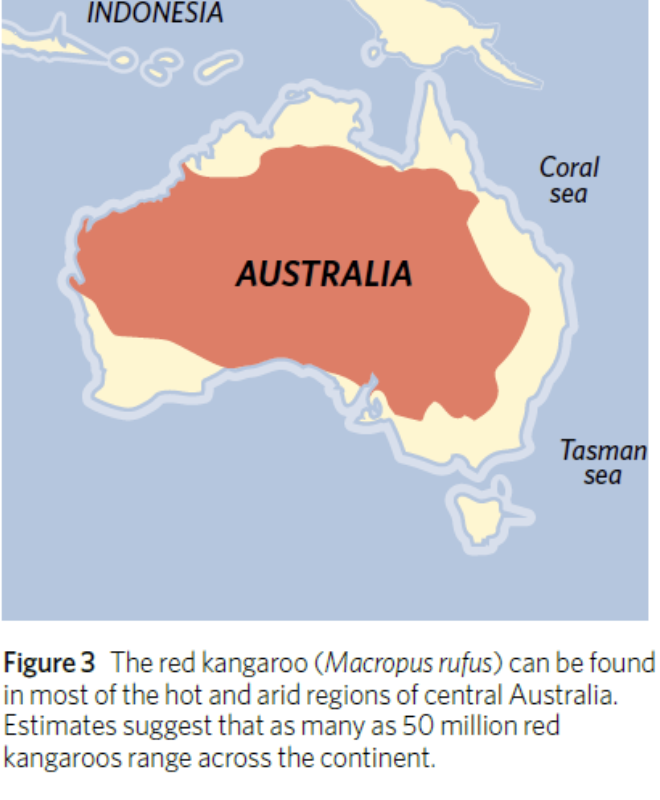
e.g. Macropus rufus
same genus = more closely related
same species = produce fertile offspring
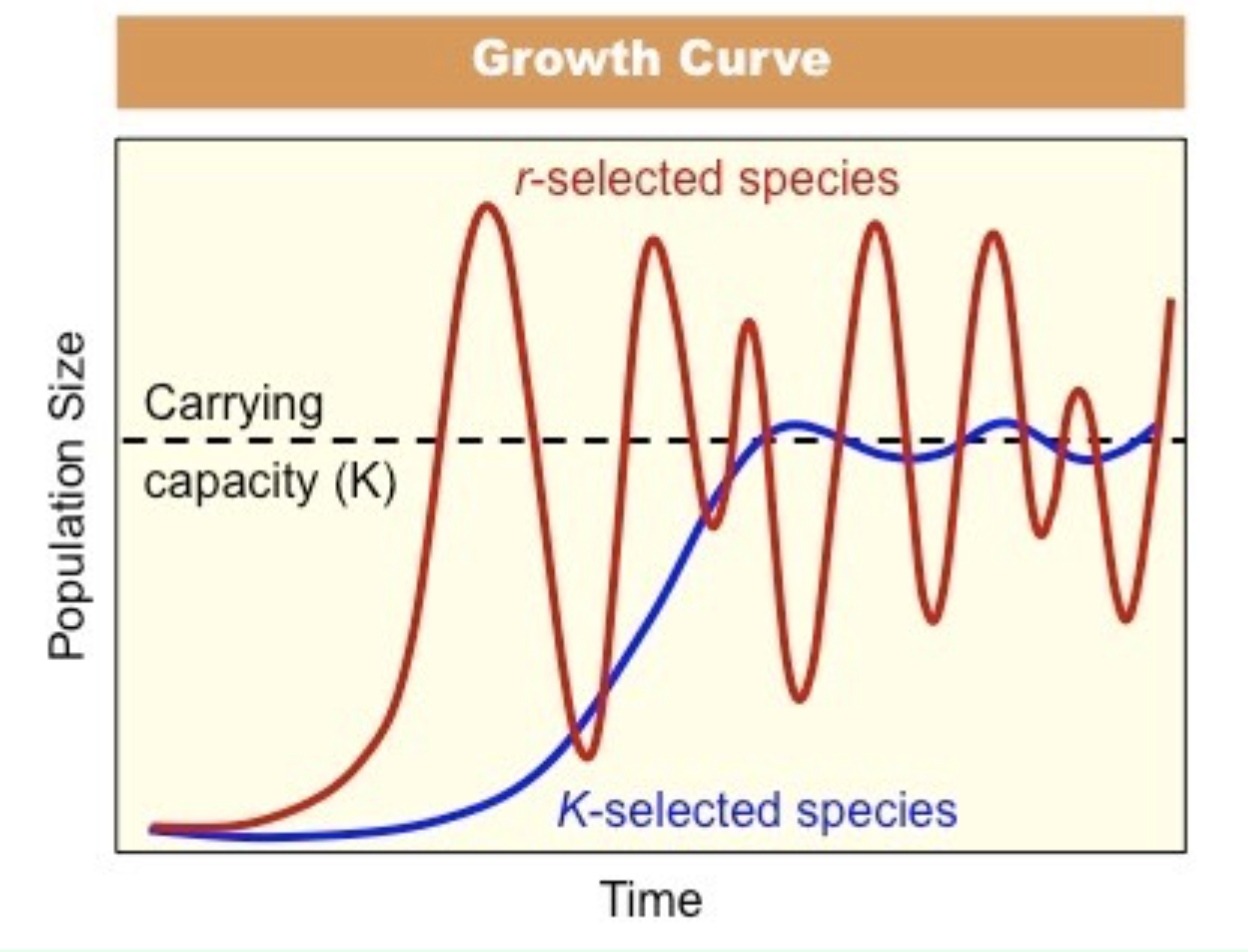
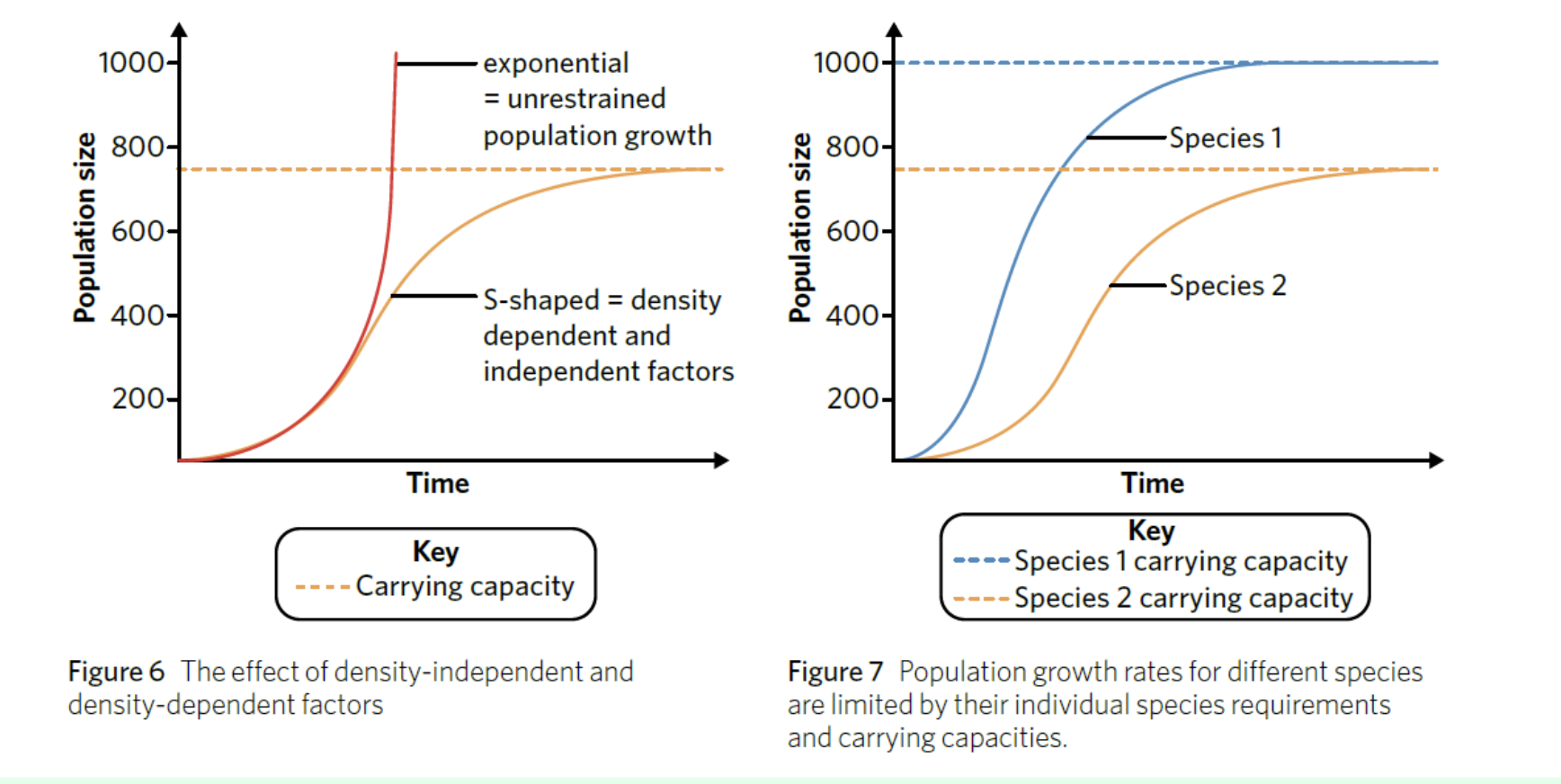
carrying capacity
maximum population size an environment can sustain indefinitely
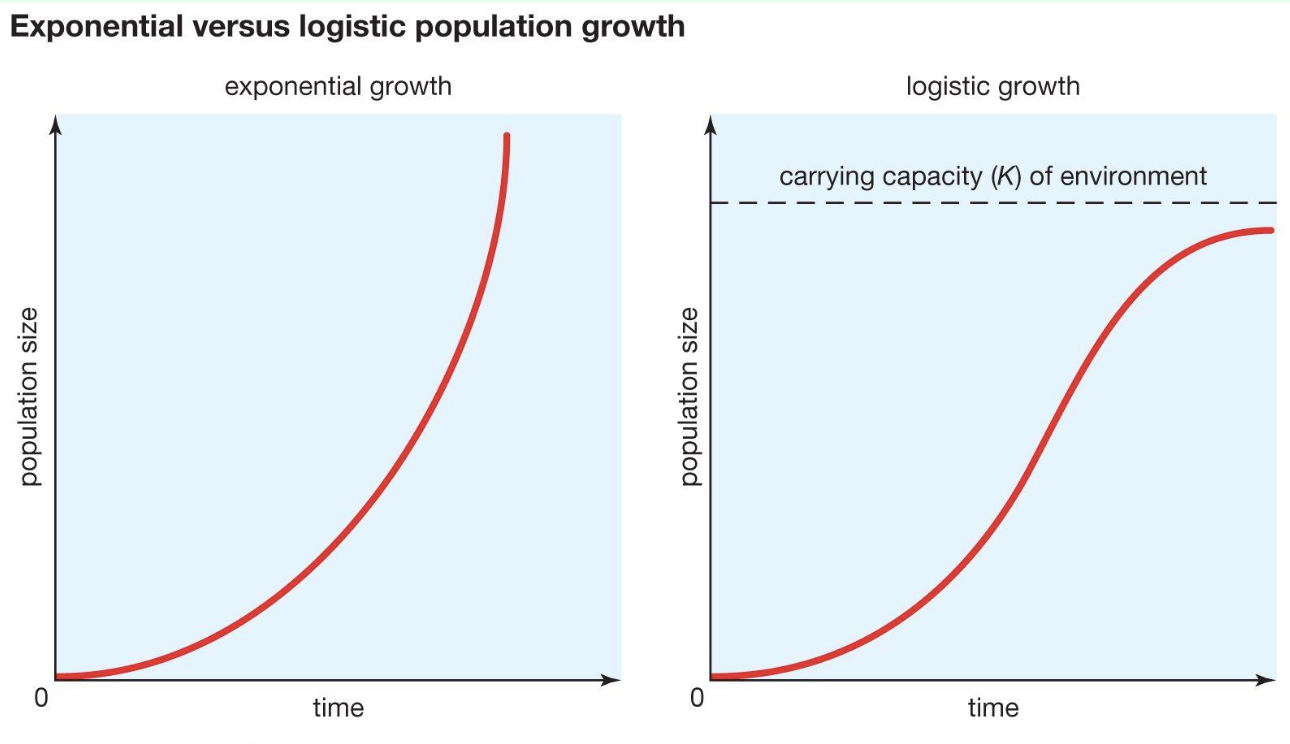
influences of population growth rate
influenced by amount of offspring produced by an individual / pairs of individuals each generation
what happens in an unstable environment
organisms produce large numbers of short-living offspring
let them take chances at survival until reproductive age
stable environments
fewer offspring but invest more resources in each individual
increase lifespan, chances of survival
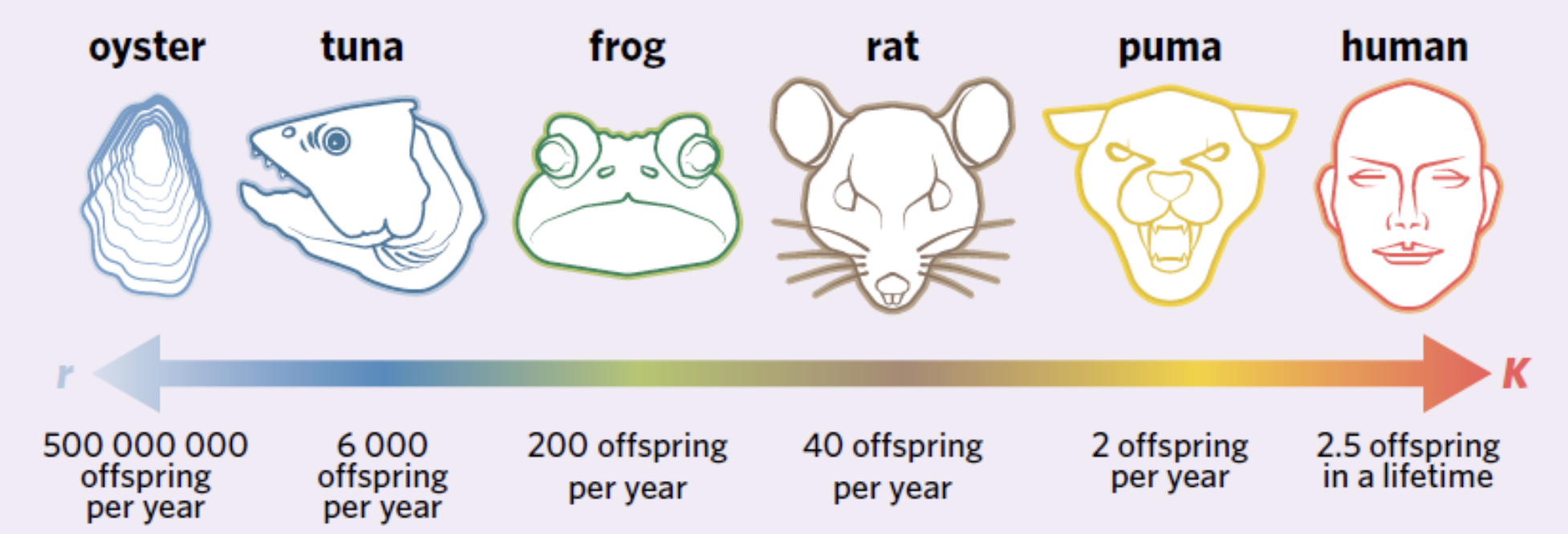
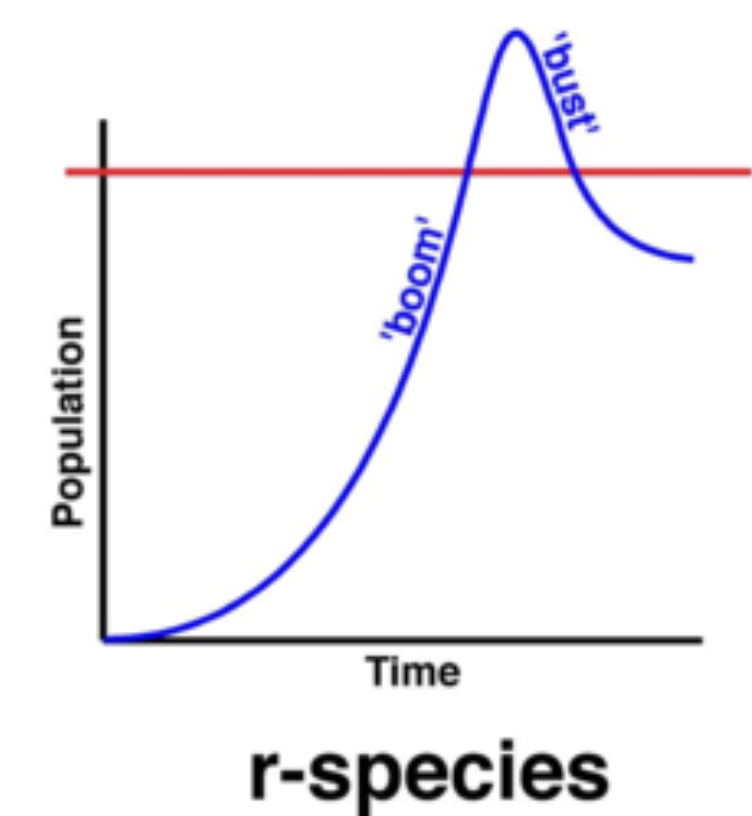
r reproduction
quick and many strategy
large number of offspring
little to no parental care
high mortality rate of offspring
reach sexual maturity quickly
become self-sufficient adults earlier than other organisms
boom and bust
rapid, exponential growth followed by a massive die-off
many aquatic animals, insects, rodents
k reproduction
small and few method of reproduction
smaller number of offspring
larger in size
dependent on parental care
reach sexual maturity slower
population growth in K-strategists will remain constant at the carrying capacity
e.g. most mammals, including humans, chimpanzees, whales, elephants
growth curve
population distribution
range of geographical areas that members can be found in
population density
number of individuals in a population per unit area
density-independent factors
environmental factors that affect population growth but are not affected by population density
limit size of a population regardless of population density
density-dependent factors
affect population growth and becomes stronger as population density increases
examples of density-independent
climate
natural disturbance events
cyclone
volcanic eruptions
functionally unlimited resources
O2
CO2
examples of density-dependent factors
disease
predation
competition
resources
availability
accumulation of waste
more carrying capacity fyi!
symbiosis
interaction of two different species living in close proximity to each other
mutualism
overall benefit
commensalism
one benefits, one has no significant benefit
barnacles attach to whales
parasitism
one obtains nutrients at the expense of a host organism
amensalism
one harmed / killed, other no effect
e.g. predator trampling over grass
predation
one organism kills / hunts organism for food
competition
between two or more organisms competing for the same pool of resources
interspecific competition
different species competing for the same pool of resources
intraspecific competition
same species competing for the same pool of resources
keystone species
effects on ecosystem is greater than expected relative to its population size
critical – is often the focus of conservation efforts
e.g. apex predators, ecosystem engineers
apex predator
no natural predators
top of food chain
ecosystem engineer
creates / significantly alters, or maintains structure of environment
e.g. beavers construct dams where many species of fish (such as trout / salmon) live in