Week 3: Basic cost assignment to MOH and job costing systems
 Call Kai
 Learn
Learn Practice Test
 Spaced Repetition
 Match
Match Flashcards
 Knowt Play
1/12

There's no tags or description
Looks like no tags are added yet.
13 Terms
Why do we assign costs to cost objects
Helps with
management decisions
pricing, product mix, customers, cost reduction
motivating employees
rewards performance, building cost awareness
forecasting and planning
external reporting
inventory valuation
Justifying costs and reimbursement
How to assign direct costs to cost objects
direct material: actual quantity used x actual material cost per unit
direct labour: actual hours worked x actual hourly rate
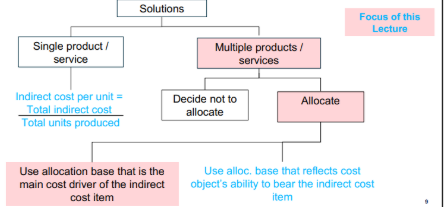
How can you allocate MOH if you only have one product vs multiple products
divide total MOH/by total quantity of product
if there are multiple lines/products you can choose an allocation base that reflects the main cost driver of the cost item or choose an allocation base that reflects the objects ability to bear the indirect cost or just not allocate at all
What is a cost driver vs cost item/object vs cost pool
Cost driver: is the reason the cost occurred ie. due to machine hours, complexity of machine, size of machine.
Cost item: anything you want a separate measure of cost for
cost pool: a collection of costs for items that share the same cost driver
What is an allocation base and how do you pick a good quality alllocation base
allocation base is a cost driver that is used to allocate indirect costs to cost items
allocation base should be the most appropriate and important cost driver
should be measurable and traceable to cost object
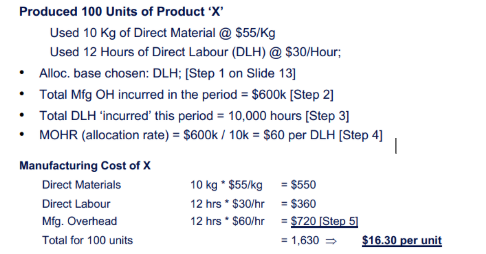
Steps to allocating indirect costs using actual costing
choose allocation base for indirect cost/cost pool
record actual indirect costs
record actual quantity of allocation base
allocation rate= total actual indirect costs/total allocation base quantity
to get allocation cost= allocation rate x actual quantity of allocation base
When using actual costing, indirect costs are only allocated at the end of the period once total indirect costs are known and quantities produced are known
How many cost pools should you use
simplest approach is just have one cost pool
however if theres multiple cost drivers you should have as many cost pools are needed to encompass the cost drivers
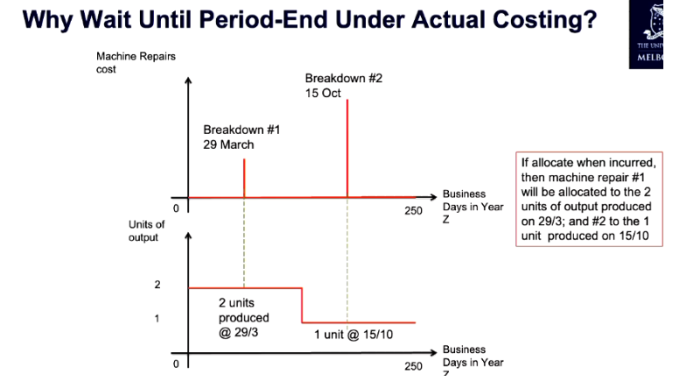
Why does actual costing wait to allocate MOH at the end of the period
since we don’t want prices to fluctuate too much Bc. you can’t predict when MOH will happen eg. monthly rent supports whole month, don’t know when maintenance cost will happen
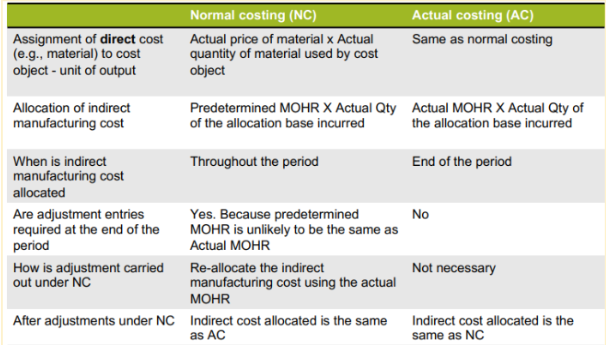
What is the solution for actual costing and how does it work
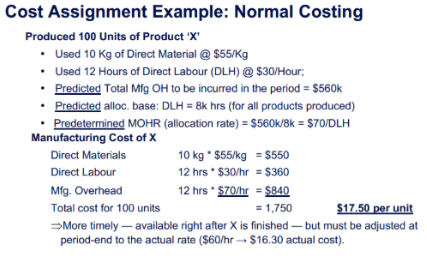
use normal costing
for directly traceable costs eg. direct material and direct labour you use actual costing
for indirect costs you use a predetermined MOH rate and adjust rate at period end.
STEPS
predict indirect MOH costs and allocation base quantity at period start
calc predetermined MOHR= budgetted indirect mfg costs/budgetted allocation base quantity
allocate costs throughout period using actual quantities
adjust rate at end of period
Actual vs normal costing
What is job costing
it is a type of costing system involving accumulates and allocates costs for each job separately
features of job costing
costs are accumulated separately for each job
costs are recorded on a job cost sheet
unit cost is derived from the job cost sheet
when is job costing used
for organisations that make unique or highly variable goods or services
lower volume producers
EG. boeing plane company
maufacturing service or merchanidising industries