Session 2- External Analysis
 Call Kai
 Learn
Learn Practice Test
 Spaced Repetition
 Match
Match Flashcards
 Knowt Play
1/28

There's no tags or description
Looks like no tags are added yet.
Name | Mastery | Learn | Test | Matching | Spaced | Call with Kai | Chat |
|---|
No analytics yet
Send a link to your students to track their progress
29 Terms
PESTEL Framework
breaks down the macro-environment into 6 areas
Political
Economic
Socio-cultural
Technological
Environmental
Legal
By evaluating these areas, businesses can spot opportunities and threats
Porter’s Five Forces
looks at the industry’s competitive environment to understand the dynamics affecting profitability
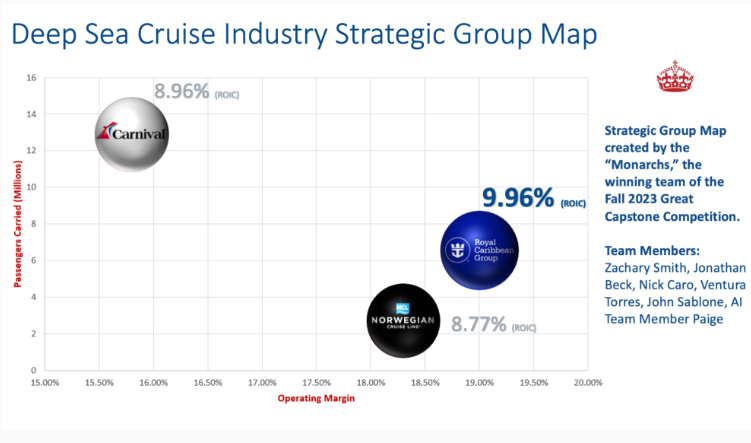
Strategic Group Mapping
helps businesses figure out where they stand in comparison to competitors and who they are really competing against
Structure-Conduct-Performance (SCP) Model
Examines the industry from a broader economic standpoint to understand how market structures affect business performance
External Section of AFI Framework

Before using PESTEL…
define the industry you’re examining
take a macro-economic view
strategic mngt is all abt recognizing external factors and using them to your advantage or minimize their potential negative impact
PESTEL Analysis
executive can rely on it to organize factors within the general environment and to identify how these factors influence industries and the firms within them
Six segments of the general environment:(1) political, (2) economic, (3) sociocultural, (4) technological, (5) environmental, and (6) legal
executives examine each of these and identify opportunities and threats and adjust their firms strategy
PESTEL Analysis: Political
tax policies, changes in trade restrictions and tariffs, the stability of governments, and proposed legislative changes that have not yet been enacted into law.
emphasizes the influence of govt actions on business operations
U.S. government creating new regulations for the organic and GMO food products.
Proposals to provide support to businesses are often featured within political campaigns.
The word tariff derived from an Arabic word meaning "fees to be paid." By levying tariffs and implementing other trade restrictions, governments can -- to some extent -- protect domestic firms from international competition.
The stability of the US government provides a source of confidence for foreign firms who want to do business in the United States. Countries that face frequent regime change and political turmoil have a harder time attracting foreign investments.
One of the most important duties of elected officials in the United States is to debate and set new tax policies.
PESTEL Analysis: Economic
interest rates, inflation rates, gross domestic product, unemployment rates, levels of disposable income, and the general growth or decline of the economy. Think broad economic conditions!
focuses on the financial conditions that influence organizational operations
Interest Rates: an affect borrowing costs and investment.
Gross domestic product (GDP) refers to the market value of goods and services within a country produced in a given time period and serves as a rough indicator of a country's standard of living. The United States has a much larger GDP than China, but China has enjoyed a much higher rate of GDP growth in recent years.
Inflation Rates: Influence purchasing power and pricing strategies.
Unemployment Rates: Impact consumer confidence and spending habits.
Disposable Income Levels: Determine how much consumers can spend on goods and services.
Discretionary income refers to the amount of money individuals have to spend after all necessary bills are paid. As discretionary income increases, firms such as boutique clothing retailers that sell nonessential goods and services are more likely to prosper.
PESTEL Analysis: Sociocultural
trends in demographics such as population size, age, and ethnic mix, as well as cultural trends and shifts such as attitudes toward obesity and consumer activism.
examines how societal and cultural shifts impact businesses
Demographic Trends: Changes in population size, age distribution, and ethnic composition.
Cultural Trends and Consumer Preferences: Evolving attitudes and behaviors, like views on health and consumer rights.
One in three Americans is obese, due in part to the increasing prevalence of fast-food restaurants and the popularity of sedentary activities such as playing video games.
Hemline theory contends that women's skirt lengths predict stock market increases and declines. The idea was born in the 1920s when economist George Taylor noticed that many women raised their skirts to reveal their silk stockings when times were good, but lowered their skirts to hide the fact that they weren't wearing stockings when times were tough.
The tendency to collect material items while being reluctant to throw them away has led to a rise in self-storage outlets as well as awareness of a hoarding epidemic.
PESTEL Analysis: Technological
changes in the rate of new product development, increases in automation, and advancements in service industry delivery.
focusing on scientific advancements that enhance products and services
Unsuccessful technological innovations such a Smell-O-Vision (a system that would release different odors that matched the events shown on screen) highlight the risk associated with the technology sector. Image watching a show on horse stables!
The adoption rate of Artificial Intelligence which will certainly transform nearly every industry and how work is automated.
The dramatic changes in the video game industry over the past 25 years highlight the need to constantly adapt to technological factors to maintain market leadership. Once-mighty Atari has given way to current leaders Sony, Nintendo, and Microsoft.
Moore's law suggests that the performance of microcircuit technology roughly doubles every two years.
Service Industry Delivery: Improvements in how services are offered to consumers.
PESTEL Analysis: Environmental/Ecological
natural disasters, weather patterns, and/or EPA regulations.
physical and ecological aspects that businesses must navigate
Pollution/Carbon Footprint Levels: May lead to regulations affecting business practices.
Global Warming: Influences the development of new, eco-friendly products and services.
Individuals embracing the three Rs of green living--reduce, reuse, recycle--has fueled new business concepts such as Recycle Match, a firm that brings together waste products with businesses that need those materials.
Concern about the environmental effects of burning fossil fuels has contributed to the growing popularity of scooters.
The increase in the number of food cooperatives reflects the growing interest in sustainable, natural foods that are produced with a high degree of social responsibility.
PESTEL Analysis: Legal
current laws involving issues such as employment, health and safety, discrimination, and antitrust.
laws and regulations that frame business activities
Electronic recycling laws are creating opportunities for "green collar jobs." A Missouri law, for example, requires computer electronic equipment manufacturers to develop and implement recycling plans.
The Sherman Antitrust Act of 1890 limits cartels and monopolies in the United States. Senator John Sherman was the principal author of this legislation.
In the United States, it is illegal to discriminate against anyone based on age, race, religion, gender or disability.
The role of the Occupational Safety and Health Administration (OSHA) is to prevent work-related injuries, diseases, and fatalities by enforcing standards for workplace safety and health.
Laws requiring that nutrition information must appear on the packaging of most food products are intended to protect consumers and help them make informed choices.
Porter’s Five Forces
developed by Harvard Business Prof: Michael Porter (Godfather of strategy)
tool used to measure industry attractiveness but also forces us to look at interactions among competitors in an industry, potential new entrants to the industry, substitutes for the industry’s offerings, suppliers to the industry, and the industry’s buyers
if none of these works to undermine the profits in the industry, then the profit potential is very strong
value may be drained away through the rivalry among existing competitors but it can also be bargained away through the power of suppliers or the power of buyers or be constrained by the threat of new entrants or the threat of substitutes
Changes in the strength of the forces signal changes in the competitive landscape critical to ongoing strategy formulation.
The Five Forces are not immune to industry-wide advancements of technology but instead can be greatly influenced by them
since this is an INDUSTRY level tool, we NEVER run this analysis on a single firm
Porter’s Five Forces: Rivalry Among Existing Competitors
price discounting, new product introductions, advertising campaigns, service improvements
high rivalry limits the profitability of an industry
the degree to which rivalry drives down an industry’s profit potential depends on the intensity with which companies compete and the basis on which they compete
Competitive Rivalry is HIGH when:
There are many competitors in the industry. Often the greater the number of players, the more intense the rivalry
The competitors are roughly of equal size
The industry growth rate is slow, zero or even negative. In a stagnant or declining market, companies often fight intensely for a smaller and smaller market
Exit barriers are high
Products and/or services are direct substitutes
Porter’s Five Forces: Bargaining Power of Buyers
powerful customers- the flip side of powerful suppliers- can capture more value by forcing down prices, demanding better quality or more service (drives up costs), and playing industry participants off against one another, all at the expense of industry profitability
Buyers are powerful if they have negotiating leverage relative to industry participants, especially if they are price sensitive, using their clout primarily to pressure price reductions
Bargaining Power of Buyers is HIGH when:
There are a few large buyers
Buyers purchase in large quantities relative to the size of a single seller
The industry’s products are standardized or undifferentiated commodities
Buyer’s face little to no switching costs
Buyers can credibly threaten to backward-integrate in their supply chain
Porter’s Five Forces: Threat of New Entrants
New entrants to an industry bring new capacity and a desire to gain market share that puts pressure on prices, costs, and the rate of investment necessary to compete
particularly when new entrants are diversifying from other markets, they can leverage existing capabilities and cash flows to shake up competition
Threat of New Entrants are HIGH when:
Customer switching costs are low
Capital requirements are low
Incumbents do not possess:
proprietary technology
established brand equity
the ability for economies of scale
New entrants expect that incumbents will not or cannot retaliate
Porter’s Five Forces: Threat of Substitute Products/Services
a substitute performs the same or a similar function as an industry’s product by a different means but exists outside the current industry
videoconferencing is a sub for travel, plastic is a sub for aluminum, email is a sub for express mail
Threat of Substitutes are HIGH when:
The substitute offers an attractive price-performance trade-off
The buyers cost of switching to the substitute is low
Porter’s Five Forces: 6th Force?
Government: should not be one bc there is no monotonic (direct linear) relationship btwn the strength and influence of govt and profitability of an industry
you cant say govt is low, industry profitability is high; it all depends on exactly what govt does
there are many diff parts of govt, each with its own distinct impacts and you can assess the consequences of what govt does if you look at the 5 forces
orgs whose products and services are complementary to the primary org’s products and services
there is no monotonic relationship btwn the extent of complements and profitability, sometimes with low profitability
it has to do w how complements affect the 5 forces; complements have much to do with the size of the pie, but their role in the division of the pie is independent of other factors
Structure-Conduct-Performance (SCP Framework)
used as an analytical framework, to make relations among market structure, market conduct, and market performance
developed in 1959 by Bain in his book Industrial Organization
starting point when analyzing markets and industries (porter used it to base his five forces off of)
if we can identify our clients industry as being fragmented or concentrated, then well better have an idea of how we should advise our clients positioning w/in their industry
Structure-Conduct-Performance (SCP Framework): High-Concentration Industries
80-100%
Circuses (89%) Breakfast Cereal manufacturing (85%)
ex. circus industry where just four big companies own almost 90% of the market. They don’t trash-talk each other and avoid direct competition. This friendly rivalry can lead to good profits, but it’s not the only factor that matters.
Structure-Conduct-Performance (SCP Framework): Medium-Concentration Industries
50-79%
flight training (52%), sugar manufacturing (60%)
Structure-Conduct-Performance (SCP Framework): Low-Concentration/Fragmented Industries
Below 50%
Full-service restaurants (9%), Legal services (3%), Truck driving schools (27%), phone call centers (22%)
Ex. restaurant world. It’s a free-for-all where many players, big and small, fight for a slice of the pie. Take Quiznos and Subway: Quiznos once launched ads attacking Subway to grab attention and customers. This kind of aggressive competition can lead to price wars, which might be great for us as customers but can squeeze the industry’s profits
The SCP framework is split up into the following four categories:
Perfect Competition
Monopolistic Competition
Oligopoly
Monopoly

Structure-Conduct-Performance (SCP Framework: 4 Categories
Perfect Competition
Imagine a market where many sellers offer the same product, like fish at a local market. No single seller can sway the price; they all accept the market rate. It’s a level playing field where everyone’s in the same boat, or in this case, fish market.
many small comps, none of which control prices; they accept the market price determined by supply and demand
Structure-Conduct-Performance (SCP Framework: 4 Categories
Monopolistic Competition
Still have many sellers (as we had under perfect competition) but they don’t sell identical products.
differentiated products—products that differ somewhat, or are perceived to differ, even though they serve a similar purpose
quality, style, convenience, location, and brand name
Although many people are fiercely loyal to their favorites, most products in most categories are quite similar and address the same consumer need.
But what if there was a substantial price difference among products? In that case, many buyers would likely be persuaded to switch brands, at least on a trial basis.
Product differentiation: Sometimes, it’s simply geographical. Or promoted by advertising designed to convince consumers that one product is different from another—and better than it.
Regardless of customer loyalty to a product, however, if its price goes too high, the seller will lose business to a competitor. Under monopolistic competition, therefore, companies have only limited control over price.
Structure-Conduct-Performance (SCP Framework: 4 Categories
Oligopoly
Few sellers
each seller supplies a large portion of all the products sold in the marketplace
bc the cost of starting a business in an oligopolistic industries is usually high, the number of firms entering is low
ex. large scale enterprises (automobile comps and airlines)
large firms supplying a sizable portion of a market, these comps have some control over the prices they charge
bc products are fairly similar, when one comp lowers prices, others are often forced to do the same to remain competitive
Structure-Conduct-Performance (SCP Framework: 4 Categories
Monopoly
lies at the opposite end of the spectrum from perfect comp in terms of number of sellers and degree of comp
One seller to rule them all
the market could be a geographical area (city/regional area and doesn’t have to be an entire country)
only a few in the U.S bc the govt limits them. Two categories: natural and legal
Natural monopolies: public utilities (electricity and gas suppliers) req huge investments and its inefficient to duplicate the products they provide. Inhibit competition, but they’re legal bc they are important to society. In exchange for the right to conduct business w/o competition, they are regulated. They cant charge whatever prices they want, but they must adhere to govt controlled prices. Req to serve all customers, even if its not cost efficient
Legal monopoly: when a comp receives a patent giving it exclusive use of an invented product or process. Patents are issued for a limited time, generally 20 yrs. Other comps can’t use the invented product or process w/o permission from the patent holder. Patents allow companies a certain period to recover the heavy costs of researching and developing products and tech
Strategic Group Mapping (SGM)
the analysis of the strategic groups in an industry can offer important insights to executives
strat groups are sets sets of firms that follow similar strategies to one another
consists of a set of industry competitors that have similar characteristics to one another but differ in important ways from the members of other groups
Why is understanding the nature of strat groups w/in an industry important?
emphasizing the members of a firm’s group is helpful because these firms are usually its closest rivals. When assessing their firm’s performance and considering strategic moves, the other members of a group are often the best references for executives to consider.
the strategies pursued by firms within other strategic groups highlight alternative paths to success. A firm may be able to borrow an idea from another strategic group and use this idea to improve its situation.
the analysis of strategic groups can reveal gaps in the industry that represent untapped opportunities