Spread Plate and Streak Plate techniques
 Studied by 0 people
 Call Kai
 Learn
Learn Practice Test
 Spaced Repetition
 Match
Match Flashcards
 Knowt Play
1/37

There's no tags or description
Looks like no tags are added yet.
Name | Mastery | Learn | Test | Matching | Spaced |
|---|
No study sessions yet.
38 Terms
What is the purpose of LB Agar plate?
To observe colony morphologies
How does colony morphology differ from cell morphology?
No use of microscopy to obverse different shapes, margins, elevation, textures and colors of bacterial colony

What is this colony form called?
Tiny multiple dots, various sizes
Punctiform

What is this colony form called?
Circular

What is this colony form called?
Filamentous

What is this colony form called?
Irregular

What is this colony form called?
Spreading tentacles
Rhizoid

What is this colony form called?
Spindle

What is this colony elevation called?
Flat

What is this colony elevation called?
Taller than agar surface
Raised

What is this colony elevation called?
Convex

What is this colony elevation called?
Hill-like
Pulvinate

What is this colony elevation called?
Uneven lumps
Umbonate
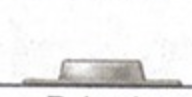
What is this colony elevation called?
Have edges
Raised, spreading edge

What is this colony elevation called?
Flat, raised margin

What is this colony elevation called?
Growth into medium

What is this colony margin called?
Smooth, entire
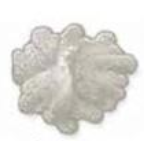
What is this colony margin called?
Lobate
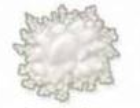
What is this colony margin called?
Erose
Irregular
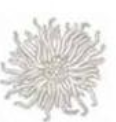
What is this colony margin called?
Filamentouse

What is this colony margin called?
Curled

What is this colony margin called?
Undulate
What different textures of colony?
dry
moist
mucoid (slimy)
Which technique creates a lawn of bacteria?
Spread Plate
What are the applications of Spread Plate technique?
→ Test the efficacy of chemical germicides and antibiotics
→ Enumerating bacteria after a serial dilution in viable cell count
Which technique isolate an individual colony?
Streak Plate
What are the applications of Streak Plate?
→ Study each colony of microorganisms from a mixed culture
Why does the quadrant streak result in single colonies?
Because each streak is dragged from the previous quadrant and the sterilization of the inoculation loop between streaks.
Why would a microbiologist want to obtain single colonies?
Because bacteria can co-exist in the same colony, the microbiologist want to separate them to study the only microbe of interest
What is a bacterial colony?
A single bacteria colony contain trillions of bacterial cells
What happens if forgetting to sterilize loop in between quadrants in streak?
All 4 quadrants will appear dense
How will spread plate look if increase the concentration 1000x higher?
The lawn will be fully covered with colonies
How will streak plate look like if the concentration increase 1000x?
The first quadrant will have more colonies
Brief protocol of Spread Plate
Label plate. Vortex culture. Pipet 100uL aseptically to the center of the plate
Spread the culture evenly with L-shaped rob until the plate is dry.
Place the spreader in the glass beaker to be autoclaved
Incubate at 37 degrees
Brief protocol of Streak Plate
Label the plate, divide into 4 quadrants
Vortex broth culture. Aseptically streak culture following the order.
After squiggling, sterilize the inoculation loop in between streak
Drag from the previous quadrant onto the next
Incubate
After incubation, clumps of colony appear on Spread plate
Insufficient to isolate the colonies
→ Try spread around the plate
After incubation, quadrants 1 and 2 are too dense and no isolated colony
Did not streak from previous quadrant
After incubation, 1-3 dense quadrants and 1-2 isolated quadrants on Streak plate
Successfully isolate