Algebra 2 Rules
 Call Kai
 Learn
Learn Practice Test
 Spaced Repetition
 Match
Match Flashcards
 Knowt Play
1/126

There's no tags or description
Looks like no tags are added yet.
Name | Mastery | Learn | Test | Matching | Spaced | Call with Kai | Chat |
|---|
No analytics yet
Send a link to your students to track their progress
127 Terms
Factorial
the product of all positive integers from n to 1
Triangular Number
the sum of all positive integers from n to 1
Commutative Property
if a + b = c, then b + a = c and if ab = c, then ba = c
Associative Property
(a + b) + c = a + (b + c) and (ab)c = a(bc)
Distributive Property
a(b + c) = ab + ac
Additive Identity
a + 0 = a
Multiplicative Identity
a x 1 = a
Absolute Value
IaI = I-aI = a
Like Signs
in both multiplication and division, an operation between two numbers with the same sign always results in a positive answer
Unlike Signs
in both multiplication and division, an operation between two numbers with different signs always results in a negative answer
Product of Square Roots Rule
square root of m times square root of n equals the square root of m times n
Product Rule for Exponents
x to the power of n times x to the power of m equals x to the power of n plus m
Quotient Rule for Exponents
x to the power of m divided by x to the power of n equals x to the power of m minus n
Quotient of Square Roots Rule
the square root of m divided by n equals the square root of m divided by the square root of n
Reciprocal
this of x equals 1/x
Logarithm Rule
if N = b to the power of L, then log subscript b times N = L
Additive Property of Equality
if a = b, then a + c = b + c and a - c = b - c
Multiplicative Property of Equality
if a = b, then ca = cb and a/c = b/c
Power Rule for Exponents
x to the power of m to the power of n equals x to the power of m times n
Linear Equation
y = mx + b
Quadratic Equation
y equals ax squared plus bx plus c
Difference of Two Squares Theorem
if p squared equals q squared, then p = plus or minus q
Fundamental Theorem of Algebra
any polynomial of degree n has n complex roots
Zero Factor Theorem
of ab = 0, then either a = 0, b = 0, or both a and b = 0
All right angles equal…
…90 degrees
All straight angles equal…
…180 degrees
When two line segments intersect…
…the opposite angles are equal
Complementary Angles
the sum of these angles equals 90 degrees
Supplementary Angles
the sum of these angles equals 180 degrees
When a transversal intersects two or more parallel lines…
…all acute angles are equal and all obtuse angles are equal
The sum of the measures of the three angles in a triangle…
…equals 180 degrees
The angles opposite sides of equal lengths in a triangle…
…have equal measures
In a polygon, the number of sides…
…equals the number of vertices
In a convex polygon of N sides, the sum of the measures of the interior angles…
…equals (N-2)180
In a convex polygon of N sides, the sum of the measures of the exterior angles…
…equals 360
The diagonals of parollelograms…
…bisect each other
The diagonals of rectangles…
…are equal
The diagonals of rhombuses…
…are perpendicular bisectors
Side-Angle-Side (SAS)
if two sides and the included angle in one triangle has the same measures as two sides and the included angle in a second triangle, the triangles are congruent (Euclid’s Proposition 4)
Side-Side-Side (SSS)
if the lengths of the sides in one triangle are equal to the lengths of the sides in a second triangle, the triangles are congruent (Euclid’s Proposition 8)
Angle-Angle-Angle-Side (AAAS)
if the angles in one triangle equal the angles in a second triangle, the triangles are similar; if it is also known that at least one pair of sides opposite the same angle measure are congruent, then the two triangles are also congruent (Euclid’s Proposition 26)
Hypotenuse-Leg (HL)
if the lengths of the hypotenuse and a leg in one right triangle equal the lengths of the hypotenuse and a leg in a second right triangle, the right triangles are congruent
Third Angle Theorem
if two angles in one triangle are congruent to two angles in another triangle, the third angles are also congruent
Euclid’s Axiom 1
things that are equal to the same thing are also equal to one another (if a=c and b=c, then a=b)
Euclid’s Axiom 2
if equals are added to equals, the wholes are equal (if a=b and c=d, then a+c=b+d)
Euclid’s Axiom 3
if equals are subtracted from equals, the remainders are equal (if a=b and c=d, then a-c=b-d)
Euclid’s Axiom 4
things which coincide with one another are equal to one another (a=a)
Euclid’s Axiom 5
the whole is greater than the part
Euclid’s Postulate 1
two and only two points determine one unique straight line
Euclid’s Postulate 2
a straight line extends an indefinite length in either direction
Euclid’s Postulate 3
a circle may be drawn with any given center and any given radius
Euclid’s Postulate 4
all right angles are equal to one another
Euclid’s Postulate 5
given a line n and a point P not on that line, there exists in the plane of P and n and through P only one line m, which does not intersect line n
Intersecting Chords Theorem
for a circle with a pair of intersecting chords, the product of the lengths of the segments of one chord equal the product of the lengths of the segments of the other chord
Secant-Tangent Theorem
if a secant segment and tangent segment are drawn to a circle from the same external point, the product of the length of the secant segment and its external part equals the square of the length of the tangent segment
Intersecting Secants Theorem
when two secant lines intersect each other outside a circle, the products of their segments are equal
Tangent Segments Theorem
two intersecting tangent segments from points outside a circle have equal lengths
Inscribed Angle Theorem
an inscribed angle equals half the measure of the arc it intercepts
Intersecting Secant Angles Theorem
the angle made by two secants intersecting outside a circle is half the difference between the intercepted arc measures - the theorem applies to tangents too
Intersecting Chord Angles Theorem
the measure of the angle formed by two chords that intersect inside the circle is half the sum of the chords’ intercepted arcs
Standard Line Equation
y = mx + b
Linear Graph
f(x) = x

Quadratic Graph
f(x) = x squared
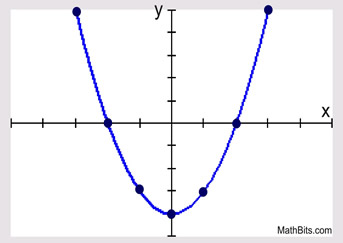
Cubic Graph
f(x) = x cubed

Square Root Graph
f(x) = square root of x
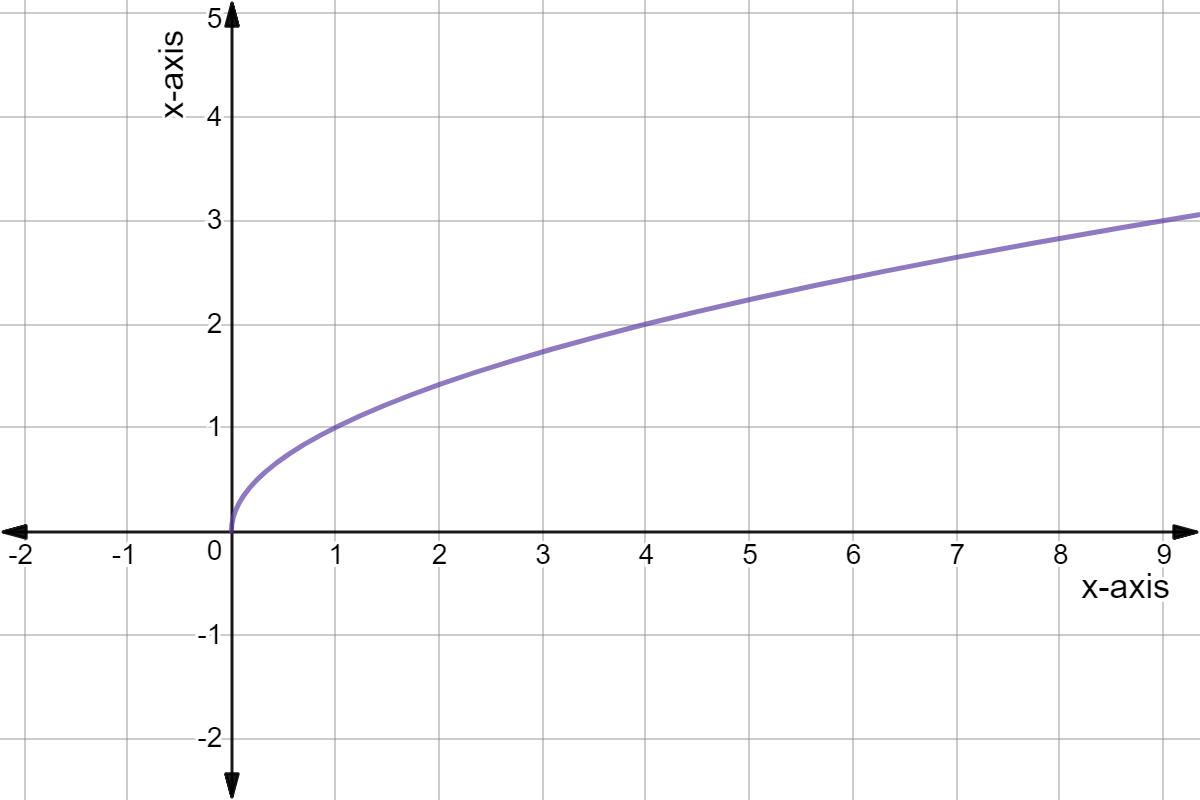
Absolute Value Graph
f(x) = IxI

Reciprocal Graph
f(x) = 1/x
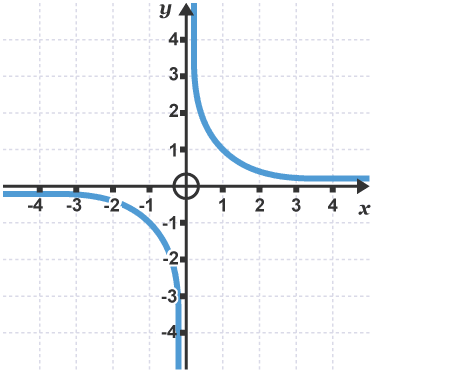
Exponential Graph for a>1
f(x) = a to the power of x

Exponential Graph for 0<a<1
f(x) = a to the power of x
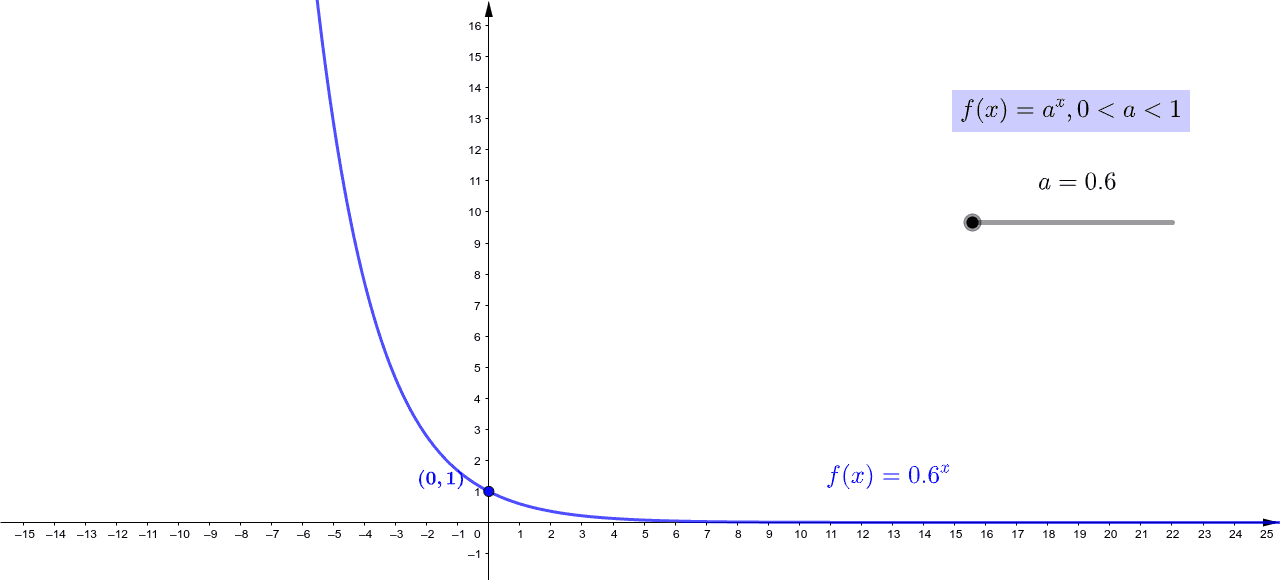
Parallel Lines…
…have the same slope
Perpendicular Lines…
…have slopes that are negative reciprocals of each other
1 meter equals…
…100 centimeters
1 centimeter equals…
…10 millimeters
1 kilometer equals…
…1,000 meters
1 foot equals…
…12 inches
1 yard equals…
…3 feet
1 mile equals…
…5,280 feet
1 hectare equals…
…10,000 meters squared
1 acre equals…
…43,560 feet squared
1 centimeter cubed equals…
…1 milliliter
1 liter equals…
…1,000 milliliters
1 cup equals…
…8 ounces
1 quart equals…
…4 cups
1 gallon equals…
…4 quarts
Pi radians equals…
…180 degrees
Fahrenheit equals…
…1.8C + 32
Kelvin equals…
…C + 273
When converting to scientific notation…
…moving the decimal place to the left adds positive values to the base 10 exponent and moving the decimal place to the right adds negative values to the base 10 exponent
When converting from scientific notation…
…a positive base 10 exponent tells you to move the decimal place to the right and a negative base 10 exponent tells you to move the decimal place to the left
Perimeter of a Rectangle
2 (l + w)
Perimeter of a Square
4s
Perimeter of a Circle
2 pi r
Area of a Rectangle
l x w
Area of a Square
s squared
Area of a Circle
pi r squared
Area of a Triangle
b x h / 2
Area of a Trapezoid
(b1 + b2)h / 2
Volume of a Rectangular Solid
l x w x h
Volume of a Cone
pi r squared h / 3
Volume of a Cube
s cubed