Lecture 3: Disorders of Chromosome Copy Number Variation (CNV)
 Call Kai
 Learn
Learn Practice Test
 Spaced Repetition
 Match
Match Flashcards
 Knowt Play
1/46

There's no tags or description
Looks like no tags are added yet.
Name | Mastery | Learn | Test | Matching | Spaced | Call with Kai | Chat |
|---|
No analytics yet
Send a link to your students to track their progress
47 Terms
Objectives
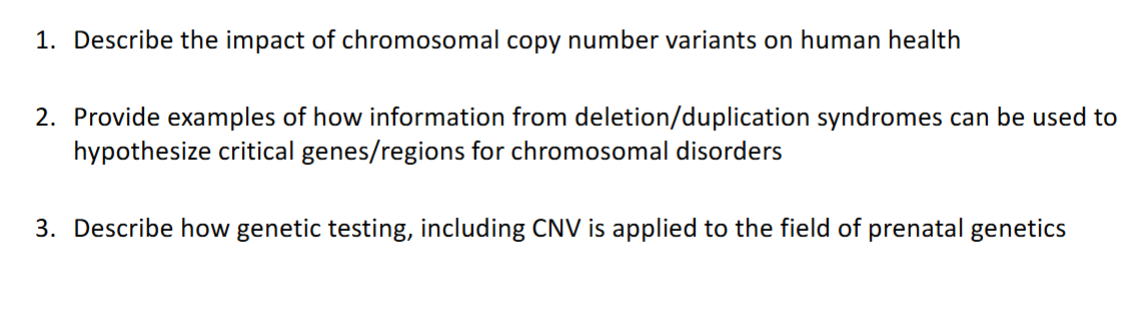
What are the 2 major types of genetic variations in human disease?
Quantitative
Qualitative
Other

****What types of Genetic variations fall under the Quantitative vs. Qualitative categories? Other category?
Quantitative: Aneuploidy, Del/Dup (too much/ too little genetic material)
Qualitative: Sequence variants
Other: Balanced structural (Inversion + translocations), Epigenetic (methylations + imprinting)
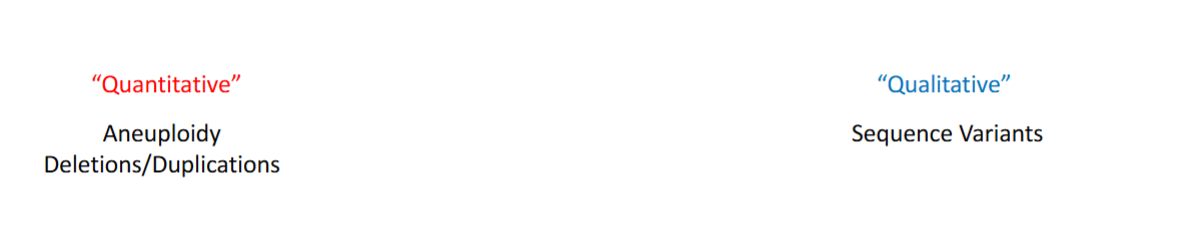
*****Quantitative vs. Qualitative genetic variants Which are CHROMOSOMAL disorders + Which are SINGLE GENE disorders?
Quantitative = CHROMOSOMAL
Qualitative = SINGLE GENE
******What type of TESTING Cytogenetic vs. Molecular would you use for QUANTITATIVE vs. QUALITATIVE diseases?
List the names of the different tests in each category
Quantitative = CYTOGENETIC → Karyotype, ACGH/Microarray, FISH
Qualitative = MOLECULAR → sequence technologies
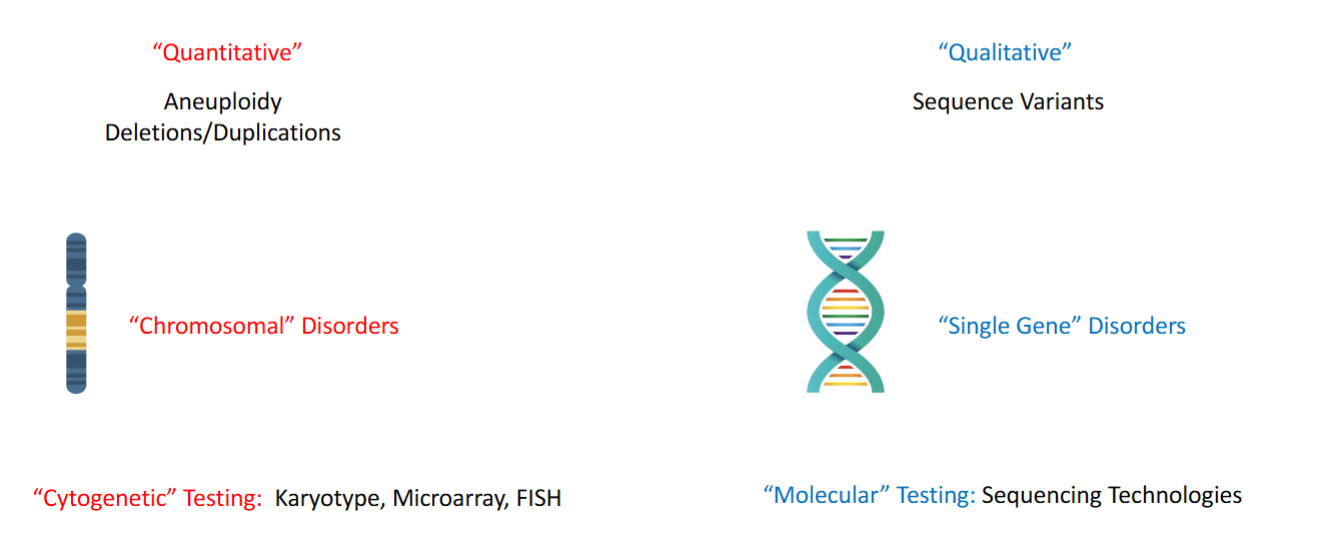
Since this is the chromosomal unit we’ll be focusing on the CHROMOSOMAL diseases

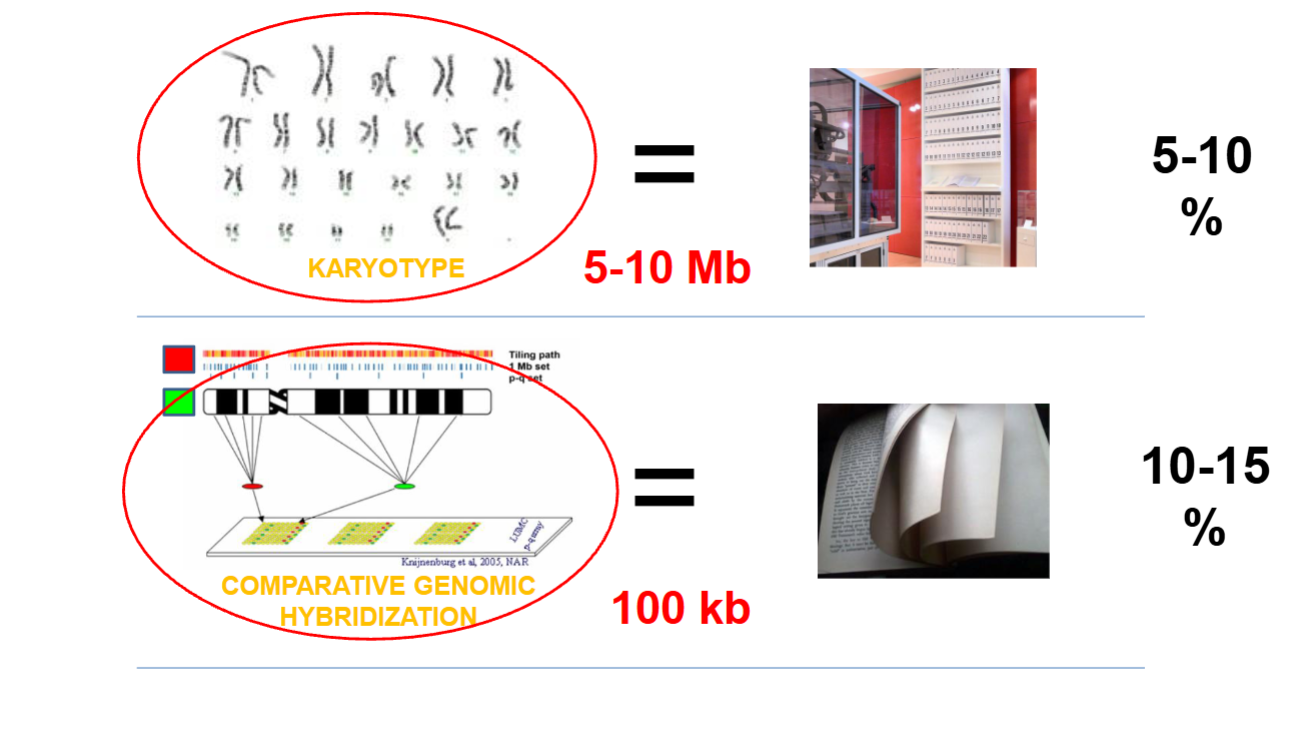
****Compare the RESOLUTION + DIAGNOSIS YIELD between Karyotype + Microarray (comparative genomic hybridization)
Karyotype = LOW resolution + LOW diagnostic yield
Microarray = HIGH resolution + HIGH diagnostic yield
Diagnostic yield: percentage of tests that successfully find a definitive disease-causing genetic change
*****What are the 4 types of chromosomal CNVs? DEFINE each
Aneuploidy: Chr. number that deviates from the multiple of the haploid set (eg. Extra/missing Full chromosome)
Polyploidy: More than complete sets of chromosomes
Del/Dup: loss/gain of a segment of chromosome
Microdel/microdup: Loss/gain of a segment of chromosome LESS THAN 5Mb too small to be detected by conventional cytogenetic methods or high resolution karyotyping
What is the most common polyploidy?
Triploidy
not viable
****What 2 things does the Effects of a del/dip depend on?
The SIZE + GENE content
Some del/dup are RECURRENT others are UNIQUE to an indiv/family
***Is DEL or DUP better tolerated?
DUP
missing info = generally worse than extra info
*****What 4 conditions ALL fall under 22q11.2 DELETION SYNDROME?
DiGeorge’s: Hypoparathyroidism + Immune deficiency
Shprintzen - velo-pharyngeal insufficiency, submucous cleft palate, speech delay
Velocardiofacial
Cayler: Asymmetric crying face

*****What are 7 Symptoms/Clinical indications of 22q11.2 Deletion syndrome
List the PERCENTAGE OCCURENCE for the top 4
Learning disability 100%
Immune deficiency 77%
Congenital heart disease (conotruncal malformations) 74%
Palate abnormalities 69%
Hypocalcemia
Hypoparathyroidism
Characteristic Facial features
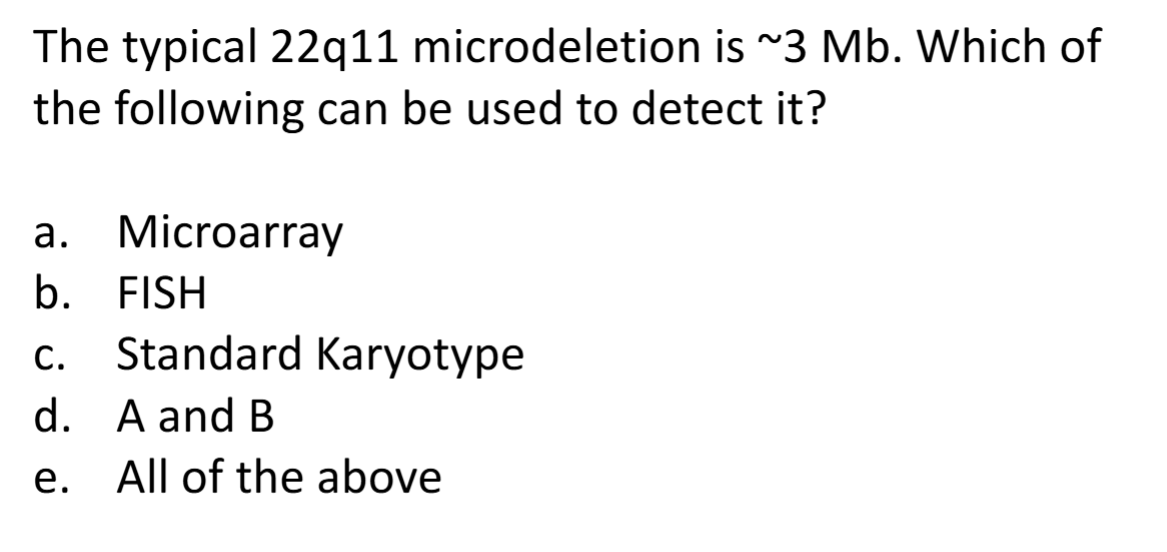

******What is the LIMITATION of common FISH probes on detecting 22q11.2 Deletions?
Common FISH probes cannot differentiate between the Typical 3Mb deletion and the smaller nested 1.5 Mb deletion
MICROARRAYs will let us know if it is a nested deletion
Genes ABC (on left) are more commonly deleted genes
******Why do RECURRENT breakpoints occur? Give an example of a mechanism + how it works
Remember Del/Dup can be RECURRENT or UNIQUE
Non-allelic Homologous Recombination (NAHR)
Occurs when DNA segments with similar sequences misalign during MEIOSIS
= Unequal Crossing-over ==> recurrent del/dups
RESULTS IN RECIPRODAL DEL + DUP
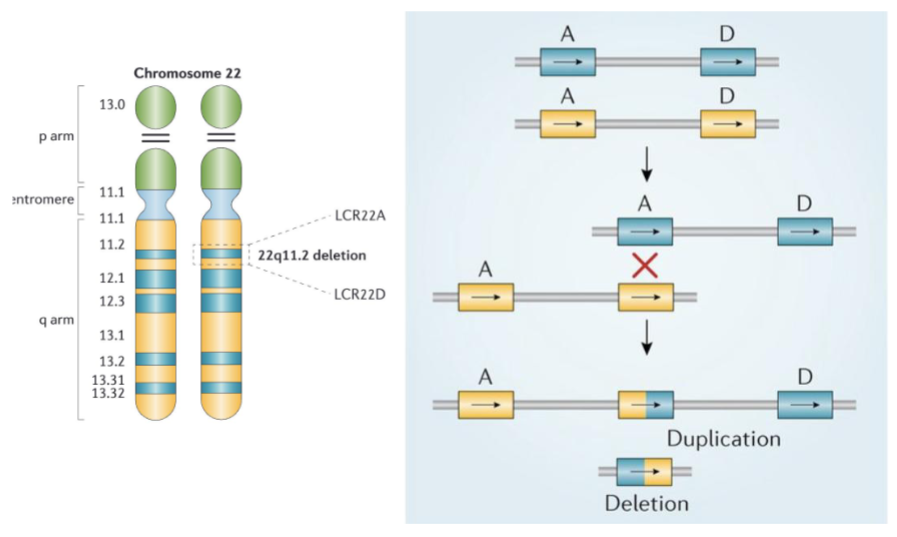
****We mentioned how Dup/Del can be recurrent or Unique. Is 22q11.2 Del/Dup UNIQUE or RECURRENT?
Its RECURRENT
22q11.2 Region is a classic hot spot where NAHR between low copy repeats gives rise to common CNV associated with human disease

*****Compare the 22q11.2 DUPLICATION to the reciprocal DELETION
How are they different?
The duplication has less medical issues than the deletion
Remember Addition info is better than missing info
They have a Non-specific Neurodevelopmental phenotype
*****What is a SYNDROME?
Recognizable pattern of differences in conditions = a syndrome
Many recurrent microdeletions have Specific Clinical features that might be clues to the diagnosis ==> MICRODELETION SYNDROMES
****Microdeletion syndromes account for what % of individuals with Intellectual disabilities
5-7%
(don’t think important) What are some examples of Microdeletion Syndromes?

*****What is Subtelomeric FISH?
When was it made
Why was it made?
Hypothesis?
late 90 - early 2000 (pre microarray)
Why?
Many patients with syndromic presentations but Normal karyotypes
Hypothesis:
Sub telomeric regions are GENE-RICH and prone to REARRANGEMENTS. Disease-causing tiny Del/Dup near Chromosome ends (subtelomeres) may be missed by G-banded karyotype (RESOLUTION TOO LOW)
Approach:
Sub telomeric FISH probes sets → specifically light up ends of each chromosome = if Subtelomere region is del/dup can be detected
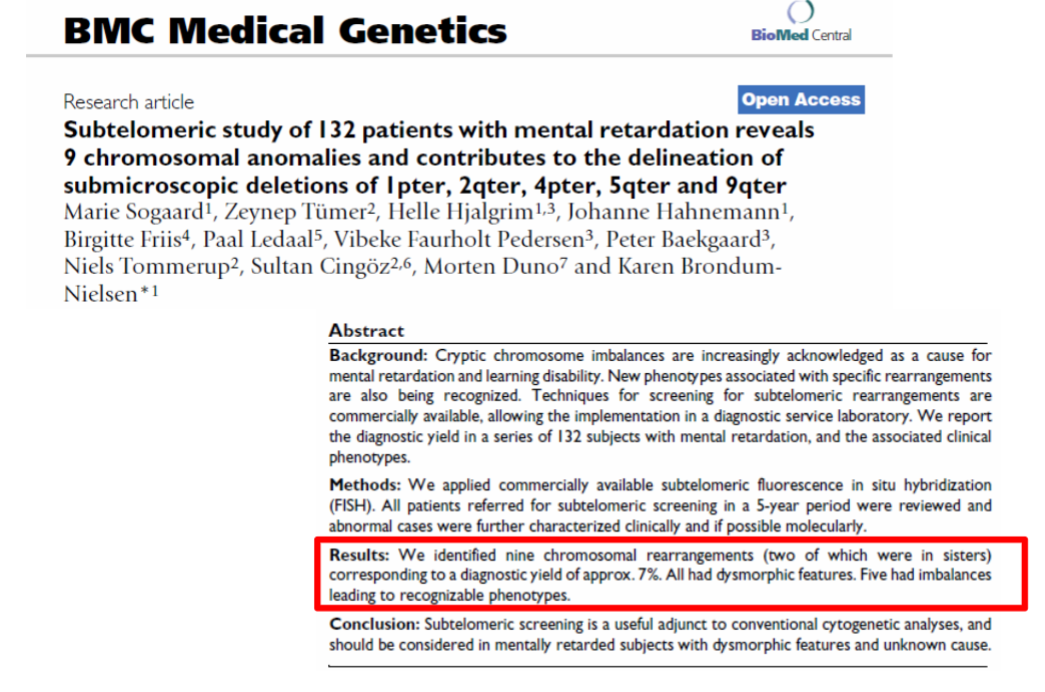
*****Example of Utilization of Subtelomeric FISH
What is the application of use for this technique (aka when/why would someone choose to use Subtelomeric fish)
Intellectual disability paired with dysmorphic features with UNKNOWN CAUSE
*****What is an example of a SYNDROME caused by Subtelomeric Deletion
9q34del or Kleefstra syndrome

*****What are some Physical + Behavioral/Developmental symptoms of 9q34del or Kleefstra syndrome?
Physical:
Heart defects
Genital defects in males
Childhood Hypotonia
Respiratory infections
Motor delays
Renal defects
Behavioral/Developmental
Autism
Intellectual disability
Passiveness
Sociability
Aggression
Disliking routine changes
**History of the Kleefstra syndrome (9q34 del)
Initially children with these features had been described clinically but not recognized as a unified syndrome
Early 2000 - Sub telomeric FISH revealed deletions at 9q34 in some of these patients
Mid 2000 - EHMT1 gene (within 9q34 region) pathogenic sequence variants (point mutations) also determined to be associated with the disorder
Understanding of the causes has helped define the Syndrome, identify new patients and delineate the phenotypic spectrum
Example of RECURRENT CHROMOSOMAL DELETION where one gene may be responsible for the majority of the phenotype
Others are unique conditions resulting from contribution of many genes encompassed
*****what is the TEST done to detect CNVs? (genomic Micro del/dups)
Chromosomal Microarray CMA

*****Compare + Contrast between KARYOTYPE + Microarray
Resolution
What type of info does it provide
What is it best at detecting
USE?
Karyotype USE: Suspected aneuploidy, FHx (family health history) of balanced translocations → better for things like Down syndrome
Array USE: possible MICRODELETION syndrome, Broad differential diagnosis → suspect a genetic variation but don’t know what that may be

*****How do Karyotypes + Microarrays compare when it comes to detecting Mosaicism?
Karyotype = May be Better for detection if enough cells are assessed
Array = Not always reliable for LOW LEVEL mosaicism

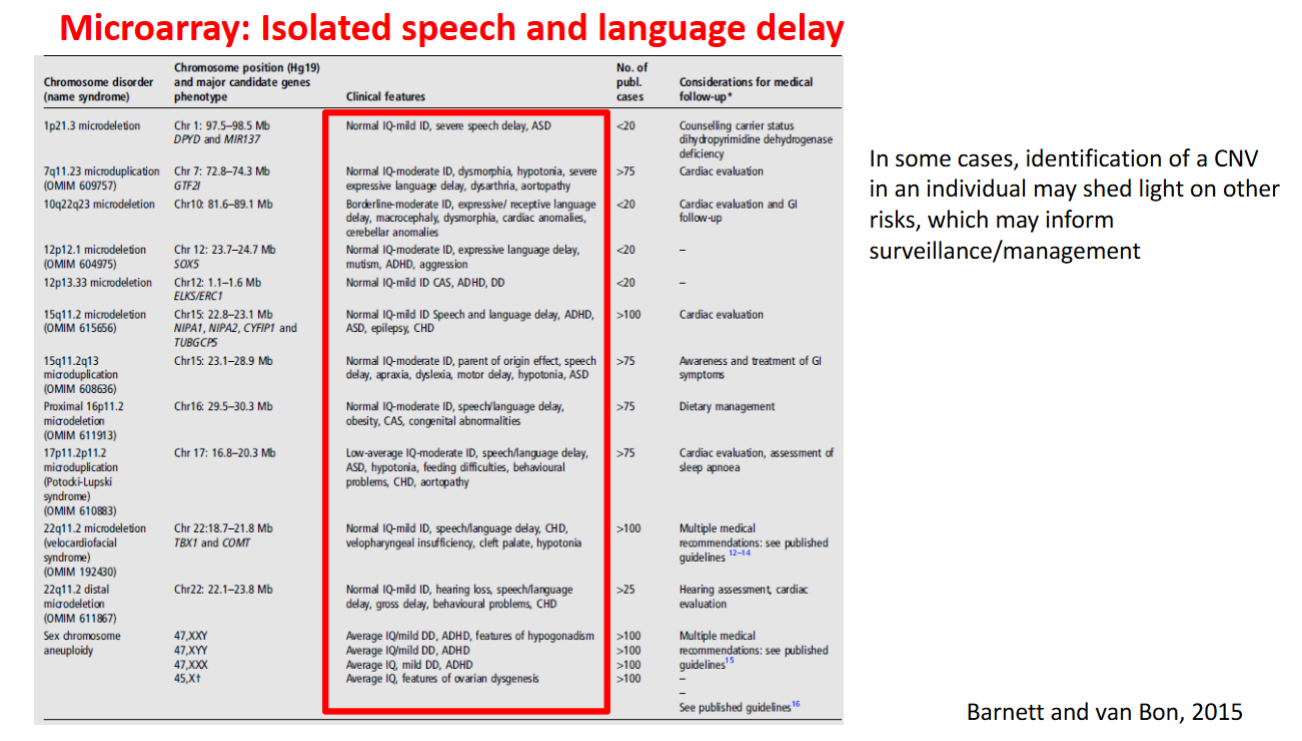
******what phenotype is commonly associated with microdeletions and duplications and calls for microarray testing
What information can Microarray testing on these individuals additionally reveal?
Intellectual disability and developmental delay
In some cases identification of a CNV in an individual may shed light on some OTHRE RISKS which may inform surveillance/management
*****Are CNVs Common in the population?
YES
some may have no clinical effect (not all genes/regions are dose sensitive)
****CNV at the population level:
CNV >500Kb are seen in what % of individuals
CNV >1Mb are seen in what % of individuals?
500kb+ → 5-10%
1 Mb+ → 1-2%
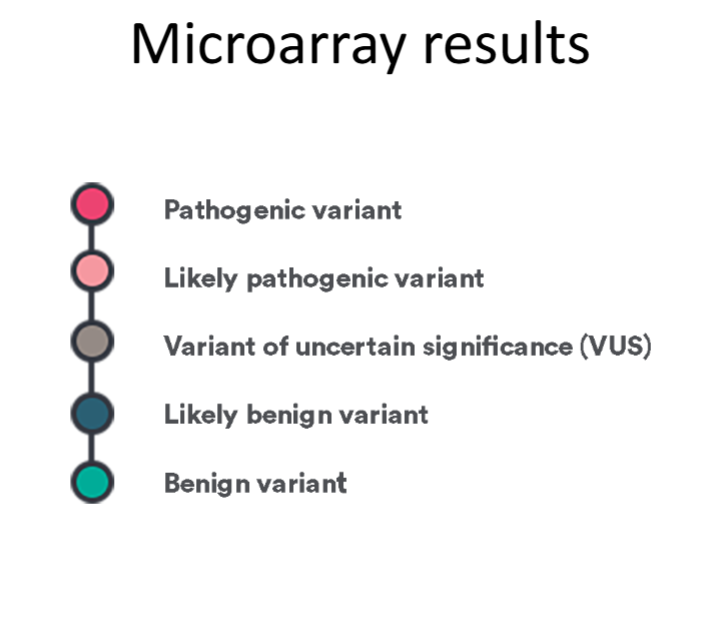
*****HOW ARE COPY NUMBER VARIANTS INTERPRETED?

*****What are the 5 factors that INCREASE the likelihood of PATHOGENICITY (with caveats)


CASE STUDY: What is the LESSON?
Normal array does not exclude a single gene disorder
What a microarray does: It looks for large structural changes across the entire genome. It detects missing pieces (deletions) or extra pieces (duplications) of DNA. These are called Copy Number Variants (CNVs) and usually involve hundreds or thousands of DNA base pairs, often spanning multiple genes.
What a single-gene disorder is: These conditions are caused by a tiny mistake inside one specific gene—often a change in just a single DNA "letter" (a point mutation) or a tiny deletion/insertion. Examples include Cystic Fibrosis, Sickle Cell Anemia, and Marfan Syndrome.
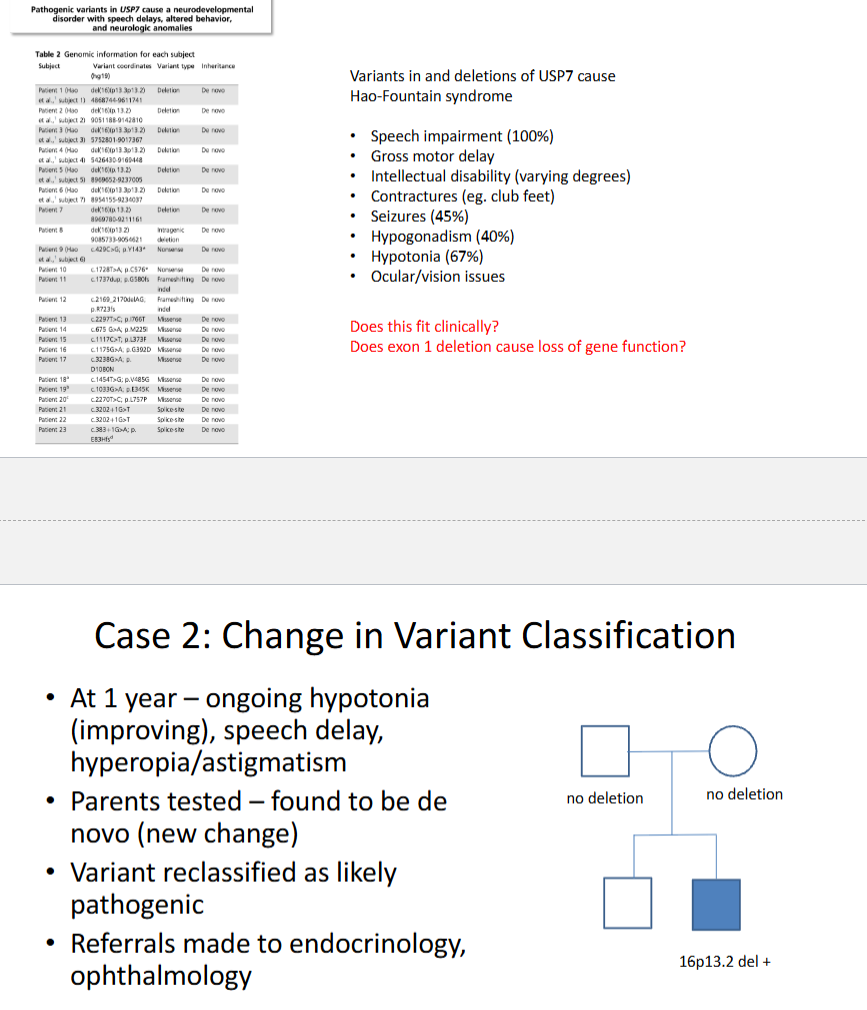
CASE STUDY: Change in Variant Classification What is the LESSON?
Initially seen as 2-week-old male with low tone, feeding issues, bilateral club feet, laryngomalacia (floppy larynx)
No significant prenatal or family history
Microarray – small deletion (173kb) encompassing exon 1 of USP7, classified as variant of uncertain significance
Even very small deletions can still be Clinically relevant, depending on gene content. SEGREGATION (testing of family members) can halp interpretation
****Chromosomal disorders in the Prenatal setting
Screening vs. Diagnosis
What is the use for both
Why are they important?

*****is an FTS? What are the 3 components of this process + does this process do?
A FIRST TRIMESTER SCREEN
Algorithm provides RISK for TRISOMY 21, 13 + 18

*****What is NIPS?
Simple blood test performed during pregnancy to assess the risk of certain genetic conditions
Cell-Free DNA: During pregnancy, tiny fragments of DNA from the placenta circulate in the mother's bloodstream. this is what is tested

What are the steps/flow of events for screen → diagnosis?

****Weigh + Compare the PROS + CONS of Screening vs. Diagnosis Testing

******What are the 4 Important elements to consider for a SCREENING test?
Sensitivity: % of affected pregnancies that are screen +
Positive Predictive value: Likelihood that a person with a + test has an affected pregnancy
Negative Predictive value: Likelihood that a person with a - test does not have an affected pregnancy
Specificity: % of individuals with unaffected pregnancies who screen -
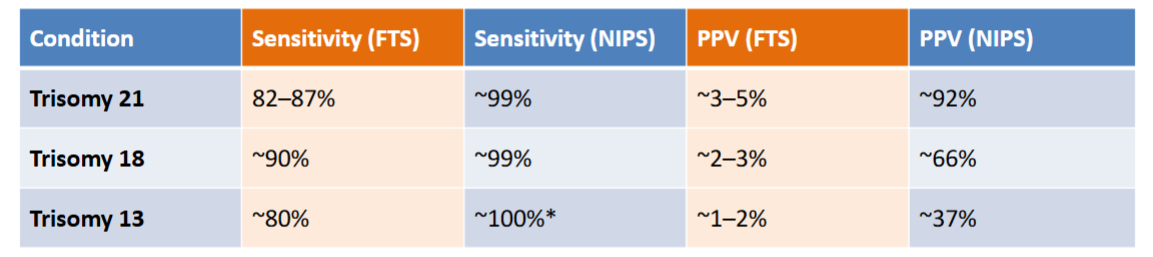
*****Between a FTS + NIPS Which is BETTER for detecting a common aneuploidy?
NIPS has improved SENSITIVITY (detection rate amount of screen positive) + PPV (Positive Predictive Value)
NOTE: while NIPS has good Sensitivity + PPV a diagnostic test is still required as it is still a SCREEN
***Methods of CNV detection by invasive means? How invasive is it?
Diagnostic tests required to confirm or rule out chromosomal disorders after positive screen
Fetal DNA sample acquired via invasive procedures (eg. amniocentesis). Chance of Miscarriage associated (1 in 200 - 1 in 500)
Microarray can also be offered if ultrasounds show anomalies (Even if screen is negative)
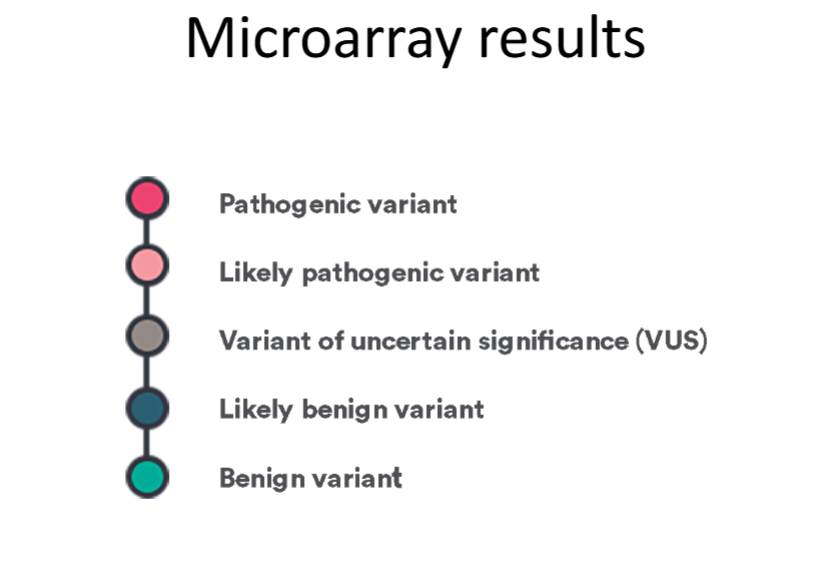
*****Of the 5 Microarray results, Which are REPORTED for prenatal vs. pediatrics + adult tests?
WHY?
Prenatal: Pathogenic + likely pathogenic only
Why?
As results may inform decisions regarding continuation of a pregnancy thus only actionable results are reported
Pediatrics + adults: VUS added
Remember Likely benign + benign variants are never reported
