CH. 16 The Endocrine System
 Call Kai
 Learn
Learn Practice Test
 Spaced Repetition
 Match
Match Flashcards
 Knowt Play
1/56

There's no tags or description
Looks like no tags are added yet.
Name | Mastery | Learn | Test | Matching | Spaced | Call with Kai | Chat |
|---|
No analytics yet
Send a link to your students to track their progress
57 Terms
endocrine system releases
hormones, that are then transported thru blood.
response times for hormones
slower, but last longer than nervous system responses
endocrinology
the study of hormones and endocrine organs
endocrine system controls and integrates
reproduction
growth and development
maintenance of electrolyte, water, and nutrient balance of blood
regulation of cellular metabolism and energy balance
mobilization of body defenses
exocrine glands
produce nonhormonal substances (ex. saliva, sweat)
have ducts to carry secretion to membrane surface
endocrine glands
pituitary, thyroid, parathyroid, adrenal, and pineal glands
what do endocrine hormones produce
hormones, but they lack ducts
circulated by blood to target tissues
hypothalamus is
neuroendocrine organ
what organs have both exocrine and endocrine functions
pancreas
gonads
placenta
hormones
long-distance chemical signals, travel in blood or lymph
autocrines
chemicals that exert effects on the same cells that secrete them
paracrines
locally acting chemicals that affect cells other than those that secrete them.
diffuse through ECF to neighboring tissues
two main classes of hormones
amino acid-based hormones
steroids
amino acid-based hormones
amino acid derivatives
peptides
proteins
steroids
synthesized from cholesterol
gonadal and adrenocortical hormones
hormone action on target cells may be to
alter plasma membrane permeability and/or membrane potential by opening or closing ion channels
stimulate synthesis of enzymes or other proteins
activate or deactivate enzymes
induce secretory activity
stimulate mitosis
water-soluble hormones
all amino acid-based hormones EXCEPT thyroid hormone
act on plasma membrane receptors
act via 2nd messenger (signal transduction)
CANNOT ENTER CELL
receptor types: G-protein linked, enzyme-linked, and ion channel-linked
lipid-soluble hormones
steroid and thyroid hormones
act on intracellular receptors that DIRECTLY activate genes
NO 2ND MESSENGERS
CAN ENTER CELL
two main second-messenger systems for amino acid-based hormones
cyclic AMP (uses one 2nd messenger)
PIP2 calcium (uses two 2nd messengers)
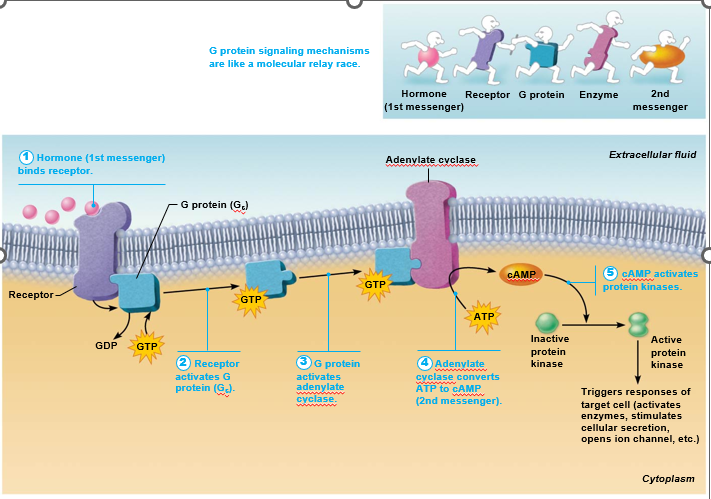
cyclic AMP (cAMP)
hormone (first messenger) binds to receptor
receptor activates a G protein
G protein activates or inhibits effector enzyme ADENYLATE CYCLASE
Adenylate cyclase then converts ATP TO cAMP (second messenger)
cAMP activates PROTEIN KINASES that phosphorylate (add a phosphate) other proteins
hormone floats away, or phosphodiesterase (PDE) converts cAMP back to AMP
PIP2-calcium signalling mechanism
hormone-activated G protein activates a different effector enzyme PHOSPHOLIPASE C
activated phospholipase C splits membrane protein, PIP2, into two second messengers
-diacylglycerol (DAG) activates protein kinases
-inositol trisphosphate (IP3) causes CA2+ release from intracellular storage sites (DAG and IP3 are first set of second messengers)
calcium ions act as another second messenger
-CA2+ alters enzyme activity and channels, or binds to regulatory protein CALMODULIN
-calcium-bound calmodulin activates enzymes that amplify cellular response
what are the amino acid-based hormones (water soluble)
from ant pit: TSH, LH, FSH, GH, ACTH, PRL
from post pit: ADH, oxytocin
all pituitary, hypothalamus, thymus, thyroid (functionally a lipid), heart, GIT, pancreas hormones
what are the sterioids (lipid based)
gonads: testosterone, estrogen, progesterone
adrenal cortex: adrenocortical hormones (mineralcorticoids, glucorticoids, gonadocorticoids)
What do PDE blockers do?
keeps the process going much longer, often have high mortality rates
what other hormones work without second messenger system
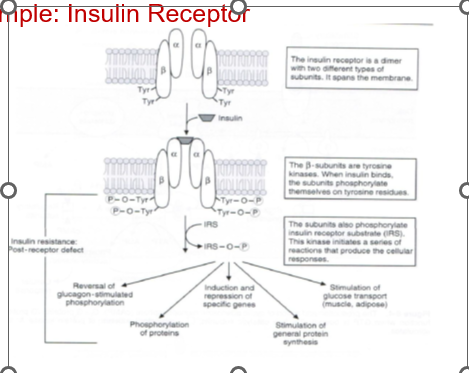
insulin receptor
amino acid-based in structure (water soluble), but does NOT USED G PROTEIN COUPLED RECEPTOR
works without a second messenger system
insulin receptor in cell membrane (tyrosine kinase) that can phosphorylate something, then activating the downstream signalling
insulin acts in opposite of glucagon, tells the cell to stop release glucose (bring glucose inside instead) also does protein and fat synthesis (food is used to build proteins and any extra sugar is stored as fat)
where do water soluble hormones come from
the brain
where do lipid soluble hormones come from
gonads and adrenal cortex
what hormone acts like a lipid soluble hormone
thyroid hormone (can go straight into plasma membrane and to target cell)
what do steroids look like
4 interlocking ring structure
lipid soluble hormone activation process
receptor hormone complex enters nucleus and binds to DNA
initiates transcription to produce mRNA
mRNA is then translated into specific protein for various functions (metabolic activities, structural purposes, etc)
water soluble hormones affect
proteins that were already made, can cause proteins to activate/deactivate, secretion, or opening/closing ion channels
most use 2nd messenger systems except insulin
lipid soluble hormones and thyroid hormone
go straight into the nucleus and determine what protein is made
thyroid hormone
lipid soluble
amino acid-based (acts like water soluble)
blood levels of hormones are controlled by
negative feedback mechanisms
hormone release is triggered by
endocrine gland stimuli
nervous system modulation
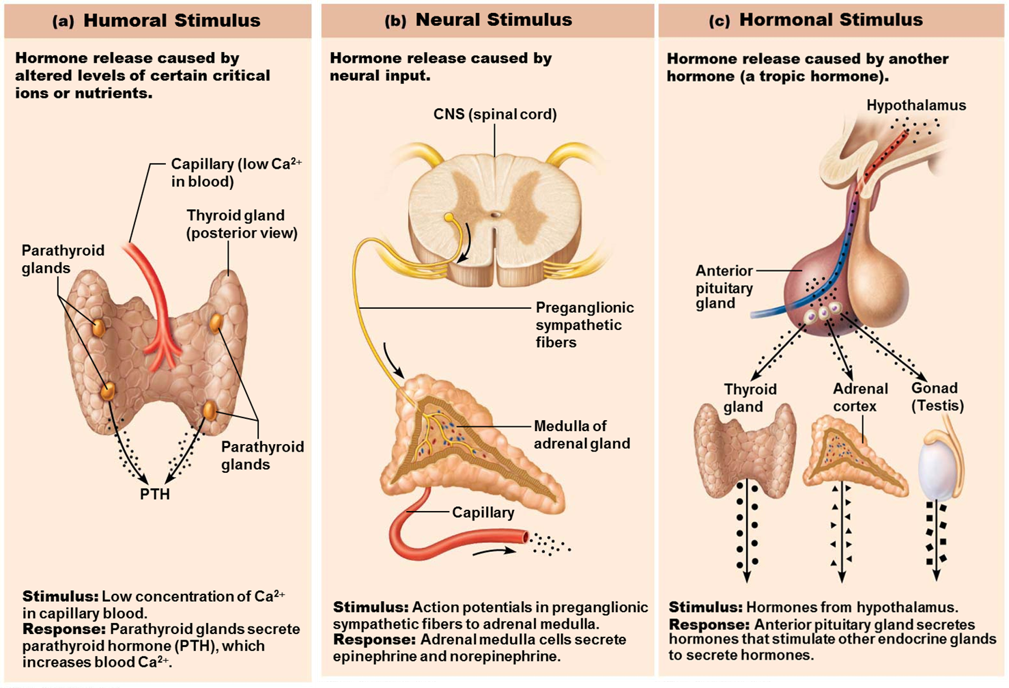
what are the forms of stimuli percieved by the endocrine glands
humoral stimulus
neural stimulus
hormonal stimulus

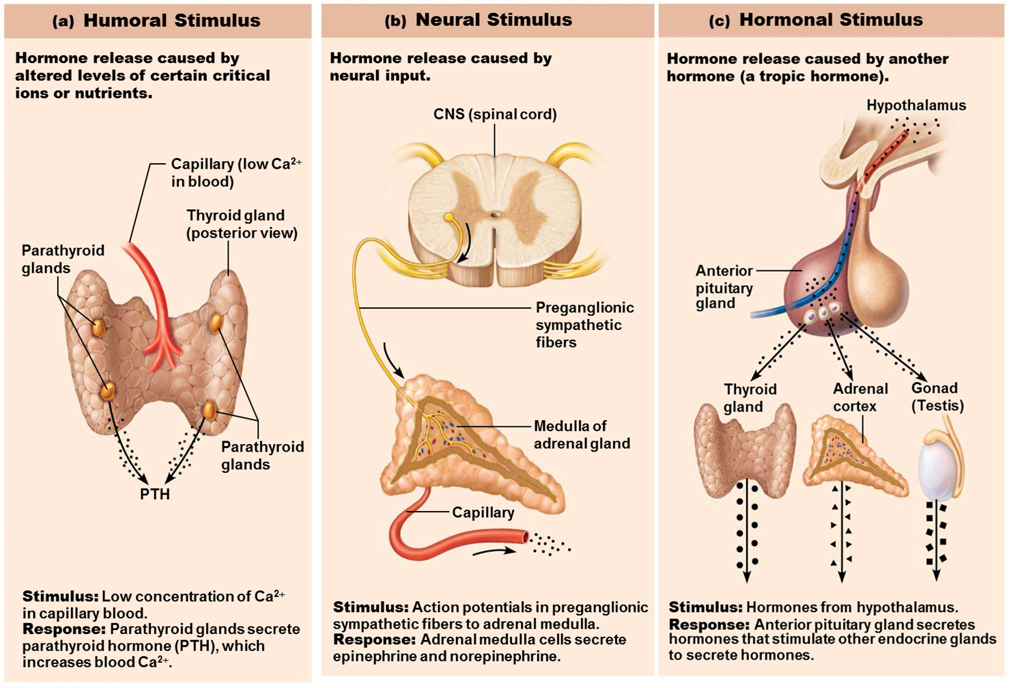
humoral stimulus
triggered by something in the blood
ex. low Ca2+ in blood causes parathyroid glands to release PTH goes to bones, activates osteoclasts that digest bones to release calcium into the blood, tell kidneys to hold onto calcium.
neural stimulus
the nervous system triggers a stimulus
ex. sympathetic fibers tell adrenal medulla to release epinephrine and norepinephrine
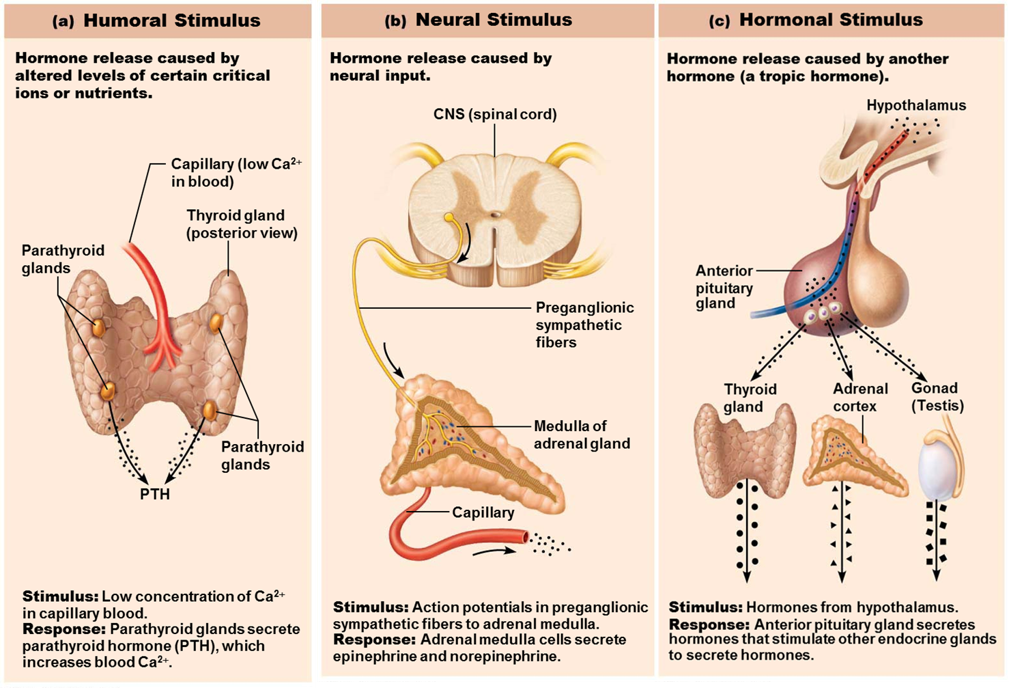
hormonal stimulus
hormones signal when other hormones need to be released
ex. hypothalamus makes TRH which then triggers the release of TSH, which causes the release of thyroid hormone
ex. adrenal cortex CRH > ACTH > hormones released from adrenal cortex
ex. gonads GNRH > causes the release of FSH and LH > goes to the gonads and causes release of testosterone or estrogens
target cells must have
specific receptors to which hormone binds.
ex. ACTH receptors are found only on certain cells of the adrenal cortex, but thyroxin receptors are found on nearly all areas of the body (bc it needs to maintain cell metabolism, as ACTH just needs to go to the adrenal cortex)
target cell activation (biological response) depends on what factors
blood levels of hormone (concentration)- if levels of hormone are low, response is low.
relative number of receptors on target cell- if hormone can’t bind to a receptor, it does not respond
affinity (strength) of binding between receptor and hormone- if affinity is low, effect of response is low
up-regulation
in response to low hormone levels:
target cells can upregulate gene expression encoding receptors to increase the number of receptors,
ex. thyroid hormone activity is low, cells can upregulate gene expression to make more hormone absorbed.
this is a compensatory mechanism to increase the sensitivity of the cell to the hormone in low production
down-regulation
in response to high hormone levels:
ex. thyroid hormone activity is high, cells can down-regulate and desensitize to the hormone, and overall lower the amount of receptors, because it doesn’t need to respond to all of it.
a compensatory mechanism to decrease sensitivity to high hormone levels
hormones circulate in blood are either
free or bound
steroids and thyroid hormone are attached to plasma proteins, all others circulate without carriers
free hormones are usually water soluble and do not need carriers.
bound hormones need to be bound to something to help get it to its target. usually steroids and lipid soluble thyroid hormone
concentration of circulating hormone reflects
rate of release
speed at which it is inactivated and removed from body (cleared by liver or kidneys
hormones have different response times
some responses are immediate
some, especially steroid, can take hours to days
some are inactive until they enter target cells
hormones can be removed from blood by
degrading enzymes
kidneys- filter out water soluble hormones (faster)
liver- clear lipid soluble hormones out (slower)
half-life
time required for level or hormone in blood level to decrease by half
varies anywhere from fraction of a minute to a week, depending on the hormone
half-life, onset, and duration of hormone activity are dependent on
whether the hormone is water or lipid soluble.
lipid soluble hormone receptors are
found internally
water soluble hormone receptors are found
externally
which type of hormone is going to activate/deactivate existing proteins?
water soluble hormone
which type of hormone is going to make new proteins
lipid soluble
multiple hormones may act on same target at the same time thru
permissivness
synergism
antagonism
permissiveness
one hormone cannot exert its effects without another hormone being present
ex. reproductive hormones need thyroid hormone to have affect, if TH is low (hypothyroidism), puberty is delayed
ex. TH and Epi work better together, release a lot of fatty acids.
synergism
more than one hormone produces same effects on target cell, causing AMPLIFICATION
ex. glucagon and epinephrine both cause liver to release glucose, but when cortisol is added glucose skyrockets.
can work indepenently, but better together.
antagonism
one or more hormones oppose action of another hormone
ex. insulin (brings sugar into cells) and glucagon (says to release sugar), PTH vs calcitonin