L1+L2: History of Public Health Microbiology
 Call Kai
 Learn
Learn Practice Test
 Spaced Repetition
 Match
Match Flashcards
 Knowt Play
1/17

There's no tags or description
Looks like no tags are added yet.
Name | Mastery | Learn | Test | Matching | Spaced | Call with Kai | Chat |
|---|
No analytics yet
Send a link to your students to track their progress
18 Terms
Who was the “founder” of public health + what year
Charles-Edward Winslow - 1920
Who originally proposed the theory of epidemiological transition + what year
Abdul Omran (1971)
What do epidemiological transitions describe
Changing patterns of population distributions in relation to changing patterns of mortality, fertility, life expectancy, and leading causes of death
Three phases of epidemiological transition (original wording from Abdul Omran)
1) The Age of Pestilence and Famine
2) The Age of Receding Pandemics
3) The Age of Degenerative and Man-Made Diseases
The major transitions that should be addressed in modern public health (9)
Demographic
Democratic
Epidemiological
Urban
Energy
Economic
Nutrition
Bio-ecological
Cultural
5 Phases of the demographic transition model
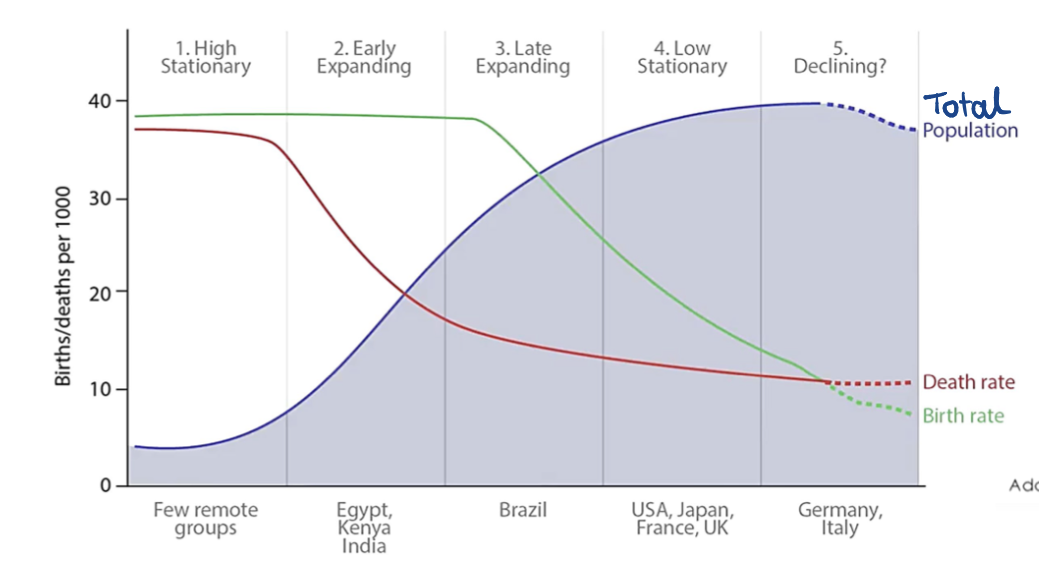
Population pyramids are
A graphical illustration of pop distribution by age and sex
Population pyramids: 4 stages
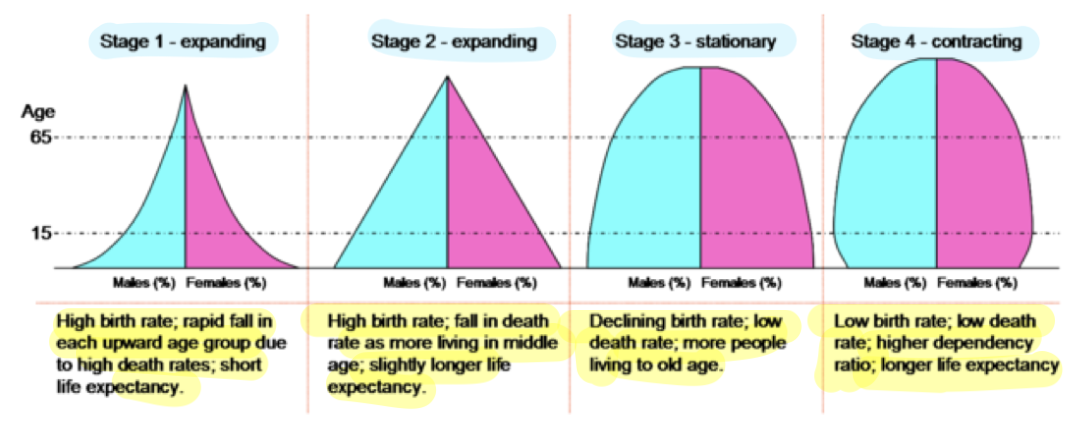
Population pyramids stage 1 is called?
+ Description
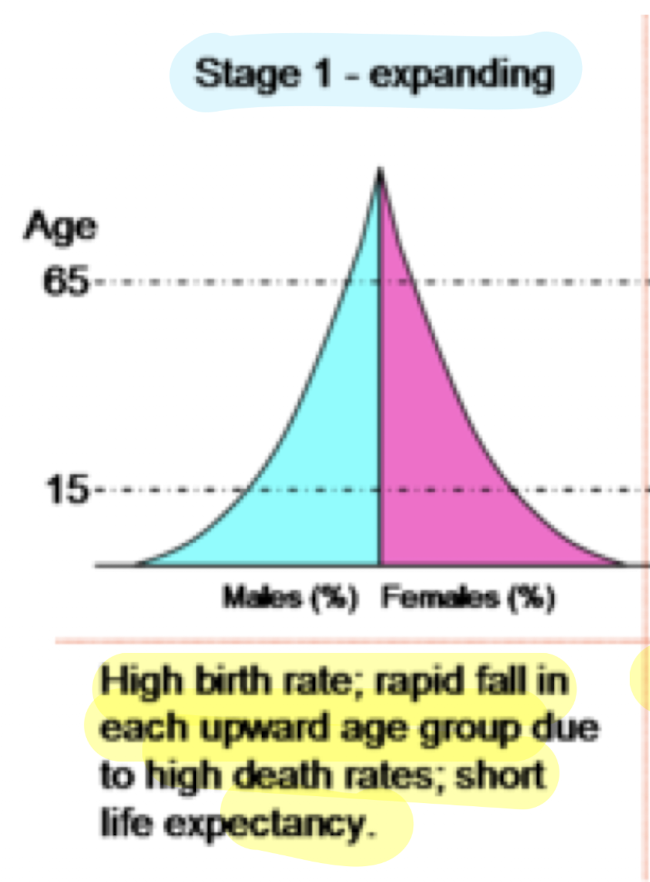
Population pyramids stage 2 =
Description
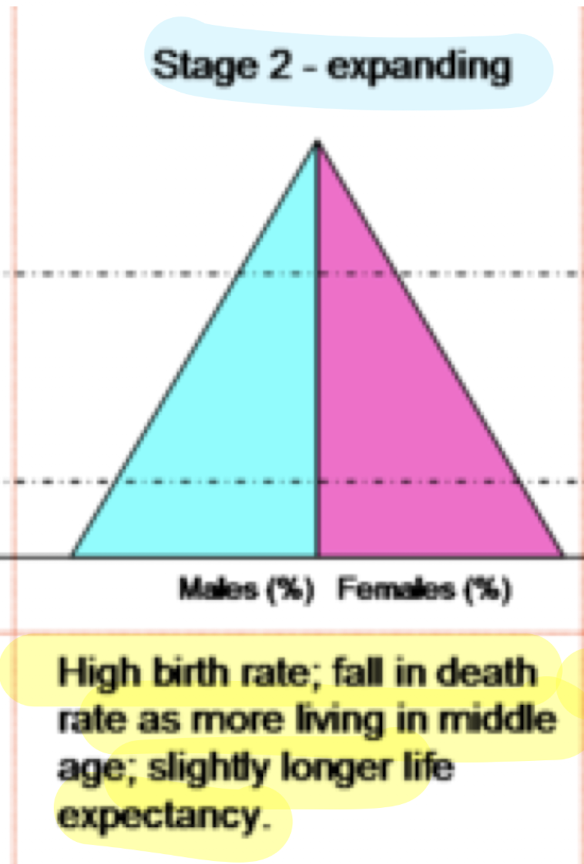
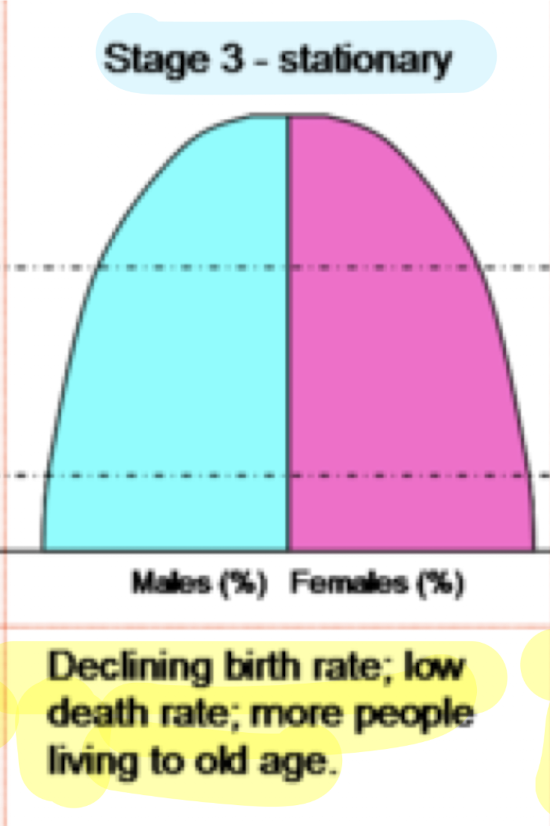
Population pyramids stage 3=
Description
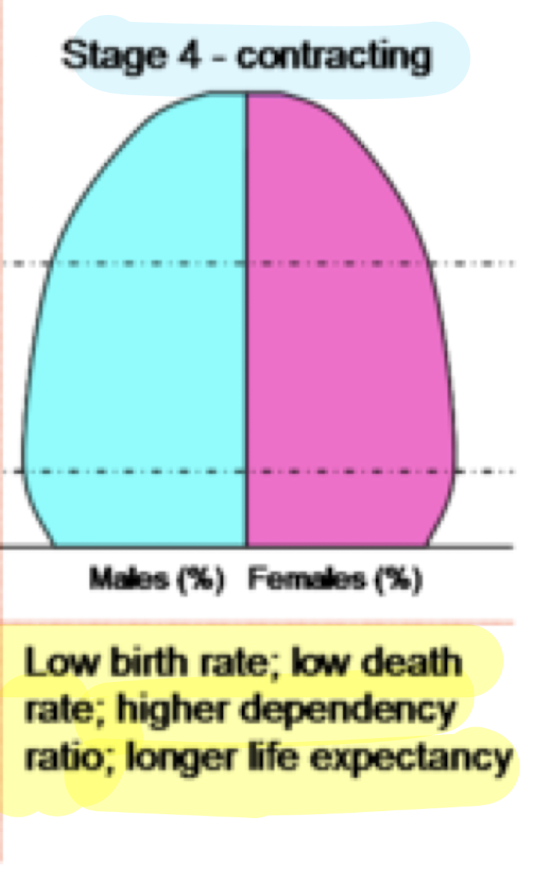
Population pyramids stage 4 =
Description
The first epidemiological transition
Occured
Characterised by
Development of agricultural societies
Approximately 10,000 years ago
-High fertility and mortality rates
-High infectious disease burdens and nutritional
diseases
Characterised by sedentism (practice of living in one place for a long time) and development of urban centres, domestication of animals and exploration and expansion of populations into new areas
Adverse disease consequences of first epidemiiologicasl transition
• Increase of parasitic diseases by contact with human waste
• Increased exposure to zoonotic diseases
• Introduction of novel diseases to groups that had little resistance to them
The second epidemiological transition
Shift from acute infectious diseases to chronic noninfectious, degenerative diseases
Increasing developments in technology, medicine, and science
Key characteristics:
Low fertility and mortality rates
High burden of degenerative diseases (cardiovascular diseases, cancer, etc.)
Beneficial consequences of the second epidemiological transition
• Varied economy with enough agriculture to sustain large populations
• Improved nutrition (or over-consumption)
• Improved hygiene and sanitation
• Development of antimicrobials and vaccines
Many of the diseases of the second epidemiological transition share common etiological factors related to
human adaptation, including diet, activity level, mental stress, behavioral practices, and environmental pollution
Key characteristics of second epidemiological transition
Low fertility and mortality rates
High burden of degenerative diseases (cardiovascular
diseases, cancer, etc.)