modern test 2
 Call Kai
 Learn
Learn Practice Test
 Spaced Repetition
 Match
Match Flashcards
 Knowt Play
1/36

There's no tags or description
Looks like no tags are added yet.
Name | Mastery | Learn | Test | Matching | Spaced | Call with Kai | Chat |
|---|
No analytics yet
Send a link to your students to track their progress
37 Terms
speed of light is measured at c
BY EVERY OBSERVER
basis of time dilation
velocity © has to stay constant so time hasw to change
th moving clock runs slow =
an outside stationary observer sees time pass more slowly for a moving object
guy on the train
proper time , views light going up and down
observer on the tracfk views its as a longer path/diagonal
longer time
proper length
observer on the trakcs
guy on the spaceship time is proper
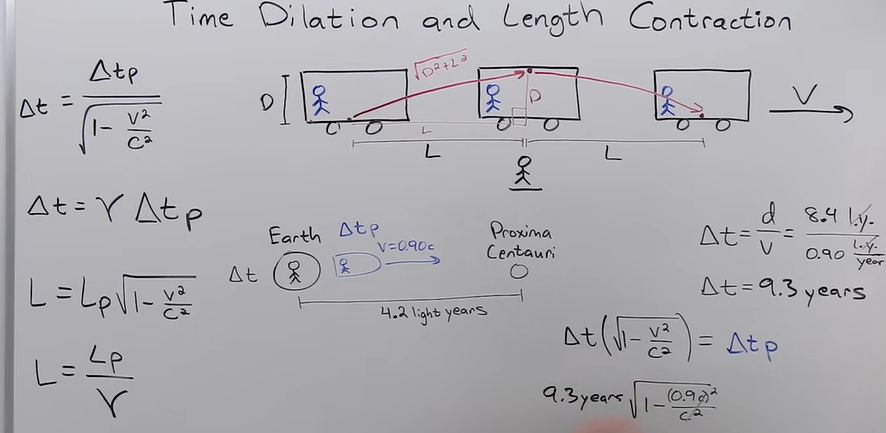
earth has proper time

farther away from earth, clock ticks faster
earth pre deterine time
if photon had clock
no ticks
Since a single clock in Clock A's frame cannot be at both event locations at once,
Clock A's frame must use multiple synchronized clocks spaced apart to measure the start and end of that interval.
proper time
observers own refernece frame
one clock
no spatial dsitnacfe
dialted time
same or other ref frame
multiple clocks
spatial distacne

given 1 time not the other5

time dialtino
alpha and beta are 2 seperate places
proper length
in whoevers ref frame where obj r at test
contracted
observer who sees the onj moving

gamma
It tells you how much two observers will disagree on measurements of time and space based on their relative speed.NOT INVARIANT DEPENDS ON WHOS REFERENCE FRMAE UR USING, aka whos v ur using
twin paradox
start w earth frame, v=x/t
finding rockets time
time/gamma
earth link clock accfording to rocket when it gets to planet P
t = t (our) gamma
x = x (our) gamma
time on earth according to rocket coming back
time slipage plus earth time
privilleged frame
absolute rest
absolt tiem
gedmeotry of
SPACETIME
time and spacfe
MEASURD!!! differnelty, clocks dcont acc change3 the way they tick
so your saying since measuring megth is t4echnically measuring 1 length to another
that one length to another is not the same across all reference frames therefore its length is different dpe4ended on reference fram
divide spacfe by c
distance in seconds
multiplyby c
time units into length
time in earths pov
mulyiply gamma to how much time spent on planet
add outbotnd ( kinematics ) to inbound ( gamma )
same ref frame
divide/multiply gamma
turn arouhd n= change of simutlanelity
xhange in how ur seeing the clocks , earths clock appears to jump
While you are coasting smoothly toward Canopus, the situation remains symmetric: you see Earth's clocks running slower than yours
This is because your two frames disagree on what events occur simultaneously across space.
turn doesnt create agte differnenecfe
it simply aligns your reference frame with Earth's so both of you can stand side-by-side and agree on the final result.
coordinatees, spacfetime invariant
s² = v² - t²
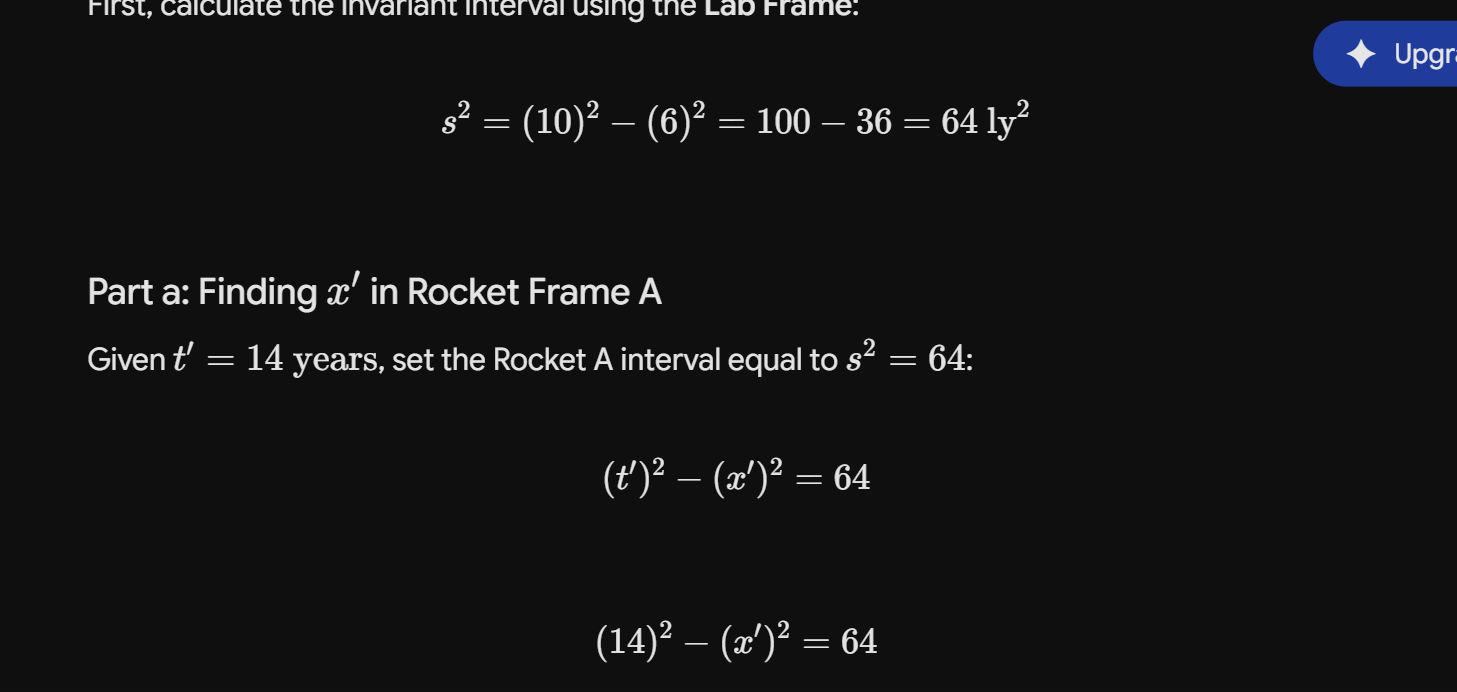
find invariant
pythag