BIOL 202 Practical 2: Phylum Echinodermata
 Studied by 0 people
 Call Kai
 Learn
Learn Practice Test
 Spaced Repetition
 Match
Match Flashcards
 Knowt Play
1/14

There's no tags or description
Looks like no tags are added yet.
Name | Mastery | Learn | Test | Matching | Spaced |
|---|
No study sessions yet.
15 Terms
Phylum Echinodermata
Sea stars/sea urchins/sea cucumbers
Aboral Side
side opposite from the mouth (Phylum Echinodermata)
Oral side
on the same side as the mouth (Phylum Echinodermata)
Calcite endoskeleton, WVS, mutable collagenous tissue
3 defining traits of Phylum Echinodermata
Calcite endoskeleton
made of ossicles of calcium carbonate, some have spikes and pedicellariae (Phylum Echinodermata)
Ossicles
fused calcium carbonate plates in the Echinodermata endoskeleton
Pedicellariae
pincer-like structures for defense and grooming within the Echinodermata endoskeleton
Water vascular system (WVS)
network of hydraulic canals with madreporite that can be used for locomotion/respiration/feeding/attachment/etc.
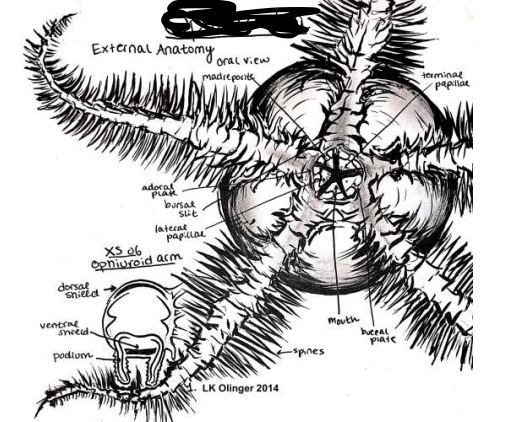
Madreporite
Opening for the WVS (Phylum Echinodermata)
Mutable collagenous tissue
allows Phylum Echinodermata to change rigidity of tissues for defense and for them to push out their stomachs for feeding
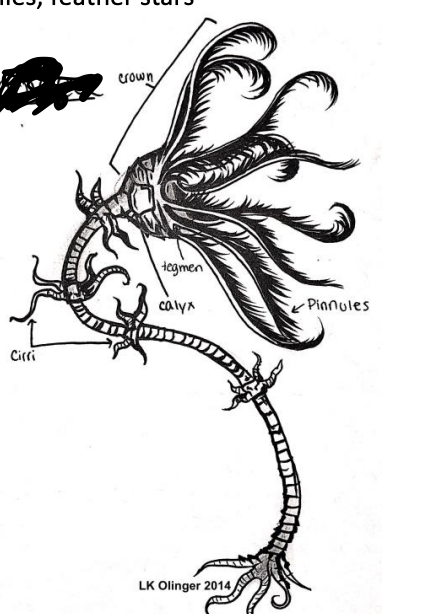
Class Crinoidea
Echinodermata: sea lilies/feather stars, no spines/madreporite/pedicellariae, feather-like arms
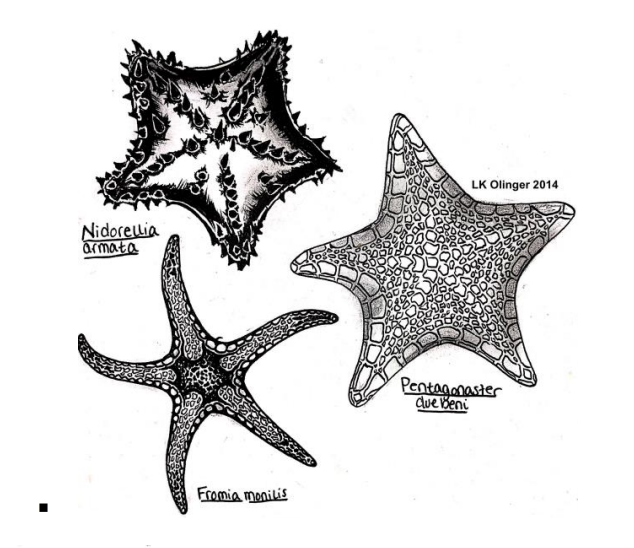
Class Asteroidea
Echinodermata: sea stars, pentaradial, aboral madreporite
Class Ophiuroidea
Echinodermata: brittle/basket stars, long and flexible arms, oral madreporite
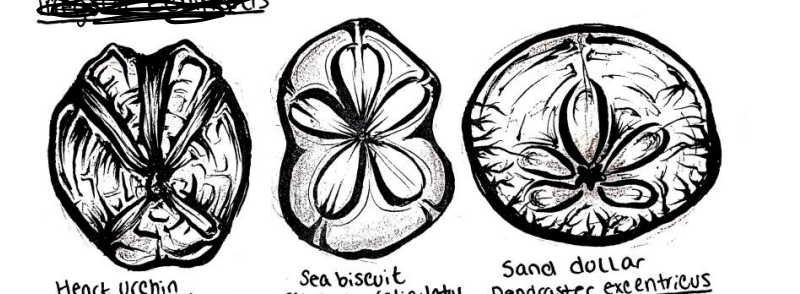
Class Echinoidea
Echinodermata: sea urchins/sand dollars, globe-like bodies, aboral madreporite
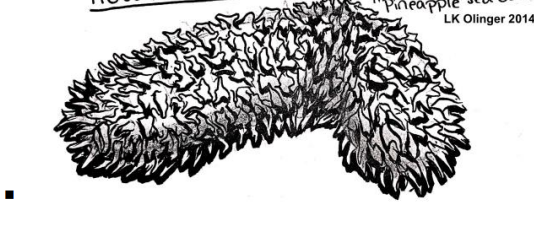
Class Holothuroidea
Echinodermata: sea cucumbers, internal madreporite