Algebra 2 function toolbox
 Call Kai
 Learn
Learn Practice Test
 Spaced Repetition
 Match
Match Flashcards
 Knowt Play
1/11

Earn XP
Description and Tags
EQN means equation
Name | Mastery | Learn | Test | Matching | Spaced | Call with Kai | Chat |
|---|
No analytics yet
Send a link to your students to track their progress
12 Terms

Constant function
no slope
no increase or decrease
EQN: y = c (c can only be any real #)
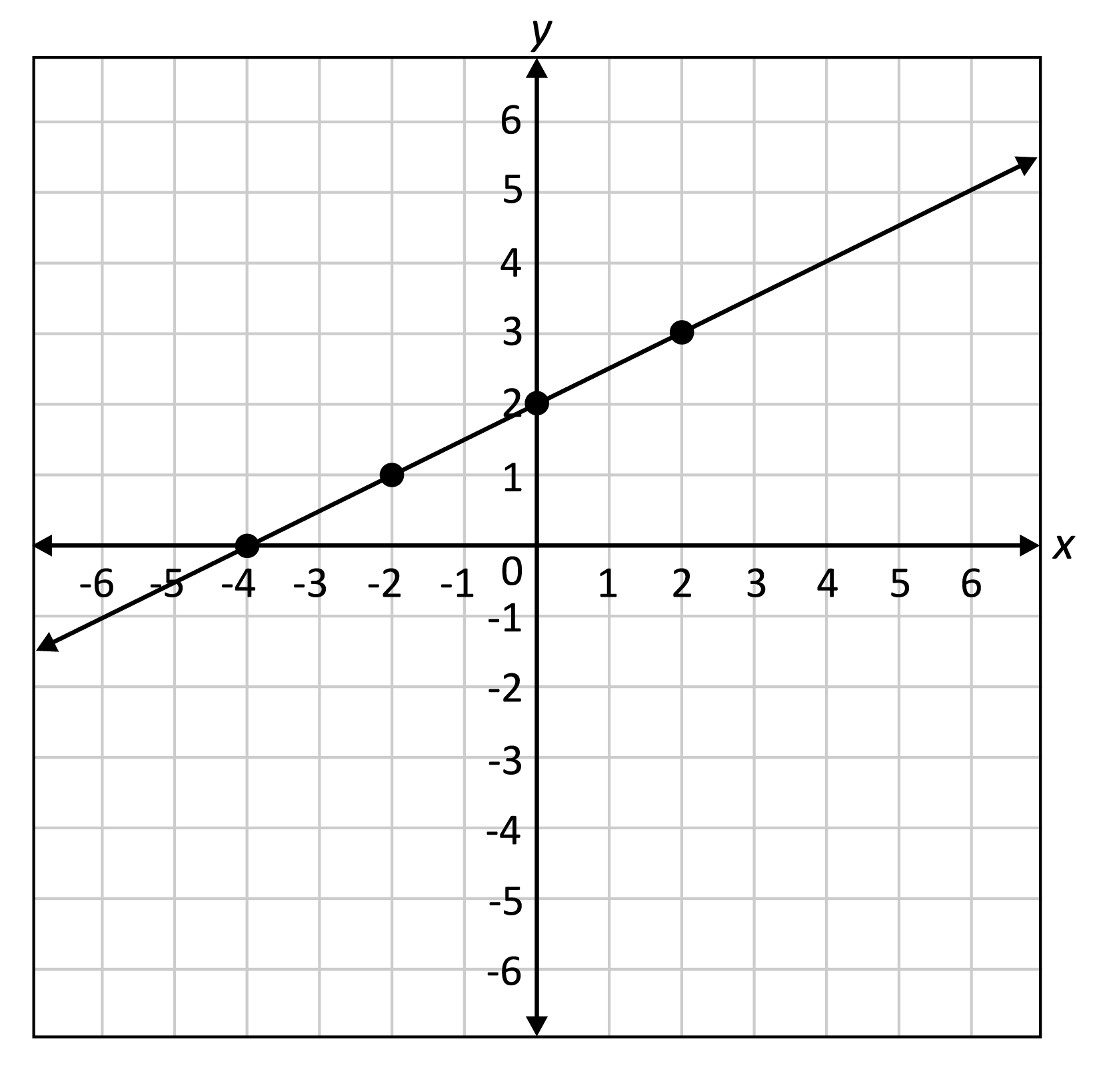
Linear function
has a constant slope
has one x - intercept & one y - intercept,
EQN: y = mx + b (m is slope and b is y - intercept)

Quadratic function
shape is parabola
the degree is 2
EQN:
standard form: y = ax²+bx+c
vertex: y = a (x-h)² + k
Factor: y = (x + b) (x + c)
graphical features:
min or max
y - intercept (only 1)
2 x intercepts
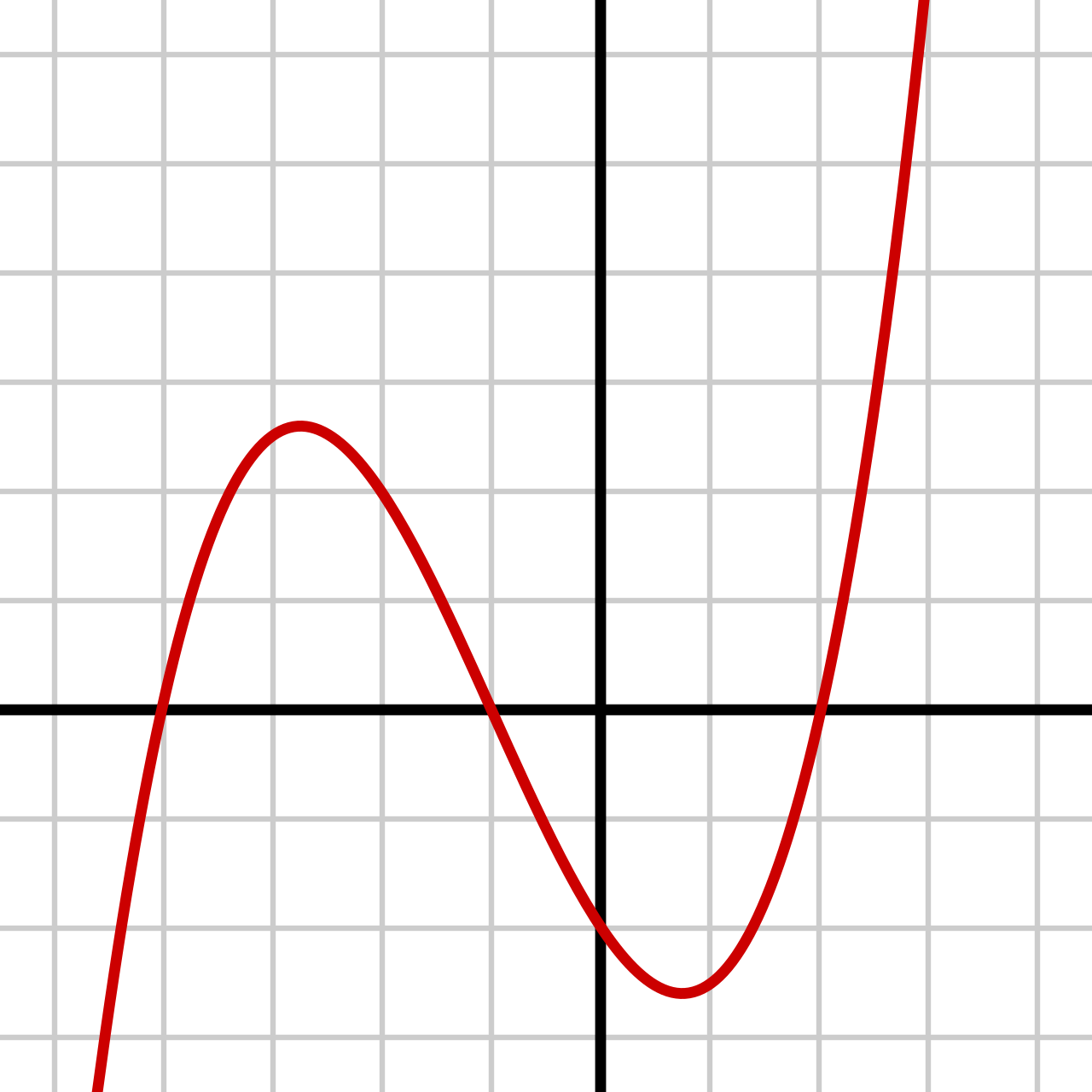
Cubic function
the degree is 3
EQN: y = ax³ + bx² + cx + d
Graphical features:
Min & max
x-intercept (at most 3)
y - intercept
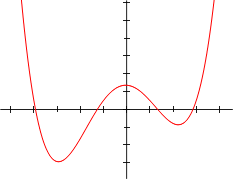
Quartic function
EQN: y = ax4 + bx3 + cx2 + dx + e
The degree is 4
Graphical features:
Min/max
4 x - intercepts (at most)
y - intercept (1)

Absolute value function
EQN: y = |x|
Graphical features:
min or max (vertex)
x - intercept (at most 2)
y - intercept

Exponential growth
the function is always increasing
EQN: y = a (b)x
(b > 1)
Graphical features:
exponential functions have horizontal asymptotes.
An Asymptotes is a value the function approaches, but doesn’t ever touch
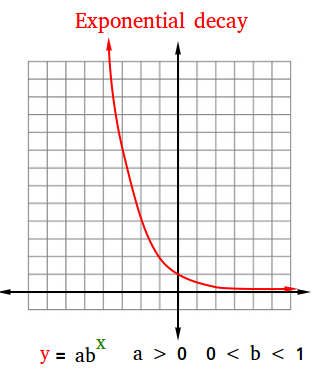
Exponential decay
EQN: y = a(b)x
(0 < b < 1)
exponential functions have horizontal asymptotes.

logarithmic functions
Graphical features:
there is a vertical Asymptotes
EQN: y = logb(x)

rational function
EQN: y = 1/x
the variable is the denominator
has both vertical and horizontal asymptotes
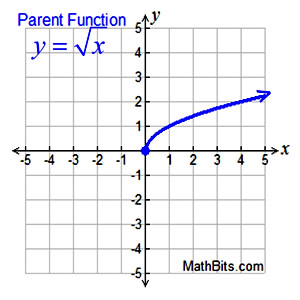
Square root function
clear starting point
EQN: y = √x
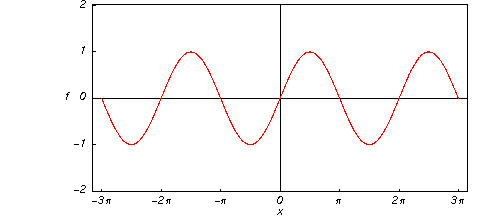
sine function
EQN: y = sin(x)
infinite x - intercepts and infinite max/mins
ONLY ONE y INTERCEPT