Lecture 1 Great Diseases of the World
 Call Kai
 Learn
Learn Practice Test
 Spaced Repetition
 Match
Match Flashcards
 Knowt Play
1/60

There's no tags or description
Looks like no tags are added yet.
Name | Mastery | Learn | Test | Matching | Spaced | Call with Kai | Chat |
|---|
No analytics yet
Send a link to your students to track their progress
61 Terms
What are five diseases that this man could have as evidenced by the lesions on his skin?
Small Pox
Leprosy
Chicken Pox
Measles
Monkey Pox (M Pox)
Why did people dress like plague doctors?
Glasses - protects eyes
Breathed through the beak to not breathe (bad air)
Sticks - poke their patients
Robes - protect their bodies
Hat - protect their head
Closed toed shoes - protects their feet
(true/false) We have lived through several pandemics recently and will face others in your lifetime
true
define pandemic
an epidemic of infectious disease that has spread across a large region or multiple continents or worldwide affecting a large number of people or animals.
give an example of a pandemic
COVID
Highly Pathogenic Avian Influenza spill over into many mammal species
Reemerging Monkey Pox now called Mpox and human to human transmission.
What are the two main purposes of wearing face coverings?
reduce the amount of virus spreading from the wearer (who may not know they are spreading the virus) into the environment and to others.
reduce the likelihood that large droplets containing virus that are generated by others may enter the nose and mouth of the wearer.
(true or false) If you have an upper respiratory infection you might consider wearing a mask in class to help protect your classmates from getting your virus infection as well
True
What is the two basic meanings of medicine
The Science of Healing; the practice of the diagnosis, treatment and prevention of disease, and the promotion of health.
Medications, drugs, natural substances like plants and chemical substances used to treat and cure diseases, and to promote health.
What does Australopithecus mean?
Latin australis "southern", Greek "ape"
Is a genus of extinct hominids
It is closely related to the human genus Homo and may be ancestor
What’s some of history about Australopithecus
It shared several traits with modern apes and humans and were widespread throughout Eastern and Northern Africa around 3.5 to 4.9 million years ago.
Who is Lucy?
One of our oldest relatives
Ethiopia 3.2 million years old.
The most famous fossil
part of the Australopithecus apheresis
What is Australopithecus apheresis
an extinct species that lived between 3.9 and 2.9 million years ago.
was ancestral to both the genus Australopithecus and the genus Homo, which includes the modern human species, Homo sapiens.
What did Australopithecus apheresis people eat?
fruit, vegetables, and tubers

label this diagram

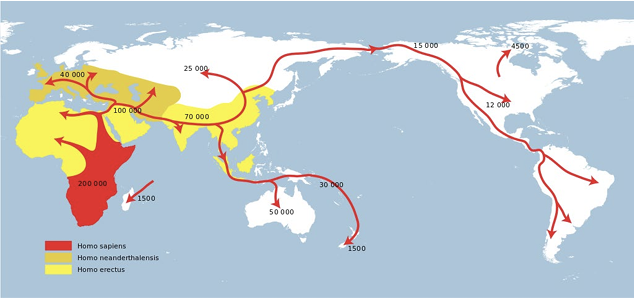
what is the major reason humans migrated
food security
where did human migration begin?
out of Africa approximately 70,000 years ago
Why do Humans Migrate to New Homes?
Been ongoing for thousands of years
Population growth and crowding
Disease outbreaks
Drought and climate change
Crop failure and starvation (food security)
what does agriculture contribute to?
the development of civilization
Around when did prehistoric societies evolve from nomadic lifestyles?
10,000 years ago in many locations around the world
has a long history for thousands of years of hunting and gathering
what present day counties the historic fertile crescent is found?
Iraq, Syria, Egypt. Turkey, Iran
what rivers are along the fertile crescent
Tigris and Euphrates
where is the birth of agriculture?
the fertile crescent
Babylon
Why is it called the fertile crescent?
began modern agriculture
domestication of grasses (grains)
Wheat
Rye
Barely
Domestication of pulses
beans
Lentils
Chickpeas
domestication of animals
cattle
sheep
goat
pig
cat
goose
what and when was the first writing developed?
Cuneiform (writing based on wedge-like characters)
Around 3500 B.C Middle East

what was one of the earliest records from the middle east?
A recipe for making beer in cuneiform
what has the growing population lead to?
more diseases
hunting vs. agriculture
What’s the effect of agriculture?
Increase in population
Animal husbandry (zoonoses)
Social organization
describe why agriculture was a lethal gift
Development of communities and crowding
Decreased variability of plants and animals
Night soil and manure use → Parasitic diseases, bacterial diseases, flies
Water contamination
Zoonotic Diseases began to emerge Humans living in close contact with their domestic animals
Plagues or disease outbreaks began to be described in humans living in agricultural and urban communities.
What is prehistoric medicine?
Refers to medicine before humans were able to read and write.
It covers a vast period, which varies according to regions and cultures.
what combination did people in prehistoric times believe in for conditions and diseases?
natural and supernatural causes and treatments
(true/false) people of today are certain about what prehistoric people knew about how the body works
false, nobody can be certain
define geophagy
refers to eating soil-like or earthy substances, such as chalk or clay
what did people use clay for in prehistoric times?
trace materials
use clay externally and internally for the treatment of cuts and wound
what is trepanning
drilling a hole into the human skull for the treatment of health problems or free the victim of demons and evil spirits

where is this skull located in the world (hint - museum)
A Human skull with trepanations at Monte Albán - Museo del Sitio (Del Sitio Museum) Oaxaca Mexico
(true/false) prehistoric peoples had a decent concept of public health
false, they had no concept of public health. this was due to their nomadic lifestyle, so they had no need or through to build public health infrastructure
(true/false) During pre-history, people were afflicted with ailments and diseases, just like we are today.
True
what diseases and conditions were most likely common in prehistoric times?
Osteoarthritis
micro-fractures of the spine and spondylolysis
infections
complications.
what was the life expectancy in prehistoric times
this ranged initially 18-25 years and then from 25 to 40 years, depending on regions and per-historic periods.
(true/false) prehistoric people used medicinal herbs
true
How did the knowledge of medicinal herbs spread?
benefits
harms
word of mouth because people did not read or write in those days
where would have prehistoric people gotten their herbs?
locally or traded with other groups
what materials would nomadic tribes have access to?
Yarrow ( Achillea millefolium)
Mallow
Rosemary
Birch Polypore (Piptoporus betulinus)
what were medicine-men and shaman’s roles in the
lived in tribes and people would seek help for health and medicine advice
in charge of their tribe's health and gathered plant- based medications, mainly herbs and roots, carried out rudimentary surgical procedures, as well as casting spells and charms.
(true/false) shaman are still important today in many communities
true
how did people explain disease in prehistoric times?
unseen causes, (such as demons, spirits and gods) were blamed for making people ill. Cures or hexes put on people which made them fall ill.
what did people believe would treat disease from the supernatural?
people visited the shaman the shaman to appease the gods through chants, prayers, sacrifices and spells
(true/false) Even today people of many faiths still pray or go to shrines for their healing
true, Holy shrines in many religious faiths around the world.
what was the common method to try to heal individuals (hint - Gods & Spirits)
Spiritual healing
what kind of medicine is today becoming a growing industry as an alternative to visiting a physician
Alternative medicine
define disease
Broadly refers to any condition that damages the normal function of the body
define infectious disease
Diseases caused by infections with pathogens (aka ‘germs’) such as viruses, bacteria, fungi, protozoa, and helminths
define causative agent
the name of the pathogen that causes an infectious disease
what type of diseases are the deadliest in history
infectious diseases
Most of the diseases we are familiar with did not exist until recently, why?
They are a consequence of how we live, our cultures and technological advancements
what was the life expectancy in 1900s
32 years
what was the life expectancy in 2021
71 years
Why do you think life expectancy has increased since 1900?
Better Public Health Practices
Clean Water
More Nutritious Food
Antibiotics
Vaccines
Modern Medicine
what are the top 10 leading causes of death globally?
Ischemic heart disease
stroke
chronic obstructive pulmonary disease
lower respiratory infections
neonatal conditions
trachea, bronchus, lung cancer
Alzheimer’s disease and other dementias
diarroheal diseases
diabetes mellitus
kidney diseases
What do you think are the reasons for differences in causes of death among developed and developing countries?
Developing countries have:
Poor infrastructures
Lack of clean, potable water and sanitation
Shortage of qualified health personnel to manage, control and contain the crisis/spread of disease. Lack of vaccines and cost of medicines.