Chapter 1-4: Scientific Notation, SI Units, Average Velocity, Average Acceleration
 Call Kai
 Learn
Learn Practice Test
 Spaced Repetition
 Match
Match Flashcards
 Knowt Play
1/54

There's no tags or description
Looks like no tags are added yet.
Name | Mastery | Learn | Test | Matching | Spaced | Call with Kai | Chat |
|---|
No analytics yet
Send a link to your students to track their progress
55 Terms
Physics
It is a study of natural phenomena.
Physics
It deals with quantity with direction.
Units
These are labels that provide meaning; fundamental of measurements
A way to write very large or very small numbers so they are easier to read, compare, and calculate with in science. It uses powers of 10 to show how many times the number is multiplied or divided by 10.
What is scientific notation?
Scientific notation format
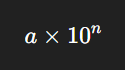
coefficient/number between 1 and 10
In the formula, a is the ?
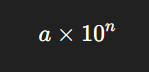
many places the decimal moved
In the formula, n tells how?
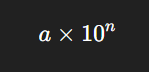
Number is large and moves to the right
What does a positive n exponent mean?
Number is small and moves to the left
What does a negative n exponent mean?
number of decimals moved
The exponent is equals to the?
4,500

They are the standard measurement units used worldwide in science so everyone measures things the same way.
What are SI units?
To make sure all values are in the same unit before using formulas, so answers are correct.
Why do we convert units?
meter (m)
Base Unit – Length
second (s)
Base Unit – Time
kilogram (kg)
Base Unit – Mass
mm, cm, dcm, m, dkm, hm, km
It is the order of length quanties from the reference point of meter (1m)
1 km
1000 m
1 hm
100 m
1 dm
10 m
1 m
m
1 dcm
0.1 m
1 cm
0.01 m
1 mm
0.001 m
1 year
365 days
1 month
4 weeks
1 week
7 days
1 day
24 hours
1 hour
60 mins
1 mins
60 seconds
1 mile
1609 meters
1 feet
0.3048 meters
1 lb
0.4536 kg
1 mph
0.447 m/s
1 inch
2.54 cm
What is a derived unit?
A unit made from combining base units (e.g., m/s, m/s²).
meters per second (m/s)
SI unit for velocity
meters per second squared (m/s²)
SI unit for acceleration
Distance
It has no reference point.
Zero
It is the reference point in a number line.
Position/Location
It needs a reference point to be determined.
Number Scale
It dictates your exact positions or quantity.
Scalar, Vector
Two of way of measuring quantity.
Scalar
It consists of a magnitude or size. Example: cm, kg, hm.
Vector
It consists of a magnitude and direction. Example: 60 m/s NORTH
Distance
It states how far.
Time
It states how fast.
Displacement
It covers a change in position and time. It is represented by delta d.
Displacement
It is equal to d2 - d1
Time Interval
It pertains to the change in time. It is represented by Delta t.
Displacement
It is equal to t2 - t1
Average Velocity Formula
It is equal to: d2 - d1 / t2 - t1 or Δd / Δt
d2 - d1 / t2 - t1 or Δd / Δt
Average Velocity Formula
Acceleration
It is the change in velocity of an object moving over increasing or decreasing distances.
Acceleration Formula
It is equal to: Δv / Δt or v2 - v1 / t2 - t1