UNIT 2: Definitions
 Call Kai
 Learn
Learn Practice Test
 Spaced Repetition
 Match
Match Flashcards
 Knowt Play
1/38

There's no tags or description
Looks like no tags are added yet.
Name | Mastery | Learn | Test | Matching | Spaced | Call with Kai | Chat |
|---|
No analytics yet
Send a link to your students to track their progress
39 Terms
Programmed aging
Loss of DNA repair or cellular repair potential
Wear & tear (accumulated damage)
Current theories of aging fall into three broad categories. What are they?
Gene Program Theories
Theories of aging that view senescence as genetically “programmed” sequence of events that is controlled by genes.
Program or Genetic Theory
Genes are programmed to change their activity at certain stages of development. When these gene “switches” turn on or off, they trigger harmful changes in how our organs and tissues work.
The Hayflick Phenomena
Cells can only divide a set number of times, and this number gets smaller with age. Thought this caused aging, but later evidence showed that cells from older people can still divide many times in young environments. Now the idea is that aging may involve genetic switches turning certain genes off as part of a programmed process.
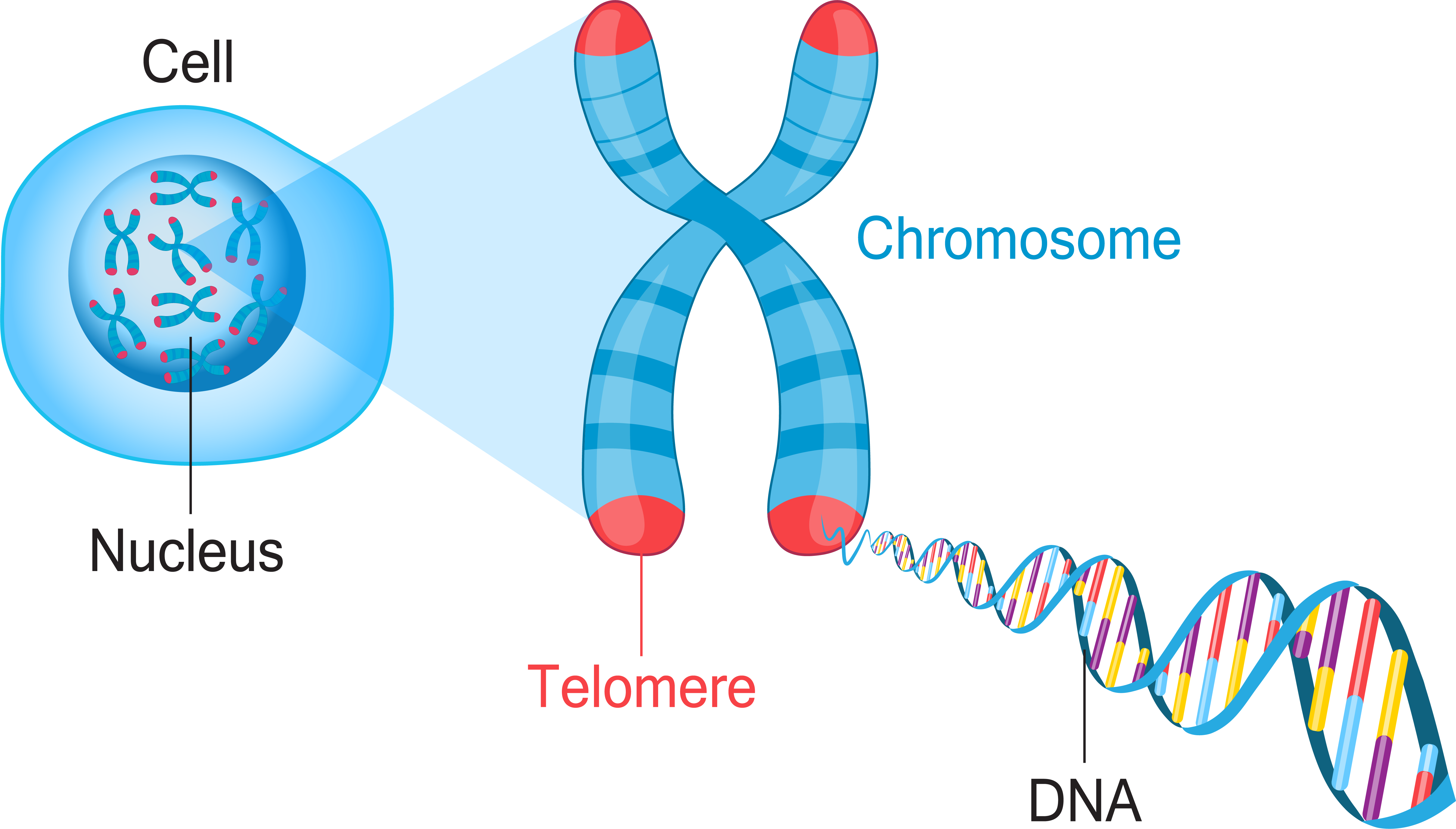
Chromosomes
The genetic code of cells is stored on structures of highly compacted DNA known as __________.
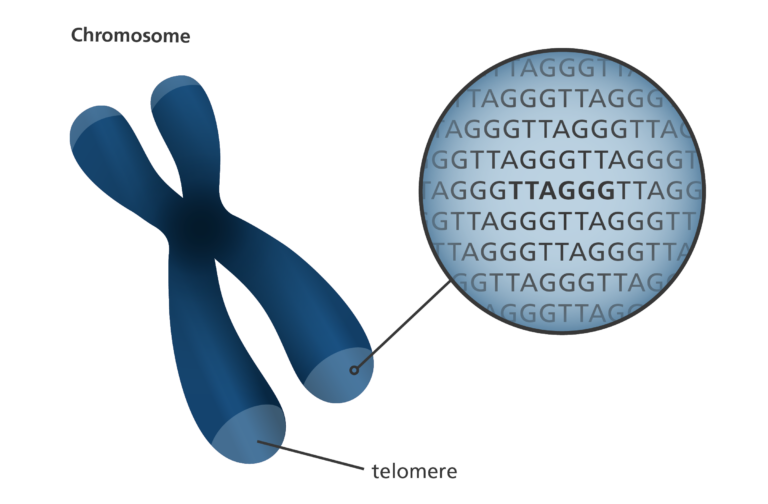
Telomeres
Regions of highly repeated genetic sequences at the tips of chromosomes. Important for allowing specific enzymes to gain a foothold and direct DNA replication during cell division.
Telomere theory
Telomeres get shorter each time a cell divides. When they become too short, the cell can’t divide anymore.
Telomerase
Cancer cells have an enzyme called _______ that rebuilds telomeres, letting them divide endlessly.
Family history
Reveals disease or predispositions that may span several generations and implies that genes in our background are important in determining our susceptibility for some ailments and conditions.
Aging or Death Genes
As we get older, deleterious or harmful genes are activated, causing senescence
Oncogenes
Genes found in all cells, and when activated, are known to cause cancers.
Gene Mutation and DNA Repair Failure Theories
As we age, the number of genetic mutations accumulating in the body increases. These mutations may eventually hinder normal cell function and even trigger events such as cancer.
Somatic Mutation Theories
Harmful environmental factors that damage DNA, have cumulative effects as we age, and damage or destroy critical genes. Factors: radiation exposure (UV radiation from the sun, medical x-rays), toxic chemicals, pesticides, free radicals.
DNA Repair Failure Theories
During the life span of any cell, there is recurring damage to the genomic DNA template. DNA damage can also result from radiation, dietary and inhaled toxins, metabolic byproducts, and highly reactive free radicals including glucose. Aging occurs due to failure to repair this DNA damage. There is a progressive depletion of critical repair enzymes during aging.
DNA Program Restriction Theory
Aging stems from a progressive increase in the “turn-off” of DNA template activity. There is a progressive decrease in the cellular capacity for protein synthesis and in the responsiveness of cells to endogenous stimuli.
Error Catastrophe Theory
When genes become damaged, the end result is the translation of that gene into a faulty protein product. The proliferation of this faulty protein product throughout the body causes the senescent changes associated with aging. One faulty gene might lead to the production of 1000 faulty protein molecules.
Error and fidelity theory
DNA errors or errors in ribosomal protein synthetic machinery lead to production of faulty proteins
Redundancy failure theory
The supply of redundant gene complexes is depleted as one ages.
Free Radical Theory
During many normal metabolic reactions, highly reactive, but very short-lived, intermediates are produced that have an unpaired electron in their outer shell. They damage the tissue upon contact. Many age-related immune diseases and vascular diseases appear to be caused in part by membrane lipid changes mediated by free radical lipid peroxidases.
Superoxide dismutase, peroxidase, catalase
In healthy cells, protective enzymes are present, including ________, ________, and _____ all of which curtail free radical production.
Vitamin E, vitamin C
Certain vitamins, such as _____ and _______, as well as trace minerals including zinc and selenium, protect against free radical damage and exert “antioxidant” activity
Crosslinking
Chemically links stands of biological molecules together, forming a molecular sheet out of what had once been individual strands.
collagen
One common, age-related victim of crosslinking is ______, an important structural component found in tendons, ligaments, and the deep dermis layer of skin. When individual _______ fibers become crosslinked, the resulting sheet loses flexibility and elasticity. For this reason, older skin becomes less elastic and older tendons and ligaments less flexible.
oxidation, crosslinking, and damage.
Although sugar is an important body energy source, sugar also acts as an oxidizing agent in the body, resulting in tissue _______, _______, and ______.
Cellular garbage or clinker theories
As cells age and experience nuclear and membrane damage from somatic mutations, they progressively lose the capacity to degrade or recycle metabolic products. The accumulation of these metabolic by-products is believed to be a mechanism that ultimately interferes with normal cell functioning.
Pigment (lipofuscin), beta amyloid protein, highly reactive free radicals
Gives several examples of metabolic by-products that would interfere with normal cell functioning in the cellular garbage or clinker theories
Lipofuscin
________ is shown to accumulate in both aging muscle and nervous system tissue
Beta amyloid accumulation
A hallmark pathology of Alzheimer’s Disease
Mitochondrial theories
Damage to a key cell organelle that is responsible for the energy production that fuels cellular metabolism. Release of the free radical compounds they produce accounts for the senescent changes associated with aging
Mitochondria
Genetic damage accumulates much faster in _________ and results in ______ destruction and release of harmful free radicals that damages cells and tissues.
Rate of metabolism theories
Longevity is determined by the metabolic rate, that is, the rate of energy expenditure during one’s life span.
Sirtuins (SIR)
Specific longevity genes, called ________ may be activated by caloric restriction and slow both metabolism and free radical production.
Increase DNA Repair mechanisms, restore telomeres, and enhance immune system function
Sirtuin genes appear to be activated when certain stressors applied on the body, including both Caloric Restriction and Exercise. When activated, these genes seem to ________
Wear & Tear Theories
Aging is an accumulation of damage, injury, and pathology to the body caused by metabolism, disease processes, and failure of the body to repair this cumulative damage over time.
Osteoarthritis
The most common form of arthritis, which seems to be related to age and use of our large, weight bearing joints such as knees and hips, which degenerate in almost everyone, over time
Hormone or Neuroendocrine Theories
Aging is caused by imbalances in the endocrine system or the nervous system that ultimately regulates that system
Immune System Theory
Aging is caused by a decline in the immune system. Results in a decline in infectious disease resistance (pneumonia, flu, re-eruption of the chick pox virus, shingles). Increase in cancer susceptibility, increase in autoimmune diseases.
Rheumatoid Arthritis
A form of arthritis where the body’s immune system attacks the small joints of the hands and wrists, over time causing destruction of the joint and immobility
Network Theories
Senescence changes we note in aging are best explained by a combination of factors listed: genes, failure to repair genetic damage, free radical accumulation & subsequent tissue crosslinking/damage, accumulation of waste products, using up the body’s metabolic bank, a decline in key homeostasis controllers (nervous and endocrine system), a decline in the immune system