Life Cycle of Viruses
 Call Kai
 Learn
Learn Practice Test
 Spaced Repetition
 Match
Match Flashcards
 Knowt Play
1/76

Earn XP
Description and Tags
Name | Mastery | Learn | Test | Matching | Spaced | Call with Kai | Chat |
|---|
No analytics yet
Send a link to your students to track their progress
77 Terms
Function of the viral core
control the viral heredity
control viral variation
responsible for the infectivity
Function of the protein shell
Protect the viral nucleic acid
Participate in the viral infection
Share the antigenicity
susceptible
cell has a functional receptor for a given virus - the cell may or may not be able to support viral replication
resistant
cell has no receptor - it may or may not be competent to support viral replication
permissive
cell has the capacity to replicate virus - it may or may not be susceptible
susceptible and permissive
cell is only cell that can take up virus particle and replicate it
a virus is an organism with two phases
virion and infect living cell
life cycle of viruses
virologists divide the infectious cycle into steps to facilitate their study, but no such artificial boundaries occur
how does the viral genome enter the host cell
T even phages
phage life cycle
Attachment and Adsorption
Penetration
Uncoating
Synthesis of viral genomes and proteins
Release
when does transcription and translation take place
after uncoating
attachment
plasma membrane proteins and glycoproteins
entry
capsid enters by endocytosis or fusion
uncoating
enzymatic removal of capsid proteins
biosynthesis
in nucleus or cytoplasm
chronic infection
latency: slow viral infections; cancer
release
enveloped viruses bud out nonenveloped viruses rupture plasma membrane
One-step growth cycle (phage growth cycle)
a method to study virus reproduction in cells
studying the infectious cycle in cells
Ender, Weller, Robbins, propagate poliovirus in human cell culture in 1954
Bacteriophage
the viruses that infect bacteria
Ellis and Delbruck, 1939
studies on E.coli bacteriophages
Bacteriophage structure
Polyhedral head
Helical tail
Polyhedral head
consists of 2000 capsomeres with double-stranded DNA enclosed within
Helical tailt
inner hollow tube which is surrounded by a contractile sheath with 24 annular rings. the distal end consists of basal plate with tail fibers at each corner. the distal end consists of a basal plate with tail fibers at each corner. the bacteriophage attaches to the bacteria with the help of these tail fibers
two major lifecycle
lytic cycle
lysogenic cycle
Lytic Cycle
Infects a bacteria and kills it to release progeny virus
Lytic cycle steps
Attach and entry by injection of viral DNA
Synthesis of core and capsid
Assembly
Lysis of the host
Lysogenic Cycle
the phage becomes integrated with the chromosome of the host cell
Bacteriophage Cycle steps
Attach and entry by injection
Integrate with bacterial chromosome
Binary fission
Renters lytic phase
Synthesis of core and capsid
Assembly
Lysis of the host cell
Replication of Eukaryotic Viruses
Attachment
Entry
Direct Penetration for viruses
Membrane fusion for enveloped viruses
Endocytosis for naked viruses
Uncoating
Synthesis
Assembly
Release by bursting for naked viruses and by budding for enveloped viruses
Attachment (in Eukaryotic Viruses)
comes in contact with receptor sites on the surface of host cells and the glycoprotein spikes mediate attachment
Penetration (in Eukaryotic Viruses)
Direct
Fusion
Endocytosis
Uncoating and NA synthesis (in Eukaryotic Viruses)
the usual replication for most is (dsDNA)
Parvoviridae
DNA SS , cellular enzyme transcribes viral DNA in Nucleus
Heroesviridae, Papovaviridae
DNA DS, cellular enzyme transcribes viral DNA in nucleus
Poxviridae
DNA DS, Enzyme transcribes viral DNA in virion, in cytoplasm
Hepodnaviridae
DNA Reverse transcriptase, cellular enzyme transcribes viral DNA in nucleus: reverse tronscriptase copies mRNA to make viral DNA
Picornaviridae, Togaviridae
RNA + strand, viral RNA functions as a templates for synthesis of RNA polymerase which copies - strand RNA to make mRNA in the cytoplasm
Rhabdoviridae
RNA strand, Viral enzyme copies viral RNA to make mRNA in cytoplasm
Reoviridae
RNA DS, viral enzyme copies strands RNA to make mRNA in cytoplasm
Retroviridae
RNA reverse transcriptase, viral enzyme copies viral RNA to make DNA in cytoplasm: DNA moves to nucleus

Attachment

Penetration

Uncoating

Synthesis of viral genomes and proteins

Assembly

Release

Phage assembly

Life cycle of bacteriophage

Phage attaches to host cell and injects DNA
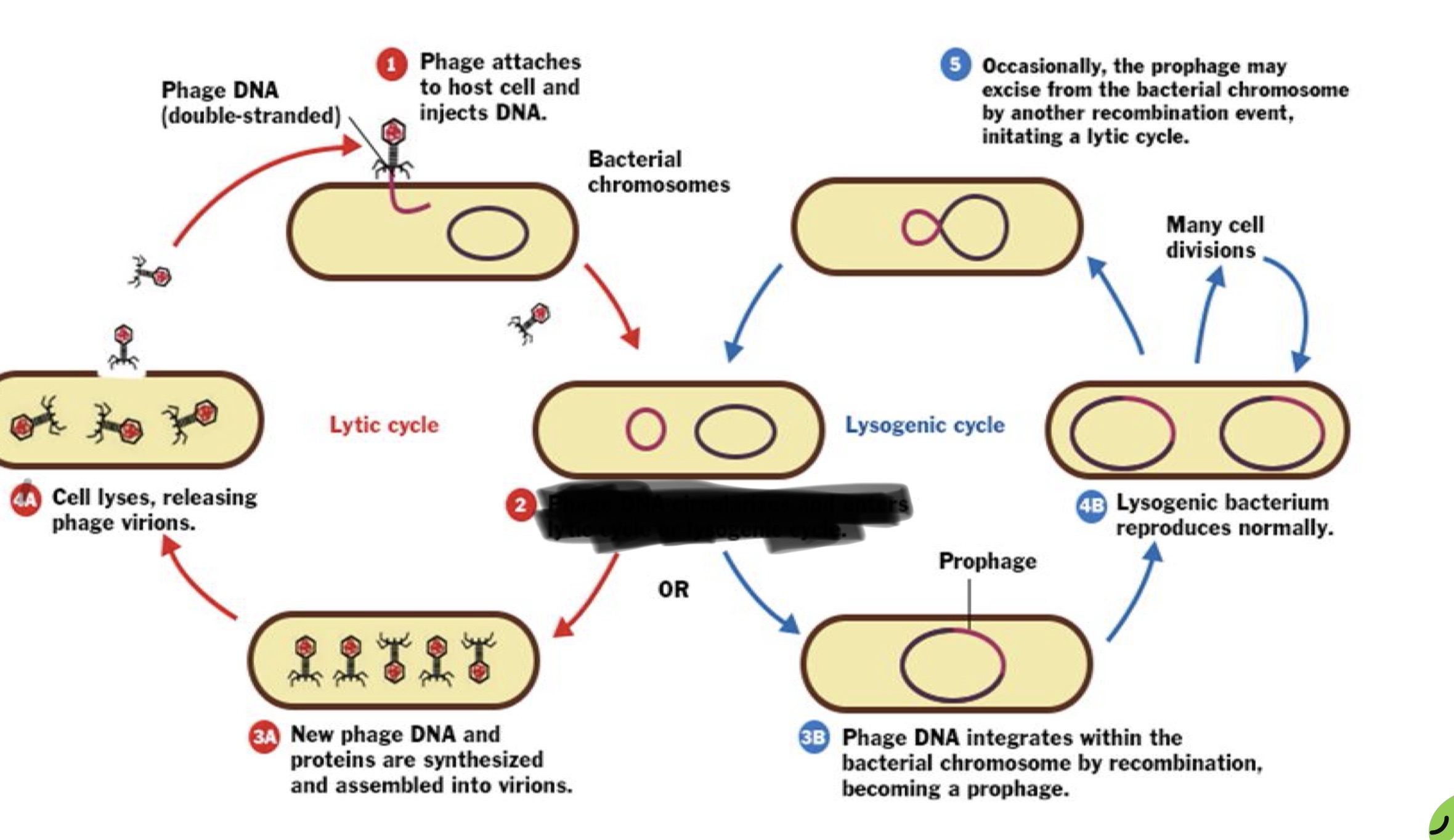
Phage DNA circularizes and enters lytic or lysogenic cycle

Phage DNA integrates within the bacterial chromosomes by recombination

the prophage may excise from the bacterial chromosome by another recombination event

Chorioallantoic membrane inoculation

Shell membrane

Amniotic inoculation

Yolk sac inoculation

Allantoic inoculation

Albumin

Primary Human foreskin fibroblasts

Mouse fibroblast cell line (3T3)
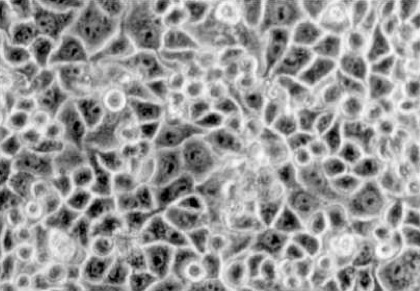
Human epithelial cell line (HeLa)

head

DNA /RNA

Collar

Sheaths

Base Plates

Pins

Lytic Cycle

Bacteriopghage Cycle

Lysogenic Cycle
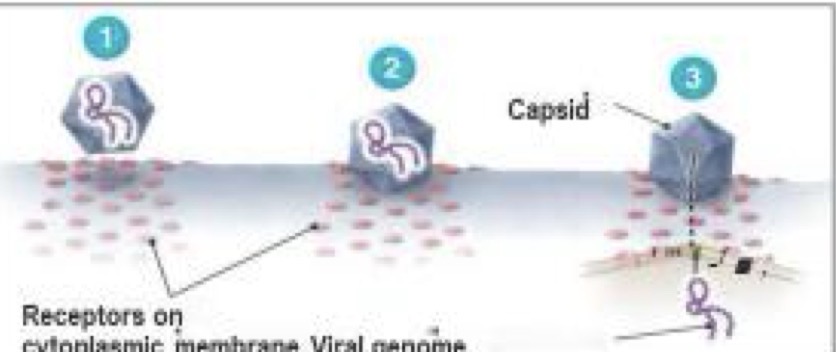
Direct Penetration

Membrane fusion
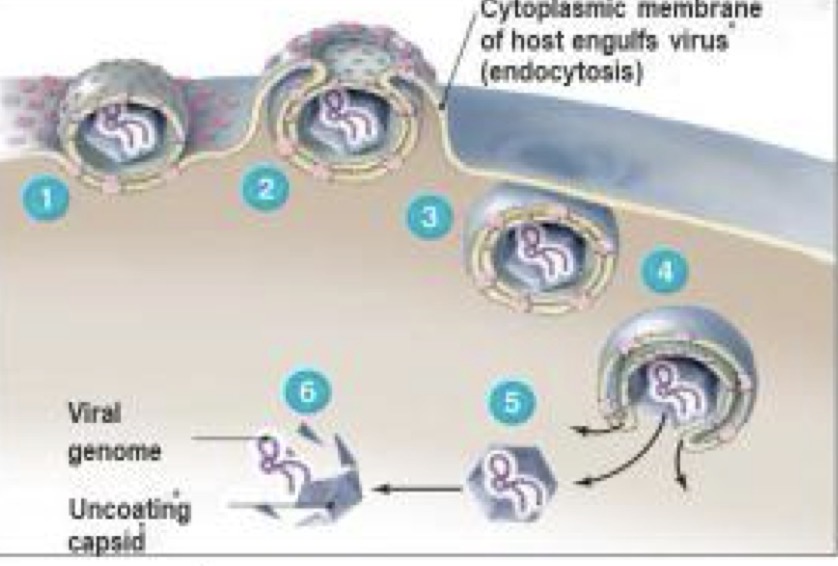
Endocytosis

Cell Lysis
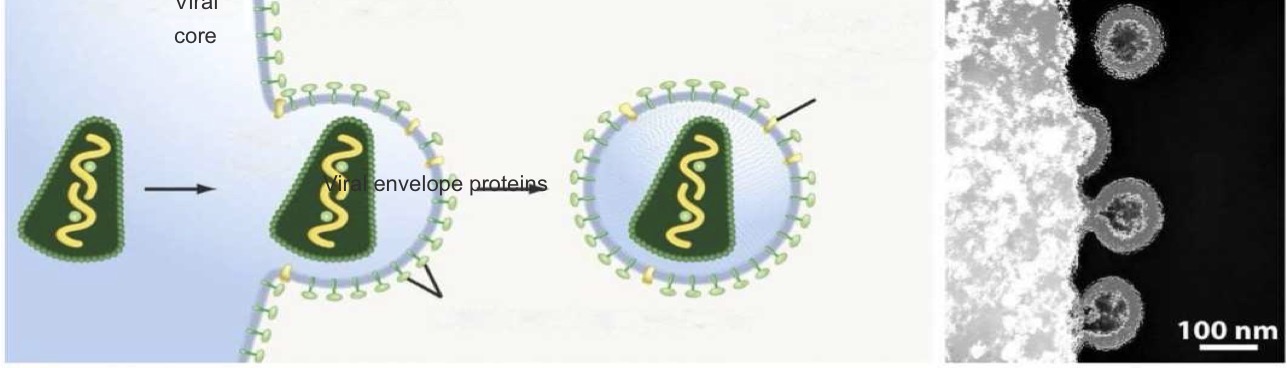
Budding